

The DOI matches its Crossref record.
Characterization of Hybrid FRP Composite Produced from Recycled PET and CFRP
Open accessAbstract
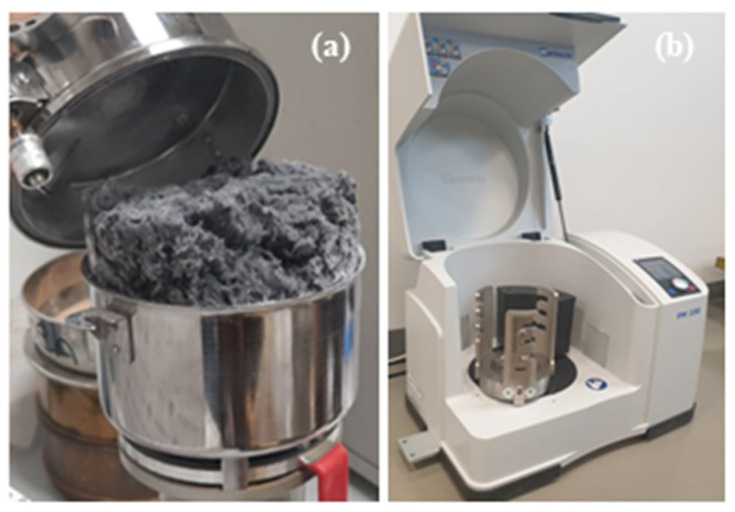
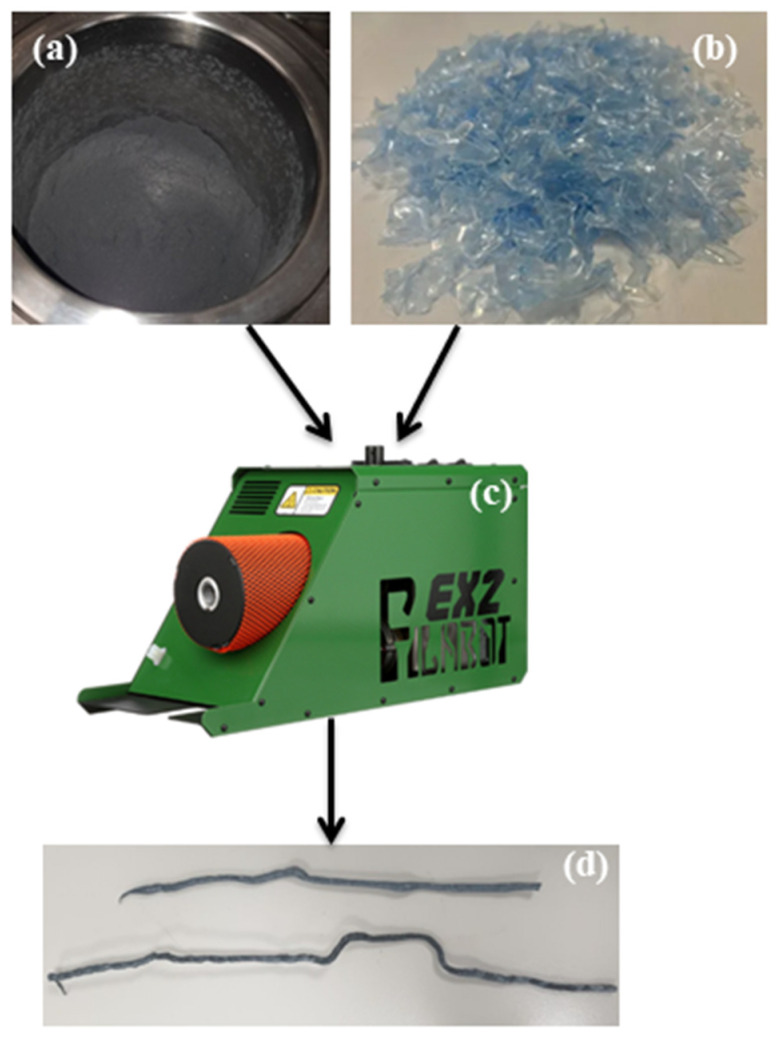
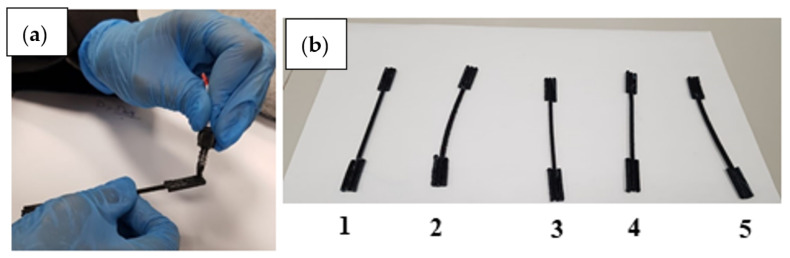
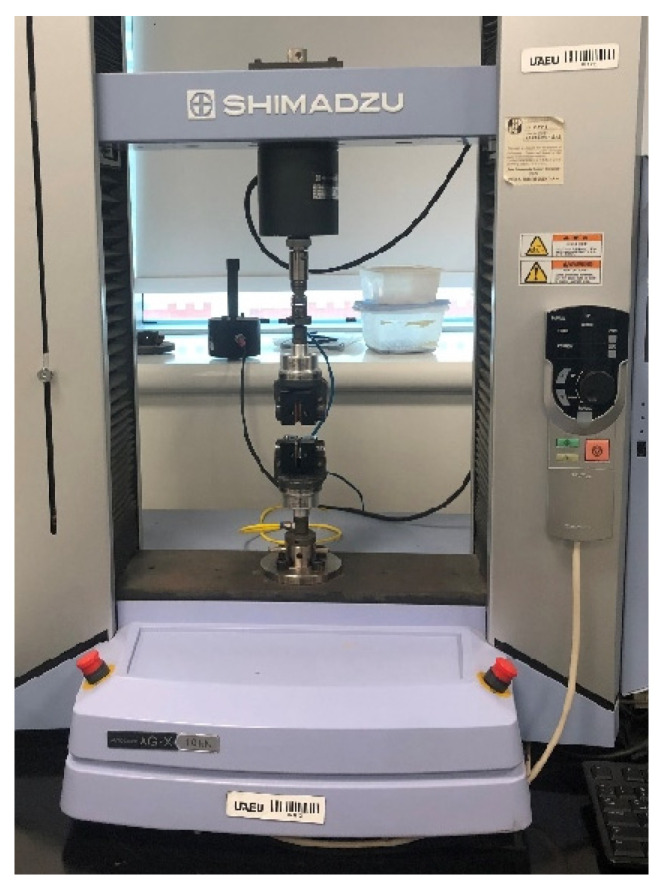
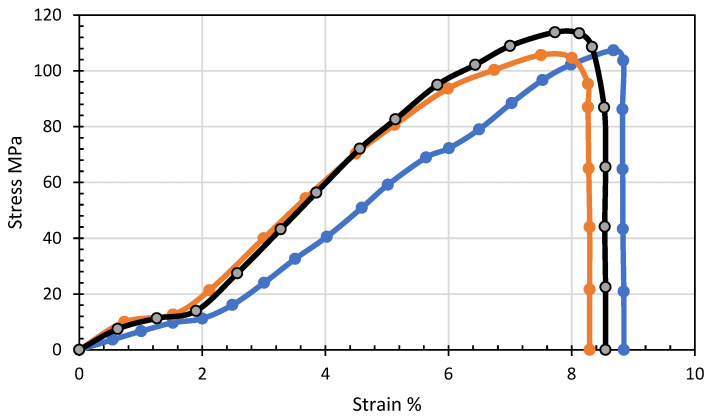
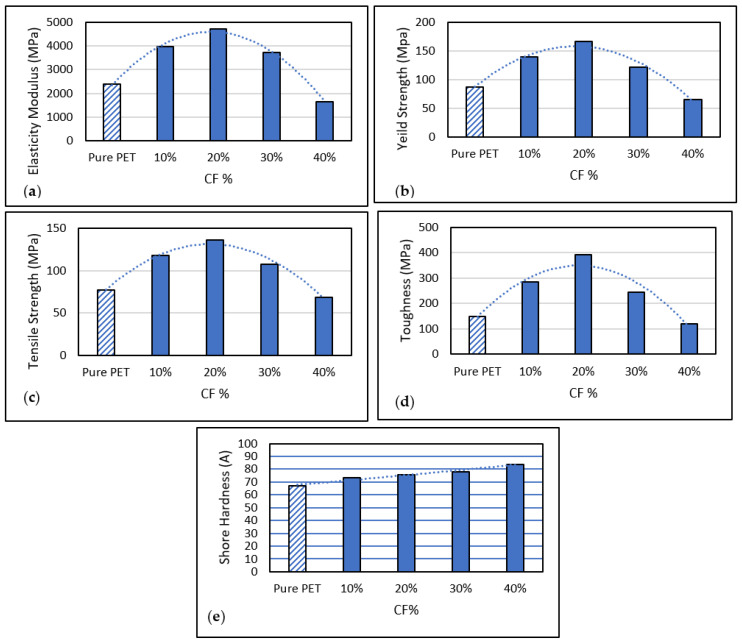
In recent years, carbon fiber has experienced a significant surge in popularity attributed to its exceptional properties, including its high-temperature resistance, mechanical strength, and cost-effectiveness. Many industries have been attracted to the prevalent use of carbon-fiber-reinforced polymers or plastics (CFRP). However, the increasing demand for carbon fiber has created a waste recycling problem that needs to be addressed. This research aimed to develop a recycled composite using PET waste as a solution to the growing demand for both materials. The recycled carbon fibers were processed chemically and mechanically to generate power for this process. Various samples were tested with different proportions of CF (10%, 20%, 30%, and 40%) to analyze their mechanical properties. The recycled composites are examined under tensile test conditions to further explore the waste carbon reinforcement’s effect on polymers’ characteristics. Scanning electron microscopy was also utilized for mechanical morphology evaluations. After analyzing the data, it was found that samples containing 20% CF had the highest elastic modulus value among all the mixes. This is attributed to the reinforcing effect of the fibers. The Elasticity Modulus of the filaments increased with the concentration of CF, reaching its peak at 20% before decreasing. This trend is also apparent in the visual representations. When compared to recycling, the Elasticity Modulus value of 20% CF filament increased by 97.5%. The precise value for CF with a 20% filament is 4719.3 MPa. Moreover, the composite samples were analyzed using SEM to characterize them, and it was discovered that the incorporation of 20% CF/PET filler produced the composition with the highest strength.
Overview
The claims and statistics of this paper haven’t been checked yet.
Run the check — free, no account needed. It reads the open-access text and checks the sources it cites.
Integrity signals
Registry
Cites
Statistics
Figures

Verification
Claims the paper makes
The claims and statistics of this paper haven’t been checked yet.
Run the check — free, no account needed. It reads the open-access text and checks the sources it cites.
Claims other papers make about this one
Each is checked against this paper’s own text: does it say what the citing paper says it does?
The check wasn’t confident either way, so it gives no verdict — never disputed.
In the citing paper
“Security forces can now spot suspicious activity in real time thanks to AI-powered surveillance systems that automate threat detection and pattern recognition, improving situational awareness and response capabilities.”
From Enhancing Operational Effectiveness in Security and Defence within the UAE: The Strategic Role of Artificial Intelligence (2025) · cites this paper as Almahri, et al., 2023
Experimental — accuracy not yet measured
Self-check
Percentages, sums and reported differences re-computed from the paper’s own numbers.
The self-check needs the paper’s full text.
Citations
Cites
Still being checked.
Research works printed but not linked: 73
- Huang, 2009, Fabrication and Properties of Carbon Fibers, Materials, 2, 2369, 10.3390/ma2042369 · DOI
- Gholampoor, 2017, Fabrication of nano-Fe 3 O 4 3D structure on carbon fibers as a microwave absorber and EMI shielding composite by modified EPD method, Solid State Sci., 64, 51, 10.1016/j.solidstatesciences.2016.12.005 · DOI
- Marshall, 1985, The mechanics of matrix cracking in brittle-matrix fiber composites, Acta Met., 33, 2013, 10.1016/0001-6160(85)90124-5 · DOI
- Lu, 2023, Micromechanics-based model of single crack propagation in Engineered cementitious composites (ECC), Constr. Build. Mater., 369, 130519, 10.1016/j.conbuildmat.2023.130519 · DOI
- Gangineni, 2019, Mechanical behavior of Graphene decorated carbon fiber reinforced polymer composites: An assessment of the influence of functional groups, Compos. Part A Appl. Sci. Manuf., 122, 36, 10.1016/j.compositesa.2019.04.017 · DOI
- Wang, 2016, Electrophoretic deposition of graphene oxide on continuous carbon fibers for reinforcement of both tensile and interfacial strength, Compos. Sci. Technol., 135, 46, 10.1016/j.compscitech.2016.07.009 · DOI
- Lionetto, F. (2021). Carbon Fiber Reinforced Polymers. Materials, 14. · DOI
- Abas, 2018, Natural and synthetic refrigerants, global warming: A review, Renew. Sustain. Energy Rev., 90, 557, 10.1016/j.rser.2018.03.099 · DOI
- Shi, 2022, Effect of fiber constituent in matrix on cyclic behavior of PVA-Steel hybrid Fiber-Reinforced cementitious composites columns with mild steel rebar, Constr. Build. Mater., 359, 129514, 10.1016/j.conbuildmat.2022.129514 · DOI
- Xiaoyong, 2022, Research on mechanical properties of ultra-high performance fiber reinforced cement-based composite after elevated temperature, Compos. Struct., 291, 115584, 10.1016/j.compstruct.2022.115584 · DOI
- Singh, 2021, Composite materials based on recycled polyethylene terephthalate and their properties—A comprehensive review, Compos. Part B Eng., 219, 108928, 10.1016/j.compositesb.2021.108928 · DOI
- Stănescu, M.M., and Bolcu, D. (2020). A Study of Some Mechanical Properties of Composite Materials with a Dammar-Based Hybrid Matrix and Reinforced by Waste Paper. Polymers, 12. · DOI
- Öchsner, A., and Altenbach, H. (2023, May 15). Advanced Structured Materials Engineering Design Applications III Structures, Materials and Processes. Available online: http://www.springer.com/series/8611. · DOI
- Dhiman, 2020, Applications and Future Trends of Carbon Fiber Reinforced Polymer Composites: A Review, Int. Res. J. Eng. Technol., 10, 1883
- 2021, Investigation of reinforcement corrosion effects in RC columns produced with blast furnace slag and fly ash under reversed-cyclic lateral loading tests, Eng. Struct., 245, 112866, 10.1016/j.engstruct.2021.112866 · DOI
- Boucher, 2011, Book Reviews: Book Reviews, Crit. Sociol., 37, 493, 10.1177/0261018311403863 · DOI
- Muflikhun, M.A., and Fiedler, B. (2022). Failure Prediction and Surface Characterization of GFRP Laminates: A Study of Stepwise Loading. Polymers, 14. · DOI
- Muflikhun, 2023, Systematic analysis of fractured specimens of composite laminates: Different perspectives between tensile, flexural, Mode I, and Mode II test, Int. J. Light Mater. Manuf., 6, 329
- Muflikhun, 2020, The evaluation of failure mode behavior of CFRP/Adhesive/SPCC hybrid thin laminates under axial and flexural loading for structural applications, Compos. Part B Eng., 185, 107747, 10.1016/j.compositesb.2020.107747 · DOI
- Yu, 2018, Micromechanical modeling of crack-bridging relations of hybrid-fiber Strain-Hardening Cementitious Composites considering interaction between different fibers, Constr. Build. Mater., 182, 629, 10.1016/j.conbuildmat.2018.06.115 · DOI
- Deokar, 2016, A Review Paper on Properties of Carbon Fiber Reinforced Polymers, IJRSIT, 2, 238
- Worku, 2021, Mechanical Properties of Composite Materials from Waste Poly(ethylene terephthalate) Reinforced with Glass Fibers and Waste Window Glass, Int. J. Polym. Sci., 2021, 226, 10.1155/2021/3320226 · DOI
- Zheng, 2022, Recent advances of interphases in carbon fiber-reinforced polymer composites: A review, Compos. Part B Eng., 233, 109639, 10.1016/j.compositesb.2022.109639 · DOI
- Ma, 2018, Interfacial enhancement of carbon fiber composites by growing TiO2 nanowires onto amine-based functionalized carbon fiber surface in supercritical water, Appl. Surf. Sci., 433, 560, 10.1016/j.apsusc.2017.10.036 · DOI
- Wang, 2016, A controllable interface performance through varying ZnO nanowires dimensions on the carbon fibers, Appl. Surf. Sci., 389, 96, 10.1016/j.apsusc.2016.07.092 · DOI
- Yu, 2019, Mechanical performance of Strain-Hardening Cementitious Composites (SHCC) with hybrid polyvinyl alcohol and steel fibers, Compos. Struct., 226, 111198, 10.1016/j.compstruct.2019.111198 · DOI
- Chen, 2017, A facile one-pot fabrication of polyphosphazene microsphere/carbon fiber hybrid reinforcement and its effect on the interfacial adhesion of epoxy composites, Appl. Surf. Sci., 410, 530, 10.1016/j.apsusc.2017.03.104 · DOI
- Lu, 2018, Highly dispersed graphene oxide electrodeposited carbon fiber reinforced cement-based materials with enhanced mechanical properties, Cem. Concr. Compos., 87, 220, 10.1016/j.cemconcomp.2018.01.006 · DOI
- Zhu, 2018, Preparation of polyetherimide nanoparticles on carbon fiber surface via evaporation induced surface modification method and its effect on tensile strength and interfacial shear strength, Appl. Surf. Sci., 454, 54, 10.1016/j.apsusc.2018.04.232 · DOI
- Qiu, 2016, Fatigue-induced deterioration of the interface between micro-polyvinyl alcohol (PVA) fiber and cement matrix, Cem. Concr. Res., 90, 127, 10.1016/j.cemconres.2016.08.021 · DOI
- Dong, 2017, Improved mechanical properties of carbon fiber-reinforced epoxy composites by growing carbon black on carbon fiber surface, Compos. Sci. Technol., 149, 75, 10.1016/j.compscitech.2017.06.002 · DOI
- Kitamura, 2011, The method for surface functionalization of single-walled carbon nanotubes with fuming nitric acid, Carbon, 49, 3851, 10.1016/j.carbon.2011.05.020 · DOI
- Chen, 2012, Structural evolution during annealing of thermally reduced graphene nanosheets for application in supercapacitors, Carbon, 50, 3572, 10.1016/j.carbon.2012.03.029 · DOI
- Felisberto, 2017, Carbon nanotubes grown on carbon fiber yarns by a low temperature CVD method: A significant enhancement of the interfacial adhesion between carbon fiber/epoxy matrix hierarchical composites, Compos. Commun., 3, 33, 10.1016/j.coco.2017.01.003 · DOI
- Pozegic, 2014, Low temperature growth of carbon nanotubes on carbon fibre to create a highly networked fuzzy fibre reinforced composite with superior electrical conductivity, Carbon, 74, 319, 10.1016/j.carbon.2014.03.038 · DOI
- Lee, 2016, Electrophoretic deposition of aramid nanofibers on carbon fibers for highly enhanced interfacial adhesion at low content, Compos. Part A Appl. Sci. Manuf., 84, 482, 10.1016/j.compositesa.2016.02.029 · DOI
- Malekimoghadam, 2023, Bending analysis of carbon nanotube coated–fiber multi-scale composite beams using the refined zigzag theory, Aerosp. Sci. Technol., 138, 108328, 10.1016/j.ast.2023.108328 · DOI
- Cook, 1998, A {3,2}-order bending theory for laminated composite and sandwich beams, Compos. Part B Eng., 29, 565, 10.1016/S1359-8368(98)00011-0 · DOI
- Christensen, 1979, Solutions for effective shear properties in three phase sphere and cylinder models, J. Mech. Phys. Solids, 27, 315, 10.1016/0022-5096(79)90032-2 · DOI
- Shakhlavi, 2023, On nonlinear damping effects with nonlinear temperature-dependent properties for an axial thermo-viscoelastic rod, Int. J. Non-linear Mech., 153, 104418, 10.1016/j.ijnonlinmec.2023.104418 · DOI
- Chauhan, 2022, Enhancing aging resistance of glass fiber/epoxy composites using carbon nanotubes, Mater. Chem. Phys., 291, 104418, 10.1016/j.matchemphys.2022.126740 · DOI
- Qu, 2022, Effects of cryo-thermal cycling on interlaminar shear strength and thermal expansion coefficient of carbon fiber/graphene oxide-modified epoxy composites, Compos. Commun., 32, 104418, 10.1016/j.coco.2022.101180 · DOI
- Ma, 2010, Dispersion and functionalization of carbon nanotubes for polymer-based nanocomposites: A review, Compos. Part A Appl. Sci. Manuf., 41, 1345, 10.1016/j.compositesa.2010.07.003 · DOI
- Barbosa, 2017, Accelerated aging effects on carbon fiber/epoxy composites, Compos. Part B Eng., 110, 298, 10.1016/j.compositesb.2016.11.004 · DOI
- Nicholas, 2016, Effects of accelerated environmental aging on glass fiber reinforced thermoset polyurethane composites, Compos. Part B Eng., 94, 370, 10.1016/j.compositesb.2016.03.059 · DOI
- Khan, 2018, Augmenting mode-II fracture toughness of carbon fiber/epoxy composites through carbon nanotube grafting, Eng. Fract. Mech., 204, 211, 10.1016/j.engfracmech.2018.10.014 · DOI
- Grammatikos, 2012, On the electrical properties of multi scale reinforced composites for damage accumulation monitoring, Compos. Part B Eng., 43, 2687, 10.1016/j.compositesb.2012.01.077 · DOI
- Seo, 1999, Damage detection of CFRP laminates using electrical resistance measurement and neural network, Compos. Struct., 47, 525, 10.1016/S0263-8223(00)00016-7 · DOI
- Qin, 2021, Mechanical property deterioration and defect repair factors of carbon fibers during the continuous growth of carbon nanotubes by chemical vapor deposition, Ceram. Int., 47, 19213, 10.1016/j.ceramint.2021.03.269 · DOI
- Ouyang, 2022, Significantly improving thermal conductivity of carbon fiber polymer composite by weaving highly conductive films, Compos. Part A Appl. Sci. Manuf., 163, 107183, 10.1016/j.compositesa.2022.107183 · DOI
- Yadav, 2023, Tailoring of physical properties of glassy selenium (g-Se) by using multi-walled carbon nanotubes (MWCNTs), Mater. Sci. Eng. B, 290, 116310, 10.1016/j.mseb.2023.116310 · DOI
- Wang, 2014, Heterogeneously structured conductive carbon fiber composites by using multi-scale silver particles, Compos. Part B Eng., 61, 172, 10.1016/j.compositesb.2014.01.049 · DOI
- Suzuki, 1999, Pitch-based carbon fiber microstructure and texture and compatibility with aluminum coated using chemical vapor deposition, Carbon, 37, 47, 10.1016/S0008-6223(98)00186-9 · DOI
- Yang, 2013, Effect of tungsten addition on thermal conductivity of graphite/copper composites, Compos. Part B Eng., 55, 1, 10.1016/j.compositesb.2013.05.023 · DOI
- Lee, 2007, Effect of alloying elements on the interfacial bonding strength and electric conductivity of carbon nano-fiber reinforced Cu matrix composites, Mater. Sci. Eng. A, 449-451, 778, 10.1016/j.msea.2006.02.377 · DOI
- Xia, 2009, Effect of carbide formers on microstructure and thermal conductivity of diamond-Cu composites for heat sink materials, Trans. Nonferrous Met. Soc. China, 19, 1161, 10.1016/S1003-6326(08)60422-7 · DOI
- Nepal, 2023, High tilted antiferroelectric liquid crystals: Polymer-based approach for phase stabilisation and device development, J. Mol. Liq., 375, 121297, 10.1016/j.molliq.2023.121297 · DOI
- Yildizel, 2020, Experimental and modelling study of mixture design optimisation of glass fibre-reinforced concrete with combined utilisation of Taguchi and Extreme Vertices Design Techniques, J. Mater. Res. Technol., 9, 2093, 10.1016/j.jmrt.2020.02.083 · DOI
- Chua, 2015, Probabilistic predictive modelling of carbon nanocomposites for medical implants design, J. Mech. Behav. Biomed. Mater., 44, 164, 10.1016/j.jmbbm.2015.01.013 · DOI
- Barter, 2020, A systems engineering vision for floating offshore wind cost optimization, Renew. Energy Focus, 34, 1, 10.1016/j.ref.2020.03.002 · DOI
- Zhang, 2023, Experimental and numerical research on opening size effect of novel short fiber reinforced composite laminates, Results Phys., 46, 106303, 10.1016/j.rinp.2023.106303 · DOI
- Ouyang, 2022, Research advances in the mechanical joining process for fiber reinforced plastic composites, Compos. Struct., 296, 115906, 10.1016/j.compstruct.2022.115906 · DOI
- Um, 2021, Effect of crystallinity on the mechanical behavior of carbon fiber reinforced polyethylene-terephthalate (CF/PET) composites considering temperature conditions, Compos. Sci. Technol., 207, 108745, 10.1016/j.compscitech.2021.108745 · DOI
- Sadeghi, 2021, Recent Studies on Recycled PET Fibers: Production and Applications: A Review, Mater. Circ. Econ., 3, 4, 10.1007/s42824-020-00014-y · DOI
- Kirshanov, K., Toms, R., Aliev, G., Naumova, A., Melnikov, P., and Gervald, A. (2022). Recent Developments and Perspectives of Recycled Poly(ethylene terephthalate)-Based Membranes: A Review. Membranes, 12. · DOI
- Zhou, 2022, Research on laser ultrasonic propagation characteristics and quantitative detection of delamination of carbon fiber composite, Optik, 271, 170173, 10.1016/j.ijleo.2022.170173 · DOI
- Wu, J., Gao, X., Wu, Y., Wang, Y., Nguyen, T.T., and Guo, M. (2023). Recycling Carbon Fiber from Carbon Fiber-Reinforced Polymer and Its Reuse in Photocatalysis: A Review. Polymers, 15. · DOI
- Olam, M. (2023). Mechanical and Thermal Properties of HDPE/PET Microplastics, Applications, and Impact on Environment and Life, IntechOpen. · DOI
- Zhang, 2014, Effects of humidity conditions at fabrication on the interfacial shear strength of flax/unsaturated polyester composites, Compos. Part B Eng., 60, 186, 10.1016/j.compositesb.2013.12.031 · DOI
- Liu, 2022, Research on mechanical properties and durability of flax/glass fiber bio-hybrid FRP composites laminates, Compos. Struct., 290, 115566, 10.1016/j.compstruct.2022.115566 · DOI
- Xie, 2021, Research on basalt fiber reinforced phosphogypsum-based composites based on single factor test and RSM test, Constr. Build. Mater., 316, 126084, 10.1016/j.conbuildmat.2021.126084 · DOI
- Qing, 2023, Research progress on aligned fiber reinforced cement-based composites, Constr. Build. Mater., 363, 129578, 10.1016/j.conbuildmat.2022.129578 · DOI
- Joy, 1997, Scanning electron microscopy for materials characterization, Curr. Opin. Solid State Mater. Sci., 2, 465, 10.1016/S1359-0286(97)80091-5 · DOI
Cited by
Sorted by citations
Afghani, A. (2025) · International Journal of Technology and Systems · doi:10.47604/ijts.3194
Metadata
- Authors
- Almahri, G., Madi, K., Alkaabi, F., Badran, Y., Shehadeh, K., ElHassan, A., Ahmed, W., & Alzahmi, S.
- Affiliations
- United Arab Emirates University (AE)
- Corresponding author
- Alzahmi, Salem
- Venue
- Polymers
- Publisher
- MDPI AG
- Published
- 2023-07-04
- Volume
- 15
- Issue
- 13
- Pages
- 2946
- ISSN
- 2073-4360 (ISSN-L)
- PMC
- PMC10346695
- OpenAlex
- W4383226927
- Cited by
- 18
- References
- 0
- Citations by year
- 2026: 5 · 2025: 10 · 2024: 1 · 2023: 2
- FWCI
- 1.77
- Type
- journal article
- Language
- en
- Open access
- gold
- doi.org
- Licence
- Locations
- Polymers (publishedVersion, cc-by)
- PubMed Central (publishedVersion, cc-by)
- PubMed (publishedVersion)
- DOAJ (DOAJ: Directory of Open Access Journals) (submittedVersion)
- Funders
- UAE University (31R333)
- Topics
- Physical Sciences › Engineering › Mechanical Engineering › Fiber-reinforced polymer composites
- Physical Sciences › Materials Science › Polymers and Plastics › Polymer crystallization and properties
- Physical Sciences › Materials Science › Polymers and Plastics › Natural Fiber Reinforced Composites
- Keywords
- recycled carbon fiber, carbon fiber reinforced polymer, PET waste, recycled PET, carbon fiber recycling, mechanical properties, tensile properties, elastic modulus, fiber content, composite morphology
About these checks
Registry, retraction, Cites and statistics results are computed, not judged, with one exception: a printed reference that no index lists is read once by a model before it counts as a citation error. Claims are extracted by a model and kept only when their quote appears verbatim in the text; each cited source is then checked, with a model’s help, for whether it says what the claim relies on. Those verdicts can be wrong — read the claim’s quote and the cited source before relying on one.
Statistics and arithmetic are recomputed, not judged.
Confidence bands are shown only for fields calibrated on our annotated test set. None is calibrated yet, so no band is shown.
What counts as a claim ›How we measure confidence ›How we check this ›
Are you an author, or do you see a problem with this page? Request a review
