

Functional Compounds from Banana Peel Used to Decrease Oxidative Stress Effects
Open accessThe DOI matches its Crossref record; 26 of the 26 references it cites were found in a registry or an index.
Abstract
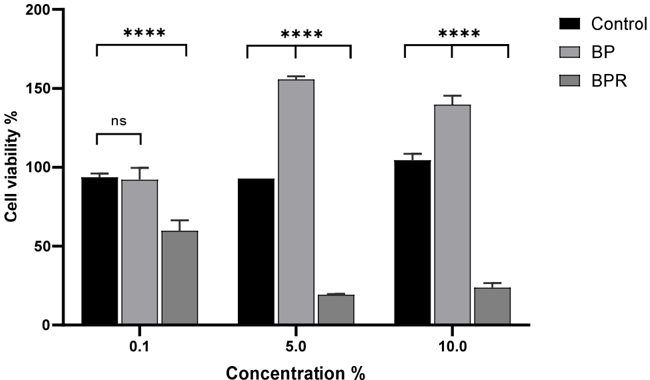
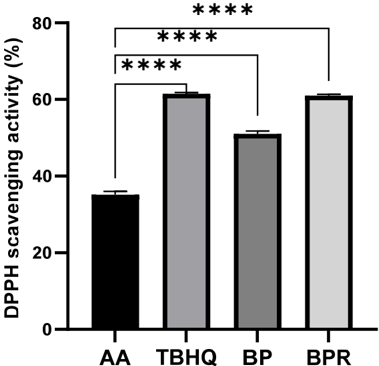
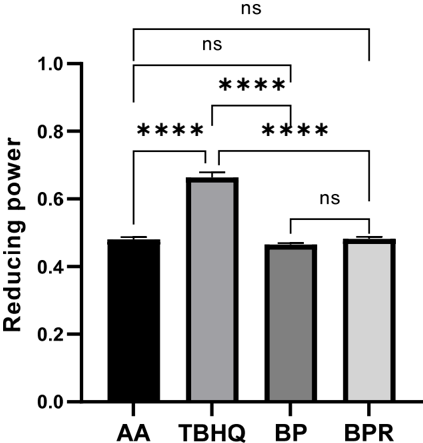
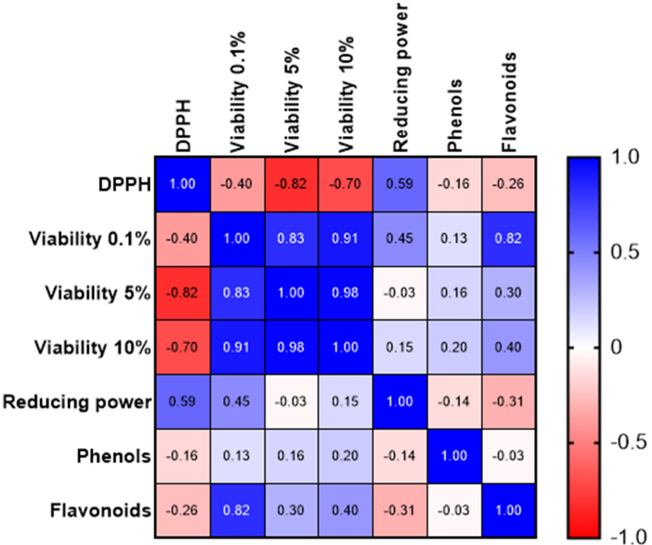
Banana peel, a little-used waste, contains a high amount of biologically active compounds. The aim of the study is to demonstrate in vitro, the antioxidant, cytotoxic, and antimicrobial effects of hydroalcoholic extracts from yellow (BP) and red (BPR) banana peels. The analysis of the extracts by Capillary Zone Electrophoresis (CZE) has confirmed the presence of several bioactive compounds. BPR has a higher in vitro antioxidant activity than BP, which correlates with a significant cytotoxic, antimicrobial effect, with a UVA/UVB rate of 0.9. In the case of BPR, the results confirm the presence of isoquercitrin and kaempferol in a 1:3 ratio. The bioactive compounds from the extracts have shown a different interaction with HCT-8 cell lines and with tested bacterial strains with pathogenic properties. The HCA analysis proved the biological value of BPR to reduce oxidative stress and its potential use in natural products.
Overview
The claims and statistics of this paper haven’t been checked yet.
Free: it reads the open-access text and checks the first 5 claims that cite a source we can check. Create a free account to check every claim.
Integrity signals
Registry
Cites
Statistics
Figures
Verification
Claims the paper makes
The claims and statistics of this paper haven’t been checked yet.
Free: it reads the open-access text and checks the first 5 claims that cite a source we can check. Create a free account to check every claim.
Claims other papers make about this one
Each is checked against this paper’s own text: does it say what the citing paper says it does?
The source backs part of the claim, not all of it — or backs it for a different population, condition or comparison.
In the citing paper
“Subcritical water extraction (SWE) was used to separate pectin from banana peels in a sustainable and ecofriendly manner, but high temperatures made it unfit for thermolabile compounds.[64]”
From Bioactive, antioxidant, industrial, and nutraceutical applications of banana peel (2023) · cites this paper as [64]
Experimental — accuracy not yet measuredThe check wasn’t confident either way, so it gives no verdict — never disputed.
In the citing paper
“The yield from the conventional Soxhlet method was higher, but the quality was worse.”
From Bioactive, antioxidant, industrial, and nutraceutical applications of banana peel (2023) · cites this paper as [64]
Experimental — accuracy not yet measuredThe check wasn’t confident either way, so it gives no verdict — never disputed.
In the citing paper
“In terms of extraction time and quality, microwave-assisted extraction (MAE) was preferred.”
From Bioactive, antioxidant, industrial, and nutraceutical applications of banana peel (2023) · cites this paper as [64]
Experimental — accuracy not yet measuredThe check wasn’t confident either way, so it gives no verdict — never disputed.
In the citing paper
“With less energy consumption and extraction time, a good quality banana peel extract was found in ultrasound-assisted extraction method (modified Soxhlet extraction method).”
From Bioactive, antioxidant, industrial, and nutraceutical applications of banana peel (2023) · cites this paper as [64]
Experimental — accuracy not yet measured
Self-check
Percentages, sums and reported differences re-computed from the paper’s own numbers.
The self-check needs the paper’s full text.
Citations
Cites
Ekor, M. (2014) · Frontiers in Pharmacology · doi:10.3389/fphar.2013.00177 · Cited by 3,919
Tangerine, banana and pomegranate peels valorisation for sustainable environment: A review
El Barnossi, A., Moussaid, F., & Iraqi Housseini, A. (2021) · Biotechnology Reports · doi:10.1016/j.btre.2020.e00574 · Cited by 178
Comparative analysis of pigments in red and yellow banana fruit
Fu, X., Cheng, S., Liao, Y., Huang, B., Du, B., Zeng, W., Jiang, Y., Duan, X., & Yang, Z. (2017) · Food Chemistry · doi:10.1016/j.foodchem.2017.07.046 · Cited by 122
Barone, A. S., Matheus, J. R. V., de Souza, T. S. P., Moreira, R. F. A., & Fai, A. E. C. (2021) · Comprehensive Reviews in Food Science and Food Safety · doi:10.1111/1541-4337.12812 · Cited by 115
Biotechnology Applied to Cosmetics and Aesthetic Medicines
Gomes, C., Silva, A. C., Marques, A. C., Sousa Lobo, J., & Amaral, M. H. (2020) · Cosmetics · doi:10.3390/cosmetics7020033 · Cited by 105
Fungicidal effect of isoquercitrin via inducing membrane disturbance
Yun, J., Lee, H.-J., Ko, H. J., Woo, E., & Lee, D. G. (2014) · Biochimica et Biophysica Acta (BBA) - Biomembranes · doi:10.1016/j.bbamem.2014.11.019 · Cited by 87
Anal, A. K., Jaisanti, S., & Noomhorm, A. (2014) · Journal of Food Science and Technology · doi:10.1007/s13197-012-0793-x · Cited by 72
UVB induced oxidative stress in human keratinocytes and protective effect of antioxidant agents
Jin, G., Liu, Y., Jin, S., Liu, X., & Liu, S. (2007) · Radiation and Environmental Biophysics · doi:10.1007/s00411-007-0096-1 · Cited by 69
Extraction of Kaempferol and Its Glycosides Using Supercritical Fluids from Plant Sources: A Review
Cid-Ortega, S., & Monroy-Rivera, J. A. (2018) · Food Technology and Biotechnology · doi:10.17113/ftb.56.04.18.5870 · Cited by 66
Rivadeneira, J. P., Wu, T., Ybanez, Q., Dorado, A. A., Migo, V. P., Nayve, F. R. P., & Castillo-Israel, K. A. T. (2020) · International Journal of Food Science · doi:10.1155/2020/8879425 · Cited by 63 · cited 1×
“Thus, the pectin obtained was used as a stabilizing agent in the food industry and demonstrated a functional role by normalizing digestive processes [5].”
BackgroundMihai, M. M., Holban, A. M., Giurcăneanu, C., Popa, L. G., Buzea, M., Filipov, M., Lazăr, V., Chifiriuc, M. C., & Popa, M. I. (2014) · PubMed · Cited by 62
Abreu-Naranjo, R., Paredes-Moreta, J. G., Granda-Albuja, G., Iturralde, G. A., Gonzaléz‐Paramás, A. M., & Álvarez-Suárez, J. M. (2020) · Heliyon · doi:10.1016/j.heliyon.2020.e05211 · Cited by 62
Cefali, L. C., Ataide, J. A., Fernandes, A. R., Sánchez‐López, E., Sousa, I. M. D. O., Figueiredo, M. C., Ruiz, A. L. T. G., Foglio, M. A., Mazzola, P. G., & Souto, E. B. (2019) · Plants · doi:10.3390/plants8110453 · Cited by 50
The Bioactive Potential of Functional Products and Bioavailability of Phenolic Compounds
Dabulici, C. M., Sârbu, I., & Vamanu, E. (2020) · Foods · doi:10.3390/foods9070953 · Cited by 47
Self-citationManzoor, A., & Ahmad, S. (2021) · ACS Food Science & Technology · doi:10.1021/acsfoodscitech.1c00235 · Cited by 36
Arraibi, A. A., Liberal, Â., Días, M. I., Alves, M. J., Ferreira, I. C. F. R., Barros, L., & Barreira, J. C. M. (2021) · Foods · doi:10.3390/foods10081949 · Cited by 35
Bio-Valorization Potential of Banana Peels (Musa sapientum): An Overview
Jamal, P., Saheed, O. K., & Alam, M. Z. (2011) · Asian Journal of Biotechnology · doi:10.3923/ajbkr.2012.1.14 · Cited by 31
Chueh, C. C., Lin, L. J., Lin, W. C., Huang, S. H., Jan, M. S., Chang, S. C., Chung, W. S., & Lee, T. T. (2019) · Italian Journal of Animal Science · doi:10.1080/1828051x.2019.1667884 · Cited by 30
Vamanu, E., Gatea, F., & Pelinescu, D. R. (2020) · Foods · doi:10.3390/foods9091281 · Cited by 30
Self-citationProchor, P., & Mierzejewska, Ż. A. (2019) · Materials · doi:10.3390/ma12244189 · Cited by 25
Antiviral and Cytotoxic Activity of Different Plant Parts of Banana (Musa spp.)
Panda, S. K., Castro, A. H. F., Jouneghani, R. S., Leyssen, P., Neyts, J. H., Swennen, R. L., & Luyten, W. H. M. L. (2020) · Viruses · doi:10.3390/v12050549 · Cited by 24
Al-Mqbali, L. R. A., & Hossain, M. A. (2019) · Toxicology Reports · doi:10.1016/j.toxrep.2019.10.003 · Cited by 23
Idamokoro, E. M., Masika, P. J., & Muchenje, V. (2017) · Sustainability · doi:10.3390/su9020164 · Cited by 18
In vitroantioxidant activity of the water and ethanol extracts ofForsythia koreanaflowers
Yang, X. N., & Kang, S. C. (2011) · Natural Product Research · doi:10.1080/14786419.2010.541880 · Cited by 11
Sârbu, I., Vassu, T., Chifiriuc, M. C., Bucur, M., Stoica, I., Petrut, S., Rusu, E. E., Moldovan, H., & Pelinescu, D. R. (2018) · Revista de Chimie · doi:10.37358/rc.17.12.6029 · Cited by 10
Vamanu, E., Dinu, L.-D., Luntraru, C., & Suciu, A. (2021) · Applied Sciences · doi:10.3390/app11094315 · Cited by 8
Self-citation
Research works printed but not linked: 1
- Castillo, 2017, Oxidative Stress and DNA damage in human keratinocytes by citrus and olive formulations, Free Radic. Biol. Med., 108, S82
Cited by
Banana peels as a bioactive ingredient and its potential application in the food industry
Mohd Zaini, H., Roslan, J., Saallah, S., Munsu, E., Sulaiman, N. S., & Pindi, W. (2022) · Journal of Functional Foods · doi:10.1016/j.jff.2022.105054 · Cited by 259
Phytochemicals Derived from Agricultural Residues and Their Valuable Properties and Applications
Oleszek, M., Kowalska, I., Bertuzzi, T., & Oleszek, W. A. (2023) · Molecules · doi:10.3390/molecules28010342 · Cited by 94
Bioactive, antioxidant, industrial, and nutraceutical applications of banana peel
Bhavani, M., Morya, S., Saxena, D., & Awuchi, C. G. (2023) · International Journal of Food Properties · doi:10.1080/10942912.2023.2209701 · Cited by 57
“Like temperature was found to have significant impact on extraction of polyphenol content and antioxidant capacity from orange peels, banana peel extract reduces oxidative stress, and thus they are suitable for application in biopharmaceuticals; their potential enhances UV protection in creams.([63]) The yield from th…”
BackgroundNoor, A., Moyle, P. M., Malik, A., Ziora, Z. M., & Pant, K. K. (2024) · Process Safety and Environmental Protection · doi:10.1016/j.psep.2024.05.002 · Cited by 39
dos Santos, F. K. F., Barcellos-Silva, I. G. C., Leite-Barbosa, O. S., Ribeiro, R., Cunha-Silva, Y., & da Veiga, V. F. (2024) · Biomass · doi:10.3390/biomass4020011 · Cited by 38
Metadata
- Authors
- Avram, I., Gatea, F., & Vamanu, E.
- Affiliations
- University of Bucharest (RO)
- National Institute of Research and Development for Biological Sciences (RO)
- University of Agronomic Sciences and Veterinary Medicine of Bucharest (RO)
- Corresponding author
- Vamanu, Emanuel
- Venue
- Processes
- Publisher
- MDPI AG
- Published
- 2022-01-27
- Volume
- 10
- Issue
- 2
- Pages
- 248
- ISSN
- 2227-9717 (ISSN-L)
- OpenAlex
- W4210268906
- Cited by
- 27
- References
- 26
- Citations by year
- 2026: 11 · 2025: 4 · 2024: 4 · 2023: 6 · 2022: 2
- FWCI
- 2.08
- Type
- journal article
- Language
- en
- Open access
- gold
- doi.org
- Licence
- Locations
- Processes (publishedVersion, cc-by)
- DOAJ (DOAJ: Directory of Open Access Journals) (submittedVersion, cc-by-sa)
- Funders
- Universitatea din București
- LifeWatch – Niclas Öberg Foundation
- European Regional Development Fund
- Topics
- Health Sciences › Medicine › Biochemistry (medical) › Phytochemicals and Antioxidant Activities
- Life Sciences › Agricultural and Biological Sciences › Plant Science › Medicinal Plant Research
- Life Sciences › Agricultural and Biological Sciences › Food Science › Agricultural and Biological Research
- Keywords
- banana peel, fruit waste valorization, antioxidant activity, oxidative stress, cytotoxicity, antimicrobial activity, hydroalcoholic extract, isoquercitrin, kaempferol, HCT-8 cells, pathogenic bacteria, natural products
About these checks
Registry, retraction, Cites and statistics results are computed, not judged, with one exception: a printed reference that no index lists is read once by a model before it counts as a citation error. Claims are extracted by a model and kept only when their quote appears verbatim in the text; each cited source is then checked, with a model’s help, for whether it says what the claim relies on. Those verdicts can be wrong — read the claim’s quote and the cited source before relying on one.
Statistics and arithmetic are recomputed, not judged.
Confidence bands are shown only for fields calibrated on our annotated test set. None is calibrated yet, so no band is shown.
What counts as a claim ›How we measure confidence ›How we check this ›
Are you an author, or do you see a problem with this page? Request a review
Data sources
Bibliographic data: Semantic Scholar, OpenAlex, Crossref.
Contains information from the Semantic Scholar Academic Graph Datasets, made available under the ODC Attribution License (ODC-BY 1.0).
Semantic Scholar’s data is described in: Kinney, R., et al. (2023). The Semantic Scholar Open Data Platform. arXiv:2301.10140.
