

Effect of Recycled Concrete Aggregate Addition on the Asphalt Mixtures Performance: ITZ Area, Microstructure, and Chemical Analysis Perspectives
The DOI matches its Crossref record; 3 of the 3 references it cites were found in a registry or an index.
Abstract
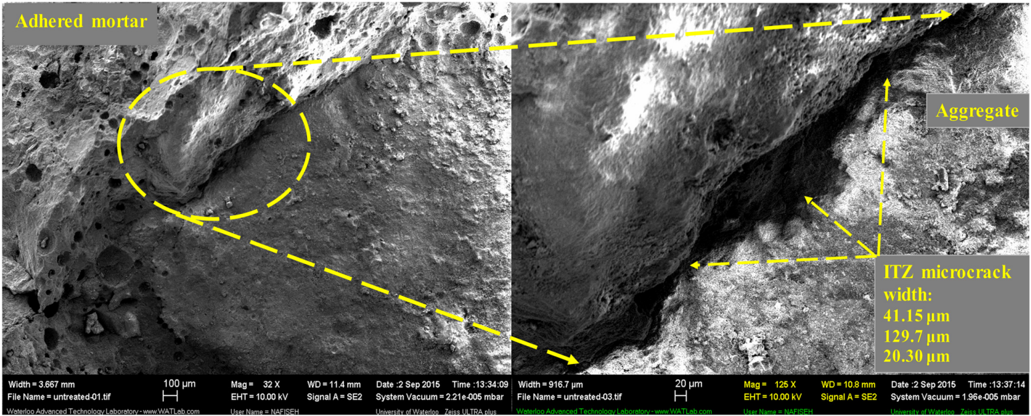
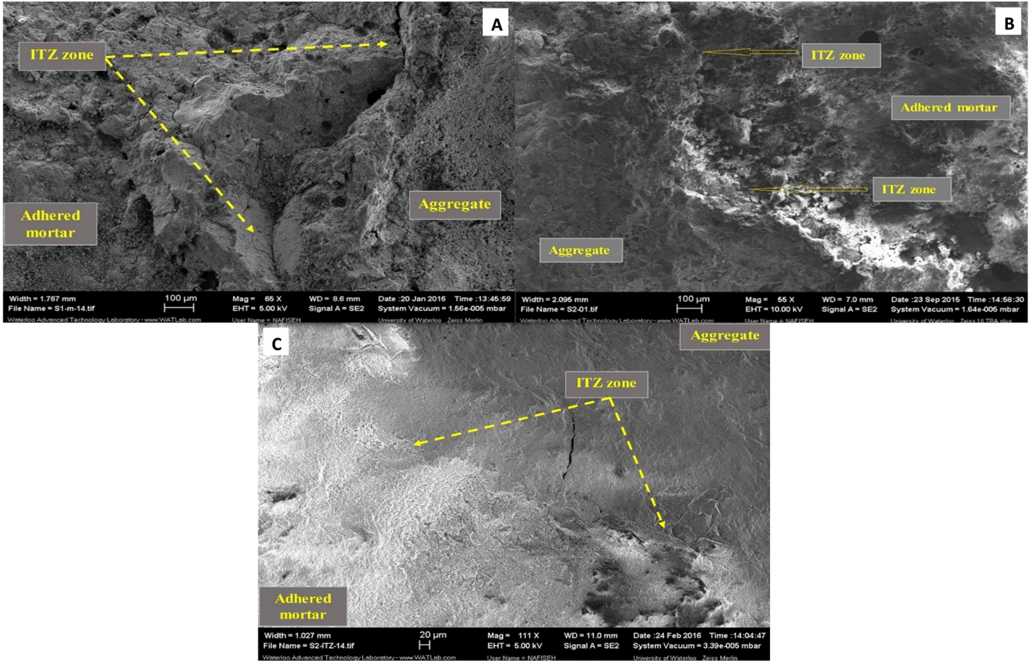
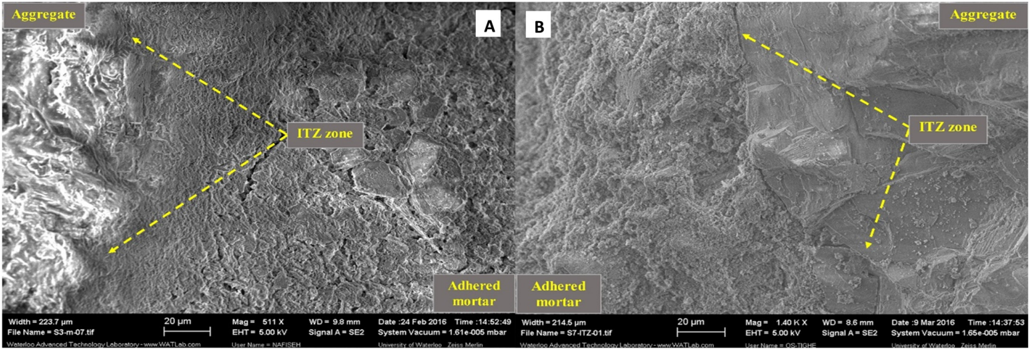
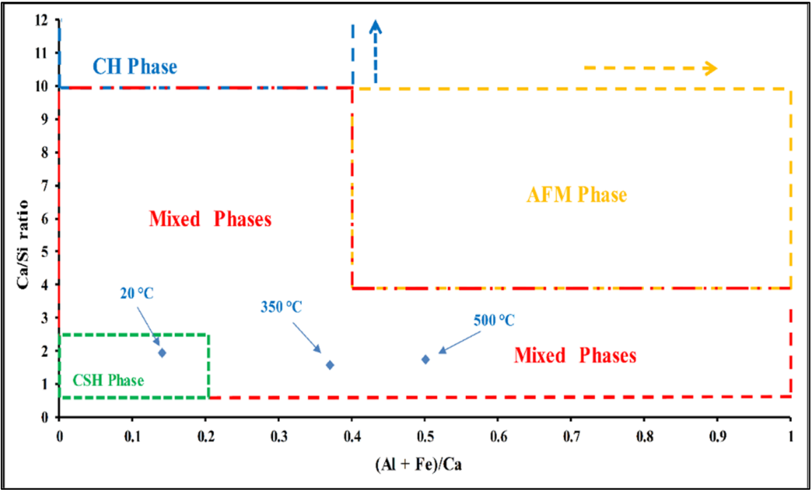
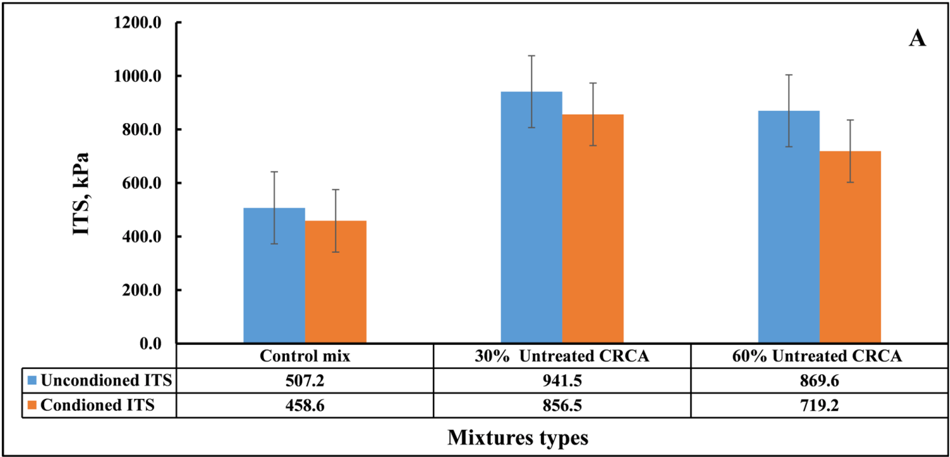
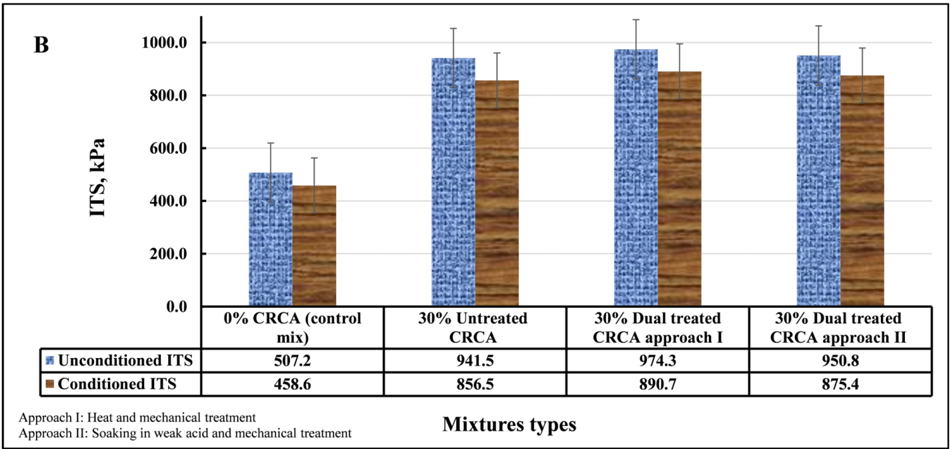
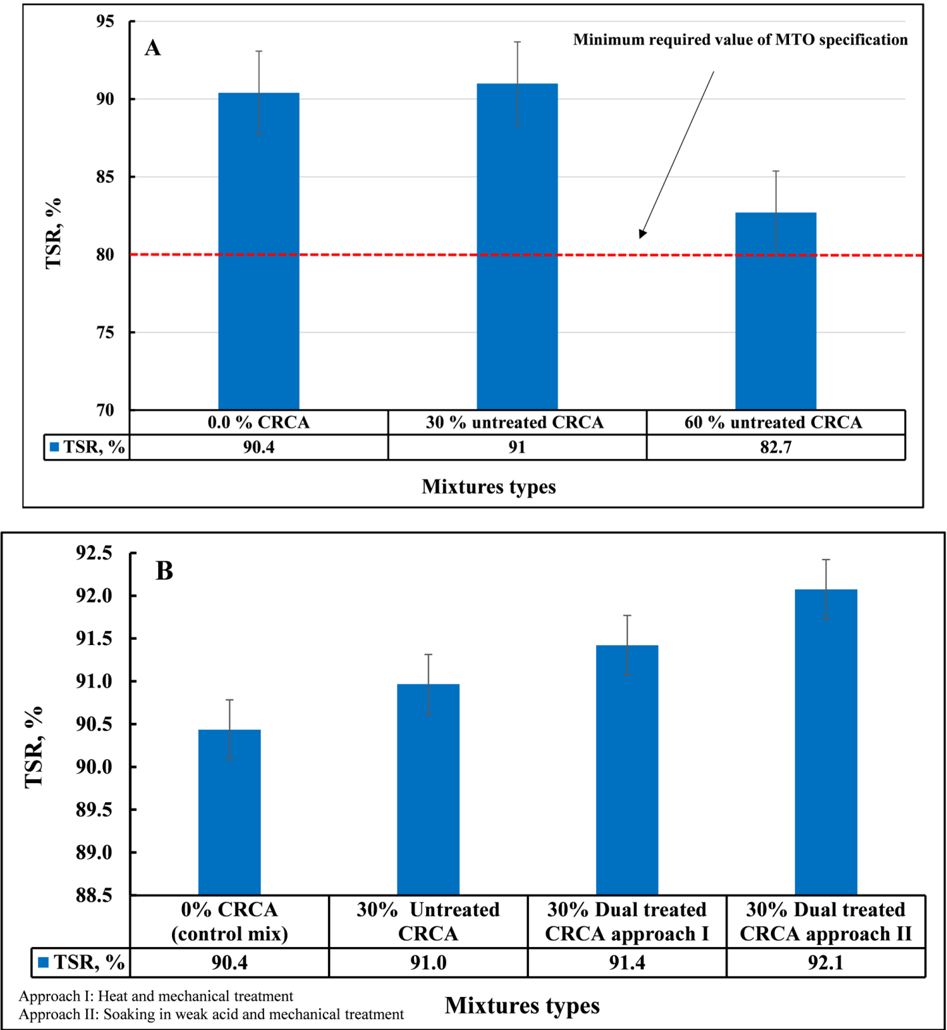
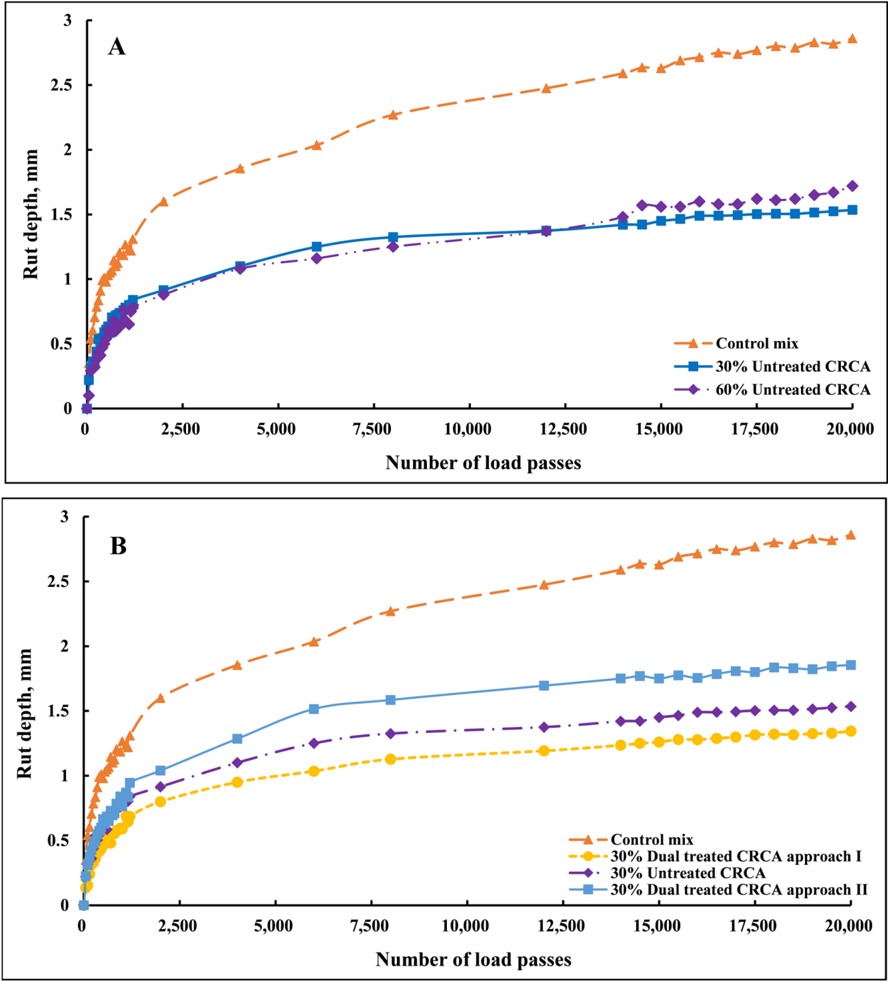
The importance of environmental consciousness and sustainability is increasing among transportation governing bodies worldwide. Many government bodies are concerned with maximizing the usage of recycled substances in road construction. Therefore, assessing the effect of recycled materials consumption is essential, mainly when designing new ‘green’ pavement types. The primary objective of this study is to investigate the impact of different treatments on improving the interfacial transition zone (ITZ) of coarse recycled concrete aggregate (CRCA) and its application in asphalt mixes. Such an aim is accomplished by enhancing its physical and mechanical characteristics, as well as its microstructure. The surface morphology, chemical composition, and intermix phases of the ITZ area and calcium silicate hydrate (CSH) compounds for CRCA were evaluated using scanning electron microscopy (SEM), an energy-dispersive X-ray analyzer (EDAX), and X-ray diffraction analysis (XRD). The performance of asphalt mixtures that included treated and untreated CRCA was also examined using different tests. It was found that heat treatment is an effective technique for enhancing the ITZ. However, cracks were seen in the mortar of CRCA when exposed to high temperatures (500 °C), which adversely affects the characteristics of the mortar. Acid treatment appeared to be an effective approach for improving the ITZ area. Nevertheless, the treatment that used acetic acid, a weak acid, was more effective than HCl acid, a strong acid. The outcomes revealed that the ITZ microstructure is significantly enhanced under different treatment types; however, microstructure improvements mainly included increased surface homogeneity and CSH compounds and a reduced Ca/Si ratio. It was also found that the asphalt mixtures with different proportions of untreated CRCA exhibited enhanced resistance to rutting. Furthermore, their tensile strength ratio (TSR) values were above the minimal level requirements. Moreover, the asphalt mixture with 30% CRCA, which was treated with various treatment methods, demonstrated a significant improvement in the mixtures’ mechanical properties; therefore, its application is highly successful and an environmentally friendly solution.
Overview
The claims and statistics of this paper haven’t been checked yet.
Free: it reads the open-access text and checks the first 5 claims that cite a source we can check. Create a free account to check every claim.
Integrity signals
Registry
Cites
Statistics
Figures
Verification
Claims the paper makes
The claims and statistics of this paper haven’t been checked yet.
Free: it reads the open-access text and checks the first 5 claims that cite a source we can check. Create a free account to check every claim.
Claims other papers make about this one
Each is checked against this paper’s own text: does it say what the citing paper says it does?
In the citing paper
“The broadening of ITZs due to the old mortar adhering to RCAs leads to a more porous and less cohesive microstructure within the RAC [19,20].”
From Multiscale Investigation of Modified Recycled Aggregate Concrete on Sulfate Attack Resistance (2025) · cites this paper as [19]
Self-check
Percentages, sums and reported differences re-computed from the paper’s own numbers.
The self-check needs the paper’s full text.
Citations
Cites
Richardson, I. G. (2004) · Cement and Concrete Research · doi:10.1016/j.cemconres.2004.05.034 · Cited by 1,082
Performance Enhancement of Recycled Concrete Aggregates through Carbonation
Zhang, J., Shi, C., Li, Y., Pan, X., Poon, C.-S., & Xie, Z. (2015) · Journal of Materials in Civil Engineering · doi:10.1061/(asce)mt.1943-5533.0001296 · Cited by 398 · cited 1×
“This is linked with factors such as ettringite and lower-temperature CSH, whereas the reason for the loss when temperatures are between 200 C and 420 C is because correlated water molecules dissociate into well-formed hydrated compounds such as CAH and CSH [38–40].”
BackgroundEffects of recycled concrete aggregates on properties of asphalt concrete
Paranavithana, S., & Mohajerani, A. (2006) · Resources, Conservation and Recycling · doi:10.1016/j.resconrec.2005.12.009 · Cited by 256
Research works printed but not linked: 66
- Marinković, S.; Radonjanin, V.; Malešev, M.; Ignjatović, I. Comparative environmental assessment of natural and recycled aggregate concrete. Waste Manag. 2010, 30, 2255-2264. [CrossRef] [PubMed] · DOI · Paper page
- Van den Heede, P.; De Belie, N. Environmental impact and life cycle assessment (LCA) of traditional and 'green' concretes: Literature review and theoretical calculations. Cem. Concr. Compos. 2012, 34, 431-442. [CrossRef] · DOI · Paper page
- Huda, S.B.; Alam, M.S. Mechanical behavior of three generations of 100% repeated recycled coarse aggregate concrete. Constr. Build. Mater. 2014, 65, 574-582. [CrossRef] · DOI · Paper page
- Poulikakos, L.D.; Papadaskalopoulou, C.; Hofko, B.; Gschösser, F.; Falchetto, A.C.; Bueno, M.; Arraigada, M.; Sousa, J.; Ruiz, R.; Petit, C.; et al. Harvesting the unexplored potential of European waste materials for road construction. Resour. Conser. Recycl. 2017, 116, 32-44. [CrossRef] · DOI · Paper page
- Purushothaman, R.; Amirthavalli, R.R.; Karan, L. Influence of treatment methods on the strength and performance characteristics of recycled aggregate concrete. J. Mater. Civ. Eng. 2015, 27, 04014168. [CrossRef] · DOI
- Al-Bayati, H.K.A.; Tighe, S.L.; Achebe, J. Influence of recycled concrete aggregate on volumetric properties of hot mix asphalt. Resour. Conser. Recycl. 2018, 130, 200-214. [CrossRef] · DOI
- Hossain, M.U.; Poon, C.S.; Lo, I.M.; Cheng, J.C. Comparative environmental evaluation of aggregate production from recycled waste materials and virgin sources by LCA. Resour. Conser. Recycl. 2016, 109, 67-77. [CrossRef] · DOI · Paper page
- Sandler, K. Analyzing what's recyclable in C&D debris. BioCycle 2003, 44, 51-59.
- Shen, L.Y.; Tam, V.W.; Tam, C.M.; Drew, D. Mapping approach for examining waste management on construction sites. J. Constr. Eng. Manag. 2004, 130, 472-481. [CrossRef] · doi:10.1061/(asce)0733-9364(2004)130:4(472 · Paper page
- Nejad, F.M.; Azarhoosh, A.R.; Hamedi, G.H. The effects of using recycled concrete on fatigue behavior of hot mix asphalt. J. Civ. Eng. Manag. 2013, 19, S61-S68. [CrossRef]
- Tam, V.W. Economic comparison of concrete recycling: A case study approach. Resour. Conser. Recycl. 2008, 52, 821-828. [CrossRef] · DOI · Paper page
- Wijayasundara, M.; Mendis, P.; Zhang, L.; Sofi, M. Financial assessment of manufacturing recycled aggregate concrete in ready-mix concrete plants. Resour. Conser. Recycl. 2016, 109, 187-201. [CrossRef] · DOI
- Jin, R.; Li, B.; Zhou, T.; Wanatowski, D.; Piroozfar, P. An empirical study of perceptions towards construction and demolition waste recycling and reuse in China. Resour. Conser. Recycl. 2017, 126, 86-98. [CrossRef] · DOI · Paper page
- Marzouk, M.; Azab, S. Environmental and economic impact assessment of construction and demolition waste disposal using system dynamics. Resour. Conserv. Recycl. 2014, 82, 41-49. [CrossRef] · DOI · Paper page
- Otsuki, N.; Miyazato, S.I.; Yodsudjai, W. Influence of recycled aggregate on interfacial transition zone, strength, chloride penetration and carbonation of concrete. J. Mater. Civ. Eng. 2003, 15, 443-451. [CrossRef] · doi:10.1061/(asce)0899-1561(2003)15:5(443 · Paper page
- Akçao glu, T.; Tokyay, M.; Çelik, T. Assessing the ITZ microcracking via scanning electron microscope and its effect on the failure behavior of concrete. Cem. Concr. Res. 2005, 35, 358-363. [CrossRef] · doi:10.1016/j.cemconres.2004.05.042
- Tam, V.W.; Gao, X.F.; Tam, C.M. Microstructural analysis of recycled aggregate concrete produced from two-stage mixing approach. Cem. Concr. Res. 2005, 35, 1195-1203. [CrossRef] · DOI · Paper page
- Tam, V.W.; Tam, C.M. Diversifying two-stage mixing approach (TSMA) for recycled aggregate concrete: TSMAs and TSMAsc. Constr. Build. Mater. 2008, 22, 2068-2077. [CrossRef] · DOI
- Xuan, D.X.; Shui, Z.H.; Wu, S.P. Influence of silica fume on the interfacial bond between aggregate and matrix in near-surface layer of concrete. Constr. Build. Mater. 2009, 23, 2631-2635. [CrossRef] · doi:10.1016/j.conbuildmat.2009.01.006
- Kong, D.; Lei, T.; Zheng, J.; Ma, C.; Jiang, J.; Jiang, J. Effect and mechanism of surface-coating pozzalanics materials around aggregate on properties and ITZ microstructure of recycled aggregate concrete. Constr. Build. Mater. 2010, 24, 701-708. [CrossRef] · DOI · Paper page
- Li, W.; Xiao, J.; Sun, Z.; Kawashima, S.; Shah, S.P. Interfacial transition zones in recycled aggregate concrete with different mixing approaches. Constr. Build. Mater. 2012, 35, 1045-1055. [CrossRef] · DOI · Paper page
- Erdem, S.; Dawson, A.R.; Thom, N.H. Influence of the micro-and nanoscale local mechanical properties of the interfacial transition zone on impact behavior of concrete made with different aggregates. Cem. Concr. Res. 2012, 42, 447-458. [CrossRef] · DOI
- Jawahar, J.G.; Sashidhar, C.; Reddy, I.R.; Peter, J.A. Micro and macrolevel properties of fly ash blended self compacting concrete. Mater. Des. 2013, 46, 696-705. [CrossRef] · doi:10.1016/j.matdes.2012.11.027
- Cwirzen, A.; Penttala, V. Aggregate-cement paste transition zone properties affecting the salt-frost damage of high-performance concretes. Cem. Concr. Res. 2005, 35, 671-679. [CrossRef] · DOI
- Leemann, A.; Münch, B.; Gasser, P.; Holzer, L. Influence of compaction on the interfacial transition zone and the permeability of concrete. Cem. Concr. Res. 2006, 36, 1425-1433. [CrossRef] · DOI · Paper page
- Sun, X.; Zhang, B.; Dai, Q.; Yu, X. Investigation of internal curing effects on microstructure and permeability of interface transition zones in cement mortar with SEM imaging, transport simulation and hydration modeling techniques. Constr. Build. Mater. 2015, 76, 366-379. [CrossRef] · doi:10.1016/j.conbuildmat.2014.12.014
- Wu, K.; Shi, H.; Xu, L.; Ye, G.; De Schutter, G. Microstructural characterization of ITZ in blended cement concretes and its relation to transport properties. Cem. Concr. Res. 2016, 79, 243-256. [CrossRef] · DOI
- Wang, X.H.; Jacobsen, S.; He, J.Y.; Zhang, Z.L.; Lee, S.F.; Lein, H.L. Application of nanoindentation testing to study of the interfacial transition zone in steel fiber reinforced mortar. Cem. Concr. Res. 2009, 39, 701-715. [CrossRef] · DOI
- Gao, Y.; De Schutter, G.; Ye, G.; Tan, Z.; Wu, K. The ITZ microstructure, thickness and porosity in blended cementitious composite: Effects of curing age, water to binder ratio and aggregate content. Compos. Part B Eng. 2014, 60, 1-13. [CrossRef] · DOI · Paper page
- Poon, C.S.; Shui, Z.H.; Lam, L. Effect of microstructure of ITZ on compressive strength of concrete prepared with recycled aggregates. Constr. Build. Mater. 2004, 18, 461-468. [CrossRef] · DOI · Paper page
- Tam, V.W.; Tam, C.M.; Le, K.N. Removal of cement mortar remains from recycled aggregate using pre-soaking approaches. Resour. Conser. Recycl. 2007, 50, 82-101. [CrossRef] · DOI · Paper page
- Duan, P.; Shui, Z.; Chen, W.; Shen, C. Effects of metakaolin, silica fume and slag on pore structure, interfacial transition zone and compressive strength of concrete. Constr. Build. Mater. 2013, 44, 1-6. [CrossRef] · DOI · Paper page
- Güneyisi, E.; Geso glu, M.; Algın, Z.; Yazıcı, H. Effect of surface treatment methods on the properties of self-compacting concrete with recycled aggregates. Constr. Build. Mater. 2014, 64, 172-183. [CrossRef] · DOI
- Li, J.; Xiao, H.; Zhou, Y. Influence of coating recycled aggregate surface with pozzolanic powder on properties of recycled aggregate concrete. Constr. Build. Mater. 2009, 23, 1287-1291. [CrossRef] · DOI · Paper page
- Al-Bayati, H.K.A.; Das, P.K.; Tighe, S.L.; Baaj, H. Evaluation of various treatment methods for enhancing the physical and morphological properties of coarse recycled concrete aggregate. Constr. Build. Mater. 2016, 112, 284-298. [CrossRef] · DOI · Paper page
- De Juan, M.S.; Gutiérrez, P.A. Study on the influence of attached mortar content on the properties of recycled concrete aggregate. Constr. Build. Mater. 2009, 23, 872-877. [CrossRef] · DOI · Paper page
- Zega, C.J.; Di Maio, A.A. Recycled concrete made with different natural coarse aggregates exposed to high temperature. Constr. Build. Mater. 2009, 23, 2047-2052. [CrossRef] · DOI · Paper page
- El-Hassan, H.; Shao, Y.; Ghouleh, Z. Reaction products in carbonation-cured lightweight concrete. J. Mater. Civ. Eng. 2013, 25, 799-809. [CrossRef] · DOI · Paper page
- Richardson, I.G.; Groves, G.W. Models for the composition and structure of calcium silicate hydrate (C S H) gel in hardened tricalcium silicate pastes. Cem. Concr. Res. 1992, 22, 1001-1010. [CrossRef] · DOI · Paper page
- Richardson, I.G.; Groves, G.W. The incorporation of minor and trace elements into calcium silicate hydrate (C S H) gel in hardened cement pastes. Cem. Concr. Res. 1993, 23, 131-138. [CrossRef] · DOI · Paper page
- Del Bosque, I.S.; Martínez-Ramírez, S.; Blanco-Varela, M.T. FTIR study of the effect of temperature and nanosilica on the nano structure of C-S-H gel formed by hydrating tricalcium silicate. Constr. Build. Mater. 2014, 52, 314-323. [CrossRef] · DOI · Paper page
- Richardson, I.G. The calcium silicate hydrates. Cem. Concr. Res. 2008, 38, 137-158. [CrossRef] · DOI · Paper page
- Goñi, S.; Frias, M.; Vegas, I.; García, R.; De La Villa, R.V. Effect of ternary cements containing thermally activated paper sludge and fly ash on the texture of C-S-H gel. Constr. Build. Mater. 2012, 30, 381-388. [CrossRef] · DOI
- Ríos, C.A.; Williams, C.D.; Fullen, M.A. Hydrothermal synthesis of hydrogarnet and tobermorite at 175 • C from kaolinite and metakaolinite in the CaO-Al 2 O 3 -SiO 2 -H 2 O system: A comparative study. Appl. Clay Sci. 2009, 43, 228-237. [CrossRef] · doi:10.1016/j.clay.2008.09.014
- Tragardh, J. Microstructural features and related properties of self-compacting concrete. In Self-Compacting Concrete: Proceedings of the First International RILEM Symposium Held in Stockholm; RILEM Publications: Bagneux, France, 1999; pp. 175-186.
- Lee, C.H.; Du, J.C.; Shen, D.H. Evaluation of pre-coated recycled concrete aggregate for hot mix asphalt. Constr. Build. Mater. 2012, 28, 66-71. [CrossRef] · DOI
- Zhu, J.; Wu, S.; Zhong, J.; Wang, D. Investigation of asphalt mixture containing demolition waste obtained from earthquake- damaged buildings. Constr. Build. Mater. 2012, 29, 466-475. [CrossRef] · DOI
- Pasandín, A.R.; Pérez, I. Laboratory evaluation of hot-mix asphalt containing construction and demolition waste. Constr. Build. Mater. 2013, 43, 497-505. [CrossRef] · DOI
- Mills-Beale, J.; You, Z. The mechanical properties of asphalt mixtures with recycled concrete aggregates. Constr. Build. Mater. 2010, 24, 230-235. [CrossRef] · DOI
- Pérez, I.; Pasandín, A.R.; Gallego, J. Stripping in hot mix asphalt produced by aggregates from construction and demolition waste. Wast. Manag. Res. 2012, 30, 3-11. [CrossRef] [PubMed] · DOI
- Pérez, I.; Pasandín, A.R.; Medina, L. Hot mix asphalt using C&D waste as coarse aggregates. Mater. Des. 2012, 36, 840-846. · DOI
- Pérez, I.; Pasandín, A.R.; Gallego, J. Impact of construction and demolition waste aggregates on stripping in hot-mix asphalt. In Proceedings of the Transportation Research Board 89th Annual Meeting, Washington, DC, USA, 10-14 January 2010; No. 10-0021.
- Pasandín, A.R.; Pérez, I.; Gómez-Meijide, B. Treatments Applied to Recycled Concrete Aggregate When Used in Hot-Mix Asphalt 2. In Proceedings of the Transportation Research Board 94th Annual Meeting, Washington, DC, USA, 11-15 January 2015; No. 15-1510.
- Al-Bayati, H.K.A.; Tighe, S.L. Examining the Effect of Course Recycled Concrete Aggregate on Moisture Damage Resistance of HMA Mixtures. In Proceedings of the Transportation Association of Canada and ITS Canada 2019 Joint Conference and Exhibition, Halifax, NS, Canada, 22-25 September 2019.
- Singh, M.; Kumar, P.; Anupam, A.K. Effect of type of aggregate on permanent deformation of bituminous concrete mixes. Road Mater. Pavement Des. 2016, 17, 417-433. [CrossRef] · doi:10.1080/14680629.2015.1091374
- Oufa, M.S.; Abdolsamedb, A.A. Controlling Rutting Performance of Hot Mix Asphalt. Int. J. Sci. Eng. Res. 2016, 6, 872-882.
- Subrahmanyam, B.B.; Gopi, P.; Naik, M.B. Influence of Mix Properties on the Permanent Deformation Characteristics of Bituminous Mixtures. Int. J. Res. Eng. Technol. 2016, 5, 183-191. · doi:10.15623/ijret.2016.0508034
- Aljassar, A.H.; Al-Fadala, K.B.; Ali, M.A. Recycling building demolition waste in hot-mix asphalt concrete: A case study in Kuwait. J. Mater. Cycles Waste Manag. 2005, 7, 112-115. [CrossRef] · doi:10.1007/s10163-005-0135-4
- Shen, D.H.; Du, J.C. Evaluation of building materials recycling on HMA permanent deformation. Constr. Build. Mater. 2004, 18, 391-397. [CrossRef] · doi:10.1016/j.conbuildmat.2004.03.007
- Wong, Y.D.; Sun, D.D.; Lai, D. Value-added utilisation of recycled concrete in hot-mix asphalt. Wast. Manag. 2007, 27, 294-301. [CrossRef] [PubMed] · DOI
- Chen, M.; Lin, J.; Wu, S. Potential of recycled fine aggregates powder as filler in asphalt mixture. Constr. Build. Mater. 2011, 25, 3909-3914. [CrossRef] · DOI
- Shen, D.H.; Du, J.C. Application of gray relational analysis to evaluate HMA with reclaimed building materials. J. Mater. Civ. Eng. 2005, 17, 400-406. [CrossRef] · doi:10.1061/(asce)0899-1561(2005)17:4(400
- Gul, W.A.; Guler, M. Rutting susceptibility of asphalt concrete with recycled concrete aggregate using revised Marshall procedure. Constr. Build. Mater. 2014, 55, 341-349. [CrossRef] · DOI
- Gul, W.A. Effect of Recycled Cement Concrete Content on Rutting Behavior of Asphalt Concrete. Master's Thesis, Middle East Technical University, Ankara, Turkey, 2008.
- Akbarnezhad, A.; Ong, K.C.G.; Tam, C.T.; Zhang, M.H. Effects of the parent concrete properties and crushing procedure on the properties of coarse recycled concrete aggregates. J. Mater. Civ. Eng. 2013, 25, 1795-1802. [CrossRef] · DOI · Paper page
- Walubita, L.F.; Zhang, J.; Das, G.; Hu, X.; Mushota, C.; Alvarez, A.E.; Scullion, T. Hot-mix asphalt permanent deformation evaluated by Hamburg wheel tracking, dynamic modulus, and repeated load tests. Transp. Res. Rec. J. Transp. Res. Board 2012, 2296, 46-56. [CrossRef · doi:10.3141/2296-05
Cited by
Multiscale Investigation of Modified Recycled Aggregate Concrete on Sulfate Attack Resistance
Chen, X.-F., Zhang, X.-C., & Yan, G.-H. (2025) · Materials · doi:10.3390/ma18071450 · Cited by 16
Metadata
- Authors
- Al-Bayati, H. K. A., Jadaa, W., & Tighe, S. L.
- Affiliations
- Department of Civil Engineering, College of Engineering, Tikrit University, Tikrit 34001, Iraq
- Center for Energy and Environmental Sustainability (CEES), Prairie View A&M University, Prairie View, TX 77446, USA
- Department of Civil Engineering, McMaster University, Hamilton, ON L8S 4L8, Canada
- Venue
- Recycling
- Publisher
- MDPI AG
- Published
- 2024-05-18
- Volume
- 9
- Issue
- 3
- Pages
- 41
- ISSN
- 2313-4321
- Cited by
- 12
- References
- 3
- Language
- en
- Funders
- Ministry of Higher Education and Scientific Research/Iraq (#26919)
About these checks
Registry, retraction, Cites and statistics results are computed, not judged, with one exception: a printed reference that no index lists is read once by a model before it counts as a citation error. Claims are extracted by a model and kept only when their quote appears verbatim in the text; each cited source is then checked, with a model’s help, for whether it says what the claim relies on. Those verdicts can be wrong — read the claim’s quote and the cited source before relying on one.
Statistics and arithmetic are recomputed, not judged.
Confidence bands are shown only for fields calibrated on our annotated test set. None is calibrated yet, so no band is shown.
What counts as a claim ›How we measure confidence ›How we check this ›
Are you an author, or do you see a problem with this page? Request a review
Data sources
Bibliographic data: Semantic Scholar, OpenAlex, Crossref.
Contains information from the Semantic Scholar Academic Graph Datasets, made available under the ODC Attribution License (ODC-BY 1.0).
Semantic Scholar’s data is described in: Kinney, R., et al. (2023). The Semantic Scholar Open Data Platform. arXiv:2301.10140.
