

Do Kentucky Kami Drink Bourbon? Exploring Parallel Glocalization in Global Shinto Offerings
Open accessThe DOI matches its Crossref record; 27 of the 28 references it cites were found in a registry or an index; none of the 39 sources its claims cite is checked for support yet.
Abstract
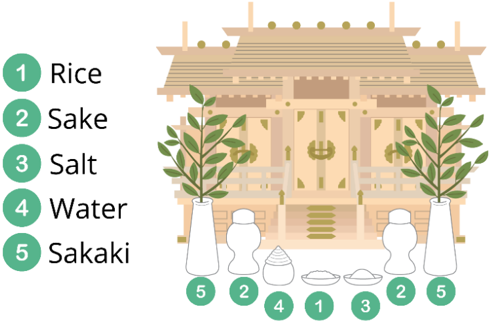
Scholars of Japanese religion have recently drawn attention to the global repositioning, “greening”, and international popularization of Shinto. However, research on Shinto ritual practice and material religion continues to focus predominantly on cases located within the borders of the Japanese state. This article explores the globalization of Shinto through transnational practitioners’ strategic glocalization of everyday ritual practices outside of Japan. Drawing upon digital ethnographic fieldwork conducted in online Shinto communities, I examine three case studies centering on traditional ritual offerings made at the domestic altar (kamidana): rice, sake, and sakaki branches. I investigate how transnational Shinto communities hold in tension a multiplicity of particularistic understandings of Shinto locality and authenticity when it comes to domestic ritual practice. While relativistic approaches to glocalization locate the sacred and authentic in an archetypical or idealized form of Japanese tradition rooted in its environment, creolization and transformation valorize the particularities of one’s personal surroundings and circumstances. Examining these strategies alongside recent and historical cases in Shinto ritual at shrines within Japan, I propose that attending to processes of “parallel glocalization” helps to illuminate the quasi-fictive notion of the religious “homeland” and close the perceived gap in authenticity between ritual practices at home and abroad.
Overview
CoChat Summary
TL;DR
This article uses digital ethnographic fieldwork in online Shinto communities to examine how transnational practitioners glocalize domestic kamidana offerings of rice, sake, and sakaki. It argues that “parallel glocalization” in Japan and abroad blurs relativization, creolization, and transformation and challenges a static, quasi-fictive Shinto “homeland.”
Key findings
- Global practitioners negotiate authenticity and locality through three glocalization strategies: relativization (preserving Japanese tradition), creolization/accommodation-hybridization (adapting local equivalents), and transformation (favoring local or personal forms); a single person may adopt multiple strategies over time.
- The three case studies show adaptations: Lisa in the UK offered oats at her kamidana during COVID-19 rice shortages and said it “feels more natural”; Matthew in Kentucky offered Old Grand-Dad bourbon because his local liquor store did not carry sake; practitioners substituted local evergreens for sakaki, including Colorado juniper, camellia at the Tsubaki Grand Shrine of America, reeds in England, and holly/oak in Ireland.
- Historical and contemporary Japanese cases also show internal variation: Sasou (2012) reports at least thirty-six tree species used for tamagushi; Meiji Jingū has received nearly 200 bottles of Burgundy wine from France since 2006; Asama Jinja designates wine as its omiki.
- Online Shinto communities’ consensus is that if one cannot follow Japanese tradition exactly, one should interact with the kami with sincerity and gratitude; locality matters to kami, and personal sincerity matters to them.
Methods
- Digital ethnographic fieldwork in online Shinto communities, primarily Facebook groups, drawing on four years of participant observation and interviews and a 2019 survey of fifty members’ domestic ritual practices.
- Analysis centers on three case studies of kamidana offerings—rice, sake, and sakaki—alongside recent and historical cases of Shinto ritual at shrines within Japan.
- Ethical approval was granted under Protocol 5-19-0105 on 15 February 2019 by the University of California, Santa Barbara, Human Subjects Committee; data are recorded in the author’s fieldnotes and held in confidence.
Limitations
- Stated: data are held in confidence to protect participants’ privacy; names and identifying information were changed unless informants preferred and consented to be identified; original data may be transfigured into composite accounts. The paper has no explicit limitations section.
- Stated: discussions in the groups tend to be dominated by anglophone posts, and the majority of active members as of writing are non-Japanese and live in the Global North; the author notes further research is required to substantiate a trend about Japanese-ancestry versus non-Japanese practitioners’ rice preferences.
- Evident: findings rest on a survey of fifty members and individual case studies within online communities, so they are not statistically generalizable; the paper’s claims about global Shinto trends are based on qualitative digital ethnography.
Model-written summary. Check it against the paper before relying on it.
Integrity signals
Registry
Cites
Statistics
Figures
Verification
Claims the paper makes
0 Valid · 11 Not valid · 30 Not checked · 72 Own results and interpretations
A result the paper states — it cites no source for it, so there is none to check. The quote shows it is in the paper.
In the paper
“In recognition of the historical role of sake in Shinto ritual, Rev. Barrish has cultivated such a relationship with SakéOne, an American-owned brewery in Oregon.”
§ Do Kentucky Kami Drink Bourbon? Exploring Parallel Glocalization in Global Shinto Offerings > 3.2. Do Kentucky Kami Drink Bourbon?
plainstates a causeSingle case- Asserted: passes — The authors put it forward as true.
- Checkable: passes — It can be checked against evidence.
- Load-bearing: unclear — It is unclear whether the paper’s conclusions depend on it.
- Based: passes — The paper gives a reason why it holds.
- Rests on an assumption not shown here.
In the paper
“SakéOne also produces a special junmai ginjo genshu sake in a fundraising collaboration with Rev. Barrish, with 20% of the profits donated to the shrine”
§ Do Kentucky Kami Drink Bourbon? Exploring Parallel Glocalization in Global Shinto Offerings > 3.2. Do Kentucky Kami Drink Bourbon?
What the sources say
- Not matchedcites Hawk 2020
An author–year citation the paper’s reference list doesn’t settle. We don’t search these by name.
plainSingle case- Asserted: passes — The authors put it forward as true.
- Checkable: passes — It can be checked against evidence.
- Load-bearing: unclear — It is unclear whether the paper’s conclusions depend on it.
- Based: passes — The paper gives a reason why it holds.
- Rests on an assumption not shown here.
- Not matched
A result the paper reports from its own data — it cites no other source for it, so there is none to check. The quote shows it is in the paper.
In the paper
“In Matthew's case, his local liquor store in Kentucky doesn't carry sake, citing lack of demand and high import cost.”
§ Do Kentucky Kami Drink Bourbon? Exploring Parallel Glocalization in Global Shinto Offerings > 3.2. Do Kentucky Kami Drink Bourbon?
plainstates a causeSingle case- Asserted: passes — The authors put it forward as true.
- Checkable: passes — It can be checked against evidence.
- Load-bearing: passes — The paper’s conclusions depend on it.
- Based: passes — The paper gives a reason why it holds.
- Rests on an assumption not shown here.
A result the paper states — it cites no source for it, so there is none to check. The quote shows it is in the paper.
In the paper
“In each case, online Shinto communities affirm the importance of the connection between Shinto ritual and the sacralized landscape.”
§ Do Kentucky Kami Drink Bourbon? Exploring Parallel Glocalization in Global Shinto Offerings > 4. Discussion
plain- Asserted: passes — The authors put it forward as true.
- Checkable: passes — It can be checked against evidence.
- Load-bearing: passes — The paper’s conclusions depend on it.
- Based: passes — The paper gives a reason why it holds.
In the paper
“Global Shinto practitioners' use of California-grown japonica rice as an approximation of Japanese rice is interesting, given the controversy over the importation of California rice in Japan (Ohnuki-Tierney 1993).”
§ Do Kentucky Kami Drink Bourbon? Exploring Parallel Glocalization in Global Shinto Offerings > 4. Discussion
What the sources say
- Not checked yetcites Ohnuki-Tierney 1993 matched to “Rice as Self: Japanese Identities through Time” (1994) source
plain- Asserted: passes — The authors put it forward as true.
- Checkable: passes — It can be checked against evidence.
- Load-bearing: unclear — It is unclear whether the paper’s conclusions depend on it.
- Based: passes — The paper gives a reason why it holds.
28 more claims
Create a free account to see all 113 claims and to verify the 17 references still open.
- It may state two separate claims as one. 33
- Probably not a substantial claim. 63
Self-check
Percentages, sums and reported differences re-computed from the paper’s own numbers.
Each contradiction between two passages listed here was confirmed by an independent check.
Rated minor: it would not touch a result — a value no result rests on, a p-value that stays on the same side of the significance level, or a conflict that is clerical, resolved elsewhere in the paper, or outside its own findings.
In the paper
§ Do Kentucky Kami Drink Bourbon? Exploring Parallel Glocalization in Global Shinto Offerings > 4. Discussion
“collapsing distinctions between relativization, creolization, and translation strategies taken for granted in Giuliannotti and Robertson's analysis of glocalization.”
§ Do Kentucky Kami Drink Bourbon? Exploring Parallel Glocalization in Global Shinto Offerings > 4. Discussion
“We have seen that global Shinto practitioners may favor any and all three categories of glocalization strategies: relativization, creolization, and transformation.”
Citations
Cites
FABRICATION AS ETHICAL PRACTICE: Qualitative inquiry in ambiguous Internet contexts
Markham, A. (2012) · Information, Communication & Society · doi:10.1080/1369118x.2011.641993 · Cited by 484
Featherstone, M., Lash, S., & Robertson, R. (1995) · SAGE Publications Ltd eBooks · doi:10.4135/9781446250563 · Cited by 429
Rice as Self: Japanese Identities through Time
Ohnuki-Tierney, E. (1994) · Princeton University Press eBooks · doi:10.1515/9781400820979 · Cited by 260
The SAGE Handbook of the Sociology of Religion
Beckford, J., & Demerath, N. (2007) · SAGE Publications Ltd eBooks · doi:10.4135/9781848607965 · Cited by 164
Giulianotti, R., & Robertson, R. (2007) · Sociology · doi:10.1177/0038038507073044 · Cited by 159
Hardacre, H. (2016) · Oxford University Press eBooks · doi:10.1093/acprof:oso/9780190621711.001.0001 · Cited by 148
Three lies of digital ethnography
de Seta, G. (2020) · Journal of Digital Social Research · doi:10.33621/jdsr.v2i1.24 · Cited by 144
(2015) · doi:10.1093/acref/9780198705383.001.0001 · Cited by 125
Religion in Contemporary Japan
Reader, I. (1991) · doi:10.1057/9780230375840 · Cited by 120
Inoue, N., Jun, E., Mizue, M., & Satoshi, I. (2003) · Routledge eBooks · doi:10.4324/9780203462881 · Cited by 93
Research works printed but not linked: 17
- Appadurai, Arjun. 1996. Modernity at Large: Cultural Dimensions of Globalization. Minneapolis: University of Minnesota Press.
- de Certeau, Michel. 1984. The Practice of Everyday Life. Translated by Steven Rendall. Berkeley: University of California Press.
- Deleuze, Gilles, and Félix Guattari. 2005. A Thousand Plateaus: Capitalism and Schizophrenia. Translated by Brian Massumi. Minneapolis: University of Michigan Press. First published 1987.
- Iwamura, Jane Naomi. 2003. Altared States: Exploring the Legacy of Japanese American Butsudan Practice. Pacific World: Journal of the Institute of Buddhist Studies 3: 275-91.
- Kebbe, Victor Hugo. 2021. Espíritos e Divindades em Festa: Algumas Leituras Sobre Cultura Japonesa e Okinawana em São Paulo. Revista do Centro de Pesquisa e Formação 12: 141-60.
- Mori, Mizue. 2003. The Dawn of Shinto. In Shinto: A Short History. Edited by Inoue Nobutaka, It ō Satoshi, End ō Jun and Mori Mizue. Translated and Adapted by John Breen and Mark Teeuwen. London: Routledge, pp. 12-62.
- Payne, Richard. 2021. Globalization. In The Bloomsbury Handbook of Japanese Religions. Edited by Erica Baffelli, Fabio Rambelli and Andrea Castiglioni. New York: Bloomsbury, pp. 99-106. · DOI · Paper page
- Reader, Ian, and George Tanabe Jr. 1998. Practically Religious: Worldly Benefits and the Common Religion of Japan. Honolulu: University of Hawai'i Press.
- Robertson, Roland. 1992. Globalization: Social Theory and Global Culture. London: Sage Publications.
- Rocha, Cristina. 2006. Zen in Brazil: The Quest for Cosmopolitan Modernity. Honolulu: University of Hawai'i Press.
- Rots, Aike. 2015. Worldwide Kami, Global Shinto: The Invention and Spread of a "Nature Religion". Czech and Slovak Journal of Humanities 3: 31-48.
- Rots, Aike. 2017. Shinto, Nature and Ideology: Making Sacred Forests. New York: Bloomsbury Academic.
- Toida, Katsuki 戸井田克己. 2011. Iki no sh ōch ū 壱岐の焼酎. Sōgō shakaigakubu kiyō 総合社会学部紀要 1: 3-21.
- Sarah Tulloch, comp. 1991, Oxford Dictionary of New Words. Oxford: Oxford University Press.
- Ugoretz, Kaitlyn. 2021a. Case Study-World-Wide Shinto: The Globalization of "Japanese" Religion. In The Bloomsbury Handbook of Japanese Religions. Edited by Erica Baffelli, Fabio Rambelli and Andrea Castiglioni. New York: Bloomsbury, pp. 145-48. · DOI · Paper page
- Yanagita, Kunio. 1982. Kura inadama kō 倉稲魂考. Yanagita Kunio-sh ū 柳田国男集. Tokyo: Tsukuma Shob ō, vol. 31, pp. 159-66.
- Yarrow, Patricia. 2010. "Here's Looking At You": Re-imaging Saké Locally and Globally. In Globalization, Food and Social Identities in the Asia Pacific Region. Edited by James Farrer. Tokyo: Sophia University Institute of Comparative Culture, pp. 71-95.
Cited by
Aluk Todolo: The Journey of Puang Matua’s Wisdom from Dormancy to Revival
Wiryadinata, H. (2024) · The International Journal of Religion and Spirituality in Society · doi:10.18848/2154-8633/cgp/v15i02/263-277 · Cited by 6
Crossing Boundaries: Rethinking “Japanese Religion” in the Anthropocene
Rots, A. P. (2025) · Japanese Journal of Religious Studies · doi:10.18874/jjrs.51.2.2024.253-283 · Cited by 2
Lapis, G. (2023) · Annali di Ca’ Foscari Serie orientale · doi:10.30687/annor/2385-3042/2023/01/025
Metadata
- Authors
- Ugoretz, K.
- Affiliations
- University of California, Santa Barbara (US)
- Corresponding author
- Ugoretz, Kaitlyn
- ORCID
- Ugoretz, Kaitlyn
- Venue
- Religions
- Publisher
- MDPI AG
- Published
- 2022-03-17
- Volume
- 13
- Issue
- 3
- Pages
- 257
- ISSN
- 2077-1444 (ISSN-L)
- OpenAlex
- W4220726586
- Cited by
- 5
- References
- 28
- Citations by year
- 2025: 2 · 2024: 2 · 2023: 1
- FWCI
- 3.10
- Type
- journal article
- Language
- en
- Open access
- gold
- doi.org
- Licence
- Locations
- Religions (publishedVersion, cc-by)
- DOAJ (DOAJ: Directory of Open Access Journals) (submittedVersion)
- Knowledge Commons Works (Michigan State University)
- Funders
- Social Science Research Council (International Dissertation Research Fellowship, 2020)
- Topics
- Social Sciences › Arts and Humanities › Philosophy › Study and Philosophy of Religion
- Social Sciences › Geography, Planning and Development › Religious Tourism and Spaces
- Social Sciences › Sociology and Political Science › Religion and Society Interactions
- Keywords
- Shinto, glocalization, transnational religious communities, ritual offerings, sake, authenticity, creolization, material culture of religion, Kentucky
About these checks
Registry, retraction, Cites and statistics results are computed, not judged, with one exception: a printed reference that no index lists is read once by a model before it counts as a citation error. Claims are extracted by a model and kept only when their quote appears verbatim in the text; each cited source is then checked, with a model’s help, for whether it says what the claim relies on. Those verdicts can be wrong — read the claim’s quote and the cited source before relying on one.
A language model drew the claims from the paper on 2026-11-24, under version 3 of the claim definition (model deepseek-v4.1-flash, prompt extract-v3).
A second model labelled each claim on 2026-11-24 (model jev-1.13-20260917, definition revision gold-guideline-v0.2).
Statistics and arithmetic are recomputed, not judged.
Confidence bands are shown only for fields calibrated on our annotated test set. None is calibrated yet, so no band is shown.
What counts as a claim ›How we measure confidence ›How we check this ›
Are you an author, or do you see a problem with this page? Request a review
Data sources
Bibliographic data: Semantic Scholar, OpenAlex, Crossref.
Contains information from the Semantic Scholar Academic Graph Datasets, made available under the ODC Attribution License (ODC-BY 1.0).
Semantic Scholar’s data is described in: Kinney, R., et al. (2023). The Semantic Scholar Open Data Platform. arXiv:2301.10140.
