

QCM-Arrays for Sensing Terpenes in Fresh and Dried Herbs via Bio-Mimetic MIP Layers
Open accessThe DOI matches its Crossref record; 28 of the 28 references it cites were found in a registry or an index.
Abstract
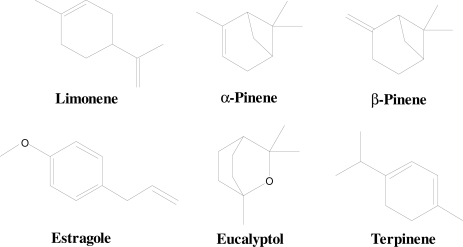
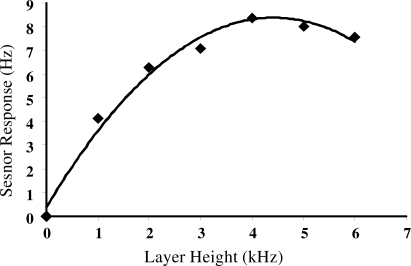
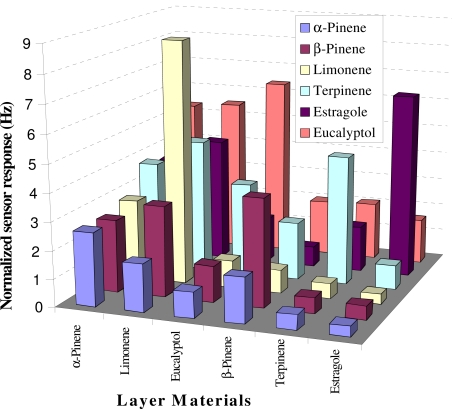
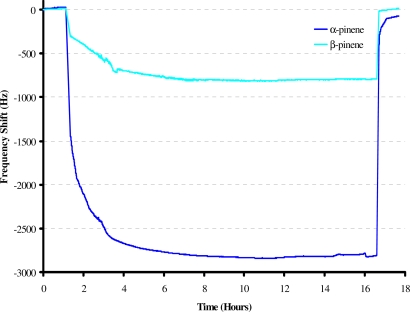
A piezoelectric 10 MHz multichannel quartz crystal microbalance (MQCM), coated with six molecularly imprinted polystyrene artificial recognition membranes have been developed for selective quantification of terpenes emanated from fresh and dried Lamiaceae family species, i.e., rosemary (Rosmarinus Officinalis L.), basil (Ocimum Basilicum) and sage (Salvia Officinalis). Optimal e-nose parameters, such as layer heights (1–6 KHz), sensitivity
Overview
The claims and statistics of this paper haven’t been checked yet.
Free: it reads the open-access text and checks the first 5 claims that cite a source we can check. Create a free account to check every claim.
Integrity signals
Registry
Cites
Statistics
Figures
Verification
Claims the paper makes
The claims and statistics of this paper haven’t been checked yet.
Free: it reads the open-access text and checks the first 5 claims that cite a source we can check. Create a free account to check every claim.
Claims other papers make about this one
Each is checked against this paper’s own text: does it say what the citing paper says it does?
The cited source says what the claim attributes to it.
In the citing paper
“For instance, a multichannel QCM (MQCM) with molecularly imprinted polystyrene membranes has been used to discriminate terpenes emanating from freshly dried Lamiaceae species, such as rosemary (Rosmarinus officinalis L.), sweet basil (Ocimum basilicum), and common Sage (Salvia officinalis) [20].”
From Sniff Species: SURMOF-Based Sensor Array Discriminates Aromatic Plants beyond the Genus Level (2021) · cites this paper as [20]
The cited source says what the claim attributes to it.
In the citing paper
“Quartz crystal microbalance (QCM)-based sensor arrays have also been used to differentiate among plants from the Lamiaceae family [20,28].”
From Sniff Species: SURMOF-Based Sensor Array Discriminates Aromatic Plants beyond the Genus Level (2021) · cites this paper as [20]
Self-check
Percentages, sums and reported differences re-computed from the paper’s own numbers.
The self-check needs the paper’s full text.
Citations
Cites
Wulff, G. (1995) · Angewandte Chemie International Edition in English · doi:10.1002/anie.199518121 · Cited by 2,373 · cited 1×
“Molecularly imprinted polymers (MIPs), one of the most promising recognition materials for e-nose, have been applied since their first introduction [17] as highly selective coatings with excellent binding efficiency of analyte molecules.”
BackgroundWayne, R. P. (1985) · Cited by 980
Wayne, R. P. (1985) · Cited by 892
Hydrogen Radicals, Nitrogen Radicals, and the Production of O 3 in the Upper Troposphere
Wennberg, P. O., Hanisco, T. F., Jaeglé, L., Jacob, D. J., Hintsa, E. J., Lanzendorf, E. J., Anderson, J. G., Gao, R.-S., Keim, E. R., Donnelly, S. G., et al. (1998) · Science · doi:10.1126/science.279.5347.49 · Cited by 329
Trace Organic Compounds in Landfill Gas at Seven U.K. Waste Disposal Sites
Allen, M. R., Braithwaite, A., & Hills, C. C. (1997) · Environmental Science & Technology · doi:10.1021/es9605634 · Cited by 288
Jetti, R. R., Yang, E., Kurnianta, A., Finn, C., & Qian, M. C. (2007) · Journal of Food Science · doi:10.1111/j.1750-3841.2007.00445.x · Cited by 224 · cited 1×
“Generally, these analytes are extracted, pre-concentrated, and analyzed by gas chromatography/mass spectrometry (GC-MS) [7], gas chromatography flame ionization detection (GC-FID) [8], accelerated solvent extraction (ASE) GC-MS [9], solid-phase microextraction (SPME) GC-MS, GC-FID [10] and automated thermal desorption…”
MethodMolecular-Imprinted, Polymer-Coated Quartz Crystal Microbalances for the Detection of Terpenes
Percival, C. J., Stanley, S., Galle, M., Braithwaite, A., Newton, M. I., McHale, G., & Hayes, W. (2001) · Analytical Chemistry · doi:10.1021/ac0155198 · Cited by 135 · cited 1×
“Some attempts [19,20] have already been made in order to detect terpenes in herbs using MIP-based QCM, and selectivity has been identified as the most important challenge in this field.”
BackgroundBaritaux, O., Richard, H., Touche, J., & Derbesy, M. (1992) · Flavour and Fragrance Journal · doi:10.1002/ffj.2730070507 · Cited by 123 · cited 1×
“Both devices were calibrated with selected terpenes showing relevance in different aspects [21-24].”
MethodFlamini, G., Cioni, P. L., Morelli, I., Macchia, M., & Ceccarini, L. (2002) · Journal of Agricultural and Food Chemistry · doi:10.1021/jf011138j · Cited by 112 · cited 1×
“Both devices were calibrated with selected terpenes showing relevance in different aspects [21-24].”
MethodBarbri, N. E., Mirhisse, J., Ionescu, R., Bari, N. E., Correig, X., Bouchikhi, B., & Llobet, E. (2009) · Sensors and Actuators B Chemical · doi:10.1016/j.snb.2009.07.034 · Cited by 112 · cited 1×
“, electronic noses [12,13] and tongues [14,15] are a quite suitable option for continuous and online monitoring in this scenario.”
Background
Cited by
Molecularly-imprinted polymer sensors: realising their potential
Uzun, L., & Turner, A. P. F. (2016) · Biosensors and Bioelectronics · doi:10.1016/j.bios.2015.07.013 · Cited by 535
“<<< Figure 9 here >>> In the second approach, multi-analytes on a single MIP or array formats might be developed to overcome the problems stemming from operational cost, as mentioned before (Iqbal et al., 2010; Shimizu and Clifton, 2010; Qui et al., 2012b; Wackers et al., 2014; Zaidi, 2013).”
BackgroundWhitcombe, M. J., Kirsch, N., & Nicholls, I. A. (2014) · Journal of Molecular Recognition · doi:10.1002/jmr.2347 · Cited by 445
Ashley, J. A., Shahbazi, M., Kant, K., Vinayaka, A. C., Wolff, A., Bang, D. D., & Sun, Y. (2017) · Biosensors and Bioelectronics · doi:10.1016/j.bios.2017.01.018 · Cited by 388
“They developed a QCM array for the detection of six different herbs using polystyrene based MIP membranes which were fabricated by spin coating layers onto the surface (Iqbal et al., 2010).”
MethodElectronic Noses: From Advanced Materials to Sensors Aided with Data Processing
Hu, W., Wan, L., Jian, Y., Ren, C., Jin, K., Su, X., Bai, X., Haick, H., Yao, M., & Wu, W. (2019) · Advanced Materials Technologies · doi:10.1002/admt.201800488 · Cited by 366
Biology and applications of olfactory sensing system: A review
Sankaran, S., Khot, L. R., & Panigrahi, S. (2012) · Sensors and Actuators B Chemical · doi:10.1016/j.snb.2012.03.029 · Cited by 174
Metadata
- Authors
- Iqbal, N., Mustafa, G., Rehman, A., Biedermann, A., Najafi, B., Lieberzeit, P. A., & Dickert, F. L.
- Affiliations
- University of Vienna (AT)
- Corresponding author
- Dickert, Franz L.
- Venue
- Sensors
- Publisher
- MDPI AG
- Published
- 2010-06-28
- Volume
- 10
- Issue
- 7
- Pages
- 6361-6376
- ISSN
- 1424-8220 (ISSN-L)
- PMC
- PMC3231110
- OpenAlex
- W1974886945
- Cited by
- 78
- References
- 28
- Citations by year
- 2026: 1 · 2025: 7 · 2024: 2 · 2023: 6 · 2022: 5 · 2021: 5 · 2020: 6 · 2019: 7 · 2018: 6 · 2017: 6 · 2016: 7 · 2015: 5 · 2014: 3 · 2013: 3 · 2012: 6
- FWCI
- 2.27
- Type
- journal article
- Language
- en
- Open access
- gold
- doi.org
- Licence
- Locations
- Sensors (publishedVersion, cc-by)
- Europe PMC (PubMed Central) (publishedVersion, cc-by)
- PubMed Central (publishedVersion, cc-by)
- PubMed (publishedVersion)
- Phaidra (Universität Wien) (submittedVersion, cc-by-nc-nd)
- DOAJ (DOAJ: Directory of Open Access Journals) (submittedVersion, cc-by-sa)
- Topics
- Physical Sciences › Engineering › Biomedical Engineering › Advanced Chemical Sensor Technologies
- Physical Sciences › Engineering › Electrical and Electronic Engineering › Acoustic Wave Resonator Technologies
- Physical Sciences › Chemistry › Analytical Chemistry › Analytical chemistry methods development
- Keywords
- molecularly imprinted polymers, electronic nose, Rosmarinus officinalis, Ocimum basilicum, sage, α-pinene, β-pinene, isomer identification, volatile organic compounds, sensor arrays
- MeSH terms
- Gas Chromatography-Mass Spectrometry, Plants, Quartz, Terpenes, Biomimetics, Molecular Imprinting
About these checks
Registry, retraction, Cites and statistics results are computed, not judged, with one exception: a printed reference that no index lists is read once by a model before it counts as a citation error. Claims are extracted by a model and kept only when their quote appears verbatim in the text; each cited source is then checked, with a model’s help, for whether it says what the claim relies on. Those verdicts can be wrong — read the claim’s quote and the cited source before relying on one.
Statistics and arithmetic are recomputed, not judged.
Confidence bands are shown only for fields calibrated on our annotated test set. None is calibrated yet, so no band is shown.
What counts as a claim ›How we measure confidence ›How we check this ›
Are you an author, or do you see a problem with this page? Request a review
Data sources
Bibliographic data: Semantic Scholar, OpenAlex, Crossref.
Contains information from the Semantic Scholar Academic Graph Datasets, made available under the ODC Attribution License (ODC-BY 1.0).
Semantic Scholar’s data is described in: Kinney, R., et al. (2023). The Semantic Scholar Open Data Platform. arXiv:2301.10140.
