

Optical Camera Communication as an Enabling Technology for Microalgae Cultivation
Open accessThe DOI matches its Crossref record; 31 of the 34 references it cites were found in a registry or an index; none of the 24 sources its claims cite is checked for support yet.
Abstract
Optical Camera Communication (OCC) systems have a potential application in microalgae production plants. In this work, a proof-of-concept prototype consisting of an artificial lighting photobioreactor is proposed. This reactor optimises the culture’s photosynthetic efficiency while transmitting on-off keying signals to a rolling-shutter camera. Upon reception, both signal decoding and biomass concentration sensing are performed simultaneously using image processing techniques. Moreover, the communication channel’s theoretical modelling, the data rate system’s performance, and the plant distribution requirements and restrictions for a production-scale facility are detailed. A case study is conducted to classify three different node arrangements in a real facility, considering node visibility, channel capacity, and space exploitation. Finally, several experiments comprising radiance evaluation and Signal-to-Noise Ratio (SNR) computation are performed at different angles of view in both indoor and outdoor environments. It is observed that the Lambertian-like emission patterns are affected by increasing concentrations, reducing the effective emission angles. Furthermore, significant differences in the SNR, up to 20 dB, perceived along the illuminated surface (centre versus border), gradually reduce as light is affected by greater dispersion. The experimental analysis in terms of scattering and selective wavelength attenuation for green (Arthrospira platensis) and brown (Rhodosorus marinus) microalgae species determines that the selected strain must be considered in the development of this system.
Overview
CoChat Summary
TL;DR
The paper proposes optical camera communication (OCC) as a dual-use technology for microalgae cultivation, combining lighting, communication, and culture sensing with low-cost cameras and LED flat-panel photobioreactors. It presents a channel/geometry model, a plant-distribution metric, and indoor/outdoor experiments showing that camera viewpoint, biomass concentration, and microalgae species strongly affect signal quality.
Key findings
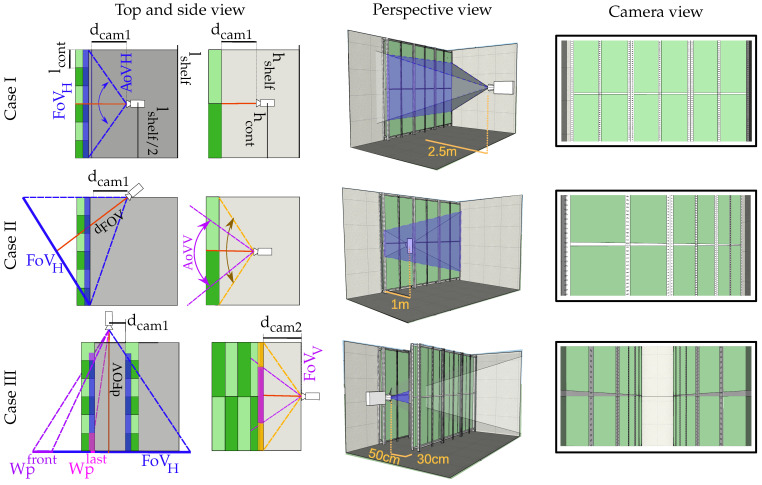
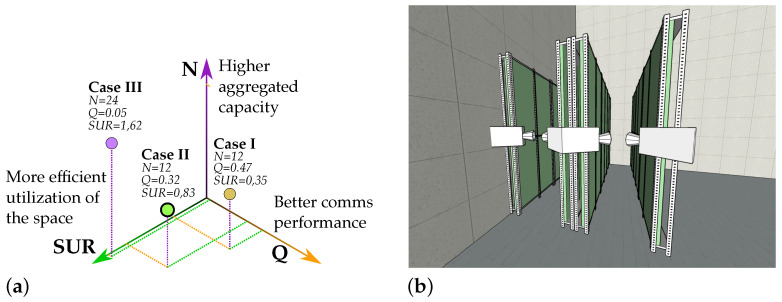
- The case-study plant-distribution analysis compared three layouts and found Case II (camera observing the reactor shelf from the side) to be the preferred solution because it balanced communication quality and space use better than the frontal view in Case I or the corridor-like Case III.
- For the case study, using a PiCamera v2 with 57 s exposure time gave a maximum baud rate of approximately 717 Bd/reactor per available channel, or 2151 Bd/reactor across three independent channels (red, green, blue). The computed cut-off frequency was approximately 8213 Hz.
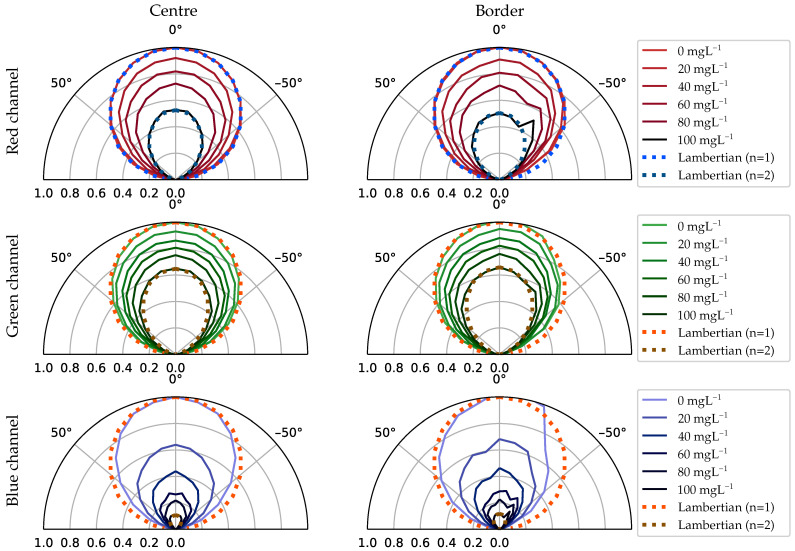
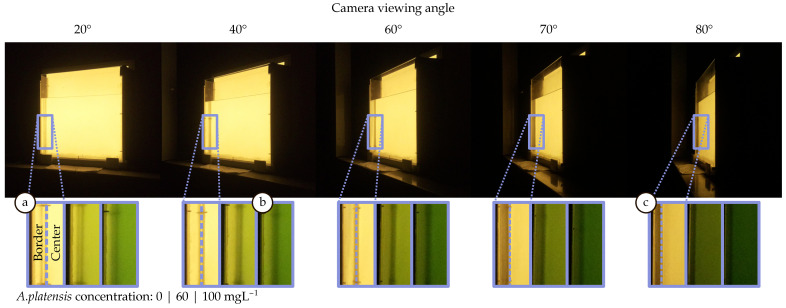
- In the indoor experiment with Arthrospira platensis, the container center followed a Lambertian pattern with n = 1 for red and green when biomass was absent, and at maximum concentration the red and green channels approached n = 2; the blue channel attenuated faster, with SNR decay starting around 40° at the edges, about 20° earlier than red and green.
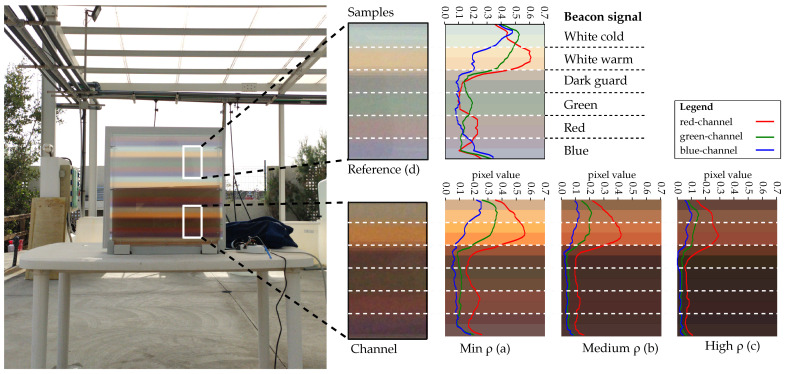
- In the outdoor experiment with Rhodosorus marinus, blue and green were “highly attenuated,” and at high biomass the green, blue, and red pulses could not be distinguished, but the cold-white and warm-white signatures remained usable for communication.
Methods
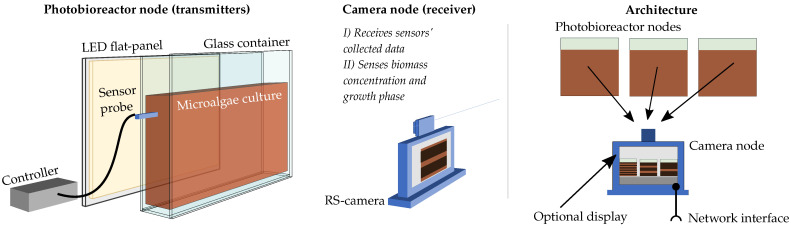
- The paper develops an OCC-based architecture with a many-to-one unidirectional network topology, where flat-panel photobioreactor nodes transmit beacon and Manchester-encoded data packets to a rolling-shutter camera receiver.
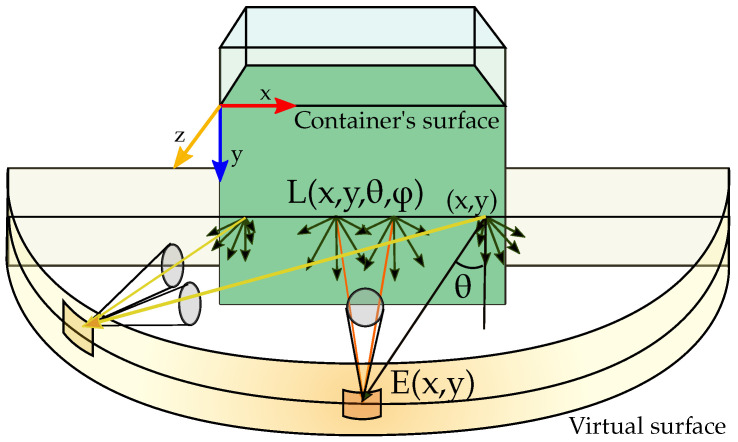
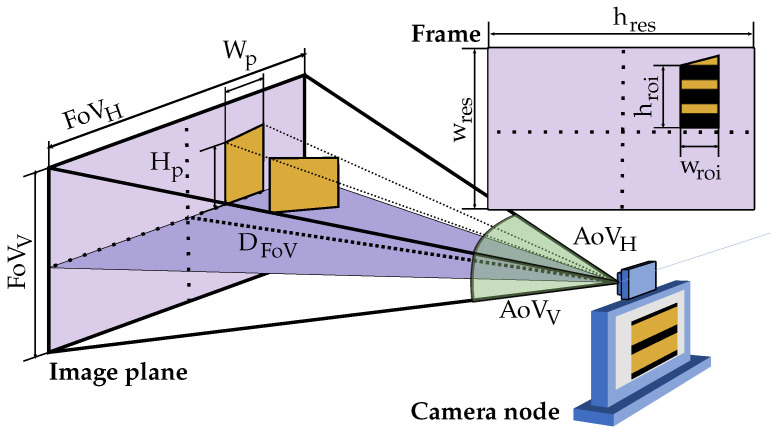
- It builds a geometric/communications model of the channel, including air, glass, water/microalgae, and outer glass layers, and derives data-rate and placement relations using camera exposure time, row-scan time, and a multidimensional placement metric F = {N, Q, SUR}.
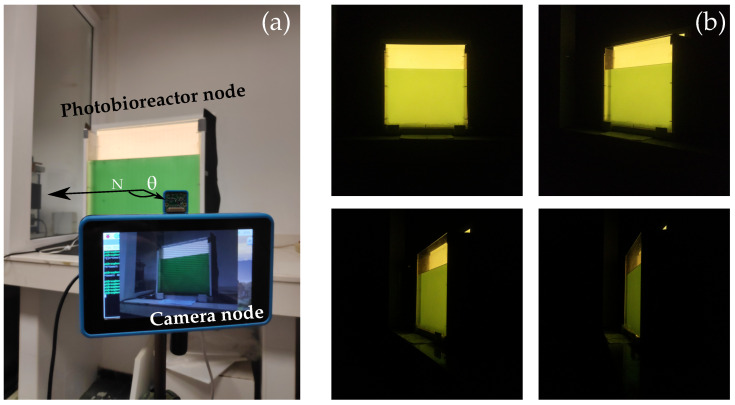
- Two experiments were run at the BEA facilities: an indoor experiment on radiance/SNR/BER versus azimuth angle and biomass concentration for A. platensis (0 to 100 mg l−1 in 20 mg l−1 steps), and an outdoor experiment testing beacon reception across biomass levels for R. marinus.
Limitations
- The paper states that future work should extend the SNR evaluation to the actual achievable BER, examine more deeply the effect of aeration bubbles, and develop/improve framing strategies and AI-based biomass estimation.
- The analysis of plant distribution relies on coarse approximations: constant camera hardware/configuration, negligible shot noise relative to thermal noise, and simplified comparisons of radiance and SNR. This is evident from the text, not explicitly framed as a limitation by the authors.
- The indoor experiment did not evaluate vertical camera translations or vertical-angle radiance changes; this was justified by symmetry, but it limits the completeness of the empirical assessment.
Model-written summary. Check it against the paper before relying on it.
Integrity signals
Registry
Cites
Statistics
Figures

Verification
Claims the paper makes
0 Valid · 6 Not valid · 17 Not checked · 91 Own results and interpretations
A result the paper states — it cites no source for it, so there is none to check. The quote shows it is in the paper.
In the paper
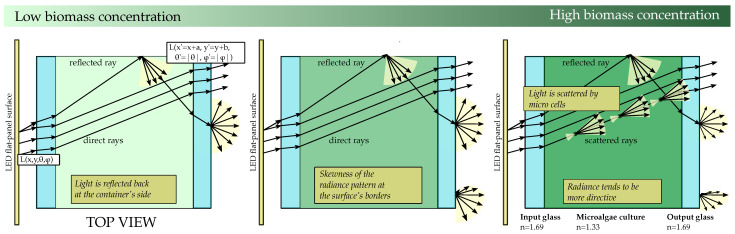
“However, the output radiance at the borders of the container tends to skew.”
plain- Asserted: passes — The authors put it forward as true.
- Checkable: passes — It can be checked against evidence.
- Load-bearing: passes — The paper’s conclusions depend on it.
- Based: passes — The paper gives a reason why it holds.
A result the paper reports from its own data — it cites no other source for it, so there is none to check. The quote shows it is in the paper.
In the paper
“As it can be extracted from preliminary experiments, this skewness can be partially reduced if the container’s sides reflection has a perfect diffuse behaviour, causing the light to be uniformly spread in all directions.”
plainstates a possible cause- Asserted: passes — The authors put it forward as true.
- Checkable: passes — It can be checked against evidence.
- Load-bearing: unclear — It is unclear whether the paper’s conclusions depend on it.
- Based: passes — The paper gives a reason why it holds.
A result the paper states — it cites no source for it, so there is none to check. The quote shows it is in the paper.
In the paper
“As a result, the output radiance from infinitesimal surfaces located at the container’s centre tends to mimic the original lamp radiation pattern.”
hedgedstates an association- Asserted: passes — The authors put it forward as true.
- Checkable: passes — It can be checked against evidence.
- Load-bearing: unclear — It is unclear whether the paper’s conclusions depend on it.
- Based: passes — The paper gives a reason why it holds.
A result the paper states — it cites no source for it, so there is none to check. The quote shows it is in the paper.
In the paper
“Hence, light rays with acute entry angles have a significant amount of power reflected.”
plainstates a cause- Asserted: passes — The authors put it forward as true.
- Checkable: passes — It can be checked against evidence.
- Load-bearing: unclear — It is unclear whether the paper’s conclusions depend on it.
- Based: passes — The paper gives a reason why it holds.
A result the paper reports from its own data — it cites no other source for it, so there is none to check. The quote shows it is in the paper.
In the paper
“The cut-off frequency was computed using Newton–Raphson’s algorithm and is approximately 8213 Hz.”
plain- Asserted: passes — The authors put it forward as true.
- Checkable: passes — It can be checked against evidence.
- Load-bearing: unclear — It is unclear whether the paper’s conclusions depend on it.
- Based: passes — The paper gives a reason why it holds.
- Rests on 6 assumptions not shown here.
55 more claims
Create a free account to see all 114 claims and to verify the 24 references still open.
- Probably not a substantial claim. 21
- It may state two separate claims as one. 41
- The quote only partly states this claim. 1
Self-check
Percentages, sums and reported differences re-computed from the paper’s own numbers.
Each contradiction between two passages listed here was confirmed by an independent check.
Rated minor: it would not touch a result — a value no result rests on, a p-value that stays on the same side of the significance level, or a conflict that is clerical, resolved elsewhere in the paper, or outside its own findings.
In the paper
“(8) R s = | n 1 1 − ( n 1 / n 2 · sin ϑ i ) 2 − n 2 cos ϑ i n 1 1 − ( n 1 / n 2 · sin ϑ i ) 2 + n 2 cos ϑ i | 2”
“where R s (Equation ( 7 )) and R p (Equation ( 8 )) are the reflectances for s-polarized and p-polarized light, respectively.”
Rated minor: it would not touch a result — a value no result rests on, a p-value that stays on the same side of the significance level, or a conflict that is clerical, resolved elsewhere in the paper, or outside its own findings.
In the paper
“(17) h packet ≥ 2 · S packet · h s”
“In addition, to avoid packet losses, the source’s image projection, h p , must fit at least two complete packets, as was detailed in the previous work [ 29 ].”
Citations
Cites
A Mathematical Theory of Communication
Shannon, C. E. (1948) · Bell System Technical Journal · doi:10.1002/j.1538-7305.1948.tb01338.x · Cited by 88,486
Light requirements in microalgal photobioreactors: an overview of biophotonic aspects
Carvalho, A. P., Silva, S. O., Baptista, J. M., & Malcata, F. X. (2011) · Applied Microbiology and Biotechnology · doi:10.1007/s00253-010-3047-8 · Cited by 521 · cited 1×
“In terms of light energy, the photosynthetic rate is directly related to the irradiance power, and excessive or insufficient incident light constrains optimal performance and may induce the photo-inhibition and photo-oxidation of the cells, eventually attaining photo-damage and even leading to culture death [15].”
BackgroundPhotobioreactors for the production of microalgae
Acién Fernández, F. G., Fernández Sevilla, J. M., & Molina Grima, E. (2013) · Reviews in Environmental Science and Bio/Technology · doi:10.1007/s11157-012-9307-6 · Cited by 445 · cited 1×
“, raceways) and closed photobioreactors [1].”
Visible Light Communications: Theory and Applications
(2017) · CRC Press eBooks · doi:10.1201/9781315367330 · Cited by 339
Light management technologies for increasing algal photobioreactor efficiency
Nwoba, E. G., Parlevliet, D. A., Laird, D. W., Alameh, K., & Moheimani, N. R. (2019) · Algal Research · doi:10.1016/j.algal.2019.101433 · Cited by 248 · cited 2×
“Among these parameters, light radiant energy is a capital factor that affects the photosynthetic efficiency, and therefore the overall productivity [2].”
BackgroundFlashing light in microalgae biotechnology
Abu-Ghosh, S., Fixler, D., Dubinsky, Z., & Iluz, D. (2016) · Bioresource Technology · doi:10.1016/j.biortech.2015.12.057 · Cited by 204 · cited 1×
“On the other hand, recent experimental studies have shown that combining short and intense light flashes with extended dark periods instead of continuous illumination might increase the culture’s growth efficiency, as discussed in [17,18].”
BackgroundRadiation transfer in photobiological carbon dioxide fixation and fuel production by microalgae
Pilon, L., Berberoğlu, H., & Kandilian, R. (2011) · Journal of Quantitative Spectroscopy and Radiative Transfer · doi:10.1016/j.jqsrt.2011.07.004 · Cited by 193 · cited 4×
“This RTE equation given by Equation (11) reveals that the scattering absorption crosssections and the SPF have an important role in predicting light transfer in photobioreactors for simulation, design and optimisation purposes.”
MethodInfluentialImpact of light color on photobioreactor productivity
de Mooij, T., de Vries, G., Latsos, C., Wijffels, R. H., & Janssen, M. (2016) · Algal Research · doi:10.1016/j.algal.2016.01.015 · Cited by 187 · cited 1×
“Thus, better energy usage can be achieved by adjusting the light source’s emission to match the absorption spectrum [16].”
BackgroundA New Automotive VLC System Using Optical Communication Image Sensor
Goto, Y., Takai, I., Yamazato, T., Okada, H., Fujii, T., Kawahito, S., Arai, S., Yendo, T., & Kamakura, K. (2016) · IEEE Photonics Journal · doi:10.1109/jphot.2016.2555582 · Cited by 182 · cited 1×
“Furthermore, the use of image-forming optics compensates the power loss due to spherical propagation with the projected size of the optical source on the image sensor [31].”
BackgroundOptical camera communications: Survey, use cases, challenges, and future trends
Saeed, N., Guo, S., Park, K., Al-Naffouri, T. Y., & Alouini, M. (2019) · Physical Communication · doi:10.1016/j.phycom.2019.100900 · Cited by 155
Survey on optical camera communications: challenges and opportunities
Saha, N., Ifthekhar, M. S., Le, N. T., & Jang, Y. M. (2015) · IET Optoelectronics · doi:10.1049/iet-opt.2014.0151 · Cited by 146
Visible Light Communications for Industrial Applications—Challenges and Potentials
Almadani, Y., Plets, D., Bastiaens, S., Joseph, W., Ijaz, M., Ghassemlooy, Z. F., & Rajbhandari, S. (2020) · Electronics · doi:10.3390/electronics9122157 · Cited by 118
A survey of design and implementation for optical camera communication
Le, N. T., Hossain, M. A., & Jang, Y. M. (2017) · Signal Processing Image Communication · doi:10.1016/j.image.2017.02.001 · Cited by 117
Flashing LEDs for microalgal production
Schulze, P. S. C., Guerra, R., Pereira, H., Schüler, L. M., & Varela, J. C. S. (2017) · Trends in Biotechnology · doi:10.1016/j.tibtech.2017.07.011 · Cited by 103 · cited 1×
“On the other hand, recent experimental studies have shown that combining short and intense light flashes with extended dark periods instead of continuous illumination might increase the culture’s growth efficiency, as discussed in [17,18].”
BackgroundEssential Principles of Image Sensors
黒田, 隆. (2014) · CRC Press eBooks · doi:10.1201/b17411 · Cited by 61 · cited 1×
“However, due to the use of image-forming optics [11], cameras can receive light from multiple sources, providing inherent spatial multiplexing capabilities [12–14], which can be easily exploited for simultaneous monitoring within a microalgae production plant.”
BackgroundMicroalgae biomass quantification by digital image processing and RGB color analysis
Sarrafzadeh, M., La, H., Lee, J.-Y., Cho, D., Shin, S.-Y., Kim, W. J., & Oh, H. (2014) · Journal of Applied Phycology · doi:10.1007/s10811-014-0285-7 · Cited by 59 · cited 1×
“In [4,5], different approaches based on the digital processing analysis of red-green-blue (RGB) images for low cost, fast and accurate quantification of biomass concentration were proposed and experimentally validated.”
Performance Analysis and Improvement of Optical Camera Communication
Hasan, M. K., Chowdhury, M. Z., Shahjalal, M. A., et al. (2018) · Applied Sciences · doi:10.3390/app8122527 · Cited by 55 · cited 1×
“The maximum achievable data rate for a photobioreactor depends on its projection’s vertical size over the image; in other words, the total number of vertical samples (rows of pixels) recovered from the signal [27].”
BackgroundTeli, S. R., Matus, V., Zvánovec, S., Pérez‐Jiménez, R., Vítek, S., & Ghassemlooy, Z. F. (2020) · Sensors · doi:10.3390/s20123361 · Cited by 38
Self-citationNon-Line-of-Sight MIMO Space-Time Division Multiplexing Visible Light Optical Camera Communications
Hassan, N. B., Ghassemlooy, Z. F., Zvánovec, S., et al. (2019) · Journal of Lightwave Technology · doi:10.1109/jlt.2019.2906097 · Cited by 36 · cited 1×
“Leaving aside the reflections with the objects present in the scene [13,28], the signal has to be recovered mainly from the projection within the image of the light source where the signal quality is considerably better.”
BackgroundCorrelation-based receiver for optical camera communications
Jurado-Verdú, C., Matus, V., Rabadan, J. A., et al. (2019) · Optics Express · doi:10.1364/oe.27.019150 · Cited by 34 · cited 1×
“In addition, to avoid packet losses, the source’s image projection, hp, must fit at least two complete packets, as was detailed in the previous work [29].”
MethodSelf-citationMatus, V., Eso, E., Teli, S. R., Pérez‐Jiménez, R., & Zvánovec, S. (2020) · Sensors · doi:10.3390/s20030757 · Cited by 34 · cited 19×
“After capturing the image samples, they were processed offline to obtain the radiance and SNR, from two different regions, the centre and the boundaries of the container’s surface, to analyse the skewness phenomenon in the outermost regions of the surface.”
BackgroundInfluentialSelf-citationScattering properties of microalgae: the effect of cell size and cell wall
Svensen, Ø., Frette, Ø., & Erga, S. R. (2007) · Applied Optics · doi:10.1364/ao.46.005762 · Cited by 33
Line scan sampling for visible light communication: Theory and practice
Aoyama, H., & Oshima, M. (2015) · International Conference on Communications · doi:10.1109/icc.2015.7249126 · Cited by 31 · cited 2×
“While the sensor is not scanning the transmitter’s surface, but another part of the scene, it will remain blind to the light changes of the transmission [19].”
BackgroundNon-Line-of-Sight Optical Camera Communication in a Heterogeneous Reflective Background
Lain, J., Jhan, F.-C., & Yang, Z.-D. (2019) · IEEE photonics journal · doi:10.1109/jphot.2019.2892966 · Cited by 21 · cited 1×
“Leaving aside the reflections with the objects present in the scene [13,28], the signal has to be recovered mainly from the projection within the image of the light source where the signal quality is considerably better.”
BackgroundMultispectral image analysis for algal biomass quantification
Murphy, T. E., Macon, K., & Berberoglu, H. (2013) · Biotechnology Progress · doi:10.1002/btpr.1714 · Cited by 20 · cited 1×
“In [4,5], different approaches based on the digital processing analysis of red-green-blue (RGB) images for low cost, fast and accurate quantification of biomass concentration were proposed and experimentally validated.”
Sandstorm effect on experimental optical camera communication
Matus, V., Guerra, V., Zvánovec, S., et al. (2020) · Applied Optics · doi:10.1364/ao.405952 · Cited by 19 · cited 19×
“After capturing the image samples, they were processed offline to obtain the radiance and SNR, from two different regions, the centre and the boundaries of the container’s surface, to analyse the skewness phenomenon in the outermost regions of the surface.”
BackgroundInfluentialSelf-citationMa, C., Zhao, J., & Liu, L. H. (2018) · Journal of Quantitative Spectroscopy and Radiative Transfer · doi:10.1016/j.jqsrt.2018.06.021 · Cited by 16 · cited 3×
“Furthermore, these radiative properties of microalgae (the absorption cross-section, scattering cross-section and scattering phase function) vary significantly over time, depending on the strain’s growth stage, as shown by the studies [25,26].”
BackgroundSpatial frequency-based angular behavior of a short-range flicker-free MIMO–OCC link
Teli, S. R., Zvánovec, S., Pérez‐Jiménez, R., et al. (2020) · Applied Optics · doi:10.1364/ao.404378 · Cited by 11
Ma, C. Y., Zhao, J. M., Liu, L. H., & Zhang, L. (2019) · Journal of Applied Phycology · doi:10.1007/s10811-018-1499-x · Cited by 7 · cited 1×
“Furthermore, these radiative properties of microalgae (the absorption cross-section, scattering cross-section and scattering phase function) vary significantly over time, depending on the strain’s growth stage, as shown by the studies [25,26].”
BackgroundKOMINE, M., & TAKAKURA, T. (1998) · Seibutsu kankyō chōsetsu/Seibutsu kankyou chousetsu · doi:10.2525/ecb1963.36.41 · Cited by 2 · cited 5×
“Its cylindrical morphology gives the cell a highly directive SPF [33] (depending on the orientation).”
BackgroundInfluentialApplication of Optical Camera Communication to Microalgae Production Plants
Jurado-Verdú, C., Guerra, V., Matus, V., Rabadan, J. A., Pérez‐Jiménez, R., Gómez‐Pinchetti, J. L., & Almeida, C. (2020) · International Symposium on Communication Systems, Networks and Digital Signal Processing (CSNDSP) · doi:10.1109/csndsp49049.2020.9249534 · Cited by 1 · cited 2×
“The effect of the link’s air gap between the container and the camera was addressed previously in [22].”
BackgroundSelf-citation
Research works printed but not linked: 1
- (2019). IEEE Standard for Local and Metropolitan Area Networks–Part 15. 7: Short-Range Optical Wireless Communications-Redline, IEEE. IEEE Std 802.15.7-2018 (Revision of IEEE Std 802.15.7-2011)-Redline.
Cited by
Tham, P. E., Ng, Y. J., Vadivelu, N., Lim, H. R., Khoo, K. S., Chew, K. W., & Show, P. L. (2022) · Bioresource Technology · doi:10.1016/j.biortech.2021.126558 · Cited by 67
Eöllős-Jarošíková, K., Neuman, V., Jurado-Verdú, C., et al. (2023) · Optics Express · doi:10.1364/oe.495805 · Cited by 15
“Reports on the use of side-emitting fibers in fabrics for design purposes and sensing [14] and for microalgae growth [15] were presented.”
Self-citationThe Way to Modern Shutter Speed Measurement Methods: A Historical Overview
Simon, G., Vakulya, G., & Rátosi, M. (2022) · Sensors · doi:10.3390/s22051871 · Cited by 18
Evolution of OWC: A Collaborative Contour Across Various Sectors
Modalavalasa, S. K., Usmani, A. F., Gelehpordesari, A. P., et al. (2024) · International Symposium on Communication Systems, Networks and Digital Signal Processing (CSNDSP) · doi:10.1109/csndsp60683.2024.10636621 · Cited by 3
“Authors in [9] mentioned the importance of optimizing plant distribution in terms of link quality, channel capacity, and efficient space exploitation.”
BackgroundEditorial to the Special Issue on “Visible Light Communications, Networking, and Sensing”
Zvánovec, S., Ghassemlooy, Z. F., Pérez‐Jiménez, R., et al. (2021) · Sensors · doi:10.3390/s21124004 · Cited by 3
“[12], in their paper on “Optical Camera Communication as an Enabling Technology for Microalgae Cultivation”, show how the OCC technology can be used as a potential application in microalgae production plants.”
Background
Metadata
- Authors
- Jurado-Verdu, C., Guerra, V., Matus, V., Almeida, C., & Rabadan, J.
- Affiliations
- Institute for Technological Development and Innovation in Communications (IDeTIC), Universidad de Las Palmas de Gran Canaria (ULPGC), 35017 Las Palmas de Gran Canaria, Canary Islands, Spain
- Universidad de Las Palmas de Gran Canaria (ES)
- Venue
- Sensors
- Publisher
- MDPI AG
- Published
- 2021-02-25
- Volume
- 21
- Issue
- 5
- Pages
- 1621
- ISSN
- 1424-8220 (ISSN-L)
- PMC
- PMC7956580
- OpenAlex
- W3130637258
- Cited by
- 8
- References
- 34
- Citations by year
- 2026: 1 · 2025: 1 · 2024: 1 · 2023: 2 · 2022: 1 · 2021: 2
- FWCI
- 0.44
- Type
- journal article
- Language
- en
- Open access
- gold
- doi.org
- Licence
- Locations
- Sensors (publishedVersion, cc-by)
- PubMed Central (publishedVersion, cc-by)
- PubMed (publishedVersion)
- HAL (submittedVersion, cc-by)
- Acceda (Universidad de Las Palmas de Gran Canaria) (submittedVersion)
- DOAJ (DOAJ: Directory of Open Access Journals) (submittedVersion, cc-by-sa)
- Funders
- Canary Island Regional Government (Project ATICCuA ProID:2017010053)
- H2020 - MSCA (VISION: 764461)
- Topics
- Physical Sciences › Engineering › Electrical and Electronic Engineering › Optical Wireless Communication Technologies
- Physical Sciences › Engineering › Biomedical Engineering › Molecular Communication and Nanonetworks
- Physical Sciences › Energy › Renewable Energy, Sustainability and the Environment › Algal biology and biofuel production
- Keywords
- optical camera communication, microalgae cultivation, photobioreactors, on-off keying, rolling shutter camera, signal-to-noise ratio, light scattering, Spirulina platensis, channel capacity, indoor and outdoor propagation
- MeSH terms
- Communication, Biomass, Spirulina, Microalgae, Photobioreactors
About these checks
Registry, retraction, Cites and statistics results are computed, not judged, with one exception: a printed reference that no index lists is read once by a model before it counts as a citation error. Claims are extracted by a model and kept only when their quote appears verbatim in the text; each cited source is then checked, with a model’s help, for whether it says what the claim relies on. Those verdicts can be wrong — read the claim’s quote and the cited source before relying on one.
A language model drew the claims from the paper on 2026-10-11, under version 3 of the claim definition (model deepseek-v4.1-flash, prompt extract-v3).
A second model labelled each claim on 2026-10-11 (model jev-1.13-20260917, definition revision gold-guideline-v0.2).
Statistics and arithmetic are recomputed, not judged.
Confidence bands are shown only for fields calibrated on our annotated test set. None is calibrated yet, so no band is shown.
What counts as a claim ›How we measure confidence ›How we check this ›
Are you an author, or do you see a problem with this page? Request a review
Data sources
Bibliographic data: Semantic Scholar, OpenAlex, Crossref.
Contains information from the Semantic Scholar Academic Graph Datasets, made available under the ODC Attribution License (ODC-BY 1.0).
Semantic Scholar’s data is described in: Kinney, R., et al. (2023). The Semantic Scholar Open Data Platform. arXiv:2301.10140.
