

Comparison of Imaging Models for Spectral Unmixing in Oil Painting
Open accessThe DOI matches its Crossref record; 47 of the 48 references it cites were found in a registry or an index; none of the 18 sources its claims cite is checked for support yet.
Abstract
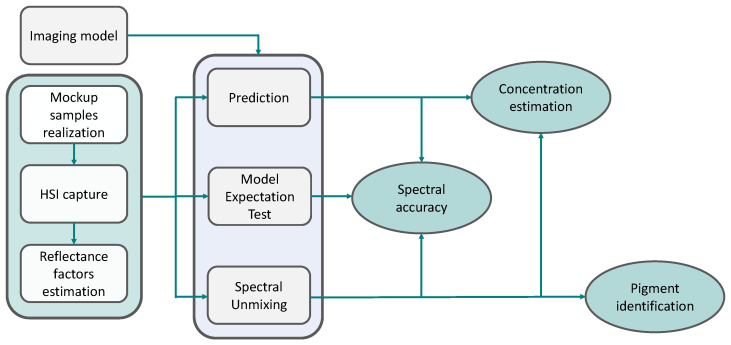
The radiation captured in spectral imaging depends on both the complex light–matter interaction and the integration of the radiant light by the imaging system. In order to obtain material-specific information, it is important to define and invert an imaging process that takes into account both aspects. In this article, we investigate the use of several mixing models and evaluate their performances in the study of oil paintings. We propose an evaluation protocol, based on different features, i.e., spectral reconstruction, pigment mapping, and concentration estimation, which allows investigating the different properties of those mixing models in the context of spectral imaging. We conduct our experiment on oil-painted mockup samples of mixtures and show that models based on subtractive mixing perform the best for those materials.
Overview
CoChat Summary
TL;DR
This paper compares seven imaging/mixing models for spectral unmixing of oil-painted mockups and a mockup painting, evaluating spectral reconstruction, pigment mapping, and concentration estimation. Models based on subtractive mixing performed best overall for these materials.
Key findings
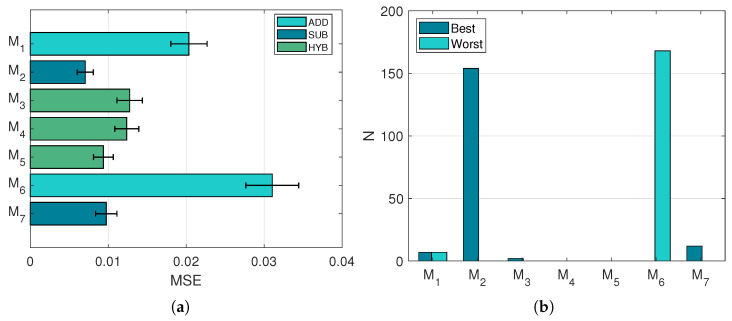
- In the model expectation test, subtractive models fared best, followed by hybrid models, then additive models; among hybrids, subtractive-oriented M5 had better MSE than additive-oriented M4.
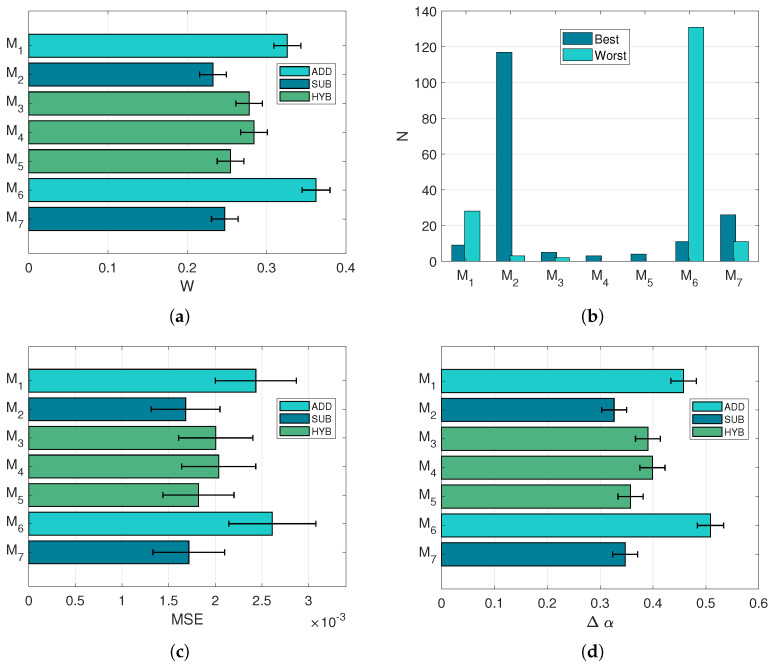
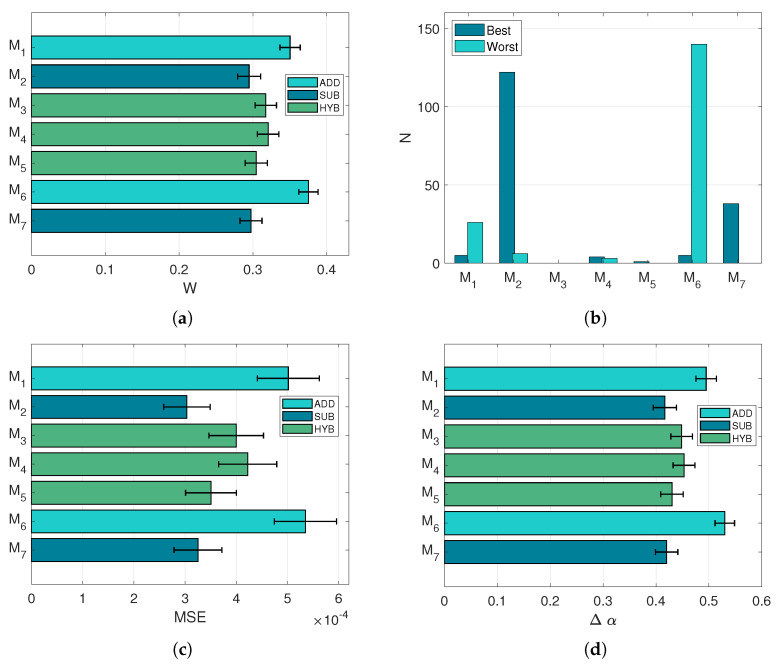
- In prediction and full unmixing, the same ranking was confirmed, with the pure subtractive model most often selected; in unmixing, MSE scale was reduced by approximately a factor of 10, while concentration error Δα was slightly higher than in prediction.
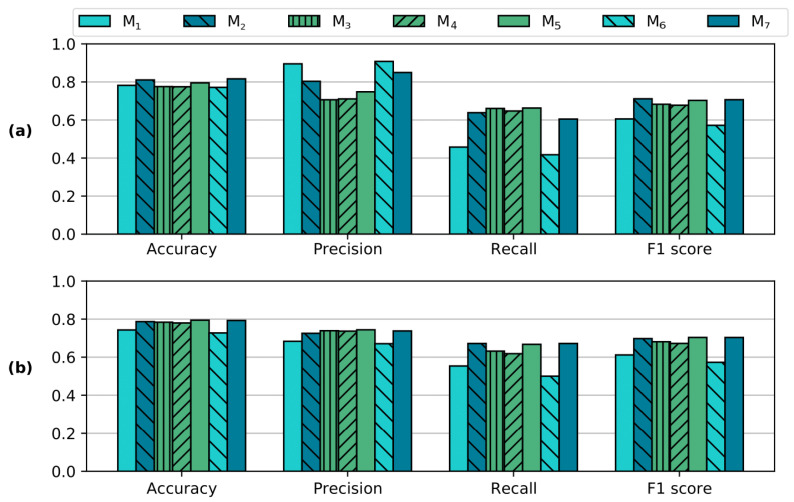
- For pigment identification, hybrid models M3, M4, and M5 had slightly better cut-off αT values than subtractive M2 and M7, but accuracy, precision, recall, and F1 differences indicated a preference for subtractive-based models.
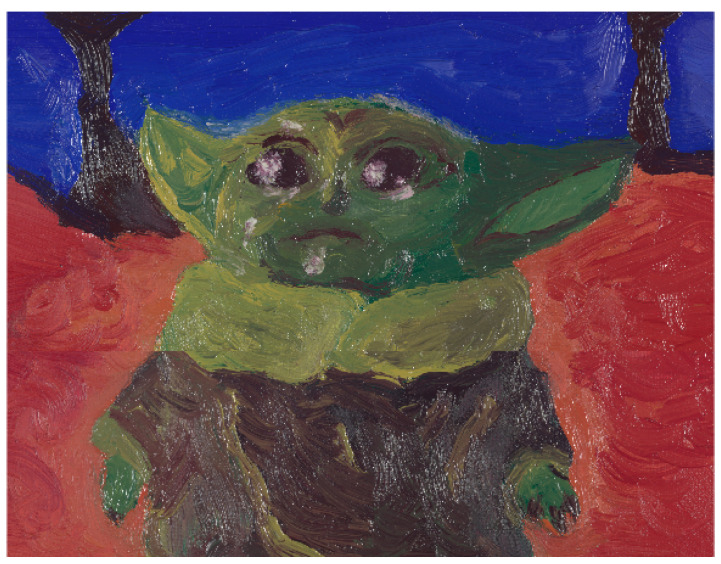
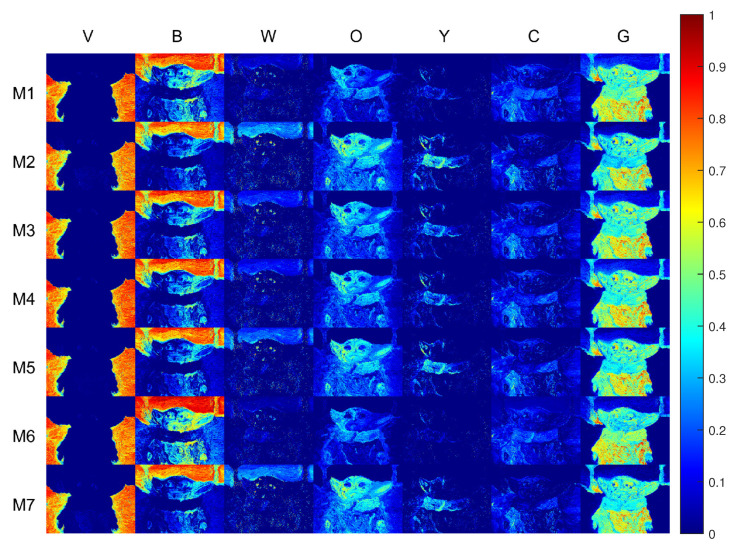
- On the validation mockup painting, subtractive-based models correctly identified Kremer White in the lower sky and correctly identified the absence of Carmine in the right face area, whereas additive-based models did not fully appreciate the white and detected Carmine where it was absent; Naples Yellow was strongly misidentified with Gold Ochre.
Methods
- Seven mixing models were compared: additive linear M1; subtractive weighted geometric mean M2; hybrid Yule–Nielsen M3, Additive-Subtractive M4, and Subtractive-Additive M5; and logarithmic image processing (LIP) versions M6 and M7. Hybrid mixing constant τ was arbitrarily set to 0.5.
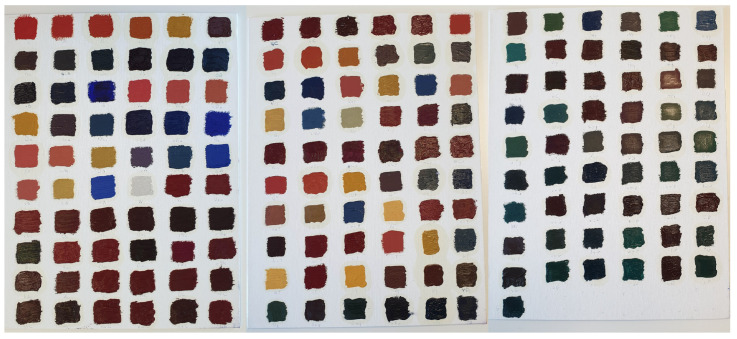
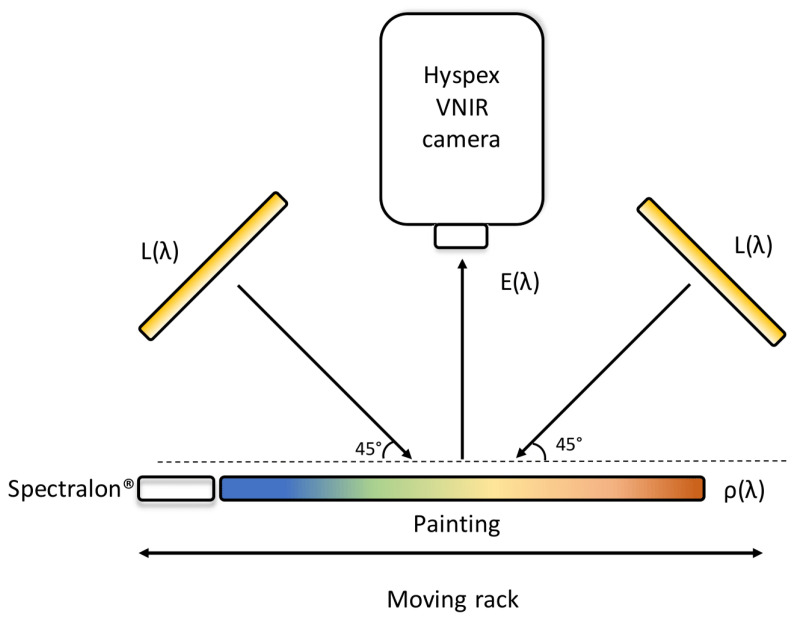
- Mockup samples used seven Kremer pigments in an oil-painting Renaissance palette; mixtures included up to three pigments, with all two-pigment combinations at 1:1 and 2:1 ratios and three-pigment combinations at 2:1:1, totaling 175 mixtures on 2×2 cm patches. Hyperspectral images were captured with a HySpex VNIR-1800 pushbroom camera from 400 to 1000 nm, with 186 bands, 3.26 nm spectral sampling, and 166 data points after omitting the first and last 10 bands; a mockup painting served as validation.
- Spectral unmixing used Nelder–Mead constrained optimization with non-negativity and sum-to-one constraints, minimizing MSE; concentration error Δα was the Euclidean distance between ground-truth and estimated concentration vectors, and a combined score w = MSE + Δα/√2 was used. Three tasks were run: model expectation, prediction, and full unmixing; pigment detection thresholds were derived from ROC curves using the Youden Index, with accuracy, precision, recall, and F1 reported.
Limitations
- The paper states that all models assume diffuse reflections and do not handle specularities or BRDFs, and specularities were observed in the mockups. It also states that radiative transfer models such as Kubelka–Munk and four-flux were excluded because they require scattering and absorption coefficients and applicability conditions.
- The paper states that the concentration error does not consider the scale of concentrations, only the magnitude of differences; false positives could be highly penalized; good unmixing does not imply good rendering; and future joint analysis of unmixing and rendering is needed. It also notes that the hybrid τ was set arbitrarily to 0.5 and that the αT values may be too high from a conservation standpoint, as concentrations around 10% might be significant but would be neglected.
- Evident from the text: the study is limited to seven pigments, oil mockups, and the VNIR range (400–1000 nm), with no SWIR evaluation; the validation painting was spatially down-sampled by a factor of 10 without interpolation.
Model-written summary. Check it against the paper before relying on it.
Integrity signals
Registry
Cites
Statistics
Figures
Verification
Claims the paper makes
0 Valid · 2 Not valid · 11 Not checked · 31 Own results and interpretations
A result the paper states — it cites no source for it, so there is none to check. The quote shows it is in the paper.
In the paper
“With the selected unmixing algorithm, the spectral reconstructions showed increasing accuracies as the endmember spectral library was extended.”
§ Comparison of Imaging Models for Spectral Unmixing in Oil Painting † > 3. Results > 3.5. Mockup Painting
plainstates a cause- Asserted: passes — The authors put it forward as true.
- Checkable: passes — It can be checked against evidence.
- Load-bearing: passes — The paper’s conclusions depend on it.
- Based: passes — The paper gives a reason why it holds.
- Rests on an assumption not shown here.
A result the paper states — it cites no source for it, so there is none to check. The quote shows it is in the paper.
In the paper
“There is a generally strong tendency to misidentify pigment Naples Yellow (Y) with Gold Ochre (O).”
§ Comparison of Imaging Models for Spectral Unmixing in Oil Painting † > 3. Results > 3.5. Mockup Painting
boostedstates an associationSingle case- Asserted: passes — The authors put it forward as true.
- Checkable: passes — It can be checked against evidence.
- Load-bearing: unclear — It is unclear whether the paper’s conclusions depend on it.
- Based: passes — The paper gives a reason why it holds.
- Rests on 2 assumptions not shown here.
A result the paper states — it cites no source for it, so there is none to check. The quote shows it is in the paper.
In the paper
“An estimated concentration vector rarely presents entries with a value of exactly 0, as spurious concentrations of some endmembers are often output in the optimisation process.”
§ Comparison of Imaging Models for Spectral Unmixing in Oil Painting † > 3. Results > 3.4. Pigment Identification
hedgedstates a cause- Asserted: passes — The authors put it forward as true.
- Checkable: passes — It can be checked against evidence.
- Load-bearing: passes — The paper’s conclusions depend on it.
- Based: passes — The paper gives a reason why it holds.
- Rests on an assumption not shown here.
A result the paper reports from its own data — it cites no other source for it, so there is none to check. The quote shows it is in the paper.
In the paper
“A validation test of pigment mapping is run on a mockup painting realised with the same set of pigments, confirming the observation made on the dataset of mixture samples.”
§ Comparison of Imaging Models for Spectral Unmixing in Oil Painting † > 1. Introduction
plainstates an associationSingle case- Asserted: passes — The authors put it forward as true.
- Checkable: passes — It can be checked against evidence.
- Load-bearing: passes — The paper’s conclusions depend on it.
- Based: passes — The paper gives a reason why it holds.
A result the paper reports from its own data — it cites no other source for it, so there is none to check. The quote shows it is in the paper.
In the paper
“We conduct our experiment on oil-painted mockup samples of mixtures and show that models based on subtractive mixing perform the best for those materials.”
- Also stated in: § 1. Introduction · plain
“In the particular instance of the investigated imaging models, the results show that models having a subtractive nature are more accurate under several standpoints: spectral reconstruction, accuracy in pigment identification, and precision in determining the relative abundances.”
§ Comparison of Imaging Models for Spectral Unmixing in Oil Painting † > Abstract
plainstates an association- Asserted: passes — The authors put it forward as true.
- Checkable: passes — It can be checked against evidence.
- Load-bearing: passes — The paper’s conclusions depend on it.
- Based: passes — The paper gives a reason why it holds.
- Also stated in: § 1. Introduction · plain
14 more claims
Create a free account to see all 44 claims and to verify the 17 references still open.
- It may state two separate claims as one. 12
- Probably not a substantial claim. 15
Citations
Cites
A Simplex Method for Function Minimization
Nelder, J. A., & Mead, R. (1965) · The Computer Journal · doi:10.1093/comjnl/7.4.308 · Cited by 28,905
Hyperspectral Unmixing Overview: Geometrical, Statistical, and Sparse Regression-Based Approaches
Bioucas-Dias, J. M., Plaza, A., Dobigeon, N., Parente, M., Du, Q., Gader, P., & Chanussot, J. (2012) · IEEE Journal of Selected Topics in Applied Earth Observations and Remote Sensing · doi:10.1109/jstars.2012.2194696 · Cited by 2,836 · cited 2×
“Spectral Unmixing (SU) is one of the most studied applications within remote sensing [4], since it allows the identification and mapping of specific materials, denominated endmembers, by decomposing a spectrum into fundamentals, according to a pre-determined imaging model.”
BackgroundRemote sensing for mineral exploration
Sabins, F. F. (1999) · Ore Geology Reviews · doi:10.1016/s0169-1368(99)00007-4 · Cited by 925
Bioucas-Dias, J. M., & Figueiredo, M. A. T. (2010) · 2010 2nd Workshop on Hyperspectral Image and Signal Processing: Evolution in Remote Sensing · doi:10.1109/whispers.2010.5594963 · Cited by 658
A variable splitting augmented Lagrangian approach to linear spectral unmixing
Bioucas-Dias, J. M. (2009) · 2009 First Workshop on Hyperspectral Image and Signal Processing: Evolution in Remote Sensing · doi:10.1109/whispers.2009.5289072 · Cited by 463
Remote sensing applications for precision agriculture: A learning community approach
Seelan, S. K., Laguette, S., Casady, G. M., & Seielstad, G. A. (2003) · Remote Sensing of Environment · doi:10.1016/j.rse.2003.04.007 · Cited by 428
Revised Kubelka–Munk theory I Theory and application
Yang, L., & Kruse, B. (2004) · Journal of the Optical Society of America A · doi:10.1364/josaa.21.001933 · Cited by 410
Cucci, C., Delaney, J. K., & Picollo, M. (2016) · Accounts of Chemical Research · doi:10.1021/acs.accounts.6b00048 · Cited by 373
Applicability conditions of the Kubelka–Munk theory
Vargas, W. E., & Niklasson, G. A. (1997) · Applied Optics · doi:10.1364/ao.36.005580 · Cited by 335
THE VISUAL DISCRIMINATION OF INTENSITY AND THE WEBER-FECHNER LAW
Hecht, S. (1924) · Journal of General Physiology · doi:10.1085/jgp.7.2.235 · Cited by 281
Delaney, J. K., Zeibel, J. G., Thoury, M., Littleton, R., Palmer, M., Morales, K. M., de la Rie, E. R., & Hoenigswald, A. (2010) · Applied Spectroscopy · doi:10.1366/000370210791414443 · Cited by 278
Four-flux models to solve the scattering transfer equation in terms of Lorenz-Mie parameters
Maheu, B., Letoulouzan, J. N., & Gouesbet, G. (1984) · Applied Optics · doi:10.1364/ao.23.003353 · Cited by 231
Nonlinear mixture model for hyperspectral unmixing
Nascimento, J. M. P., & Bioucas-Dias, J. M. (2009) · SPIE Proceedings · doi:10.1117/12.830492 · Cited by 185
Mishra, P., Lohumi, S., Khan, H. A., & Nordon, A. (2020) · Computers and Electronics in Agriculture · doi:10.1016/j.compag.2020.105780 · Cited by 159
Bartell, F. O., Dereniak, E. L., & Wolfe, W. L. (1981) · Proceedings of SPIE, the International Society for Optical Engineering/Proceedings of SPIE · doi:10.1117/12.959611 · Cited by 148
Automatic pigment identification from hyperspectral data
Grabowski, B., Masarczyk, W., Głomb, P., & Mendys, A. (2018) · Journal of Cultural Heritage · doi:10.1016/j.culher.2018.01.003 · Cited by 116
Pixel based bruise region extraction of apple using Vis-NIR hyperspectral imaging
Che, W., Sun, L., Zhang, Q., Tan, W., Ye, D., Zhang, D., & Liu, Y. (2018) · Computers and Electronics in Agriculture · doi:10.1016/j.compag.2018.01.013 · Cited by 112
Jourlin (2001) · doi:10.1016/s1076-5670(01)80095-1 · Cited by 94
Deep learning for automated forgery detection in hyperspectral document images
Khan, M. J., Yousaf, A., Abbas, A., & Khurshid, K. (2018) · Journal of Electronic Imaging · doi:10.1117/1.jei.27.5.053001 · Cited by 92
Mapping the pigment distribution of Vermeer’s Girl with a Pearl Earring
Delaney, J. K., Dooley, K. A., van Loon, A., & Vandivere, A. (2020) · Heritage Science · doi:10.1186/s40494-019-0348-9 · Cited by 86
QUANTITATIVE HYPERSPECTRAL IMAGING OF HISTORICAL DOCUMENTS: TECHNIQUE AND APPLICATIONS
Padoan, R., & de Bruin, G. (2008) · Cited by 71
Pigment Mapping of the Scream (1893) Based on Hyperspectral Imaging
Deborah, H., George, S., & Hardeberg, J. Y. (2014) · Lecture notes in computer science · doi:10.1007/978-3-319-07998-1_28 · Cited by 68
Self-citationHyperspectral imaging of art: Acquisition and calibration workflows
Pillay, R., Hardeberg, J. Y., & George, S. (2019) · Journal of the American Institute for Conservation · doi:10.1080/01971360.2018.1549919 · Cited by 53
Self-citationRealization of Seurat’s pointillism via non-photorealistic rendering
Yang, C., & Yang, H.-L. (2007) · The Visual Computer · doi:10.1007/s00371-007-0183-y · Cited by 48
Delaney, J. K., Ricciardi, P., Glinsman, L. D., Palmer, M., & Burke, J. (2016) · Analytical Methods · doi:10.1039/c6ay02066f · Cited by 40
Estimating forest species abundance through linear unmixing of CHRIS/PROBA imagery
Stagakis, S., Vanikiotis, T., & Sykioti, O. (2016) · ISPRS Journal of Photogrammetry and Remote Sensing · doi:10.1016/j.isprsjprs.2016.05.013 · Cited by 38
Between additive and subtractive color mixings: Intermediate mixing models
Simonot, L., & Hébert, M. (2014) · Journal of the Optical Society of America A · doi:10.1364/josaa.31.000058 · Cited by 36
Nonlinear Unmixing of Hyperspectral Datasets for the Study of Painted Works of Art
Rohani, N., Pouyet, É., Walton, M. S., Cossairt, O. S., & Katsaggelos, A. K. (2018) · Angewandte Chemie International Edition · doi:10.1002/anie.201805135 · Cited by 35
Zhao, Y., & Berns, R. S. (2009) · Color Research & Application · doi:10.1002/col.20525 · Cited by 34
Nonlinear Unmixing of Hyperspectral Datasets for the Study of Painted Works of Art
Rohani, N., Pouyet, É., Walton, M. S., Cossairt, O. S., & Katsaggelos, A. K. (2018) · Angewandte Chemie · doi:10.1002/ange.201805135 · Cited by 27
Hyperspectral visualization of skin pathologies in visible region
Bratchenko, I. А., Васильевна, А. М., Myakinin, O. O., Moryatov, A. A., Kozlov, S. V., & Zakharov, V. P. (2016) · Computer Optics · doi:10.18287/2412-6179-2016-40-2-240-248 · Cited by 27
Deborah, H., George, S., & Hardeberg, J. Y. (2019) · Journal of the American Institute for Conservation · doi:10.1080/01971360.2018.1560756 · Cited by 25
Self-citationVitamin C distribution in acerola fruit by near infrared hyperspectral imaging
Malegori, C., Grassi, S., Marques, E. J. N., de Freitas, S. T., & Casiraghi, E. (2016) · Journal of Spectral Imaging · doi:10.1255/jsi.2016.a6 · Cited by 22
Pigment Unmixing of Hyperspectral Images of Paintings Using Deep Neural Networks
Rohani, N., Pouyet, É., Walton, M. S., Cossairt, O. S., & Katsaggelos, A. K. (2019) · IEEE International Conference on Acoustics Speech and Signal Processing · doi:10.1109/icassp.2019.8682838 · Cited by 20
Rohani, N., Salvant, J., Bahaadini, S., Cossairt, O., Walton, M., & Katsaggelos, A. (2016) · 2016 24th European Signal Processing Conference (EUSIPCO) · doi:10.1109/eusipco.2016.7760621 · Cited by 14
Valdiviezo-N., J. C., Urcid, G., & Lechuga-S., E. (2016) · Signal Image and Video Processing · doi:10.1007/s11760-016-1042-y · Cited by 12
Field spectroscopy for the detection of underground military structures
Μelillos, G., Αγαπίου, Ά., Themistocleous, K., Michaelides, S. C., Papadavid, G., & Hadjimitsis, D. G. (2019) · European Journal of Remote Sensing · doi:10.1080/22797254.2019.1625075 · Cited by 11
Linear, Subtractive and Logarithmic Optical Mixing Models in Oil Painting.
Grillini, F., Thomas, J., & George, S. (2020) · NVA (Nasjonalt vitenarkiv) · Cited by 8
Self-citationA Study of Spectral Imaging Acquisition and Processing for Cultural Heritage
George, S., Hardeberg, J. Y., Linhares, J. M. M., MacDonald, L. W., Montagner, C., Nascimento, S., Picollo, M., Pillay, R., Vitorino, T., & Webb, E. K. (2017) · Arc Humanities Press, Leeds eBooks · doi:10.5040/9781641899444.ch-008 · Cited by 7
Self-citationSpectral unmixing using linear unmixing under spatial autocorrelation constraints
Song, X., Jiang, X., & Rui, X. (2010) · 2010 IEEE International Geoscience and Remote Sensing Symposium · doi:10.1109/igarss.2010.5649735 · Cited by 6
Contactless Classification of Strawberry Using Hyperspectral Imaging.
Devassy, B. M., & George, S. (2020) · Cited by 6
Self-citationRipstein, A. (1999) · Legal Theory · doi:10.1017/s135232529905301x · Cited by 2
(1950) · doi:10.1002/1097-0142(1950)3:1<32::aid-cncr2820030106>3.0.co;2-3
(1931) · Medical Entomology and Zoology
Subtractive Color Mixture Computation
Burns, S. A. (2017) · arXiv · doi:10.48550/arxiv.1710.06364
(2021) · doi:10.82019/jaic.2602
Self-citation(2012) · NVA (Nasjonalt vitenarkiv)
Research works printed but not linked: 2
- Grillini F. Thomas J.B. George S. Mixing models in close-range spectral imaging for pigment mapping in cultural heritage Proceedings of the International Colour Association (AIC) Conference 2020 Avignon, France 20, 26–27 November 2020 372 376
- Yule J. Nielsen W. The penetration of light into paper and its effect on halftone reproduction Proc. TAGA 1951 3 65 76
Cited by
Valero, E. M., Martínez‐Domingo, M. Á., López-Baldomero, A. B., López‐Montes, A., Abad-Muñoz, D., & Vílchez, J. L. (2023) · Journal of Cultural Heritage · doi:10.1016/j.culher.2023.10.016 · Cited by 32
Gouesbet, G. (2024) · Journal of Quantitative Spectroscopy and Radiative Transfer · doi:10.1016/j.jqsrt.2024.109015 · Cited by 28
Ink classification in historical documents using hyperspectral imaging and machine learning methods
López-Baldomero, A. B., Buzzelli, M., Moronta-Montero, F., Martínez‐Domingo, M. Á., & Valero, E. M. (2025) · Spectrochimica Acta Part A Molecular and Biomolecular Spectroscopy · doi:10.1016/j.saa.2025.125916 · Cited by 25
Myers, T. L., Bernacki, B. E., Wilhelm, M. J., Jensen, K. L., Johnson, T. J., Primera-Pedrozo, O. M., Tonkyn, R. G., Smith, S. C., Burton, S., & Bradley, A. M. (2022) · Physical Chemistry Chemical Physics · doi:10.1039/d2cp02920k · Cited by 19
Mapping Materials and Dyes on Historic Tapestries Using Hyperspectral Imaging
Vlachou–Mogire, C., Danskin, J., Gilchrist, J. R., & Hallett, K. (2023) · Heritage · doi:10.3390/heritage6030168 · Cited by 18
Metadata
- Authors
- Grillini, F., Thomas, J.-B., & George, S.
- Affiliations
- Norwegian University of Science and Technology (NO)
- Université de Bourgogne (FR)
- Corresponding author
- Grillini, Federico
- Venue
- Sensors
- Publisher
- MDPI AG
- Published
- 2021-04-02
- Volume
- 21
- Issue
- 7
- Pages
- 2471
- ISSN
- 1424-8220 (ISSN-L)
- PMC
- PMC8038140
- OpenAlex
- W3142984983
- Cited by
- 43
- References
- 48
- Citations by year
- 2026: 10 · 2025: 11 · 2024: 5 · 2023: 9 · 2022: 4 · 2021: 3
- FWCI
- 16.84
- Type
- journal article
- Language
- en
- Open access
- gold
- doi.org
- Licence
- Locations
- Sensors (publishedVersion, cc-by)
- PubMed Central (publishedVersion, cc-by)
- PubMed (publishedVersion)
- HAL (submittedVersion, other-oa)
- DOAJ (DOAJ: Directory of Open Access Journals) (submittedVersion)
- NORA - Norwegian Open Research Archives (submittedVersion, cc-by)
- Funders
- Regional Research Council (RFF-Innlandet) of Norway (298914)
- Topics
- Social Sciences › Arts and Humanities › Archeology (arts and humanities) › Cultural Heritage Materials Analysis
- Physical Sciences › Physics and Astronomy › Atomic and Molecular Physics, and Optics › Color Science and Applications
- Physical Sciences › Chemistry › Analytical Chemistry › Spectroscopy and Chemometric Analyses
- Keywords
- spectral unmixing, oil painting, imaging model, mixing models, spectral reconstruction, pigment mapping, concentration estimation, light-matter interaction
About these checks
Registry, retraction, Cites and statistics results are computed, not judged, with one exception: a printed reference that no index lists is read once by a model before it counts as a citation error. Claims are extracted by a model and kept only when their quote appears verbatim in the text; each cited source is then checked, with a model’s help, for whether it says what the claim relies on. Those verdicts can be wrong — read the claim’s quote and the cited source before relying on one.
A language model drew the claims from the paper on 2026-11-24, under version 3 of the claim definition (model deepseek-v4.1-flash, prompt extract-v3).
A second model labelled each claim on 2026-11-24 (model jev-1.13-20260917, definition revision gold-guideline-v0.2).
Statistics and arithmetic are recomputed, not judged.
Confidence bands are shown only for fields calibrated on our annotated test set. None is calibrated yet, so no band is shown.
What counts as a claim ›How we measure confidence ›How we check this ›
Are you an author, or do you see a problem with this page? Request a review
Data sources
Bibliographic data: Semantic Scholar, OpenAlex, Crossref.
Contains information from the Semantic Scholar Academic Graph Datasets, made available under the ODC Attribution License (ODC-BY 1.0).
Semantic Scholar’s data is described in: Kinney, R., et al. (2023). The Semantic Scholar Open Data Platform. arXiv:2301.10140.
