

Fuzzy Gain-Scheduling PID for UAV Position and Altitude Controllers
Open accessThe DOI matches its Crossref record; 46 of the 46 references it cites were found in a registry or an index.
Abstract
Unmanned aerial vehicle (UAV) applications have evolved to a wide range of fields in the last decade. One of the main challenges in autonomous tasks is the UAV stability during maneuvers. Thus, attitude and position control play a crucial role in stabilizing the vehicle in the desired orientation and path. Many control techniques have been developed for this. However, proportional integral derivative (PID) controllers are often used due their structure and efficiency. Despite PID’s good performance, different requirements may be present at different mission stages. The main contribution of this research work is the development of a novel strategy based on a fuzzy-gain scheduling mechanism to adjust the PID controller to stabilize both position and altitude. This control strategy must be effective, simple, and robust to uncertainties and external disturbances. The Robot Operating System (ROS) integrates the proposed system and the flight control unit. The obtained results showed that the proposed approach was successfully applied to the trajectory tracking and revealed a good performance compared to conventional PID and in the presence of noises. In the tests, the position controller was only affected when the altitude error was higher, with an error of 2% lower.
Overview
The claims and statistics of this paper haven’t been checked yet.
Free: it reads the open-access text and checks the first 5 claims that cite a source we can check. Create a free account to check every claim.
Integrity signals
Registry
Cites
Statistics
Figures






Verification
Claims the paper makes
The claims and statistics of this paper haven’t been checked yet.
Free: it reads the open-access text and checks the first 5 claims that cite a source we can check. Create a free account to check every claim.
Self-check
Percentages, sums and reported differences re-computed from the paper’s own numbers.
The self-check needs the paper’s full text.
Citations
Cites
Robust Backstepping Sliding Mode Control and Observer-based Fault Estimation for a Quadrotor UAV
Chen, F., Jiang, R., Zhang, K., Jiang, B., & Tao, G. (2016) · IEEE Transactions on Industrial Electronics · doi:10.1109/tie.2016.2552151 · Cited by 642 · cited 1×
“Most of these works are based on fuzzy logic [15,16], sliding-mode controller (SMC) [17], neural network-based control [18], backstepping-based adaptive control [19], and a linear quadratic regulator (LQR) [20], among others.”
BackgroundIdrissi, M., Salami, M., & Annaz, F. (2022) · Journal of Intelligent & Robotic Systems · doi:10.1007/s10846-021-01527-7 · Cited by 345 · cited 1×
“The quadrotor altitude control design is well researched in many works [47,48].”
BackgroundA Survey on Load Transportation Using Multirotor UAVs
Villa, D. K. D., Brandão, A. S., & Sarcinelli-Filho, M. (2020) · Journal of Intelligent & Robotic Systems · doi:10.1007/s10846-019-01088-w · Cited by 247 · cited 1×
“These aerial systems are being applied in a wide range of practical applications, such as inspection [2,3], surveillance [4,5], search and rescue [6,7], cargo transportation [8], etc.”
BackgroundUAV-Assisted Wireless Localization for Search and Rescue
Atif, M., Ahmad, R., Ahmad, W., Zhao, L., & Rodrigues, J. J. P. C. (2021) · IEEE Systems Journal · doi:10.1109/jsyst.2020.3041573 · Cited by 167 · cited 1×
“These aerial systems are being applied in a wide range of practical applications, such as inspection [2,3], surveillance [4,5], search and rescue [6,7], cargo transportation [8], etc.”
BackgroundDesign and implementation of a hybrid fuzzy logic controller for a quadrotor VTOL vehicle
Erginer, B., & Altuğ, E. (2012) · International Journal of Control Automation and Systems · doi:10.1007/s12555-012-0107-0 · Cited by 126 · cited 1×
“In the work of [38], the authors evaluated the performance between the hybrid fuzzy logic PD controller and classical PD controller.”
MethodSelf-Tuning Neural Network PID With Dynamic Response Control
Rodríguez-Abreo, O., Rodríguez‐Reséndiz, J., Fuentes-Silva, C., Hernández-Alvarado, R., & Falcón, M. D. C. P. T. (2021) · IEEE Access · doi:10.1109/access.2021.3075452 · Cited by 101 · cited 1×
“To improve the UAV flight performance, several researchers proposed advanced approaches for stabilizing the attitude and improving the UAV positions and tracking [13,14].”
MethodAmoozgar, M. H., Chamseddine, A., & Zhang, Y. M. (2012) · IFAC Proceedings Volumes · doi:10.3182/20120328-3-it-3014.00048 · Cited by 99 · cited 1×
“[37] proposed the use of an adaptive PID controller for fault-tolerant control and a fuzzy inference scheme for real-time tuning of PID controller gains.”
MethodComparison of PD, PID and Sliding-Mode Position Controllers for V–Tail Quadcopter Stability
Castillo-Zamora, J. D. J., Camarillo-Gómez, K. A., Perez-Soto, G. I., & Rodríguez‐Reséndiz, J. (2018) · IEEE Access · doi:10.1109/access.2018.2851223 · Cited by 99 · cited 1×
“To improve the UAV flight performance, several researchers proposed advanced approaches for stabilizing the attitude and improving the UAV positions and tracking [13,14].”
MethodNovel Fuzzy PID-Type Iterative Learning Control for Quadrotor UAV
Dong, J., & He, B. (2018) · Sensors · doi:10.3390/s19010024 · Cited by 87
Eltayeb, A., Rahmat, M. F., Basri, M. A. M., Eltoum, M. A. M., & Ferik, S. E. (2020) · IEEE Access · doi:10.1109/access.2020.3037557 · Cited by 83 · cited 2×
“Most of these works are based on fuzzy logic [15,16], sliding-mode controller (SMC) [17], neural network-based control [18], backstepping-based adaptive control [19], and a linear quadratic regulator (LQR) [20], among others.”
BackgroundAutonomous Moving Target-Tracking for a UAV Quadcopter Based on Fuzzy-PI
Rabah, M., Rohan, A., Mohamed, S. A. S., & Kim, S.-H. (2019) · IEEE Access · doi:10.1109/access.2019.2906345 · Cited by 82
Multi-UAV Surveillance With Minimum Information Idleness and Latency Constraints
Scherer, J., & Rinner, B. (2020) · IEEE Robotics and Automation Letters · doi:10.1109/lra.2020.3003884 · Cited by 80 · cited 1×
“These aerial systems are being applied in a wide range of practical applications, such as inspection [2,3], surveillance [4,5], search and rescue [6,7], cargo transportation [8], etc.”
BackgroundSun, C., Liu, M., Liu, C., Feng, X., & Wu, H. R. (2021) · Electronics · doi:10.3390/electronics10040376 · Cited by 65 · cited 1×
“In this sense, this aircraft must have a reliable and robust control for attitude control and stabilization problems [10,11].”
BackgroundLiao, K.-C., & Lu, J.-H. (2021) · Applied Sciences · doi:10.3390/app11041835 · Cited by 63 · cited 9×
“This automated monitoring practice provides rapid maintenance service, fast and efficient failure detection, extending the service life and performance [9].”
BackgroundMethodInfluentialSingle Neural Adaptive PID Control for Small UAV Micro-Turbojet Engine
Tang, W., Wang, L., Gu, J., & Gu, Y. (2020) · Sensors · doi:10.3390/s20020345 · Cited by 54
Demir, B. E., Bayır, R., & Duran, F. (2016) · International Journal of Micro Air Vehicles · doi:10.1177/1756829316675882 · Cited by 53 · cited 1×
“In [40], the authors used a fuzzy system, tuning gains from the PID controller to stabilize the quadrotor to control the attitude and to track the desired trajectory.”
MethodFuzzy Logic-Based Robust and Autonomous Safe Landing for UAV Quadcopter
Talha, M., Asghar, F., Rohan, A., Rabah, M., & Kim, S. H. (2018) · Arabian Journal for Science and Engineering · doi:10.1007/s13369-018-3330-z · Cited by 52 · cited 1×
“In [36], the authors applied a fuzzy logic to introduce safety aspects to landing.”
MethodControl fligth of a UAV type tricopter with fuzzy logic controller
Jatsun, S. F., Emelyanova, O., León, A. S. M., & Stykanyova, S. (2017) · Dynamics of Systems Mechanisms and Machines · doi:10.1109/dynamics.2017.8239459 · Cited by 46
Derrouaoui, S. H., Bouzid, Y., & Guiatni, M. (2021) · Journal of Intelligent & Robotic Systems · doi:10.1007/s10846-021-01422-1 · Cited by 44
Neural network and fuzzy logic-based hybrid attitude controller designs of a fixed-wing UAV
Ulus, Ş., & Eski, İ. (2021) · Neural Computing and Applications · doi:10.1007/s00521-020-05629-5 · Cited by 42 · cited 1×
“In this sense, this aircraft must have a reliable and robust control for attitude control and stabilization problems [10,11].”
BackgroundA Robotic Cognitive Architecture for Slope and Dam Inspections
Pinto, M. F., Honório, L. D. M., Melo, A. G., & Marcato, A. L. M. (2020) · Sensors · doi:10.3390/s20164579 · Cited by 41 · cited 1×
“Unmanned aerial vehicles (UAVs) give new opportunities to the industry due to their flexibility of flight, efficient and easy deployment, and simple structure [1].”
BackgroundSelf-citationARCog: An Aerial Robotics Cognitive Architecture
Pinto, M. F., Honório, L. D. M., Marcato, A. L. M., Dantas, M. A. R., Melo, A. G., Capretz, M. A. M., & Urdiales, C. (2020) · Robotica · doi:10.1017/s0263574720000521 · Cited by 40 · cited 1×
“These aerial systems are being applied in a wide range of practical applications, such as inspection [2,3], surveillance [4,5], search and rescue [6,7], cargo transportation [8], etc.”
BackgroundSelf-citationObserver-based super twisting design: A comparative study on quadrotor altitude control
González, J. A. C., Salas-Peña, O. S., & Morales, J. D. L. (2020) · ISA Transactions · doi:10.1016/j.isatra.2020.10.026 · Cited by 40 · cited 1×
“The quadrotor altitude control design is well researched in many works [47,48].”
BackgroundAltitude and horizontal motion control of quadrotor UAV in the presence of air turbulence
Joyo, M. K., Desa, H., Ahmed, S. F., Tanveer, M. H., Warsi, F. A., & Hussain, A.-S. T. (2013) · IEEE Conference on Systems, Process and Control · doi:10.1109/spc.2013.6735095 · Cited by 38 · cited 1×
“For instance, in [24], the authors applied a self-tuned PID control in a quadrotor UAV to overcome the external disturbances.”
MethodNeural Network and Fuzzy-logic-based Self-tuning PID Control for Quadcopter Path Tracking
Hamidi, K. E., Mjahed, M., Kari, A. E., & Ayad, H. (2019) · Studies in Informatics and Control · doi:10.24846/v28i4y201904 · Cited by 37
Altitude and Position Control of Parrot Mambo Minidrone with PID and Fuzzy PID Controllers
Kaplan, M. R., Eraslan, A., Beke, A., & Kumbasar, T. (2019) · National Conference on Electrical and Electronics Engineering (ELECO) · doi:10.23919/eleco47770.2019.8990445 · Cited by 36
3D Correspondence and Point Projection Method for Structures Deformation Analysis
Melo, A. G., Pinto, M. F., Honório, L. D. M., Dias, F. M., & Masson, J. E. N. (2020) · IEEE Access · doi:10.1109/access.2020.3027205 · Cited by 35 · cited 1×
“These aerial systems are being applied in a wide range of practical applications, such as inspection [2,3], surveillance [4,5], search and rescue [6,7], cargo transportation [8], etc.”
BackgroundSelf-citationMethodology of fuzzy logic with mamdani fuzzy models applied to the microcontroller
Sakti, I. (2014) · International Conference on Information Technology, Computer, and Electrical Engineering · doi:10.1109/icitacee.2014.7065721 · Cited by 33 · cited 1×
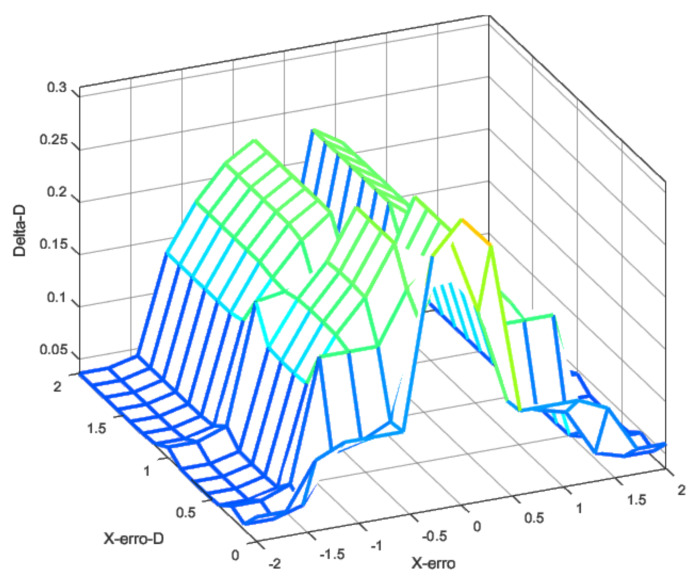
“Figures 8–10 show the fuzzy surface generated by the rules applied using a Mamdani inference method [49].”
MethodAutonomous Fuzzy Control and Navigation of Quadcopters
Domingos, D., Camargo, G. R. P., & Gomide, F. A. C. (2016) · IFAC-PapersOnLine · doi:10.1016/j.ifacol.2016.07.092 · Cited by 32 · cited 1×
“[23] proposed the utilization of the Mamdani-type fuzzy control algorithm for attitude and altitude control.”
MethodPinto, M. F., Melo, A. G., Marcato, A. L. M., & Urdiales, C. (2017) · IEEE International Symposium on Industrial Electronics (ISIE) · doi:10.1109/isie.2017.8001437 · Cited by 32 · cited 1×
“These aerial systems are being applied in a wide range of practical applications, such as inspection [2,3], surveillance [4,5], search and rescue [6,7], cargo transportation [8], etc.”
BackgroundSelf-citationUnmanned Aerial Vehicles Motion Control with Fuzzy Tuning of Cascaded-PID Gains
Andrade, F. A. A., Guedes, I. P., Carvalho, G. F., Zachi, A. R. L., Haddad, D. B., Almeida, L. F., Melo, A. G., & Pinto, M. F. (2021) · Machines · doi:10.3390/machines10010012 · Cited by 32
Self-citationRamos, G. S., Pinto, M. F., Coelho, F. O., Honório, L. D. M., & Haddad, D. B. (2022) · Robotica · doi:10.1017/s026357472100196x · Cited by 32 · cited 1×
“Another example is the case of a UAV carrying a load that can move or changes weight during flight, such as carrying a cable [33].”
BackgroundSelf-citationFuzzy State Feedback for Attitude Stabilization of Quadrotor
Torres, F., Rabhi, A., Lara, D., Romero, G., & Pégard, C. (2016) · International Journal of Advanced Robotic Systems · doi:10.5772/61934 · Cited by 29 · cited 1×
“In the work of [22], the authors used the Takagi–Sugeno (TS) technique, along with linear parallel distributed compensation for vehicle stabilization.”
MethodAmmar, N. B., Bouallègue, S., & HAGGEGE, J. Y. (2018) · International Journal of Advanced Computer Science and Applications · doi:10.14569/ijacsa.2018.090320 · Cited by 28 · cited 1×
“According to [29], the fuzzy-scheduling approach enables the possibility of having variable gains over time that can be more suitable and robust for uncertainties, disturbances, and possible faults.”
BackgroundQuadrotor UAV attitude stabilization using fuzzy robust control
Lara, D., Rabhi, A., Pégard, C., Garcia, F. T., & Romero, G. (2021) · Transactions of the Institute of Measurement and Control · doi:10.1177/01423312211002588 · Cited by 27
Tanveer, M. H., Desa, H., Ahmed, S. F., Joyo, M. K., Warsi, F. A., Kamaruddin, H., Razlan, Z. M., Khairunizam, W., & Shahriman, A. B. (2014) · IEEE International Colloquium on Signal Processing & Its Applications (CSPA) · doi:10.1109/cspa.2014.6805732 · Cited by 26 · cited 1×
“The authors of [25] used a hybrid PID control strategy to deal with wind disturbances.”
MethodAdaptive PID Control of UAV Altitude Dynamics Based on Parameter Optimization with Fuzzy Inference
Sarhan, A. A., & Qin, S. (2016) · International Journal of Modeling and Optimization · doi:10.7763/ijmo.2016.v6.534 · Cited by 26
Control Fundamentals of Small / Miniature Helicopters - A Survey
Castillo‐Effen, M., Castillo, C., Moreno, W. A., & Valavanis, K. P. (2008) · Springer eBooks · doi:10.1007/978-1-4020-6114-1_4 · Cited by 22 · cited 1×
“Authors refer to [46] for this type of model limitation and characteristic.”
BackgroundHybrid PID-Fuzzy controller for autonomous UAV stabilization
Carvalho, G. F., Guedes, I. P., Pinto, M. F., Zachi, A. R. L., Almeida, L. F., Andrade, F. A. A., & Melo, A. G. (2021) · IEEE International Conference on Industry Applications · doi:10.1109/induscon51756.2021.9529680 · Cited by 22 · cited 2×
“The authors of [16] proposed a Fuzzy-type PID hybrid approach to improve the attitude controller by adjusting the PID gains through fuzzy logic.”
BackgroundMethodSelf-citationDecentralized sampled-data fuzzy controller design for a VTOL UAV
Kim, H. S., Lee, K., & Joo, Y. H. (2021) · Journal of the Franklin Institute · doi:10.1016/j.jfranklin.2020.12.025 · Cited by 21 · cited 1×
“Most of these works are based on fuzzy logic [15,16], sliding-mode controller (SMC) [17], neural network-based control [18], backstepping-based adaptive control [19], and a linear quadratic regulator (LQR) [20], among others.”
BackgroundFuzzy Gain Scheduling PID Control for Position of the AR.Drone
Prayitno, A., Indrawati, V., & Trusulaw, I. I. (2018) · International Journal of Electrical and Computer Engineering (IJECE) · doi:10.11591/ijece.v8i4.pp1939-1946 · Cited by 17
Dief, T. N., Yoshida, S., & Abdel-Hady, M. (2015) · AIAA Atmospheric Flight Mechanics Conference · doi:10.2514/6.2015-2392 · Cited by 15 · cited 1×
“The use of a fuzzy controller can improve the system’s robustness and adaptability [28].”
BackgroundZhang, Z., Chen, T., & Zheng, L. (2021) · Nonlinear Dynamics · doi:10.1007/s11071-021-06445-9 · Cited by 12 · cited 1×
“Most of these works are based on fuzzy logic [15,16], sliding-mode controller (SMC) [17], neural network-based control [18], backstepping-based adaptive control [19], and a linear quadratic regulator (LQR) [20], among others.”
BackgroundFlight control of a flying-wing UAV based on active disturbance rejection control
Yuxiang, Z., Yin, Y., & Song, J. Y. (2017) · IEEE International Conference on Control Science and Systems Engineering (ICCSSE) · doi:10.1109/ccsse.2017.8087893 · Cited by 10 · cited 1×
“A similar methodology was implemented in [35] by using an active disturbance rejection control (ADRC) controller.”
MethodDevelopment and Validation of a LQR-Based Quadcopter Control Dynamics Simulation Model
Minervini, A., Godio, S., Guglieri, G., Dovis, F., & Bici, A. (2021) · Journal of Aerospace Engineering · doi:10.1061/(asce)as.1943-5525.0001336 · Cited by 8 · cited 1×
“Most of these works are based on fuzzy logic [15,16], sliding-mode controller (SMC) [17], neural network-based control [18], backstepping-based adaptive control [19], and a linear quadratic regulator (LQR) [20], among others.”
BackgroundFlying velocity constraint control for quad-rotor system based on finite-Time control technique
Wei, J., Zhou, J., Du, H., & Wu, D. (2020) · Chinese Control Conference (CCC) · doi:10.23919/ccc50068.2020.9188931 · Cited by 1 · cited 1×
“Note that a design of high-quality flight is a tough effort for quadrotor UAVs due to their nonlinear characteristics [12].”
Background
Research works printed but not linked: 3
- Biundini, I.Z., Melo, A.G., Pinto, M.F., Marins, G.M., Marcato, A.L., and Honorio, L.M. Coverage Path Planning Optimization for Slopes and Dams Inspection. Proceedings of the Iberian Robotics Conference.
- Fernández, R.A.S., Dominguez, S., and Campoy, P. (2017, January 13–16). L1 adaptive control for wind gust rejection in quad-rotor uav wind turbine inspection. Proceedings of the 2017 International Conference on Unmanned Aircraft Systems (ICUAS), Miami, FL, USA.
- Sharma, 2012, Controlling of quad-rotor uav using pid controller and fuzzy logic controller, Int. J. Electr. Electron. Comput. Eng., 1, 38
Cited by
Yang, C., Zuo, Y., Lu, W., & Wang, T. (2025) · Nonlinear Dynamics · doi:10.1007/s11071-025-11197-x · Cited by 97
“Melo et al. [10] proposed an effective and simple PID controller tuning strategy to make the position and altitude stable using a fuzzy gain scheduling mechanism.”
Berger, G. S., Teixeira, M. A. S., Cantieri, Á. R., Lima, J., Pereira, A. I., Valente, A. L. G., de Castro, G. G. R., & Pinto, M. F. (2023) · Agriculture · doi:10.3390/agriculture13020239 · Cited by 73
Self-citationA Review of Modeling and Control Techniques for Unmanned Aerial Vehicles
Gedefaw, E. A., Abera, N. B., & Abdissa, C. M. (2025) · Engineering Reports · doi:10.1002/eng2.70215 · Cited by 54
Madebo, N. W. (2025) · IEEE Access · doi:10.1109/access.2025.3532743 · Cited by 46
“In reference [29], the authors address the challenges of maintaining UAV stability during autonomous maneuvers, with a focus on attitude and position control.”
Understanding and Securing the Risks of Uncrewed Aerial Vehicle Services
Anagnostis, I., Kotzanikolaou, P., & Douligeris, C. (2025) · IEEE Access · doi:10.1109/access.2025.3549861 · Cited by 42
Metadata
- Authors
- Melo, A. G., Andrade, F. A. A., Guedes, I. P., Carvalho, G. F., Zachi, A. R. L., & Pinto, M. F.
- Affiliations
- Department of Electrical Engineering, Federal University of Juiz de Fora, Juiz de Fora 36036-900, Brazil
- University of South-Eastern Norway (NO)
- Federal Center for Technological Education Celso Suckow da Fonseca (BR)
- Corresponding author
- Andrade, Fabio A. A.
- ORCID
- Venue
- Sensors
- Publisher
- MDPI AG
- Published
- 2022-03-10
- Volume
- 22
- Issue
- 6
- Pages
- 2173
- ISSN
- 1424-8220 (ISSN-L)
- PMC
- PMC8954855
- OpenAlex
- W4220953675
- Cited by
- 52
- References
- 46
- Citations by year
- 2026: 13 · 2025: 13 · 2024: 15 · 2023: 9 · 2022: 2
- FWCI
- 4.34
- Type
- journal article
- Language
- en
- Open access
- gold
- doi.org
- Licence
- Locations
- Sensors (publishedVersion, cc-by)
- PubMed Central (publishedVersion, cc-by)
- PubMed (publishedVersion)
- DOAJ (DOAJ: Directory of Open Access Journals) (submittedVersion, cc-by-sa)
- NORA - Norwegian Open Research Archives (submittedVersion, other-oa)
- Funders
- Fundação Carlos Chagas Filho de Amparo à Pesquisa do Estado do Rio de Janeiro (001)
- National Council for Scientific and Technological Development (001)
- Topics
- Physical Sciences › Engineering › Aerospace Engineering › Aerospace Engineering and Control Systems
- Physical Sciences › Engineering › Control and Systems Engineering › Adaptive Control of Nonlinear Systems
- Physical Sciences › Computer Science › Artificial Intelligence › Fuzzy Logic and Control Systems
- Keywords
- fuzzy gain scheduling, PID control, unmanned aerial vehicles, trajectory tracking, attitude control, flight control, Robot Operating System, robustness to disturbances
About these checks
Registry, retraction, Cites and statistics results are computed, not judged, with one exception: a printed reference that no index lists is read once by a model before it counts as a citation error. Claims are extracted by a model and kept only when their quote appears verbatim in the text; each cited source is then checked, with a model’s help, for whether it says what the claim relies on. Those verdicts can be wrong — read the claim’s quote and the cited source before relying on one.
Statistics and arithmetic are recomputed, not judged.
Confidence bands are shown only for fields calibrated on our annotated test set. None is calibrated yet, so no band is shown.
What counts as a claim ›How we measure confidence ›How we check this ›
Are you an author, or do you see a problem with this page? Request a review
Data sources
Bibliographic data: Semantic Scholar, OpenAlex, Crossref.
Contains information from the Semantic Scholar Academic Graph Datasets, made available under the ODC Attribution License (ODC-BY 1.0).
Semantic Scholar’s data is described in: Kinney, R., et al. (2023). The Semantic Scholar Open Data Platform. arXiv:2301.10140.
