

The DOI matches its Crossref record; 35 of the 35 references it cites were found in a registry or an index.
Real Time Monitoring of Wine Vinegar Supply Chain through MOX Sensors
Open accessAbstract
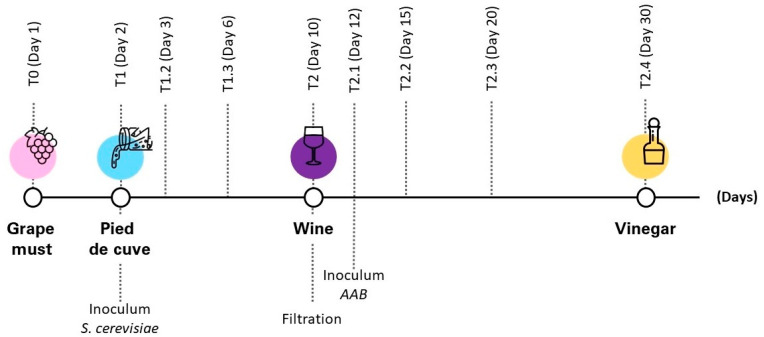
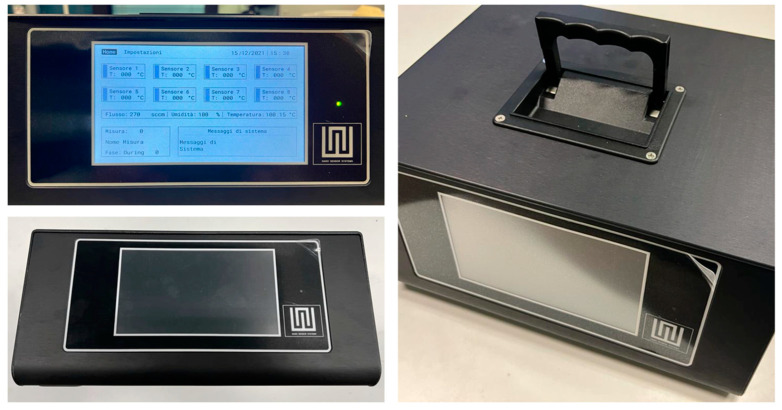
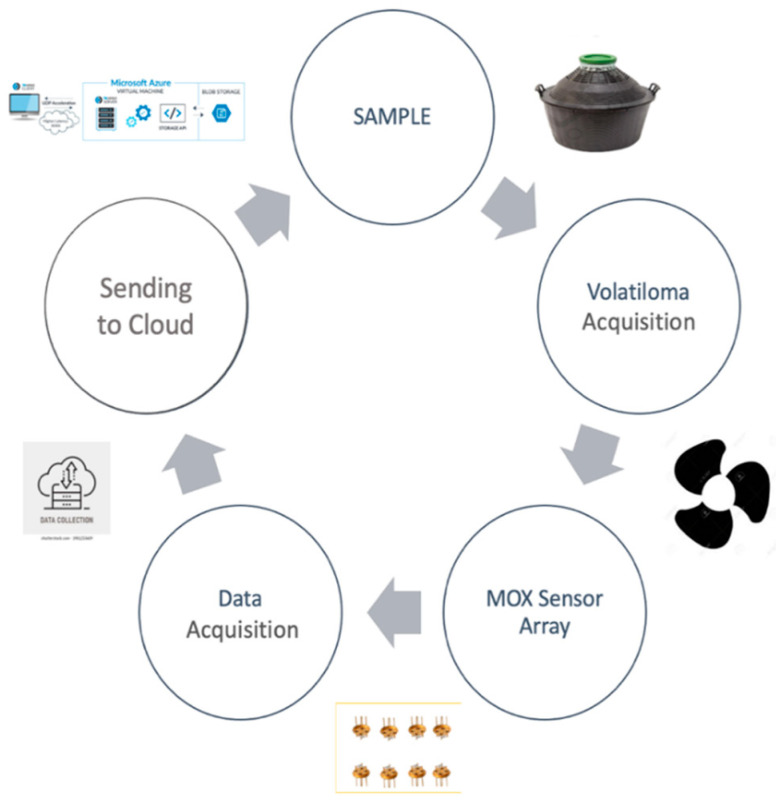
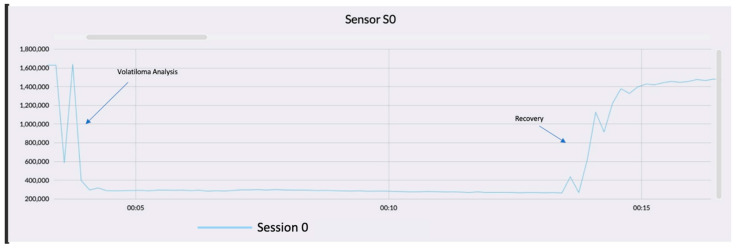
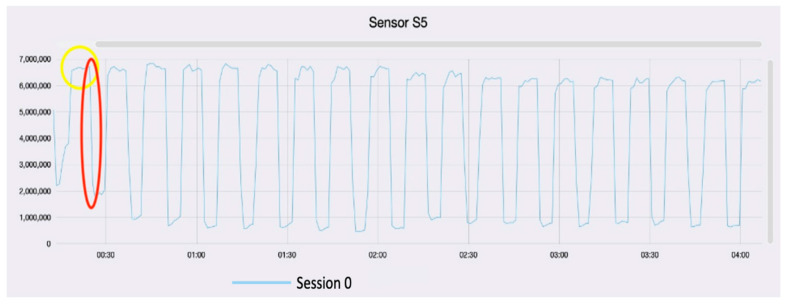
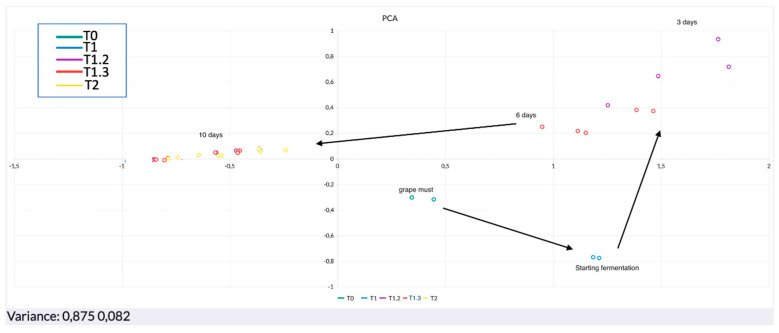
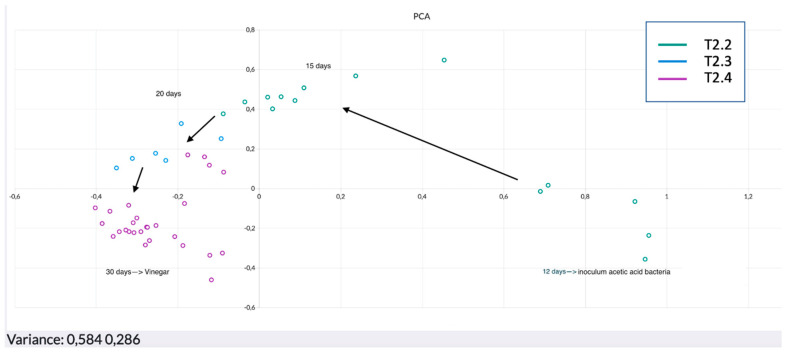
Vinegar is a fermented product that is appreciated world-wide. It can be obtained from different kinds of matrices. Specifically, it is a solution of acetic acid produced by a two stage fermentation process. The first is an alcoholic fermentation, where the sugars are converted in ethanol and lower metabolites by the yeast action, generally Saccharomyces cerevisiae. This was performed through a technique that is expanding more and more, the so-called “pied de cuve”. The second step is an acetic fermentation where acetic acid bacteria (AAB) action causes the conversion of ethanol into acetic acid. Overall, the aim of this research is to follow wine vinegar production step by step through the volatiloma analysis by metal oxide semiconductor MOX sensors developed by Nano Sensor Systems S.r.l. This work is based on wine vinegar monitored from the grape must to the formed vinegar. The monitoring lasted 4 months and the analyses were carried out with a new generation of Electronic Nose (EN) engineered by Nano Sensor Systems S.r.l., called Small Sensor Systems Plus (S3+), equipped with an array of six gas MOX sensors with different sensing layers each. In particular, real-time monitoring made it possible to follow and to differentiate each step of the vinegar production. The principal component analysis (PCA) method was the statistical multivariate analysis utilized to process the dataset obtained from the sensors. A closer look to PCA graphs affirms how the sensors were able to cluster the production steps in a chronologically correct manner.
Overview
The claims and statistics of this paper haven’t been checked yet.
Run the check — free, no account needed. It reads the open-access text and checks the sources it cites.
Integrity signals
Registry
Cites
Statistics
Figures
Verification
Claims the paper makes
The claims and statistics of this paper haven’t been checked yet.
Run the check — free, no account needed. It reads the open-access text and checks the sources it cites.
Claims other papers make about this one
Each is checked against this paper’s own text: does it say what the citing paper says it does?
The source backs part of the claim, not all of it — or backs it for a different population, condition or comparison.
In the citing paper
“During the liquid fermentation of fruit vinegar, acetic acid bacteria primarily produce acetic acid via the sugar metabolism pathway. Acetic acid is a key component of fruit vinegar and plays a crucial role in determining its acidity. Specifically, acetic acid bacteria metabolize ethanol, which is generated by yeast during alcoholic fermentation, into acetic acid through a series of enzymatic”
From The Metabolic Pathways of Yeast and Acetic Acid Bacteria During Fruit Vinegar Fermentation and Their Influence on Flavor Development (2025) · cites this paper as [41]
Experimental — accuracy not yet measured
Self-check
Percentages, sums and reported differences re-computed from the paper’s own numbers.
The self-check needs the paper’s full text.
Citations
Cites
Functional Properties of Vinegar
Budak, N. H., Aykin, E., Seydim, A. C., Greene, A. K., & Guzel‐Seydim, Z. B. (2014) · Journal of Food Science · doi:10.1111/1750-3841.12434 · Cited by 405
Parallel pathways of ethanol oxidation: The effect of ethanol concentration
Câmara, G. A., & Iwasita, T. (2005) · Journal of Electroanalytical Chemistry · doi:10.1016/j.jelechem.2005.01.013 · Cited by 365
Cleenwerck, I., Vandemeulebroecke, K., Janssens, D., & Swings, J. (2002) · INTERNATIONAL JOURNAL OF SYSTEMATIC AND EVOLUTIONARY MICROBIOLOGY · doi:10.1099/00207713-52-5-1551 · Cited by 277
Nutrients and Bioactive Components from Vinegar: A Fermented and Functional Food
Xia, T., Zhang, B., Duan, W., Zhang, J., & Wang, M. (2020) · Journal of Functional Foods · doi:10.1016/j.jff.2019.103681 · Cited by 220 · cited 1×
“The main fermentation systems to produce vinegar are two: liquid state fermentation and solid state fermentation [10].”
Background(2009) · doi:10.1007/978-88-470-0866-3 · Cited by 204
Gullo, M., Verzelloni, E., & Canonico, M. (2014) · Process Biochemistry · doi:10.1016/j.procbio.2014.07.003 · Cited by 185
Characterization of acetic acid bacteria in “traditional balsamic vinegar”
Gullo, M., Caggia, C., Vero, L. D., & Giudici, P. (2005) · International Journal of Food Microbiology · doi:10.1016/j.ijfoodmicro.2005.06.024 · Cited by 180
Elmi, I., Zampolli, S., Cozzani, E., Mancarella, F., & Cardinali, G. C. (2008) · Sensors and Actuators B Chemical · doi:10.1016/j.snb.2008.09.002 · Cited by 152
Xu, W., Huang, Z., Zhang, X., Li, Q., Lu, Z., Shi, J., Xu, Z., & Ma, Y. (2011) · Food Microbiology · doi:10.1016/j.fm.2011.03.011 · Cited by 130
Characterisation of polymer nanocomposite sensors for quantification of bacterial cultures
Arshak, K. I., Adley, C. C., Moore, E., Cunniffe, C., CAMPION, M., & HARRIS, J. (2007) · Sensors and Actuators B Chemical · doi:10.1016/j.snb.2006.12.006 · Cited by 129
Research works printed but not linked: 2
- Hailu, 2012, Vinegar production technology—An overview, Beverage Food World, 2, 29
- Sun, 2010, Changes of characteristic aroma component in Zhenjiang fragrance vinegar during processing and analysis of their formation mechanism, J. Chin. Inst. Food Sci. Technol., 10, 120
Cited by
Sorted by citations
Ge, Y., Wu, Y., Aihaiti, A., Wang, L., Wang, Y., Xing, J., Zhu, M., & Hong, J. (2025) · Microorganisms · doi:10.3390/microorganisms13030477 · Cited by 49
Feng, H., Viejo, C. G., Vaghefi, N., Taylor, P. W. J., Tongson, E. J., & Fuentes, S. (2022) · Sensors · doi:10.3390/s22228645 · Cited by 29
Littarru, E., Modesti, M., Alfieri, G., Pettinelli, S., Floridia, G., Bellincontro, A., Sanmartin, C., & Brizzolara, S. (2024) · Journal of the Science of Food and Agriculture · doi:10.1002/jsfa.13336 · Cited by 28
Devices for monitoring oenological processes: A review
Gallego-Martínez, J. J., Cañete, E., Gersnoviez, A., Brox, M., Sánchez-Gil, J. J., Martín, C., & Moreno, J. (2024) · Measurement · doi:10.1016/j.measurement.2024.114922 · Cited by 25
SERS-Based Hydrogen Bonding Induction Strategy for Gaseous Acetic Acid Capture and Detection
Kou, Y., Zhang, X., Li, H., Zhang, K.-L., Xu, Q., Zheng, Q., Tian, J., Zhang, Y., & Li, J. (2024) · Analytical Chemistry · doi:10.1021/acs.analchem.3c05905 · Cited by 22
Metadata
- Authors
- Genzardi, D., Greco, G., Núñez-Carmona, E., & Sberveglieri, V.
- Affiliations
- Institute of Biosciences and Bioresources (IT)
- University of Brescia (IT)
- Corresponding author
- Greco, Giuseppe
- Venue
- Sensors
- Publisher
- MDPI AG
- Published
- 2022-08-19
- Volume
- 22
- Issue
- 16
- Pages
- 6247
- ISSN
- 1424-8220 (ISSN-L)
- PMC
- PMC9412311
- OpenAlex
- W4293256761
- Cited by
- 19
- References
- 35
- Citations by year
- 2026: 5 · 2025: 4 · 2024: 5 · 2023: 4 · 2022: 1
- FWCI
- 1.02
- Type
- journal article
- Language
- en
- Open access
- gold
- doi.org
- Licence
- Locations
- Sensors (publishedVersion, cc-by)
- PubMed Central (publishedVersion, cc-by)
- PubMed (publishedVersion)
- DOAJ (DOAJ: Directory of Open Access Journals) (submittedVersion, cc-by-sa)
- Topics
- Physical Sciences › Engineering › Biomedical Engineering › Advanced Chemical Sensor Technologies
- Physical Sciences › Chemistry › Analytical Chemistry › Spectroscopy and Chemometric Analyses
- Life Sciences › Agricultural and Biological Sciences › Food Science › Fermentation and Sensory Analysis
- Keywords
- wine vinegar, vinegar production, supply chain monitoring, metal oxide gas sensors, electronic nose, volatilome, alcoholic fermentation, acetic acid fermentation, acetic acid bacteria, grape must, real-time monitoring, principal component analysis, sensor arrays
- MeSH terms
- Ethanol, Fermentation, Saccharomyces cerevisiae, Wine, Acetic Acid
About these checks
Registry, retraction, Cites and statistics results are computed, not judged, with one exception: a printed reference that no index lists is read once by a model before it counts as a citation error. Claims are extracted by a model and kept only when their quote appears verbatim in the text; each cited source is then checked, with a model’s help, for whether it says what the claim relies on. Those verdicts can be wrong — read the claim’s quote and the cited source before relying on one.
Statistics and arithmetic are recomputed, not judged.
Confidence bands are shown only for fields calibrated on our annotated test set. None is calibrated yet, so no band is shown.
What counts as a claim ›How we measure confidence ›How we check this ›
Are you an author, or do you see a problem with this page? Request a review
How to cite
Cite CoChat for the checks on this page, and the paper for its own findings.
- This page
- CoChat. (2026). Citation check: Real Time Monitoring of Wine Vinegar Supply Chain through MOX Sensors. https://app.cochat.ai/papers/10.3390/s22166247
- The paper
- Genzardi, D., Greco, G., Núñez-Carmona, E., & Sberveglieri, V. (2022). Real Time Monitoring of Wine Vinegar Supply Chain through MOX Sensors. Sensors. https://doi.org/10.3390/s22166247
