

The DOI matches its Crossref record; 37 of the 37 references it cites were found in a registry or an index.
Classification of Normal and Malicious Traffic Based on an Ensemble of Machine Learning for a Vehicle CAN-Network
Open accessAbstract
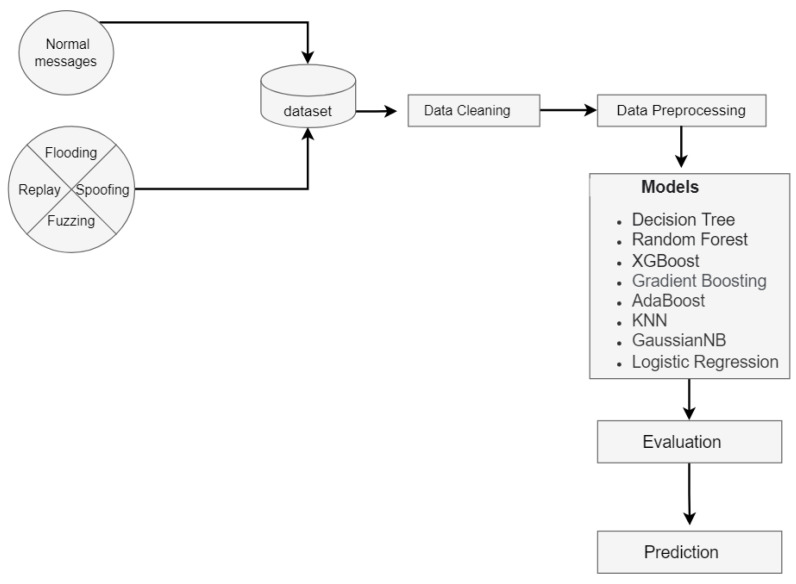
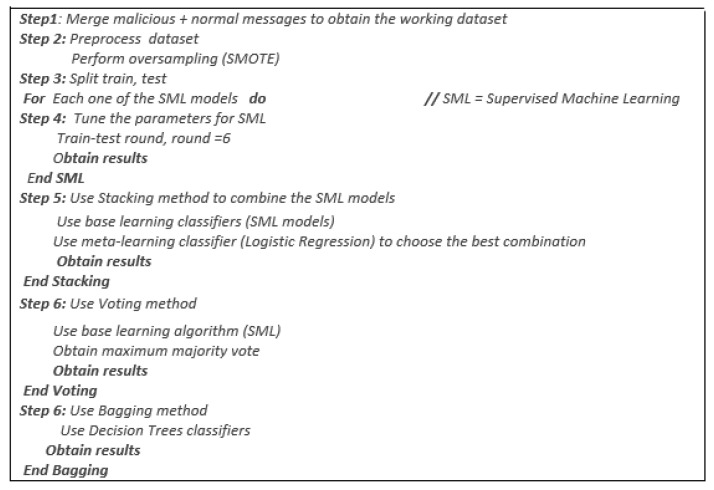
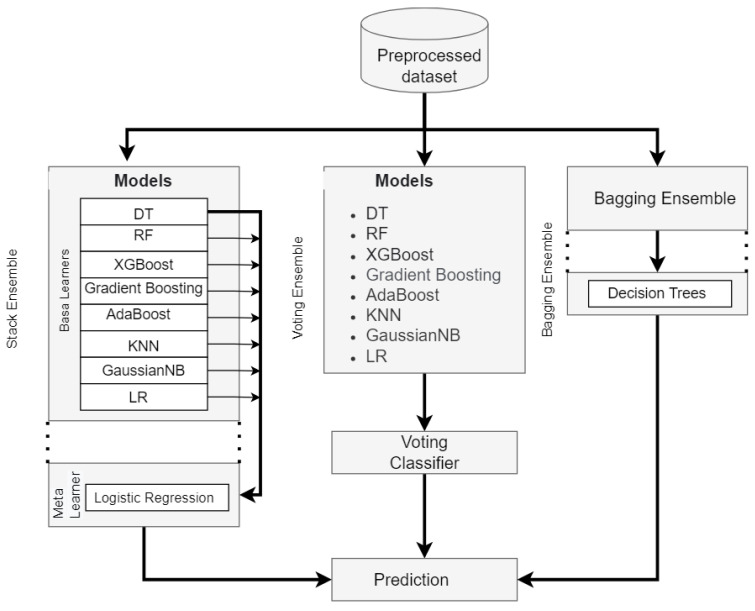
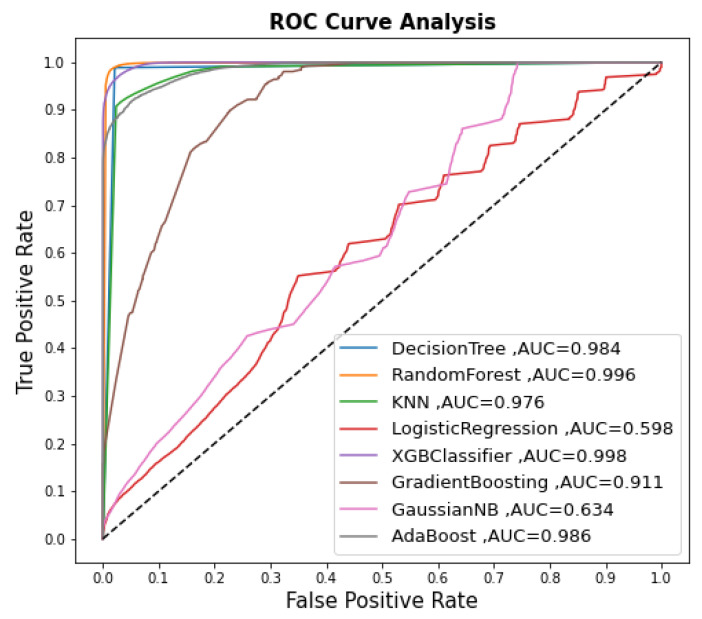
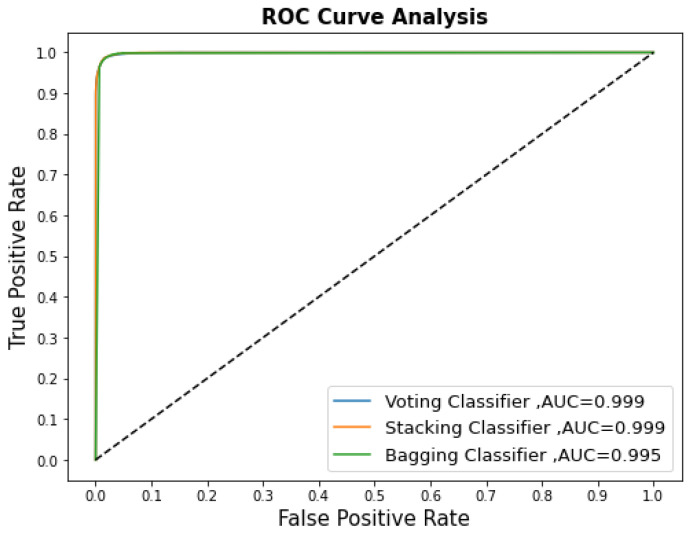
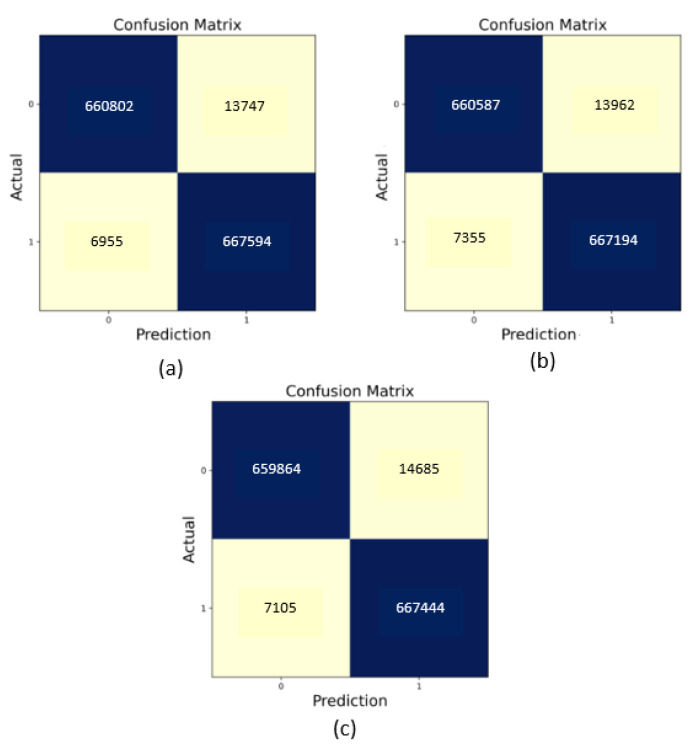
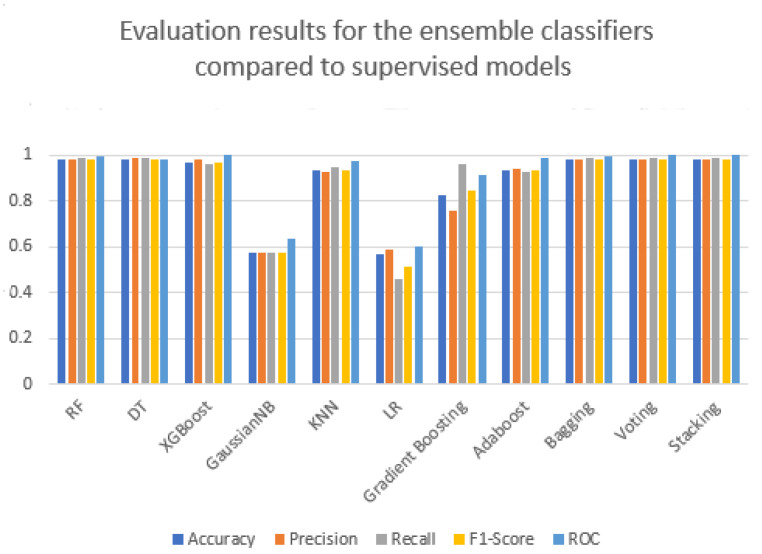
Connectivity and automation have expanded with the development of autonomous vehicle technology. One of several automotive serial protocols that can be used in a wide range of vehicles is the controller area network (CAN). The growing functionality and connectivity of modern vehicles make them more vulnerable to cyberattacks aimed at vehicular networks. The CAN bus protocol is vulnerable to numerous attacks, as it is lacking security mechanisms by design. It is crucial to design intrusion detection systems (IDS) with high accuracy to detect attacks on the CAN bus. In this paper, we design an effective machine learning-based IDS scheme for binary classification that utilizes eight supervised ML algorithms, along with ensemble classifiers. The scheme achieved a higher effectiveness score in detecting normal and abnormal activities when trained with normal and malicious CAN traffic datasets. Random Forest, Decision Tree, and Xtreme Gradient Boosting classifiers provided the most accurate results. Then we evaluated three ensemble methods, voting, stacking, and bagging, for this classification task. The ensemble classifiers achieved better accuracy than the individual models, since ensemble learning strategies have superior performance through a combination of multiple learning mechanisms. These mechanisms have a varied range of capabilities that improve the prediction reliability while lowering the possibility of classification errors. Our model outperformed the most recent study that used the same dataset, with an accuracy of 0.984.
Overview
The claims and statistics of this paper haven’t been checked yet.
Run the check — free, no account needed. It reads the open-access text and checks the sources it cites.
Integrity signals
Registry
Cites
Statistics
Figures

Verification
Claims the paper makes
The claims and statistics of this paper haven’t been checked yet.
Run the check — free, no account needed. It reads the open-access text and checks the sources it cites.
Claims other papers make about this one
Each is checked against this paper’s own text: does it say what the citing paper says it does?
The cited source says what the claim attributes to it.
In the citing paper
“In [140], the authors proposed an IDS scheme to classify normal and malicious traffic messages in vehicle networks using eight supervised models. Their scheme demonstrated high performance.”
From Security and Trust Management in the Internet of Vehicles (IoV): Challenges and Machine Learning Solutions (2024) · cites this paper as [140]
Self-check
Percentages, sums and reported differences re-computed from the paper’s own numbers.
The self-check needs the paper’s full text.
Citations
Cites
Wolpert, D. H. (1992) · Neural Networks · doi:10.1016/s0893-6080(05)80023-1 · Cited by 7,951
SMOTE for Learning from Imbalanced Data: Progress and Challenges, Marking the 15-year Anniversary
Fernández, A., García, S., Herrera, F., & Chawla, N. V. (2018) · Journal of Artificial Intelligence Research · doi:10.1613/jair.1.11192 · Cited by 2,416
(2011) · Cited by 1,423
An overview of Internet of Vehicles
Yang, F., Wang, S., Li, J., Liu, Z., & Sun, Q. (2014) · China Communications · doi:10.1109/cc.2014.6969789 · Cited by 665
VANet security challenges and solutions: A survey
Hasrouny, H., Samhat, A. E., Bassil, C., & Laouiti, A. (2017) · Vehicular Communications · doi:10.1016/j.vehcom.2017.01.002 · Cited by 642
A Survey on Recent Advances in Vehicular Network Security, Trust, and Privacy
Lu, Z., Qu, G., & Liu, Z. (2019) · IEEE Transactions on Intelligent Transportation Systems · doi:10.1109/tits.2018.2818888 · Cited by 608
GIDS: GAN based Intrusion Detection System for In-Vehicle Network
Seo, E., Song, H. M., & Kim, H. K. (2018) · Conference on Privacy, Security and Trust · doi:10.1109/pst.2018.8514157 · Cited by 599
A Systematic Review on Imbalanced Data Challenges in Machine Learning
Kaur, H., Pannu, H. S., & Malhi, A. K. (2019) · ACM Computing Surveys · doi:10.1145/3343440 · Cited by 492
A Survey of Intrusion Detection for In-Vehicle Networks
Wu, W., Li, R., Xie, G., An, J., Bai, Y., Zhou, J., & Li, K. (2019) · IEEE Transactions on Intelligent Transportation Systems · doi:10.1109/tits.2019.2908074 · Cited by 417
Artificial Intelligence for Vehicle-to-Everything: A Survey
Wang, T., Hussain, A., Bo, W. X., & Maharjan, S. (2019) · IEEE Access · doi:10.1109/access.2019.2891073 · Cited by 343
Research works printed but not linked: 4
- Avatefipour, O., and Malik, H. (2018). State-of-the-art survey on in-vehicle network communication (CAN-Bus) security and vulnerabilities. arXiv.
- Kang, H., Kwak, B., Lee, Y., Lee, H., Lee, H., and Kim, H. (2021). Car Hacking: Attack and Defense Challenge 2020 Dataset. IEEE Dataport, IEEE.
- Dietterich, 2002, Ensemble learning, Handb. Brain Theory Neural Netw., 2, 110
- Quinlan, J.R. (1996, January 4–8). Bagging, boosting, and C4.5. Proceedings of the AAAI/IAAI, Portland, OR, USA.
Cited by
Almehdhar, M., Albaseer, A. M., Khan, M. A., Abdallah, M. M., Menouar, H., Al-Kuwari, S. M., & Al‐Fuqaha, A. (2024) · IEEE Open Journal of Vehicular Technology · doi:10.1109/ojvt.2024.3422253 · Cited by 160
Ensemble-Learning Framework for Intrusion Detection to Enhance Internet of Things’ Devices Security
Alotaibi, Y., & Ilyas, M. (2023) · Sensors · doi:10.3390/s23125568 · Cited by 131
Alalwany, E., & Mahgoub, I. (2024) · Sensors · doi:10.3390/s24020368 · Cited by 130
Self-citationBari, B. S., Yelamarthi, K., & Ghafoor, S. (2023) · Sensors · doi:10.3390/s23073610 · Cited by 83
Balhareth, G., & Ilyas, M. (2024) · Sensors · doi:10.3390/s24175712 · Cited by 76
Metadata
- Authors
- Alalwany, E., & Mahgoub, I.
- Affiliations
- Taibah University (SA)
- Florida Atlantic University (US)
- Corresponding author
- Mahgoub, Imad
- Venue
- Sensors
- Publisher
- MDPI AG
- Published
- 2022-11-26
- Volume
- 22
- Issue
- 23
- Pages
- 9195
- ISSN
- 1424-8220 (ISSN-L)
- PMC
- PMC9736208
- OpenAlex
- W4310153907
- Cited by
- 36
- References
- 36
- Citations by year
- 2026: 7 · 2025: 11 · 2024: 12 · 2023: 6
- FWCI
- 3.22
- Type
- journal article
- Language
- en
- Open access
- gold
- doi.org
- Licence
- Locations
- Sensors (publishedVersion, cc-by)
- PubMed Central (publishedVersion, cc-by)
- PubMed (publishedVersion)
- DOAJ (DOAJ: Directory of Open Access Journals) (submittedVersion, cc-by-sa)
- Funders
- Florida Atlantic University
- Universidad del Atlántico
- Topics
- Physical Sciences › Computer Science › Computer Networks and Communications › Network Security and Intrusion Detection
- Physical Sciences › Computer Science › Artificial Intelligence › Adversarial Robustness in Machine Learning
- Physical Sciences › Computer Science › Artificial Intelligence › Artificial Immune Systems Applications
- Keywords
- CAN bus, VANET security, intrusion detection, malicious traffic classification, ensemble classifiers, stacking, voting, bagging, random forest, XGBoost, decision tree, autonomous vehicles
- MeSH terms
- Machine Learning, Algorithms, Reproducibility of Results
About these checks
Registry, retraction, Cites and statistics results are computed, not judged, with one exception: a printed reference that no index lists is read once by a model before it counts as a citation error. Claims are extracted by a model and kept only when their quote appears verbatim in the text; each cited source is then checked, with a model’s help, for whether it says what the claim relies on. Those verdicts can be wrong — read the claim’s quote and the cited source before relying on one.
Statistics and arithmetic are recomputed, not judged.
Confidence bands are shown only for fields calibrated on our annotated test set. None is calibrated yet, so no band is shown.
What counts as a claim ›How we measure confidence ›How we check this ›
Are you an author, or do you see a problem with this page? Request a review
