

An Adaptive Real-Time Malicious Node Detection Framework Using Machine Learning in Vehicular Ad-Hoc Networks (VANETs)
Open accessThe DOI matches its Crossref record; 48 of the 48 references it cites were found in a registry or an index.
Abstract
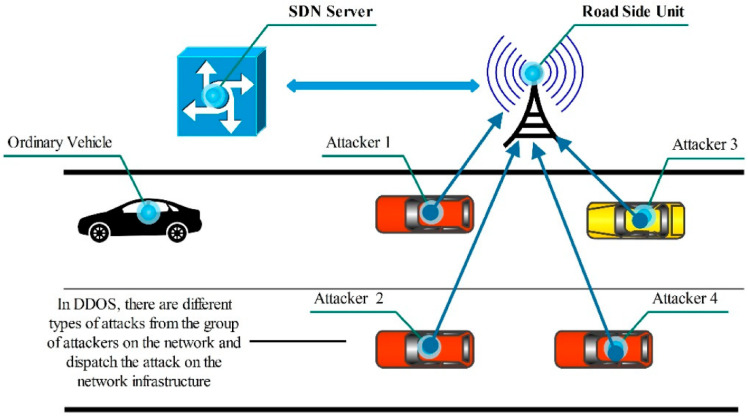
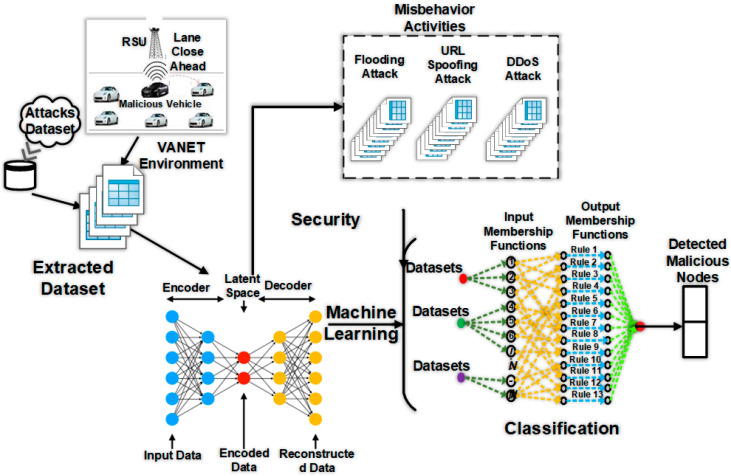
Modern vehicle communication development is a continuous process in which cutting-edge security systems are required. Security is a main problem in the Vehicular Ad Hoc Network (VANET). Malicious node detection is one of the critical issues found in the VANET environment, with the ability to communicate and enhance the mechanism to enlarge the field. The vehicles are attacked by malicious nodes, especially DDoS attack detection. Several solutions are presented to overcome the issue, but none are solved in a real-time scenario using machine learning. During DDoS attacks, multiple vehicles are used in the attack as a flood on the targeted vehicle, so communication packets are not received, and replies to requests do not correspond in this regard. In this research, we selected the problem of malicious node detection and proposed a real-time malicious node detection system using machine learning. We proposed a distributed multi-layer classifier and evaluated the results using OMNET++ and SUMO with machine learning classification using GBT, LR, MLPC, RF, and SVM models. The group of normal vehicles and attacking vehicles dataset is considered to apply the proposed model. The simulation results effectively enhance the attack classification with an accuracy of 99%. Under LR and SVM, the system achieved 94 and 97%, respectively. The RF and GBT achieved better performance with 98% and 97% accuracy values, respectively. Since we have adopted Amazon Web Services, the network’s performance has improved because training and testing time do not increase when we include more nodes in the network.
Overview
The claims and statistics of this paper haven’t been checked yet.
Free: it reads the open-access text and checks the first 5 claims that cite a source we can check. Create a free account to check every claim.
Integrity signals
Registry
Cites
Statistics
Figures

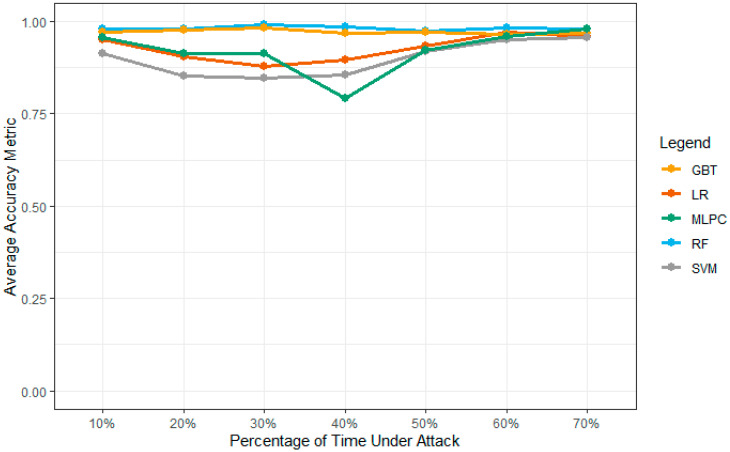
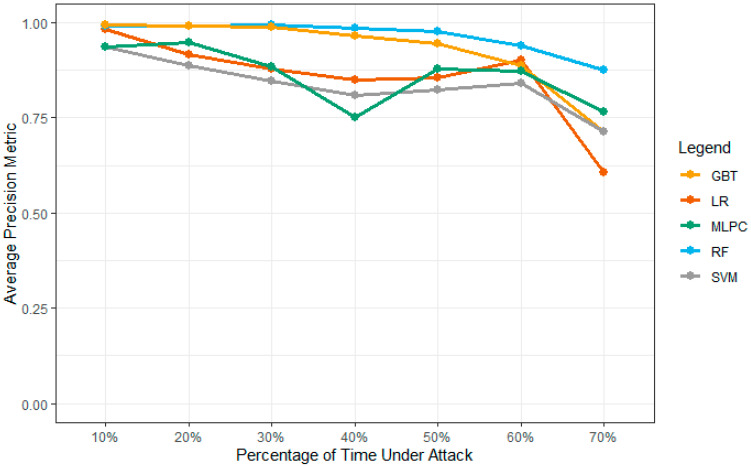
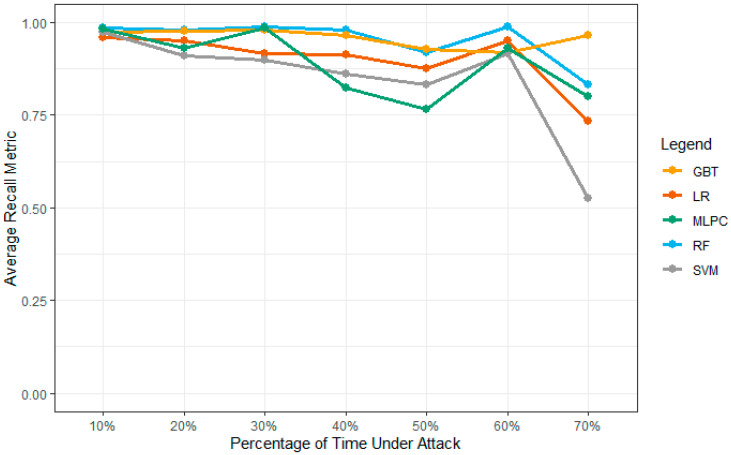
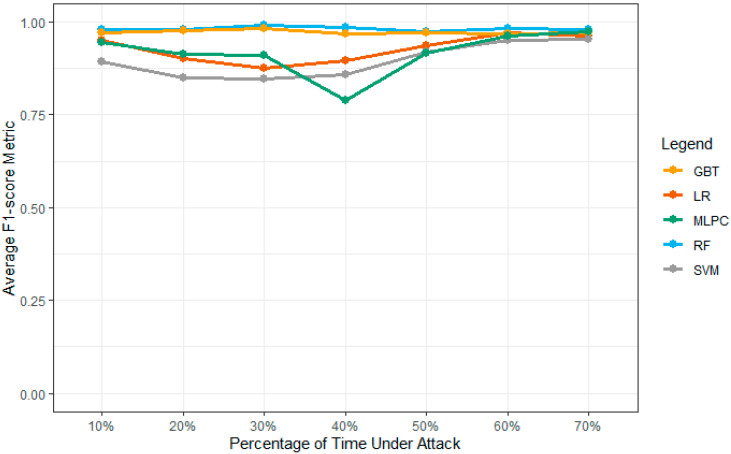

Verification
Claims the paper makes
The claims and statistics of this paper haven’t been checked yet.
Free: it reads the open-access text and checks the first 5 claims that cite a source we can check. Create a free account to check every claim.
Claims other papers make about this one
Each is checked against this paper’s own text: does it say what the citing paper says it does?
The source backs part of the claim, not all of it — or backs it for a different population, condition or comparison.
In the citing paper
“Edge Computing for Real-Time Threat Mitigation: Decentralized processing at edge nodes enhances response speed and scalability, reducing reliance on cloud servers [Rashid et al., 2023].”
From A Hybrid Deep Learning Model for Detection and Mitigation of DDoS Attacks in VANETs (2025) · cites this paper as Rashid et al., 2023
Experimental — accuracy not yet measured
Self-check
Percentages, sums and reported differences re-computed from the paper’s own numbers.
The self-check needs the paper’s full text.
Citations
Cites
1 retracted
Kalaiselvi, K., Vanitha, L., Thilak, K. D., Kumar, T. R., Saranya, S., & Kumaresan, K. (2021) · Wireless Personal Communications · doi:10.1007/s11277-021-08790-9 · Cited by 10 · cited 2×
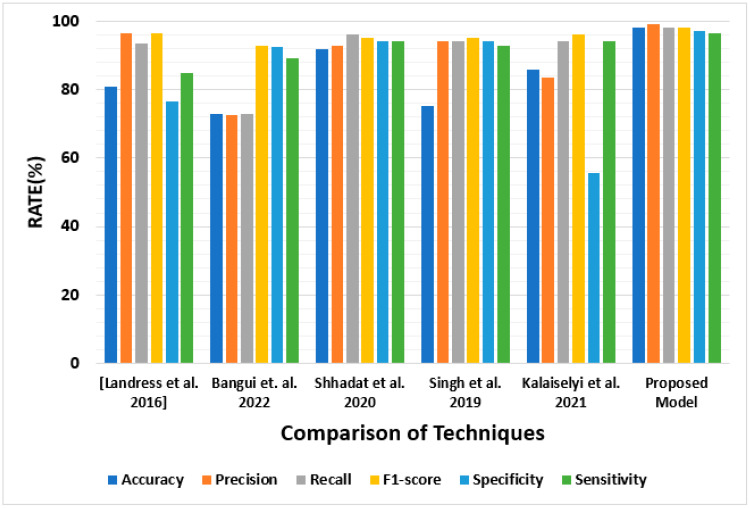
“Conclusions and Future Research The results show that the proposed approach presents accuracy, precision, recall, F1 score, specificity, and sensitivity with 98%, 99%, 98%, 98%, 97%, and 96.6% from the proposed results.”
ResultInfluentialRetractedAl-Heety, O. S., Zakaria, Z., Ismail, M., Shakir, M. M., Alani, S., & Alsariera, H. (2020) · IEEE Access · doi:10.1109/access.2020.2992580 · Cited by 258 · cited 1×
“Real-time means whenever a node starts behaving differently, we encounter the machine learning algorithm that starts detection of the malicious nodes [25].”
BackgroundAuthentication and privacy schemes for vehicular ad hoc networks (VANETs): A survey
Ali, I., Hassan, A., & Li, F. (2019) · Vehicular Communications · doi:10.1016/j.vehcom.2019.02.002 · Cited by 219 · cited 1×
“Real-time means whenever a node starts behaving differently, we encounter the machine learning algorithm that starts detection of the malicious nodes [25].”
BackgroundVANET applications: Past, present, and future
Lee, M., & Atkison, T. (2021) · Vehicular Communications · doi:10.1016/j.vehcom.2020.100310 · Cited by 196 · cited 1×
“Real-time means whenever a node starts behaving differently, we encounter the machine learning algorithm that starts detection of the malicious nodes [25].”
BackgroundSecurity of Vehicular Ad Hoc Networks using blockchain: A comprehensive review
Grover, J. (2022) · Vehicular Communications · doi:10.1016/j.vehcom.2022.100458 · Cited by 169 · cited 1×
“Real-time means whenever a node starts behaving differently, we encounter the machine learning algorithm that starts detection of the malicious nodes [25].”
BackgroundKhatri, S., Vachhani, H., Shah, S., Bhatia, J., Chaturvedi, M., Tanwar, S., & Kumar, N. (2020) · Peer-to-Peer Networking and Applications · doi:10.1007/s12083-020-00993-4 · Cited by 167 · cited 1×
“…and enhances the work of different resources under a high level of mobility [13]. network provides fast technology change in different infrastructure management and enhances the work In VANET, the devices are equipped with wireless communication devices and computing technologies for…”
BackgroundIntegrating Plausibility Checks and Machine Learning for Misbehavior Detection in VANET
So, S., Sharma, P., & Petit, J. (2018) · 2018 17th IEEE International Conference on Machine Learning and Applications (ICMLA) · doi:10.1109/icmla.2018.00091 · Cited by 164 · cited 1×
“Real-time means whenever a node starts behaving differently, we encounter the machine learning algorithm that starts detection of the malicious nodes [25].”
BackgroundNECPPA: A novel and efficient conditional privacy-preserving authentication scheme for VANET
Pournaghi, S. M., Zahednejad, B., Bayat, M., & Farjami, Y. (2018) · Computer Networks · doi:10.1016/j.comnet.2018.01.015 · Cited by 157 · cited 1×
“The main idea in this context is real-time malicious node detection.”
BackgroundA hybrid machine learning model for intrusion detection in VANET
Bangui, H., Ge, M., & Bühnová, B. (2021) · Computing · doi:10.1007/s00607-021-01001-0 · Cited by 156 · cited 2×
“Conclusions and Future Research The results show that the proposed approach presents accuracy, precision, recall, F1 score, specificity, and sensitivity with 98%, 99%, 98%, 98%, 97%, and 96.6% from the proposed results.”
MethodResultInfluentialAnyanwu, G. O., Nwakanma, C. I., Lee, J., & Kim, D. (2022) · IEEE Internet of Things Journal · doi:10.1109/jiot.2022.3199712 · Cited by 154 · cited 1×
“After the composition of clusters, the data is transferred to a neural network to check the DDoS attack in the case of this light scenario.”
Method
Research works printed but not linked: 6
- 6. Pandey, P.K.; Kansal, V.; Swaroop, A. Vehicular ad hoc networks (VANETs): Architecture, challenges, and applications. In Handling Priority Inversion in Time-Constrained Distributed Databases; IGI Global: Hershey, PA, USA, 2020; pp. 224-239.
- 9. Gaurav, A.; Gupta, B.B.; Peñalvo, F.J.G.; Nedjah, N.; Psannis, K. Ddos attack detection in vehicular ad-hoc network (vanet) for 5g networks. In Security and Privacy Preserving for IoT and 5G Networks: Techniques, Challenges, and New Directions; Springer: Berlin/Heidelberg, Germany, 2022; pp. 263-278.
- 36. Sánchez-Casado, L.; Rodríguez-Gómez, R.A.; Magán-Carrión, R.; Maciá-Fernández, G. NETA: Evaluating the effects of NETwork attacks. MANETs as a case study. In International Conference on Security of Information and Communication Networks; Springer: Berlin/Heidelberg, Germany, 2013; pp. 1-10.
- 50. Singh, R.; Kumar, R. A Real-Time Intrusion Detection System Based on Machine Learning for Wireless Sensor Networks. IEEE Sens. J. 2022, 23, 31-41.
- 51. Hossain, M.M.; Kim, D.H. Real-time Malicious Node Detection in VANET using Ensemble Learning Algorithm. J. Netw. Comput. Appl. 2023, 184, 103113.
- 54. Singh, P.K.; Gupta, S.; Vashistha, R.V.; Nandi, S.K.; Nandi, S. Machine learning based approach to detect position falsification attack in VANETs. In International Conference on Security & Privacy; Springer: Berlin/Heidelberg, Germany, 2019; pp. 166-178.
Cited by
Saoud, B., Shayea, I. A. M., Yahya, A. E., Shamsan, Z. A., Alhammadi, A., Alawad, M. A., & Alkhrijah, Y. M. (2024) · ICT Express · doi:10.1016/j.icte.2024.05.008 · Cited by 95
Security Challenges in Internet of Vehicles (IoV) for ITS: A Survey
Khezri, E., Hassanzadeh, H., Yahya, R. O., & Mir, M. (2025) · Tsinghua Science & Technology · doi:10.26599/tst.2024.9010083 · Cited by 86
Detecting and Preventing False Nodes and Messages in Vehicular Ad-Hoc Networking (VANET)
Masood, S., Saeed, Y., Ali, A., Jamil, H., Samee, N. A., Alamro, H., Muthanna, M. S. A., & Khakimov, A. (2023) · IEEE Access · doi:10.1109/access.2023.3308035 · Cited by 41
Self-citationDetection of DDoS attacks in SDN-based VANET using optimized TabNet
Setitra, M. A., & Fan, M. (2024) · Computer Standards & Interfaces · doi:10.1016/j.csi.2024.103845 · Cited by 40
El‐Shafai, W., Azar, A. T., & Ahmed, S. (2025) · IEEE Access · doi:10.1109/access.2025.3552544 · Cited by 45
Ehtisham, M., Hassan, M. U., Al-Awady, A. A., Ali, A., Junaid, M., Khan, J., Ali, Y. A. A., & Akram, M. I. (2024) · Sensors · doi:10.3390/s24030874 · Cited by 33
“The internet of vehicles (IoV) is the vehicular network with software, sensors, and technologies to exchange information [13].”
BackgroundSelf-citationCyber-Twin: Digital Twin-Boosted Autonomous Attack Detection for Vehicular Ad-Hoc Networks
Yigit, Y., Panitsas, I., Maglaras, L. A., Tassiulas, L., & Canberk, B. (2024) · International Conference on Communications · doi:10.1109/icc51166.2024.10622784 · Cited by 26
“Another notable study introduced a machine learning-based system for real-time identification of malicious nodes in VANETs, achieving high accuracy with random forest and gradient-boosted trees models [9].”
BackgroundAutonomous vehicle security: Current survey and future research challenges
Pali, I., Amin, R., & Abdussami, M. (2024) · Security and Privacy · doi:10.1002/spy2.367 · Cited by 28
“Rashid et al. 32 provides an adaptive real-time machine learning-based malicious node detection framework in VANETs.”
BackgroundAhmed, N., Hassan, F., Aurangzeb, K., Magsi, A. H., & Alhussein, M. A. (2024) · Heliyon · doi:10.1016/j.heliyon.2024.e28844 · Cited by 32
RetractedDual-stage machine learning approach for advanced malicious node detection in WSNs
Khashan, O. A. (2024) · Ad Hoc Networks · doi:10.1016/j.adhoc.2024.103672 · Cited by 22
Connected Vehicles Security: A Lightweight Machine Learning Model to Detect VANET Attacks
Elsadig, M. A., Altigani, A., Mohamed, Y. A., Mohamed, A. H. H. M., Khanan, A., Bashir, M., & Adiel, M. A. E. (2025) · World Electric Vehicle Journal · doi:10.3390/wevj16060324 · Cited by 32
“Rashid et al. [51] proposed a real-time malicious node prediction approach using ML.”
Awais, M., Saeed, Y., Ali, A., Jabbar, S., Ahmad, A., Alkhrijah, Y. M., Raza, U., & Saleem, Y. (2024) · Journal of Cloud Computing Advances Systems and Applications · doi:10.1186/s13677-024-00665-1 · Cited by 23
“Additionally, the incorporation of blockchain ensures data integrity, transparency, and decentralized control, mitigating potential security risks within the VANET eco-system [35].”
BackgroundSelf-citationA Hybrid Deep Learning Model for Detection and Mitigation of DDoS Attacks in VANETs
Jayakrishna, N., & Prasanth, N. N. (2025) · Scientific Reports · doi:10.1038/s41598-025-15215-1 · Cited by 20
“Techniques like model pruning and knowledge distillation 48,49 can further optimize the model for resource-constrained vehicular environments, improving inference speed and deployment scalability without sacrificing accuracy.”
BBSF: Blockchain-Based Secure Weather Forecasting Information through Routing Protocol in Vanet
Sohail, H., Hassan, M. U., Elmagzoub, M. A., Rajab, A. D., Rajab, K. D., Ahmed, A. R., Shaikh, A., Ali, A., & Jamil, H. (2023) · Sensors · doi:10.3390/s23115259 · Cited by 19
“The method with the highest accuracy, ranging from 90.3% to 99.5%, was random forest [25].”
MethodInfluentialSelf-citationCloudin, S., Shanmugam, R., Kumar, K. P. M., & Subbiyan, B. (2024) · Transactions on Emerging Telecommunications Technologies · doi:10.1002/ett.70004 · Cited by 20
“The machine learning approaches are logistic regression (LR), multi-layer perceptron classifier (MLPC), random forest (RF), and support vector machine (SVM) [39].”
PETRAK: A solution against DDoS attacks in vehicular networks
Verma, A., Saha, R., Kumar, G., & Conti, M. (2024) · Computer Communications · doi:10.1016/j.comcom.2024.04.025 · Cited by 13
A Machine Learning-Based Attack Detection and Prevention System in Vehicular Named Data Networking
Magsi, A. H., Ghulam, A., Memon, S., Javeed, K., Alhussein, M. A., & Rida, I. (2023) · Computers, materials & continua/Computers, materials & continua (Print) · doi:10.32604/cmc.2023.040290 · Cited by 20
Nobahari, A., Avval, D. B., Akhbari, A., & Nobahary, S. (2023) · Security and Communication Networks · doi:10.1155/2023/4020275 · Cited by 15
Machine Learning-Powered IDS for Gray Hole Attack Detection in VANETs
Silva, M. C. J. A. A., Santiago, A. M., Tlaxcaltecatl, M. E., & Muñiz-Montero, C. (2025) · World Electric Vehicle Journal · doi:10.3390/wevj16090526 · Cited by 10
“The results demonstrate that our approach outperforms previous studies [2,4,5], with an F1-score of 0.9927 versus 0.88–0.95 reported for similar attacks.”
Influential2CAP: A Novel Curve Crash Avoidance Protocol to Handle Curve Crashes in Vehicular Ad-Hoc Network
Bashir, R. R., Saeed, Y., Ali, A., Algarni, A. D., Muthanna, A., Hijjawi, M., & Alsboui, T. (2024) · IEEE Access · doi:10.1109/access.2024.3349474 · Cited by 9
Self-citationA VANET, Multi-Hop-Enabled, Dynamic Traffic Assignment for Road Networks
Arellano, W., & Mahgoub, I. (2025) · Electronics · doi:10.3390/electronics14030559 · Cited by 12
Mahmoudian, M., Zanjani, S. M., Shahinzadeh, H., Kabalcı, Y., Kabalcı, E., & Ebrahimi, F. (2023) · Global Power, Energy and Communication Conference · doi:10.1109/gpecom58364.2023.10175794 · Cited by 10
“In the future, big data can enable Vehicular Ad-Hoc Networks (VANETs) to support a wide range of potential services and applications, including those for smart cities and intelligent transportation [2-3].”
BackgroundMitigating MEV attacks with a two-tiered architecture utilizing verifiable decryption
Alnajjar, M. I., Kiraz, M. S., Al-Bayatti, A. H., & Kardaş, S. (2024) · EURASIP Journal on Wireless Communications and Networking · doi:10.1186/s13638-024-02390-4 · Cited by 8
“Rashid et al. [37] introduce an adaptive, real-time framework for detecting malicious nodes in VANETs, leveraging advanced machine learning techniques to enhance network security.”
BackgroundPerformance enhancement of short-term wind speed forecasting model using Realtime data
Ashraf, M., Raza, B., Arshad, M., Khan, B. M., & Zaidi, S. S. H. (2024) · PLoS ONE · doi:10.1371/journal.pone.0302664 · Cited by 7
Caching Strategies in NDN Based Wireless Ad Hoc Network: A Survey
Khalid, A., Rehman, R. A., & Kim, B.-S. (2024) · Computers, materials & continua/Computers, materials & continua (Print) · doi:10.32604/cmc.2024.049981 · Cited by 7
“• Security: Multiple security aspects such as various attacks (i.e., DDoS attacks [97], Content Poisoning Attacks, and replay attacks) may result in poor performance of VANETs [98].”
BackgroundRecent progress of neuromorphic sensory and optoelectronic systems
Nam, S., Kang, D., Jo, J., Kang, D., Park, S. K., & Kim, Y. (2025) · International Journal of Extreme Manufacturing · doi:10.1088/2631-7990/adbb33 · Cited by 13
Gopal, S. V., Badiger, V. S., Meher, K., Sharma, P., Meeramani, N., & Nayak, P. P. (2025) · SN Computer Science · doi:10.1007/s42979-025-04509-w · Cited by 8
“(ML) to effectively identified DDoS attacks [ 18].”
HyperLSTM for Anomaly Detection Model for VANET Security Using the VeReMi Extension Dataset
Mahesh, T. R., Gangadevi, G., Mishra, K. K., Algarni, A. D., Saidani, O., & Kumar, A. (2025) · International Journal of Distributed Sensor Networks · doi:10.1155/dsn/6789771 · Cited by 7
“Kanwal Rashid et al. [12] Develops a real-time malicious node detection system for VANET using ML classi fi ers.”
Optimizing Traffic Safety: A Dual Multi-Scale Attention Network for Anomaly Detection in VANETs
Ezumalai, R., & Santhakumar, D. (2025) · International Conference on Communication, Security and Artificial Intelligence (ICCSAI) · doi:10.1109/iccsai64074.2025.11064594 · Cited by 5
Cheekati, S., Rayala, R. V., Borra, C. R., & Madhura, G. K. (2026) · Biennial International Conference on Nascent Technologies in Engineering (ICNTE) · doi:10.1109/icnte66387.2026.11437488 · Cited by 5
Spiking Neural Network Model for Detection Spoofing Attacks in Vehicular Ad-Hoc Networks
Yalçin, S. (2024) · International Artificial Intelligence and Data Processing Symposium (IDAP) · doi:10.1109/idap64064.2024.10711007 · Cited by 5
“Various degrees of success have been achieved when applying Convolutional Neural Networks (CNNs) [10], Recurrent Neural Networks (RNNs), and their derivatives to VANET security [11].”
BackgroundGayathri Devi, S., S., C., Vijayalakshmi, S., & Saraswathi, K. (2024) · Knowledge-Based Systems · doi:10.1016/j.knosys.2024.112698 · Cited by 6
Bilban, M., & İnan, O. (2025) · Sensors · doi:10.3390/s25113485 · Cited by 8
“In regression problems, the main purpose of the algorithm is to minimize the prediction errors, usually measured with a metric such as the sum of squared errors [59].”
Mao, W., Jiang, L., Liu, S., Xi, S., & Bao, H. (2025) · PLoS ONE · doi:10.1371/journal.pone.0328169 · Cited by 7
“As operational time increases, the demand for processing and communication resources grows accordingly, often leading to network delays and data packet loss [5,6].”
Ajjaj, S., Houssaini, S. E., Hain, M., & Houssaini, M.-A. E. (2023) · Telecom · doi:10.3390/telecom4030028 · Cited by 10
Privacy and security issues surrounding vehicular Adhoc networks
Asituha, E. (2023) · World Journal of Advanced Research and Reviews · doi:10.30574/wjarr.2023.20.3.2602 · Cited by 5
“By enabling vehicles to communicate with each other and with roadside infrastructure, this innovation enables real-time data exchange for diverse applications, ranging from enhancing road safety to optimizing traffic flow [1]-[6].”
Suman, S., & Khan, R. A. (2024) · Multimedia Tools and Applications · doi:10.1007/s11042-024-18323-8 · Cited by 8
“Control-flow integrity is hence the method that is used the most often in identifying and preventing ROP attacks [33].”
Sattar, M. U., Rehman, R. A., Arsalan, A., & Kim, B.-S. (2024) · IEEE Access · doi:10.1109/access.2024.3452281 · Cited by 5
Ezumalai, R., & Santhakumar, D. (2025) · International Conference on Communication, Security and Artificial Intelligence (ICCSAI) · doi:10.1109/iccsai64074.2025.11064456 · Cited by 4
“The suggested method is compared with other simulations that already exist [7-10].”
NAYOMI, B. D. D., & Jyothsna, V. (2024) · International Conference on Ubiquitous Computing and Intelligent Information Systems (ICUIS) · doi:10.1109/icuis64676.2024.10866735 · Cited by 4
“Deep learning algorithms excel in extracting meaningful patterns from such complex data sets, making them ideal for predicting node positions with high accuracy[10][11].”
VECLLF: A vehicle-edge collaborative lifelong learning framework for anomaly detection in VANETs
Wang, Y., Liang, Y., Huang, Y., & Qin, G. (2025) · Computer Networks · doi:10.1016/j.comnet.2025.111328 · Cited by 4
Gupta, M., Karthikeyan, M. P., Sahu, P. K., Reddy, N. H., Alli, A., & Jadhav, Y. (2025) · SN Computer Science · doi:10.1007/s42979-025-04508-x · Cited by 6
Putta, N. R., Kumar, Y. R., Nirupama, P., Vikram, M., & Lokesh, G. (2026) · Iranian Journal of Science and Technology Transactions of Electrical Engineering · doi:10.1007/s40998-026-01050-1 · Cited by 3
Vehicular Connectivity Analysis Using Enhanced Quality Slotted ALOHA (EQS-ALOHA)
Iskandarani, M. Z. (2024) · Lecture notes in networks and systems · doi:10.1007/978-3-031-62273-1_31 · Cited by 4
Redundant task offloading with dual-reliability in MEC-assisted vehicular networks
Duan, Y., Nie, W., Lee, V. C. S., & Liu, K. (2024) · Vehicular Communications · doi:10.1016/j.vehcom.2024.100867 · Cited by 8
Zhong, Y., Yang, B., Li, Y., Yang, H., Li, X., & Zhang, Y. (2023) · International Conference on Computational Intelligence and Applications (ICCIA) · doi:10.1109/iccia59741.2023.00010 · Cited by 13
Rodrigues, A. J., Rabah, N. B., Gorrab, A., & Grand, B. L. (2024) · IEEE/ACS International Conference on Computer Systems and Applications (AICCSA) · doi:10.1109/aiccsa63423.2024.10912522 · Cited by 2
“A VANET system relies essentially on three major components [4]: • Certificate Authority (CA ) .”
Al-Matarneh, F. M. (2025) · Scientific Reports · doi:10.1038/s41598-025-93549-6 · Cited by 2
“Nevertheless, attackers will still substantially capture sensor nodes (SNs), remove their cryptographic keying material, and produce malicious code for behaviour 8 .”
Bommy, M., Vivekanandan, T., Sreeraman, Y., Jagadeesan, D., Kumar, C. S., & Asha, G. (2023) · International Conference on Innovative Computing, Intelligent Communication and Smart Electrical Systems (ICSES) · doi:10.1109/icses60034.2023.10465320 · Cited by 2
“They are vulnerable to data breaches, network outages, and service deterioration because to their nature [1].”
BackgroundAryal, S., Magani, N., & Oluoch, J. (2024) · Conference on AI, Science, Engineering, and Technology (AIxSET) · doi:10.1109/aixset62544.2024.00032 · Cited by 2
“Their work is novel compared to other research as it takes into account the real-time computational cost of proposed model which had not been done in other solutions before [13].”
Adaptive Vehicular Communication using ALOHA CSMA with Modified Logistic Function (ALOHAMLF)
(2023) · International journal of intelligent engineering and systems · doi:10.22266/ijies2023.0831.19 · Cited by 1
“Data storage, privacy and security concerns, IoT sensor energy optimization in vehicles, legal uncertainty, and real-time big data analytics are main issues of developments nowadays [25-30].”
Advances of vehicular ad hoc network using machine learning approach
Meng, S. T., Yogarayan, S., Razak, A., Kannan, S., & Azman, A. (2023) · Indonesian Journal of Electrical Engineering and Computer Science · doi:10.11591/ijeecs.v32.i3.pp1426-1433 · Cited by 4
“Rashid et al. [36] presented the issue of detecting malicious nodes in VANET is addressed in this study, where a machine learning-based solution is developed for real-time identification of dangerous nodes.”
BackgroundVikas, Goel, M., Singh, K., & Jain, S. (2024) · International Conference on Reliability, Infocom Technologies and Optimization (Trends and Future Directions) (ICRITO) · doi:10.1109/icrito61523.2024.10522231 · Cited by 2
“Moreover, the packet scheduling system and routing are managed by fuzzy logic and reinforcement learning in order to optimize throughput and minimize transmission delays of MANETs while guaranteeing improved high-quality providers (quality of service)[2].”
BackgroundRetractedInsights of machine learning-based threat identification schemes in advanced network system
Narasimhamurthy, T., & Swamy, G. H. (2024) · International Journal of Power Electronics and Drive Systems/International Journal of Electrical and Computer Engineering · doi:10.11591/ijece.v14i4.pp4664-4674 · Cited by 3
A Novel Approach to Driver Negligence Detection: EAXB ‐ EVS Algorithm With IoT Integration
Bharathi, S., & Durgadevi, P. (2025) · Transactions on Emerging Telecommunications Technologies · doi:10.1002/ett.70068 · Cited by 1
A Trusted Measurement Scheme for Connected Vehicles Based on Trust Classification and Trust Reverse
Diao, Z., Wang, M., Fu, Q., Gong, B., & Chen, M. (2025) · Mathematics · doi:10.3390/math13091453 · Cited by 1
Real Time Traffic Prediction using Deep Learning in VANET
Sujihelen, L., Chandu, G., Sekhar, G. C., & Asha, P. (2025) · International Conference Inventive Material Science Applications · doi:10.1109/icima64861.2025.11073952 · Cited by 1
A Machine Learning Approach for Secure Communication Using Blockchain for IoT‐Based VANETs
Alqahtani, J., Hassan, M. U., Ali, A., & Akram, M. I. (2025) · IET Communications · doi:10.1049/cmu2.70113 · Cited by 2
Self-citationFederated Learning Approach for Distributed DDoS Detection in VANETs
Thakur, N. V., Vijayakumar, S., Meenachi, L., Das, S., & Patro, P. (2025) · Transactions on Emerging Telecommunications Technologies · doi:10.1002/ett.70312 · Cited by 1
Wang, W., Qin, M., You, L., Yang, C., Lou, Q., & Guo, W. (2025) · Electronics · doi:10.3390/electronics15010150 · Cited by 2
Adaptive Power Control in Cognitive VANETs via Quantum-Behaved Particle Swarm Optimization
Vignesh, G. D., Subash, K. M., Sudheesh, S. S., & Balamurugan, A. M. (2025) · International Conference on Science Technology Engineering and Mathematics (ICONSTEM) · doi:10.1109/iconstem65670.2025.11374345 · Cited by 1
“Vehicular Ad Hoc Networks (VANETs) are emerging as a cornerstone technology in intelligent transportation systems, enabling a wide range of applications from collision avoidance to autonomous navigation and real-time traffic coordination [1] [2].”
Bhardwaj, S., & Saha, R. (2026) · Peer-to-Peer Networking and Applications · doi:10.1007/s12083-026-02200-2 · Cited by 1
Retracted: Evaluating the Impact of Machine Learning on Accuracy in Real-Time Data Analysis
Sohal, J., Nirmala, D., Inamdar, F. M., Yadav, D. C., Sharma, N., & Prasad, K. V. (2023) · International Conference on Smart Generation Computing, Communication and Networking (SMART GENCON) · doi:10.1109/smartgencon60755.2023.10442055 · Cited by 1
“With the help of gadgets getting to know algorithms, information can be analyzed at a much faster charge, with a far higher accuracy[3]. device mastering algorithms consisting of regression, decision timber, neural networks, assist vector machines, and genetic algorithms may be used to expect…”
BackgroundRetractedReview Article: Problems and the Approaches of Machine Learning in Vehicle Ad Hoc Networks
Hussen, S. H., & Mohammed, M. A. (2024) · ITM Web of Conferences · doi:10.1051/itmconf/20246401004 · Cited by 1
“Trouble with reactive tactics is that they make it take longer to figure out how to get from one place to another [14].”
BackgroundAn Efficient Approach for Detection and Prevention of Attacks in VANETs
Ramesh, L., Padmavathi, S., Pavithra, T., Praveena, M., & Priyadharshini, R. (2025) · doi:10.1109/icoact63339.2025.11005302 · Cited by 1
“The framework proposed by Rashid et al. (2023) integrates tool analyzing for dynamic malicious node detection in VANETs which leads to improved protection for the community [2].”
Privacy-Preserving Intrusion Detection Systems in VANETs Using Federated Deep LearningPreprint
Garba, M. (2025) · SSRN Electronic Journal · doi:10.2139/ssrn.5325808 · Cited by 2
Attention Mechanism-Based Models for Malicious Behavior Prediction in VANETsPreprint
Lawal, S. (2025) · SSRN Electronic Journal · doi:10.2139/ssrn.5351699 · Cited by 1
Collaborative Detection Framework Using ML for VANET Malicious Node LocalizationPreprint
Abubakar, M. (2025) · SSRN Electronic Journal · doi:10.2139/ssrn.5369635 · Cited by 1
A DDoS Attack Detection Using Deep Learning - A Review
-, K. K., & -, A. B. (2023) · International Journal For Multidisciplinary Research · doi:10.36948/ijfmr.2023.v05i03.2842 · Cited by 1
Privacy Attacks and Defenses in Machine Learning: A Survey
Liu, W., Han, X., & He, M. (2024) · Lecture notes in electrical engineering · doi:10.1007/978-981-99-9247-8_41
A Study on Malicious Node Detection in Different Application Domains
Jayaram, B., Sethukarasi, T., & Jayakumar, C. (2023) · International Conference on Research Methodologies in Knowledge Management, Artificial Intelligence and Telecommunication Engineering (RMKMATE) · doi:10.1109/rmkmate59243.2023.10369610
Retracted: Utilizing Machine Learning to Develop an Improved Real-Time Data Analysis System
Khandari, H., Sahoo, G. S., N, R. P. K., Shree, R., Umamaheswari, B., & Yashwant, V. (2023) · International Conference on Smart Generation Computing, Communication and Networking (SMART GENCON) · doi:10.1109/smartgencon60755.2023.10442518
“…businesses of all sizes depend on actual-time statistics analysis structures to make knowledgeable choices on a way to nice control their business[1]. system learning-primarily based systems have emerge as increasingly more popular for this reason due to their ability to analyze complex records…”
BackgroundMethodRetractedRetracted: Adaptive Modeling for Real-Time Data Analysis with Machine Learning
Mahesh, T. R., Singh, S., Srivastav, V., Kalra, H., Rajan, T. S., & Yadav, G. B. (2023) · International Conference on Smart Generation Computing, Communication and Networking (SMART GENCON) · doi:10.1109/smartgencon60755.2023.10442430
“The key to machine gaining knowledge of is its adaptive nature[3-5].”
BackgroundMethodRetractedFormal validation of authentication scheme in 5G-enabled vehicular networks using AVISPA
Hamdan, M. A., Meddeb-Makhlouf, A., & Mnif, H. (2024) · Indonesian Journal of Electrical Engineering and Computer Science · doi:10.11591/ijeecs.v34.i1.pp396-406
Enhancing Real-Time Data Analysis Performance by Applying Adaptive Machine Learning Algorithms
Agarwal, A., Zaidi, T., Mishra, R., Parmar, Y., Jayasree, S., & Karyakarte, M. S. (2023) · IEEE International Conference on Paradigm Shift in Information Technologies with Innovative Applications in Global Scenario (ICPSITIAGS) · doi:10.1109/icpsitiags59213.2023.10527512
“Rashid, K., et al. [4] Evet is an AI-based malicious node detection machine designed for vehicular advert-hoc networks (VANETs).”
BackgroundExploring the Use of Mobile Ad-hoc Networks for Real-Time Automotive Applications
Raghavendra, R., Negi, B. S., Manasa, C., & Mishra, A. (2024) · Lecture notes in electrical engineering · doi:10.1007/978-981-97-8043-3_99
DDoS Attack Detection Based on Differential Privacy Graph Data Protection in IoV
Wen, Q., & Li, Z. (2024) · International Conference on Algorithms, Data Mining, and Information Technology (ADMIT) · doi:10.1145/3701100.3701159 · Cited by 1
An Intelligent Traffic Planning using Improved Phase Timing Optimization Algorithm
Sahoo, A., & Tripathy, A. K. (2024) · International Conference on Artificial Intelligence and Signal Processing (AISP) · doi:10.1109/aisp61711.2024.10870715
“However, just the carrying capacity of the roadways is considered, disregarding delays that truly impact the quality of service provided by the transportation system [5].”
Trust Evaluation in VANETs with Blockchain and Reinforcement LearningPreprint
Garba, M. (2025) · SSRN Electronic Journal · doi:10.2139/ssrn.5325803 · Cited by 2
Misbehavior Detection in VANET Using Grey Wolf Optimized—Random Forest Algorithm
Verma, P., Sharma, H., & Angayarkanni, S. A. (2025) · Lecture notes in networks and systems · doi:10.1007/978-981-96-3361-6_38
Collaborative Detection Framework Using ML for VANET Malicious Node LocalizationPreprint
Heleen, B. (2025) · Research Square · doi:10.21203/rs.3.rs-7109228/v1
Anshad, A. S., Elumalai, J., Nair, S. R., Sivaranjani, S., Janani, K., & Saritha, A. (2025) · International Conference on Radio Frequency Communication and Networks (RFCoN) · doi:10.1109/rfcon62306.2025.11085268
“Secure content distribution via malicious nodes has been the subject of numerous research efforts but the fundamental problem remains the real-time identification of malicious nodes [4].”
Hybrid Machine Learning Models for Real-Time Malicious Node Detection in VANETsPreprint
ABUBAKAR, M. O. (2025) · SSRN Electronic Journal · doi:10.2139/ssrn.5368985
Leveraging Autoencoders for Anomaly Detection in Intelligent Transportation SystemsPreprint
Heleen, B. (2025) · Preprints.org · doi:10.20944/preprints202508.0087.v1
BatchMDS: A Time-Efficient Misbehavior Detection System in Internet of Vehicles
Chen, X., Jiang, Y., Huang, J., Gyawali, S., Zhong, F., & Qian, Y. (2025) · IEEE Internet of Things Journal · doi:10.1109/jiot.2025.3626717 · Cited by 1
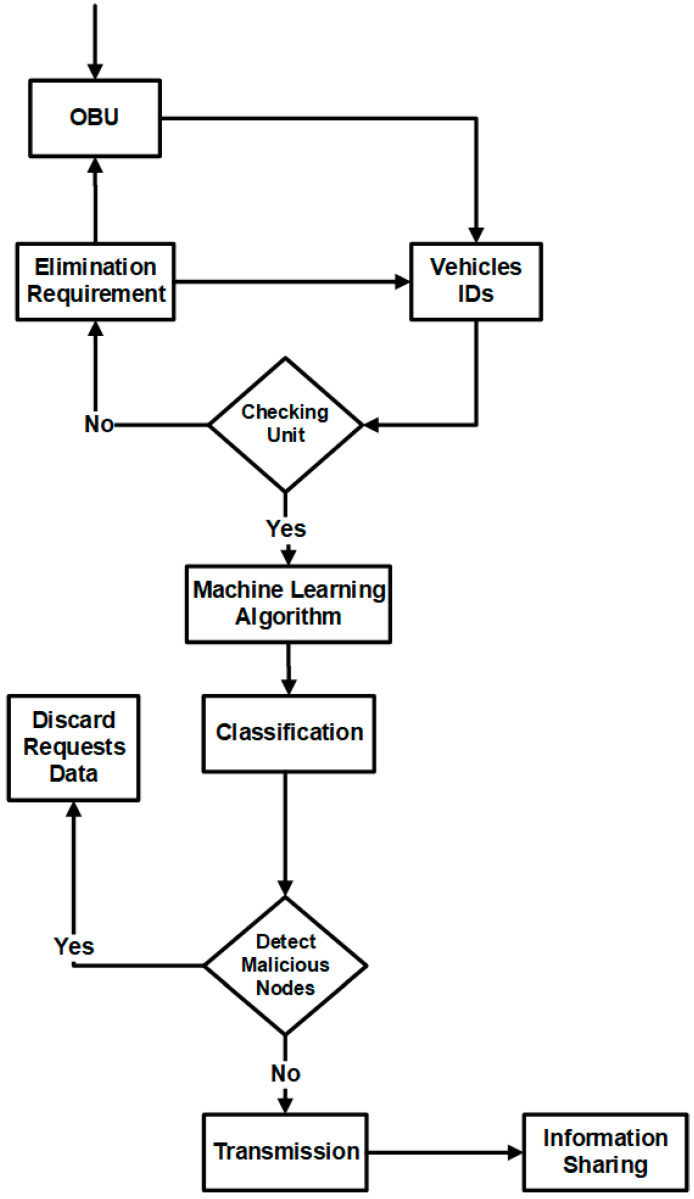
“The CU applies additional ML models, such as RF, to evaluate the reported vehicle IDs based on historical communication features, thereby con-firming whether the vehicles are truly malicious [35].”
Mitigating DDoS Threats in VANETs: A Real-Time Simulation Approach Using SUMO and NS-3
Elashry, A., Elasmar, A., Khalifa, Y., Bahnassy, M., & Hamza, A. A. (2025) · Novel Intelligent and Leading Emerging Sciences Conference (NILES) · doi:10.1109/niles68063.2025.11231899
“In comparison to prior studies [15], [20], our framework provides a more comprehensive and effective defense strategy, highlighting a meaningful contribution to VANET security research by addressing both attack detection and response in real time [1], [3], [6].”
Anomaly Detection Frameworks and Trends in Vehicular Ad-Hoc Networks (VANETs)
Reddy, K. N., Hosmitha, K., Srividya, K., & Jabbar, M. A. (2025) · International Conference on Intelligent Communication Networks and Computational Techniques (ICICNCT) · doi:10.1109/icicnct66124.2025.11233000
“Finally, Rashid et al. present a real-time adaptive framework combining RF, support vector machines, and lightweight feature selection techniques in a sliding window deployment, enabling continuous, low latency detection in live VANET environments [17].”
A Review on Computational Intelligence Techniques for Improving Communication and Security in VANETs
Nidamanuri, S., & Rajesh, E. (2025) · IEEE India Council International Subsections Conference (INDISCON) · doi:10.1109/indiscon66021.2025.11253831
“Thus, all such benefits make this technique highly effective to deal with the prediction of congestion as well as the establishment of handover processes, especially when working in multimedia data and channel allocation [22].”
Ramya, S. T., Al-Safi, J. K. S., Ashwin, B., Manikandan, G., Rexy, A. M., & Revathi, R. (2025) · Asian Conference on Innovation in Technology (ASIANCON) · doi:10.1109/asiancon66527.2025.11281250
“This study focuses on the utilization of machine learning methods for adaptive threat detection in MANETs, with a particular emphasis on the identification of wormhole assaults, which pose a substantial danger in such networks [6].”
Khan, N., Khokale, R., & Khatib, M. S. (2025) · Springer eBooks · doi:10.1007/978-3-031-92854-3_42
Infrastructure Design of Vehicular ad Hoc Network with Algorithm
Lai, W., Singaravelan, A., Sujitha, S., Kavin, B. P., Kavitha., C., Dhanaraj, R. K., Peng, B.-H., & Chiu, C.-Y. (2025) · IEEE International Symposium on Embedded Multicore/Many-core Systems-on-Chip (MCSoC) · doi:10.1109/mcsoc67473.2025.00130
“It has been demonstrated that V2x apps have a number of difficulties in terms of making good decisions and transferring data reliably and consistently between vehicles [10].”
Tiwari, P., Raut, Y., Anish, & Kumar, R. (2026) · Lecture notes in mechanical engineering · doi:10.1007/978-981-96-8516-5_38
Alsamman, S., Panthakkan, A., & Gawanmeh, A. (2025) · International Conference on Computational Intelligence and Knowledge Economy (ICCIKE) · doi:10.1109/iccike67021.2025.11318177
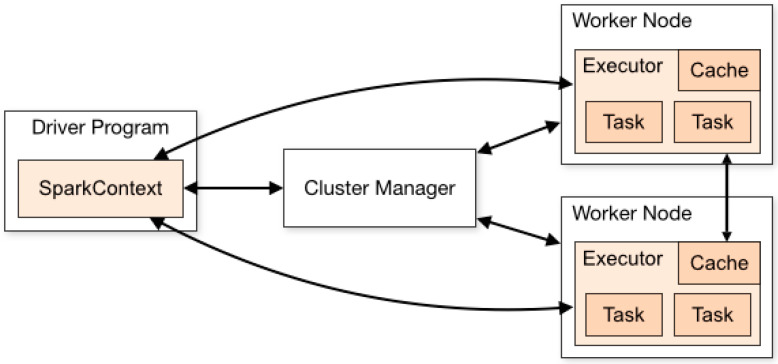
“An adaptive real-time framework was proposed using OMNET++ and SUMO simulations, employing a distributed multi-layer classifier such as RF, Gradient Boosted Trees (GBT) and SVM, and deployed on AWS [5].”
A Machine Learning-Based Framework for Real-Time Malicious Node Detection in VANETs
Priyadarshini, R., Bahuguna, R., Dwivedi, S. P., Singh, A., Bose, C., & Karim, B. (2025) · International Symposium on Advanced Electrical and Communication Technologies (ISAECT) · doi:10.1109/isaect68904.2025.11318769
“The Author [18] developed a multilayered ML architecture for adaptive real-time detection of malicious nodes.”
Sun, C., Li, L., Zihao, Z., Xie, G. P., & Mi, S. (2025) · International Conference on Mobile Networks and Wireless Communications (ICMNWC) · doi:10.1109/icmnwc66779.2025.11354176
Sefati, S. S., Samal, A. K., Fratu, O., & Halunga, S. V. (2025) · International Symposium on Wireless Personal Multimedia Communications (WPMC) · doi:10.1109/wpmc67460.2025.11351272
“Rashid et al. [7] propose an adaptive real-time malicious-node detection framework for VANETs that couples a distributed multi-layer classifier with Apache Spark–based execution and evaluates multiple Machine Learning (ML) models—Logistic Regression (LR), Support Vector Machine (SVM), Random Forest…”
Patil, S., Taneja, M., Raghu, N., Swain, B., Reddy, N. H., & Sheetal (2026) · SN Computer Science · doi:10.1007/s42979-026-04762-7
“The purpose [8 ] was to immediately find malicious devices in VANETs connected to DDoS attacks through a real-time machine learning system that works on several layers.”
Hadri, H., Ouadou, M., & Minaoui, K. (2026) · Journal of Cybersecurity and Privacy · doi:10.3390/jcp6020059 · Cited by 1
“Furthermore, few approaches balance detection accuracy with the limited computational and communication capacity of on-board units [21].”
Active Learning Method with K-means-Based Malicious Attack Detection in Cloud Computing
Chintale, P., Khanna, A., Mahida, A., Perumal, A. P., Korada, L., & Buddiga, S. K. P. (2026) · Lecture notes in electrical engineering · doi:10.1007/978-981-95-0788-7_56
Pan, B. D., Zhou, Y., Liu, D., Yang, T., Chen, H., Liu, Y., Wang, J., & Zhang, Y. (2026) · Systems · doi:10.3390/systems14050539 · Cited by 1
Metadata
- Authors
- Rashid, K., Saeed, Y., Ali, A., Jamil, F., Alkanhel, R., & Muthanna, A.
- Affiliations
- University of Haripur (PK)
- University of Engineering and Technology Taxila (PK)
- Norwegian University of Science and Technology (NO)
- Princess Nourah bint Abdulrahman University (SA)
- Peoples' Friendship University of Russia (RU)
- Corresponding author
- Jamil, Faisal
- Alkanhel, Reem
- Venue
- Sensors
- Publisher
- MDPI AG
- Published
- 2023-02-26
- Volume
- 23
- Issue
- 5
- Pages
- 2594
- ISSN
- 1424-8220 (ISSN-L)
- PMC
- PMC10007041
- OpenAlex
- W4322502842
- Cited by
- 110
- References
- 48
- Citations by year
- 2026: 18 · 2025: 44 · 2024: 31 · 2023: 17
- FWCI
- 8.17
- Type
- journal article
- Language
- en
- Open access
- gold
- doi.org
- Licence
- Locations
- Sensors (publishedVersion, cc-by)
- PubMed Central (publishedVersion, cc-by)
- PubMed (publishedVersion)
- DOAJ (DOAJ: Directory of Open Access Journals) (submittedVersion, cc-by-sa)
- NORA - Norwegian Open Research Archives (submittedVersion, cc-by)
- Funders
- Norwegian University of Science (PNURSP2023R323)
- Topics
- Physical Sciences › Engineering › Electrical and Electronic Engineering › Vehicular Ad Hoc Networks (VANETs)
- Physical Sciences › Computer Science › Computer Networks and Communications › Network Security and Intrusion Detection
- Physical Sciences › Computer Science › Computer Networks and Communications › Security in Wireless Sensor Networks
- Keywords
- malicious node detection, vehicular ad hoc networks, DDoS attack detection, real-time intrusion detection, ensemble classifiers, random forest, gradient boosting, support vector machine, logistic regression, multilayer perceptron
About these checks
Registry, retraction, Cites and statistics results are computed, not judged, with one exception: a printed reference that no index lists is read once by a model before it counts as a citation error. Claims are extracted by a model and kept only when their quote appears verbatim in the text; each cited source is then checked, with a model’s help, for whether it says what the claim relies on. Those verdicts can be wrong — read the claim’s quote and the cited source before relying on one.
Statistics and arithmetic are recomputed, not judged.
Confidence bands are shown only for fields calibrated on our annotated test set. None is calibrated yet, so no band is shown.
What counts as a claim ›How we measure confidence ›How we check this ›
Are you an author, or do you see a problem with this page? Request a review
Data sources
Bibliographic data: Semantic Scholar, OpenAlex, Crossref.
Contains information from the Semantic Scholar Academic Graph Datasets, made available under the ODC Attribution License (ODC-BY 1.0).
Semantic Scholar’s data is described in: Kinney, R., et al. (2023). The Semantic Scholar Open Data Platform. arXiv:2301.10140.
