

The DOI matches its Crossref record; 32 of the 36 references it cites were found in a registry or an index.
5G Network Slicing: Security Challenges, Attack Vectors, and Mitigation Approaches
Open accessAbstract
This paper explores the security challenges associated with network slicing in 5th Generation (5G) networks, a technology that enables the creation of virtual networks tailored to different use cases. This study contributes to network slicing research efforts by providing a comprehensive classification of attacks aligned with the architectural layers of 5G, complemented by practical mitigation approaches suitable for multi-tenant environments. The classification depicts specific attacks and categorizes vulnerabilities across layers such as orchestration, virtualization, and inter-slice communication. Additionally, mitigation strategies are discussed, emphasizing the importance of real-time monitoring and robust access controls. The proposed classification aims to support the development of advanced security mechanisms, including risk assessment models and automated mitigation strategies, tailored to the dynamic and heterogeneous nature of 5G slicing. The findings highlight the need for layered defenses, AI-driven monitoring, and architectural isolation as critical components to enhance the resilience of 5G slicing deployments.
Overview
The claims and statistics of this paper haven’t been checked yet.
Run the check — free, no account needed. It reads the open-access text and checks the sources it cites.
Integrity signals
Registry
Cites
Statistics
Figures
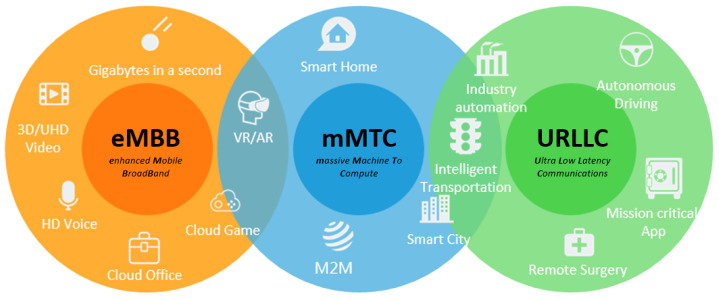
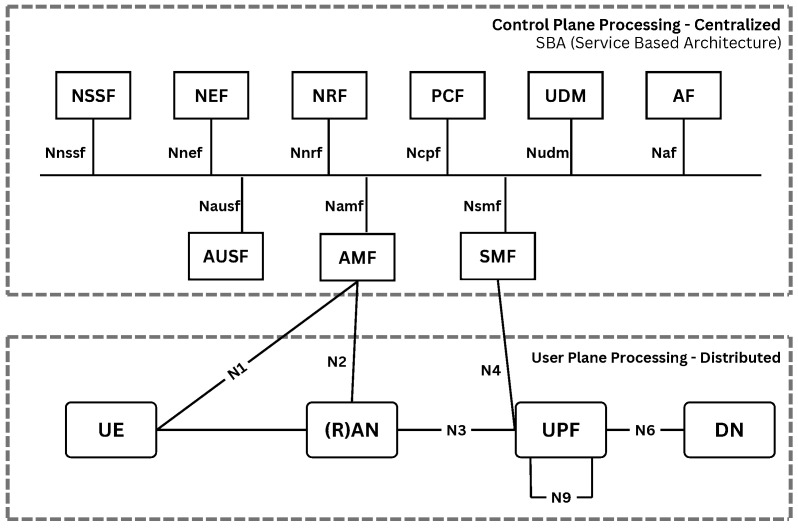
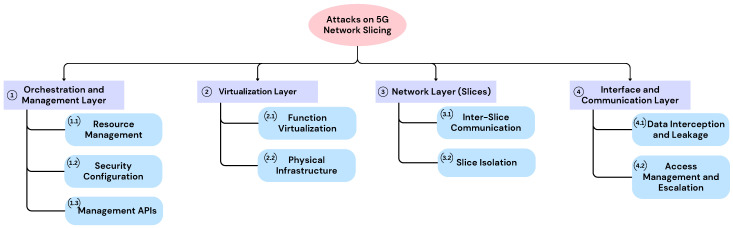
Verification
Claims the paper makes
The claims and statistics of this paper haven’t been checked yet.
Run the check — free, no account needed. It reads the open-access text and checks the sources it cites.
Claims other papers make about this one
Each is checked against this paper’s own text: does it say what the citing paper says it does?
The source backs part of the claim, not all of it — or backs it for a different population, condition or comparison.
In the citing paper
“The 5G/6G transition compounds the problem by introducing network slicing-logical partitions whose isolation guarantees become themselves the target of slice-hopping attacks”
From Agentic AI and Large Language Models for Autonomous IoT Cybersecurity: A Systematic Survey, Taxonomy, and Research Roadmap (2026) · cites this paper as [39]
Experimental — accuracy not yet measured
Self-check
Percentages, sums and reported differences re-computed from the paper’s own numbers.
The self-check needs the paper’s full text.
Citations
Cites
Network Slicing and Softwarization: A Survey on Principles, Enabling Technologies, and Solutions
Afolabi, I., Taleb, T., Samdanis, K., Ksentini, A., & Flinck, H. (2018) · IEEE Communications Surveys & Tutorials · doi:10.1109/comst.2018.2815638 · Cited by 1,078
5G Wireless Network Slicing for eMBB, URLLC, and mMTC: A Communication-Theoretic View
Popovski, P., Trillingsgaard, K. F., Simeone, O., & Durisi, G. (2018) · IEEE Access · doi:10.1109/access.2018.2872781 · Cited by 989
5G network slicing using SDN and NFV: A survey of taxonomy, architectures and future challenges
Barakabitze, A. A., Ahmad, A., Mijumbi, R., & Hines, A. (2019) · Computer Networks · doi:10.1016/j.comnet.2019.106984 · Cited by 875
An Overview of Network Slicing for 5G
Zhang, S. (2019) · IEEE Wireless Communications · doi:10.1109/mwc.2019.1800234 · Cited by 515
Technologies for 5G Networks: Challenges and Opportunities
Al‐Falahy, N., & Alani, O. (2017) · IT Professional · doi:10.1109/mitp.2017.9 · Cited by 415
Network Slicing: Recent Advances, Taxonomy, Requirements, and Open Research Challenges
Khan, L. U., Yaqoob, I., Tran, N. H. K., Han, Z., & Hong, C. S. (2020) · IEEE Access · doi:10.1109/access.2020.2975072 · Cited by 232
A Survey and an Analysis of Network Slicing in 5G Networks
Kaloxylos, A. (2018) · IEEE Communications Standards Magazine · doi:10.1109/mcomstd.2018.1700072 · Cited by 197
A Survey on Beyond 5G Network Slicing for Smart Cities Applications
Rafique, W., Barai, J. R., Fapojuwo, A. O., & Krishnamurthy, D. (2024) · IEEE Communications Surveys & Tutorials · doi:10.1109/comst.2024.3410295 · Cited by 160
5G Network Slicing: A Security Overview
Olimid, R. F., & Nencioni, G. (2020) · IEEE Access · doi:10.1109/access.2020.2997702 · Cited by 147
Secure5G: A Deep Learning Framework Towards a Secure Network Slicing in 5G and Beyond
Thantharate, A., Paropkari, R. A., Walunj, V., Beard, C. C., & Kankariya, P. (2020) · IEEE Annual Computing and Communication Workshop and Conference (CCWC) · doi:10.1109/ccwc47524.2020.9031158 · Cited by 120
Research works printed but not linked: 3
- Nerini, M., and Palma, D. (2021, January 17–21). 5G Network Slicing for Wi-Fi Networks. Proceedings of the 2021 IFIP/IEEE International Symposium on Integrated Network Management (IM), Bordeaux, France.
- Shan, J., Shaik, A., Borgaonkar, R., Park, J.H., Seifert, J.P., and Kim, T. (2021, January 11–13). 5Glatte: Mapping the Security Landscape of 5G Device Implementation. Proceedings of the 30th USENIX Security Symposium (USENIX Security 21), Online.
- Li, X., Yu, X., Zhang, Y., Guo, Y., Zheng, Z., and Zhou, Z. (2023, January 26–30). 5Greplay: Characterizing and Attacking Dynamic Protocol Stack in 5G Standalone Access. Proceedings of the 30th ACM Conference on Computer and Communications Security (CCS ’23), Copenhagen, Denmark.
Cited by
Sustainable Broadband Internet: Current Status and Future Directions
Moghaddam, S. S., & Moghaddam, K. S. (2025) · IEEE Access · doi:10.1109/access.2025.3638684 · Cited by 9
A Comprehensive Survey on 5G RedCap: Technologies, Security Vulnerabilities, and Attack Vectors
Pavan Raja, I., Jain, K., Hari, N. N., Sethu Subramanian, N., & Krishnan, P. (2026) · Future Internet · doi:10.3390/fi18030118 · Cited by 3
Nageshwaran, V., & Ezekiel, S. (2026) · Electronics · doi:10.3390/electronics15122740 · Cited by 4
“The 5G/6G transition compounds the problem by introducing network slicing—logical partitions whose isolation guarantees become themselves the target of slice-hopping attacks [38,39,48,49].”
Higashi, S., Kraikritayakul, P., Liu, Y., Ikeda, M., Matsuo, K., & Barolli, L. (2026) · Journal of High Speed Networks · doi:10.1177/09266801251408613 · Cited by 2
Ravi, V., Ahmadon, M. A. B., & Shuhidan, S. M. (2026) · Scientific Reports · doi:10.1038/s41598-026-57412-6 · Cited by 1
Metadata
- Authors
- Dias, J., Pinto, P., Santos, R., & Malta, S.
- Affiliations
- Universidade Politécnica de Viana do Castelo (PT)
- Instituto Superior de Engenharia do Porto (PT)
- Centro de Inovação e Investigação em Ciências Empresariais e Sistemas de Informação (PT)
- Corresponding author
- Malta, Silvestre
- Venue
- Sensors
- Publisher
- MDPI AG
- Published
- 2025-06-24
- Volume
- 25
- Issue
- 13
- Pages
- 3940
- ISSN
- 1424-8220 (ISSN-L)
- PMC
- PMC12251764
- OpenAlex
- W4411583209
- Cited by
- 26
- References
- 36
- Citations by year
- 2026: 19 · 2025: 7
- FWCI
- 10.91
- Type
- journal article
- Language
- en
- Open access
- gold
- doi.org
- Licence
- Locations
- Sensors (publishedVersion, cc-by)
- PubMed Central (publishedVersion, cc-by)
- PubMed (publishedVersion)
- DOAJ (DOAJ: Directory of Open Access Journals) (submittedVersion, cc-by-sa)
- Topics
- Physical Sciences › Computer Science › Computer Networks and Communications › Software-Defined Networks and 5G
- Physical Sciences › Computer Science › Computer Networks and Communications › Cybersecurity and Information Systems
- Physical Sciences › Computer Science › Computer Networks and Communications › Network Security and Intrusion Detection
- Keywords
- 5G network slicing, network slicing security, attack classification, attack vectors, multi-tenancy, access control, real-time monitoring, AI-driven monitoring, risk assessment, layered defense
About these checks
Registry, retraction, Cites and statistics results are computed, not judged, with one exception: a printed reference that no index lists is read once by a model before it counts as a citation error. Claims are extracted by a model and kept only when their quote appears verbatim in the text; each cited source is then checked, with a model’s help, for whether it says what the claim relies on. Those verdicts can be wrong — read the claim’s quote and the cited source before relying on one.
Statistics and arithmetic are recomputed, not judged.
Confidence bands are shown only for fields calibrated on our annotated test set. None is calibrated yet, so no band is shown.
What counts as a claim ›How we measure confidence ›How we check this ›
Are you an author, or do you see a problem with this page? Request a review
