

The DOI matches its Crossref record; 2 of the 2 references it cites were found in a registry or an index.
Computer-Based Concept Mapping as a Method for Enhancing the Effectiveness of Concept Learning in Technology-Enhanced Learning
Open accessAbstract
Technology enhanced learning is a wide area that covers all uses of digital technology to support learning and teaching activities. The computer-based concept mapping has shown potential in enhancing meaningful learning in education. Concept mapping is an important tool that is used in the field of education to help students in understanding the basic concepts and the relationships between them. This research proposes a computer-based concept mapping (CBCM) environment combined with Google classroom to help students reduce their misconceptions and to improve their problem solving skills. Furthermore, it examines the effect of CBCM on the sustainability of concept learning according to student views. The participants were first-year engineering students. The study was conducted in a physics class, and a true-experimental design was used. The experimental group students learned with the Google classroom combined with computer-based concept mapping (CBCM), while the concept group students learned with Google classroom and the traditional method. Data were collected from a physics concept test, problem solving inventory, and semi-structured interviews. The research results indicated that teaching in the CBCM environment combined with Google Classroom provides meaningful learning by correcting the misconceptions of the students. Moreover, there was a significant increase in the problem solving skills of the experimental group as compared to the control group. According to the students’ views, it was determined that CBCM enhances the sustainability of concept learning. The results of this study can help educators and researchers to integrate computer-based concept mapping (CBCM) techniques into Google Classroom.
Overview
The claims and statistics of this paper haven’t been checked yet.
Run the check — free, no account needed. It reads the open-access text and checks the sources it cites.
Integrity signals
Registry
Cites
Statistics
Figures
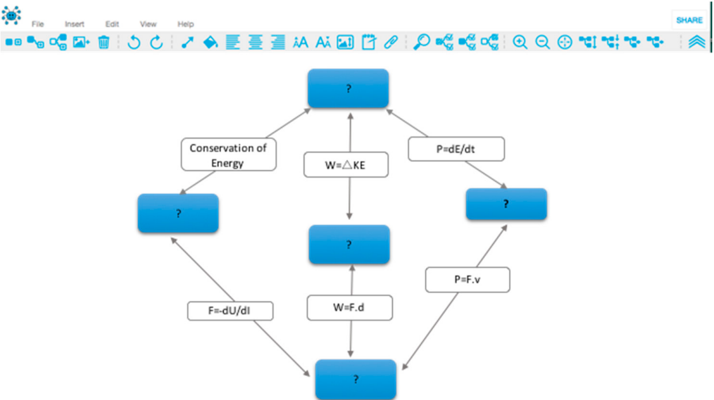
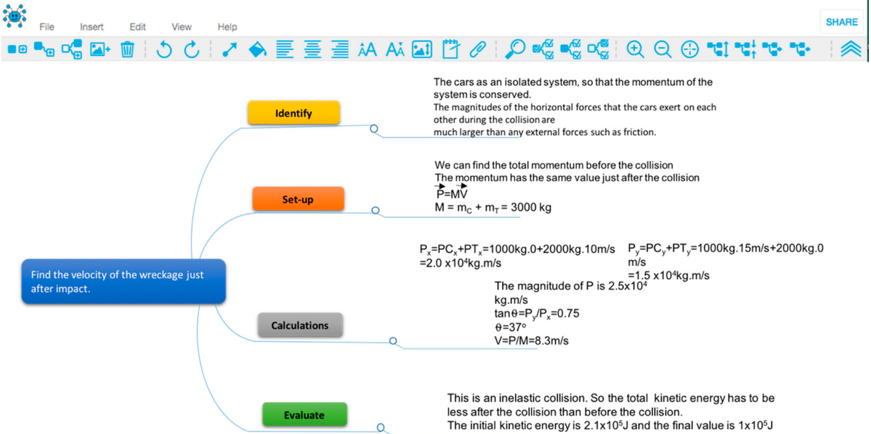
Verification
Claims the paper makes
The claims and statistics of this paper haven’t been checked yet.
Run the check — free, no account needed. It reads the open-access text and checks the sources it cites.
Claims other papers make about this one
Each is checked against this paper’s own text: does it say what the citing paper says it does?
In the citing paper
“The choice of concept map construction mode, that is, whether students should construct concept maps individually or collaboratively (Aşıksoy, 2019; Fang, 2023), and whether the construction process is student- or teacher-led (Huang et al., 2022; Hwang et al., 2023), are still hot topics in the current research and urgently need to be explored and answered in greater depth.”
From Concept mapping in STEM education: a meta-analysis of its impact on students' achievement (2004–2023) (2025) · cites this paper as Aşıksoy, 2019
Self-check
Percentages, sums and reported differences re-computed from the paper’s own numbers.
The self-check needs the paper’s full text.
Citations
Cites
The development and implications of a personal problem-solving inventory.
Heppner, P. P., & Petersen, C. H. (1982) · Journal of Counseling Psychology · doi:10.1037/0022-0167.29.1.66 · Cited by 1,357
Using Concept Maps to Facilitate Collaborative Simulation-Based Inquiry Learning
Gijlers, H., & de Jong, T. (2013) · Journal of the Learning Sciences · doi:10.1080/10508406.2012.748664 · Cited by 79
Research works printed but not linked: 56
- Watson, M.K., Pelkey, J., Noyes, C.R., and Rodgers, M.O. (2014, January 15–18). Use of Concept Maps to Assess Student Sustainability Knowledge. Proceedings of the American Society for Engineering Education Annual Conference and Exposition, Indianapolis, IN, USA.
- Hansmann, 2010, “Sustainability Learning”: An Introduction to the Concept and Its Motivational Aspects, Sustainability, 2, 2873, 10.3390/su2092873 · DOI
- Daniela, L., Visvizi, A., Gutiérrez-Braojos, C., and Lytras, M.D. (2018). Sustainable Higher Education and Technology-Enhanced Learning (TEL). Sustainability, 10. · DOI
- Ormrod, J.E. (2003). Educational Psychology, Developing Learners, Merrill Prentice Hall. [4th ed.].
- Sadanand, 1990, Concepts in force and motion, Phys. Teach., 28, 530, 10.1119/1.2343138 · DOI
- Wang, 2018, Using cognitive mapping to foster deeper learning with complex problems in a computer-based environment, Comput. Hum. Behav., 87, 450, 10.1016/j.chb.2018.01.024 · DOI
- Novak, 1991, A Twelve-Year Longitudinal Study of Science Concept Learning, Am. Educ. Res. J., 28, 117, 10.3102/00028312028001117 · DOI
- Novak, J., and Gowin, B. (1984). Learning How to Learn, Cambridge University Press. · DOI · Paper page
- Novak, J.D. (2010). Learning, Creating, and Using Knowledge: Concept Maps as Facilitative Tools in Schools and Corporations, Routledge. [2nd ed.].
- Visvizi, A., Lytras, M., and Daniela, L. (2018). Education, innovation and the prospect of sustainable growth and development. The Future of Innovation and Technology in Education: Policies and Practices for Teaching and Learning Excellence, Emerald Publishing. · DOI
- Chang, 2005, A new assessment for computer-based concept mapping, J. Educ. Technol. Soc., 8, 138
- Rautama, E. (2000, January 11–13). Extending the Delivery of Concept Maps. Proceedings of the AAPS Project, ITiCSE2000, The 5th Annual Conference on Innovation and Technology in Computer Science Education, Helsinki, Finland.
- Shute, V.J., Jeong, A.C., Spector, J.M., Seel, N.M., and Johnson, T.E. (2009). Model-based methods for assessment, learning and instruction: Innovative educational technology at Florida state university. Educational Media and Technology Yearbook, Springer. · DOI
- Hwang, 2014, Effects of an integrated concept mapping and web-based problem-solving approach on students’ learning achievements, perceptions and cognitive loads, Comput. Educ., 71, 77, 10.1016/j.compedu.2013.09.013 · DOI
- Jonassen, D.H. (2004). Learning to Solve Problems. An Instructional Design Guide, John Wiley & Sons.
- Denton, 2008, Students’ response to traditional and computer-assisted formative feedback: a comparative case study, Brit. J. Educ. Technol., 39, 486, 10.1111/j.1467-8535.2007.00745.x · DOI
- Wu, 2012, An innovative concept map approach for improving students’ learning performance with an instant feedback mechanism, Brit. J. Educ. Technol., 43, 217, 10.1111/j.1467-8535.2010.01167.x · DOI
- Lin, 2015, Exploring the effects of employing Google Docs in collaborative concept mapping on achievement, concept representation, and attitudes, Interact. Learn. Environ., 24, 1
- Harini, 2017, Solve Miscellaneous Mathematical Problems using Mind Map, Global J. Pure Appl. Math., 13, 7441
- Hwang, G.J., Chen, M.R.A., Sung, H.Y., and Lin, M.H. (2018). Effects of integrating a concept mapping-based summarization strategy into flipped learning on students’ reading performances and perceptions in Chinese courses. Br. J. Educ. Technol. · DOI
- Schultz, 2001, Comparison of the reliability and validity of scores from two concept-mapping techniques, J. Res. Sci. Teach., 38, 260, 10.1002/1098-2736(200102)38:2<260::AID-TEA1005>3.0.CO;2-F · DOI
- Moon, B., Hoffman, R.R., Novak, J., and Canas, A. (2011). Applied Concept Mapping: Capturing, Analyzing, and Organizing Knowledge, CRC Press. · DOI
- Dosanjh, N.K. (2011). The Effects of Three Concept Mapping Strategies on Seventh-Grade Students’ Science Achievement at An Urban Middle School. [Ph.D. Thesis, The University of San Francisco].
- Nakipoglu, 2010, Comparison of the Structural, Relational and Proposition Accuracy Scoring Results of Concept Maps about Atom, J. Turk. Sci. Educ., 7, 60
- Akinoglu, 2007, The Effects of Note-Taking in Science Education Through the Mind Mapping Technique on Students’ attitudes, Academic Achievement and Concept Learning, J. Balt. Sci. Educ., 6, 34
- Conradty, 2010, Implementation of concept mapping to novices: reasons for errors, a matter of technique or content?, Educ. Stud., 36, 47, 10.1080/03055690903148605 · DOI
- Watson, 2016, Assessing conceptual knowledge using three concept map scoring methods, J. Eng. Educ., 105, 118, 10.1002/jee.20111 · DOI
- Lin, 2016, Effects of concept map extraction and a test-based diagnostic environment on learning achievement and learners’ perceptions, Br. J. Educ. Technol., 47, 649, 10.1111/bjet.12250 · DOI
- Chang, 2017, The Effects of a Collaborative Computer-based Concept Mapping Strategy on Geographic Science Performance in Junior High School Students, Eurasıa J. Math. Sci. Technol. Educ., 13, 5049
- Mammen, 2016, Computer-assisted concept mapping: Visual aids for knowledge construction, J. Nurs. Educ., 55, 403, 10.3928/01484834-20160615-09 · DOI
- Chiou, 2017, Analyzing the Effects of various Concept Mapping Techniques on Learning Achievement under different Learning Styles, Eurasıa J. Math. Sci. Technol. Educ., 13, 3687
- Liu, 2010, Effects of a computer-assisted concept mapping learning strategy on EFL college students’ English reading comprehension, Comput. Educ., 54, 436, 10.1016/j.compedu.2009.08.027 · DOI
- Hwang, 2011, An interactive concept map approach to supporting mobile learning activities for natural science courses, Comput. Educ., 57, 2272, 10.1016/j.compedu.2011.06.011 · DOI
- Chu, 2014, A cooperative computerized concept-mapping approach to improving students’ learning performance in web-based information-seeking activities, J. Comput. Educ., 1, 19, 10.1007/s40692-014-0001-2 · DOI
- Shamsuddin, 2017, Influence of Computer Assisted Concept Mapping Instructional Strategy on Students Performance in Chemistry, Teach. Educ. Curric. Stud., 2, 86, 10.11648/j.tecs.20170206.12 · DOI
- Altun, 2003, The perceived problem-solving ability and values of student nurses and midwives, Nurs. Educ. Today, 23, 575, 10.1016/S0260-6917(03)00096-0 · DOI
- Wu, 1996, Technological and personal problem-solving styles: Is there a difference?, J. Technol. Educ., 7, 55
- Ocak, 2014, Investigation of pre-service teachers’ problem-solving skills in terms of different variables, Asian J. Instruct., 2, 27
- Miller, 2001, Using group discussion to improve social problem solving and learning, Education, 121, 470
- Wang, 2017, Guest Editorial: Fostering deep learning in problem-solving contexts with the support of technology, Educ. Technol. Soc., 20, 162
- Palencia, 2008, Mediated learning experience, and concept maps: A pedagogical tool for achieving meaningful learning in medical physiology students, Adv. Physiol. Educ., 32, 312, 10.1152/advan.00021.2007 · DOI
- Sarker, 2015, Use of concept maps for problem-solving in engineering, Global J. Eng. Educ., 17, 29
- Shaharanee, 2016, Google Classroom as A Tool for Active Learning, AIP Conf. Proc., 1761, 020069, 10.1063/1.4960909 · DOI · Paper page
- Iftakhar, 2016, Google classroom: what works and how?, J. Educ. Soc. Sci., 3, 12
- Young, H.D., Freedman, R.A., and Ford, A.L. (2010). Sears and Zemansky’s University Physics with Modern Physics, Pearson Education. [13th ed.].
- Sahin, 1993, Psychometric properties of the problem-solving inventory in a group of Turkish university students, Cogn. Ther. Res., 17, 379, 10.1007/BF01177661 · DOI
- Balim, 2013, The Effect of Mind-Mapping Applications on Upper Primary Students’ Success and Inquiry-Learning Skills in Science and Environment Education, Int. Res. Geogr. Environ. Educ., 22, 337, 10.1080/10382046.2013.826543 · DOI
- Rye, 2013, Incorporating concept mapping in project-based learning: Lessons from watershed investigations, J. Sci. Educ. Technol., 22, 379, 10.1007/s10956-012-9400-1 · DOI
- Engelmann, 2010, How digital concept maps about the collaborators’ knowledge and information influence computer-supported collaborative problem-solving, Int. J. Comput.-Support. Collab. Learn., 5, 299, 10.1007/s11412-010-9089-1 · DOI
- Engelmann, 2010, Evoking knowledge and information awareness for enhancing computer-supported collaborative problem-solving, J. Exp. Educ., 78, 1
- Kinchin, 2000, Concept Mapping in Biology, J. Biol. Educ., 34, 61, 10.1080/00219266.2000.9655687 · DOI
- Elias, 2000, Primary prevention: Educational approaches to enhance social and emotional learning, J. Sch. Health., 70, 186, 10.1111/j.1746-1561.2000.tb06470.x · DOI
- Demirel, T., and Karakus Yilmaz, T. (2018, October 20). The Effects of Mind Games in Math and Grammar Courses on The Achievements and Perceived Problem-Solving Skills of Secondary School Students. Available online: https://onlinelibrary.wiley.com/doi/abs/10.1111/bjet.12624. · DOI
- Varouchas, E., Sicilia, M.Á., and Sánchez-Alonso, S. (2018). Academics’ Perceptions on Quality in Higher Education Shaping Key Performance Indicators. Sustainability, 10. · DOI
- Zhuhadar, 2013, The impact of Social Multimedia Systems on cyberlearners, Comput. Hum. Behav., 29, 378, 10.1016/j.chb.2012.09.009 · DOI
- Lytras, M., Visvizi, A., Daniela, L., Sarirete, A., and Ordonez De Pablos, P. (2018). Social Networks Research for Sustainable Smart Education. Sustainability, 10. · DOI
Cited by
Sorted by citations
Wang, X.-M., Wang, J.-L., Xu, S.-Y., & Xu, S.-J. (2025) · International Journal of STEM Education · doi:10.1186/s40594-025-00554-2 · Cited by 14
“The choice of concept map construction mode, that is, whether students should construct concept maps individually or collaboratively (Aşıksoy, 2019; Fang, 2023), and whether the construction process is student-or teacher-led (Huang et al., 2022; Hwang et al., 2023), are still hot topics in the…”
Metadata
- Authors
- Aşıksoy, G.
- Affiliations
- Near East University (CY)
- Corresponding author
- Aşıksoy, Gülsüm
- ORCID
- Aşıksoy, Gülsüm
- Venue
- Sustainability
- Publisher
- MDPI AG
- Published
- 2019-02-15
- Volume
- 11
- Issue
- 4
- Pages
- 1005
- ISSN
- 2071-1050 (ISSN-L)
- OpenAlex
- W2912364585
- Cited by
- 24
- References
- 2
- Citations by year
- 2025: 5 · 2024: 4 · 2023: 6 · 2022: 3 · 2021: 2 · 2020: 3 · 2019: 1
- FWCI
- 6.08
- Type
- journal article
- Language
- en
- Open access
- gold
- dx.doi.org
- Licence
- Locations
- Sustainability (publishedVersion, cc-by)
- RePEc: Research Papers in Economics (submittedVersion)
- DOAJ (DOAJ: Directory of Open Access Journals) (submittedVersion, cc-by-sa)
- Topics
- Social Sciences › Education › Technology-Enhanced Education Studies
- Social Sciences › Education › Educational Methods and Outcomes
- Physical Sciences › Computer Science › Information Systems › Educational Technology and E-Learning
- Keywords
- concept learning, Google Classroom, technology-enhanced learning, misconceptions, problem-solving skills, meaningful learning, physics education, engineering students, student perceptions
About these checks
Registry, retraction, Cites and statistics results are computed, not judged, with one exception: a printed reference that no index lists is read once by a model before it counts as a citation error. Claims are extracted by a model and kept only when their quote appears verbatim in the text; each cited source is then checked, with a model’s help, for whether it says what the claim relies on. Those verdicts can be wrong — read the claim’s quote and the cited source before relying on one.
Statistics and arithmetic are recomputed, not judged.
Confidence bands are shown only for fields calibrated on our annotated test set. None is calibrated yet, so no band is shown.
What counts as a claim ›How we measure confidence ›How we check this ›
Are you an author, or do you see a problem with this page? Request a review
How to cite
Cite CoChat for the checks on this page, and the paper for its own findings.
- This page
- CoChat. (2026). Citation check: Computer-Based Concept Mapping as a Method for Enhancing the Effectiveness of Concept Learning in Technology-Enhanced Learning. https://app.cochat.ai/papers/10.3390/su11041005
- The paper
- Aşıksoy, G. (2019). Computer-Based Concept Mapping as a Method for Enhancing the Effectiveness of Concept Learning in Technology-Enhanced Learning. Sustainability. https://doi.org/10.3390/su11041005
