

A Review on the Archaeological Chemistry of Shellfish Purple.
Open accessThe DOI matches its Crossref record; 87 of the 89 references it cites were found in a registry or an index.
Abstract
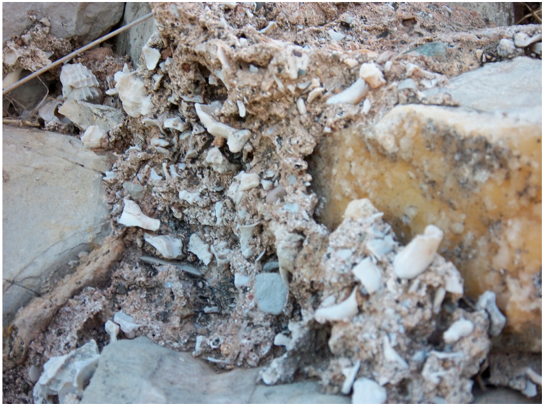
Shellfish purple, also known as Tyrian purple and royal purple, has a long history, which has been revealed and documented in recent years through valid physicochemical studies using sophisticated techniques. The aim of the work was to summarize the conclusions of these studies and to describe the results of two unpublished investigations regarding the (i) identification of shellfish purple in a textile (4th century BCE) from ancient Macedonia and (ii) dramatic effect of the dyeing conditions on the composition of the purple dye. Moreover, a critical discussion is included about the discovery of the shellfish pigment and dye based on the available scientific evidence. Previously published reports describing the identification of the shellfish colorant in objects of the cultural heritage were carefully summarized. Shellfish purple was not used only as colorant, but it served other purposes as emphasized in this review. In particular, examples for the use of shellfish purple in medicine, grave goods and fillers and plasters in walls, were described. Examples of materials and methods that were used in the past to produce “fake” purple, imitating the aesthetic result of the valuable royal marine material were summarized. Finally, the solubility of indigoids was discussed using modern approaches of physical chemistry.
Overview
The claims and statistics of this paper haven’t been checked yet.
Free: it reads the open-access text and checks the first 5 claims that cite a source we can check. Create a free account to check every claim.
Integrity signals
Registry
Cites
Statistics
Figures
Verification
Claims the paper makes
The claims and statistics of this paper haven’t been checked yet.
Free: it reads the open-access text and checks the first 5 claims that cite a source we can check. Create a free account to check every claim.
Claims other papers make about this one
Each is checked against this paper’s own text: does it say what the citing paper says it does?
The source backs part of the claim, not all of it — or backs it for a different population, condition or comparison.
In the citing paper
“The experimental dyeing with this species strengthens our conclusion, because while H. trunculus yielded more violet-blue hues due to the indigo compound, the two other species produce a more pink-purple hue (Fig 8; S1 Appendix), due to the high concentration of the combined DBI and the DBIR components which are responsible for the characteristic red/pink hue (Table 3 [97]).”
From Early evidence of royal purple dyed textile from Timna Valley (Israel) (2021) · cites this paper as [97]
Experimental — accuracy not yet measured
Self-check
Percentages, sums and reported differences re-computed from the paper’s own numbers.
The self-check needs the paper’s full text.
Citations
Cites
Hansen Solubility Parameters: A User's Handbook, Second Edition
Hansen, C. M. (2007) · CRC Press eBooks · doi:10.1201/9781420006834 · Cited by 3,156
A 100,000-Year-Old Ochre-Processing Workshop at Blombos Cave, South Africa
Henshilwood, C. S., d’Errico, F., van Niekerk, K. L., Coquinot, Y., Jacobs, Z., Lauritzen, S.-E., Menu, M., & García-Moreno, R. (2011) · Science · doi:10.1126/science.1211535 · Cited by 601 · cited 1×
“The astonishing findings of abalone shells that were used to hold ochre mixtures 100,000 years ago suggest that pigments were utilised from the very early days [5].”
BackgroundNatural Dyes: Sources, Tradition, Technology and Science
(2007) · HAL · Cited by 443
Moran, W. (2000) · Johns Hopkins University Press eBooks · doi:10.56021/9780801842511 · Cited by 426
Analytical Methods for the Characterization of Organic Dyes in Artworks and in Historical Textiles
Degano, I., Ribechini, E., Modugno, F., & Colombini, M. P. (2009) · Applied Spectroscopy Reviews · doi:10.1080/05704920902937876 · Cited by 256 · cited 1×
“Moreover, the characterization and identification of cultural heritage materials leads to useful insights regarding the technological skills of civilizations and reveals economic, social and historic aspects [2].”
BackgroundMulti-species collapses at the warm edge of a warming sea
Rilov, G. (2016) · Scientific Reports · doi:10.1038/srep36897 · Cited by 203 · cited 6×
“However, it should be noted that the mollusk populations have been affected by the recent effects of sea pollution and global warming [17].”
BackgroundInfluentialEarly pre-Hispanic use of indigo blue in Peru
Splitstoser, J. C., Dillehay, T. D., Wouters, J., & Claro, A. (2016) · Science Advances · doi:10.1126/sciadv.1501623 · Cited by 183 · cited 1×
“Consequently, early known-identified use of dyes dates back to at around 6000 years ago [6], which falls short compared to the iron and manganese pigments found in the aforementioned prehistoric caves.”
BackgroundÜber den Farbstoff des antiken Purpurs aus murex brandaris
Friedländer, P. (1909) · Berichte der deutschen chemischen Gesellschaft · doi:10.1002/cber.190904201122 · Cited by 131 · cited 2×
“In e rly reports, DBI wa considered to be the marker for the identification of shellfish purple, as this was the first compound isolated fr m the raw purple pulp [24].”
BackgroundVoultsiadou, E. (2010) · Journal of Ethnopharmacology · doi:10.1016/j.jep.2010.04.041 · Cited by 113 · cited 1×
“Some of these properties are found in the Murex extracts and have been known since antiquity [116].”
BackgroundElslande, E. V., Lecomte, S., & Hô, A. L. (2008) · Journal of Raman Spectroscopy · doi:10.1002/jrs.1994 · Cited by 103
Green Extraction of Natural Products: Theory and Practice
(2015) · Wiley eBooks · doi:10.1002/9783527676828 · Cited by 103
Pigment and terracotta analyses of Hellenistic figurines in Crete
Maravelaki-Kalaitzaki, P., & Kallithrakas-Kontos, N. G. (2003) · Analytica Chimica Acta · doi:10.1016/j.aca.2003.08.035 · Cited by 96 · cited 10×
“Finally, as described in Table 1, other methods employed to analyze and identify shellfish purple pigments/paints in objects of the cultural heritage are mass spectrometry (LC–MS, direct exposure– mass spectrometry—DE–MS) as well as imaging techniques including FTIR and XRF imaging.”
BackgroundInfluentialWestlake, P., Siozos, P., Philippidis, A., Apostolaki, C., Derham, B., Terlixi, A., Perdikatsis, V., Jones, R. E., & Anglos, D. (2011) · Analytical and Bioanalytical Chemistry · doi:10.1007/s00216-011-5281-z · Cited by 94 · cited 2×
“For example, mixtures of Egyptian blue with red pigments were used in painting plasters to achieve a purple hue [124].”
MethodAloupi, E., Karydas, A. G., & Paradellis, T. (2000) · X-Ray Spectrometry · doi:10.1002/(sici)1097-4539(200001/02)29:1<18::aid-xrs397>3.0.co;2-5 · Cited by 91
First analytical evidences of precious colourants on Mediterranean illuminated manuscripts
Aceto, M., Agostino, A., Fenoglio, G., Baraldi, P., Zannini, P., Hofmann, C., & GamillschEg, E. (2012) · Spectrochimica Acta Part A Molecular and Biomolecular Spectroscopy · doi:10.1016/j.saa.2012.04.103 · Cited by 78
Bruni, S., Guglielmi, V., & Pozzi, F. (2009) · Journal of Raman Spectroscopy · doi:10.1002/jrs.2456 · Cited by 76
Benkendorff, K., Rudd, D., Nongmaithem, B., Liu, L., Young, F., Edwards, V., Avila, C., & Abbott, C. (2015) · Marine Drugs · doi:10.3390/md13085237 · Cited by 74 · cited 1×
“It is noteworthy, that recent studies revealed that mollusks from the family Muricidae produce biological active compounds with anti-inflammatory, anti-cancer, muscle-relaxing and pain relieving properties as well as steroidogenic activity [114,115].”
High-Performance Liquid Chromatography of Blue and Purple Indigoid Natural Dyes.
Wouters, J., & Verhecken, A. (1991) · Journal of the Society of Dyers and Colourists · doi:10.1111/j.1478-4408.1991.tb01351.x · Cited by 74
Archaeo-Chemical Analysis of Royal Purple on a Darius I stone Jar.
Koren, Z. C. (2008) · Microchimica Acta · doi:10.1007/s00604-007-0862-4 · Cited by 71 · cited 12×
“Interestingly, the use of kaolinite in painting techniques of shellfish purple were previously reported in the analyses of the Darius I stone painted jar [62] and the pigment powder of Pompeii [73].”
BackgroundMethodResultInfluential“Precious colours” in Ancient Greek polychromy and painting : material aspects and symbolic values
Brecoulaki, H. (2014) · Revue archéologique · doi:10.3917/arch.141.0003 · Cited by 67
Dyer, J., Tamburini, D., & Sotiropoulou, S. (2017) · Dyes and Pigments · doi:10.1016/j.dyepig.2017.09.062 · Cited by 67 · cited 9×
“© he Trustees of the British Museum.”
BackgroundMethodInfluentialArmitage, R. A., & Burton2, J. H. (2013) · ACS symposium series · doi:10.1021/bk-2013-1147 · Cited by 64
Analytical Chemistry in Archaeological Research
Nigra, B. T., Faull, K. F., & Barnard, H. (2014) · Analytical Chemistry · doi:10.1021/ac5029616 · Cited by 62 · cited 1×
“For these reasons the application of physicochemical methods and instruments to archaeological research has increased substantially over the last half-century and today represents a major methodological subfield within archaeological science [3].”
BackgroundClostridium used in mediaeval dyeing
Padden, A. N., Dillon, V. M., John, P., Edmonds, J., COLLINS, M. D., & Alvarez, N. (1998) · Nature · doi:10.1038/24290 · Cited by 60 · cited 1×
“Reduction is induced by bacteria according to the mechanism that was elucidated for the reduction of woad [134].”
BackgroundThe Minoan Origin of Tyrian Purple.
Stieglitz, R. R. (1994) · The Biblical Archaeologist · doi:10.2307/3210395 · Cited by 60 · cited 1×
“In the eastern shores of the basin, significant deposits of shells have been discovered in various sites in the Aegean islands, which are dated to the 18th century BCE [51,52].”
BackgroundKakoulli, I. (2002) · Studies in Conservation · doi:10.1179/sic.2002.47.supplement-1.56 · Cited by 54 · cited 12×
“Finally, as described in Table 1, other methods employed to analyze and identify shellfish purple pigments/paints in objects of the cultural heritage are mass spectrometry (LC–MS, direct exposure– mass spectrometry—DE–MS) as well as imaging techniques including FTIR and XRF imaging.”
BackgroundInfluentialTyrian Purple: The First Four Thousand Years
Cooksey, C. (2013) · Science Progress · doi:10.3184/003685013x13680345111425 · Cited by 52 · cited 5×
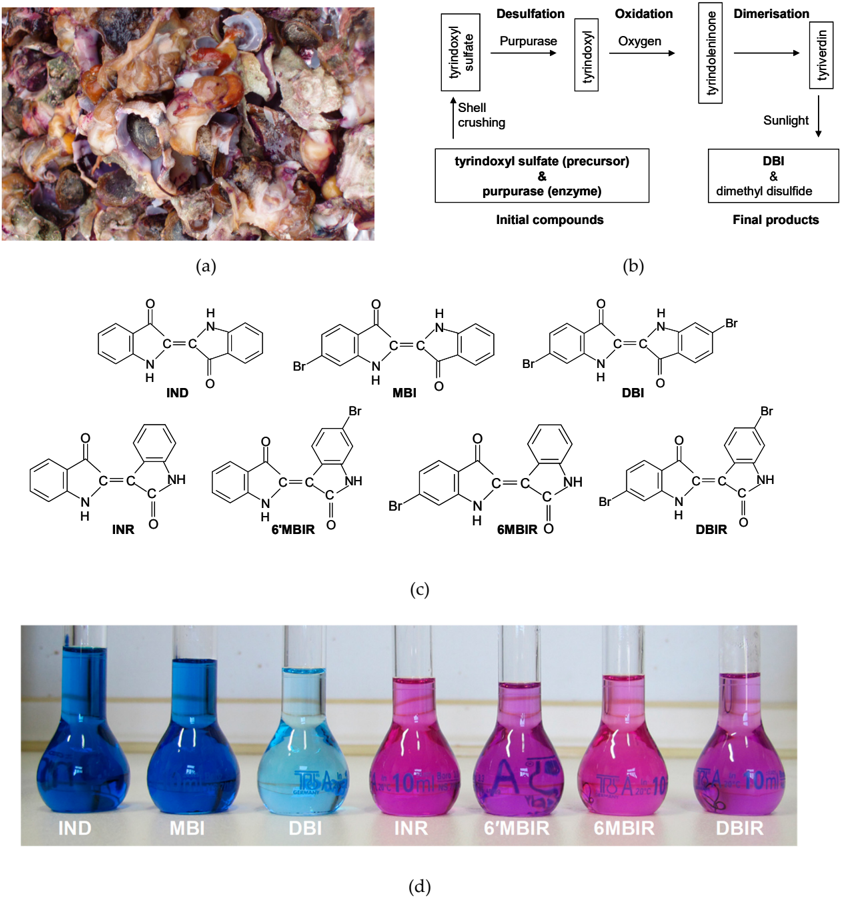
“For exampl , the reaction series for the conversion of tyrindoxyl sulfate (precursor) to 6,6′–dibromoindigotin, DBI (coloring compound) is schematically illustrated in Figure 3b [9,18].”
BackgroundInfluentialKarapanagiotis, I., Mantzouris, D., Cooksey, C., Mubarak, M. S., & Tsiamyrtzis, P. (2013) · Microchemical Journal · doi:10.1016/j.microc.2013.02.008 · Cited by 52 · cited 12×
“The sample was included in a previous study and labeled Ak3 [42].”
BackgroundResultInfluentialSelf-citationOrganic dyes in illuminated manuscripts: a unique cultural and historic record
Melo, M. J., Nabais, P., Guimarães, M., Araújo, R., Castro, R., Oliveira, M. C., & Whitworth, I. (2016) · Philosophical Transactions of the Royal Society A Mathematical Physical and Engineering Sciences · doi:10.1098/rsta.2016.0050 · Cited by 52 · cited 2×
“Orchella eeds, hen properly processed, provide a bright purple, hich has been often detected in illu inated anuscripts [108,133].”
BackgroundIdentification of the Coloring Constituents of Four Natural Indigoid Dyes
Karapanagiotis, I., de Villemereuil, V., Magiatis, P., Polychronopoulos, P., Vougogiannopoulou, K., & Skaltsounis, A. (2006) · Journal of Liquid Chromatography & Related Technologies · doi:10.1080/10826070600674935 · Cited by 51
Self-citationClark, R. J. H., & Cooksey, C. J. (1999) · New Journal of Chemistry · doi:10.1039/a808562e · Cited by 50
High‐Performance Liquid Chromatographic Analysis of an Ancient Tyrian Purple Dyeing Vat from Israel
Koren, Z. C. (1995) · Israel Journal of Chemistry · doi:10.1002/ijch.199500018 · Cited by 48 · cited 1×
“Moreover, N,N–dimethylformamide (DMF), which is not included in Table 4, was also used for the extraction of the purple material [42,78].”
Textiles and Textile Production in Europe
(2012) · Oxbow Books · doi:10.2307/j.ctvh1djwg · Cited by 48
Integrated analytical techniques for the study of ancient Greek polychromy
Colombini, M. P., Carmignani, A., Modugno, F., Frezzato, F., Olchini, A., Brécoulaki, H., Vassilopoulou, V., & Karkanas, P. (2004) · Talanta · doi:10.1016/j.talanta.2003.12.043 · Cited by 47 · cited 8×
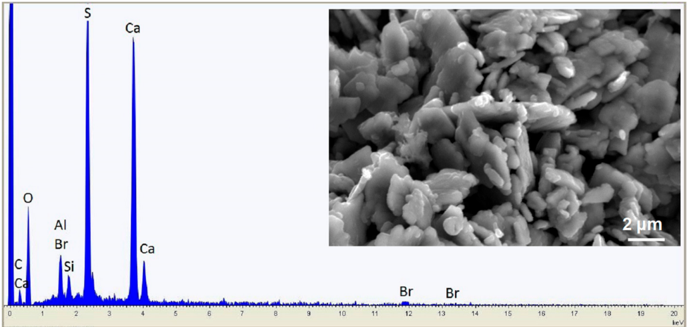
“XRD lead to the identification of aragonite in the investigated plaster samples, but the presence of Murex was not confirmed by SEM–EDX [120] or Raman [121] results.”
BackgroundInfluentialNon-invasive investigation on a VI century purple codex from Brescia, Italy
Aceto, M., Idone, A., Agostino, A., Fenoglio, G., Gulmini, M., Baraldi, P., & Crivello, F. (2013) · Spectrochimica Acta Part A Molecular and Biomolecular Spectroscopy · doi:10.1016/j.saa.2013.07.092 · Cited by 47
Identification of Pigments in Hellenistic and Roman Funeral Figurines
Fostiridou, A., Karapanagiotis, I., Vivdenko, S., Lampakis, D., Mantzouris, D., Achilara, L., & Manoudis, P. N. (2015) · Archaeometry · doi:10.1111/arcm.12177 · Cited by 47 · cited 1×
“Mixtures of purpurin-rich madder and Armenian cochineal Porphyrophora hamelii Brandt were found in funeral figurines dated to 3rd–2nd century BCE [126,127].”
BackgroundSelf-citationHigh Prestige Royal Purple dyed Textiles from the Bronze Age Royal Tomb at Qatna, Syria.
James, M. A., Reifarth, N., Mukherjee, A. J., Crump, M. P., Gates, P. J., Sandor, P., Robertson, F., Pfälzner, P., & Evershed, R. P. (2009) · Antiquity · doi:10.1017/s0003598x00099397 · Cited by 43 · cited 6×
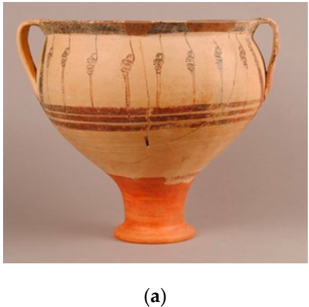
“As mentioned previously, the earliest direct scientific evidence of the shellfish dyeing industry were reported for textile fragments unearthed in Chagar Bazar (18th–16th century BCE) [47] and Tell Mishrife [48] and pottery vessels from Crete (ca. 1800/1700 BCE) [49].”
BackgroundInfluentialPalaikastro Shells and Bronze Age Purple-Dye Production in the Mediterranean Basin.
Reese, D. S. (1987) · The Annual of the British School at Athens · doi:10.1017/s0068245400020438 · Cited by 41
New Evidence of the Purple-Dye Industry at Tel Shiqmona, Israel.
Sukenik, N., Iluz, D., Amar, Z., Varvak, A., & Bar, S. (2017) · Archaeometry · doi:10.1111/arcm.12290 · Cited by 39
Archaeometry’s Role in Cultural Heritage Sustainability and Development
Liritzis, I., & Korka, E. (2019) · Sustainability · doi:10.3390/su11071972 · Cited by 36 · cited 1×
“Conservation and preservation are probably the most important conditions towards a sustainable market for cultural heritage, along with appropriate policies aiming at promoting the human civilization through the multidisciplinary area of archaeometry and other disciplines [1].”
BackgroundBrysbaert, A., & Vandenabeele, P. (2004) · Journal of Raman Spectroscopy · doi:10.1002/jrs.1204 · Cited by 34 · cited 10×
“XRD lead to the identification of aragonite in the investigated plaster samples, but the presence of Murex was not confirmed by SEM–EDX [120] or Raman [121] results.”
MethodResultInfluentialGulmini, M., Idone, A., Davit, P., Moi, M., Carrillo, M., Ricci, C., Bello, F. D., Borla, M., Oliva, C., Greco, C., et al. (2016) · Archaeological and Anthropological Sciences · doi:10.1007/s12520-016-0376-2 · Cited by 34
Historic Mineral Pigments: Colorful Benchmarks of Ancient Civilizations
Orna, M. V. (2015) · ACS symposium series · doi:10.1021/bk-2015-1211.ch002 · Cited by 32 · cited 2×
“Ever since the beginning of human existence, humans made use of materials to color virtually everything they used or had: Bodies, caves, pottery, sculpture, stone structures, parchment, paper, clothing and other textiles [4].”
BackgroundA Roman Egyptian Painting Workshop: Technical Investigation of the Portraits from Tebtunis, Egypt
Salvant, J., Williams, J., Ganio, M., Casadio, F., Daher, C., Sutherland, K., Monico, L., Vanmeert, F., Meyer, S. D., Janssens, K. H., et al. (2017) · Archaeometry · doi:10.1111/arcm.12351 · Cited by 30 · cited 1×
“An analogous practice was revealed in Roman-Egyptian mummy portraits (2nd century CE) in which mixtures of madder lakes and indigo were identified and were probably applied as cheaper substitutes for shellfish purple [129].”
Background(2010) · Mediterranean Archaeology & Archaeometry. International Journal/Mediterranean archaeology and archaeometry. International scientific journal · Cited by 30
Devièse, T., Ribechini, E., Baraldi, P., Farago-Szekeres, B., Duday, H., Regert, M., & Colombini, M. P. (2011) · Analytical and Bioanalytical Chemistry · doi:10.1007/s00216-011-5217-7 · Cited by 28 · cited 2×
“Purple was widely spread after the deposition of the body for burial, suggesting that the valuable purple grave good was part of the funeral practice [117].”
BackgroundMethodAnalytical investigations on the Coronation Gospels manuscript
Aceto, M., Agostino, A., Fenoglio, G., Idone, A., Crivello, F., Grießer, M., Kirchweger, F., Uhlir, K., & Roger-Puyo, P. (2016) · Spectrochimica Acta Part A Molecular and Biomolecular Spectroscopy · doi:10.1016/j.saa.2016.07.050 · Cited by 28
Preparation of Tyrian Purple (6,6′-Dibromoindigo): Past and Present
Wolk, J. L., & Frimer, A. A. (2010) · Molecules · doi:10.3390/molecules15085473 · Cited by 27
Bicchieri, M. (2014) · Environmental Science and Pollution Research · doi:10.1007/s11356-014-3341-6 · Cited by 26 · cited 4×
“FORS results, however, did not confirm the presence of shellfish purple.”
BackgroundInfluential(2017) · Cited by 26
Organic residue analysis of pottery from the dye workshop at Alatsomouri-Pefka, Crete
Koh, A., Betancourt, P. P., Pareja, M. N., Brogan, T. M., & Apostolakou, V. (2015) · Journal of Archaeological Science Reports · doi:10.1016/j.jasrep.2014.12.005 · Cited by 24 · cited 9×
“Photographs of M. trunculus mollusks, which were collected in t Thermaic (Thessaloniki) gulf in th Aegean Sea, are shown in Figure 3a.”
BackgroundInfluentialMargariti, C., Protopapas, S., Allen, N. S., & Vishnyakov, V. M. (2012) · Dyes and Pigments · doi:10.1016/j.dyepig.2012.11.003 · Cited by 23
Determination of Tyrian Purple by High Performance Liquid Chromatography with Diode Array Detection
Vasileiadou, A., Karapanagiotis, I., & Zotou, A. (2016) · Journal of Chromatography A · doi:10.1016/j.chroma.2016.04.046 · Cited by 23 · cited 4×
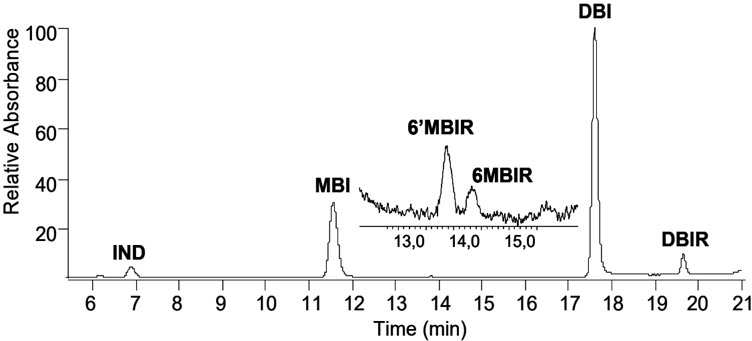
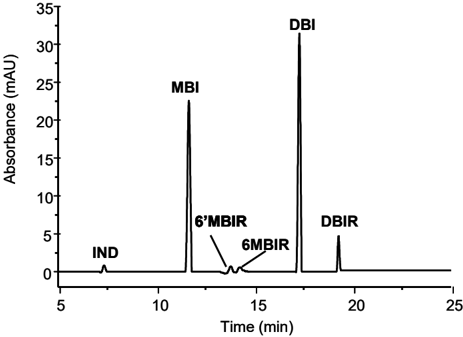
“On the other hand, the corresponding relative percentage of DBI, which is calculated using the HPLC peak areas at 288 nm, is an underestimation of the actual mass content of DBI in the shellfish pigment [75].”
BackgroundMethodInfluentialSelf-citationA strategy for the development of UV-ELS fingerprints for Ginkgo biloba extracts
van Nederkassel, A. M., & Heyden, Y. V. (2005) · VUBIR (Vrije Universiteit Brussel) · Cited by 23
Karapanagiotis, I., Verhecken-Lammens, C., & Kamaterou, P. (2018) · Archaeological and Anthropological Sciences · doi:10.1007/s12520-018-0705-8 · Cited by 23 · cited 1×
“A common practice for the Egyptian dyers was to mix madder and indigo/woad [8,34,93] achieving a remarkable purple hue.”
BackgroundSelf-citationSurowiec, I., Nowik, W., & Möritz, T. (2012) · Dyes and Pigments · doi:10.1016/j.dyepig.2012.01.023 · Cited by 22 · cited 3×
“trunculus extracts, were not included in Figure 3c [23].”
BackgroundInfluentialAN IMPROVED SYNTHETIC PROCEDURE FOR 6,6′-DIBROMOINDIGO (TYRIAN PURPLE)
Imming, P., Imhof, I., & Zentgraf, M. (2001) · Synthetic Communications · doi:10.1081/scc-100107023 · Cited by 22
Nongmaithem, B. D., Mouatt, P., Smith, J., Rudd, D. A., Russell, M., Sullivan, C. A., & Benkendorff, K. (2017) · Scientific Reports · doi:10.1038/s41598-017-17551-3 · Cited by 22 · cited 1×
“It is noteworthy, that recent studies revealed that mollusks from the family Muricidae produce biological active compounds with anti-inflammatory, anti-cancer, muscle-relaxing and pain relieving properties as well as steroidogenic activity [114,115].”
FTIR imaging and HPLC reveal ancient painting and dyeing techniques of molluskan purple
Papliaka, Z. E., Konstanta, A., Karapanagiotis, I., Karadağ, R., Akyol, A. A., Mantzouris, D., & Tsiamyrtzis, P. (2015) · Archaeological and Anthropological Sciences · doi:10.1007/s12520-015-0270-3 · Cited by 21 · cited 10×
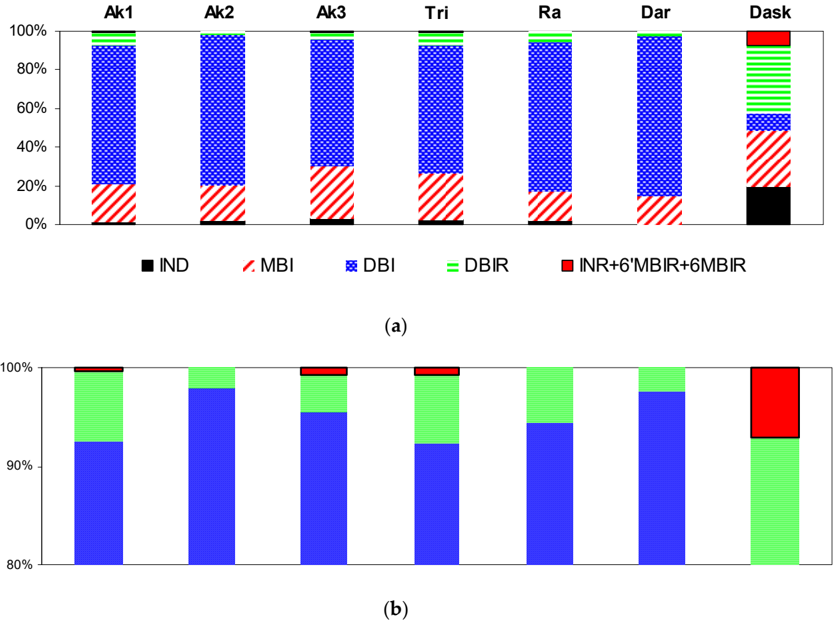
“The relative compositions of the shellfish purple pigment and dye used in the two objects were similar according to chromatographic results [46], thus offering support to the scenario that pigment production and dyeing were probably carried out within the same batch reactor-vessel.”
BackgroundResultInfluentialSelf-citationRamig, K., Lavinda, O., Szalda, D. J., Mironova, I., Karimi, S., Pozzi, F., Shah, N. C., Samson, J., Ajiki, H., Massa, L., et al. (2015) · Dyes and Pigments · doi:10.1016/j.dyepig.2015.01.025 · Cited by 19 · cited 2×
“High proportions of IND may have resulted because of the composition of the source mollusk or the dyeing conditions, as both affect the resulting color [28,29].”
BackgroundSelf-citationIdentification of indirubin and monobromoindirubins in Murex brandaris
Mantzouris, D., & Karapanagiotis, I. (2014) · Dyes and Pigments · doi:10.1016/j.dyepig.2014.01.011 · Cited by 19
Self-citationChemical Analysis of Murex-Dyed Textiles from Wadi Murabba’at, Israel.
Sukenik, N., Varvak, A., Amar, Z., & Iluz, D. (2015) · Journal of Archaeological Science Reports · doi:10.1016/j.jasrep.2015.08.003 · Cited by 18
Lapis Lazuli in an Enigmatic ‘Purple7rsquo; Pigment from a Thirteenth-Century BC Greek Wall Painting
Brysbaert, A. (2006) · Studies in Conservation · doi:10.1179/sic.2006.51.4.252 · Cited by 18
Armenian cochineal ( P orphyrophora hamelii) and purpurin‐rich madder in ancient polychromy
Mantzouris, D., & Karapanagiotis, I. (2015) · Coloration Technology · doi:10.1111/cote.12169 · Cited by 17
Self-citationIlluminating the Carolingian era: new discoveries as a result of scientific analyses
Denoël, C., Roger-Puyo, P., Brunet, A.-M., & Siloe, N. P. (2018) · Heritage Science · doi:10.1186/s40494-018-0194-1 · Cited by 17
A new method for the analysis of blue and purple dyes in textiles
Wouters, J. (1992) · Flanders Marine Institute (Flanders Marine Institute) · Cited by 17
Clementi, C., Nowik, W., Romani, A., Cardon, D., Trojanowicz, M., Davantès, A., & Chaminade, P. (2016) · Analytica Chimica Acta · doi:10.1016/j.aca.2016.04.022 · Cited by 16 · cited 1×
“Recent advances in the development of non-sampling methods to identify shellfish purple offer new perspectives for the investigation of historical manuscripts, artworks and other objects of the cultural heritage [110,111].”
BackgroundDaniilia, S., & Andrikopoulos, K. S. (2006) · Journal of Raman Spectroscopy · doi:10.1002/jrs.1648 · Cited by 14 · cited 1×
“Consequently, the study of historical manuscripts is limited to non-sampling techniques, such as, for instance, XRF [105–108], fiber optics UV-Vis diffuse reflectance spectrophotometry with optical fibres (FORS) [106,108] and Raman spectroscopy [108,109].”
BackgroundGaspa, S., Michel, C., & Nosch, M. L. B. (2017) · Zea Books · doi:10.13014/k2s46pvb · Cited by 14
Royal Purple dye: tracing the chemical origins of the industry
McGovern, P. E., & Michel, R. H. (1985) · Analytical Chemistry · doi:10.1021/ac00291a002 · Cited by 13
Cardon, D., Nowik, W., Granger-Taylor, H., Marcinowska, R., Kusyk, K., & Trojanowicz, M. (2011) · HAL · Cited by 12
Ribechini, E., Pérez‐Arantegui, J., Pavan, A., Degano, I., Zanaboni, M., & Colombini, M. P. (2015) · Journal of Cultural Heritage · doi:10.1016/j.culher.2015.11.006 · Cited by 12
Ramig, K., Islamova, A., Scalise, J., Karimi, S., Lavinda, O., Cooksey, C. J., Vasileiadou, A., & Karapanagiotis, I. (2017) · Structural Chemistry · doi:10.1007/s11224-017-0932-0 · Cited by 12 · cited 3×
“High proportions of IND may have resulted because of the composition of the source mollusk or the dyeing conditions, as both affect the resulting color [28,29].”
BackgroundSelf-citationMythic dyes or mythic colour? New insight into the use of purple dyes on codices
Aceto, M., Calà, E., Agostino, A., Fenoglio, G., Gulmini, M., Idone, A., Porter, C., Hofmann, C., Rabitsch, S., Denoël, C., et al. (2019) · Spectrochimica Acta Part A Molecular and Biomolecular Spectroscopy · doi:10.1016/j.saa.2019.01.091 · Cited by 12
An investigation of paint from a mural in the church of Sainte Madeleine, Manas, France
March, R. E., Papanastasiou, M., McMahon, A. W., & Allen, N. S. (2011) · Journal of Mass Spectrometry · doi:10.1002/jms.1950 · Cited by 11 · cited 3×
“It was suggested that probably the purple pigment was transported there from the eastern coast of the Mediterranean Sea during the time of the Crusades [74].”
BackgroundMethodInfluentialKatsifas, C. S., Ignatiadou, D., Zacharopoulou, A., Kantiranis, N., Karapanagiotis, I., & Zachariadis, G. A. (2018) · Separations · doi:10.3390/separations5020032 · Cited by 11
Self-citationDoherty, B., Nowik, W., Miliani, C., & Clementi, C. (2017) · Journal of Raman Spectroscopy · doi:10.1002/jrs.5096 · Cited by 10
Verri, G., de Fonjaudran, C. M., Acocella, A., Accorsi, G., Comelli, D., D’Andrea, C., Nevin, A., Zerbetto, F., & Saunders, D. R. (2018) · Dyes and Pigments · doi:10.1016/j.dyepig.2018.08.027 · Cited by 10 · cited 1×
“Recent advances in the development of non-sampling methods to identify shellfish purple offer new perspectives for the investigation of historical manuscripts, artworks and other objects of the cultural heritage [110,111].”
BackgroundPo-Pu-Re: Workshops, Use And Αrchaeometric Analysis In Pre-Roman Central Eastern Mediterranean
Kalaitzaki, A., Vafiadou, A., Frony, Α., Reese, D. S., Drivaliari, A., & Liritzis, I. (2017) · Zenodo · doi:10.5281/zenodo.160967 · Cited by 10
Wouters, J., Vanden Berghe, I., Richard, G., Breniaux, R., & Cardon, D. (2008) · HAL · Cited by 10
ADVANTAGES AND IMPORTANCE OF NATURAL DYES IN THE RESTORATION OF TEXTILE CULTURAL HERITAGE
Karadağ, R., & Torgan, E. (2016) · Cited by 9
Shells at the Bronze Age settlement of Coppa Nevigata (Apulia, Italy)
Minniti, C. (2005) · Oxbow Books · doi:10.2307/j.ctt1kw2959.11 · Cited by 9
Shellfish purple and gold threads from a Late Antique tomb excavated in Thessaloniki
Karapanagiotis, I., Sotiropoulou, S., Vasileiadou, S., Karagiannidou, E., Mantzouris, D., & Tsiamyrtzis, P. (2018) · Virtual Community of Pathological Anatomy (University of Castilla La Mancha) · Cited by 6
Self-citationShellfish purple and gold threads from a Late Antique tomb excavated in Thessaloniki
Karapanagiotis, I., Sotiropoulou, S., Vasileiadou, S., Karagiannidou, E. G., Mantzouris, D., & Tsiamyrtzis, P. (2018) · Cited by 4
Self-citationGleba, M., Mandolesi, A., & Lucidi, M. R. (2018) · Apollo (University of Cambridge) · doi:10.17863/cam.20479 · Cited by 2 · cited 2×
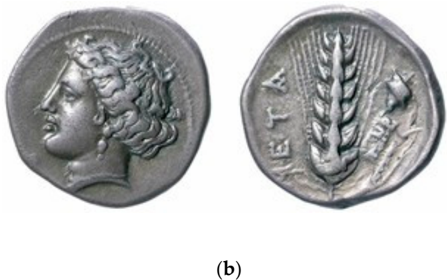
“Orientalising/early Archaic (Etruscan) [84]”
Pliny's first century AD recipe for a purple dye-vat217: decoded
Cooksey, C. (2016) · Dialnet (Universidad de la Rioja) · Cited by 1
Minniti, C., & Recchia, G. (2018) · IRIS Research product catalog (Sapienza University of Rome) · Cited by 1
Research works printed but not linked: 49
- Rasmussen, S.C., Ed.; ACS Symposium Series; American Chemical Society: Washington, DC, USA, 2015; Volume 1211, pp. 17-69.
- Ventris, M.G.F.; Chadwick, J. Documents in Mycenaean Greece, 2nd ed.; Cambridge University Press: Cambridge, UK, 1973; p. 573.
- Ortiz, J., Alfaro, C., Turell, L., Martínez, J., Eds.; Universitat de València: València, Spain, 2016; pp. 217-220.
- Meijer, L., Guyard, N., Skaltsounis, A.-L., Eisenbrand, G., Eds.; Life in Progress Editions: Roscoff, France, 2006; pp. 45-53.
- Koren, Z.C.; Verhecken-Lammens, C. Microscopic and chromatographic analyses of molluskan purple yarns in a late Roman period textile. e-PS 2013, 10, 27-34.
- Alfaro, C., Brun, J.-P., Borgard, P., Pierobon Benoît, R., Eds.; Universitat de València: València, Spain, 2011; pp. 197-214.
- Sukenik, N.; Iluz, D.; Shamir, O.; Varvak, A.; Amar, Z. Purple-dyed textiles from Wadi Murabba'at. Archaeol. Text. Newslett. 2013, 55, 46-54.
- Meijer, L., Guyard, N., Skaltsounis, A.-L., Eisenbrand, G., Eds.; Life in Progress Editions: Roscoff, France, 2006; pp. 71-78.
- Karapanagiotis, I. Identification of indigoid natural dyestuffs used in art objects by HPLC coupled to APCI-MS. Am. Lab. 2006, 38, 36-40.
- Karapanagiotis, I.; Sotiropoulou, S.; Valianou, L. Identification of Tyrian purple in Aegean Bronze age pigments. In Proceedings of the 30th Dyes in History and Archaeology meeting, Derby, UK, 12-15 October 2011.
- Karapanagiotis, I.; Sotiropoulou, S.; Chryssikopoulou, E.; Magiatis, P.; Andrikopoulos, K.S.; Chryssoulakis, Y. Investigation of Tyrian purple occurring in prehistoric wall paintings of Thera. In The Diversity of Dyes in History & Archaeology; Kirby, J., Ed.; Archetype Publications: London, UK, 2017; pp. 82-89.
- Tunca, O., Baghdo, A., Eds.; Peeters Publishers: Lueven-Li ėge, Belgium, 2018; pp. 11-32.
- Edmonds, J. The trail of the purple snail. J. Weavers Spinners Dyers 2005, 214, 5.
- Adam-Veleni, P., Stefani, E., Eds.; Hellenic Ministry of Culture and Tourism, Archaeological Museum of Thessaloniki: Thessaloniki, Greece, 2012; pp. 103-105.
- Macgillivray, J.A., Sackett, L.H., Eds.; The British School of Athens: Athens, Greece, 2019; pp. 387-409.
- Reese, D.S. Shell Purple-dye Production in the Mediterranean Basin and Environs. In press.
- Alfaro, C., Tellenbach, M., Ortiz, J., Eds.; Universitat de València: València, Spain, 2014; pp. 167-173.
- Busana, M.S., Gleba, M., Meo, F., Tricomi, A.R., Eds.; Libros Pórtico: Zaragoza, España, 2018; pp. 87-97.
- Kokiasmanou, E. Portable XRF Analysis and MA-XRF Imaging of Mycenaean Wall-Painting Pigments from the Palace of Nestor at Pylos. Master's Thesis, Aristotle University of Thessaloniki, Thessaloniki, Greece, 2018.
- Maniatis, Y.; Arvaniti, T.; Antikas, T.G.; Wynn-Antikas, L.; Orsini, S.; Ribechini, E.; Colombini, M.P. Investigation of an unusual composite material found in the larnax with cremated bones in royal tomb II at Vergina. In Proceedings of the 40th International Symposium on Archaeometry, Los Angeles, CA, USA, 19-23 May 2014.
- Sanpaolo, E.A.; Follo, L.; Sfrecola, S. Alcuni aspetti tecnologici della ceramica policroma della Daunia nella collezione Sansone di Mattinata (FG). L'apporto dell'archeometria. In Atti dell' 11 Convegno Nazionale sulla Preistoria-Protostoria, Storia della Daunia; Gravina, A., Ed.; Gerni Editori: San Severo, Italy, 1990; pp. 139-170.
- Andreotti, A.; Colombini, M.P.; Ribechini, E.; D'Alessio, A.; Frezzato, F. The characterisation of red-violet organic colours in ancient samples. In The Diversity of Dyes in History & Archaeology; Kirby, J., Ed.; Archetype Publications: London, UK, 2017; pp. 97-106.
- Maniatis, G.; Sakelari, H.; Kavousanaki, D.; Minos, N. Physicochemical characterisation of pigments from the cist tomb of Pella. In Cist Tomb with Painting Decoration from Pella; Lilibaki-Akamati, M., Ed.; Ministry of Culture, 17th Ephorate of Prehistoric and Classical Antiquities: Athens, Greece, 2007; pp. 138-175. (In Greek)
- Karydas, A.G.; Brecoulaki, H.; Bourgeois, B.; Jockey, P.H. In situ X-ray fluorescence analysis of raw pigments and traces of polychromy on Hellenistic sculpture and the Archaeological Museum of Delos. In Proceedings of the 7th International Conference of Association for the Study of Marble and Other Stones in Antiquity, Thassos, Greece, 15-20 September 2003;
- Maniatis, Y., Ed.; Suppl. 51. École française d'Athènes, BCH: Athens, Greece, 2009; pp. 811-829.
- Clarke, M.; Fredrick, P.; Colombini, M.P.; Andreotti, A.; Wouters, J.; Van Bommel, M.; Eastaugh, N.; Walsh, V.; Chaplin, T.; Siddall, R. Pompei purpurissum pigment problems. In Proceedings Art 2005: 8th International Conference on Non-Destructive Testing and Microanalysis for the Diagnostics and Conservation of the Cultural and Environmental Heritage;
- McGovern, P.E.; Michel, R.H. Boyal purple and the pre-Phoenician dye industry of Lebanon. MASCA 1984, 3, 67-70.
- Spanier, E., Ed.; Keter Publ House: Jerusalem, Israel, 1987; pp. 147-158.
- Karmon, N.; Spanier, E. Remains of a purple dye industry at Tel Shiqmona. Isr. Explor. J. 1988, 38, 184-186.
- Domínguez-Bella, S.; March, R.J.; Gener, J.M.; Martínez, J. Analisis de restos organicos de la tumba punica de la Casa del Obispo, Cadiz. Reconstruyendo la memoria fenicia en el occidente del Mediterraneo. In Gadir y el Círculo del Estrecho Revisados; Domínguez-Pérez, J.C., Ed.; Servicio de Publicaciones de la Universidad de Cadiz: Cadiz, Spain, 2011; pp. 307-319.
- Kolonas, L.; Sarri, K.; Margariti, C.; Vanden Berghe, I.; Skals, I.; Nosch, M.-L. Heirs from the loom? Funerary textiles from Stamna (Aitolia, Greece). A preliminary analysis. In Hesperos. The Aegean Seen from the West, Proceedings of the 16th International Aegean Conference, Ioannina, Greece, 18-21 May 2016;
- Fotiadis, M., Laffineur, R., Lolos, Y., Vlachopoulos, A., Eds.; Peeters Publishers: Lueven-Li ėge, Belgium, 2017; pp. 533-542.
- Metallinou, G.; Moulhérat, C.; Spantidaki, G. Archaeological textiles from Kerkyra. Arachne 2009, 3, 30-51.
- Moulhérat, C.; Spantidaki, Y. A study of textile remains from the 5th century BC discovered in Kalyvia, Attica. In Ancient Textiles: Production, Craft and Society, Proceedings of the First International Conference on Ancient Textiles, Lund, Sweden, and Copenhagen, Denmark, 19-23 March 2003;
- Gillis, C., Nosch, M.-L., Eds.; Oxbow Books: Oxford, UK, 2007; pp. 163-166.
- Gleba, M., Mannering, U., Eds.; Oxbow Books: Oxford, UK, 2012; pp. 185-200.
- Daniels, V. Dye analysis on two fragments from Enkomi. Dyes Hist Archaeol 1985, 4, 15-18.
- Energen, H.L., Meo, F., Eds.; Oxbow Books: Oxford, UK, 2017; pp. 131-137.
- Koren, Z.C. The Unprecedented Discovery of the Royal Purple Dye on the Two Thousand Year-Old Royal Masada Textile; The Textile Specialty Group Postprints; American Institute for Conservation of Historic and Artistic Works: Washington, DC, USA, 1997; Volume 7, pp. 23-34.
- Sato, M.; Sasaki, Y. Blue and purple dyestuffs used for ancient textiles. Dyes Hist. Archaeol. 2003, 19, 100-105.
- Michel, R.H.; Lazar, J.; McGovern, P.E. Indigoid dyes in Peruvian and Coptic textiles of the university museum of archaeology and anthropology. Archaeomaterials 1992, 6, 69-83. 100. Hofmann-de Keijzer, R.; Van Bommel, M.R.; De Keijzer, M. Coptic textiles: Dyes, dyeing techniques and dyestuff analysis of two textile fragments of the MAK Vienna. In Methods of Dating Ancient Textiles of the 1st Millennium AD from Egypt and Neighbouring Countries, Proceedings of the 4th Meeting of the Study Group 'Textiles from the Nile Valley', Antwerp, Belgium, 16-17 April 2005;
- De Moor, A., and Fluck, C. (2007). Coptic textiles: Dyes, dyeing techniques and dyestuff analysis of two textile fragments of the MAK Vienna. Methods of Dating Ancient Textiles of the 1st Millennium AD from Egypt and Neighbouring Countries, Proceedings of the 4th Meeting of the Study Group ‘Textiles from the Nile Valley’, Antwerp, Belgium, 16–17 April 2005, Lannoo Publishers.
- De Moor, A., Fluck, C., Eds.; Lannoo Publishers: Tielt, Belgium, 2007; pp. 214-228. 101. Wouters, J. Dye analysis in a broad perspective: A study of 3rd to 10th century Coptic textiles from Belgian private collections. Dyes Hist. Archaeol. 1995, 13, 38-45. 102.
- 2008, Dyestuff analysis of two textile fragments from late antiquity, Dyes Hist. Archaeol., 21, 17
- Walton, 1985, Shellfish purple in a Coptic textile, Dyes Hist. Archaeol., 4, 33
- Van Grieken, R., Janssens, K., Van’t dack, L., and Meersman, G. (2002). The analysis of eight manuscripts and fragments from the fifth/sixth century to the twelfth century, with particular reference to the use of and identification of “real purple” in manuscripts. Proceedings Art 2002: 7th International Conference on Non-Destructive Testing and Microanalysis for the Diagnostics and Conservation of the Cultural and Environmental Heritage, University of Antwerp.
- Brysbaert, 2007, Murex uses in plaster features in the Aegean and eastern Mediterranean Bronze Age, Mediterr. Archaeol. Archaeom., 7, 29
- Foster, K.P., and Laffineur, R. (2003). Rotating angles in measuring the Aegean Bronze Age. The technology of bronze painted plaster from the Aegean and Eastern Mediterranean. Measuring the Aegean Bronze Age, Proceedings of the 9th International Aegean Conference, New Haven, CT, USA, 18–21 April 2002, Université de Liége and University of Texas at Austin.
- Facorellis, Y., Zacharias, N., and Polikreti, K. (2008). Bronze Age painted plaster from the Greek mainland: A comparative study of its technology by means of XRD analysis and optical microscopy techniques. Proceedings of the 4th Symposium of the Hellenic Society for Archaeometry, National Hellenic Research Foundation.
Cited by
Bacterial pigments: A colorful palette reservoir for biotechnological applications
Orlandi, V. T., Martegani, E., Giaroni, C., Baj, A., & Bolognese, F. (2021) · Biotechnology and Applied Biochemistry · doi:10.1002/bab.2170 · Cited by 112
Pigments—the palette of organic colourants in wall paintings
Aceto, M. (2021) · Archaeological and Anthropological Sciences · doi:10.1007/s12520-021-01392-3 · Cited by 72
“…in the history of Mankind is mainly connected with the dyeing of precious garments produced for kings, emperors and high ecclesiastical offices (Karapanagiotis 2019), Tyrian purple was used for painting and in particular in wall paintings, being insoluble in water and therefore suitable as a…”
BackgroundMethodInfluentialEarly evidence of royal purple dyed textile from Timna Valley (Israel)
Sukenik, N., Iluz, D., Amar, Z., Varvak, A., Shamir, O., & Ben-Yosef, E. (2021) · PLOS ONE · doi:10.1371/journal.pone.0245897 · Cited by 40
“trunculus yielded more violet-blue hues due to the indigo compound, the two other species produce a more pink-purple hue (Fig 8; S1 Appendix), due to the high concentration of the combined DBI and the DBIR components which are responsible for the characteristic red/pink hue (Table 3 [97]).”
BackgroundHistory of Natural Dyes in the Ancient Mediterranean Civilization
Melo, M. J. (2023) · doi:10.1002/9781119811749.ch1 · Cited by 17
Sotiropoulou, S., Karapanagiotis, I., Andrikopoulos, K. S., Marketou, T., Birtacha, K., & Marthari, M. (2021) · Heritage · doi:10.3390/heritage4010010 · Cited by 19
“Reviewing the published results of analyses of shellfish purple pigment found in different archaeological contexts over time, in different applications and substrates, it appears that the inorganic base of the pigment can vary [32].”
BackgroundSelf-citation
Metadata
- Authors
- Karapanagiotis, I.
- Affiliations
- University Ecclesiastical Academy of Thessaloniki (GR)
- Corresponding author
- Karapanagiotis, Ioannis
- Venue
- Sustainability
- Publisher
- MDPI AG
- Published
- 2019-06-29
- Volume
- 11
- Issue
- 13
- Pages
- 3595
- ISSN
- 2071-1050 (ISSN-L)
- OpenAlex
- W2954254570
- Cited by
- 37
- References
- 89
- Citations by year
- 2026: 2 · 2025: 8 · 2024: 7 · 2023: 8 · 2022: 3 · 2021: 8 · 2020: 1
- FWCI
- 21.70
- Type
- journal article
- Language
- en
- Open access
- gold
- dx.doi.org
- Licence
- Locations
- Sustainability (publishedVersion, cc-by)
- RePEc: Research Papers in Economics (submittedVersion)
- DOAJ (DOAJ: Directory of Open Access Journals) (submittedVersion, cc-by-sa)
- Topics
- Social Sciences › Arts and Humanities › Archeology (arts and humanities) › Cultural Heritage Materials Analysis
- Physical Sciences › Materials Science › Polymers and Plastics › Dyeing and Modifying Textile Fibers
- Social Sciences › Arts and Humanities › Archeology (arts and humanities) › Ancient Mediterranean Archaeology and History
- Keywords
- Tyrian purple, indigoids, ancient dyes, textile dyeing, dyeing conditions, ancient Macedonia, cultural heritage materials, grave goods, archaeological chemistry
About these checks
Registry, retraction, Cites and statistics results are computed, not judged, with one exception: a printed reference that no index lists is read once by a model before it counts as a citation error. Claims are extracted by a model and kept only when their quote appears verbatim in the text; each cited source is then checked, with a model’s help, for whether it says what the claim relies on. Those verdicts can be wrong — read the claim’s quote and the cited source before relying on one.
Statistics and arithmetic are recomputed, not judged.
Confidence bands are shown only for fields calibrated on our annotated test set. None is calibrated yet, so no band is shown.
What counts as a claim ›How we measure confidence ›How we check this ›
Are you an author, or do you see a problem with this page? Request a review
Data sources
Bibliographic data: Semantic Scholar, OpenAlex, Crossref.
Contains information from the Semantic Scholar Academic Graph Datasets, made available under the ODC Attribution License (ODC-BY 1.0).
Semantic Scholar’s data is described in: Kinney, R., et al. (2023). The Semantic Scholar Open Data Platform. arXiv:2301.10140.
