

Differential Uptake and Translocation of Cadmium and Lead by Quinoa: A Multivariate Comparison of Physiological and Oxidative Stress Responses
Open accessThe DOI matches its Crossref record; 41 of the 41 references it cites were found in a registry or an index; 1 of the 64 sources its claims cite were checked for support.
Abstract
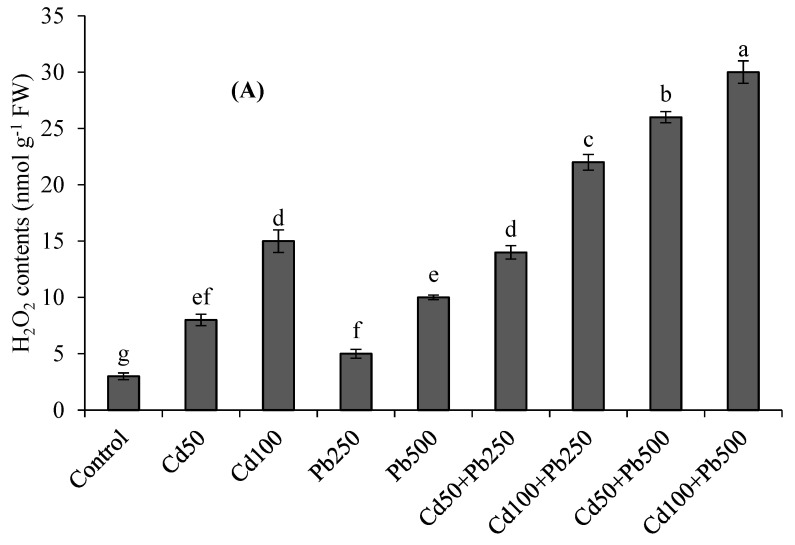
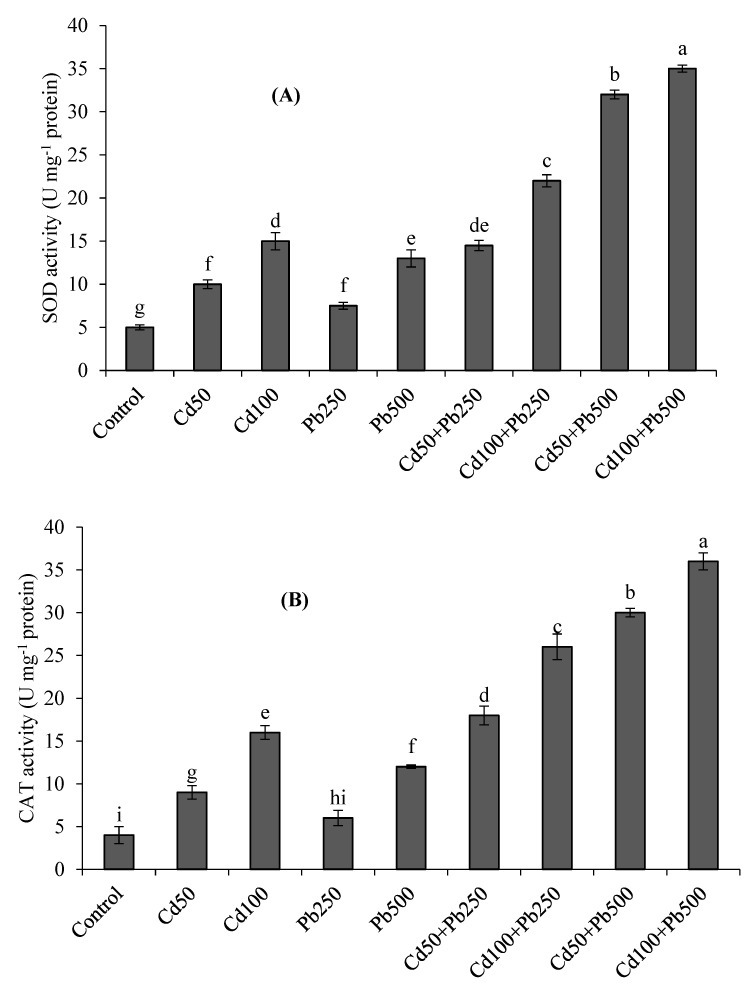
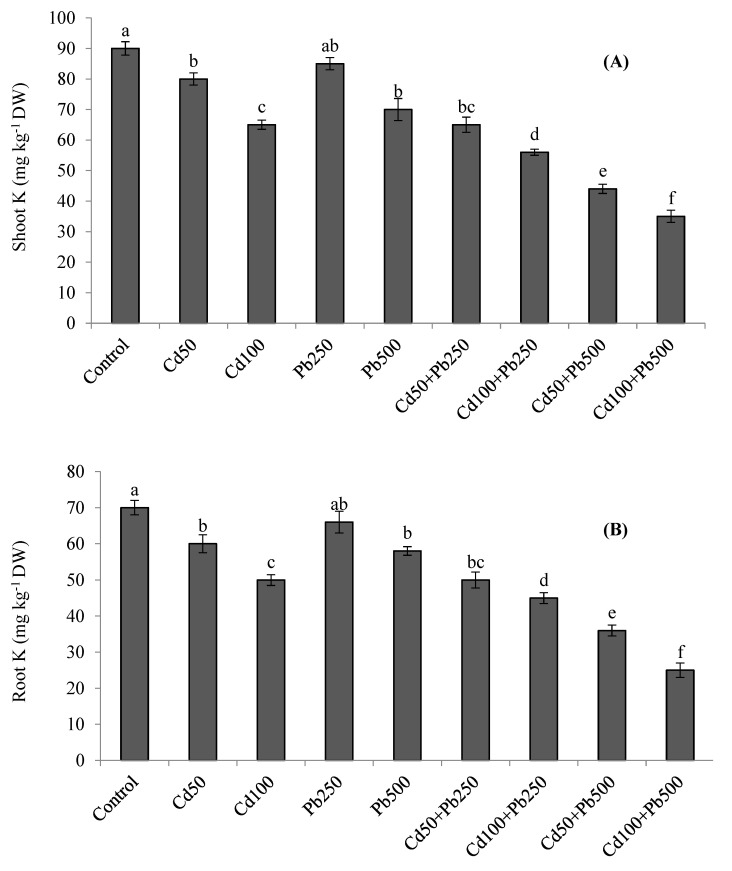
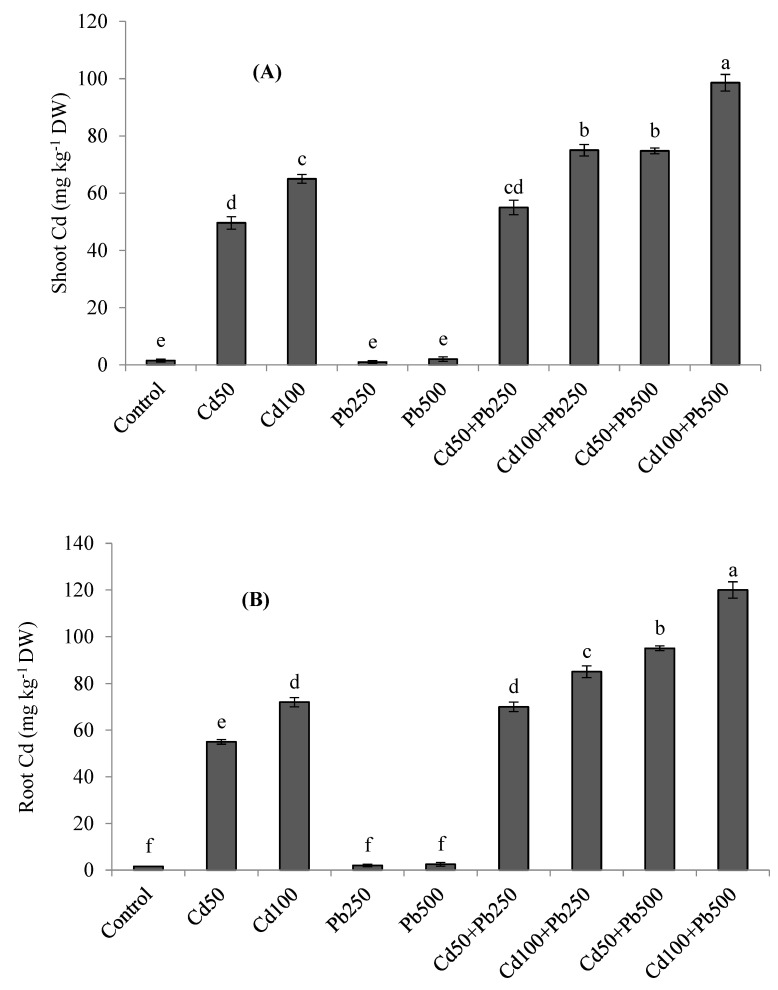
Contamination of soils with cadmium (Cd) and lead (Pb) has emerged as a serious environmental issue that reduces crop productivity. However, the metals tolerance and accumulation potential of quinoa (Chenopodium Quinoa Willd) under the combined stress of Cd and Pb has not yet been explored. In the present hydroponic study, the physiological and biochemical characteristics of quinoa exposed to Cd and Pb were explored. Four-week-old plants of quinoa genotype ‘Puno’ were grown under different concentrations of Cd (0, 50 and 100 µM), Pb (0, 250 and 500 µM) alone as well as in combinations. The results showed that with increasing Cd and Pb levels in the nutrient solution, the plant biomass, stomatal conductance and chlorophyll contents were decreased. However, the concurrent application of higher concentrations of Cd (100 µM) and Pb (500 µM) caused even more reduction in the plant biomass (more than 50% than the control) and physiological attributes. The combined application of Pb and Cd caused oxidative stress through an overproduction of H2O2 (10-fold) and TBARS (12.5-fold), leading to decrease in membrane stability (52%). The oxidative stress was alleviated by a 7-fold, 10-fold and 9-fold overactivation of superoxide dismutase (SOD), peroxidase (POD) and catalase (CAT), respectively. An excessive uptake of Cd resulted in a limited uptake of Pb and K in the roots and shoots of quinoa plants. The Cd and Pb tolerance and uptake potential of Puno showed its ability to stabilize Cd and Pb in co-contaminated soils.
Overview
CoChat Summary
TL;DR
This hydroponic study exposed quinoa genotype ‘Puno’ to Cd and Pb alone and in combination and found that combined Cd/Pb caused the greatest reductions in growth and physiology, along with oxidative stress and overactivation of antioxidant enzymes. Quinoa accumulated both metals more in roots than shoots (TF < 1) and showed potential to stabilize Cd and Pb in co-contaminated soils.
Key findings
- Combined high Cd (100 µM) + Pb (500 µM) reduced shoot and root lengths by 60% and 61%, and shoot and root dry weights by 65% and 62%, respectively, versus control; single-metal treatments caused smaller reductions (e.g., shoot dry weight decreased 38% at 100 µM Cd and 24% at 500 µM Pb).
- Pigment and stomatal responses declined most under combined metals: Chl a, Chl b, and total Chl fell by 55%, 60%, and 57%, and stomatal conductance by 47%, compared with declines at 100 µM Cd (31%, 32%, 31%; 20%) and 500 µM Pb (14%, 18%, 16%; 14%).
- Combined Cd/Pb caused a 10-fold increase in H2O2 and a 12.5-fold increase in TBARS, with MSI declining by 55% in Results (the abstract reports 52%); antioxidant enzyme activities increased 7-fold (SOD), 9-fold (CAT), and 10-fold (POD) under the combination.
- Cd and Pb bioconcentration factors were >1 for roots and shoots across treatments, but translocation factors were <1 for both metals; when Cd was combined with Pb, root and shoot Cd contents increased further while root and shoot Pb contents declined. Tolerance index values were 62% under 100 µM Cd, 76% under 500 µM Pb, and 38% under their combination.
Methods
- Hydroponic experiment with quinoa genotype ‘Puno’: 30-day-old seedlings transplanted into half-strength Hoagland’s solution, acclimatized one week, then exposed for 28 days to Cd (0, 50, 100 µM) and Pb (0, 250, 500 µM) alone and in combination; completely randomized design with 9 treatments, 4 replications, and 2 plants per replication.
- Measured growth, pigment contents, stomatal conductance, oxidative stress markers (H2O2, TBARS, MSI), antioxidant enzymes (SOD, POD, CAT), K, Cd, and Pb; Cd/Pb analyzed by atomic absorption spectrometry and K by flame photometer; BCF, TF, and TI calculated.
- Data analyzed by ANOVA at 5% significance with LSD pairwise comparison, plus PCA and Pearson correlations using XLSTAT 2014.
Limitations
- The paper states that further research is needed to determine metal accumulation in quinoa grains and the expected health risks of growing quinoa in Cd- and Pb-co-contaminated soils.
- The text notes that BCF is usually lower in soil culture than in hydroponics due to lower metal availability and mobility, indicating that these hydroponic results may not directly translate to field/soil conditions (evident from the discussion).
- Only the genotype ‘Puno’ was tested, so genotypic variation in Cd/Pb tolerance and accumulation is not addressed (evident from the methods; not stated as a limitation by the authors).
Model-written summary. Check it against the paper before relying on it.
Integrity signals
Registry
Cites
Statistics
Figures
Verification
Claims the paper makes
0 Valid · 0 Not valid · 33 Not checked · 66 Own results and interpretations
None of the sources cited for this claim have been checked yet.
In the paper
“So, it is quite evident that the separate applications of Cd and Pb in the growth medium have different effects than their combined application on the accumulation and translocation of Cd and Pb by plants [40,41].”
§ Differential Uptake and Translocation of Cadmium and Lead by Quinoa: A Multivariate Comparison of Physiological and Oxidative Stress Responses > 4. Discussion
What the sources say
- Could not verifycites [40] Nawrot N. Wojciechowska E. Pazdro K. Szmagliński J. Pempkowiak J. Uptake, accumulation, and translocation of Zn, Cu, Pb, Cd, Ni, and Cr by P. australis seedlings in an urban dredged sediment mesocosm: Impact of seedling origin and initial trace metal content Sci. Total Environ. 2021 768 144983 10.1016/j.scitotenv.2021.144983 33454486 sourceExperimental — accuracy not yet measured
Our copy of Nawrot et al. (2021) describes a mesocosm built from naturally mixed-contaminated dredged sediments (Sections 2.1 Laboratory set-up and 3.1.1), with the experimental contrast being seedling origin (S uncont vs S cont) across columns C1-C3, not separate versus combined spiking of Cd and Pb. The only statements about multi-metal interactions concern Cu-Zn antagonism, Cd-Zn synergy near the roots, Ni affinity to Cu/Zn/Cd, and Pb/Zn raising Cu in below-ground parts (Section 3.3, attributing the last to Singh et al., 2016) — none addresses a Cd-plus-Pb mixture versus individual Cd or Pb exposure. Searched: 'separate application of Cd and Pb versus combined mixture effect', 'Cd and Pb interactions antagonistic synergistic uptake competition', 'combined contamination mixture of metals compared with individual exposure Pb Cd', and the experimental design; no passage states or contradicts the claim, so the point cannot be checked against this source. (LLM, conf=0.72)
- Not checked yetcites [41] Xu J. Hu C. Wang M. Zhao Z. Zhao X. Cao L. Lu Y. Cai X. Changeable effects of coexisting heavy metals on transfer of cadmium from soils to wheat grains J. Hazard. Mater. 2021 423 127182 10.1016/j.jhazmat.2021.127182 34537640 source
Checked before — its earlier verdict is held back until a new check runs.
boostedstates a cause- Asserted: passes — The authors put it forward as true.
- Checkable: passes — It can be checked against evidence.
- Load-bearing: passes — The paper’s conclusions depend on it.
- Based: passes — The paper gives a reason why it holds.
- Could not verify
A result the paper reports from its own data — it cites no other source for it, so there is none to check. The quote shows it is in the paper.
In the paper
“the concurrent application of higher concentrations of Cd (100 µM) and Pb (500 µM) caused even more reduction in the plant biomass (more than 50% than the control) and physiological attributes.”
- Also stated in: § 3.1. Plant Growth · plain
“Nevertheless, the elevated levels of Cd (100 µM) and Pb (500 µM) jointly caused the highest alleviation in the plant biomass with respect to the control.”
§ Differential Uptake and Translocation of Cadmium and Lead by Quinoa: A Multivariate Comparison of Physiological and Oxidative Stress Responses > Abstract
plainstates a cause- Asserted: passes — The authors put it forward as true.
- Checkable: passes — It can be checked against evidence.
- Load-bearing: passes — The paper’s conclusions depend on it.
- Based: passes — The paper gives a reason why it holds.
- Also stated in: § 3.1. Plant Growth · plain
A result the paper reports from its own data — it cites no other source for it, so there is none to check. The quote shows it is in the paper.
In the paper
“The results revealed that with increasing the concentrations of Cd and Pb in the nutrient solution, the growth of the shoots and roots of quinoa was reduced (Table 1).”
- Also stated in: § 4. Discussion · plain
“The growth of quinoa significantly declined as the contamination levels of Cd and Pb were augmented in the growth medium.”
§ Differential Uptake and Translocation of Cadmium and Lead by Quinoa: A Multivariate Comparison of Physiological and Oxidative Stress Responses > 3. Results > 3.1. Plant Growth
plainstates a cause- Asserted: passes — The authors put it forward as true.
- Checkable: passes — It can be checked against evidence.
- Load-bearing: passes — The paper’s conclusions depend on it.
- Based: passes — The paper gives a reason why it holds.
- Also stated in: § 4. Discussion · plain
A result the paper reports from its own data — it cites no other source for it, so there is none to check. The quote shows it is in the paper.
In the paper
“Under the combined treatment of Cd (100 µM) + Pb (500 µM), the respective reductions in shoot and root lengths were 60% and 61% as compared to the control.”
§ Differential Uptake and Translocation of Cadmium and Lead by Quinoa: A Multivariate Comparison of Physiological and Oxidative Stress Responses > 3. Results > 3.1. Plant Growth
plainstates a cause- Asserted: passes — The authors put it forward as true.
- Checkable: passes — It can be checked against evidence.
- Load-bearing: passes — The paper’s conclusions depend on it.
- Based: passes — The paper gives a reason why it holds.
A result the paper reports from its own data — it cites no other source for it, so there is none to check. The quote shows it is in the paper.
In the paper
“The dry weights of the root and shoot were decreased respectively by 62% and 65% in the combined treatment of 100 µM of Cd + 500 µM of Pb.”
§ Differential Uptake and Translocation of Cadmium and Lead by Quinoa: A Multivariate Comparison of Physiological and Oxidative Stress Responses > 3. Results > 3.1. Plant Growth
plainstates a cause- Asserted: passes — The authors put it forward as true.
- Checkable: passes — It can be checked against evidence.
- Load-bearing: passes — The paper’s conclusions depend on it.
- Based: passes — The paper gives a reason why it holds.
46 more claims
Create a free account to see all 99 claims and to verify the 63 references still open.
- It may state two separate claims as one. 32
- The quote only partly states this claim. 1
- Probably not a substantial claim. 22
Self-check
Percentages, sums and reported differences re-computed from the paper’s own numbers.
Each contradiction between two passages listed here was confirmed by an independent check.
Rated major: it would touch a result — a value a result rests on, reported and recomputed p-values on opposite sides of the significance level, two passages that conflict with no sign which is right, or a cited work retracted before this paper was published.
In the paper
§ Differential Uptake and Translocation of Cadmium and Lead by Quinoa: A Multivariate Comparison of Physiological and Oxidative Stress Responses > Abstract
“The combined application of Pb and Cd caused oxidative stress through an overproduction of H2O2 (10-fold) and TBARS (12.5-fold), leading to decrease in membrane stability (52%).”
§ Differential Uptake and Translocation of Cadmium and Lead by Quinoa: A Multivariate Comparison of Physiological and Oxidative Stress Responses > 3. Results > 3.3. Oxidative Stress Attributes
“The higher levels of Cd, Pb and their combination resulted in 24%, 15% and 55% declines, respectively, in the MSI with respect to the control treatment.”
Rated minor: it would not touch a result — a value no result rests on, a p-value that stays on the same side of the significance level, or a conflict that is clerical, resolved elsewhere in the paper, or outside its own findings.
In the paper
§ Differential Uptake and Translocation of Cadmium and Lead by Quinoa: A Multivariate Comparison of Physiological and Oxidative Stress Responses > 4. Discussion
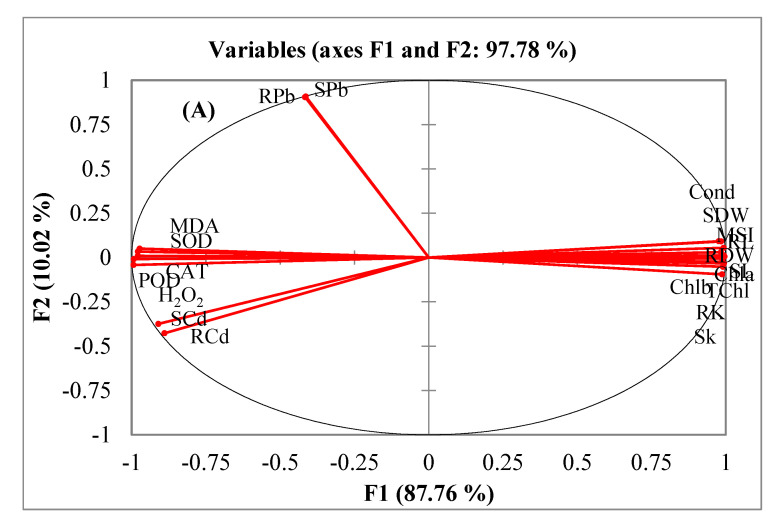
“Contrarily, oxidative stress indicators (MDA, H2O2 and MSI) and antioxidant enzymes (SOD, POD and CAT) had positive associations with Cd and Pb contents.”
§ Differential Uptake and Translocation of Cadmium and Lead by Quinoa: A Multivariate Comparison of Physiological and Oxidative Stress Responses > 3. Results > 3.3. Oxidative Stress Attributes
“The MSI was decreased, with an increase in the oxidative stress under the Pb and Cd contamination (Figure 1C).”
Citations
Cites
Aebi, H. (1984) · Methods in Enzymology · doi:10.1016/s0076-6879(84)05016-3 · Cited by 25,696 · cited 2×
“Catalase (CAT) was estimated as detailed by Aebi [27], and was described as μM of H2O2 degraded min−1 mg−1 protein.”
MethodMechanisms of Salinity Tolerance
Munns, R., & Tester, M. (2008) · Annual Review of Plant Biology · doi:10.1146/annurev.arplant.59.032607.092911 · Cited by 13,792 · cited 1×
“It plays crucial roles in osmotic adjustment, enzyme activation, cell enlargement, chlorophyll synthesis, the maintenance of cytoplasmatic pH and membrane potential [33,34].”
Background[34] Chlorophylls and carotenoids: Pigments of photosynthetic biomembranes
Lichtenthaler, H. K. (1987) · Methods in Enzymology · doi:10.1016/0076-6879(87)48036-1 · Cited by 13,616
DHINDSA, R. S., PLUMB-DHINDSA, P., & THORPE, T. A. (1981) · Journal of Experimental Botany · doi:10.1093/jxb/32.1.93 · Cited by 4,421
Sharma, P., & Dubey, R. S. (2005) · Brazilian Journal of Plant Physiology · doi:10.1590/s1677-04202005000100004 · Cited by 1,600
Sairam, R. K., Rao, K. V., & Srivastava, G. C. (2002) · Plant Science · doi:10.1016/s0168-9452(02)00278-9 · Cited by 1,262
Unravelling cadmium toxicity and tolerance in plants: Insight into regulatory mechanisms
Gallego, S. M., Pena, L. B., Barcia, R. A., Azpilicueta, C. E., Iannone, M. F., Rosales, E. P., Zawoznik, M. S., Groppa, M. D., & Benavides, M. P. (2012) · Environmental and Experimental Botany · doi:10.1016/j.envexpbot.2012.04.006 · Cited by 1,199
Shahid, M., Dumat, C., Khalid, S., Schreck, E., Xiong, T., & Niazi, N. K. (2017) · Journal of Hazardous Materials · doi:10.1016/j.jhazmat.2016.11.063 · Cited by 1,181
Lead Uptake, Toxicity, and Detoxification in Plants
Pourrut, B., Shahid, M., Dumat, C., Winterton, P., & Pinelli, E. (2011) · Reviews of Environmental Contamination and Toxicology · doi:10.1007/978-1-4419-9860-6_4 · Cited by 937
Effects of Naturally Occurring Antioxidants on Peroxidase Activity of Vegetable Extracts
HEMEDA, H. M., & KLEIN, B. P. (1990) · Journal of Food Science · doi:10.1111/j.1365-2621.1990.tb06048.x · Cited by 678
Research works printed but not linked: 1
- Steel R. Torrie J. Dickey D. Principles and Procedures of Statistics: A Biometrical Approach 3rd ed. McGraw-Hill New York, NY, USA 1997
Cited by
Goncharuk, E. A., & Zagoskina, N. V. (2023) · Molecules · doi:10.3390/molecules28093921 · Cited by 274
Meng, L., Yang, Y., Ma, Z., Jiang, J., Zhang, X., Chen, Z., Cui, G., & Yin, X. (2022) · Journal of Hazardous Materials · doi:10.1016/j.jhazmat.2022.129128 · Cited by 159
Recent Advances in Minimizing Cadmium Accumulation in Wheat
Zhou, M., & Li, Z. (2022) · Toxics · doi:10.3390/toxics10040187 · Cited by 60
Raza, H. Z., Shah, A. A., Noreen, Z., Usman, S., Zafar, S., Yasin, N. A., Sayed, S. R. M., Al-Mana, F. A., Elansary, H. O., Ahmad, A., et al. (2023) · Plant Physiology and Biochemistry · doi:10.1016/j.plaphy.2023.108171 · Cited by 48
Food Plants and Environmental Contamination: An Update
Guerrieri, N., Mazzini, S., & Borgonovo, G. (2024) · Toxics · doi:10.3390/toxics12050365 · Cited by 42
Elik, Ü., & Gül, Z. D. (2025) · Life · doi:10.3390/life15020310 · Cited by 45
Cadmium toxicity in plants and its remediation management: A review
Mushtaq, G., Agrawal, S., Kushwah, A., Kumar, A., & Lone, R. (2025) · Plant Stress · doi:10.1016/j.stress.2025.100894 · Cited by 48
Meng, L., Wu, Y., Mu, M., Wang, Z., Chen, Z., Wang, L., Ma, Z., Cui, G., & Yin, X. (2023) · Frontiers in Plant Science · doi:10.3389/fpls.2023.1112002 · Cited by 22
Li, X., Liu, L., Sun, S., Li, Y., Jia, L., Ye, S., Yu, Y., Dossa, K., & Luan, Y. (2023) · BMC Plant Biology · doi:10.1186/s12870-023-04268-x · Cited by 21
Haseeb, M. A., Iqbal, S., Hafeez, M. B., Baloch, H., Zahra, N., Mumtaz, M., Ahmad, G., Fatima, E. M., Jahanzaib, J., Raza, S., et al. (2023) · Journal of Agriculture and Food Research · doi:10.1016/j.jafr.2023.100741 · Cited by 26
Krówczyńska, N., & Pietrowska‐Borek, M. (2025) · Environmental and Experimental Botany · doi:10.1016/j.envexpbot.2025.106240 · Cited by 19
Luo, X.-F., Liu, M., Tian, Z.-X., Xiao, Y., Zeng, P., Han, Z., Zhou, H., Gu, J.-F., & Liao, B. (2023) · Environmental Science and Pollution Research · doi:10.1007/s11356-023-31260-7 · Cited by 18
Rombel‐Bryzek, A., Bojarski, B., Świsłowski, P., Jakubiak, M., Boliukh, I., & Rajfur, M. (2024) · Journal of Trace Elements in Medicine and Biology · doi:10.1016/j.jtemb.2024.127463 · Cited by 16
Alghamdi, S. A., Alharby, H. F., Abbas, G., Al-Solami, H. M. A., Younas, A., Aldehri, M., Alabdallah, N. M., & Chen, Y. (2023) · Plants · doi:10.3390/plants12193450 · Cited by 15
Self-citationExploring genotypic variation and gene expression associated to cadmium accumulation in bread wheat
Abdolmalaki, Z., Soorni, A., Beigi, F., Mortazavi, M., Najafi, F., Mehrabi, R., Sayed-Tabatabaei, B. E., Shirvani, M., & Majidi, M. M. (2024) · Scientific Reports · doi:10.1038/s41598-024-78425-z · Cited by 14
Kou, M., Wang, Z., Wang, M., Benedetti, M. F., Avena, M. J., Fang, L., & Tan, W. (2025) · Ecotoxicology and Environmental Safety · doi:10.1016/j.ecoenv.2025.118324 · Cited by 12
Karimi-Baram, A., Amooaghaie, R., Ghorbanpour, M., & Ahadi, A. M. (2024) · Scientia Horticulturae · doi:10.1016/j.scienta.2024.113366 · Cited by 11
Enhancing cadmium tolerance and photosynthesis in Cosmos bipinnatus Cav. By hormone methyl jasmonate
Fan, C., Yu, X.-F., Yang, L., Yue, L., Zeng, X., Liu, Y., Xiao, X., Yang, L., & Luo, F. (2024) · International Biodeterioration & Biodegradation · doi:10.1016/j.ibiod.2024.105976 · Cited by 9
Khalid, N., Noman, A., Nazir, A., Tufail, A., Hadayat, N., Alzuaibr, F. M., Ikram, S., Akhter, N., Hussain, M., & Aqeel, M. A. (2023) · Environmental Science and Pollution Research · doi:10.1007/s11356-023-25160-z · Cited by 9
Abbas, G., Tariq, M. L., Khan, M. N., Ahmed, K. Z., Amjad, M., Jabeen, Z., Ali, Q., & Raza, M. (2024) · Plant Physiology and Biochemistry · doi:10.1016/j.plaphy.2024.109029 · Cited by 9
Self-citationHeavy metals tolerance and toxic effects on plants: A review
Patra, D. K., Nayak, M., Pradhan, C. K., & Patra, H. K. (2026) · Chemistry and Ecology · doi:10.1080/02757540.2026.2661739 · Cited by 9
Liu, J., Qiu, G., Liu, C., Lin, Y., Chen, X., Li, H., Fu, Q., & Guo, B. (2022) · Biology · doi:10.3390/biology11081133 · Cited by 8
Rosales-Huamaní, J. A., Breña-Ore, J. L., Abanto, A. L., Ñiquin, J. A., Centeno-Rojas, L., Otiniano-Zavala, A., Andrade-Choque, J., & Medina-Collana, J. T. (2023) · International Journal of Membrane Science and Technology · doi:10.15379/ijmst.v10i2.1181 · Cited by 8
Anisimov, V. S., Anisimova, L. N., Вячеславович, К. Д., Владимирович, Д. Д., Санжаров, А. И., Korneev, Y. N., Kostyukov, I. A., & Kolyagin, Y. G. (2023) · Plants · doi:10.3390/plants12030649 · Cited by 7
Amooaghaie, R., Karimi-Baram, A., Ghorbanpour, M., & Ahadi, A. M. (2025) · The Science of The Total Environment · doi:10.1016/j.scitotenv.2025.179777 · Cited by 9
Luo, X.-F., Yi, X.-T., Wang, D.-Z., Wang, J., Zeng, P., Zhou, H., Gu, J.-F., Liao, B., & Li, H. (2025) · Tree Physiology · doi:10.1093/treephys/tpaf015 · Cited by 7
Li, S., Wang, Q., Li, W., Yang, Y. H., & Jiang, L. (2023) · Forests · doi:10.3390/f14040724 · Cited by 6
Gómez-Oquendo, G., Curí, M. F., Carrión-Carrera, G., Garcia, S., Velarde-Guillén, J., & Gómez, C. (2025) · Journal of Ecological Engineering · doi:10.12911/22998993/209671 · Cited by 4
Zarrabi, A., Ghasemi‐Fasaei, R., Ronaghi, A., Zeinali, S., & Safarzadeh, S. (2024) · PLoS ONE · doi:10.1371/journal.pone.0310054 · Cited by 4
Flores-Calla, S. S., Villanueva-Salas, J. A., Díaz-Rodríguez, K., & Gonzales-Condori, E. G. (2024) · Scientifica · doi:10.1155/sci5/6842159 · Cited by 4
Effects of cadmium stress on fruits germination and growth of two herbage species
Hu, Y., Wang, H., Zhou, B., Li, Z., Jia, H., Deji, P., Liu, N., & Wei, J. (2023) · Open Life Sciences · doi:10.1515/biol-2022-0544 · Cited by 4
Health risk assessment of heavy metals (lead and cadmium) in transgenic corn in Tehran
Hatami, S., Mousavi, Z., & Ziarati, P. (2022) · Biological Environment and Pollution · doi:10.31763/bioenvipo.v2i2.584 · Cited by 4
Khan, A., Khan, A. A., Samreen, S., Ansarì, M. S., Hasan, S. A., & Irfan, M. (2025) · Biocatalysis and Agricultural Biotechnology · doi:10.1016/j.bcab.2025.103514 · Cited by 3
Aslam, M. U., Raza, M. A. S., Saleem, M. F., Iqbal, R., Ahmad, S., Haider, I., Waqas, M., Alkubaisi, N. A. O., & Elshikh, M. S. (2025) · Communications in Soil Science and Plant Analysis · doi:10.1080/00103624.2025.2551306 · Cited by 1
Kang, F., Wei, R., Huang, X., Dawuda, U. K., Xu, P., Li, Z., Tao, Z., Tian, L., Ouyang, X., & Guo, Q. (2025) · Journal of Environmental Sciences · doi:10.1016/j.jes.2025.09.025 · Cited by 1
Bao, J., Wei, Y., Ren, Y., Chen, H., 贺鸿志, & Shi, Z. (2026) · Agronomy · doi:10.3390/agronomy16101017 · Cited by 1
Rehman, H. U., Mahmood, A., Farooq, M., Shahbaz, M., Aslam, Z., Hussain, S., & Hemat, M. (2026) · Environmental Technology & Innovation · doi:10.1016/j.eti.2026.104995 · Cited by 1
Heavy Metal Stress: Recent Insights on Toxicity and Adaptive Strategies in Plants—A Review
Ahmed, K. B. M., Khanam, N., Siddiqui, H., & Ramjan, M. (2026) · International Journal of Environmental Research · doi:10.1007/s41742-026-01152-y · Cited by 1
Senhor, D. F., Aguilar, M. V. M., Kuinchtner, C. C., Wertonge, G. S., Birck, T. P., da Rosa, F. C. R., Lovato, L. D. R., & Tabaldi, L. A. (2023) · Rodriguésia · doi:10.1590/2175-7860202374059 · Cited by 1
Cadmium toxicity and sensitivity responses in Enterolobium contortisiliquum
Senhor, D. F., Aguilar, M. V. M., Kuinchtner, C. C., Wertonge, G. S., Birck, T. P., & Tabaldi, L. A. (2023) · Revista Caatinga · doi:10.1590/1983-21252023v36n409rc · Cited by 1
da Silva, H. F. O., Torchia, D. F. D. O., de Castro, T. A. V. T., Lopes, S. D. A., CANTARINO, R. E., Tavares, O. C. H., de Moura, O. V. T., Rodrigues, N. F., Berbara, R. L. L., Santos, L. A., et al. (2024) · Environmental Science and Pollution Research · doi:10.1007/s11356-024-32898-7 · Cited by 1
Roman, W. J. B., Cruz, J. A. V. D. L., Rojas, J. M. L., Puscán, M. W. V., Fernández, G. I. L., & Alva, F. A. C. (2022) · LACCEI International Multiconference on Entrepreneurship, Innovation and Regional Development (LEIRD) · doi:10.18687/leird2022.1.1.21 · Cited by 2
Bioindicator potential of Cedrela fissilis seedlings in copper-contaminated areas
Kuinchtner, C. C., Aguilar, M. V. M., Senhor, D. F., Wertonge, G. S., Lovato, L. D. R., da Rosa, F. C. R., & Tabaldi, L. A. (2024) · Revista Brasileira de Engenharia Agrícola e Ambiental · doi:10.1590/1807-1929/agriambi.v28n11e277661
Activation of antioxidant enzymes as a mechanism against cadmium stress in Mimosa scabrella
Wertonge, G. S., Aguilar, M. V. M., Senhor, D. F., Kuinchtner, C. C., Rorato, D. G., & Tabaldi, L. A. (2024) · Revista em Agronegócio e Meio Ambiente · doi:10.17765/2176-9168.2024v17n4e11973
Alamri, A. M., Alharby, H. F., Rahman, N. U., Alabdallah, N. M., Abdulmajeed, A. M., Hussain, M., Rashti, M. R., & Abbas, G. (2025) · International Journal of Phytoremediation · doi:10.1080/15226514.2025.2594545
Self-citationBasit, A., Oladoye, P. O., Naveed, S., Lawanson, S. E., Naveed, M., Naveed, M., Shokunbi, Y. O., & Anjum, N. (2026) · Next research. · doi:10.1016/j.nexres.2026.101330
Rodríguez–Sánchez, A., Jiménez-Castañeda, M. E., Filley, T. R., Brenner, D. M., Macedo-Valdivia, D., Casa-Coila, V. H., & Hoagland, L. (2026) · The Science of The Total Environment · doi:10.1016/j.scitotenv.2025.181058
Ballová, Z. K., Zatkalíková, G., & Janiga, M. (2026) · Environmental Monitoring and Assessment · doi:10.1007/s10661-026-15471-2
PyWRKY48 directly activates PyMTP10 to confer cadmium tolerance and accumulation in poplar
Chen, X., Liu, M., Yang, J., Zhu, K., Xiao, K., Hao, R., Zhou, X., Tian, F., Wang, X., Wu, H., et al. (2026) · Tree Physiology · doi:10.1093/treephys/tpag091
Saeed, S. H., Shah, G. M., Gazder, U., Mahmood, Q., & Hung, Y.-T. (2026) · International Journal of Phytoremediation · doi:10.1080/15226514.2026.2703734
Khongdee, N., Huangmee, K., Luangkaeo, D., Khaonet, J., Prethawin, K., & Iamsaard, K. (2026) · Sustainable Environment · doi:10.1080/27658511.2026.2730673
Mousavi, E., Azimzadeh, H. R., Arani, A. M., & Sotoudeh, A. (2026) · Discover Environment · doi:10.1007/s44274-026-01163-8
Parera, V. E., Chaca, M. V. P., Gatica-Aguilar, C. V., Parera, C. A., & Feresin, G. E. (2026) · Plants · doi:10.3390/plants15213392
Meng, L., Wu, Y., Mu, M., Wang, Z., Chen, Z., Wang, L., Ma, Z., Cui, G., & Yin, X. (2023) · doi:10.3389/fpls.2023.1112002.s003
Metadata
- Authors
- Bamagoos, A. A., Alharby, H. F., & Abbas, G.
- Affiliations
- King Abdulaziz University (SA)
- COMSATS University Islamabad (PK)
- Corresponding author
- Abbas, Ghulam
- Venue
- Toxics
- Publisher
- MDPI AG
- Published
- 2022-02-04
- Volume
- 10
- Issue
- 2
- Pages
- 68
- ISSN
- 2305-6304 (ISSN-L)
- PMC
- PMC8880804
- OpenAlex
- W4210642306
- Semantic Scholar
- 1d7272ffd15d0d59e6d29356e9e625b4e3986b00
- Cited by
- 54
- References
- 41
- Citations by year
- 2026: 12 · 2025: 11 · 2024: 11 · 2023: 15 · 2022: 5
- FWCI
- 2.43
- Type
- journal article
- Language
- en
- Open access
- gold
- doi.org
- Licence
- Locations
- Toxics (publishedVersion, cc-by)
- PubMed (publishedVersion)
- PubMed Central (publishedVersion, cc-by)
- DOAJ (DOAJ: Directory of Open Access Journals) (submittedVersion, cc-by-sa)
- Funders
- Deanship of scientific research (DSR) at King Abdulaziz University, Jeddah (G: 278-130-1442)
- Topics
- Physical Sciences › Environmental Science › Pollution › Heavy metals in environment
- Life Sciences › Agricultural and Biological Sciences › Plant Science › Plant Stress Responses and Tolerance
- Physical Sciences › Chemistry › Analytical Chemistry › Heavy Metals in Plants
- Keywords
- quinoa, cadmium, lead, heavy metal uptake, metal translocation, combined metal stress, oxidative stress, antioxidant enzymes, superoxide dismutase, peroxidase, catalase, hydrogen peroxide, lipid peroxidation, membrane stability, stomatal conductance, chlorophyll content, plant biomass, metal tolerance, soil contamination, potassium uptake
About these checks
Registry, retraction, Cites and statistics results are computed, not judged, with one exception: a printed reference that no index lists is read once by a model before it counts as a citation error. Claims are extracted by a model and kept only when their quote appears verbatim in the text; each cited source is then checked, with a model’s help, for whether it says what the claim relies on. Those verdicts can be wrong — read the claim’s quote and the cited source before relying on one.
The claim verdicts this report counts are experimental: their accuracy is not yet measured.
A language model drew the claims from the paper on 2026-11-15, under version 3 of the claim definition (model deepseek-v4.1-flash, prompt extract-v3).
A second model labelled each claim on 2026-11-15 (model jev-1.13-20260917, definition revision gold-guideline-v0.2).
Cited sources are checked with a language model’s help (qwen3.8-omni-flash).
Statistics and arithmetic are recomputed, not judged.
Confidence bands are shown only for fields calibrated on our annotated test set. None is calibrated yet, so no band is shown.
What counts as a claim ›How we measure confidence ›How we check this ›
Are you an author, or do you see a problem with this page? Request a review
Data sources
Bibliographic data: Semantic Scholar, OpenAlex, Crossref.
Contains information from the Semantic Scholar Academic Graph Datasets, made available under the ODC Attribution License (ODC-BY 1.0).
Semantic Scholar’s data is described in: Kinney, R., et al. (2023). The Semantic Scholar Open Data Platform. arXiv:2301.10140.
