

The DOI matches its Crossref record.
Toxicity in Peripheral Nerves: An Overview
Open accessAbstract
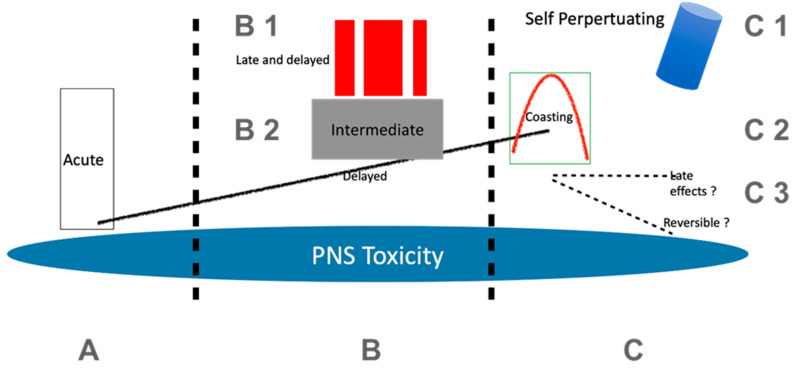
Introduction to a collection. This article is intended to introduce a collection of papers on toxic neuropathies. Toxic neuropathies can be caused by a variety of substances and by different mechanisms. Toxic agents are numerous and can be distinguished between drugs, recreational agents, heavy metals, industrial agents, pesticides, warfare agents, biologic substances and venoms. Toxic agents reach the nervous system by ingestion, transcutaneously, via the mucous membranes, parenterally and by aerosols. The most frequent types are cumulative toxicities. Other types are acute or delayed toxicities. Pathogenetic mechanisms range from a specific toxic substance profile causing axonal or demyelinating lesions, towards ion channel interferences, immune-mediated mechanisms and a number of different molecular pathways. In addition, demyelination, focal lesions and small fiber damage may occur. Clinically, neurotoxicity presents most frequently as axonal symmetric neuropathies. In this work, we present a panoramic view of toxic neuropathy, in terms of symptoms, causes, mechanisms and classification.
Overview
The claims and statistics of this paper haven’t been checked yet.
Run the check — free, no account needed. It reads the open-access text and checks the sources it cites.
Integrity signals
Registry
Cites
Statistics
Figures
Verification
Claims the paper makes
The claims and statistics of this paper haven’t been checked yet.
Run the check — free, no account needed. It reads the open-access text and checks the sources it cites.
Claims other papers make about this one
Each is checked against this paper’s own text: does it say what the citing paper says it does?
The source backs part of the claim, not all of it — or backs it for a different population, condition or comparison.
In the citing paper
“These leaked substances can also disrupt the ionic balance of essential elements like sodium, potassium, and calcium, leading to excitotoxicity—a pathological process causing neuron damage due to excessive neurotransmitter stimulation.”
From Comparative analysis of energy transfer mechanisms for neural implants (2024) · cites this paper as Grisold and Carozzi, 2021
Experimental — accuracy not yet measuredThe check wasn’t confident either way, so it gives no verdict — never disputed.
In the citing paper
“Lastly, in response to chemical exposure, neural tissue might undergo fibrosis, a defensive yet functionally compromising mechanism (Grisold and Carozzi, 2021; Schander et al., 2021; Yin et al., 2021; World Health Organization: WHO, 2023).”
From Comparative analysis of energy transfer mechanisms for neural implants (2024) · cites this paper as Grisold and Carozzi, 2021
Experimental — accuracy not yet measured
Self-check
Percentages, sums and reported differences re-computed from the paper’s own numbers.
The self-check needs the paper’s full text.
Citations
Cites
No references could be resolved yet.
Research works printed but not linked: 61
- Hill, 1965, The Environment and Disease: Association or Causation?, Proc. R. Soc. Med., 58, 295
- Hill, 2015, The environment and disease: Association or causation? 1965, J. R. Soc. Med., 108, 32, 10.1177/0141076814562718 · DOI
- Ventura, 2015, Predicting concentrations of cytostatic drugs in sewage effluents and surface waters of Catalonia (NE Spain), Environ. Res., 138, 161, 10.1016/j.envres.2015.02.015 · DOI
- Moretti, M., Bonfiglioli, R., Feretti, D., Pavanello, S., Mussi, F., Grollino, M.G., Villarini, M., Barbieri, A., Ceretti, E., and Carrieri, M. (2011). A study protocol for the evaluation of occupational mutagenic/carcinogenic risks in subjects exposed to antineoplastic drugs: A multicentric project. BMC Public Health, 11. · DOI
- Hachisuka, 2018, Itch and neuropathic itch, Pain, 159, 603, 10.1097/j.pain.0000000000001141 · DOI
- Oaklander, 2012, Common neuropathic itch syndromes, Acta Derm. Venereol., 92, 118, 10.2340/00015555-1318 · DOI
- Saviuc, 2001, Erythromelalgia and mushroom poisoning, J. Toxicol. Clin. Toxicol., 39, 403, 10.1081/CLT-100105162 · DOI
- Cimolai, 2009, Erythromelalgia accompanying rosuvastatin-associated myopathy, J. Dermatol. Case Rep., 3, 1, 10.3315/jdcr.2009.1026 · DOI
- Grzybowski, 2015, Toxic optic neuropathies: An updated review, Acta Ophthalmol., 93, 402, 10.1111/aos.12515 · DOI
- Aghdam, 2017, An Updated Review on the Most Common Agents Causing Toxic Optic Neuropathies, Curr. Pharm. Des., 23, 586, 10.2174/1381612823666170124113826 · DOI
- Du, 2019, Aspects of vincristine-induced neuropathy in hematologic malignancies: A systematic review, Cancer Chemother. Pharmacol., 84, 471, 10.1007/s00280-019-03884-5 · DOI
- Fehm, 2008, Paravasation von Zytostatika, Der Gynäkologe, 41, 607, 10.1007/s00129-008-2173-1 · DOI
- Emre, 2009, Median Nerve Injury Due to High-Pressure Water Jet Injection: A Case Report and Review of Literature, Eur. J. Trauma Emerg. Surg., 35, 411, 10.1007/s00068-008-8092-y · DOI
- Busse, 1983, Peripheral nerve damage following isolated extremity perfusion with cis-platinum, Recent Results Cancer Res., 86, 264, 10.1007/978-3-642-82025-0_44 · DOI
- Peel, 1990, Localized neuropathy following jellyfish sting, Postgrad. Med J., 66, 953, 10.1136/pgmj.66.781.953 · DOI
- Hebl, 2001, Diffuse Brachial Plexopathy after Interscalene Blockade in a Patient Receiving Cisplatin Chemotherapy: The Pharmacologic Double Crush Syndrome, Anesth. Analg., 92, 249, 10.1097/00000539-200101000-00049 · DOI
- Novak, 2015, Association of Statins with Sensory and Autonomic Ganglionopathy, Front. Aging Neurosci., 7, 191, 10.3389/fnagi.2015.00191 · DOI
- Giannoccaro, 2011, Somatic and autonomic small fiber neuropathy induced by bortezomib therapy: An immunofluorescence study, Neurol. Sci., 32, 361, 10.1007/s10072-010-0475-2 · DOI
- Gebremedhn, E.G., Shortland, P.J., and Mahns, D.A. (2018). The incidence of acute oxaliplatin-induced neuropathy and its impact on treatment in the first cycle: A systematic review. BMC Cancer, 18. · DOI
- Alcaraz, 2002, Intrathecal vincristine: Fatal myeloencephalopathy despite cerebrospinal fluid perfusion, J. Toxicol. Clin. Toxicol., 40, 557, 10.1081/CLT-120014647 · DOI
- Otsuka, 2020, Impact of peripheral neuropathy induced by platinum in first-line chemotherapy on second-line chemotherapy with paclitaxel for advanced gastric cancer, Int. J Clin. Oncol., 25, 595, 10.1007/s10147-019-01598-5 · DOI
- Cox, 2018, Modernizing the Bradford Hill criteria for assessing causal relationships in observational data, Crit. Rev. Toxicol., 48, 682, 10.1080/10408444.2018.1518404 · DOI
- Abdollahi, 2012, A comprehensive review on experimental and clinical findings in intermediate syndrome caused by organophosphate poisoning, Toxicol. Appl. Pharmacol., 258, 309, 10.1016/j.taap.2011.11.014 · DOI
- Haliga, 2018, New insights into the organophosphate-induced intermediate syndrome, Arh. Hig. Rada. Toksikol., 69, 191, 10.2478/aiht-2018-69-3121 · DOI
- Vasconcellos, 2002, Organophosphate-induced delayed neuropathy: Case report, Arq. Neuropsiquiatr., 60, 1003, 10.1590/S0004-282X2002000600022 · DOI
- Agalave, 2021, Neuroimmune Consequences of eIF4E Phosphorylation on Chemotherapy-Induced Peripheral Neuropathy, Front. Immunol., 12, 642420, 10.3389/fimmu.2021.642420 · DOI
- Fumagalli, 2021, Neuroinflammatory Process Involved in Different Preclinical Models of Chemotherapy-Induced Peripheral Neuropathy, Front. Immunol., 11, 626687, 10.3389/fimmu.2020.626687 · DOI
- Lehr, 1972, Sulfonamide vasculitis, J. Clin. Pharmacol. New Drugs., 12, 181, 10.1002/j.1552-4604.1972.tb00159.x · DOI
- Adjemian, 2009, A clustering of immune-mediated polyradiculoneuropathy among swine abattoir workers exposed to aerosolized porcine brains, Indiana, United States, Int. J. Occup. Environ. Health, 15, 331, 10.1179/oeh.2009.15.4.331 · DOI
- Gelpi, 2002, The Spanish toxic oil syndrome 20 years after its onset: A multidisciplinary review of scientific knowledge, Environ. Health Perspect., 110, 457
- Grisold, 1984, The syndrome of continuous muscle fibre activity following gold therapy, J. Neurol., 231, 244, 10.1007/BF00313659 · DOI
- Jortner, 2000, Mechanisms of toxic injury in the peripheral nervous system: Neuropathologic considerations, Toxicol. Pathol., 28, 54, 10.1177/019262330002800108 · DOI
- Kist, A.M., Sagafos, D., Rush, A.M., Neacsu, C., Eberhardt, E., Schmidt, R., Lunden, L.K., Ørstavik, K., Kaluza, L., and Meents, J. (2016). SCN10A Mutation in a Patient with Erythromelalgia Enhances C-Fiber Activity Dependent Slowing. PLoS ONE, 11. · DOI
- Carozzi, 2009, Effect of the chronic combined administration of cisplatin and paclitaxel in a rat model of peripheral neurotoxicity, Eur. J. Cancer, 45, 656, 10.1016/j.ejca.2008.10.038 · DOI
- Meregalli, 2021, Blood molecular biomarkers for chemotherapy-induced peripheral neuropathy: From preclinical models to clinical practice, Neurosci. Lett., 749, 135739, 10.1016/j.neulet.2021.135739 · DOI
- Benbow, 2016, Effects of Paclitaxel and Eribulin in Mouse Sciatic Nerve: A Microtubule-Based Rationale for the Differential Induction of Chemotherapy-Induced Peripheral Neuropathy, Neurotox. Res., 29, 299, 10.1007/s12640-015-9580-6 · DOI
- Smith, 2016, Structural Basis for Induction of Peripheral Neuropathy by Microtubule-Targeting Cancer Drugs, Cancer Res., 76, 5115, 10.1158/0008-5472.CAN-15-3116 · DOI
- Herskowitz, 1971, n-Hexane neuropathy: A syndrome occurring as a result of industrial exposure, N. Engl. J. Med., 285, 82, 10.1056/NEJM197107082850204 · DOI
- Rizzuto, 1980, n-Hexane polyneuropathy: An occupational disease of shoemakers, Eur. Neurol., 19, 308, 10.1159/000115166 · DOI
- Chang, 1990, Patients with n-hexane induced polyneuropathy: A clinical follow up, Br. J. Ind. Med., 47, 485
- Huang, 2008, Polyneuropathy induced by n-hexane intoxication in Taiwan, Acta Neurol. Taiwanica, 17, 3
- Lee, 1992, Local modulation of neurofilament phosphorylation, axonal caliber, and slow axonal transport by myelinating Schwann cells, Cell, 68, 451, 10.1016/0092-8674(92)90183-D · DOI · Paper page
- Mata, 1992, Phosphorylation-dependent neurofilament epitopes are reduced at the node of Ranvier, J. Neurocytol., 21, 199, 10.1007/BF01194978 · DOI
- Hsieh, 1994, Regional modulation of neurofilament organization by myelination in normal axons, J. Neurosci., 14, 6392, 10.1523/JNEUROSCI.14-11-06392.1994 · DOI
- Shemesh, 2010, Paclitaxel induces axonal microtubules polareconfiguration and impaired organelle transport: Implications for the pathogenesis of paclitaxel-induced polyneuropathy, Acta Neuropathol., 119, 235, 10.1007/s00401-009-0586-0 · DOI
- Yin, 1998, Myelin-associated glycoprotein is a myelin signal that modulates the caliber of myelinated axons, J. Neurosci., 18, 1953, 10.1523/JNEUROSCI.18-06-01953.1998 · DOI
- Cosgaya, 2002, The neurotrophin receptor p75NTR as a positive modulator of myelination, Science, 298, 1245, 10.1126/science.1076595 · DOI · Paper page
- Syroid, 1996, Cell death in the Schwann cell lineage and its regulation by neuregulin, Proc. Natl. Acad. Sci. USA, 93, 9229, 10.1073/pnas.93.17.9229 · DOI
- Guenard, 1995, Transforming growth factor-beta blocks myelination but not ensheathment of axons by Schwann cells in vitro, J. Neurosci., 15, 419, 10.1523/JNEUROSCI.15-01-00419.1995 · DOI
- Towfighi, 1974, Hexachlorophene-induced changes in central and peripheral myelinated axons of developing and adult rats, Lab. Investig., 31, 712
- Tripier, 1981, Hexachlorophene and the central nervous system. Toxic effects in mice and baboons, Acta Neuropathol., 53, 65, 10.1007/BF00697186 · DOI
- Graham, 1976, Triethyltin sulfateinduced neuropathy in rats. Electrophysiologic, morphologic, and biochemical studies, Arch. Neurol., 33, 40, 10.1001/archneur.1976.00500010042007 · DOI
- Hanz, 2006, Retrograde signaling in injured nerve–the axon reaction revisited, J. Neurochem., 99, 13, 10.1111/j.1471-4159.2006.04089.x · DOI
- Scheib, 2013, Advances in peripheral nerve regeneration, Nat. Rev. Neurol., 9, 668, 10.1038/nrneurol.2013.227 · DOI · Paper page
- Adelsberger, 2000, The chemotherapeutic oxaliplatin alters voltage-gated Na(þ) channel kinetics on rat sensory neurons, Eur. J. Pharmacol., 406, 25, 10.1016/S0014-2999(00)00667-1 · DOI · Paper page
- Park, S.B., Lin, C.S.Y., Krishnan, A.V., Goldstein, D., Friedlander, M.L., and Kiernan, M.C. (2011). Dose effects of oxaliplatin on persistent and transient Naþ conductances and the development of neurotoxicity. PLoS ONE, 6. · DOI
- Wu, 2009, The mechanism of the actions of oxaliplatin on ion currents and action potentials in differentiated NG108-15 neuronal cells, Neurotoxicology, 30, 677, 10.1016/j.neuro.2009.04.010 · DOI
- Webster, 2005, Oxaliplatin induces hyperexcitability at motor and autonomic neuromuscular junctions through effects on voltage-gated sodium channels, Br. J. Pharmacol., 146, 1027, 10.1038/sj.bjp.0706407 · DOI
- Quartu, 2014, Bortezomib treatment produces nocifensive behavior and changes in the expression of TRPV1, CGRP, and substance P in the rat DRG, spinal cord, and sciatic nerve, Biomed Res. Int., 2014, 180428, 10.1155/2014/180428 · DOI
- Warwick, 2013, The contribution of satellite glial cells to chemotherapy-induced neuropathic pain, Eur. J. Pain, 17, 571, 10.1002/j.1532-2149.2012.00219.x · DOI
- Ali, 2018, Effectiveness of antiarrhythmic drugs for shockable cardiac arrest: A systematic review, Resuscitation, 132, 63, 10.1016/j.resuscitation.2018.08.025 · DOI
Cited by
Comparative analysis of energy transfer mechanisms for neural implants
Miziev, S., Pawlak, W. A., & Howard, N. (2024) · Frontiers in Neuroscience · doi:10.3389/fnins.2023.1320441 · Cited by 21
“Lastly, in response to chemical exposure, neural tissue might undergo fibrosis, a defensive yet functionally compromising mechanism (Grisold and Carozzi, 2021; Schander et al., 2021; Yin et al., 2021; World Health Organization: WHO, 2023).”
BackgroundChen, D.-Z., Werder, E., Stewart, P. A., Stenzel, M., Gerr, F., Lawrence, K. G., Groth, C., Huỳnh, T. B., Ramachandran, G., Banerjee, S., et al. (2023) · Environmental Research · doi:10.2139/ssrn.4379448 · Cited by 18
Peters, J., & Staff, N. P. (2022) · Current Treatment Options in Neurology · doi:10.1007/s11940-022-00716-5 · Cited by 19
Chauhan, R., Dande, S., Hood, D. B., Chirwa, S., Langston, M. A., Grady, S. K., Dojcsak, L., Tabatabai, M., Wilus, D. M., Valdez, R. B., et al. (2025) · Journal of Toxicology and Environmental Health Part B · doi:10.1080/10937404.2025.2450354 · Cited by 19
“When neuropathy results from environmental and occupational exposures (through inhalation route) and therapeutic agents (oral route), it is termed as toxic neuropathy (Grisold and Carozzi 2021).”
Argyriou, A., Velasco, R., Kalofonou, F., Litsardopoulos, P., Alemany, M., Rikos, D., Kalofonos, H., & Bruna, J. (2025) · BMC Cancer · doi:10.1186/s12885-025-14579-x · Cited by 6
“…to various exogenous neurotoxic sources, including industrial chemical substances in the workplace (occupational hazards) or the environment (environmental hazards), as well as consumption of food, alcohol or drugs, can frequently be associated with acquired toxicity in peripheral nerves [1].”
Metadata
- Authors
- Grisold, W., & Carozzi, V.
- Affiliations
- Ludwig Boltzmann Institute for Traumatology, The Research Center in Cooperation with AUVA (AT)
- University of Milano-Bicocca (IT)
- Corresponding author
- Carozzi, Valentina
- Venue
- Toxics
- Publisher
- MDPI AG
- Published
- 2021-09-11
- Volume
- 9
- Issue
- 9
- Pages
- 218
- ISSN
- 2305-6304 (ISSN-L)
- PMC
- PMC8472820
- OpenAlex
- W3199678217
- Cited by
- 28
- References
- 63
- Citations by year
- 2026: 3 · 2025: 13 · 2024: 3 · 2023: 4 · 2022: 5
- FWCI
- 0.38
- Type
- journal article
- Language
- en
- Open access
- gold
- doi.org
- Licence
- Locations
- Toxics (publishedVersion, cc-by)
- Europe PMC (PubMed Central) (publishedVersion, other-oa)
- PubMed Central (publishedVersion, cc-by)
- PubMed (publishedVersion)
- BOA (University of Milano-Bicocca) (submittedVersion, cc-by)
- DOAJ (DOAJ: Directory of Open Access Journals) (submittedVersion, cc-by-sa)
- Topics
- Health Sciences › Medicine › Clinical Neurology › Peripheral Neuropathies and Disorders
- Health Sciences › Medicine › Oncology › Cancer Treatment and Pharmacology
- Life Sciences › Neuroscience › Cellular and Molecular Neuroscience › Hereditary Neurological Disorders
- Keywords
- toxic neuropathy, peripheral nerve toxicity, neurotoxicity, drug-induced neuropathy, heavy metals, pesticides, venom, demyelination, axonal neuropathy, autoimmune neuropathy, cumulative toxicity
About these checks
Registry, retraction, Cites and statistics results are computed, not judged, with one exception: a printed reference that no index lists is read once by a model before it counts as a citation error. Claims are extracted by a model and kept only when their quote appears verbatim in the text; each cited source is then checked, with a model’s help, for whether it says what the claim relies on. Those verdicts can be wrong — read the claim’s quote and the cited source before relying on one.
Statistics and arithmetic are recomputed, not judged.
Confidence bands are shown only for fields calibrated on our annotated test set. None is calibrated yet, so no band is shown.
What counts as a claim ›How we measure confidence ›How we check this ›
Are you an author, or do you see a problem with this page? Request a review
How to cite
Cite CoChat for the checks on this page, and the paper for its own findings.
- This page
- CoChat. (2026). Citation check: Toxicity in Peripheral Nerves: An Overview. https://app.cochat.ai/papers/10.3390/toxics9090218
- The paper
- Grisold, W., & Carozzi, V. (2021). Toxicity in Peripheral Nerves: An Overview. Toxics. https://doi.org/10.3390/toxics9090218
Data sources
Bibliographic data: Semantic Scholar, OpenAlex, Crossref.
Contains information from the Semantic Scholar Academic Graph Datasets, made available under the ODC Attribution License (ODC-BY 1.0).
Semantic Scholar’s data is described in: Kinney, R., et al. (2023). The Semantic Scholar Open Data Platform. arXiv:2301.10140.
