

The DOI matches its Crossref record; 1 of the 1 references it cites were found in a registry or an index.
Of Money and Men: A Scoping Review to Map Gender Barriers to Immunization Coverage in Low- and Middle-Income Countries
Open accessAbstract
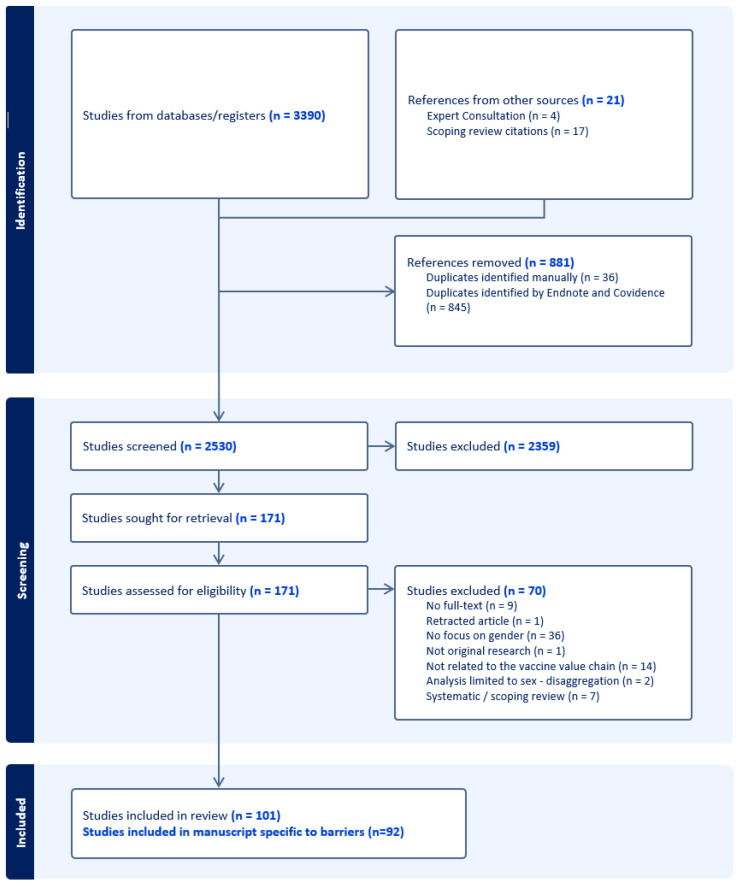
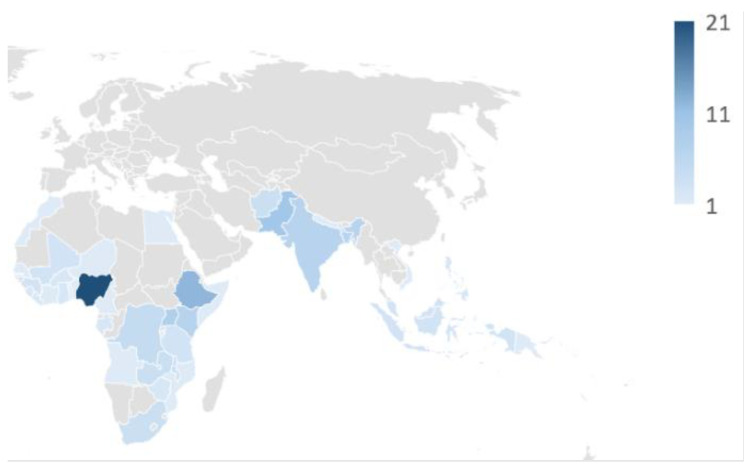
Among the multiple factors impeding equitable childhood immunization coverage in low- and middle-income countries (LMICs), gender barriers stand out as perhaps the most universal. Despite increasing recognition of the importance of gender considerations in immunization programming, there has not yet been a systematic assessment of the evidence on gender barriers to immunization. We conducted a scoping review to fill that gap, identifying 92 articles that described gender barriers to immunization. Studies documented a range of gender influencers across 43 countries in Africa and South Asia. The barrier to immunization coverage most frequently cited in the literature is women’s lack of autonomous decision-making. Access to immunization is significantly impacted by women’s time poverty; direct costs are also a barrier, particularly when female caregivers rely on family members to cover costs. Challenges with clinic readiness compound female caregiver’s time constraints. Some of the most important gender barriers lie outside of the usual purview of immunization programming but other barriers can be addressed with adaptations to vaccination programming. We can only know how important these barriers are with more research that measures the impact of programming on gender barriers to immunization coverage.
Overview
The claims and statistics of this paper haven’t been checked yet.
Run the check — free, no account needed. It reads the open-access text and checks the sources it cites.
Integrity signals
Registry
Cites
Statistics
Figures
Verification
Claims the paper makes
The claims and statistics of this paper haven’t been checked yet.
Run the check — free, no account needed. It reads the open-access text and checks the sources it cites.
Claims other papers make about this one
Each is checked against this paper’s own text: does it say what the citing paper says it does?
In the citing paper
“The low societal status of women —manifesting in a lack of resources, agency, and power—is increasingly shown to be one of the most universal factors adversely impacting equitable childhood immunisation.75–78”
Self-check
Percentages, sums and reported differences re-computed from the paper’s own numbers.
The self-check needs the paper’s full text.
Citations
Cites
Access and attitudes to HPV vaccination amongst hard-to-reach populations in Kenya
Watson-Jones, D., Mugo, N., Lees, S., Mathai, M., Vusha, S., Ndirangu, G., & Ross, D. A. (2015) · PLOS ONE · doi:10.1371/journal.pone.0123701 · Cited by 57
Research works printed but not linked: 96
- Barros, 2016, Inequalities in full immunization coverage: Trends in low- and middle-income countries, Bull. World Health Organ., 94, 794, 10.2471/BLT.15.162172 · DOI
- Nambiar, D., Hosseinpoor, A.R., Bergen, N., Danovaro-Holliday, M.C., Wallace, A., and Johnson, H.L. (2023). Inequality in immunization: Holding on to equity as we “catch up”. Vaccines, 11. · DOI
- Feletto, 2019, The influence of gender on immunisation: Using an ecological framework to examine intersecting inequities and pathways to change, BMJ Glob. Health, 4, e001711, 10.1136/bmjgh-2019-001711 · DOI · Paper page
- Idris, I.B., Hamis, A.A., Bukhori, A.B.M., Hoong, D.C.C., Yusop, H., Shaharuddin, M.A.-A., Fauzi, N.A.F.A., and Kandayah, T. (2023). Women’s autonomy in healthcare decision making: A systematic review. BMC Womens Health, 23. · DOI
- Phillips, D.E., Dieleman, J.L., Lim, S.S., and Shearer, J. (2017). Determinants of effective vaccine coverage in low and middle-income countries: A systematic review and interpretive synthesis. BMC Health Serv. Res., 17. · DOI
- Wendt, 2022, Children of more empowered women are less likely to be left without vaccination in low- and middle-income countries: A global analysis of 50 DHS surveys, J. Glob. Health, 12, 04022, 10.7189/jogh.12.04022 · DOI
- Johns, N.E., Santos, T.M., Arroyave, L., Cata-Preta, B.O., Heidari, S., Kirkby, K., Munro, J., Schlotheuber, A., Wendt, A., and O’Brien, K. (2022). Gender-Related Inequality in Childhood Immunization Coverage: A Cross-Sectional Analysis of DTP3 Coverage and Zero-Dose DTP Prevalence in 52 Countries Using the SWPER Global Index. Vaccines, 10. · DOI
- Siddiqi, D.A., Iftikhar, S., Siddique, M., Mehmood, M., Dharma, V.K., Shah, M.T., Setayesh, H., and Chandir, S. (2023). Immunization Gender Inequity in Pakistan: An Analysis of 6.2 Million Children Born from 2019 to 2022 and Enrolled in the Sindh Electronic Immunization Registry. Vaccines, 11. · DOI
- Vidal Fuertes, C., Johns, N.E., Goodman, T.S., Heidari, S., Munro, J., and Hosseinpoor, A.R. (2022). The Association between Childhood Immunization and Gender Inequality: A Multi-Country Ecological Analysis of Zero-Dose DTP Prevalence and DTP3 Immunization Coverage. Vaccines, 10. · DOI
- Seidu, 2022, Women empowerment indicators and uptake of child health services in sub-Saharan Africa: A multilevel analysis using cross-sectional data from 26 countries, J. Public Health, 44, 740, 10.1093/pubmed/fdab177 · DOI
- Porth, 2021, Women’s empowerment and child vaccination in kenya: The modifying role of wealth, Am. J. Prev. Med., 60, S87, 10.1016/j.amepre.2020.08.015 · DOI
- Muzzamil, 2022, The survival rate of neonates in Pakistan: Problems in health care access, quality and recommendations, Health Promot. Perspect., 12, 355, 10.34172/hpp.2022.46 · DOI
- Malhotra, 2014, Maternal autonomy and child health care utilization in India: Results from the National Family Health Survey, Asia Pac. J. Public Health, 26, 401, 10.1177/1010539511420418 · DOI
- Ebot, 2015, “Girl Power!”: The Relationship between Women’s Autonomy and Children’s Immunization Coverage in Ethiopia, J. Health Popul. Nutr., 33, 18, 10.1186/s41043-015-0028-7 · DOI
- Adeyanju, G.C., Sprengholz, P., Betsch, C., and Essoh, T.-A. (2021). Caregivers’ Willingness to Vaccinate Their Children against Childhood Diseases and Human Papillomavirus: A Cross-Sectional Study on Vaccine Hesitancy in Malawi. Vaccines, 9. · DOI
- Adeyanju, 2022, Examining enablers of vaccine hesitancy toward routine childhood and adolescent vaccination in Malawi, Glob. Health Res. Policy., 7, 28, 10.1186/s41256-022-00261-3 · DOI
- Venturas, 2017, Health professional feedback on HPV vaccination roll-out in a developing country, Vaccine, 35, 1886, 10.1016/j.vaccine.2017.02.052 · DOI
- Remes, 2012, A qualitative study of HPV vaccine acceptability among health workers, teachers, parents, female pupils, and religious leaders in northwest Tanzania, Vaccine, 30, 5363, 10.1016/j.vaccine.2012.06.025 · DOI
- Malande, O.O., Munube, D., Afaayo, R.N., Annet, K., Bodo, B., Bakainaga, A., Ayebare, E., Njunwamukama, S., Mworozi, E.A., and Musyoki, A.M. (2019). Barriers to effective uptake and provision of immunization in a rural district in Uganda. PLoS ONE, 14. · DOI
- Yamanis, 2023, Confronting “chaos”: A qualitative study assessing public health officials’ perceptions of the factors affecting Tanzania’s COVID-19 vaccine rollout, BMJ Open, 13, e065081, 10.1136/bmjopen-2022-065081 · DOI
- Wong, 2022, Human papillomavirus (HPV) vaccination intent and its associated factors: A study of ethnically diverse married women aged 27 to 45 in Malaysia, a Southeast Asian country, Hum. Vaccin. Immunother., 18, 2076525, 10.1080/21645515.2022.2076525 · DOI
- Vermandere, H., Naanyu, V., Mabeya, H., Vanden Broeck, D., Michielsen, K., and Degomme, O. (2014). Determinants of acceptance and subsequent uptake of the HPV vaccine in a cohort in Eldoret, Kenya. PLoS ONE, 9. · DOI
- Shearer, J.C., Nava, O., Prosser, W., Nawaz, S., Mulongo, S., Mambu, T., Mafuta, E., Munguambe, K., Sigauque, B., and Cherima, Y.J. (2023). Uncovering the Drivers of Childhood Immunization Inequality with Caregivers, Community Members and Health System Stakeholders: Results from a Human-Centered Design Study in DRC, Mozambique and Nigeria. Vaccines, 11. · DOI
- Shafiq, 2017, Knowledge, attitudes and practices related to tetanus toxoid vaccination in women of childbearing age: A cross-sectional study in peri-urban settlements of Karachi, Pakistan, J. Infect. Prev., 18, 232, 10.1177/1757177416689722 · DOI
- Sarker, A.R., Akram, R., Ali, N., Chowdhury, Z.I., and Sultana, M. (2019). Coverage and Determinants of Full Immunization: Vaccination Coverage among Senegalese Children. Medicina, 55. · DOI
- Salleh, H., Avoi, R., Abdul Karim, H., Osman, S., Dhanaraj, P., and Ab Rahman, M.A.I. (2023). A Behavioural-Theory-Based Qualitative Study of the Beliefs and Perceptions of Marginalised Populations towards Community Volunteering to Increase Measles Immunisation Coverage in Sabah, Malaysia. Vaccines, 11. · DOI
- Monguno, 2013, Socio cultural and geographical determinants of child immunisation in borno state, nigeria, J. Public Health Afr., 4, e10, 10.4081/jphia.2013.e10 · DOI
- Lohiniva, A.-L., Barakat, A., Dueger, E., Restrepo, S., and El Aouad, R. (2014). A qualitative study of vaccine acceptability and decision making among pregnant women in Morocco during the A (H1N1) pdm09 pandemic. PLoS ONE, 9. · DOI
- Limaye, 2019, Interpersonal and community influences affecting childhood vaccination decision-making among Nigerian caregivers: Perceptions among frontline workers in Nigeria, J. Child. Health Care, 23, 403, 10.1177/1367493519852457 · DOI
- Khan, M.D. (2021). Toward creating equity in access to COVID-19 vaccination for female population in Multan, Punjab, Pakistan. Health Care Women Int., 1–10. · DOI
- Jalloh, 2019, Rapid behavioral assessment of barriers and opportunities to improve vaccination coverage among displaced Rohingyas in Bangladesh, January 2018, Vaccine, 37, 833, 10.1016/j.vaccine.2018.12.042 · DOI
- Etokidem, 2021, Potential barriers to and facilitators of civil society organization engagement in increasing immunization coverage in Odukpani Local Government Area of Cross River State, Nigeria: An implementation research, Health Res. Policy Syst., 19, 46, 10.1186/s12961-021-00697-y · DOI
- Dhaliwal, B.K., Chandrashekhar, R., Rattani, A., Seth, R., Closser, S., Jain, A., Bloom, D.E., and Shet, A. (2021). Community perceptions of vaccination among influential stakeholders: Qualitative research in rural India. BMC Public Health, 21. · DOI
- Bell, 2022, Applying a social-ecological model to understand factors impacting demand for childhood vaccinations in Nigeria, Uganda, and Guinea, SSM Qual. Res. Health, 2, 100180, 10.1016/j.ssmqr.2022.100180 · DOI
- Bell, J., Lartey, B., Fernandez, M., Darrell, N., Exton-Smith, H., Gardner, C., Richards, E., Akilo, A., Odongo, E., and Ssenkungu, J. (2023). A structural equation modelling approach to understanding the determinants of childhood vaccination in Nigeria, Uganda and Guinea. PLOS Glob. Public Health, 3. · DOI
- Babirye, J.N., Rutebemberwa, E., Kiguli, J., Wamani, H., Nuwaha, F., and Engebretsen, I.M. (2011). More support for mothers: A qualitative study on factors affecting immunisation behaviour in Kampala, Uganda. BMC Public Health, 11. · DOI
- Ali, 2022, Adolescent girls’ recommendations for the design of a human papillomavirus vaccination program in Sindh, Pakistan: A qualitative study, Hum. Vaccin. Immunother., 18, 2045856, 10.1080/21645515.2022.2045856 · DOI
- Akwataghibe, 2019, Exploring Factors Influencing Immunization Utilization in Nigeria-A Mixed Methods Study, Front. Public Health, 7, 392, 10.3389/fpubh.2019.00392 · DOI
- Ahmed, 2022, An analysis of the gender and social determinants of health in urban poor areas of the most populated cities of Pakistan, Int. J. Equity Health, 21, 52, 10.1186/s12939-022-01657-w · DOI
- Abad, 2021, A rapid qualitative assessment of barriers associated with demand and uptake of health facility-based childhood immunizations and recommendations to improve immunization service delivery in Sokoto State, Northwest Nigeria, 2017, Pan Afr. Med. J., 40, 10
- Abdullahi, 2020, Factors contributing to the uptake of childhood vaccination in Galkayo District, Puntland, Somalia, Glob. Health Action., 13, 1803543, 10.1080/16549716.2020.1803543 · DOI
- Wachinger, 2022, Bargaining and gendered authority: A framework to understand household decision-making about childhood vaccines in the Philippines, BMJ Glob. Health, 7, e009781, 10.1136/bmjgh-2022-009781 · DOI
- Siddiqui, 2017, Intention to accept pertussis vaccine among pregnant women in Karachi, Pakistan, Vaccine, 35, 5352, 10.1016/j.vaccine.2017.08.033 · DOI
- Babalola, 2009, Determinants of the uptake of the full dose of diphtheria-pertussis-tetanus vaccines (DPT3) in Northern Nigeria: A multilevel analysis, Matern. Child Health J., 13, 550, 10.1007/s10995-008-0386-5 · DOI
- Antai, 2012, Gender inequities, relationship power, and childhood immunization uptake in Nigeria: A population-based cross-sectional study, Int. J. Infect. Dis., 16, e136, 10.1016/j.ijid.2011.11.004 · DOI
- Singh, 2013, Maternal autonomy and attitudes towards gender norms: Associations with childhood immunization in Nigeria, Matern. Child Health J., 17, 837, 10.1007/s10995-012-1060-5 · DOI
- Darebo, 2022, Full vaccination coverage and associated factors among children aged 12 to 23 months in remote rural area of Demba Gofa District, Southern Ethiopia, PeerJ, 10, e13081, 10.7717/peerj.13081 · DOI
- Shenton, 2018, Vaccination status of children aged 1–4 years in Afghanistan and associated factors, 2015, Vaccine, 36, 5141, 10.1016/j.vaccine.2018.07.020 · DOI
- Boulton, 2018, Socioeconomic factors associated with full childhood vaccination in Bangladesh, 2014, Int. J. Infect. Dis., 69, 35, 10.1016/j.ijid.2018.01.035 · DOI
- Nnaji, C.A., Wiysonge, C.S., Adamu, A.A., Lesosky, M., Mahomed, H., and Ndwandwe, D. (2022). Missed Opportunities for Vaccination and Associated Factors among Children Attending Primary Health Care Facilities in Cape Town, South Africa: A Pre-Intervention Multilevel Analysis. Vaccines, 10. · DOI
- Limaye, 2023, COVID-19 vaccine decision-making among pregnant and lactating women in Bangladesh, Vaccine, 41, 3885, 10.1016/j.vaccine.2023.05.024 · DOI
- Francis, 2013, The HPV vaccine: A comparison of focus groups conducted in South Africa and Ohio Appalachia, Matern. Child Health J., 17, 1222, 10.1007/s10995-012-1116-6 · DOI
- Amin, 2013, Factors limiting immunization coverage in urban Dili, Timor-Leste, Glob. Health Sci. Pract., 1, 417, 10.9745/GHSP-D-13-00115 · DOI
- Ariyo, T., and Jiang, Q. (2020). Mothers’ Healthcare Autonomy, Maternal-Health Utilization and Healthcare for Children under-3 Years: Analysis of the Nigeria DHS Data (2008–2018). Int. J. Environ. Res. Public Health, 17. · DOI
- Kalbarczyk, 2021, The influence of gender dynamics on polio eradication efforts at the community, workplace, and organizational level, Glob. Health Res. Policy, 6, 19, 10.1186/s41256-021-00203-5 · DOI
- Crann, 2016, Healthcare providers’ perspectives on the acceptability and uptake of HPV vaccines in Zimbabwe, J. Psychosom. Obs. Gynaecol., 37, 147, 10.1080/0167482X.2016.1199544 · DOI
- Ambe, 2001, Perceptions, beliefs and practices of mothers in sub-urban and rural areas towards measles and measles vaccination in Northern Nigeria, Trop. Dr., 31, 89
- Kagoné, M., Yé, M., Nébié, E., Sié, A., Müller, O., and Beiersmann, C. (2018). Community perception regarding childhood vaccinations and its implications for effectiveness: A qualitative study in rural Burkina Faso. BMC Public Health, 18. · DOI
- Schwarz, 2009, Reasons for non-adherence to vaccination at mother and child care clinics (MCCs) in Lambaréné, Gabon, Vaccine, 27, 5371, 10.1016/j.vaccine.2009.06.100 · DOI
- Zewdie, A., Letebo, M., and Mekonnen, T. (2016). Reasons for defaulting from childhood immunization program: A qualitative study from Hadiya zone, Southern Ethiopia. BMC Public Health, 16. · DOI
- Kajungu, D., Muhoozi, M., Stark, J., Weibel, D., and Sturkenboom, M.C.J.M. (2020). Vaccines safety and maternal knowledge for enhanced maternal immunization acceptability in rural Uganda: A qualitative study approach. PLoS ONE, 15. · DOI
- Khan, 2023, Access to COVID-19 vaccination for transgender community in Multan, Punjab, Pakistan, Health Care Women Int., 44, 824, 10.1080/07399332.2022.2029864 · DOI
- Pandey, 2012, Determinants of child immunization in Nepal: The role of women’s empowerment, Health Educ. J., 71, 642, 10.1177/0017896911419343 · DOI
- Tefera, Y.A., Wagner, A.L., Mekonen, E.B., Carlson, B.F., and Boulton, M.L. (2018). Predictors and Barriers to Full Vaccination among Children in Ethiopia. Vaccines, 6. · DOI
- Wado, 2014, Childhood vaccination in rural southwestern Ethiopia: The nexus with demographic factors and women’s autonomy, Pan Afr. Med. J., 17, 9
- Dheresa, 2021, Child vaccination coverage, trends and predictors in eastern ethiopia: Implication for sustainable development goals, J. Multidiscip. Healthc., 14, 2657, 10.2147/JMDH.S325705 · DOI
- Legesse, E., and Dechasa, W. (2015). An assessment of child immunization coverage and its determinants in Sinana District, Southeast Ethiopia. BMC Pediatr., 15. · DOI
- Limaye, 2022, A socio-ecological exploration to identify factors influencing the COVID-19 vaccine decision-making process among pregnant and lactating women: Findings from Kenya, Vaccine, 40, 7305, 10.1016/j.vaccine.2022.10.068 · DOI
- Shitu, B.F., Atnafu, D.D., and Agumas, Y. (2023). Public school adolescents had increased odds of being willing to uptake HPV vaccinations owing to sociodemographic and healthcare access features in bahir dar city, ethiopia. Biomed. Res. Int., 2023. · DOI
- Newland, 2019, HPV vaccination in Papua New Guinea to prevent cervical cancer in women: Gender, sexual morality, outsiders and the de-feminization of the HPV vaccine, Papillomavirus Res., 8, 100171, 10.1016/j.pvr.2019.100171 · DOI
- Coleman, 2011, HPV vaccine acceptability in Ghana, West Africa, Vaccine, 29, 3945, 10.1016/j.vaccine.2011.03.093 · DOI
- Cockcroft, 2014, Why children are not vaccinated against measles: A cross-sectional study in two Nigerian States, Arch. Public Health, 72, 48, 10.1186/2049-3258-72-48 · DOI
- Kulkarni, 2023, Using photovoice methodology to uncover individual-level, health systems, and contextual barriers to uptake of second dose of measles containing vaccine in Western Area Urban, Sierra Leone, 2020, Vaccine, 14, 100338
- Young, 2011, Influences on HPV vaccine acceptance among men in the Philippines, J. Men’s Health, 8, 126
- Babirye, J.N., Engebretsen, I.M.S., Makumbi, F., Fadnes, L.T., Wamani, H., Tylleskar, T., and Nuwaha, F. (2012). Timeliness of childhood vaccinations in Kampala Uganda: A community-based cross-sectional study. PLoS ONE, 7. · DOI
- Ports, 2013, Barriers and facilitators to HPV vaccination: Perspectives from Malawian women, Women Health, 53, 630, 10.1080/03630242.2013.809046 · DOI
- Oluwadare, 2009, The social determinants of routine immunisation in ekiti state of nigeria, Stud. Ethno-Med., 3, 49, 10.1080/09735070.2009.11886337 · DOI
- Francis, 2011, A qualitative analysis of South African women’s knowledge, attitudes, and beliefs about HPV and cervical cancer prevention, vaccine awareness and acceptance, and maternal-child communication about sexual Health, Vaccine, 29, 8760, 10.1016/j.vaccine.2011.07.116 · DOI
- Hanifi, 2018, Where girls are less likely to be fully vaccinated than boys: Evidence from a rural area in Bangladesh, Vaccine, 36, 3323, 10.1016/j.vaccine.2018.04.059 · DOI
- Mabeya, 2021, Mothers of adolescent girls and Human Papilloma Virus (HPV) vaccination in Western Kenya, Pan Afr. Med. J., 38, 126, 10.11604/pamj.2021.38.126.21359 · DOI
- Krupp, 2010, Factors associated with intention-to-recommend human papillomavirus vaccination among physicians in Mysore, India, J. Adolesc. Health, 46, 379, 10.1016/j.jadohealth.2009.10.001 · DOI
- Agarwal, 2009, Social determinants of children’s health in urban areas in India, J. Health Care Poor Underserved., 20, 68, 10.1353/hpu.0.0232 · DOI
- Bhan, 2020, Access to women physicians and uptake of reproductive, maternal and child health services in India, EClinicalMedicine, 20, 100309, 10.1016/j.eclinm.2020.100309 · DOI
- Kalbarczyk, 2022, A light touch intervention with a heavy lift-gender, space and risk in a global vaccination programme, Glob. Public Health, 17, 4087, 10.1080/17441692.2022.2099930 · DOI
- Folayan, 2022, Associations between COVID-19 vaccine hesitancy and the experience of violence among women and girls living with and at risk of HIV in Nigeria, Afr. J. AIDS Res., 21, 306, 10.2989/16085906.2022.2118615 · DOI
- Wirawan, 2022, Women’s Empowerment Facilitates Complete Immunization in Indonesian Children: A Cross-sectional Study, J. Prev. Med. Public Health, 55, 193, 10.3961/jpmph.21.592 · DOI
- Muzammil, 2021, Maternal Correlates of Poliomyelitis Vaccination Uptake: Evidence from Afghanistan, Pakistan, and Nigeria, Am. J. Trop. Med. Hyg., 105, 1301, 10.4269/ajtmh.21-0327 · DOI
- Khan, 2017, Maternal education, empowerment, economic status and child polio vaccination uptake in Pakistan: A population based cross sectional study, BMJ Open, 7, e013853, 10.1136/bmjopen-2016-013853 · DOI
- McCloskey, 2018, “When you are injected, the baby is protected:” Assessing the acceptability of a maternal Tdap vaccine based on mothers’ knowledge, attitudes, and beliefs of pertussis and vaccinations in Lusaka, Zambia, Vaccine, 36, 3048, 10.1016/j.vaccine.2018.03.081 · DOI
- Rustagi, 2022, The impact of women’s political representation on child health outcomes during 1990–2020: Evidence from a global dataset, Soc. Sci. Med., 312, 115366, 10.1016/j.socscimed.2022.115366 · DOI
- Vouking, 2017, Strategies to increase immunization coverage of tetanus vaccine among women in Sub Saharan Africa: A systematic review, Pan Afr. Med. J., 27, 25, 10.11604/pamj.supp.2017.27.3.11535 · DOI
- Machado, 2021, Effective interventions to increase routine childhood immunization coverage in low socioeconomic status communities in developed countries: A systematic review and critical appraisal of peer-reviewed literature, Vaccine, 39, 2938, 10.1016/j.vaccine.2021.03.088 · DOI
- Uddin, 2010, Child immunization coverage in urban slums of Bangladesh: Impact of an intervention package, Health Policy Plan., 25, 50, 10.1093/heapol/czp041 · DOI
- Cross, 2014, The impact of conditional cash transfers on child health in low- and middle-income countries: A systematic review, Int. J. Public Health, 59, 609, 10.1007/s00038-014-0570-x · DOI
- Duch, 2023, Financial incentives for COVID-19 vaccines in a rural low-resource setting: A cluster-randomized trial, Nat. Med., 29, 3193, 10.1038/s41591-023-02670-4 · DOI
- Coscieme, L., Fioramonti, L., Mortensen, L.F., Pickett, K.E., Kubiszewski, I., Lovins, H., McGlade, J., Ragnarsdottir, K.V., Roberts, D., and Costanza, R. (2020). Women in power: Female leadership and public health outcomes during the COVID-19 pandemic. medRxiv. · DOI
Cited by
Sorted by citations
Haeuser, E., Byrne, S., Nguyen, J., Raggi, C., McLaughlin, S. A., Bisignano, C., Harris, A. A., Smith, A. E., Lindstedt, P. A., Smith, G., et al. (2025) · The Lancet · doi:10.1016/s0140-6736(25)01037-2 · Cited by 143
Metadata
- Authors
- Kalbarczyk, A., Brownlee, N., & Katz, E.
- Affiliations
- Johns Hopkins University (US)
- Global Center for Gender Equality, Washington, DC 20036, USA
- University of San Francisco (US)
- Corresponding author
- Kalbarczyk, Anna
- Venue
- Vaccines
- Publisher
- MDPI AG
- Published
- 2024-06-05
- Volume
- 12
- Issue
- 6
- Pages
- 625
- ISSN
- 2076-393X (ISSN-L)
- PMC
- PMC11209140
- OpenAlex
- W4399358766
- Cited by
- 16
- References
- 1
- Citations by year
- 2026: 6 · 2025: 10
- FWCI
- 1.53
- Type
- journal article
- Language
- en
- Open access
- gold
- doi.org
- Licence
- Locations
- Vaccines (publishedVersion, cc-by)
- PubMed Central (publishedVersion, cc-by)
- PubMed (publishedVersion)
- DOAJ (DOAJ: Directory of Open Access Journals) (submittedVersion)
- Funders
- Bill and Melinda Gates Foundation (INV-043797)
- Topics
- Social Sciences › Health › Vaccine Coverage and Hesitancy
- Health Sciences › Medicine › Pediatrics, Perinatology and Child Health › Global Maternal and Child Health
- Life Sciences › Immunology and Microbiology › Immunology › Immune responses and vaccinations
- Keywords
- gender barriers, childhood immunization, vaccination coverage, women's decision-making autonomy, time poverty, women caregivers, vaccine cost, gender equity in health, low- and middle-income countries
About these checks
Registry, retraction, Cites and statistics results are computed, not judged, with one exception: a printed reference that no index lists is read once by a model before it counts as a citation error. Claims are extracted by a model and kept only when their quote appears verbatim in the text; each cited source is then checked, with a model’s help, for whether it says what the claim relies on. Those verdicts can be wrong — read the claim’s quote and the cited source before relying on one.
Statistics and arithmetic are recomputed, not judged.
Confidence bands are shown only for fields calibrated on our annotated test set. None is calibrated yet, so no band is shown.
What counts as a claim ›How we measure confidence ›How we check this ›
Are you an author, or do you see a problem with this page? Request a review
