

The DOI matches its Crossref record; 1 of the 1 references it cites were found in a registry or an index.
Challenges in conducting community-driven research created by differing ways of talking and thinking about science: a researcher's perspective
Open accessAbstract
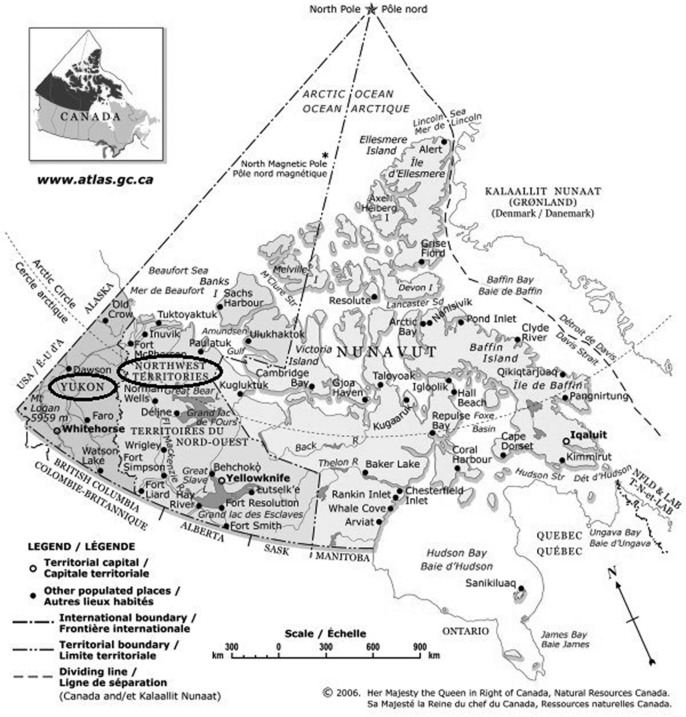
Increasingly, health scientists are becoming aware that research collaborations that include community partnerships can be an effective way to broaden the scope and enhance the impact of research aimed at improving public health. Such collaborations extend the reach of academic scientists by integrating a variety of perspectives and thus strengthening the applicability of the research. Communication challenges can arise, however, when attempting to address specific research questions in these collaborations. In particular, inconsistencies can exist between scientists and community members in the use and interpretation of words and other language features, particularly when conducting research with a biomedical component. Additional challenges arise from differing perceptions of the investigative process. There may be divergent perceptions about how research questions should and can be answered, and in expectations about requirements of research institutions and research timelines. From these differences, misunderstandings can occur about how the results will ultimately impact the community. These communication issues are particularly challenging when scientists and community members are from different ethnic and linguistic backgrounds that may widen the gap between ways of talking and thinking about science, further complicating the interactions and exchanges that are essential for effective joint research efforts. Community-driven research that aims to describe the burden of disease associated with Helicobacter pylori infection is currently underway in northern Aboriginal communities located in the Yukon and Northwest Territories, Canada, with the goal of identifying effective public health strategies for reducing health risks from this infection. This research links community representatives, faculty from various disciplines at the University of Alberta, as well as territorial health care practitioners and officials. This highly collaborative work will be used to illustrate, from a researcher's perspective, some of the challenges of conducting public health research in teams comprising members with varying backgrounds. The consequences of these challenges will be outlined, and potential solutions will be offered.
Overview
The claims and statistics of this paper haven’t been checked yet.
Run the check — free, no account needed. It reads the open-access text and checks the sources it cites.
Integrity signals
Registry
Cites
Statistics
Figures
Verification
Claims the paper makes
The claims and statistics of this paper haven’t been checked yet.
Run the check — free, no account needed. It reads the open-access text and checks the sources it cites.
Claims other papers make about this one
Each is checked against this paper’s own text: does it say what the citing paper says it does?
The source backs part of the claim, not all of it — or backs it for a different population, condition or comparison.
In the citing paper
“These kinds of guidelines are used to mitigate one of the challenges raised within these community-based and community-driven studies: potential miscommunication and misunderstandings between Indigenous partners and academic researchers due to differences in use of language and definitions, expectations about timelines and process, and research purpose (Colquhoun, Geary, & Goodman, 2013; see also,”
From Addressing the need for indigenous and decolonized quantitative research methods in Canada (2021) · cites this paper as Colquhoun, Geary, & Goodman, 2013
Experimental — accuracy not yet measured
Self-check
Percentages, sums and reported differences re-computed from the paper’s own numbers.
The self-check needs the paper’s full text.
Citations
Cites
Houts, P. S., Doak, C. C., Doak, L. G., & Loscalzo, M. J. (2006) · Patient Education and Counseling · doi:10.1016/j.pec.2005.05.004 · Cited by 1,624 · cited 1×
“The process by which this communication occurs may also be challenging: health scientists may prefer text that provides detailed explanations, and community members may prefer visual diagrams or verbal communication (11).”
Background
Research works printed but not linked: 23
- Gibbons M, 2000, Sci Publ Pol, 27, 159, 10.3152/147154300781782011 · DOI
- Stanton TK, 2008, Educ Citizen Soc Justice, 3, 19, 10.1177/1746197907086716 · DOI
- Baum HS, 2000, J Plann Educ Res, 20, 234, 10.1177/0739456X0002000208 · DOI
- Saven B, 2004, Community Dev J, 39, 372, 10.1093/cdj/bsh033 · DOI
- Estey E, 2008, Can J Nurs Res, 40, 24
- Jardine C, 2010, Can J Nurs Res, 42, 119
- Cochran PAL, 2008, Am J Public Health, 98, 22, 10.2105/AJPH.2006.093641 · DOI · Paper page
- Laveaux D, 2009, Pimatisiwin, 7, 1
- Gigerenzer G, 2008, Assoc Psychol Sci, 8, 53
- Cassady J, 2009, Int J Circumpolar Health, 67, 374, 10.3402/ijch.v67i4.18341 · DOI
- Schnarch B, 2004, J Aborig Health, 80
- Goodman KJ, 2008, Can J Gastroenterol, 22, 289, 10.1155/2008/258610 · DOI
- Suarez-Balcazar Y, 2005, Health Educ Behav, 32, 84, 10.1177/1090198104269512 · DOI
- 10.3402/ijch.v63i0.17877 · DOI
- Bowen S, 2005, J Health Serv Res Pol, 10, 203, 10.1258/135581905774414213 · DOI
- Van de Ven AH, 2006, Acad Manag Rev, 31, 802, 10.5465/amr.2006.22527385 · DOI
- Minkler M, Wallerstein N. Community-based participatory research for health: from process to outcomes. 2008; San Francisco, CA: John Wiley and Sons. 58.
- Nutbeam D, 2008, Soc Sci Med, 67, 2072, 10.1016/j.socscimed.2008.09.050 · DOI · Paper page
- Lipkus I, 2001, Med Decis Making, 21, 37, 10.1177/0272989X0102100105 · DOI
- Christopher S, 2008, Am J Public Health, 98, 1398, 10.2105/AJPH.2007.125757 · DOI
- Maiter S, 2008, Action Res, 6, 305, 10.1177/1476750307083720 · DOI
- Steinbock MB, 2007, Intellectual property management in health and agricultural innovation: a handbook of best practices
- Gold ER, 2007, Intellectual property management in health and agricultural innovation: a handbook of best practices
Cited by
Addressing the need for indigenous and decolonized quantitative research methods in Canada
Hayward, A., Wodtke, L., Craft, A., Robin, T., Smylie, J., McConkey, S., Nychuk, A., Healy, C., Star, L., & Cidro, J. (2021) · SSM - Population Health · doi:10.1016/j.ssmph.2021.100899 · Cited by 69
Metadata
- Authors
- Colquhoun, A., Geary, J., & Goodman, K. J.
- Affiliations
- University of Alberta (CA)
- Corresponding author
- Colquhoun, Amy
- Venue
- International Journal of Circumpolar Health
- Publisher
- Informa UK Limited
- Published
- 2013-01-31
- Volume
- 72
- Issue
- 1
- Pages
- 21232
- ISSN
- 1239-9736 (ISSN-L)
- 2242-3982
- PMC
- PMC3754491
- OpenAlex
- W2048162375
- Cited by
- 12
- References
- 1
- Citations by year
- 2024: 2 · 2021: 2 · 2020: 1 · 2019: 4 · 2016: 1 · 2015: 2
- FWCI
- 1.81
- Type
- journal article
- Language
- en
- Open access
- gold
- doi.org
- Licence
- cc-by-nc
- Locations
- International Journal of Circumpolar Health (publishedVersion, cc-by-nc)
- Europe PMC (PubMed Central) (publishedVersion, cc-by)
- PubMed Central (publishedVersion, cc-by)
- PubMed (publishedVersion)
- DOAJ (DOAJ: Directory of Open Access Journals) (submittedVersion, cc-by-sa)
- Funders
- Alberta Innovates - Health Solutions
- University of Alberta
- Canadian Institutes of Health Research
- Topics
- Health Sciences › Medicine › Public Health, Environmental and Occupational Health › Community Health and Development
- Social Sciences › Health › Indigenous Health, Education, and Rights
- Social Sciences › Arts and Humanities › History and Philosophy of Science › Interdisciplinary Research and Collaboration
- Keywords
- community-led research, community partnerships, science communication, language barriers, cultural and linguistic diversity, biomedical research, Helicobacter pylori infection, disease burden, Yukon, Northwest Territories
- MeSH terms
- Communication, Community-Institutional Relations, Community Participation, Humans, Indians, North American, Public Health, Northwest Territories, Yukon Territory, Helicobacter pylori, Helicobacter Infections, Health Literacy
About these checks
Registry, retraction, Cites and statistics results are computed, not judged, with one exception: a printed reference that no index lists is read once by a model before it counts as a citation error. Claims are extracted by a model and kept only when their quote appears verbatim in the text; each cited source is then checked, with a model’s help, for whether it says what the claim relies on. Those verdicts can be wrong — read the claim’s quote and the cited source before relying on one.
Statistics and arithmetic are recomputed, not judged.
Confidence bands are shown only for fields calibrated on our annotated test set. None is calibrated yet, so no band is shown.
What counts as a claim ›How we measure confidence ›How we check this ›
Are you an author, or do you see a problem with this page? Request a review
