

The DOI matches its Crossref record.
Les droits du fleuve: polyphonie autour du fleuve Atrato en Colombie et de ses Gardiens
Abstract
À partir d’une enquête ethnographique menée en Colombie sur le cas du fleuve Atrato, déclaré sujet de droits en 2016 par la Cour constitutionnelle, l’auteure de cet article analyse ce que cette décision produit localement. La perspective adoptée la resitue dans le prolongement du processus historique de la construction des Indiens et des « communautés noires » comme protectrices de l’environnement. L’analyse du texte juridique montre comment les magistrats tissent ensemble les mots des habitants, ceux des diverses disciplines scientifiques – et notamment l’anthropologie –, avec les références juridiques. La description de la mise en oeuvre de la décision met ensuite en lumière que la production d’un tel agencement ne se fait pas uniquement sur la base d’accords et d’harmonies, mais aussi de dissonances et de frictions. The Rights of the River. Polyphony Around the Colombian Atrato River and its Guardians Based on an ethnographic survey conducted in Colombia on the case of the Atrato River, declared a subject of rights by the Constitutional Court in 2016, the author analyses what this decision produces locally. The perspective adopted places this decision in the continuation of the historical process of the making of Indians and “black communities” as protectors of the environment. The analysis of the legal text shows how the magistrates weave together the words of the inhabitants, those of various scientific disciplines – and especially anthropology –, together with legal references. The description of how the decision was implemented then highlights that the production of such an assemblage is not only based on agreements and harmonies, but also on dissonances and frictions.
Overview
The claims and statistics of this paper haven’t been checked yet.
Run the check — free, no account needed. It reads the open-access text and checks the sources it cites.
Integrity signals
Registry
Cites
Statistics
Figures


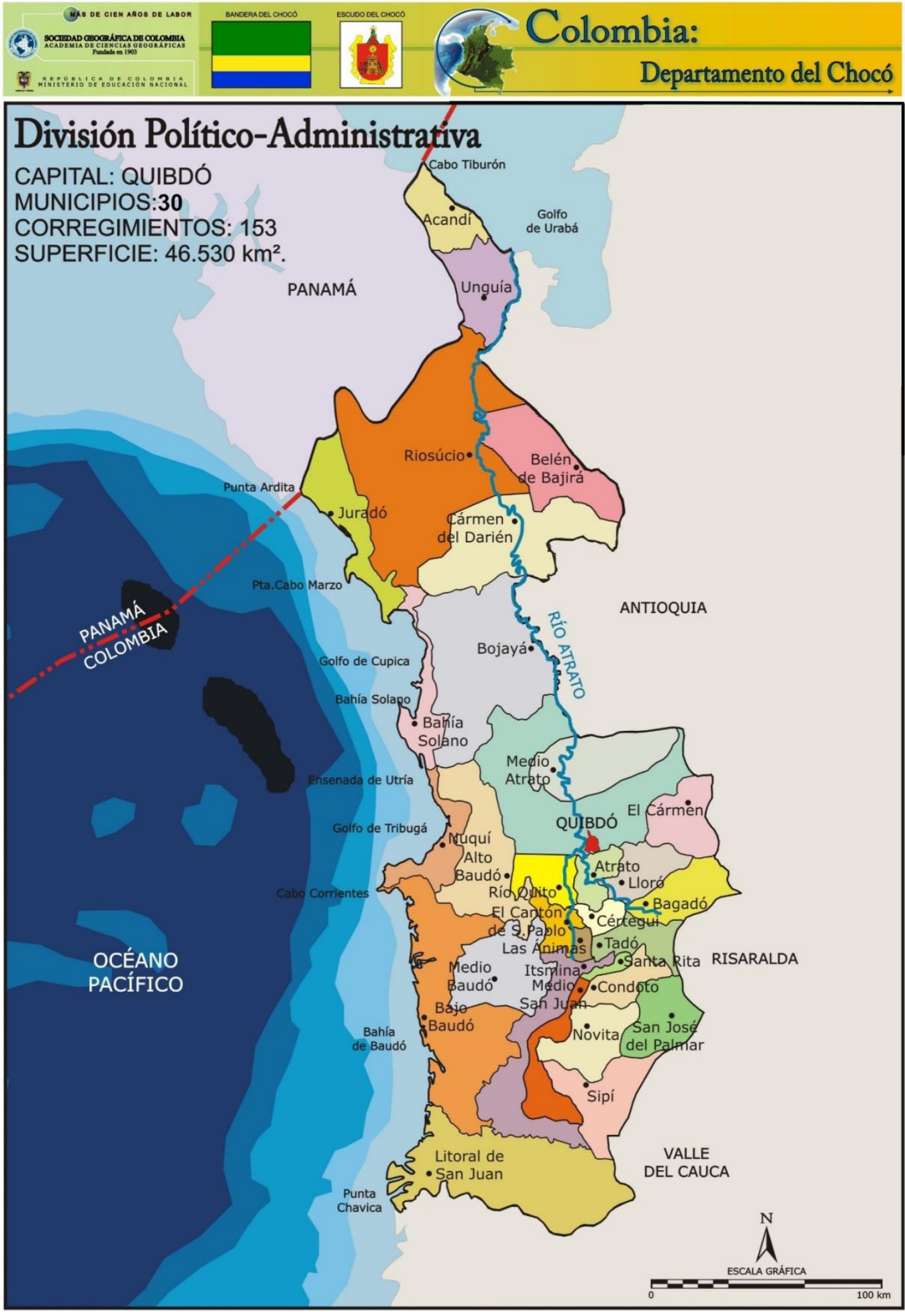
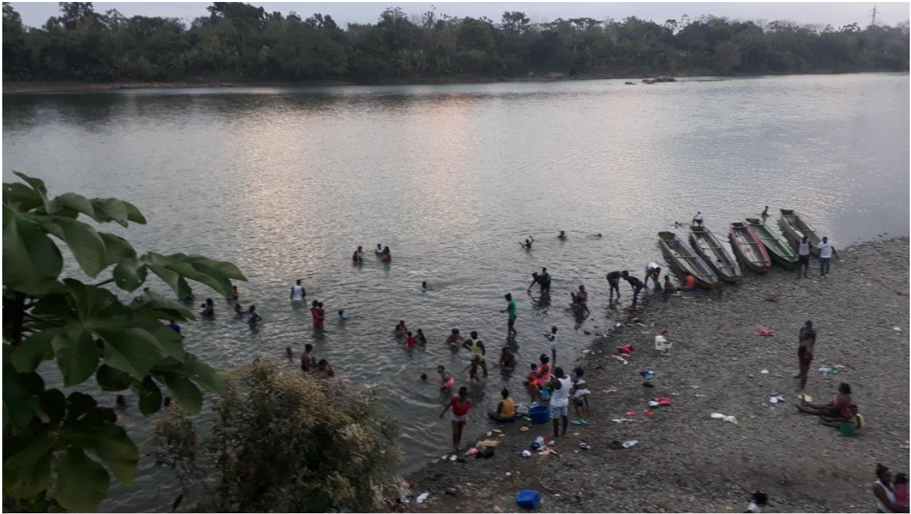
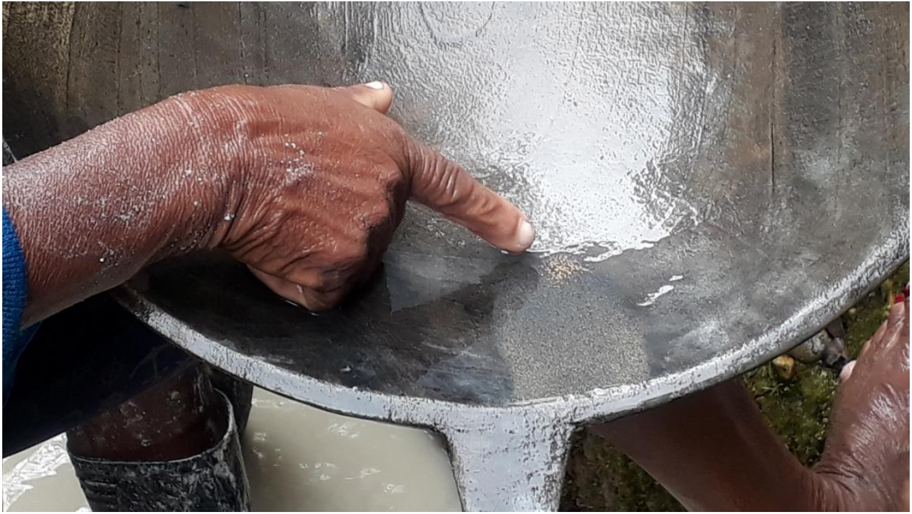
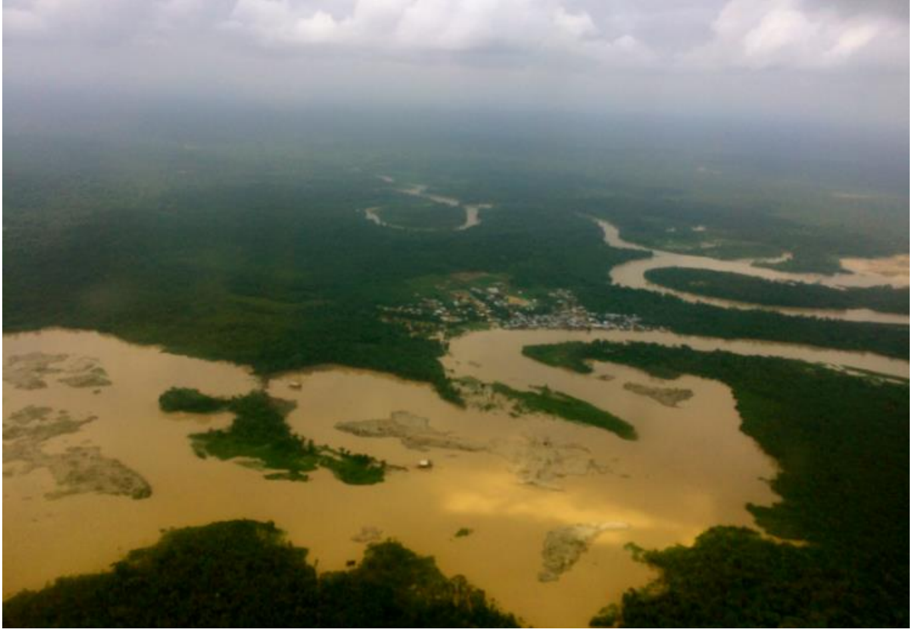
Verification
Claims the paper makes
The claims and statistics of this paper haven’t been checked yet.
Run the check — free, no account needed. It reads the open-access text and checks the sources it cites.
Claims other papers make about this one
Each is checked against this paper’s own text: does it say what the citing paper says it does?
The source backs part of the claim, not all of it — or backs it for a different population, condition or comparison.
In the citing paper
“d’une part la réponse proposée par la Cour d’octroi de la personnalité juridique ne correspondait pas aux demandes des acteurs locaux mobilisés pour alerter sur la situation de crise que traversait la région (Revet 2020)”
From Le fleuve et ses gardiens: Droits bioculturels en action sur le fleuve Atrato (2022) · cites this paper as Revet 2020
Experimental — accuracy not yet measuredThe source backs part of the claim, not all of it — or backs it for a different population, condition or comparison.
In the citing paper
“L’association de la doctrine des droits de la nature à la notion de droits bioculturels permet également de donner à la décision une traduction empirique dans la mesure où cette dernière résonne avec des pratiques, des cadrages et des alliances déjà établies localement (Revet 2020).”
From Le fleuve et ses gardiens: Droits bioculturels en action sur le fleuve Atrato (2022) · cites this paper as Revet 2020
Experimental — accuracy not yet measuredThe cited source says what the claim attributes to it.
In the citing paper
“Outre les frictions et les désaccords entre les gardiens eux-mêmes et les visions différentes du fleuve et de ses usages qu’elles révèlent (Revet 2020), il faut également rappeler que les institutions en charge de mettre en place les actions liées à la décision ont quant à elles une vision très anthropocentrée du fleuve et de la nature, et en particulier de la nature dans le Chocó.”
From Le fleuve et ses gardiens: Droits bioculturels en action sur le fleuve Atrato (2022) · cites this paper as Revet 2020
The cited source says what the claim attributes to it.
In the citing paper
“Associées à cette temporalité avant « la crise » (Revet 2020) que la plupart datent du début des années 2000, les récits mentionnent des pratiques économiques (agriculture, pêche, extraction minière) artisanales, dont la dimension commerciale est occultée au profit d’un usage familial.”
From Le fleuve et ses gardiens: Droits bioculturels en action sur le fleuve Atrato (2022) · cites this paper as Revet 2020
In the citing paper
“Mes observations de ces moments m’ont permis de voir que ces exercices sont aussi des moments de frictions qui témoignent de la polyphonie des voix qui parlent pour l’Atrato (Revet, 2020).”
From Le fleuve et ses gardiens: Droits bioculturels en action sur le fleuve Atrato (2022) · cites this paper as Revet, 2020
Self-check
Percentages, sums and reported differences re-computed from the paper’s own numbers.
The self-check needs the paper’s full text.
Citations
Cites
No references could be resolved yet.
Research works printed but not linked: 16
- BAVIKATTE, Kabir Sanjay (2014) Stewarding the Earth: Rethinking Property and the Emergence of Biocultural Rights (Dehli: Oxford University Press).
- BRUNET, Pierre (2019) « Vouloir pour la nature. La représentation juridique des entités naturelles. », Journal of Interdisciplinary History of Ideas, vol. 8, n° 15, p 1-44.
- BRUNET, Pierre et ROCHFELD, Judith (à paraître) « De l'animisme juridique à base scientifique : une voie pour la nature ? » in Rodrigo MIGUEZ NUÑEZ et María Valeria BERROS (dir.), Le droit à l'épreuve de la société des sciences et des techniques. Liber amicorum en l'honneur de Marie-Angèle Hermitte (Turin : Accademia University Press).
- HERMITTE, Marie-Angèle (2011) « La nature, sujet de droit ? » Annales. Histoire, sciences sociales, vol. 66, n° 1, Éditions de l'EHESS, pp.173-212.
- INGOLD, Tim (2013) "Anthropology beyond Humanity", Suomen Antropologi: Journal of the Finnish Anthropological Society, vol. 38, n° 3, pp. 5-23.
- JONKMAN, Jesse (2020) "Underground multiculturalism: Contentious cultural politics in gold-mining regions in Chocó, Colombia" Journal of Latin American Studies, pp. 1-28 (en ligne: https://www.cambridge.org/core/journals/journal-of- latin-american-studies/article/underground-multiculturalism-contentious-cultural-politics-in-goldmining-regions-in- choco-colombia/081DE72510FB7F56FA7C0B82F5BE4E68)
- LAFFAILLE, Franck (2018) « Le juge, l'humain et l'Amazonie. Le constitutionnalisme écocentrique de la Cour suprême de Colombie (5 avril 2018) », Revue juridique de l'environnement, vol. 43, n° 3, pp. 549-563.
- LOSONCZY, Anne-Marie (1997) « Frontières inter-ethniques au Chocó et espace national colombien », Civilisations [En ligne], vol. 44, mis en ligne le 29 juin 2009, consulté le 1 er octobre 2016. URL : http://civilisations.revues.org/1623 -(2004) « Sentirse negro » [Se sentir noir], Annales. Histoire, sciences sociales, vol. 59, n° 3, Éditions de l'EHESS, pp. 589- 611.
- MARTÍNEZ, Basallo et SANDRA, Patricia (2010) « La política de titulación colectiva a las comunidades negras del Pacífico colombiano: una mirada desde los actores locales » [La politique d'octroi de titres collectifs aux communautés noires du Pacifique colombien : un regard depuis les acteurs locaux], Boletín de Antropología Universidad de Antioquia, vol. 24, n° 41, pp. 13-43.
- NASH, Roderick Frazier (1989) The Rights of Nature: a History of Environmental Ethics (Madison: University of Wisconsin Press).
- REGAN, Tom (1983) "Animal Rights, Human Wrongs" in MILLER, H.B. and WILLIAMS, W.H. (eds) Ethics and Animals. Contemporary Issues in Biomedicine, Ethics, and Society (Clinton: Humana Press), pp.19-43.
- SALAZAR-CAMACHO, Carlos, SALAS-MORENO, Manuel, MARRUGO-MADRID, Siday, MARRUGO-NEGRETE, José and DÍEZ, Sergi (2017) "Dietary human exposure to mercury in two artisanal small-scale gold mining communities of Northwestern Colombia", Environment International, vol. 107, pp. 47-54.
- STONE, Christopher D. (1972) "Should trees have standing? Toward legal rights for natural objects", Southern California Law Review, vol. 45, pp. 450-501.
- TSING, Anna L. (2015) The Mushroom at the End of the World: On the Possibility of Life in Capitalist Ruins (Princeton: Princeton University Press) [Le Champignon de la fin du monde. Sur la possibilité de vivre dans les ruines du capitalisme (Paris : La Découverte) 2017].
- VELASCO JARAMILLO, Marcela (2014) "The territorialization of ethnopolitical reforms in Colombia: Chocó as a case study", Latin American Research Review, vol. 49, n° 3, pp. 126-152.
- WADE, Peter (2020) "Colombia: the Meaning and Measuring of Mixedness", in Zarine ROCHA and Peter J. ASPINALL (eds), The Palgrave International Handbook of Mixed Racial and Ethnic Classification (Cham: Palgrave Macmillan), pp. 195- 207.
Cited by
Le fleuve et ses gardiens: Droits bioculturels en action sur le fleuve Atrato
Revet, S. (2022) · Terrain · doi:10.4000/terrain.22695 · Cited by 11
Self-citation
Metadata
- Authors
- Revet, S.
- Venue
- Sociétés politiques comparées. Revue européenne d’analyse des sociétés politiques
- Publisher
- Firenze University Press
- Published
- 2020-12-01
- ISSN
- 2429-1714
- Cited by
- 4
- References
- 0
About these checks
Registry, retraction, Cites and statistics results are computed, not judged, with one exception: a printed reference that no index lists is read once by a model before it counts as a citation error. Claims are extracted by a model and kept only when their quote appears verbatim in the text; each cited source is then checked, with a model’s help, for whether it says what the claim relies on. Those verdicts can be wrong — read the claim’s quote and the cited source before relying on one.
Statistics and arithmetic are recomputed, not judged.
Confidence bands are shown only for fields calibrated on our annotated test set. None is calibrated yet, so no band is shown.
What counts as a claim ›How we measure confidence ›How we check this ›
Are you an author, or do you see a problem with this page? Request a review
How to cite
Cite CoChat for the checks on this page, and the paper for its own findings.
- This page
- CoChat. (2026). Citation check: Les droits du fleuve: polyphonie autour du fleuve Atrato en Colombie et de ses Gardiens. https://app.cochat.ai/papers/10.36253/spc-18813
- The paper
- Revet, S. (2020). Les droits du fleuve: polyphonie autour du fleuve Atrato en Colombie et de ses Gardiens. Sociétés politiques comparées. Revue européenne d’analyse des sociétés politiques. https://doi.org/10.36253/spc-18813
