

The DOI matches its Crossref record; the references it cites are not checked yet.
Different types of fruit intake and colorectal cancer risk: A meta-analysis of observational studies
Open accessAbstract
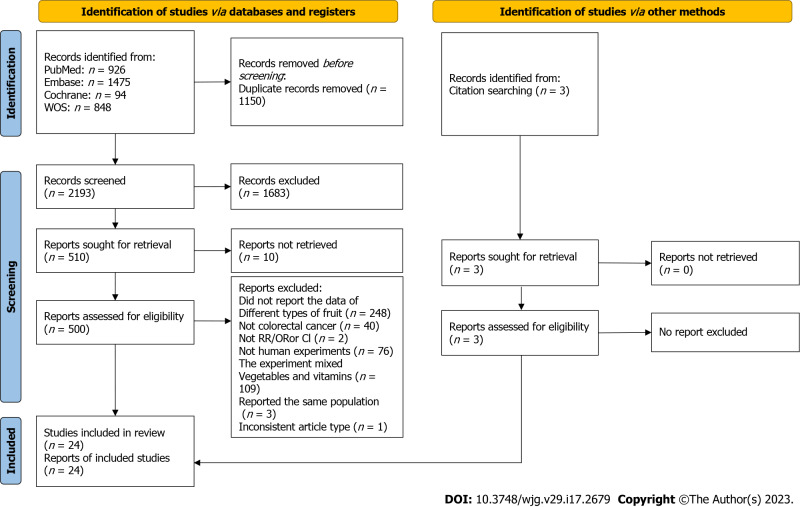
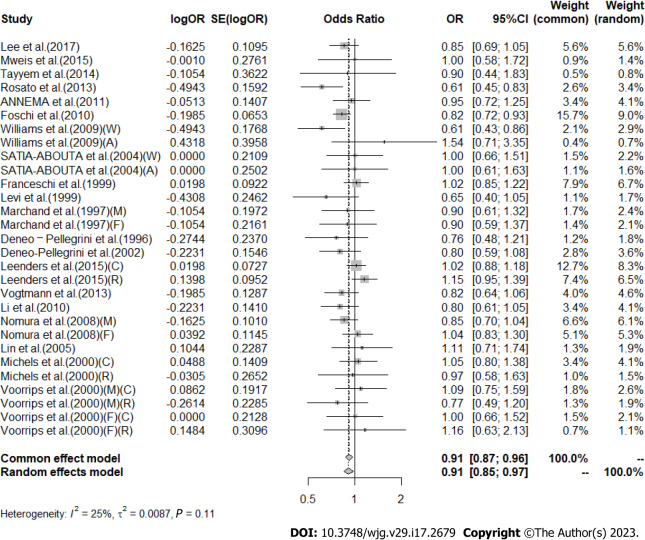
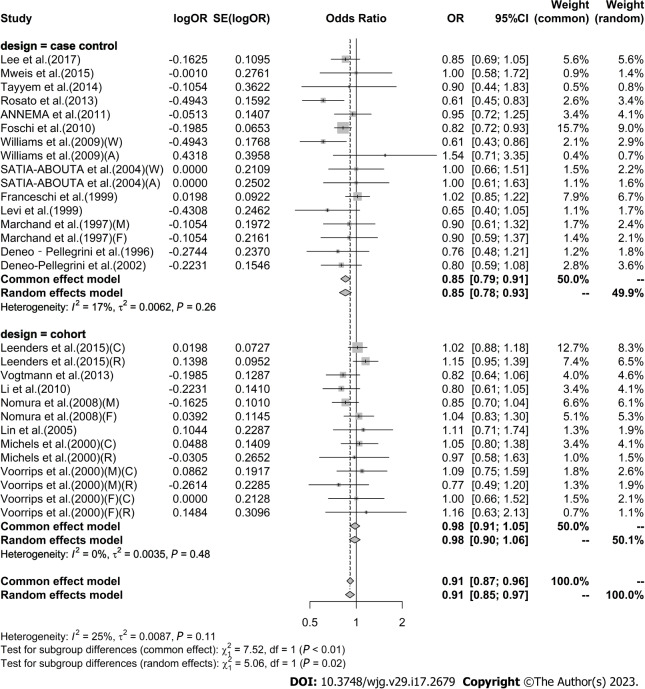
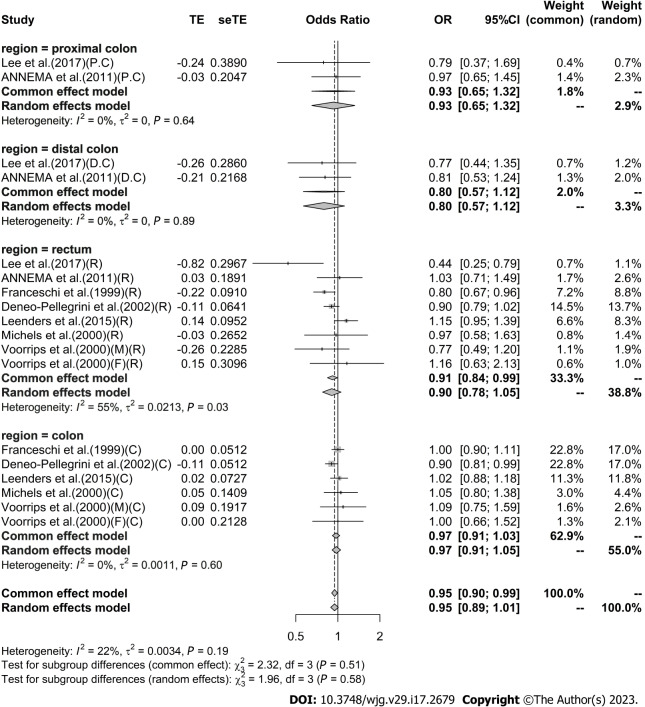
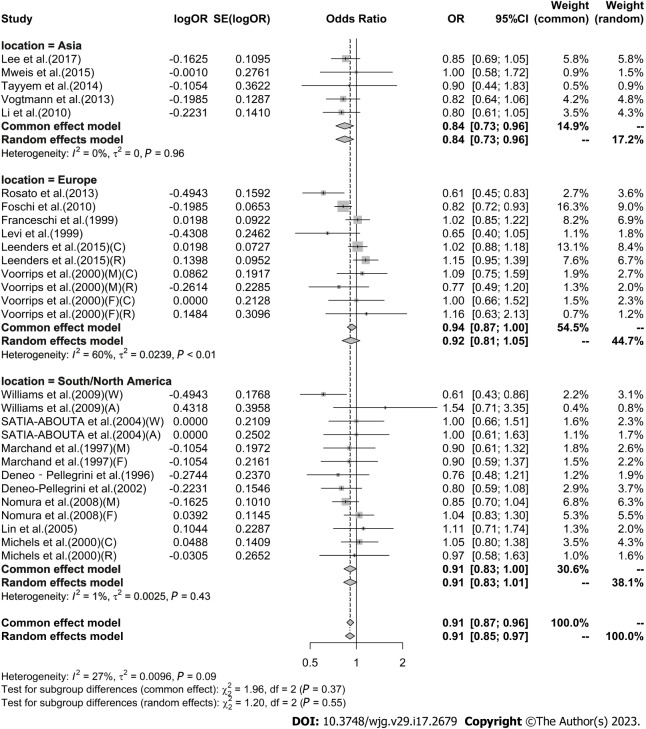
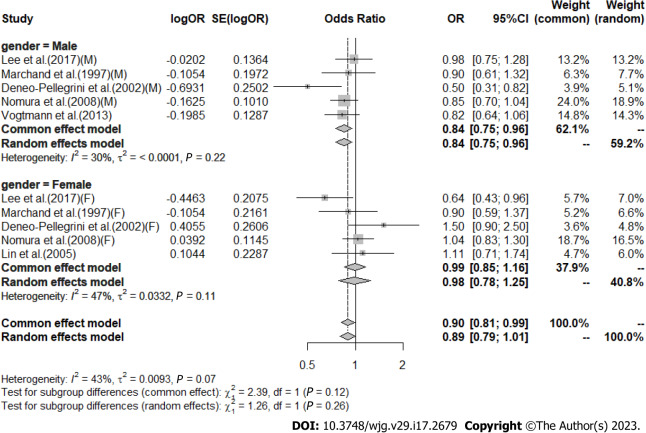
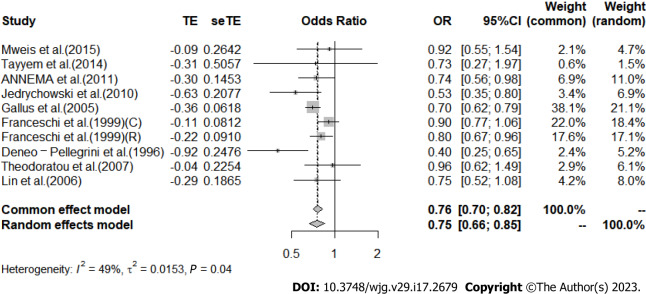
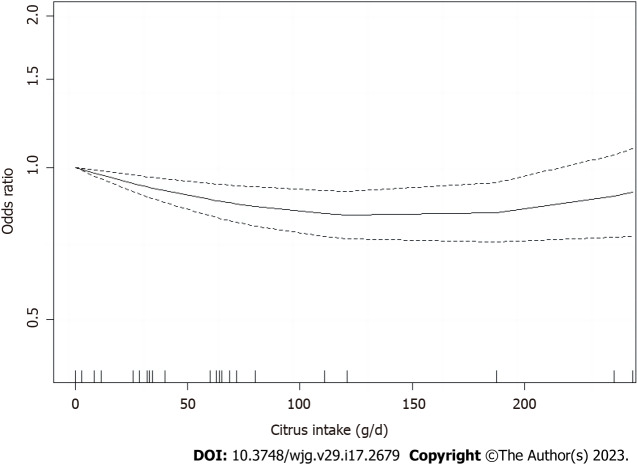
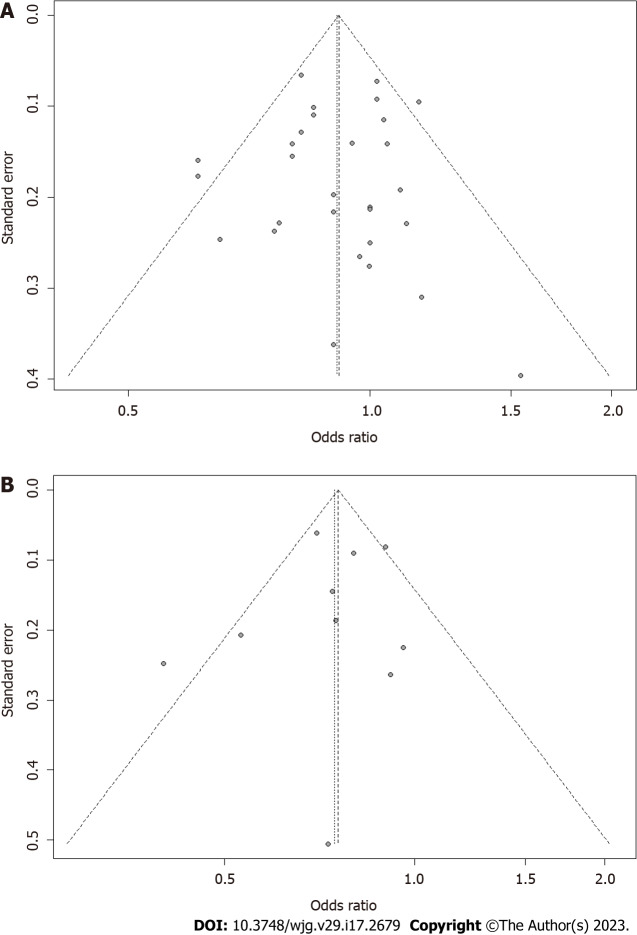
BACKGROUND: Multiple studies investigating the relationship between intake of different types of fruit and colorectal cancer (CRC) risk have yielded inconsistent results. AIM: To perform a meta-analysis of existing studies to assess the association between the intake of different kinds of fruit and the incidence of CRC. METHODS: We searched online literature databases including PubMed, Embase, WOS, and Cochrane Library for relevant articles available up to August 2022. With data extracted from observational studies, odds ratios (ORs) with 95% confidence intervals (CIs) were assessed using random-effects models. A funnel plot and Egger's test were used to determine publication bias. Furthermore, subgroup analysis and dose-response analysis were performed. All analyses were conducted using R (version 4.1.3). RESULTS: < 0.001), with the risk minimized around 120 g/d (OR = 0.85), while no significant dose-response correlation was observed after continued increase in intake. CONCLUSION: We found that a higher intake of citrus, apples, watermelon, and kiwi was negatively associated with the risk of CRC, while the intake of other types of fruits were not significantly associated with CRC. Citrus intake showed a non-linear dose-response relationship with the risk of CRC. This meta-analysis provides further evidence that a higher intake of specific types of fruit is effective in preventing the occurrence of CRC.
Overview
The claims and statistics of this paper haven’t been checked yet.
Run the check — free, no account needed. It reads the open-access text and checks the sources it cites.
Integrity signals
Registry
Cites
Statistics
Figures
Verification
Claims the paper makes
The claims and statistics of this paper haven’t been checked yet.
Run the check — free, no account needed. It reads the open-access text and checks the sources it cites.
Claims other papers make about this one
Each is checked against this paper’s own text: does it say what the citing paper says it does?
The cited source says what the claim attributes to it.
In the citing paper
“The authors of a meta-analysis selected 24 studies that combined 1068158 participants and found a decrease in the risk of CRC with high consumption of citrus fruits, apples, watermelons and kiwi fruits[18].”
From Risk factors, prevention and screening of colorectal cancer: A rising problem (2025) · cites this paper as [18]
Self-check
Percentages, sums and reported differences re-computed from the paper’s own numbers.
The self-check needs the paper’s full text.
Citations
The citation lists are queued
They are fetched later and appear here then.
References 73 · Cited by 26
Metadata
- Authors
- Wu, Z.-Y., Chen, J.-L., Li, H., Su, K., & Han, Y.-W.
- Affiliations
- Southwest Medical University (CN)
- Venue
- World Journal of Gastroenterology
- Publisher
- Baishideng Publishing Group Inc.
- Published
- 2023-05-07
- Volume
- 29
- Issue
- 17
- Pages
- 2679-2700
- ISSN
- 1007-9327 (ISSN-L)
- PMC
- PMC10198059
- OpenAlex
- W4372348067
- Cited by
- 26
- References
- 73
- Citations by year
- 2026: 5 · 2025: 10 · 2024: 11
- FWCI
- 1.28
- Type
- journal article
- Language
- en
- Open access
- hybrid
- doi.org
- Licence
- cc-by-nc
- Locations
- World Journal of Gastroenterology (publishedVersion, cc-by-nc)
- PubMed Central (publishedVersion, cc-by-nc)
- PubMed (publishedVersion)
- Topics
- Health Sciences › Medicine › Public Health, Environmental and Occupational Health › Nutritional Studies and Diet
- Health Sciences › Medicine › Oncology › Colorectal Cancer Screening and Detection
- Health Sciences › Medicine › Biochemistry (medical) › Phytochemicals and Antioxidant Activities
- Keywords
- colorectal cancer, fruit consumption, citrus, apple, watermelon, kiwi, cancer risk, dose-response relationship, cancer prevention, dietary factors
- MeSH terms
- Citrus, Diet, Fruit, Risk Factors, Colorectal Neoplasms
About these checks
Registry, retraction, Cites and statistics results are computed, not judged, with one exception: a printed reference that no index lists is read once by a model before it counts as a citation error. Claims are extracted by a model and kept only when their quote appears verbatim in the text; each cited source is then checked, with a model’s help, for whether it says what the claim relies on. Those verdicts can be wrong — read the claim’s quote and the cited source before relying on one.
Statistics and arithmetic are recomputed, not judged.
Confidence bands are shown only for fields calibrated on our annotated test set. None is calibrated yet, so no band is shown.
What counts as a claim ›How we measure confidence ›How we check this ›
Are you an author, or do you see a problem with this page? Request a review
How to cite
Cite CoChat for the checks on this page, and the paper for its own findings.
- This page
- CoChat. (2026). Citation check: Different types of fruit intake and colorectal cancer risk: A meta-analysis of observational studies. https://app.cochat.ai/papers/10.3748/wjg.v29.i17.2679
- The paper
- Wu, Z.-Y., Chen, J.-L., Li, H., Su, K., & Han, Y.-W. (2023). Different types of fruit intake and colorectal cancer risk: A meta-analysis of observational studies. World Journal of Gastroenterology. https://doi.org/10.3748/wjg.v29.i17.2679
Data sources
Bibliographic data: Semantic Scholar, OpenAlex, Crossref.
Contains information from the Semantic Scholar Academic Graph Datasets, made available under the ODC Attribution License (ODC-BY 1.0).
Semantic Scholar’s data is described in: Kinney, R., et al. (2023). The Semantic Scholar Open Data Platform. arXiv:2301.10140.
