

The DOI matches its Crossref record; 60 of the 60 references it cites were found in a registry or an index.
Discovery of antimicrobial peptides clostrisin and cellulosin from Clostridium: insights into their structures, co-localized biosynthetic gene clusters, and antibiotic activity
Open accessPublished version of a preprint
Abstract
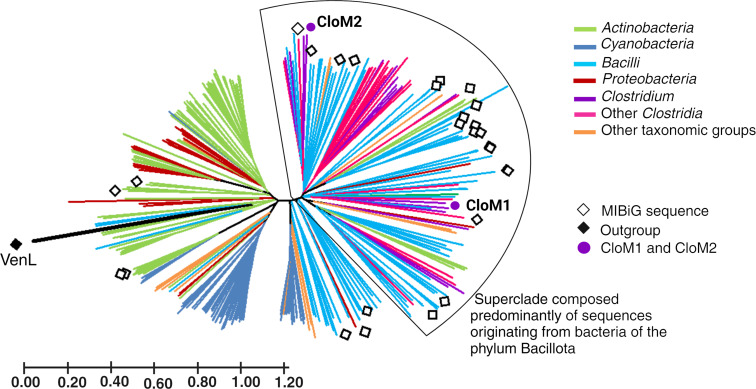
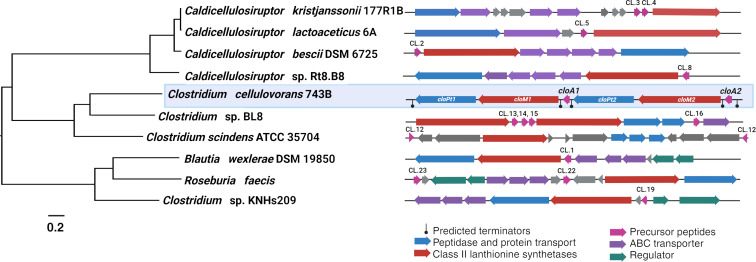
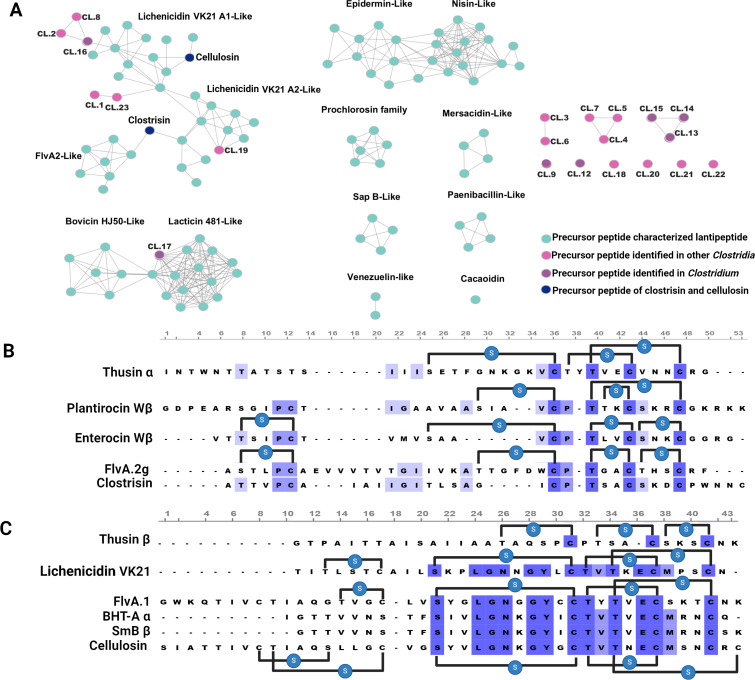
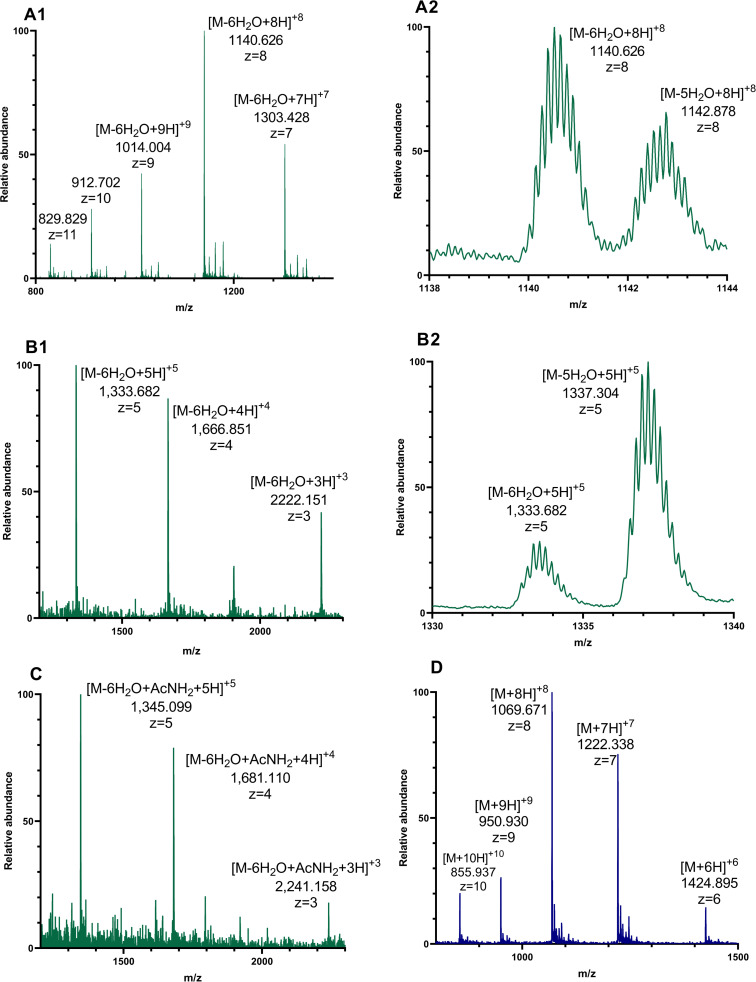
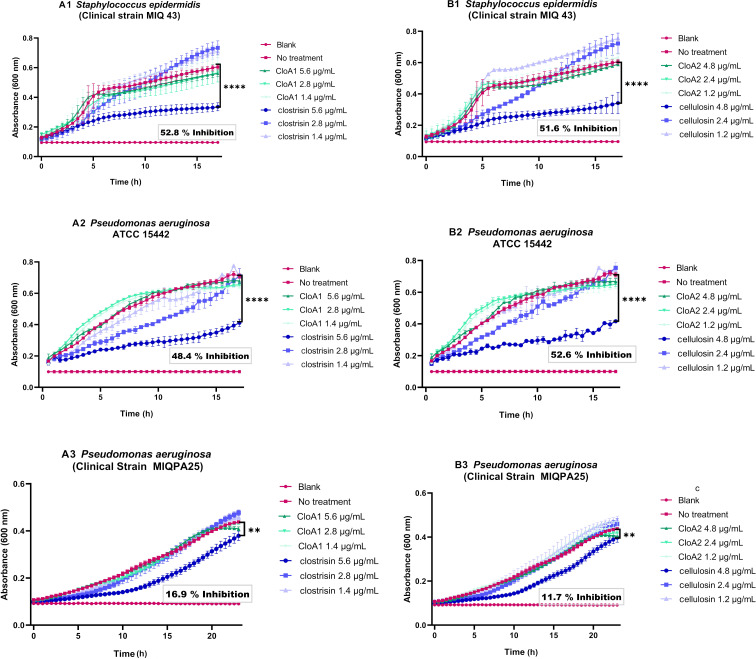
Antimicrobial resistance presents a substantial threat to global public health, demanding urgent attention and action. This study focuses on lanthipeptides, ribosomally encoded peptides that display significant structural diversity and hold promising potential as antibiotics. Genome mining was employed to locate biosynthetic gene clusters (BGCs) containing class II lanthipeptide synthetases encoded by lanM genes. A phylogenetic study analyzing homologous sequences of functional LanM sequences revealed a unique evolutionary clade of 17 LanM proteins associated with 12 Clostridium bacterial genomes. In silico exploration identified nine complete BGCs, including one super-cluster containing two co-localized operons from Clostridium cellulovorans 743B, that encode for two new peptides named clostrisin and cellulosin. Each operon was heterologously expressed in Escherichia coli . Molecular weights associated with the expected post-translational modifications of the purified lanthipeptide were confirmed by MS–MS/MS analysis for cellulosin, while clostrisin was not post-translationally modified. Both peptides demonstrated antimicrobial activity against multidrug-resistant bacteria, such as a clinical strain of Staphylococcus epidermidis MIQ43 and Pseudomonas aeruginosa PA14. This is the first report of lanthipeptides from the Clostridium genus produced with its native biosynthetic machinery, as well as chemically and biologically characterized. This study showcases the immense potential of genome mining in identifying new RiPP synthetases and associated bioactive peptides.
Overview
The claims and statistics of this paper haven’t been checked yet.
Run the check — free, no account needed. It reads the open-access text and checks the sources it cites.
Integrity signals
Registry
Cites
Statistics
Figures
Verification
Claims the paper makes
The claims and statistics of this paper haven’t been checked yet.
Run the check — free, no account needed. It reads the open-access text and checks the sources it cites.
Self-check
Percentages, sums and reported differences re-computed from the paper’s own numbers.
The self-check needs the paper’s full text.
Citations
Cites
Basic local alignment search tool
Altschul, S. F., Gish, W., Miller, W., Myers, E. W., & Lipman, D. J. (1990) · Journal of Molecular Biology · doi:10.1006/jmbi.1990.9999 · Cited by 98,669
The neighbor-joining method: a new method for reconstructing phylogenetic trees.
(1987) · Molecular Biology and Evolution · doi:10.1093/oxfordjournals.molbev.a040454 · Cited by 59,715
Cytoscape: A software Environment for integrated models of biomolecular interaction networks
Shannon, P., Markiel, A., Ozier, O., Baliga, N. S., Wang, J. T., Ramage, D., Amin, N., Schwikowski, B., & Ideker, T. (2003) · Genome Research · doi:10.1101/gr.1239303 · Cited by 51,888
UCSF Chimera—A visualization system for exploratory research and analysis
Pettersen, E. F., Goddard, T. D., Huang, C. C., Couch, G. S., Greenblatt, D. M., Meng, E. C., & Ferrin, T. E. (2004) · Journal of Computational Chemistry · doi:10.1002/jcc.20084 · Cited by 45,828
MUSCLE: multiple sequence alignment with high accuracy and high throughput
Edgar, R. C. (2004) · Nucleic Acids Research · doi:10.1093/nar/gkh340 · Cited by 44,662
Highly accurate protein structure prediction with AlphaFold
Jumper, J., Evans, R., Pritzel, A., Green, T., Figurnov, M., Ronneberger, O., Tunyasuvunakool, K., Bates, R., Žídek, A., Potapenko, A., et al. (2021) · Nature · doi:10.1038/s41586-021-03819-2 · Cited by 43,764
MEGA X: Molecular Evolutionary Genetics Analysis across Computing Platforms
Kumar, S., Stecher, G., Li, M., Knyaz, C., & Tamura, K. (2018) · Molecular Biology and Evolution · doi:10.1093/molbev/msy096 · Cited by 37,529
Global burden of bacterial antimicrobial resistance in 2019: a systematic analysis
Murray, C. J. L., Ikuta, K. S., Sharara, F., Swetschinski, L., Robles Aguilar, G., Gray, A., Han, C., Bisignano, C., Rao, P., Wool, E., et al. (2022) · The Lancet · doi:10.1016/s0140-6736(21)02724-0 · Cited by 16,316
SWISS-MODEL: homology modelling of protein structures and complexes
Waterhouse, A. M., Bertoni, M., Bienert, S., Studer, G., Tauriello, G., Gumienny, R., Heer, F. T., de Beer, T., Rempfer, C., Bordoli, L., et al. (2018) · Nucleic Acids Research · doi:10.1093/nar/gky427 · Cited by 13,364
UniProt: the Universal Protein Knowledgebase in 2023
The UniProt Consortium, Bateman, A., Martin, M.-J., Orchard, S., Magrane, M., Ahmad, S., Alpi, E., Bowler-Barnett, E. H., Britto, R., Bye-A-Jee, H., et al. (2023) · Nucleic Acids Research · doi:10.1093/nar/gkac1052 · Cited by 7,210
antiSMASH 6.0: improving cluster detection and comparison capabilities
Blin, K., Shaw, S., Kloosterman, A., Charlop–Powers, Z., van Wezel, G. P., Medema, M. H., & Weber, T. (2021) · Nucleic Acids Research · doi:10.1093/nar/gkab335 · Cited by 2,513
A Deep Learning Approach to Antibiotic Discovery
Stokes, J. M., Yang, K., Swanson, K., Jin, W., Cubillos-Ruiz, A., Donghia, N. M., MacNair, C. R., French, S., Carfrae, L. A., Bloom-Ackermann, Z., et al. (2020) · Cell · doi:10.1016/j.cell.2020.01.021 · Cited by 2,463
A new antibiotic kills pathogens without detectable resistance
Ling, L. L., Schneider, T., Peoples, A. J., Spoering, A. L., Engels, I., Conlon, B. P., Müller, A., Schäberle, T. F., Hughes, D. E., Epstein, S. S., et al. (2015) · Nature · doi:10.1038/nature14098 · Cited by 2,428
Arnison, P. G., Bibb, M. J., Bierbaum, G., Bowers, A. A., Bugni, T. S., Bulaj, G. W., Camarero, J. A., Campopiano, D. J., Challis, G. L., Clardy, J., et al. (2012) · Natural Product Reports · doi:10.1039/c2np20085f · Cited by 2,113
Olson, R., Assaf, R., Brettin, T. S., Conrad, N. R., Cucinell, C. A., Davis, J. J., Dempsey, D. M., Dickerman, A., Dietrich, E. M., Kenyon, R. W., et al. (2022) · Nucleic Acids Research · doi:10.1093/nar/gkac1003 · Cited by 1,350
BAGEL4: a user-friendly web server to thoroughly mine RiPPs and bacteriocins
van Heel, A. J., de Jong, A., Song, C., Viel, J. H., Kok, J., & Kuipers, O. P. (2018) · Nucleic Acids Research · doi:10.1093/nar/gky383 · Cited by 1,134
Zallot, R., Oberg, N., & Gerlt, J. A. (2019) · Biochemistry · doi:10.1021/acs.biochem.9b00735 · Cited by 806
Lantibiotics: Peptides of Diverse Structure and Function
Willey, J. M., & van der Donk, W. A. (2007) · Annual Review of Microbiology · doi:10.1146/annurev.micro.61.080706.093501 · Cited by 634
MIBiG 2.0: a repository for biosynthetic gene clusters of known function
Kautsar, S. A., Blin, K., Shaw, S., Navarro-Muñoz, J. C., Terlouw, B. R., van der Hooft, J. J. J., van Santen, J. A., Tracanna, V., Duran, H. G. S., Andreu, V. P., et al. (2019) · Nucleic Acids Research · doi:10.1093/nar/gkz882 · Cited by 562
Mechanistic Understanding of Lanthipeptide Biosynthetic Enzymes
Repka, L. M., Chekan, J. R., Nair, S. K., & van der Donk, W. A. (2017) · Chemical Reviews · doi:10.1021/acs.chemrev.6b00591 · Cited by 555
Begley, M., Cotter, P. D., Hill, C., & Ross, R. P. (2009) · Applied and Environmental Microbiology · doi:10.1128/aem.00730-09 · Cited by 235
Mechanisms of nisin resistance in Gram-positive bacteria
Zhou, H., Fang, J., Tian, Y., & Lu, X.-Y. (2013) · Annals of Microbiology · doi:10.1007/s13213-013-0679-9 · Cited by 159
Agrawal, P., Khater, S., Gupta, M., Sain, N., & Mohanty, D. (2017) · Nucleic Acids Research · doi:10.1093/nar/gkx408 · Cited by 159
Baltz, R. H. (2018) · Journal of Industrial Microbiology & Biotechnology · doi:10.1007/s10295-018-2115-4 · Cited by 154
Lantibiotics: biosynthesis, mode of action and applications
van Kraaij, C., de Vos, W. M., Siezen, R. J., Kuipers, O. P., van Kraaij, C., de Vos, W. M., & Siezen, R. J. (1999) · Natural Product Reports · doi:10.1039/a804531c · Cited by 138
Blondelle, S. E., & Lohner, K. (2000) · Biopolymers · doi:10.1002/1097-0282(2000)55:1 · Cited by 126
Yang, X., & van der Donk, W. A. (2013) · Chemistry - A European Journal · doi:10.1002/chem.201300401 · Cited by 125
Crystal structures of a polypeptide processing and secretion transporter
Lin, D. Y.-W., Huang, S., & Chen, J. (2015) · Nature · doi:10.1038/nature14623 · Cited by 123
Genetic Analysis of a Unique Bacteriocin, Smb, Produced by Streptococcus mutans GS5
Yonezawa, H., & Kuramitsu, H. K. (2005) · Antimicrobial Agents and Chemotherapy · doi:10.1128/aac.49.2.541-548.2005 · Cited by 111
Cacaoidin, First Member of the New Lanthidin RiPP Family
Ortiz‐López, F. J., Carretero‐Molina, D., Sánchez‐Hidalgo, M., Martı́n, J., González, I., Román‐Hurtado, F., de la Cruz, M., Fernández, S. G., Reyes, F., Deisinger, J. P., et al. (2020) · Angewandte Chemie International Edition · doi:10.1002/anie.202005187 · Cited by 108
Hyink, O., Balakrishnan, M., & Tagg, J. R. (2005) · FEMS Microbiology Letters · doi:10.1016/j.femsle.2005.09.003 · Cited by 95
The enterococcal cytolysin synthetase has an unanticipated lipid kinase fold
Dong, S., Tang, W., Lukk, T., Yu, Y., Nair, S. K., & van der Donk, W. A. (2015) · eLife · doi:10.7554/elife.07607 · Cited by 89
Zhong, Z., He, B., Li, J., & Li, Y.-X. (2020) · Synthetic and Systems Biotechnology · doi:10.1016/j.synbio.2020.06.002 · Cited by 79
Therapeutic Application of Lantibiotics and Other Lanthipeptides: Old and New Findings
Staden, A. D. P. V., van Zyl, W. F., Trindade, M., Dicks, L. M. T., & Smith, C. (2021) · Applied and Environmental Microbiology · doi:10.1128/aem.00186-21 · Cited by 76
Bioengineering nisin to overcome the nisin resistance protein
Field, D., Blake, T., Mathur, H., et al. (2018) · Molecular Microbiology · doi:10.1111/mmi.14183 · Cited by 67
Sawa, N., Wilaipun, P., Kinoshita, S., Zendo, T., Leelawatcharamas, V., Nakayama, J., & Sonomoto, K. (2011) · Applied and Environmental Microbiology · doi:10.1128/aem.06497-11 · Cited by 57
Xin, B., Zheng, J., Liu, H., Li, J., Ruan, L., Peng, D., Sajid, M., & Sun, M. (2016) · Frontiers in Microbiology · doi:10.3389/fmicb.2016.01115 · Cited by 54
Genome mining and prospects for antibiotic discovery
Foulston, L. (2019) · Current Opinion in Microbiology · doi:10.1016/j.mib.2019.01.001 · Cited by 53
Sand, S. L., Nissen-Meyer, J., Sand, O., & Haug, T. M. (2012) · Biochimica et Biophysica Acta (BBA) - Biomembranes · doi:10.1016/j.bbamem.2012.11.001 · Cited by 49
Chiriac, A. I., Kloß, F., Krämer, J., Vuong, C., Hertweck, C., & Sahl, H. (2015) · Journal of Antimicrobial Chemotherapy · doi:10.1093/jac/dkv161 · Cited by 46
Zhao, X., & van der Donk, W. A. (2016) · Cell chemical biology · doi:10.1016/j.chembiol.2015.11.014 · Cited by 46
Dickman, R., Mitchell, S. A., Figueiredo, A. M., Hansen, D. F., & Tabor, A. B. (2019) · The Journal of Organic Chemistry · doi:10.1021/acs.joc.9b01253 · Cited by 46
Lin, Y., Teng, K., Huan, L., & Zhong, J. (2010) · Microbiological Research · doi:10.1016/j.micres.2010.05.001 · Cited by 43
Genome mining unveils a class of ribosomal peptides with two amino termini
Ren, H., Dommaraju, S. R., Huang, C., Cui, H., Pan, Y., Nešić, M., Zhu, L., Šarlah, D., Mitchell, D. A., & Zhao, H. (2023) · Nature Communications · doi:10.1038/s41467-023-37287-1 · Cited by 41
Engineering the heterologous expression of lanthipeptides in Escherichia coli by multigene assembly
Kuthning, A., Mösker, E., & Süßmuth, R. D. (2015) · Applied Microbiology and Biotechnology · doi:10.1007/s00253-015-6557-6 · Cited by 36
Correlational networking guides the discovery of unclustered lanthipeptide protease-encoding genes
Xue, D., Older, E. A., Zhong, Z., Shang, Z., Chen, N., Dittenhauser, N., Hou, L., Cai, P., Walla, M. D., Dong, S., et al. (2022) · Nature Communications · doi:10.1038/s41467-022-29325-1 · Cited by 35
Discovery and Characterization of a Class IV Lanthipeptide with a Nonoverlapping Ring Pattern
Ren, H., Shi, C., Bothwell, I. R., van der Donk, W. A., & Zhao, H. (2020) · ACS Chemical Biology · doi:10.1021/acschembio.0c00267 · Cited by 33
Ongey, E. L., Giessmann, R. T., Fons, M., Rappsilber, J., Adrian, L., & Neubauer, P. B. (2018) · Frontiers in Microbiology · doi:10.3389/fmicb.2018.01688 · Cited by 28
Antimicrobial production by strictly anaerobic Clostridium spp.
Pahalagedara, A. S. N. W., Flint, S., Palmer, J. S., Brightwell, G., & Gupta, T. B. (2020) · International Journal of Antimicrobial Agents · doi:10.1016/j.ijantimicag.2020.105910 · Cited by 27
The population structure of Clostridium tetani deduced from its pan-genome
Chapetón-Montes, D., Plourde, L., Bouchier, C., Ma, L., Diancourt, L., Criscuolo, A., Popoff, M. R., & Brüggemann, H. (2019) · Scientific Reports · doi:10.1038/s41598-019-47551-4 · Cited by 26
Duramycin exhibits antiproliferative properties and induces apoptosis in tumour cells
Yates, K. R., Welsh, J., Udegbunam, N. O., Greenman, J., Maraveyas, A., & Madden, L. A. (2012) · Blood Coagulation & Fibrinolysis · doi:10.1097/mbc.0b013e3283538875 · Cited by 25
Dual targeting of the class V lanthipeptide antibiotic cacaoidin
Deisinger, J. P., Arts, M., Kotsogianni, I., Puls, J.-S., Grein, F., Ortiz‐López, F. J., Martin, N. I., Müller, A., Genilloud, O., & Schneider, T. (2023) · iScience · doi:10.1016/j.isci.2023.106394 · Cited by 21
Transporter Protein-Guided Genome Mining for Head-to-Tail Cyclized Bacteriocins
Major, D., Flanzbaum, L., Lussier, L., Davies, C., Caldo, K. M. P., & Acedo, J. Z. (2021) · Molecules · doi:10.3390/molecules26237218 · Cited by 17
CoLab: A Workshop-Based Undergraduate Research Experience for Entering College Students
Wierzchowski, A., Wink, D. J., Zhang, H., Kambanis, K., Robles, J. O. R., & Rosenhouse‐Dantsker, A. (2022) · Journal of Chemical Education · doi:10.1021/acs.jchemed.1c01290 · Cited by 17
One-pot synthesis of class II lanthipeptide bovicin HJ50 via an engineered lanthipeptide synthetase
Wang, J., Ge, X., Zhang, L., Teng, K., & Zhong, J. (2016) · Scientific Reports · doi:10.1038/srep38630 · Cited by 16
Isolation, Characterization and Structure Elucidation of a Novel Lantibiotic From Paenibacillus sp.
Karczewski, J., Krasucki, S. P., Asare‐Okai, P. N., Diehl, C., Friedman, A., Brown, C. M., Maezato, Y., & Streatfield, S. J. (2020) · Frontiers in Microbiology · doi:10.3389/fmicb.2020.598789 · Cited by 16
Core-, pan- and accessory genome analyses of Clostridium neonatale: insights into genetic diversity
Mesa, V., Monot, M., Ferraris, L., Popoff, M. R., Mazuet, C., Barbut, F., Delannoy, J., Dupuy, B., Butel, M., & Aires, J. (2022) · Microbial Genomics · doi:10.1099/mgen.0.000813 · Cited by 16
Clostrindolin is an antimycobacterial pyrone alkaloid from Clostridium beijerinckii
Schieferdecker, S., Shabuer, G., Knüpfer, U., & Hertweck, C. (2019) · Organic & Biomolecular Chemistry · doi:10.1039/c9ob00968j · Cited by 15
High Rates of Extensively Drug-Resistant Pseudomonas aeruginosa in Children with Cystic Fibrosis
Gutiérrez‐Santana, J. C., Gerónimo-Gallegos, A., Martínez-Corona, M. B., López, M., Toscano-Garibay, J. D., Cuevas-Schacht, F., & Coria‐Jiménez, R. (2022) · Current Microbiology · doi:10.1007/s00284-022-03048-4 · Cited by 9
Pei, Z., Liu, Y., Yi, Z., Liao, J., Wang, H., Zhang, H., Chen, W., & Lu, W. (2023) · Journal of Applied Microbiology · doi:10.1093/jambio/lxad127 · Cited by 9
Research works printed but not linked: 2
- 2016, Global Action Plan on Antimicrobial Resistance
- 10.1016/s0022-2836(05)80360-2 · DOI · Paper page
Metadata
- Authors
- Alejo Hernandez, M. A., Villavicencio Sánchez, K. P., Sánchez Morales, R., Hernández-Magro Gil, K. G., Moreno-Gutiérrez, D. S., Sanchez-Rueda, E. G., Teresa-Cruz, Y., Choi, B., Hernández Garcia, A., Romero-Rodríguez, A., Juárez, O., Martínez-Caballero, S., Figueroa, M., & Ceapă, C.-D.
- Affiliations
- Universidad Nacional Autónoma de México (MX)
- Instituto de Investigaciones Biomédicas, Universidad Nacional Autónoma de México (MX)
- Princeton University (US)
- Illinois Institute of Technology (US)
- Corresponding author
- Ceapă, Corina-Diana
- ORCID
- Alejo Hernandez, Moisés Alejandro
- Villavicencio Sánchez, Katia Pamela
- Sánchez Morales, Rosendo
- Hernández-Magro Gil, Karla Georgina
- Moreno-Gutiérrez, David Silverio
- Sanchez-Rueda, Eddie Guillermo
- Teresa-Cruz, Yanet
- Choi, Brian
- Hernández Garcia, Armando
- Romero-Rodríguez, Alba
- Juárez, Oscar
- Martínez-Caballero, Siseth
- Figueroa, Mario
- Ceapă, Corina-Diana
- Venue
- Beilstein Journal of Organic Chemistry
- Publisher
- Beilstein Institut
- Published
- 2024-07-30
- Volume
- 20
- Pages
- 1800-1816
- ISSN
- 1860-5397 (ISSN-L)
- PMC
- PMC11301040
- OpenAlex
- W4401126041
- Cited by
- 3
- References
- 60
- Citations by year
- 2026: 2 · 2025: 1
- FWCI
- 0.85
- Type
- journal article
- Language
- en
- Open access
- diamond
- doi.org
- Licence
- Locations
- Beilstein Journal of Organic Chemistry (publishedVersion, cc-by)
- PubMed Central (publishedVersion, cc-by)
- PubMed (publishedVersion)
- DOAJ (DOAJ: Directory of Open Access Journals) (submittedVersion)
- Funders
- Consejo Nacional de Ciencia y Tecnología (CF-2022/319816, CF-2022/319596)
- Dirección General de Asuntos del Personal Académico, Universidad Nacional Autónoma de México (project number IA201721, project number IT202424, project number IA205122, project number IN203923)
- Topics
- Life Sciences › Immunology and Microbiology › Applied Microbiology and Biotechnology › Microbial Natural Products and Biosynthesis
- Life Sciences › Immunology and Microbiology › Microbiology › Antimicrobial Peptides and Activities
- Physical Sciences › Chemistry › Organic Chemistry › Chemical Synthesis and Analysis
- Keywords
- lanthipeptides, Clostridium, biosynthetic gene clusters, genome mining, multidrug resistance, antimicrobial activity, Staphylococcus epidermidis, Pseudomonas aeruginosa, Clostridium cellulovorans, heterologous expression, post-translational modification, peptide structure
About these checks
Registry, retraction, Cites and statistics results are computed, not judged, with one exception: a printed reference that no index lists is read once by a model before it counts as a citation error. Claims are extracted by a model and kept only when their quote appears verbatim in the text; each cited source is then checked, with a model’s help, for whether it says what the claim relies on. Those verdicts can be wrong — read the claim’s quote and the cited source before relying on one.
Statistics and arithmetic are recomputed, not judged.
Confidence bands are shown only for fields calibrated on our annotated test set. None is calibrated yet, so no band is shown.
What counts as a claim ›How we measure confidence ›How we check this ›
Are you an author, or do you see a problem with this page? Request a review
Data sources
Bibliographic data: Semantic Scholar, OpenAlex, Crossref.
Contains information from the Semantic Scholar Academic Graph Datasets, made available under the ODC Attribution License (ODC-BY 1.0).
Semantic Scholar’s data is described in: Kinney, R., et al. (2023). The Semantic Scholar Open Data Platform. arXiv:2301.10140.
