

The DOI matches its Crossref record; 7 of the 22 references it cites were found in a registry or an index, and 11 are not checked yet; 3 of the 32 sources its claims cite were checked for support.
Examining the Effectiveness of Risk Management Processes in Enhancing Project Completion and Overall. Case Study of ZAMTEL 5G Digital Project
Open accessAbstract
This study investigates the effectiveness of risk management processes in enhancing project completion and overall success in Zambia's IT sector, using ZAMTEL's 5G Digital Project as a case study. Grounded in PMBOK and Prospect Theory, the study employs a mixed-methods design, combining quantitative surveys (n=50) with qualitative interviews (n=25) to address three objectives: identifying predominant risk practices, evaluating their effects on completion, and ascertaining the relationship between processes and success. Findings indicate moderate adoption of qualitative practices like risk identification via brainstorming (mean 4.1) and stakeholder engagement (mean 4.0), but low use of quantitative analysis (mean 2.8) and fuzzy techniques (mean 2.9). These practices positively affect completion by reducing delays (mean 4.2) and cost overruns (mean 4.0), though inadequate management leads to rework (mean 4.3). The relationship is strong but moderated by leadership (mean 4.1-3.78, 70-72% agreement), organizational culture (mean 3.9), and external factors like political instability (mean 4.3), with Prospect Theory explaining loss-averse decisions (mean 3.5-3.6). Weak monitoring (mean 3.6-2.94) limits feedback loops (mean 3.28, 50% agreement), contributing to ZAMTEL's challenges, such as funding-related delays in 35 sites. The study concludes that while risk management enhances outcomes potentially cutting costs by 10-14% gaps in maturity and localization hinder full efficacy in Zambia's uncertain environment. Recommendations include advanced training, strengthened monitoring, leadership engagement, and hybrid frameworks to boost resilience. This research fills a gap in African-focused studies, offering practical insights for policymakers and practitioners to improve IT project success amid regional risks.
Verified 2026-11-07 · 11 references not checked yet
Overview
AI snapshot
Written from the paper’s full text.
TL;DR
This mixed-methods case study of ZAMTEL’s 5G Digital Project finds moderate adoption of qualitative risk practices but weak use of quantitative tools, with risk management positively linked to project completion but moderated by leadership, culture, and external risks. It concludes that risk management can improve outcomes, potentially cutting costs by 10–14%, but gaps in maturity and localization limit full effectiveness in Zambia’s uncertain environment.
Key findings
- Qualitative risk practices were moderately adopted—risk identification via brainstorming (mean 4.1) and stakeholder engagement (mean 4.0)—while quantitative analysis (mean 2.8) and fuzzy techniques (mean 2.9) were little used.
- Risk management positively affected completion by reducing delays (mean 4.2) and cost overruns (mean 4.0), though inadequate management led to rework (mean 4.3).
- The relationship was strong but moderated by leadership (means 4.1–3.78; 70–72% agreement), organizational culture (mean 3.9), and external factors such as political instability (mean 4.3); Prospect Theory explained loss-averse decisions (mean 3.5–3.6).
- Weak monitoring (mean 3.6–2.94) limited feedback loops (mean 3.28; 50% agreement), contributing to ZAMTEL challenges such as funding-related delays in 35 sites; the study concludes risk management could potentially cut costs by 10–14%, while prior literature notes only 15% of organizations reach advanced risk-management levels.
Methods
- Exploratory mixed-methods case study of ZAMTEL’s 5G Digital Project in Zambia’s IT sector, grounded in PMBOK and Prospect Theory.
- The abstract, findings, and conclusion report quantitative surveys (n=50) and qualitative interviews (n=25) with project managers, team members, and stakeholders; the methodology section, however, describes a planned sample of approximately 370 surveys (minimum 350 targeted) and 20–30 interviews from an estimated population of 5,000 IT/construction professionals.
- Planned analysis included SPSS descriptive and inferential statistics (Pearson correlation, regression, ANOVA), NVivo thematic analysis, and triangulation; the presented findings are mainly descriptive means, frequencies, and percentages.
Limitations
- Stated in the paper: reliance on self-reported data risks social desirability and recall bias; findings are limited to Zambia and may not generalize; access to sensitive organizational data may be difficult; online surveys may exclude professionals with limited internet access.
- Evident from the text: the methodology describes a much larger planned sample (about 370 surveys; 20–30 interviews) than the n=50 surveys and n=25 interviews reported in the abstract, findings, and conclusion.
- Evident from the text: the methodology contains an unrelated “Target Population” paragraph about vulnerable small-scale farmers in Nakonde District, suggesting copy-paste or internal inconsistency; planned inferential statistics are not reported in the findings, which are largely descriptive.
Model-written summary. Check it against the paper before relying on it.
Integrity signals
Registry
Cites
Statistics
Figures
Verification
Claims the paper makes
23 Sources not found · 21 Own method · 15 Own result · 7 Own interpretation · 3 Partly supported · 3 No basis given · 1 Not checked yet · accuracy not yet measured
The cited sources support only part of this claim — read each source’s verdict below.
In the paper
“risk mismanagement has led to delays and cost overruns”
§ Examining the Effectiveness of Risk Management Processes in Enhancing Project Completion and Overall. Case Study of ZAMTEL 5G Digital Project > Background of the Study
What the sources say
- Partly supportedcites Tembo-Silungwe and Khatleli, 2017 sourceExperimental — accuracy not yet measured
The Introduction reports cost and time overruns in Zambian construction, and section 5.1 links inadequate risk management to poor performance, including those overruns. The paper does not establish this claim specifically for Zambian PPP projects; the PPP reference found in our copy concerns Australian projects. (LLM, conf=0.86)
- Not matchedcites Mwanaumo et al., 2020
Couldn’t be matched to a paper in Crossref, so it can’t be checked.
plaindirect- Asserted: passes — The authors put it forward as true.
- Checkable: passes — It can be checked against evidence.
- Load-bearing: passes — The paper’s conclusions depend on it.
- Based: passes — The paper gives a reason why it holds.
- Partly supported
The cited sources support only part of this claim — read each source’s verdict below.
In the paper
“reactive approaches worsen problems in uncertain settings influenced by cultural and economic factors”
§ Examining the Effectiveness of Risk Management Processes in Enhancing Project Completion and Overall. Case Study of ZAMTEL 5G Digital Project > Statement of the Problem
What the sources say
- Partly supportedcites Musosha & Kelvin, 2025 sourceExperimental — accuracy not yet measured
The Conceptual Framework (§1.4; page unavailable) contrasts reactive firefighting with early risk mitigation before problems escalate into delays or defects. The Background (§1.1) describes uncertainty, and the Results (§4.1) identify economic fluctuations as a procurement risk. Our copy does not establish that cultural factors shape those uncertain settings or that reactive approaches specifically worsen problems in them. (LLM, conf=0.82)
plaindirect- Asserted: passes — The authors put it forward as true.
- Checkable: passes — It can be checked against evidence.
- Load-bearing: passes — The paper’s conclusions depend on it.
- Based: passes — The paper gives a reason why it holds.
- Partly supported
The cited sources support only part of this claim — read each source’s verdict below.
In the paper
“proactive risk planning significantly lowers failure rates”
§ Examining the Effectiveness of Risk Management Processes in Enhancing Project Completion and Overall. Case Study of ZAMTEL 5G Digital Project > Background of the Study
What the sources say
- Partly supportedcites Alsaadi & Norhayatizakuan, 2021 sourceExperimental — accuracy not yet measured
Section 4 describes risk management as proactive and says it can increase the probability of project success. Section 7 reports an effect of planning-stage risk management on construction-project performance. Neither section reports failure rates or establishes that proactive planning significantly lowers them. (LLM, conf=0.85)
plaindirect- Asserted: passes — The authors put it forward as true.
- Checkable: passes — It can be checked against evidence.
- Load-bearing: passes — The paper’s conclusions depend on it.
- Based: passes — The paper gives a reason why it holds.
- Partly supported
A result the paper reports from its own data — it cites no other source for it, so there is none to check. The quote shows it is in the paper.
In the paper
“inadequate management leads to rework (mean 4.3)”
§ Examining the Effectiveness of Risk Management Processes in Enhancing Project Completion and Overall. Case Study of ZAMTEL 5G Digital Project > Abstract
plaindirect- Asserted: passes — The authors put it forward as true.
- Checkable: passes — It can be checked against evidence.
- Load-bearing: passes — The paper’s conclusions depend on it.
- Based: passes — The paper gives a reason why it holds.
- Rests on an assumption: Survey respondents' self-reported perceptions accurately reflect actual risk management practices and project outcomes.
A result the paper reports from its own data — it cites no other source for it, so there is none to check. The quote shows it is in the paper.
In the paper
“Findings indicate moderate adoption of qualitative practices like risk identification via brainstorming (mean 4.1) and stakeholder engagement (mean 4.0)”
§ Examining the Effectiveness of Risk Management Processes in Enhancing Project Completion and Overall. Case Study of ZAMTEL 5G Digital Project > Abstract
hedged- Asserted: passes — The authors put it forward as true.
- Checkable: passes — It can be checked against evidence.
- Load-bearing: unclear — It is unclear whether the paper’s conclusions depend on it.
- Based: passes — The paper gives a reason why it holds.
- Rests on an assumption: Survey respondents' self-reported perceptions accurately reflect actual risk management practices and project outcomes.
A result the paper reports from its own data — it cites no other source for it, so there is none to check. The quote shows it is in the paper.
In the paper
“The relationship is strong but moderated by leadership (mean 4.1-3.78,70-72% agreement), organizational culture (mean 3.9), and external factors like political instability (mean 4.3)”
§ Examining the Effectiveness of Risk Management Processes in Enhancing Project Completion and Overall. Case Study of ZAMTEL 5G Digital Project > Abstract
plaincorrelational- Asserted: passes — The authors put it forward as true.
- Checkable: passes — It can be checked against evidence.
- Load-bearing: passes — The paper’s conclusions depend on it.
- Based: passes — The paper gives a reason why it holds.
- Rests on an assumption: Survey respondents' self-reported perceptions accurately reflect actual risk management practices and project outcomes.
A result the paper reports from its own data — it cites no other source for it, so there is none to check. The quote shows it is in the paper.
In the paper
“low use of quantitative analysis (mean 2.8)”
§ Examining the Effectiveness of Risk Management Processes in Enhancing Project Completion and Overall. Case Study of ZAMTEL 5G Digital Project > Abstract
plainn = 50- Asserted: passes — The authors put it forward as true.
- Checkable: passes — It can be checked against evidence.
- Load-bearing: unclear — It is unclear whether the paper’s conclusions depend on it.
- Based: passes — The paper gives a reason why it holds.
- Rests on an assumption: Survey respondents' self-reported perceptions accurately reflect actual risk management practices and project outcomes.
A result the paper reports from its own data — it cites no other source for it, so there is none to check. The quote shows it is in the paper.
In the paper
“These practices positively affect completion by reducing delays (mean 4.2) and cost overruns (mean 4.0)”
§ Examining the Effectiveness of Risk Management Processes in Enhancing Project Completion and Overall. Case Study of ZAMTEL 5G Digital Project > Abstract
plaindirect- Asserted: passes — The authors put it forward as true.
- Checkable: passes — It can be checked against evidence.
- Load-bearing: passes — The paper’s conclusions depend on it.
- Based: passes — The paper gives a reason why it holds.
- Rests on an assumption: Survey respondents' self-reported perceptions accurately reflect actual risk management practices and project outcomes.
- Rests on an assumption: The observed association between risk management practices and project completion is causal.
A result the paper reports from its own data — it cites no other source for it, so there is none to check. The quote shows it is in the paper.
In the paper
“The relationship is strong but moderated by leadership (mean 4.1-3.78,70-72% agreement), organizational culture (mean 3.9), and external factors like political instability (mean 4.3)”
§ Examining the Effectiveness of Risk Management Processes in Enhancing Project Completion and Overall. Case Study of ZAMTEL 5G Digital Project > Abstract
boostedcorrelational- Asserted: passes — The authors put it forward as true.
- Checkable: passes — It can be checked against evidence.
- Load-bearing: passes — The paper’s conclusions depend on it.
- Based: passes — The paper gives a reason why it holds.
- Rests on an assumption: Survey respondents' self-reported perceptions accurately reflect actual risk management practices and project outcomes.
A result the paper reports from its own data — it cites no other source for it, so there is none to check. The quote shows it is in the paper.
In the paper
“The relationship is strong but moderated by leadership (mean 4.1-3.78,70-72% agreement), organizational culture (mean 3.9), and external factors like political instability (mean 4.3)”
§ Examining the Effectiveness of Risk Management Processes in Enhancing Project Completion and Overall. Case Study of ZAMTEL 5G Digital Project > Abstract
boostedcorrelationalSingle case- Asserted: passes — The authors put it forward as true.
- Checkable: passes — It can be checked against evidence.
- Load-bearing: passes — The paper’s conclusions depend on it.
- Based: passes — The paper gives a reason why it holds.
- Rests on an assumption: Survey respondents' self-reported perceptions accurately reflect actual risk management practices and project outcomes.
- Probably not a substantial claim. 34
- It may state two separate claims as one. 17
The paper states this without a source or data behind it here, so there is nothing to check it against. The quote shows it is in the paper.
In the paper
“Prospect Theory explaining loss-averse decisions (mean 3.5-3.6)”
§ Examining the Effectiveness of Risk Management Processes in Enhancing Project Completion and Overall. Case Study of ZAMTEL 5G Digital Project > Abstract
plaindirect- Asserted: passes — The authors put it forward as true.
- Checkable: passes — It can be checked against evidence.
- Load-bearing: fails — The paper’s conclusions may not depend on it.
- Based: fails — The paper may give no reason why it holds.
Probably not a substantial claim. The paper’s conclusions may not depend on it. The paper may give no reason why it holds.
- Rests on an assumption: Survey respondents' self-reported perceptions accurately reflect actual risk management practices and project outcomes.
In the paper
“decision-makers exhibit loss aversion, weighing potential losses more heavily than equivalent gains typically twice as much and evaluate choices relative to a reference point rather than absolute outcomes”
§ Examining the Effectiveness of Risk Management Processes in Enhancing Project Completion and Overall. Case Study of ZAMTEL 5G Digital Project > Theoretical/Conceptual Framework
What the sources say
- Not matchedcites Bruan & Clarke, 2006
Couldn’t be matched to a paper in Crossref, so it can’t be checked.
plain- Asserted: passes — The authors put it forward as true.
- Checkable: passes — It can be checked against evidence.
- Load-bearing: fails — The paper’s conclusions may not depend on it.
- Based: passes — The paper gives a reason why it holds.
Probably not a substantial claim. The paper’s conclusions may not depend on it. It may state two separate claims as one.
- Not matched
What the paper did — it cites no source for this, so there is none to check. The quote shows it is in the paper.
In the paper
“Individuals choose to participate or withdraw from the study at any point in time.”
§ Examining the Effectiveness of Risk Management Processes in Enhancing Project Completion and Overall. Case Study of ZAMTEL 5G Digital Project > Voluntariness:
plain- Asserted: passes — The authors put it forward as true.
- Checkable: passes — It can be checked against evidence.
- Load-bearing: fails — The paper’s conclusions may not depend on it.
- Based: passes — The paper gives a reason why it holds.
Probably not a substantial claim. The paper’s conclusions may not depend on it.
In the paper
“According to Denzin (2012), triangulation reduces bias and strengthens the credibility of findings.”
§ Examining the Effectiveness of Risk Management Processes in Enhancing Project Completion and Overall. Case Study of ZAMTEL 5G Digital Project > Triangulation
What the sources say
- Not matchedcites Denzin (2012)
Couldn’t be matched to a paper in Crossref, so it can’t be checked.
plaindirect- Asserted: passes — The authors put it forward as true.
- Checkable: passes — It can be checked against evidence.
- Load-bearing: passes — The paper’s conclusions depend on it.
- Based: passes — The paper gives a reason why it holds.
Probably not a substantial claim. It may state two separate claims as one.
- Not matched
In the paper
“The quantitative survey sample size was determined using Yamane's (1967) formula for sample size calculation”
§ Examining the Effectiveness of Risk Management Processes in Enhancing Project Completion and Overall. Case Study of ZAMTEL 5G Digital Project > Sample Size Determination
What the sources say
- Not matchedcites Yamane, 1967
Couldn’t be matched to a paper in Crossref, so it can’t be checked.
plain- Asserted: passes — The authors put it forward as true.
- Checkable: passes — It can be checked against evidence.
- Load-bearing: fails — The paper’s conclusions may not depend on it.
- Based: passes — The paper gives a reason why it holds.
Probably not a substantial claim. The paper’s conclusions may not depend on it.
- Not matched
What the paper did — it cites no source for this, so there is none to check. The quote shows it is in the paper.
In the paper
“The participation of individuals in this study is entirely voluntary.”
§ Examining the Effectiveness of Risk Management Processes in Enhancing Project Completion and Overall. Case Study of ZAMTEL 5G Digital Project > Voluntariness:
plain- Asserted: passes — The authors put it forward as true.
- Checkable: passes — It can be checked against evidence.
- Load-bearing: fails — The paper’s conclusions may not depend on it.
- Based: passes — The paper gives a reason why it holds.
Probably not a substantial claim. The paper’s conclusions may not depend on it.
A conclusion the paper draws from its own results — it cites no other source for it, so there is none to check. The quote shows it is in the paper.
In the paper
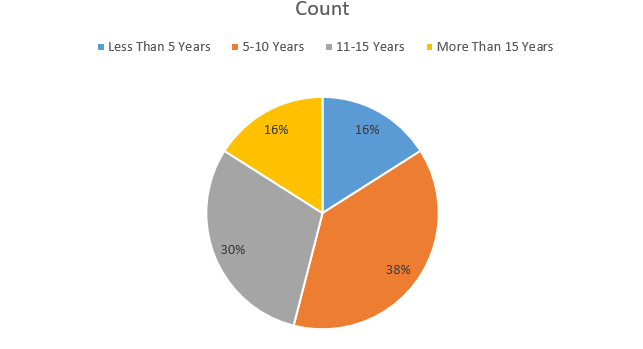
“The concentration in the 5-15 years range suggests respondents have witnessed multiple project cycles and are well-positioned to evaluate risk management effectiveness across different phases of Zamtel's infrastructure evolution.”
§ Examining the Effectiveness of Risk Management Processes in Enhancing Project Completion and Overall. Case Study of ZAMTEL 5G Digital Project > Fig 2 Years of Experience in Project Management
hedgedcorrelational- Asserted: passes — The authors put it forward as true.
- Checkable: passes — It can be checked against evidence.
- Load-bearing: fails — The paper’s conclusions may not depend on it.
- Based: passes — The paper gives a reason why it holds.
Probably not a substantial claim. The paper’s conclusions may not depend on it. It may state two separate claims as one.
What the paper did — it cites no source for this, so there is none to check. The quote shows it is in the paper.
In the paper
“All published articles arising will have no information that revealed the identity of any participants.”
§ Examining the Effectiveness of Risk Management Processes in Enhancing Project Completion and Overall. Case Study of ZAMTEL 5G Digital Project > Confidentiality of Data:
plain- Asserted: passes — The authors put it forward as true.
- Checkable: passes — It can be checked against evidence.
- Load-bearing: fails — The paper’s conclusions may not depend on it.
- Based: passes — The paper gives a reason why it holds.
Probably not a substantial claim. The paper’s conclusions may not depend on it.
In the paper
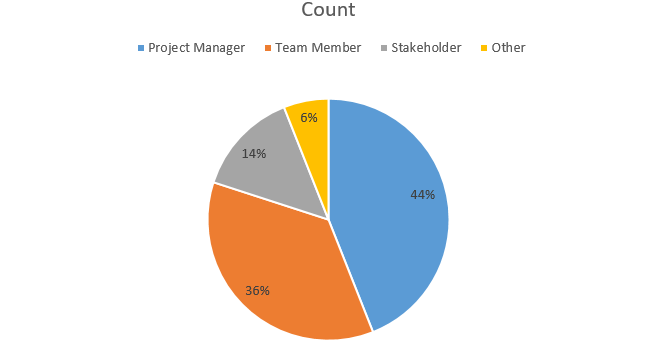
“The relatively high proportion of team members (36%) is particularly relevant given that the 2023 Auditor-General's report highlighted weaknesses in technical system management, including unpatched Oracle databases, suggesting that operational staff insights are crucial for understanding risk mitigation gaps at implementation levels.”
§ Examining the Effectiveness of Risk Management Processes in Enhancing Project Completion and Overall. Case Study of ZAMTEL 5G Digital Project > Fig 1 Distribution of Respondents by Role
What the sources say
- Not matchedcites Auditor-General
Couldn’t be matched to a paper in Crossref, so it can’t be checked.
hedgedcorrelational- Asserted: passes — The authors put it forward as true.
- Checkable: passes — It can be checked against evidence.
- Load-bearing: unclear — It is unclear whether the paper’s conclusions depend on it.
- Based: passes — The paper gives a reason why it holds.
It may state two separate claims as one.
- Not matched
What the paper did — it cites no source for this, so there is none to check. The quote shows it is in the paper.
In the paper
“All information will be given code numbers and no names were recorded.”
§ Examining the Effectiveness of Risk Management Processes in Enhancing Project Completion and Overall. Case Study of ZAMTEL 5G Digital Project > Confidentiality of Data:
plain- Asserted: passes — The authors put it forward as true.
- Checkable: passes — It can be checked against evidence.
- Load-bearing: fails — The paper’s conclusions may not depend on it.
- Based: passes — The paper gives a reason why it holds.
Probably not a substantial claim. The paper’s conclusions may not depend on it. It may state two separate claims as one.
A conclusion the paper draws from its own results — it cites no other source for it, so there is none to check. The quote shows it is in the paper.
In the paper
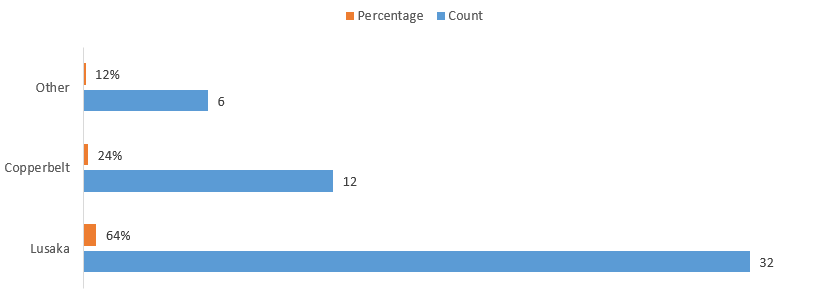
“The 24% Copperbelt representation reflects the region's economic significance as Zambia's mining heartland, where industrial connectivity demands drive telecommunications investment.”
§ Examining the Effectiveness of Risk Management Processes in Enhancing Project Completion and Overall. Case Study of ZAMTEL 5G Digital Project > Regional Distribution of Projects
plaindirect- Asserted: passes — The authors put it forward as true.
- Checkable: passes — It can be checked against evidence.
- Load-bearing: fails — The paper’s conclusions may not depend on it.
- Based: passes — The paper gives a reason why it holds.
Probably not a substantial claim. The paper’s conclusions may not depend on it.
In the paper
“Respect for persons will be taken into account in this research.According to Rebecca et al (2011), this principle requires that each individual subject in the study be treated as autonomous agents.”
§ Examining the Effectiveness of Risk Management Processes in Enhancing Project Completion and Overall. Case Study of ZAMTEL 5G Digital Project > Voluntariness:
What the sources say
- Not matchedcites Rebecca et al (2011)
Couldn’t be matched to a paper in Crossref, so it can’t be checked.
plain- Asserted: passes — The authors put it forward as true.
- Checkable: passes — It can be checked against evidence.
- Load-bearing: fails — The paper’s conclusions may not depend on it.
- Based: passes — The paper gives a reason why it holds.
Probably not a substantial claim. The paper’s conclusions may not depend on it.
- Not matched
In the paper
“only 13.5% of global studies focus here, indicating a research gap”
§ Examining the Effectiveness of Risk Management Processes in Enhancing Project Completion and Overall. Case Study of ZAMTEL 5G Digital Project > Background of the Study
What the sources say
- Not matchedcites Phiri & Tondolo, 2020
Couldn’t be matched to a paper in Crossref, so it can’t be checked.
hedged- Asserted: passes — The authors put it forward as true.
- Checkable: passes — It can be checked against evidence.
- Load-bearing: unclear — It is unclear whether the paper’s conclusions depend on it.
- Based: passes — The paper gives a reason why it holds.
It may state two separate claims as one.
- Not matched
The paper states this without a source or data behind it here, so there is nothing to check it against. The quote shows it is in the paper.
In the paper
“This distribution is considered appropriate for the study as project managers possess comprehensive oversight of risk management processes, while team members provide operational insights into implementation challenges.”
§ Examining the Effectiveness of Risk Management Processes in Enhancing Project Completion and Overall. Case Study of ZAMTEL 5G Digital Project > Fig 1 Distribution of Respondents by Role
plain- Asserted: passes — The authors put it forward as true.
- Checkable: passes — It can be checked against evidence.
- Load-bearing: passes — The paper’s conclusions depend on it.
- Based: passes — The paper gives a reason why it holds.
Probably not a substantial claim. It may state two separate claims as one.
What the paper did — it cites no source for this, so there is none to check. The quote shows it is in the paper.
In the paper
“All data collection procedures will adhere to ethical standards.”
§ Examining the Effectiveness of Risk Management Processes in Enhancing Project Completion and Overall. Case Study of ZAMTEL 5G Digital Project > Data Collection Method
plain- Asserted: passes — The authors put it forward as true.
- Checkable: passes — It can be checked against evidence.
- Load-bearing: fails — The paper’s conclusions may not depend on it.
- Based: passes — The paper gives a reason why it holds.
Probably not a substantial claim. The paper’s conclusions may not depend on it.
A conclusion the paper draws from its own results — it cites no other source for it, so there is none to check. The quote shows it is in the paper.
In the paper
“gaps in maturity and localization hinder full efficacy in Zambia's uncertain environment”
§ Examining the Effectiveness of Risk Management Processes in Enhancing Project Completion and Overall. Case Study of ZAMTEL 5G Digital Project > Abstract
plaindirectSingle case- Asserted: passes — The authors put it forward as true.
- Checkable: passes — It can be checked against evidence.
- Load-bearing: passes — The paper’s conclusions depend on it.
- Based: passes — The paper gives a reason why it holds.
It may state two separate claims as one.
- Rests on an assumption: The ZAMTEL 5G Digital Project is representative of IT projects in Zambia's IT sector.
- Rests on an assumption: Survey respondents' self-reported perceptions accurately reflect actual risk management practices and project outcomes.
- Rests on an assumption: The observed association between risk management practices and project completion is causal.
None of the sources cited for this claim could be matched to a paper in Crossref, so there is nothing to check it against.
In the paper
“The predominance of managers aligns with purposive sampling strategies employed in similar Zambian studies (Shimwambwa, 2020; Chileshe, 2019), where decision-makers' experiences are prioritized for evaluating strategic processes like risk management.”
§ Examining the Effectiveness of Risk Management Processes in Enhancing Project Completion and Overall. Case Study of ZAMTEL 5G Digital Project > Fig 1 Distribution of Respondents by Role
What the sources say
- Not matchedcites Shimwambwa, 2020
Couldn’t be matched to a paper in Crossref, so it can’t be checked.
- Not matchedcites Chileshe, 2019
Couldn’t be matched to a paper in Crossref, so it can’t be checked.
plaincorrelational- Asserted: passes — The authors put it forward as true.
- Checkable: passes — It can be checked against evidence.
- Load-bearing: fails — The paper’s conclusions may not depend on it.
- Based: passes — The paper gives a reason why it holds.
Probably not a substantial claim. The paper’s conclusions may not depend on it.
- Not matched
What the paper did — it cites no source for this, so there is none to check. The quote shows it is in the paper.
In the paper
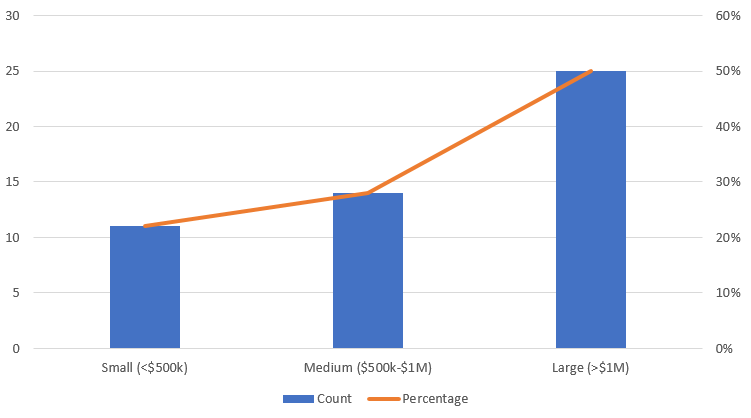
“Half of the respondents (50%) are involved in large-scale projects with budgets exceeding US$1 million, while 28% work on medium-scale projects (US$500,000-$1 million), and 22% on small-scale projects (less than US$500,000).”
§ Examining the Effectiveness of Risk Management Processes in Enhancing Project Completion and Overall. Case Study of ZAMTEL 5G Digital Project > Fig 3 Typical Scale of Projects by Budget
plain- Asserted: passes — The authors put it forward as true.
- Checkable: passes — It can be checked against evidence.
- Load-bearing: unclear — It is unclear whether the paper’s conclusions depend on it.
- Based: passes — The paper gives a reason why it holds.
It may state two separate claims as one.
In the paper
“To protect sensitive information, all responses will be anonymized (Resnik, 2018).”
§ Examining the Effectiveness of Risk Management Processes in Enhancing Project Completion and Overall. Case Study of ZAMTEL 5G Digital Project > Data Collection Method
What the sources say
- Not matchedcites Resnik, 2018
Couldn’t be matched to a paper in Crossref, so it can’t be checked.
plain- Asserted: passes — The authors put it forward as true.
- Checkable: passes — It can be checked against evidence.
- Load-bearing: fails — The paper’s conclusions may not depend on it.
- Based: passes — The paper gives a reason why it holds.
Probably not a substantial claim. The paper’s conclusions may not depend on it.
- Not matched
In the paper
“In the context of Zamtel's 5G project, the 44% manager representation reflects the organizational structure where project leadership is responsible for navigating complex technical and financial risks documented in parliamentary reviews (Parliament of Zambia, 2019).”
§ Examining the Effectiveness of Risk Management Processes in Enhancing Project Completion and Overall. Case Study of ZAMTEL 5G Digital Project > Fig 1 Distribution of Respondents by Role
What the sources say
- Not matchedcites Parliament of Zambia, 2019
Couldn’t be matched to a paper in Crossref, so it can’t be checked.
plaincorrelational- Asserted: passes — The authors put it forward as true.
- Checkable: passes — It can be checked against evidence.
- Load-bearing: fails — The paper’s conclusions may not depend on it.
- Based: passes — The paper gives a reason why it holds.
Probably not a substantial claim. The paper’s conclusions may not depend on it.
- Not matched
What the paper did — it cites no source for this, so there is none to check. The quote shows it is in the paper.
In the paper
“All data was transferred to a password protected personal computer.”
§ Examining the Effectiveness of Risk Management Processes in Enhancing Project Completion and Overall. Case Study of ZAMTEL 5G Digital Project > Confidentiality of Data:
plain- Asserted: passes — The authors put it forward as true.
- Checkable: passes — It can be checked against evidence.
- Load-bearing: fails — The paper’s conclusions may not depend on it.
- Based: passes — The paper gives a reason why it holds.
Probably not a substantial claim. The paper’s conclusions may not depend on it.
In the paper
“The 2017 expansion plan targeting over 1,000 towers included rural and under-served areas (Ecofin Agency, 2017), suggesting that Copperbelt deployments form part of broader coverage objectives beyond Lusaka.”
§ Examining the Effectiveness of Risk Management Processes in Enhancing Project Completion and Overall. Case Study of ZAMTEL 5G Digital Project > Regional Distribution of Projects
What the sources say
- Not matchedcites Ecofin Agency, 2017
Couldn’t be matched to a paper in Crossref, so it can’t be checked.
plain- Asserted: passes — The authors put it forward as true.
- Checkable: passes — It can be checked against evidence.
- Load-bearing: fails — The paper’s conclusions may not depend on it.
- Based: passes — The paper gives a reason why it holds.
Probably not a substantial claim. The paper’s conclusions may not depend on it.
- Not matched
None of the sources cited for this claim could be matched to a paper in Crossref, so there is nothing to check it against.
In the paper
“this process comprises seven key processes in its latest edition, but traditionally emphasizes six core steps for effective risk handling”
§ Examining the Effectiveness of Risk Management Processes in Enhancing Project Completion and Overall. Case Study of ZAMTEL 5G Digital Project > Theoretical/Conceptual Framework
What the sources say
- Not matchedcites Donald, 2021
Couldn’t be matched to a paper in Crossref, so it can’t be checked.
- Not matchedcites Abbaspour, 2013
Couldn’t be matched to a paper in Crossref, so it can’t be checked.
plain- Asserted: passes — The authors put it forward as true.
- Checkable: passes — It can be checked against evidence.
- Load-bearing: fails — The paper’s conclusions may not depend on it.
- Based: passes — The paper gives a reason why it holds.
Probably not a substantial claim. The paper’s conclusions may not depend on it. It may state two separate claims as one.
- Not matched
The paper states this without a source or data behind it here, so there is nothing to check it against. The quote shows it is in the paper.
In the paper
“The inclusion of stakeholders ensures that external perspectives on risk impacts are captured.”
§ Examining the Effectiveness of Risk Management Processes in Enhancing Project Completion and Overall. Case Study of ZAMTEL 5G Digital Project > Fig 1 Distribution of Respondents by Role
plaindirect- Asserted: passes — The authors put it forward as true.
- Checkable: fails — It may be too vague to check against evidence.
- Load-bearing: fails — The paper’s conclusions may not depend on it.
- Based: passes — The paper gives a reason why it holds.
Probably not a substantial claim. It may be too vague to check against evidence. The paper’s conclusions may not depend on it.
In the paper
“effective risk management can reduce project costs by an average of 14% and accelerate completion times by 10%”
§ Examining the Effectiveness of Risk Management Processes in Enhancing Project Completion and Overall. Case Study of ZAMTEL 5G Digital Project > Background of the Study
What the sources say
- Not matchedcites Banti & Mishra, 2025
Couldn’t be matched to a paper in Crossref, so it can’t be checked.
plaindirect- Asserted: passes — The authors put it forward as true.
- Checkable: passes — It can be checked against evidence.
- Load-bearing: fails — The paper’s conclusions may not depend on it.
- Based: passes — The paper gives a reason why it holds.
Probably not a substantial claim. The paper’s conclusions may not depend on it. It may state two separate claims as one.
- Not matched
What the paper did — it cites no source for this, so there is none to check. The quote shows it is in the paper.
In the paper
“Despite these limitations, the use of triangulated methods, robust sampling procedures, and advanced analytical techniques will enhance the validity of the study, ensuring that its findings contribute meaningfully to the body of knowledge on project risk management in Zambia and beyond.”
§ Examining the Effectiveness of Risk Management Processes in Enhancing Project Completion and Overall. Case Study of ZAMTEL 5G Digital Project > Limitations of the Study
plaindirect- Asserted: passes — The authors put it forward as true.
- Checkable: fails — It may be too vague to check against evidence.
- Load-bearing: passes — The paper’s conclusions depend on it.
- Based: fails — The paper may give no reason why it holds.
Probably not a substantial claim. It may be too vague to check against evidence. The paper may give no reason why it holds.
A conclusion the paper draws from its own results — it cites no other source for it, so there is none to check. The quote shows it is in the paper.
In the paper
“Second, the study is and will be limited to Zambia, and while the findings provide important contextual insights, their generalizability to other countries may be limited.”
§ Examining the Effectiveness of Risk Management Processes in Enhancing Project Completion and Overall. Case Study of ZAMTEL 5G Digital Project > Limitations of the Study
hedged- Asserted: passes — The authors put it forward as true.
- Checkable: passes — It can be checked against evidence.
- Load-bearing: fails — The paper’s conclusions may not depend on it.
- Based: passes — The paper gives a reason why it holds.
Probably not a substantial claim. The paper’s conclusions may not depend on it. It may state two separate claims as one.
What the paper did — it cites no source for this, so there is none to check. The quote shows it is in the paper.
In the paper
“The findings indicate that project managers constituted the largest proportion of respondents (44%), followed by team members (36%), stakeholders including clients and sponsors (14%), and others such as consultants and technical specialists (6%).”
§ Examining the Effectiveness of Risk Management Processes in Enhancing Project Completion and Overall. Case Study of ZAMTEL 5G Digital Project > Fig 1 Distribution of Respondents by Role
hedged- Asserted: passes — The authors put it forward as true.
- Checkable: passes — It can be checked against evidence.
- Load-bearing: unclear — It is unclear whether the paper’s conclusions depend on it.
- Based: passes — The paper gives a reason why it holds.
It may state two separate claims as one.
What the paper did — it cites no source for this, so there is none to check. The quote shows it is in the paper.
In the paper
“The majority of respondents (64%) are involved in projects primarily located in Lusaka, Zambia's capital and economic hub, followed by the Copperbelt region (24%), and other regions collectively accounting for 12%.”
§ Examining the Effectiveness of Risk Management Processes in Enhancing Project Completion and Overall. Case Study of ZAMTEL 5G Digital Project > Regional Distribution of Projects
plain- Asserted: passes — The authors put it forward as true.
- Checkable: passes — It can be checked against evidence.
- Load-bearing: fails — The paper’s conclusions may not depend on it.
- Based: passes — The paper gives a reason why it holds.
Probably not a substantial claim. The paper’s conclusions may not depend on it. It may state two separate claims as one.
What the paper did — it cites no source for this, so there is none to check. The quote shows it is in the paper.
In the paper
“Data were collected from 50 respondents comprising project managers, team members, and stakeholders involved in Zamtel's 5G rollout and related IT projects across Zambia.”
§ Examining the Effectiveness of Risk Management Processes in Enhancing Project Completion and Overall. Case Study of ZAMTEL 5G Digital Project > OF FINDINGS
plainn = 50- Asserted: passes — The authors put it forward as true.
- Checkable: passes — It can be checked against evidence.
- Load-bearing: passes — The paper’s conclusions depend on it.
- Based: passes — The paper gives a reason why it holds.
Probably not a substantial claim.
- Rests on an assumption: The 50 survey respondents and 25 interviewees are representative of professionals involved in Zamtel's 5G Digital Project and related IT projects in Zambia.
What the paper did — it cites no source for this, so there is none to check. The quote shows it is in the paper.
In the paper
“To enhance validity and reliability, triangulation will be employed at both the data and methodological levels.”
§ Examining the Effectiveness of Risk Management Processes in Enhancing Project Completion and Overall. Case Study of ZAMTEL 5G Digital Project > Triangulation
plaindirect- Asserted: passes — The authors put it forward as true.
- Checkable: passes — It can be checked against evidence.
- Load-bearing: passes — The paper’s conclusions depend on it.
- Based: passes — The paper gives a reason why it holds.
Probably not a substantial claim.
In the paper
“the 35 failed 5G sites reported in the 2023 Auditor-General's Parastatal Report”
§ Examining the Effectiveness of Risk Management Processes in Enhancing Project Completion and Overall. Case Study of ZAMTEL 5G Digital Project > OF FINDINGS
What the sources say
- Not matchedcites Auditor-General
Couldn’t be matched to a paper in Crossref, so it can’t be checked.
plain- Asserted: passes — The authors put it forward as true.
- Checkable: passes — It can be checked against evidence.
- Load-bearing: fails — The paper’s conclusions may not depend on it.
- Based: passes — The paper gives a reason why it holds.
Probably not a substantial claim. The paper’s conclusions may not depend on it.
- Not matched
None of the sources cited for this claim could be matched to a paper in Crossref, so there is nothing to check it against.
In the paper
“the first 4G/5G site launched in May 2025 was in Chalala, Lusaka (ITWeb Africa, 2025; TechAfrica News, 2025).”
§ Examining the Effectiveness of Risk Management Processes in Enhancing Project Completion and Overall. Case Study of ZAMTEL 5G Digital Project > Regional Distribution of Projects
What the sources say
- Not matchedcites ITWeb Africa, 2025
Couldn’t be matched to a paper in Crossref, so it can’t be checked.
- Not matchedcites TechAfrica News, 2025
Couldn’t be matched to a paper in Crossref, so it can’t be checked.
plain- Asserted: passes — The authors put it forward as true.
- Checkable: passes — It can be checked against evidence.
- Load-bearing: fails — The paper’s conclusions may not depend on it.
- Based: passes — The paper gives a reason why it holds.
Probably not a substantial claim. The paper’s conclusions may not depend on it.
- Not matched
What the paper did — it cites no source for this, so there is none to check. The quote shows it is in the paper.
In the paper
“This distribution indicates a predominantly experienced sample, with 84% having at least 5 years of experience, which satisfies the inclusion criteria specified in the methodology requiring minimum five years of professional experience.”
§ Examining the Effectiveness of Risk Management Processes in Enhancing Project Completion and Overall. Case Study of ZAMTEL 5G Digital Project > Fig 2 Years of Experience in Project Management
hedged- Asserted: passes — The authors put it forward as true.
- Checkable: passes — It can be checked against evidence.
- Load-bearing: unclear — It is unclear whether the paper’s conclusions depend on it.
- Based: passes — The paper gives a reason why it holds.
It may state two separate claims as one.
None of the sources cited for this claim have been checked yet.
In the paper
“This aligns with broader Zambian trends of low maturity in risk management, where only 15% of organizations achieve advanced levels, as noted in prior literature.”
§ Examining the Effectiveness of Risk Management Processes in Enhancing Project Completion and Overall. Case Study of ZAMTEL 5G Digital Project > Conclusion
plain- Asserted: passes — The authors put it forward as true.
- Checkable: passes — It can be checked against evidence.
- Load-bearing: fails — The paper’s conclusions may not depend on it.
- Based: fails — The paper may give no reason why it holds.
Probably not a substantial claim. The paper’s conclusions may not depend on it. The paper may give no reason why it holds.
What the paper did — it cites no source for this, so there is none to check. The quote shows it is in the paper.
In the paper
“The research will not inflict any harm or injury to the study participants.”
§ Examining the Effectiveness of Risk Management Processes in Enhancing Project Completion and Overall. Case Study of ZAMTEL 5G Digital Project > Non-Maleficence to Participants:
plain- Asserted: passes — The authors put it forward as true.
- Checkable: passes — It can be checked against evidence.
- Load-bearing: fails — The paper’s conclusions may not depend on it.
- Based: fails — The paper may give no reason why it holds.
Probably not a substantial claim. The paper’s conclusions may not depend on it. The paper may give no reason why it holds.
What the paper did — it cites no source for this, so there is none to check. The quote shows it is in the paper.
In the paper
“The data obtained from the respondents will be accessible only to the researcher and her supervisor.”
§ Examining the Effectiveness of Risk Management Processes in Enhancing Project Completion and Overall. Case Study of ZAMTEL 5G Digital Project > Confidentiality of Data:
plain- Asserted: passes — The authors put it forward as true.
- Checkable: passes — It can be checked against evidence.
- Load-bearing: fails — The paper’s conclusions may not depend on it.
- Based: passes — The paper gives a reason why it holds.
Probably not a substantial claim. The paper’s conclusions may not depend on it.
What the paper did — it cites no source for this, so there is none to check. The quote shows it is in the paper.
In the paper
“Participants will be provided with informed consent forms outlining the purpose of the study, confidentiality assurances, and their right to withdraw at any stage.”
§ Examining the Effectiveness of Risk Management Processes in Enhancing Project Completion and Overall. Case Study of ZAMTEL 5G Digital Project > Data Collection Method
plain- Asserted: passes — The authors put it forward as true.
- Checkable: passes — It can be checked against evidence.
- Load-bearing: fails — The paper’s conclusions may not depend on it.
- Based: passes — The paper gives a reason why it holds.
Probably not a substantial claim. The paper’s conclusions may not depend on it.
What the paper did — it cites no source for this, so there is none to check. The quote shows it is in the paper.
In the paper
“To accommodate possible non-response, a minimum of 350 completed surveys was targeted.”
§ Examining the Effectiveness of Risk Management Processes in Enhancing Project Completion and Overall. Case Study of ZAMTEL 5G Digital Project > Sample Size Determination
plain- Asserted: passes — The authors put it forward as true.
- Checkable: passes — It can be checked against evidence.
- Load-bearing: fails — The paper’s conclusions may not depend on it.
- Based: passes — The paper gives a reason why it holds.
Probably not a substantial claim. The paper’s conclusions may not depend on it.
What the paper did — it cites no source for this, so there is none to check. The quote shows it is in the paper.
In the paper
“The proposal will be subjected to ethical clearance before data collection.”
§ Examining the Effectiveness of Risk Management Processes in Enhancing Project Completion and Overall. Case Study of ZAMTEL 5G Digital Project > Ethical considerations
plain- Asserted: passes — The authors put it forward as true.
- Checkable: passes — It can be checked against evidence.
- Load-bearing: fails — The paper’s conclusions may not depend on it.
- Based: fails — The paper may give no reason why it holds.
Probably not a substantial claim. The paper’s conclusions may not depend on it. The paper may give no reason why it holds.
None of the sources cited for this claim could be matched to a paper in Crossref, so there is nothing to check it against.
In the paper
“Specifically, Zamtel's 2025-2029 strategic plan targets deployment of up to 1,400 sites (Africa-Press, 2025), building on the 2017 US$280 million investment framework (Ecofin Agency, 2017), clearly positioning the 5G initiative within the large-scale category.”
§ Examining the Effectiveness of Risk Management Processes in Enhancing Project Completion and Overall. Case Study of ZAMTEL 5G Digital Project > Fig 3 Typical Scale of Projects by Budget
What the sources say
- Not matchedcites Africa-Press, 2025
Couldn’t be matched to a paper in Crossref, so it can’t be checked.
- Not matchedcites Ecofin Agency, 2017
Couldn’t be matched to a paper in Crossref, so it can’t be checked.
boosted- Asserted: passes — The authors put it forward as true.
- Checkable: passes — It can be checked against evidence.
- Load-bearing: unclear — It is unclear whether the paper’s conclusions depend on it.
- Based: passes — The paper gives a reason why it holds.
It may state two separate claims as one.
- Not matched
In the paper
“many projects in IT, construction and infrastructure suffering from ineffective risk handling, leading to frequent abandonments, disputes, and economic losses”
§ Examining the Effectiveness of Risk Management Processes in Enhancing Project Completion and Overall. Case Study of ZAMTEL 5G Digital Project > Statement of the Problem
What the sources say
- Not matchedcites Ngosa & Chibomba, 2025
Couldn’t be matched to a paper in Crossref, so it can’t be checked.
plaindirect- Asserted: passes — The authors put it forward as true.
- Checkable: passes — It can be checked against evidence.
- Load-bearing: passes — The paper’s conclusions depend on it.
- Based: passes — The paper gives a reason why it holds.
It may state two separate claims as one.
- Not matched
The paper relies on this without support.
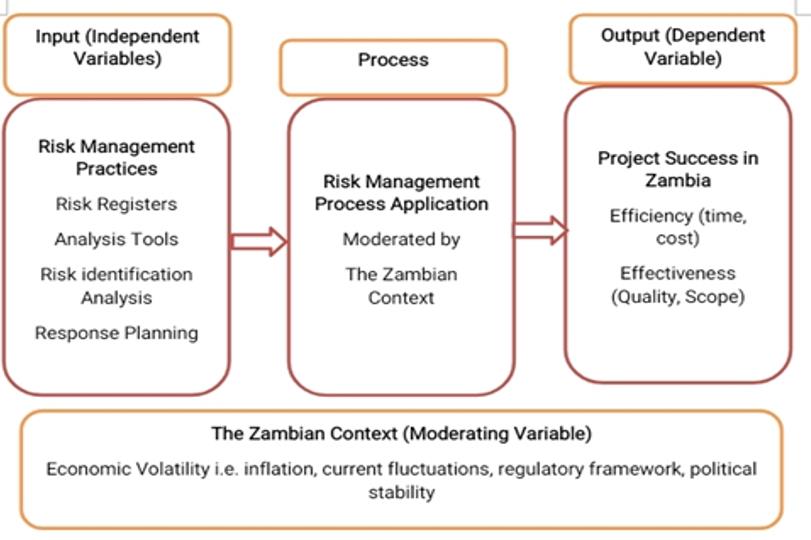
The ZAMTEL 5G Digital Project is representative of IT projects in Zambia's IT sector.
“using ZAMTEL's 5G Digital Project as a case study”
The paper relies on this without support.
Survey respondents' self-reported perceptions accurately reflect actual risk management practices and project outcomes.
“The quantitative component of the study will rely on structured surveys designed to measure the prevalence and statistical relationship between risk management practices and project success.”
The paper relies on this without support.
The observed association between risk management practices and project completion is causal.
“These practices positively affect completion by reducing delays (mean 4.2) and cost overruns (mean 4.0)”
The paper relies on this without support.
The 50 survey respondents and 25 interviewees are representative of professionals involved in Zamtel's 5G Digital Project and related IT projects in Zambia.
“Data were collected from 50 respondents comprising project managers, team members, and stakeholders involved in Zamtel's 5G rollout and related IT projects across Zambia.”
Self-check
Percentages, sums and reported differences re-computed from the paper’s own numbers.
Each contradiction between two passages listed here was confirmed by an independent check.
Rated major: it would touch a result — a value a result rests on, reported and recomputed p-values on opposite sides of the significance level, two passages that conflict with no sign which is right, or a cited work retracted before this paper was published.
In the paper
§ Examining the Effectiveness of Risk Management Processes in Enhancing Project Completion and Overall. Case Study of ZAMTEL 5G Digital Project > Fig 2 Years of Experience in Project Management
“Respondents with less than 5 years and those with more than 15 years each constituted 16% of the sample.”
§ Examining the Effectiveness of Risk Management Processes in Enhancing Project Completion and Overall. Case Study of ZAMTEL 5G Digital Project > Target Population
“The inclusion criteria requires participants to have a minimum of five years of professional experience in project management”
Rated minor: it would not touch a result — a value no result rests on, a p-value that stays on the same side of the significance level, or a conflict that is clerical, resolved elsewhere in the paper, or outside its own findings.
In the paper
§ Examining the Effectiveness of Risk Management Processes in Enhancing Project Completion and Overall. Case Study of ZAMTEL 5G Digital Project > Theoretical/Conceptual Framework
“this process comprises seven key processes in its latest edition, but traditionally emphasizes six core steps for effective risk handling:”
§ Examining the Effectiveness of Risk Management Processes in Enhancing Project Completion and Overall. Case Study of ZAMTEL 5G Digital Project > Theoretical/Conceptual Framework
“(6) implement risk responses, executing the agreed-upon plans with assigned owners; and (7) monitor risks”
Rated minor: it would not touch a result — a value no result rests on, a p-value that stays on the same side of the significance level, or a conflict that is clerical, resolved elsewhere in the paper, or outside its own findings.
In the paper
§ Examining the Effectiveness of Risk Management Processes in Enhancing Project Completion and Overall. Case Study of ZAMTEL 5G Digital Project > Target Population
“The target population for this study will consist of project managers, project team members, consultants, and other stakeholders working within Zambia's IT and Construction sectors.”
§ Examining the Effectiveness of Risk Management Processes in Enhancing Project Completion and Overall. Case Study of ZAMTEL 5G Digital Project > Target Population
“The target population comprised vulnerable small-scale farmers aged 30-70 in Nakonde District, including elderly individuals, farmers with chronic conditions, and pregnant women.”
Citations
Cites
Using thematic analysis in psychology
Braun, V., & Clarke, V. (2006) · Qualitative Research in Psychology · doi:10.1191/1478088706qp063oa · Cited by 194,414
Comparison of convenience sampling and purposive sampling
Etikan, I. (2016) · American Journal of Theoretical and Applied Statistics · doi:10.11648/j.ajtas.20160501.11 · Cited by 11,412
Risk assessment and risk management: Review of recent advances on their foundation
Aven, T. (2016) · European Journal of Operational Research · doi:10.1016/j.ejor.2015.12.023 · Cited by 1,713
The Impact of Risk Management Practices on the Performance of Construction Projects
ALSaadi, N., & Norhayatizakuan, N. (2021) · Studies of Applied Economics · doi:10.25115/eea.v39i4.4164 · Cited by 16
Tembo-Silungwe, C. K., & Khatleli, N. (2017) · Acta Structilia · doi:10.18820/24150487/as24i2.1 · Cited by 3
Musosha, C., & Kelvin, C. (2025) · International Journal of Humanities and Education Research · doi:10.33545/26649799.2025.v7.i1b.147
Analyzing Risk Management in Procurement Processes: A Case Study of Chinsali-Nakonde Road
Ngosa, S., & Chibomba, D. K. (2025) · International Journal of Advanced Multidisciplinary Research and Studies · doi:10.62225/2583049x.2025.5.2.3806
[1]. Resnik, D.B., (2018). Research ethics: A philosophical guide to the responsible conduct of research. Cham: Springer.
(n.d.)
Unresolved[3]. Abbaspour, A., (2013). Assessing the role of project risk, risk level on project success and their interaction. International Journal of Engineering Research & Technology (IJERT), 2(7), pp.1830-1834.
(n.d.)
Unresolved[4]. Auditor-General. (2025). Parastatal Report 2023. Republic of Zambia.
(n.d.)
Unresolved[5]. Ecofin Agency. (2017). Zamtel invests $280 mln in the expansion of its networks in rural areas.
(n.d.)
Unresolved[6]. IDC Zambia. (2025). Zamtel’s 4G and 5G expansion project: A bold step in Zambia’s journey towards a digitally empowered future. IDC.
(n.d.)
Unresolved[8]. Banti, R. and Mishra, R., (2025). Investigate the impact Resnik, D.B., (2018). Research ethics: A philosophical guide to the responsible conduct of research. Cham: Springer.
(n.d.)
Unresolved[10]. Bwalya, P.C. and Maseba, L., (2025). Exploring risk management practices as tools for management control in uncertain environments at the Copperbelt University School of Medicine in Ndola. International Journal of Multidisciplinary Research and Growth Evaluation, 06(04), pp.747–750.
(n.d.)
Unresolved[11]. Chileshe, M., (2019). Development of a risk management framework for PPP public market infrastructure projects in Zambia. Lusaka: University of Zambia.
(n.d.)
Unresolved[12]. Shimwambwa, S.M., (2020). Determination of a risk management framework for the Zambian construction industry. Lusaka: University of Zambia.
(n.d.)
Unresolved[13]. Sikanyika, M. and Kilvin, C., (2025). Analyzing the effectiveness of risk management strategies in procurement processes in construction companies in Lusaka, Zambia. International Journal of Innovative Science and Research Technology, 10(2), pp.1532–1547.
(n.d.)
Unresolved[15]. Phiri, J. and Tondolo, V., (2020). Risk management in Zambian construction projects: A case of Lusaka-based contractors. International Journal of Construction Management, 20(3), pp.213–223.
(n.d.)
Unresolved[17]. Mwanaumo, E.M., Nsefu, M.K., Mambwe, M. and Lindunda, M.M., (2020). Risk analysis and management in public private partnerships of urban markets in Lusaka, Zambia. Proceedings of the 2nd African International Conference on Industrial Engineering and Operations Management, Harare, Zimbabwe, Dec
(n.d.)
Unresolved[19]. Project Management Institute (PMI) Zambia Chapter, (2023). Annual membership report. Lusaka: PMI Zambia.
(n.d.)
Unresolved[21]. Field, A., (2018). Discovering statistics using IBM SPSS statistics. 5th ed. London: Sage.
(n.d.)
Unresolved[22]. Project Management Institute (PMI), (2021). A guide to the project management body of knowledge (PMBOK® Guide). 7th ed. Newtown Square, PA: Project Management Institute.
(n.d.)
Unresolved
Cited by
Still being checked.
Metadata
- Authors
- Samboko, R., & Kazembe, L.
- Affiliations
- Information and Communications University (ZM)
- Venue
- International Journal of Innovative Science and Research Technology
- Published
- 2026-01-24
- Pages
- 1835
- ISSN
- 2456-2165 (ISSN-L)
- OpenAlex
- W7125599536
- Semantic Scholar
- 85114ead146d2c048f5de4aefcc008ed7f0a9117
- Cited by
- 0
- References
- 22
- FWCI
- 0.00
- Type
- journal article
- Language
- en
- Open access
- diamond
- doi.org
- Licence
- cc-by-nc
- Locations
- International Journal of Innovative Science and Research Technology (IJISRT) (publishedVersion, cc-by-nc)
- Topics
- Social Sciences › Decision Sciences › Management Science and Operations Research › Construction Project Management and Performance
- Physical Sciences › Computer Science › Information Systems › Software Engineering Techniques and Practices
- Social Sciences › Economics, Econometrics and Finance › Finance › Capital Investment and Risk Analysis
- Keywords
- project risk management, IT project success, project implementation, risk identification, stakeholder engagement, cost overruns, project delays, leadership, organizational culture, political instability, risk monitoring, PMBOK, prospect theory
About these checks
Registry, retraction, Cites and statistics results are computed, not judged, with one exception: a printed reference that no index lists is read once by a model before it counts as a citation error. Claims are extracted by a model and kept only when their quote appears verbatim in the text; each cited source is then checked, with a model’s help, for whether it says what the claim relies on. Those verdicts can be wrong — read the claim’s quote and the cited source before relying on one.
A language model drew the claims from the paper on 2026-11-07, under version 3 of the claim definition (model deepseek-v4.1-flash, prompt extract-v3).
A second model labelled each claim on 2026-11-07 (model jev-1.13-20260917, definition revision gold-guideline-v0.2).
Cited sources are checked with a language model’s help (gpt-6-sol).
Statistics and arithmetic are recomputed, not judged.
Confidence bands are shown only for fields calibrated on our annotated test set. None is calibrated yet, so no band is shown.
What counts as a claim ›How we measure confidence ›How we check this ›
Are you an author, or do you see a problem with this page? Request a review
