

The DOI matches its Crossref record; the references it cites are not checked yet.
Lidocaine attenuates CFA‑induced inflammatory pain in rats by regulating the MAPK/ERK/NF‑κB signaling pathway
Open accessAbstract
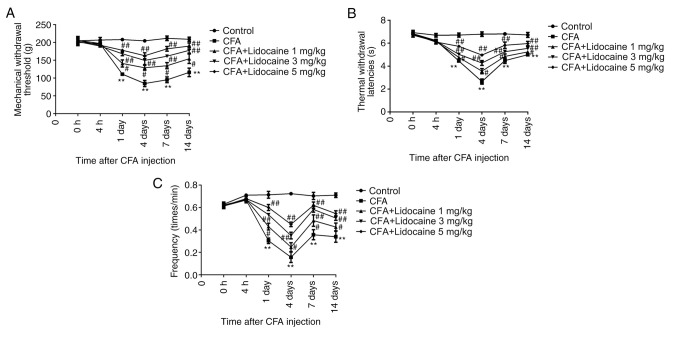
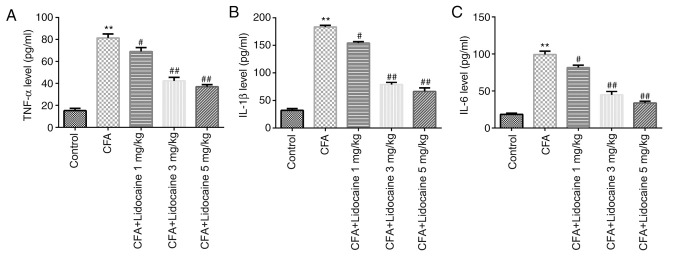
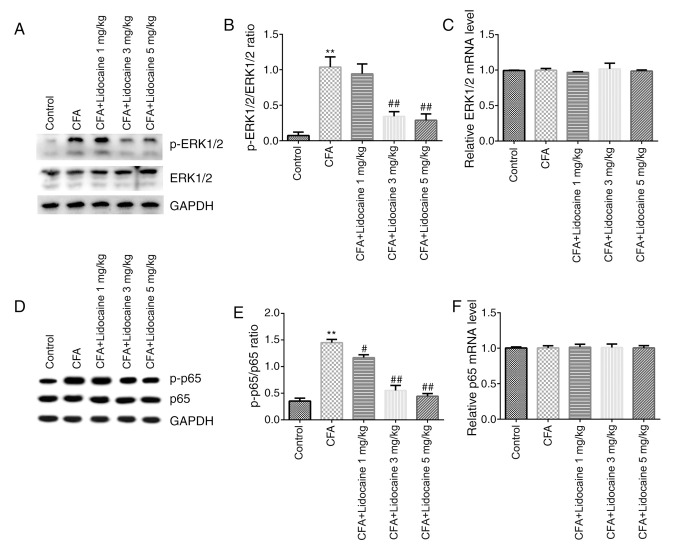
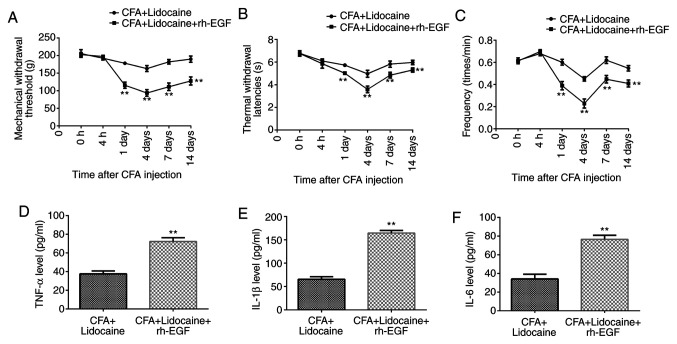
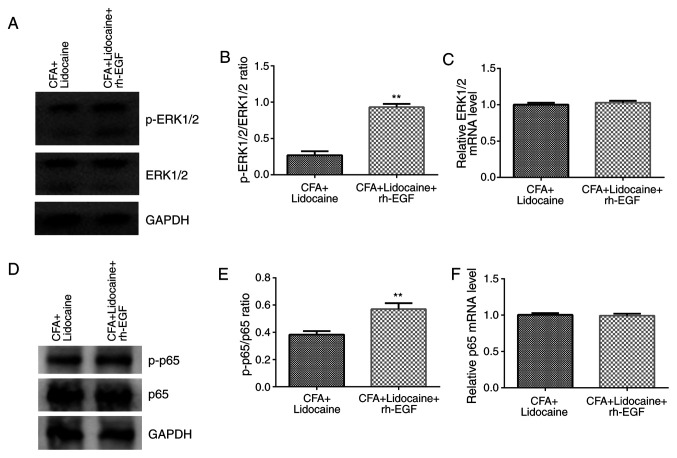
Lidocaine is a commonly used local anesthetic that also confers analgesic effects, resistance to hyperalgesia and anti-inflammatory properties. The present study aimed to explore the effects of lidocaine on complete Freund's adjuvant (CFA)-induced inflammatory pain. In the present study, rats were subcutaneously injected with CFA to investigate the molecular mechanisms associated with lidocaine in an inflammation-induced pain model. Firstly, CFA was subcutaneously injected into the paws of Sprague-Dawley rats, following which lidocaine or saline and the ERK agonist recombinant human epidermal growth factor (rh-EGF) were injected via the tail vein. Rat behavior was then assessed at 0 and 4 h, 1, 4, 7 and 14 days after CFA treatment. Proinflammatory cytokine levels in the serum were measured using ELISA. Western blotting was performed to detect the protein levels of phosphorylated (p)-ERK1/2, ERK1/2 and NF-κB subunits p-p65 and p65. Reverse transcription-quantitative PCR was used to measure the mRNA expression of ERK1/2 and p65 in rat spinal cord tissues. The results showed that injection of CFA significantly reduced the mechanical withdrawal threshold, thermal withdrawal latency and the frequency of responses to cold stimulation in rats, whilst promoting tumor necrosis factor-α, interleukin (IL)-1β, IL-6 levels in addition to ERK1/2, p65 protein phosphorylation. These effects were alleviated by lidocaine treatment. Furthermore, treatment with rh-EGF reversed the protective effects of lidocaine on inflammatory pain caused by CFA. In conclusion, lidocaine inhibits the inflammatory response and pain through the MAPK/ERK/NF-κB pathway in a rat model of pain induced by CFA.
Overview
The claims and statistics of this paper haven’t been checked yet.
Run the check — free, no account needed. It reads the open-access text and checks the sources it cites.
Integrity signals
Registry
Cites
Statistics
Figures
Verification
Claims the paper makes
The claims and statistics of this paper haven’t been checked yet.
Run the check — free, no account needed. It reads the open-access text and checks the sources it cites.
Claims other papers make about this one
Each is checked against this paper’s own text: does it say what the citing paper says it does?
The cited source says what the claim attributes to it.
In the citing paper
“Results revealed that the main signaling pathways involved in the targets of PⅡ acting on pain were associated with inflammation (Saban et al., 2011, Park et al., 2011, Zhang et al., 2021, Lai et al., 2017, Yang et al., 2022, Dai et al., 2020).”
From Picroside Ⅱ attenuates neuropathic pain by regulating inflammation and spinal excitatory synaptic transmission (2024) · cites this paper as Zhang et al., 2021
Self-check
Percentages, sums and reported differences re-computed from the paper’s own numbers.
The self-check needs the paper’s full text.
Citations
The citation lists haven’t been fetched yet
References 44 · Cited by 18
Research works printed but not linked: 40
- Swieboda, 2013, Assessment of pain: Types, mechanism and treatment, Ann Agric Environ Med, 1, 2
- Grace, 2014, Pathological pain and the neuroimmune interface, Nat Rev Immunol, 14, 217, 10.1038/nri3621 · DOI
- Fang, 2013, Intervention of electroacupuncture on spinal p38 mapk/atf-2/vr-1 pathway in treating inflammatory pain induced by CFA in rats, Mol Pain, 9, 10.1186/1744-8069-9-13 · DOI
- Del Giorno, 2017, Assessment of chronic pain and access to pain therapy: A cross-sectional population-based study, J Pain Res, 10, 2577, 10.2147/JPR.S136292 · DOI
- Zhang, 2006, Gaultherin, a natural salicylate derivative from gaultheria yunnanensis: Towards a better non-steroidal anti-inflammatory drug, Eur J Pharmacol, 530, 166, 10.1016/j.ejphar.2005.11.030 · DOI
- Chamaraux-Tran, 2017, The amide local anesthetic lidocaine in cancer surgery-potential antimetastatic effects and preservation of immune cell function? A narrative review, Front Med (Lausanne), 4, 10.3389/fmed.2017.00235 · DOI
- Johnson, 2018, Effect of perioperative lidocaine on metastasis after sevoflurane or ketamine-xylazine anaesthesia for breast tumour resection in a murine model, Br J Anaesth, 121, 76, 10.1016/j.bja.2017.12.043 · DOI
- Lauretti, 2008, Mechanisms of analgesia of intravenous lidocaine, Rev Bras Anestesiol, 58, 280, 10.1590/s0034-70942008000300011 · DOI
- Kawamata, 2002, Experimental incision-induced pain in human skin: Effects of systemic lidocaine on flare formation and hyperalgesia, Pain, 100, 77, 10.1016/s0304-3959(02)00233-6 · DOI
- Wang, 2018, Nebulized lidocaine ameliorates allergic airway inflammation via downregulation of TLR2, Mol Immunol, 97, 94, 10.1016/j.molimm.2018.03.010 · DOI
- Chiu, 2016, Neuroprotective and anti-inflammatory effects of lidocaine in kainic acid-injected rats, Neuroreport, 27, 501, 10.1097/WNR.0000000000000570 · DOI
- van der Wal, 2016, The in vitro mechanisms and in vivo efficacy of intravenous lidocaine on the neuroinflammatory response in acute and chronic pain, Eur J Pain, 20, 655, 10.1002/ejp.794 · DOI
- Liu, 2015, The UII/UT system mediates upregulation of proinflammatory cytokines through p38MAPK and NF-κB pathways in LPS stimulated Kupffer cells, PLoS One, 10, 10.1371/journal.pone.0121383 · DOI
- Wang, 2013, The protective effect of lidocaine on septic rats via the inhibition of high mobility group box 1 expression and NF-κB activation, Mediators Inflamm, 2013, 10.1155/2013/570370 · DOI
- Nagakura, 2003, Allodynia and hyperalgesia in adjuvant-induced arthritic rats: Time course of progression and efficacy of analgesics, J Pharmacol Exp Ther, 306, 490, 10.1124/jpet.103.050781 · DOI
- Bai, 2007, Downregulation of selective microRNAs in trigeminal ganglion neurons following inflammatory muscle pain, Mol Pain, 3, 10.1186/1744-8069-3-15 · DOI
- Bayne, 1996, Revised guide for the care and use of laboratory animals available American physiological society, Physiologist, 39, 208
- Tan, 2019, The molecular mechanisms associated with the effects of propofol in a rat model of pain due to inflammation following injection with complete freund's adjuvant, Med Sci Monit, 25, 10190, 10.12659/MSM.918420 · DOI
- Livak, 2001, Analysis of relative gene expression data using real-time quantitative PCR and the 2(-Delta Delta C(T)) method, Methods, 25, 402, 10.1006/meth.2001.1262 · DOI · Paper page
- Klein, 2016, Estimated maximal safe dosages of tumescent lidocaine, Anesth Analg, 122, 1350, 10.1213/ANE.0000000000001119 · DOI
- Leon-Constantin, 2019, The morphofunctional impact of topical lidocaine formulation in inflammatory pain-experimental study, Rom J Morphol Embryol, 60, 869
- Soto, 2018, Intravenous lidocaine infusion, Rev Esp Anestesiol Reanim, 65, 269, 10.1016/j.redar.2018.01.004 · DOI
- Berk, 2018, The use and method of action of intravenous lidocaine and its metabolite in headache disorders, Headache, 58, 783, 10.1111/head.13298 · DOI
- Reeves, 2017, Continuous intravenous lidocaine infusion for the management of pain uncontrolled by opioid medications, J Pain Palliat Care Pharmacother, 31, 198, 10.1080/15360288.2017.1313356 · DOI
- Hermanns, 2019, Molecular mechanisms of action of systemic lidocaine in acute and chronic pain: A narrative review, Br J Anaesth, 123, 335, 10.1016/j.bja.2019.06.014 · DOI
- Chen, 2018, The protective effect of lidocaine on lipopolysaccharide-induced acute lung injury in rats through NF-κB and p38 MAPK signaling pathway and excessive inflammatory responses, Eur Rev Med Pharmacol Sci, 22, 2099, 10.26355/eurrev_201804_14743 · DOI
- Caminero, 2011, Tumor necrosis factor alpha (TNF-α), anti-TNF-α and demyelination revisited: An ongoing story, J Neuroimmunol, 234, 1, 10.1016/j.jneuroim.2011.03.004 · DOI
- Luo, 2012, Locally instilled tumor necrosis factor-α antisense oligonucleotide inhibits allergic inflammation via the induction of Tregs, J Gene Med, 14, 374, 10.1002/jgm.2631 · DOI
- Slaats, 2016, IL-1β/IL-6/CRP and IL-18/ferritin: Distinct inflammatory programs in infections, PLoS Pathog, 12, 10.1371/journal.ppat.1005973 · DOI
- Dai, 2017, Malvidin attenuates pain and inflammation in rats with osteoarthritis by suppressing NF-κB signaling pathway, Inflamm Res, 66, 1075, 10.1007/s00011-017-1087-6 · DOI
- Dokumaci, 2017, Performing pain and inflammation: Rendering the invisible visible, AMA J Ethics, 19, 834, 10.1001/journalofethics.2017.19.8.imhl1-1708 · DOI
- Wan, 2007, Postoperative impairment of cognitive function in rats: A possible role for cytokine-mediated inflammation in the hippocampus, Anesthesiology, 106, 436, 10.1097/00000542-200703000-00007 · DOI
- Yuan, 2018, Protective effects of sinomenine on CFA-induced inflammatory pain in rats, Med Sci Monit, 24, 2018, 10.12659/msm.906726 · DOI
- Brown, 2008, Compartmentalised MAPK pathways, Handb Exp Pharmacol, 186, 205, 10.1007/978-3-540-72843-6_9 · DOI
- Aouadi, 2006, Role of MAPKs in development and differentiation: Lessons from knockout mice, Biochimie, 88, 1091, 10.1016/j.biochi.2006.06.003 · DOI
- Zhong, 2009, Inhibition of extracellular signal-regulated kinase 1 by adenovirus mediated small interfering RNA attenuates hepatic fibrosis in rats, Hepatology, 50, 1524, 10.1002/hep.23189 · DOI
- Giridharan, 2018, Mechanisms of NF-κB p65 and strategies for therapeutic manipulation, J Inflamm Res, 11, 407, 10.2147/JIR.S140188 · DOI · Paper page
- Sunami, 2012, Hepatic activation of IKK/NFκB signaling induces liver fibrosis via macrophage-mediated chronic inflammation, Hepatology, 56, 1117, 10.1002/hep.25711 · DOI
- Chen, 2012, Paeoniflorin regulates macrophage activation in dimethylnitrosamine-induced liver fibrosis in rats, BMC Complement Altern Med, 12, 10.1186/1472-6882-12-254 · DOI
- Liu, 2018, Metformin regulates atrial SK2 and SK3 expression through inhibiting the PKC/ERK signaling pathway in type 2 diabetic rats, BMC Cardiovasc Disord, 18, 10.1186/s12872-018-0950-x · DOI
Metadata
- Authors
- Zhang, S., Li, Y., & Tu, Y.
- Affiliations
- First Affiliated Hospital of Xinjiang Medical University (CN)
- Yili Friendship Hospital (CN)
- Corresponding author
- Tu, Yingjun
- ORCID
- Li, Yan
- Venue
- Experimental and Therapeutic Medicine
- Publisher
- Spandidos Publications
- Published
- 2021-01-14
- Volume
- 21
- Issue
- 3
- Pages
- 211-211
- ISSN
- 1792-0981 (ISSN-L)
- 1792-1015
- PMC
- PMC7818540
- OpenAlex
- W3118616807
- Cited by
- 18
- References
- 44
- Citations by year
- 2026: 2 · 2025: 2 · 2024: 7 · 2023: 4 · 2022: 1 · 2021: 2
- FWCI
- 2.20
- Type
- journal article
- Language
- en
- Open access
- diamond
- doi.org
- Licence
- cc-by-nc-nd
- Locations
- Experimental and Therapeutic Medicine (publishedVersion, cc-by-nc-nd)
- PubMed Central (publishedVersion, cc-by-nc-nd)
- PubMed (publishedVersion)
- Topics
- Health Sciences › Medicine › Physiology (medical) › Pain Mechanisms and Treatments
- Health Sciences › Medicine › Anesthesiology and Pain Medicine › Pain Management and Treatment
- Life Sciences › Biochemistry, Genetics and Molecular Biology › Cancer Research › NF-κB Signaling Pathways
- Keywords
- lidocaine, inflammatory pain, complete Freund's adjuvant, ERK signaling, NF-κB signaling, ERK1/2 phosphorylation, recombinant human epidermal growth factor, inflammatory cytokines, TNF-α, IL-1β, interleukin-6, spinal cord, local anesthetic analgesia, mechanical withdrawal threshold
About these checks
Registry, retraction, Cites and statistics results are computed, not judged, with one exception: a printed reference that no index lists is read once by a model before it counts as a citation error. Claims are extracted by a model and kept only when their quote appears verbatim in the text; each cited source is then checked, with a model’s help, for whether it says what the claim relies on. Those verdicts can be wrong — read the claim’s quote and the cited source before relying on one.
Statistics and arithmetic are recomputed, not judged.
Confidence bands are shown only for fields calibrated on our annotated test set. None is calibrated yet, so no band is shown.
What counts as a claim ›How we measure confidence ›How we check this ›
Are you an author, or do you see a problem with this page? Request a review
How to cite
Cite CoChat for the checks on this page, and the paper for its own findings.
- This page
- CoChat. (2026). Citation check: Lidocaine attenuates CFA‑induced inflammatory pain in rats by regulating the MAPK/ERK/NF‑κB signaling pathway. https://app.cochat.ai/papers/10.3892/etm.2021.9643
- The paper
- Zhang, S., Li, Y., & Tu, Y. (2021). Lidocaine attenuates CFA‑induced inflammatory pain in rats by regulating the MAPK/ERK/NF‑κB signaling pathway. Experimental and Therapeutic Medicine. https://doi.org/10.3892/etm.2021.9643
