

The DOI matches its Crossref record; none of the 5 sources its claims cite is checked for support yet.
Territorio y sociedad entre los Cayapas del Siglo XVI
Open accessAbstract
Como ya anunciamos en ocasión anterior, 1 en el presente trabajo nos proponemos analizar en profundidad las listas de bau tismos incluidos en la Relación de fray Gaspar de Torres de 1598 que se refieren a poblaciones de cayapas, yambas, lachas, y 1nalabas, habitantes de las cuencas de los ríos Mira, Mataje, Santiago, Caya pas y Onzole.Al parecer, los 1.484 individuos bautizados en los años 159 5 y 1597 en esa región podrían pertenecer a tres o cuatro grupos étnicos y se hallarían agrupados formando linajes emparen tados entre sí, cuyos caciques o principales encabezarían cada uno de los grupos a los que el propio Gaspar de Torres denomina «ay Ilus», haciendo así énfasis en el hecho de que tales grupos eran parientes en cierto modo.Aunque el análisis de los nombres de las personas bautizadas no nos permita establecer el sistema de parentesco en términos muy precisos, esperamos poder fijar, con un cierto grado de se guridad, los agrupamientos étnicos y lingüísticos y su grado de mestizaje mutuo.
Overview
AI snapshot
Written from the paper’s full text.
TL;DR
The paper analyzes the 1598 *Relación* of fray Gaspar de Torres, especially its baptism lists from 1595 and 1597, to reconstruct ethnic and territorial organization among Cayapas and neighboring groups in the Mira, Mataje, Santiago, Cayapas, and Onzole river basins. It identifies Cayapas and Malabas as the two main ethnic groups, with intermediate *ayllus* showing mestizaje with Lachas and Yambas.
Key findings
The document records 21 *ayllus*, each headed by a cacique or principal, and 1,484 baptized individuals; the paper treats *ayllu* here as “grupo étnico” rather than in the Inca sense. The two principal ethnic groups were the Cayapas, located between the Onzole and Santiago rivers, and the Malabas, south of the Mira and Mataje rivers; the territory between them was largely dominated by Cayapas but showed mestizaje with Lachas and Yambas around the upper Mira toward Lita. Cayapa personal names show sex-marking suffixes *ma* for women and *pa* for men; ten frequent Cayapa names account for 75% of men’s names and 69% of women’s names. Malaba male names end almost systematically in *ba* or *iba*, while women’s names most often end in *ca* or *ica*; the eight Malaba *ayllus* total no more than 186 individuals, only 52 of them women.
Methods
The study is an ethnohistorical and onomastic analysis of the baptism lists in fray Gaspar de Torres’s 1598 *Relación*, including the *Libro del Sancto bautismo* for expeditions in 1595 and 1597. It uses nominal series, name suffixes, and demographic counts by *ayllu* and sex, with tables listing 21 *ayllus* and totals of 522 women and 962 men. The paper also reconstructs the 1597 missionary route from July 8 to November 20, during which the pueblos Espíritu Santo and Santa María de Guadalupe were founded and 1,484 Indians were baptized.
Limitations
The paper states that analysis of baptized names does not allow the kinship system to be established in precise terms; the global figure of 1,443 or 1,484 seems very low for the whole territory because it excludes those still to be baptized, and calculating the unbaptized population would be risky. It also states that the marked sex imbalance in some *ayllus* can only be explained by conjectures such as female infanticide or women’s greater timidity toward baptism. Evident from the text: Torres described Lachas, Yambas, and Malabas less well because he did not travel through their lands in 1597 or paid them less attention, and the Malaba population figures are not representative because those groups approached the mission center with many reservations.
Model-written summary. Check it against the paper before relying on it.
Integrity signals
Registry
Cites
Statistics
Figures
Verification
Claims the paper makes
19 Own result · 7 Own interpretation · 5 No basis given · 3 Sources not found · 1 Not checked yet · 1 Own method
The paper states this without a source or data behind it here, so there is nothing to check it against. The quote shows it is in the paper.
In the paper
“Por el contrario, en algunos ayllus, las mu jeres casi llegan a igualar a los hombres; ese es el caso de los ayllus 6, 7, 14 y 15.”
§ Otras familias conyugales cayapas que > <<.
plain- Asserted: passes — The authors put it forward as true.
- Checkable: passes — It can be checked against evidence.
- Load-bearing: unclear — It is unclear whether the paper’s conclusions depend on it.
- Based: passes — The paper gives a reason why it holds.
- Rests on an assumption: The baptism lists in the Relación de fray Gaspar de Torres accurately record the names, ethnic labels, and numbers of baptized individuals.
A result the paper reports from its own data — it cites no other source for it, so there is none to check. The quote shows it is in the paper.
In the paper
“El sufijo de los nombres personales designan de manera casi universal el sexo de la persona ya que ma para las mujeres y pa para los hombres son constantes en ambas listas.”
§ Otras familias conyugales cayapas que > 4/ Atapa (60).
hedgedcorrelational- Asserted: passes — The authors put it forward as true.
- Checkable: passes — It can be checked against evidence.
- Load-bearing: unclear — It is unclear whether the paper’s conclusions depend on it.
- Based: passes — The paper gives a reason why it holds.
- Rests on an assumption: The baptism lists in the Relación de fray Gaspar de Torres accurately record the names, ethnic labels, and numbers of baptized individuals.
A result the paper reports from its own data — it cites no other source for it, so there is none to check. The quote shows it is in the paper.
In the paper
“Eso es lo que sucede en los ayllus 5, 11, 12, 13, 19, 20 y 21, donde apenas se consignan nombres de mujer que h,lyan sido bautizadas.”
§ Otras familias conyugales cayapas que > <<.
plain- Asserted: passes — The authors put it forward as true.
- Checkable: passes — It can be checked against evidence.
- Load-bearing: unclear — It is unclear whether the paper’s conclusions depend on it.
- Based: passes — The paper gives a reason why it holds.
- Rests on an assumption: The baptism lists in the Relación de fray Gaspar de Torres accurately record the names, ethnic labels, and numbers of baptized individuals.
A result the paper reports from its own data — it cites no other source for it, so there is none to check. The quote shows it is in the paper.
In the paper
“Si comparamos esos <latos con el resumen que el propio fri.lyGaspar de Torres proporciona en el documento que estudiamos (fol.26r.) y que reproducimos a continuación, observaremos escasas diferencias.”
§ Otras familias conyugales cayapas que > <<.
plain- Asserted: passes — The authors put it forward as true.
- Checkable: passes — It can be checked against evidence.
- Load-bearing: unclear — It is unclear whether the paper’s conclusions depend on it.
- Based: passes — The paper gives a reason why it holds.
- Rests on an assumption: The baptism lists in the Relación de fray Gaspar de Torres accurately record the names, ethnic labels, and numbers of baptized individuals.
The paper states this without a source or data behind it here, so there is nothing to check it against. The quote shows it is in the paper.
In the paper
“De la relación anterior se desprende que los grupos étnicos de la zona que estudiamos son los cayapas, yambas, pillalaguas, ma-Iabas y lachas”
§ Otras familias conyugales cayapas que > l-VI-95
plain- Asserted: passes — The authors put it forward as true.
- Checkable: passes — It can be checked against evidence.
- Load-bearing: passes — The paper’s conclusions depend on it.
- Based: passes — The paper gives a reason why it holds.
- Rests on an assumption: The ethnic labels used by Fray Gaspar de Torres, such as cayapa, malaba, lacha, yamba, and pillalagua, correspond to actual distinct ethnic or linguistic groups.
The paper states this without a source or data behind it here, so there is nothing to check it against. The quote shows it is in the paper.
In the paper
“las listas de bau tismos incluidos en la Relación de fray Gaspar de Torres de 1598 que se refieren a poblaciones de cayapas, yambas, lachas, y 1nalabas, habitantes de las cuencas de los ríos Mira, Mataje, Santiago, Caya pas y Onzole.”
§ Otras familias conyugales cayapas que > Abstract
plain- Asserted: passes — The authors put it forward as true.
- Checkable: passes — It can be checked against evidence.
- Load-bearing: passes — The paper’s conclusions depend on it.
- Based: passes — The paper gives a reason why it holds.
- Rests on an assumption: The baptism lists in the Relación de fray Gaspar de Torres accurately record the names, ethnic labels, and numbers of baptized individuals.
A result the paper reports from its own data — it cites no other source for it, so there is none to check. The quote shows it is in the paper.
In the paper
“Del análisis de los nombres propios de los indios que fueron bautizados por fray Gaspar de Torres, se distinguen con toda clari cfad dos grupos: el de los cayapas (ayllus 1, 2, 3, 4 y 5) y el de los malabas (ayllus 10, 12, 13, 14, 15, 19, 20 y 21).”
§ Otras familias conyugales cayapas que > ANÁLISIS DE LAS LISTAS DE BAUTISMOS
boostedcorrelational- Asserted: passes — The authors put it forward as true.
- Checkable: passes — It can be checked against evidence.
- Load-bearing: passes — The paper’s conclusions depend on it.
- Based: passes — The paper gives a reason why it holds.
- Rests on an assumption: The personal names recorded in the baptism lists can be used to infer ethnic and linguistic affiliation and degree of mestizaje.
A result the paper reports from its own data — it cites no other source for it, so there is none to check. The quote shows it is in the paper.
In the paper
“Lo curioso es que estos últimos nombres que podrían corresponder a la etnia lacha, nunca se repiten ni dentro de un ayllu, ni en el conjunto de los cinco ayllus que estamos examinando.”
§ Otras familias conyugales cayapas que > Additional information
hedged- Asserted: passes — The authors put it forward as true.
- Checkable: passes — It can be checked against evidence.
- Load-bearing: unclear — It is unclear whether the paper’s conclusions depend on it.
- Based: passes — The paper gives a reason why it holds.
- Rests on an assumption: The baptism lists in the Relación de fray Gaspar de Torres accurately record the names, ethnic labels, and numbers of baptized individuals.
None of the sources cited for this claim could be matched to a paper in Crossref, so there is nothing to check it against.
In the paper
“De los varios estudios sobre el parentesco cayapa en la actuali dad, tales como los de Barrett, 11 Jijón 12 o Carrasco 13 se pueden extraer una serie de términos que servirían para interpretar los nombres propios cayapas.”
§ Otras familias conyugales cayapas que > 4/ Atapa (60).
What the sources say
- Not matchedcites [11]
Couldn’t be matched to a paper in Crossref, so it can’t be checked.
- Not matchedcites [12]
Couldn’t be matched to a paper in Crossref, so it can’t be checked.
- Not matchedcites [13]
Couldn’t be matched to a paper in Crossref, so it can’t be checked.
hedged- Asserted: passes — The authors put it forward as true.
- Checkable: passes — It can be checked against evidence.
- Load-bearing: unclear — It is unclear whether the paper’s conclusions depend on it.
- Based: passes — The paper gives a reason why it holds.
- Not matched
In the paper
“ese término es quechua y debe ser interpretado en el contexto que estuaiamos como «grupo étni co» y no en la forma en que literalmente se utilizaba en el pe ríodo de dominación inca de las Andes septentrionales, ya que la región a la que nos estamos refiriendo nunca formó parte del T awantinsuyu.”
§ Otras familias conyugales cayapas que > l-VI-95
What the sources say
- Not matchedcites [9]
Couldn’t be matched to a paper in Crossref, so it can’t be checked.
plain- Asserted: passes — The authors put it forward as true.
- Checkable: passes — It can be checked against evidence.
- Load-bearing: passes — The paper’s conclusions depend on it.
- Based: passes — The paper gives a reason why it holds.
- Not matched
- Probably not a substantial claim. 7
- It may state two separate claims as one. 17
- The quote only partly states this claim. 2
A result the paper reports from its own data — it cites no other source for it, so there is none to check. The quote shows it is in the paper.
In the paper
“La serie de ayllus referidos en el documento que estuJiamcs son 21, según la relación siguiente (Tabla 2).”
§ Otras familias conyugales cayapas que > <<.
plain- Asserted: passes — The authors put it forward as true.
- Checkable: passes — It can be checked against evidence.
- Load-bearing: fails — The paper’s conclusions may not depend on it.
- Based: passes — The paper gives a reason why it holds.
Probably not a substantial claim. The paper’s conclusions may not depend on it.
- Rests on an assumption: The baptism lists in the Relación de fray Gaspar de Torres accurately record the names, ethnic labels, and numbers of baptized individuals.
A result the paper reports from its own data — it cites no other source for it, so there is none to check. The quote shows it is in the paper.
In the paper
“Es mucho más notable e irregular la diferencia entre hombres v mujeres que si en muchos ayl1us viene a ser aproximadamente la mitad de mujeres respecto a los hombres, en otros casos llega a ser casi inexistente.”
§ Otras familias conyugales cayapas que > <<.
plain- Asserted: passes — The authors put it forward as true.
- Checkable: passes — It can be checked against evidence.
- Load-bearing: unclear — It is unclear whether the paper’s conclusions depend on it.
- Based: passes — The paper gives a reason why it holds.
It may state two separate claims as one.
- Rests on an assumption: The baptism lists in the Relación de fray Gaspar de Torres accurately record the names, ethnic labels, and numbers of baptized individuals.
The paper states this without a source or data behind it here, so there is nothing to check it against. The quote shows it is in the paper.
In the paper
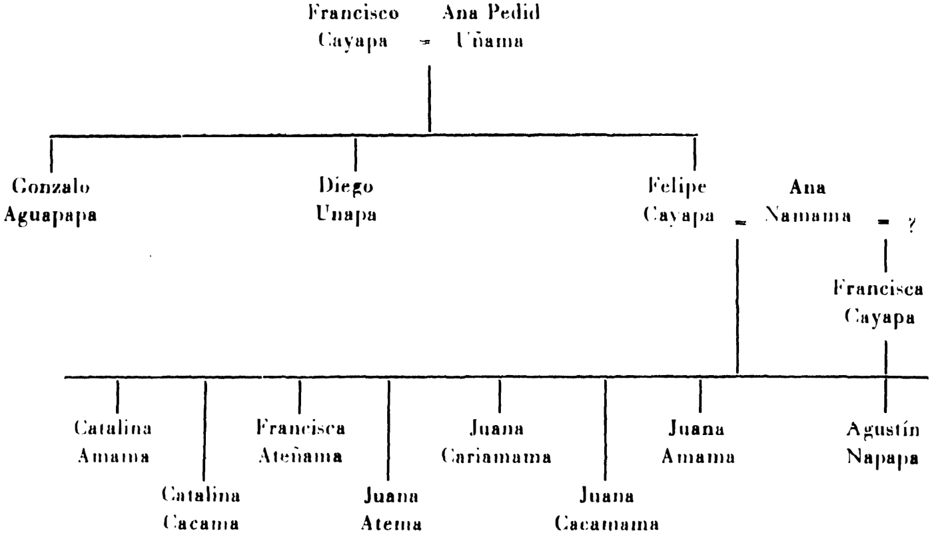
“Los cinco primeros ayllus parecen corresponder al grupo étnico cayapa cuya cabecera se hallaba en Singobucho y cuyo cacique principal era Francisco Cayapa”
§ Otras familias conyugales cayapas que > <<.
hedgedcorrelational- Asserted: passes — The authors put it forward as true.
- Checkable: passes — It can be checked against evidence.
- Load-bearing: unclear — It is unclear whether the paper’s conclusions depend on it.
- Based: passes — The paper gives a reason why it holds.
It may state two separate claims as one.
- Rests on an assumption: The baptism lists in the Relación de fray Gaspar de Torres accurately record the names, ethnic labels, and numbers of baptized individuals.
A result the paper reports from its own data — it cites no other source for it, so there is none to check. The quote shows it is in the paper.
In the paper
“Estos diez nombres representan el 7 5 % de los nombres <le hombres y el 69 <:lo del de las mujeres.”
§ Otras familias conyugales cayapas que > 4/ Atapa (60).
plain- Asserted: passes — The authors put it forward as true.
- Checkable: passes — It can be checked against evidence.
- Load-bearing: unclear — It is unclear whether the paper’s conclusions depend on it.
- Based: passes — The paper gives a reason why it holds.
It may state two separate claims as one.
- Rests on an assumption: The baptism lists in the Relación de fray Gaspar de Torres accurately record the names, ethnic labels, and numbers of baptized individuals.
The paper states this without a source or data behind it here, so there is nothing to check it against. The quote shows it is in the paper.
In the paper
“lo que es evidente es que la región o territorio estrictamente cayapa la concentración de nombres con las termina ciones típicas de los cayapas es muy alta, mientras que en áreas en que los cayapas conviven con otras etnias los nombres dominan tes son escasos”
§ Otras familias conyugales cayapas que > 4/ Atapa (60).
boostedcorrelational- Asserted: passes — The authors put it forward as true.
- Checkable: passes — It can be checked against evidence.
- Load-bearing: unclear — It is unclear whether the paper’s conclusions depend on it.
- Based: passes — The paper gives a reason why it holds.
It may state two separate claims as one.
- Rests on an assumption: The personal names recorded in the baptism lists can be used to infer ethnic and linguistic affiliation and degree of mestizaje.
A result the paper reports from its own data — it cites no other source for it, so there is none to check. The quote shows it is in the paper.
In the paper
“Este conjunto de nombres que han sido recogidos en las Tablas 5 (hombres) y 6 (mujeres) incluyen 45 nombres de mujer y 69 nombres de hombre.”
§ Otras familias conyugales cayapas que > EL GRUPO CAYAPA
plain- Asserted: passes — The authors put it forward as true.
- Checkable: passes — It can be checked against evidence.
- Load-bearing: fails — The paper’s conclusions may not depend on it.
- Based: passes — The paper gives a reason why it holds.
Probably not a substantial claim. The paper’s conclusions may not depend on it. It may state two separate claims as one.
- Rests on an assumption: The baptism lists in the Relación de fray Gaspar de Torres accurately record the names, ethnic labels, and numbers of baptized individuals.
A result the paper reports from its own data — it cites no other source for it, so there is none to check. The quote shows it is in the paper.
In the paper
“Totales 522 9ó2 J.,W 1”
§ Otras familias conyugales cayapas que > <<.
plain- Asserted: passes — The authors put it forward as true.
- Checkable: passes — It can be checked against evidence.
- Load-bearing: unclear — It is unclear whether the paper’s conclusions depend on it.
- Based: passes — The paper gives a reason why it holds.
It may state two separate claims as one.
- Rests on an assumption: The baptism lists in the Relación de fray Gaspar de Torres accurately record the names, ethnic labels, and numbers of baptized individuals.
A result the paper reports from its own data — it cites no other source for it, so there is none to check. The quote shows it is in the paper.
In the paper
“Los ayllus 10, 14 y 20 presentan un único principal o cacique, o va rios con el mismo nombre, Juan Tapiba, mientras los restantes ayllus 13, 15 y 21 tienen caciques cuyos nombres son típicamente malabas: Diego Supuchopuele, Juan Mayba y Felipe Canbiba.”
§ Otras familias conyugales cayapas que > Additional information
plain- Asserted: passes — The authors put it forward as true.
- Checkable: passes — It can be checked against evidence.
- Load-bearing: unclear — It is unclear whether the paper’s conclusions depend on it.
- Based: passes — The paper gives a reason why it holds.
It may state two separate claims as one.
- Rests on an assumption: The baptism lists in the Relación de fray Gaspar de Torres accurately record the names, ethnic labels, and numbers of baptized individuals.
A result the paper reports from its own data — it cites no other source for it, so there is none to check. The quote shows it is in the paper.
In the paper
“Aunque es muy poco lo que se sabe de la lengua mal aba, pode mos afirmar que los nombres personales de hombre terminan casi sistemáticamente en ha o iba ( ver Tabla 7); no así los nombres de mujer, para los que las terminaciones más frecuentes son las de c,1 o ica (Tabla 8).”
§ Otras familias conyugales cayapas que > Additional information
plaincorrelational- Asserted: passes — The authors put it forward as true.
- Checkable: passes — It can be checked against evidence.
- Load-bearing: unclear — It is unclear whether the paper’s conclusions depend on it.
- Based: passes — The paper gives a reason why it holds.
It may state two separate claims as one. The quote only partly states this claim.
- Rests on an assumption: The personal names recorded in the baptism lists can be used to infer ethnic and linguistic affiliation and degree of mestizaje.
A result the paper reports from its own data — it cites no other source for it, so there is none to check. The quote shows it is in the paper.
In the paper
“quien en 1587, ayudado por los ca ciques Luis y Alonso Gualapiango había abandonado el pueblo de Campi o <;ampi a causa de los continuados ataques de negros y mulatos de Esmeraldas, instalándose entonces en Singobucho.”
§ Otras familias conyugales cayapas que > <<.
plaindirectSingle case- Asserted: passes — The authors put it forward as true.
- Checkable: passes — It can be checked against evidence.
- Load-bearing: unclear — It is unclear whether the paper’s conclusions depend on it.
- Based: passes — The paper gives a reason why it holds.
It may state two separate claims as one.
- Rests on an assumption: The baptism lists in the Relación de fray Gaspar de Torres accurately record the names, ethnic labels, and numbers of baptized individuals.
A result the paper reports from its own data — it cites no other source for it, so there is none to check. The quote shows it is in the paper.
In the paper
“Los nombres más comunes entre los ayllus malabas son los siguientes: hombres Ca�iba Pula�iba o Pulasiba Naciba o Na�iba Tocoro Tapiba.mu¡eres Achica Nad,ica”
§ Otras familias conyugales cayapas que > Additional information
plain- Asserted: passes — The authors put it forward as true.
- Checkable: passes — It can be checked against evidence.
- Load-bearing: unclear — It is unclear whether the paper’s conclusions depend on it.
- Based: passes — The paper gives a reason why it holds.
It may state two separate claims as one.
- Rests on an assumption: The baptism lists in the Relación de fray Gaspar de Torres accurately record the names, ethnic labels, and numbers of baptized individuals.
A result the paper reports from its own data — it cites no other source for it, so there is none to check. The quote shows it is in the paper.
In the paper
“se bautizaron 1.484 indios de los grupos ya mencionados.”
§ Otras familias conyugales cayapas que > 68
plainn = 1,484- Asserted: passes — The authors put it forward as true.
- Checkable: passes — It can be checked against evidence.
- Load-bearing: fails — The paper’s conclusions may not depend on it.
- Based: passes — The paper gives a reason why it holds.
Probably not a substantial claim. The paper’s conclusions may not depend on it. The quote only partly states this claim.
- Rests on an assumption: The baptism lists in the Relación de fray Gaspar de Torres accurately record the names, ethnic labels, and numbers of baptized individuals.
A result the paper reports from its own data — it cites no other source for it, so there is none to check. The quote shows it is in the paper.
In the paper
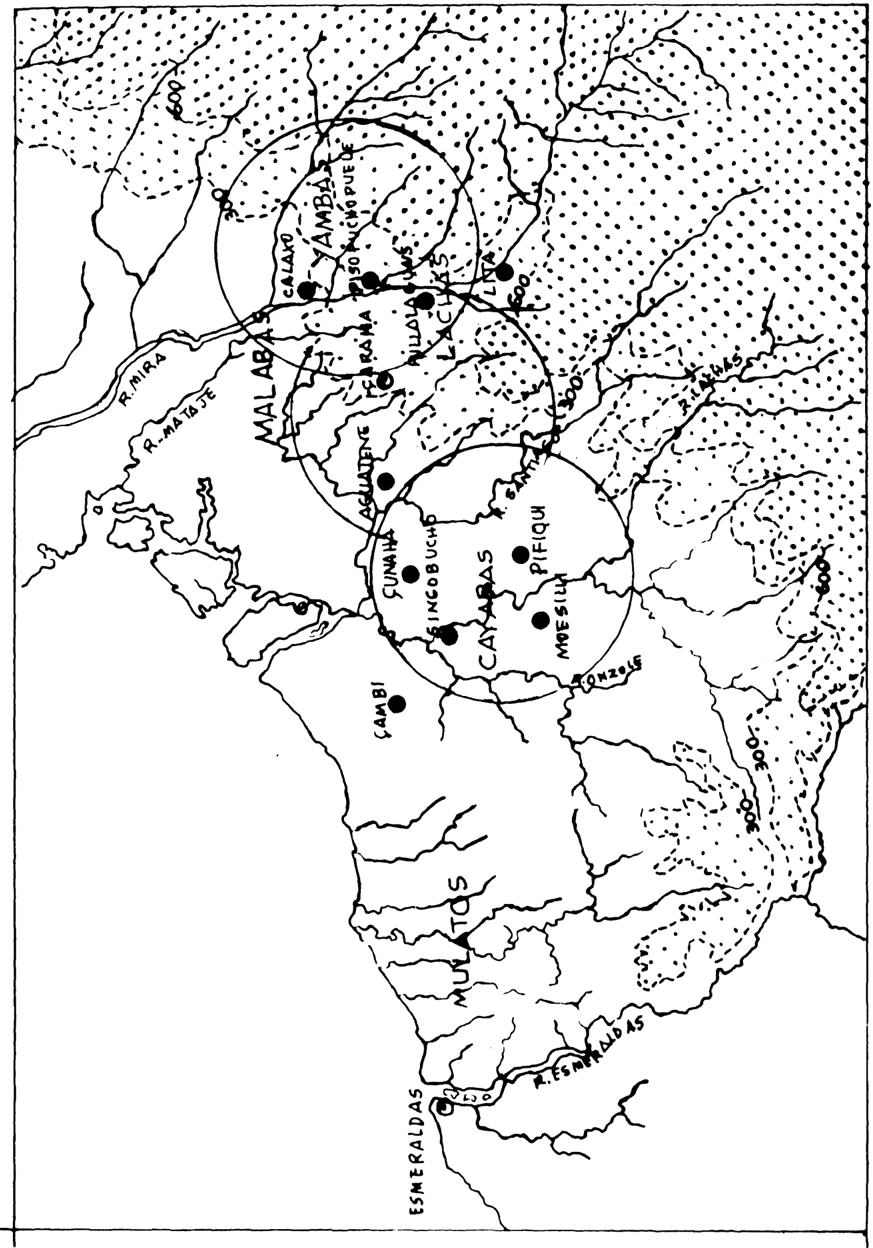
“las dos etnias principales eran la de los cayapas y la <le los malabas, situada la primera entre los ríos Onzole y Santiago y la segunda al sur de los ríos Mira y Mataje.”
§ Otras familias conyugales cayapas que > Additional information
plain- Asserted: passes — The authors put it forward as true.
- Checkable: passes — It can be checked against evidence.
- Load-bearing: passes — The paper’s conclusions depend on it.
- Based: passes — The paper gives a reason why it holds.
It may state two separate claims as one.
- Rests on an assumption: The ethnic labels used by Fray Gaspar de Torres, such as cayapa, malaba, lacha, yamba, and pillalagua, correspond to actual distinct ethnic or linguistic groups.
A result the paper reports from its own data — it cites no other source for it, so there is none to check. The quote shows it is in the paper.
In the paper
“Otro tanto podemos decir de Nagapapa, un hombre que se incluye en la Jjsta del ayllu 14 Je Juan T apiba.”
§ Otras familias conyugales cayapas que > Additional information
plainSingle case- Asserted: passes — The authors put it forward as true.
- Checkable: passes — It can be checked against evidence.
- Load-bearing: fails — The paper’s conclusions may not depend on it.
- Based: passes — The paper gives a reason why it holds.
Probably not a substantial claim. The paper’s conclusions may not depend on it.
- Rests on an assumption: The baptism lists in the Relación de fray Gaspar de Torres accurately record the names, ethnic labels, and numbers of baptized individuals.
A result the paper reports from its own data — it cites no other source for it, so there is none to check. The quote shows it is in the paper.
In the paper
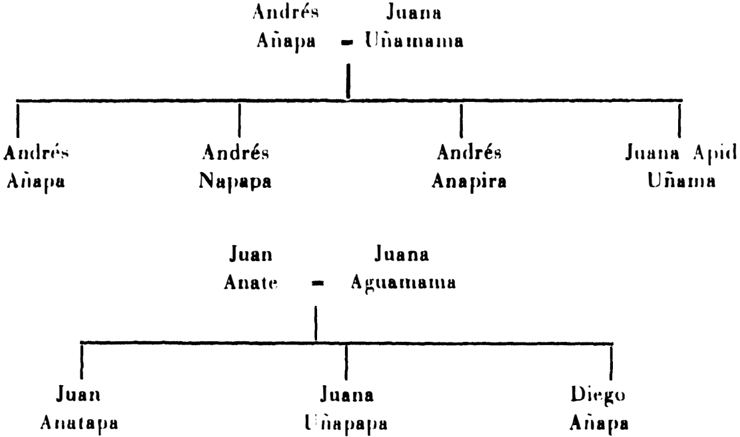
“I-Iay que advertir que los ayllus 14 y 15 de Juan Tapiba y Juan Mayba contienen dos mujeres cayapas, llamadas en el primer caso Uñamama y en el segundo Oñamarna.”
§ Otras familias conyugales cayapas que > Additional information
plainn = 2- Asserted: passes — The authors put it forward as true.
- Checkable: passes — It can be checked against evidence.
- Load-bearing: fails — The paper’s conclusions may not depend on it.
- Based: passes — The paper gives a reason why it holds.
Probably not a substantial claim. The paper’s conclusions may not depend on it. It may state two separate claims as one.
- Rests on an assumption: The baptism lists in the Relación de fray Gaspar de Torres accurately record the names, ethnic labels, and numbers of baptized individuals.
None of the sources cited for this claim have been checked yet.
In the paper
“El hecho <le que la suma de la población corrcspon<lientc a estos ocho ayllus no sobrepase los 186 individuos, de los que sola mente 52 eran 1nujeres”
§ Otras familias conyugales cayapas que > Additional information
plainn = 186- Asserted: passes — The authors put it forward as true.
- Checkable: passes — It can be checked against evidence.
- Load-bearing: passes — The paper’s conclusions depend on it.
- Based: passes — The paper gives a reason why it holds.
It may state two separate claims as one.
- Rests on an assumption: The baptism lists in the Relación de fray Gaspar de Torres accurately record the names, ethnic labels, and numbers of baptized individuals.
A result the paper reports from its own data — it cites no other source for it, so there is none to check. The quote shows it is in the paper.
In the paper
“En estos cinco ayllus apreciamos que las mujeres siempre llevan nombres cayapas, mientras los hombres, salvo en el ayllu 6 de Juan Aguazami, en el que dominan también los nombres cayapas, se reparten entre nombre de este grupo y otros totalmente diferen tes en una proporción del 50 por ciento.”
§ Otras familias conyugales cayapas que > Additional information
plaincorrelational- Asserted: passes — The authors put it forward as true.
- Checkable: passes — It can be checked against evidence.
- Load-bearing: unclear — It is unclear whether the paper’s conclusions depend on it.
- Based: passes — The paper gives a reason why it holds.
It may state two separate claims as one.
- Rests on an assumption: The baptism lists in the Relación de fray Gaspar de Torres accurately record the names, ethnic labels, and numbers of baptized individuals.
What the paper did — it cites no source for this, so there is none to check. The quote shows it is in the paper.
In the paper
“Aunque el análisis de los nombres de las personas bautizadas no nos permita establecer el sistema de parentesco en términos muy precisos”
§ Otras familias conyugales cayapas que > Abstract
plain- Asserted: passes — The authors put it forward as true.
- Checkable: passes — It can be checked against evidence.
- Load-bearing: passes — The paper’s conclusions depend on it.
- Based: passes — The paper gives a reason why it holds.
Probably not a substantial claim.
A conclusion the paper draws from its own results — it cites no other source for it, so there is none to check. The quote shows it is in the paper.
In the paper
“en los ayllus 16, 17 y 18 aparecen otros nombres -distintos a los ante riores-propios de hombres, pero también algunos de mujeres que por su localización podrían atribuirse a los llamados pillalaguas.”
§ Otras familias conyugales cayapas que > ANÁLISIS DE LAS LISTAS DE BAUTISMOS
hedgedcorrelational- Asserted: passes — The authors put it forward as true.
- Checkable: passes — It can be checked against evidence.
- Load-bearing: unclear — It is unclear whether the paper’s conclusions depend on it.
- Based: passes — The paper gives a reason why it holds.
It may state two separate claims as one.
- Rests on an assumption: The personal names recorded in the baptism lists can be used to infer ethnic and linguistic affiliation and degree of mestizaje.
A conclusion the paper draws from its own results — it cites no other source for it, so there is none to check. The quote shows it is in the paper.
In the paper
“Hay que destacar, no obstante, que la propia cifra global de 1.44 3 ó 1.484 individuos parece muy baja para el territorio total de que estamos tratando.”
§ Otras familias conyugales cayapas que > <<.
hedgedn = 1,484- Asserted: passes — The authors put it forward as true.
- Checkable: passes — It can be checked against evidence.
- Load-bearing: fails — The paper’s conclusions may not depend on it.
- Based: passes — The paper gives a reason why it holds.
Probably not a substantial claim. The paper’s conclusions may not depend on it.
In the paper
“De los malabas 14 sabemos sobre todo que era un pueblo muy agresivo, que habitaba en las tierras bajas al sur de los ríos Mira y Mataje.”
§ Otras familias conyugales cayapas que > Additional information
What the sources say
- Not matchedcites [14]
Couldn’t be matched to a paper in Crossref, so it can’t be checked.
plain- Asserted: passes — The authors put it forward as true.
- Checkable: passes — It can be checked against evidence.
- Load-bearing: unclear — It is unclear whether the paper’s conclusions depend on it.
- Based: passes — The paper gives a reason why it holds.
It may state two separate claims as one.
- Not matched
A conclusion the paper draws from its own results — it cites no other source for it, so there is none to check. The quote shows it is in the paper.
In the paper
“El territorio entre ambos grupos estaba dominado en gran medida por los cayapas aunque en los ayllus correspondientes a este sector se aprecia un doble mestizaje con grupos que cabría identificar como lachas y yambas situados a ambos lados del curso alto del río Mira, camino de Lita.”
§ Otras familias conyugales cayapas que > Additional information
hedged- Asserted: passes — The authors put it forward as true.
- Checkable: passes — It can be checked against evidence.
- Load-bearing: passes — The paper’s conclusions depend on it.
- Based: passes — The paper gives a reason why it holds.
It may state two separate claims as one.
The paper relies on this without support.
The baptism lists in the Relación de fray Gaspar de Torres accurately record the names, ethnic labels, and numbers of baptized individuals.
“las listas de bau tismos incluidos en la Relación de fray Gaspar de Torres de 1598”
“se bautizaron 1.484 indios de los grupos ya mencionados.”
The paper relies on this without support.
The personal names recorded in the baptism lists can be used to infer ethnic and linguistic affiliation and degree of mestizaje.
“El posterior análisis de las series nominales nos permitirán apreciar hasta qué punto se pueden man tener esos grupos con sus respectivos nombres o no.”
The paper relies on this without support.
The ethnic labels used by Fray Gaspar de Torres, such as cayapa, malaba, lacha, yamba, and pillalagua, correspond to actual distinct ethnic or linguistic groups.
“De la relación anterior se desprende que los grupos étnicos de la zona que estudiamos son los cayapas, yambas, pillalaguas, ma-Iabas y lachas”
Citations
Cites
Still being checked.
Cited by
Sorted by citations
Índices del Anuario de Estudios Americanos (tomos XLII-LI, 2, años 1985-1994)
Viejo, M. A. J. S., & Suárez, M. M. C. (1999) · Anuario de Estudios Americanos · doi:10.3989/aeamer.1999.v56.i1.297
Metadata
- Authors
- Palop Martínez, J.
- Venue
- Anuario De Estudios Americanos
- Publisher
- Editorial CSIC
- Published
- 1990-12-30
- Volume
- 47
- Issue
- 1
- Pages
- 65-94
- ISSN
- 0210-5810 (ISSN-L)
- 1988-4273
- OpenAlex
- W112116026
- Cited by
- 1
- References
- 0
- FWCI
- 0.00
- Type
- journal article
- Language
- es
- Open access
- diamond
- doi.org
- Locations
- Anuario de Estudios Americanos (publishedVersion, cc-by)
- DOAJ (DOAJ: Directory of Open Access Journals) (submittedVersion, cc-by-sa)
- Topics
- Social Sciences › Arts and Humanities › History › Latin American history and culture
- Social Sciences › Anthropology › Indigenous Cultures and History
- Social Sciences › Arts and Humanities › History › Amazonian Archaeology and Ethnohistory
- Keywords
- territory, society, 16th century, indigenous peoples, colonial Peru, Andean peoples
About these checks
Registry, retraction, Cites and statistics results are computed, not judged, with one exception: a printed reference that no index lists is read once by a model before it counts as a citation error. Claims are extracted by a model and kept only when their quote appears verbatim in the text; each cited source is then checked, with a model’s help, for whether it says what the claim relies on. Those verdicts can be wrong — read the claim’s quote and the cited source before relying on one.
A language model drew the claims from the paper on 2026-11-08, under version 3 of the claim definition (model deepseek-v4.1-flash, prompt extract-v3).
A second model labelled each claim on 2026-11-08 (model jev-1.13-20260917, definition revision gold-guideline-v0.2).
Statistics and arithmetic are recomputed, not judged.
Confidence bands are shown only for fields calibrated on our annotated test set. None is calibrated yet, so no band is shown.
What counts as a claim ›How we measure confidence ›How we check this ›
Are you an author, or do you see a problem with this page? Request a review
