

Identifying risk factors and donor characteristics for vasovagal reactions in whole blood donation: Insights and safety recommendations from a northern Indian study
Open accessThe DOI matches its Crossref record; 15 of the 16 references it cites were found in a registry or an index, and 1 are not checked yet.
Abstract
BACKGROUND: Although adverse reactions and injuries associated with blood donation are typically self-sustaining, they may defer donors from making future blood donations. AIMS: This study aimed to determine the prevalence and predictors of adverse reactions in whole blood donors, thereby identifying potential targets for interventions to reduce such events. METHODS: A total of 5,003 whole blood donations were analyzed over a two-year period. Donor demographic, medical, and biometric parameters were recorded and examined for associations with adverse donor reactions. RESULTS: The overall prevalence of vasovagal reactions was 1.7% and 287 donors (5.74%) experienced adverse events (AEs). Strong predictors of adverse reactions included younger age, first-time donation, low body weight, donation around noon, and a pre-donation waiting period exceeding 30 minutes. Vasovagal reaction rates reported in the literature vary widely, ranging from 0.09% to 2.24%. Most studies, including the present one, found no significant gender differences in reaction rates; in this study, males and females experienced almost similar rates (1.7% vs. 1.8%). CONCLUSION: These findings are instrumental in identifying donors at greater danger of developing undesirable reactions. Enhanced monitoring during and after donation, along with timely intervention, may facilitate to prevent many of these adverse and unpleasant events and improve donor retention.
Checked 2026-11-22 · 1 reference not checked yet
Overview
CoChat Summary
TL;DR
In 5,003 whole blood donors in northern India, vasovagal reactions occurred in 1.7% (86/5,003), while 5.74% (287) had any adverse event. Younger age, first-time donation, waiting >30 min, early-afternoon donation, inadequate sleep, and no recent food intake were significant risk factors.
Key findings
- VVR prevalence was 1.7% (86/5,003); overall adverse events occurred in 287 donors (5.74%), with hematoma most common at 195 donors (3.8%) and minor complications in 13 donors (0.26%).
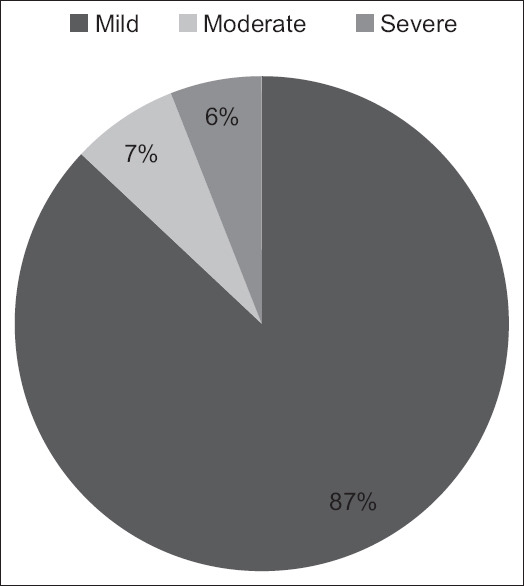
- Most VVRs were mild (87%), with moderate reactions at 7% and severe reactions at 6%; 68.6% occurred postdonation, particularly in the refreshment room, and no off-site reactions were reported.
- Significant risk factors included waiting >30 min, early-afternoon donation (12:00 noon–2:30 pm), inadequate sleep (<5 h), and no food intake within 4 h before donation (all P < 0.05).
- Donors under 20 years had the highest reaction rate (7.3%), and first-time donors accounted for 77.9% of VVRs and were more than twice as susceptible as repeat donors; gender and weight differences were not statistically significant.
Methods
- Prospective study of 5,003 whole blood donors presenting to the Department of Transfusion Medicine, Sanjay Gandhi Postgraduate Institute of Medical Sciences, Lucknow; both replacement and voluntary donors were included.
- Donation records included demographic, biometric, and clinical parameters; adverse reactions were documented on adverse reaction forms and graded using ISBT Working Party on Hemovigilance definitions for mild, moderate, and severe VVRs.
- Reactors were compared with donors without reactions using IBM SPSS v20; independent samples t-tests, Chi-square tests, and odds ratios were used, with P < 0.05 considered statistically significant.
Limitations
- The paper states this was a single-center study, which may limit generalizability.
- The paper states data on staff experience and environmental factors such as ambient temperature were not collected, and detailed follow-up procedures/outcomes were not available.
- Evident from the text: most donors were replacement donors, which may limit applicability to voluntary-donation settings, though the paper does not frame this as a limitation.
Model-written summary. Check it against the paper before relying on it.
Integrity signals
Registry
Cites
Statistics
Figures
Verification
Claims the paper makes
0 Valid · 0 Not valid · 0 Not checked · 33 Own results and interpretations
A result the paper reports from its own data — it cites no other source for it, so there is none to check. The quote shows it is in the paper.
In the paper
“Local injuries such as hematoma were the most common, observed in 195 donors (3.8%), while minor complications such as allergic reactions to bandages, bruising, and scalp laceration due to fall were noted in 13 donors (0.26%).”
- Also stated in: § Results · plain
“Local injuries such as hematoma were the most common, observed in 195 donors (3.8%)”
plainn = 195- Asserted: passes — The authors put it forward as true.
- Checkable: passes — It can be checked against evidence.
- Load-bearing: unclear — It is unclear whether the paper’s conclusions depend on it.
- Based: passes — The paper gives a reason why it holds.
- Also stated in: § Results · plain
A result the paper reports from its own data — it cites no other source for it, so there is none to check. The quote shows it is in the paper.
In the paper
“Gender-wise, the VVR rates were 1.70% for males and 1.83% for females. Though reaction rates were marginally higher in females (1.83% vs. 1.70%), the difference was not statistically significant ( P > 0.05)”
- Also stated in: § Discussion · plain
“In the present study, the reaction rate was slightly higher among female donors compared to male donors (1.8% vs. 1.6%), although the difference was not statistically significant.”
plainn = 5,003- Asserted: passes — The authors put it forward as true.
- Checkable: passes — It can be checked against evidence.
- Load-bearing: unclear — It is unclear whether the paper’s conclusions depend on it.
- Based: passes — The paper gives a reason why it holds.
- Also stated in: § Discussion · plain
A result the paper reports from its own data — it cites no other source for it, so there is none to check. The quote shows it is in the paper.
In the paper
“Among these, 6 cases of hematoma and 1 case of facial injury were associated with VVRs.”
plainstates an associationn = 6- Asserted: passes — The authors put it forward as true.
- Checkable: passes — It can be checked against evidence.
- Load-bearing: unclear — It is unclear whether the paper’s conclusions depend on it.
- Based: passes — The paper gives a reason why it holds.
A result the paper reports from its own data — it cites no other source for it, so there is none to check. The quote shows it is in the paper.
In the paper
“In the study, the highest number of reactions, i.e., 7.3% was observed in the <20 years age group while the lowest number of reactions, i.e., 0.6% were present in >50 years age.”
plainstates an association- Asserted: passes — The authors put it forward as true.
- Checkable: passes — It can be checked against evidence.
- Load-bearing: passes — The paper’s conclusions depend on it.
- Based: passes — The paper gives a reason why it holds.
A result the paper reports from its own data — it cites no other source for it, so there is none to check. The quote shows it is in the paper.
In the paper
“Higher VVR rates were significantly associated with: Waiting for more than 30 min”
- Also stated in: § Discussion · plain
“The reaction rate was also significantly higher among donors with inadequate sleep (<5 h), those who waited more than 30 min before donating, and those who either had an empty stomach (fasting) or had last eaten more than 4 h before donation.”
plainstates an association- Asserted: passes — The authors put it forward as true.
- Checkable: passes — It can be checked against evidence.
- Load-bearing: passes — The paper’s conclusions depend on it.
- Based: passes — The paper gives a reason why it holds.
- Rests on an assumption not shown here.
- Also stated in: § Discussion · plain
14 more claims
Create a free account to see all 33 claims and every source verdict.
- It may state two separate claims as one. 9
- Probably not a substantial claim. 8
- The quote only partly states this claim. 2
Self-check
Percentages, sums and reported differences re-computed from the paper’s own numbers.
Each contradiction between two passages listed here was confirmed by an independent check.
Rated minor: it would not touch a result — a value no result rests on, a p-value that stays on the same side of the significance level, or a conflict that is clerical, resolved elsewhere in the paper, or outside its own findings.
In the paper
“Gender-wise, the VVR rates were 1.70% for males and 1.83% for females.”
“the reaction rate was slightly higher among female donors compared to male donors (1.8% vs. 1.6%)”
Rated minor: it would not touch a result — a value no result rests on, a p-value that stays on the same side of the significance level, or a conflict that is clerical, resolved elsewhere in the paper, or outside its own findings.
In the paper
“Local injuries such as hematoma were the most common, observed in 195 donors (3.8%)”
Reported 3.8 · recomputed 3.897661
Rated minor: it would not touch a result — a value no result rests on, a p-value that stays on the same side of the significance level, or a conflict that is clerical, resolved elsewhere in the paper, or outside its own findings.
In the paper
“the prevalence of VVRs was 1.7% (86/5003)”
“compared to 1.6% in the general donor population”
Citations
Cites
Effect of Age and High Blood Pressure on Barorefiex Sensitivity in Man
Gribbin, B., Pickering, T. G., Sleight, P., & Peto, R. (1971) · Circulation Research · doi:10.1161/01.res.29.4.424 · Cited by 1,038 · cited 1×
“[17] Consequently, younger donors are at a greater risk of experiencing VVR.”
Trouern‐Trend, J. J., Cable, R. G., Badon, S. J., Newman, B. H., & Popovsky, M. A. (1999) · Transfusion · doi:10.1046/j.1537-2995.1999.39399219291.x · Cited by 208 · cited 5×
“[7,16] Prolonged waiting before donation can increase donor anxiety, which may in turn stimulate the central pathways involved in VVRs.”
InfluentialNewman, B. H., Pichette, S., Pichette, D., & Dzaka, E. (2003) · Transfusion · doi:10.1046/j.1537-2995.2003.00368.x · Cited by 186 · cited 4×
“[6‑ 8] Various Indian studies have reported VVR rates ranging from 0.24% to 5%.”
InfluentialWiltbank, T. B., Giordano, G. F., Kamel, H., Tomasulo, P., & Custer, B. (2008) · Transfusion · doi:10.1111/j.1537-2995.2008.01745.x · Cited by 149 · cited 3×
“[12] The elevated reaction rate in females may be attributed to lower average body weight and blood volume, social pressures, pregnancy‑related factors, and comparatively poorer nutritional status.”
InfluentialDonor reactions and injuries from whole blood donation
Newman, B. H. (1997) · Transfusion Medicine Reviews · doi:10.1016/s0887-7963(97)80011-9 · Cited by 125 · cited 1×
“[6] In the present study, 43 (2.2”
InfluentialA Study of Criteria for Blood Donor Deferral
Tomasulo, P. A., Anderson, A. J., Paluso, M. B., Gutschenritter, M. A., & Aster, R. H. (1980) · Transfusion · doi:10.1046/j.1537-2995.1980.20581034503.x · Cited by 104 · cited 3×
“[7,11,15,16] Newman also noted that donors weighing close to the minimum acceptable weight of 110 lb (50 kg) have a higher likelihood of experiencing a reaction when 450 ml of blood is collected.”
InfluentialVasovagal Reactions in Blood Donors
Ogata, H., Iinuma, N., Nagashima, K., & Akabane, T. (1980) · Transfusion · doi:10.1046/j.1537-2995.1980.20681057157.x · Cited by 99 · cited 2×
“[7,11,13,14] For instance, Newman et al . and Tomasulo et al . observed a significantly increased reaction rate among women.”
InfluentialModerate and severe reactions in blood donors
Kasprisin, D. O., Glynn, S. H., Taylor, F., & Miller, K. A. (1992) · Transfusion · doi:10.1046/j.1537-2995.1992.32192116426.x · Cited by 97 · cited 4×
“[16] The reaction rate was also significantly higher among donors with inadequate sleep ( 5 h), those who waited more than 30 min before donating, and those who either had an empty stomach (fasting) or had last eaten more than 4 h before donation.”
InfluentialA study of 178 consecutive vasovagal syncopal reactions from the perspective of safety
Newman, B. H., & Graves, S. (2001) · Transfusion · doi:10.1046/j.1537-2995.2001.41121475.x · Cited by 66 · cited 1×
“[10] The higher post‑donation reaction rate may be due to peripheral pooling of blood and hypotension.”
Vasovagal reactions in blood donors during or immediately after blood donation
Zervou, E. K., Ziciadis, K., Karabini, F., Xanthi, E., Chrisostomou, E., & Tzolou, A. (2005) · Transfusion Medicine · doi:10.1111/j.1365-3148.2005.00600.x · Cited by 54 · cited 4×
“[7,11,13,14] For instance, Newman et al . and Tomasulo et al . observed a significantly increased reaction rate among women.”
Influential
Research works printed but not linked: 1
- Liu Y Wheaton AG Chapman DP Croft JB Sleep duration and chronic diseases among U. S. adults: National health interview survey, 2004–2013 Sleep Health 2016 2 48 54
Metadata
- Authors
- Solanki, A., Singh, A., Sonker, A., & Agarwal, P.
- Affiliations
- King George's Medical University (IN)
- Sanjay Gandhi Post Graduate Institute of Medical Sciences (IN)
- Corresponding author
- Agarwal, Prashant
- ORCID
- Solanki, Archana
- Venue
- Asian Journal of Transfusion Science
- Published
- 2026-01
- Volume
- 20
- Issue
- 1
- Pages
- 126-131
- ISSN
- 0973-6247 (ISSN-L)
- 1998-3565
- PMC
- PMC13290260
- OpenAlex
- W7127587487
- Semantic Scholar
- c0bf525541b329c146d17ae91b67b534db7694a3
- Cited by
- 0
- References
- 15
- FWCI
- 0.00
- Type
- journal article
- Language
- en
- Open access
- diamond
- doi.org
- Licence
- Locations
- Asian Journal of Transfusion Science (publishedVersion, cc-by-nc-nd)
- PubMed (publishedVersion)
- PubMed Central (publishedVersion, cc-by-nc-sa)
- DOAJ (DOAJ: Directory of Open Access Journals) (submittedVersion, cc-by-sa)
- Topics
- Health Sciences › Medicine › Hematology › Blood donation and transfusion practices
- Health Sciences › Medicine › Hematology › Blood transfusion and management
- Health Sciences › Medicine › Public Health, Environmental and Occupational Health › Ethics in Clinical Research
- Keywords
- vasovagal reaction, whole blood donation, risk factors, donor characteristics, first-time donors, body weight, donor retention, blood donor safety, North India
About these checks
Registry, retraction, Cites and statistics results are computed, not judged, with one exception: a printed reference that no index lists is read once by a model before it counts as a citation error. Claims are extracted by a model and kept only when their quote appears verbatim in the text; each cited source is then checked, with a model’s help, for whether it says what the claim relies on. Those verdicts can be wrong — read the claim’s quote and the cited source before relying on one.
A language model drew the claims from the paper on 2026-09-30, under version 3 of the claim definition (model deepseek-v4.1-flash, prompt extract-v3).
A second model labelled each claim on 2026-09-30 (model jev-1.13-20260917, definition revision gold-guideline-v0.2).
Statistics and arithmetic are recomputed, not judged.
Confidence bands are shown only for fields calibrated on our annotated test set. None is calibrated yet, so no band is shown.
What counts as a claim ›How we measure confidence ›How we check this ›
Are you an author, or do you see a problem with this page? Request a review
Data sources
Bibliographic data: Semantic Scholar, OpenAlex, Crossref.
Contains information from the Semantic Scholar Academic Graph Datasets, made available under the ODC Attribution License (ODC-BY 1.0).
Semantic Scholar’s data is described in: Kinney, R., et al. (2023). The Semantic Scholar Open Data Platform. arXiv:2301.10140.
