

The DOI matches its Crossref record; 27 of the 27 references it cites were found in a registry or an index.
Association between inhaled corticosteroid use and risk of hyperglycemia in patients with chronic obstructive pulmonary disease: A systematic review and meta-analysis
Open accessAbstract
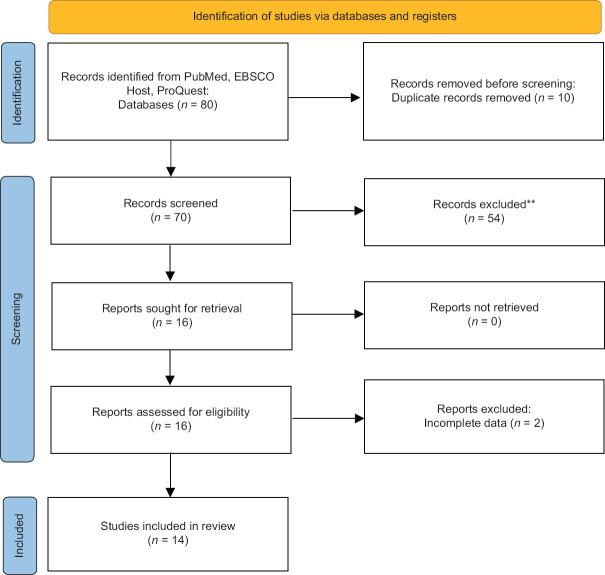
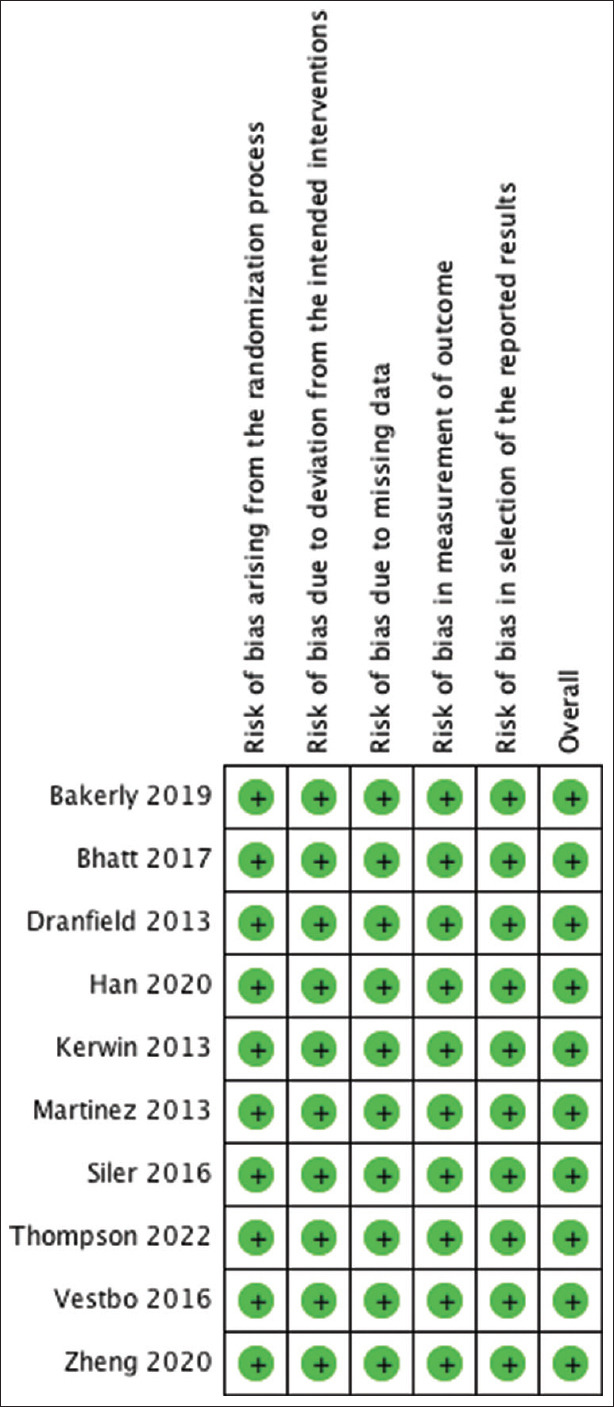
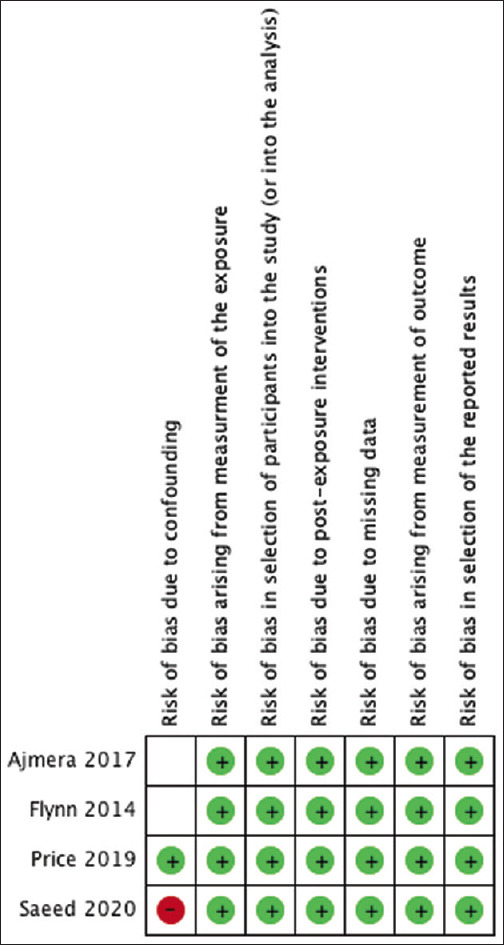
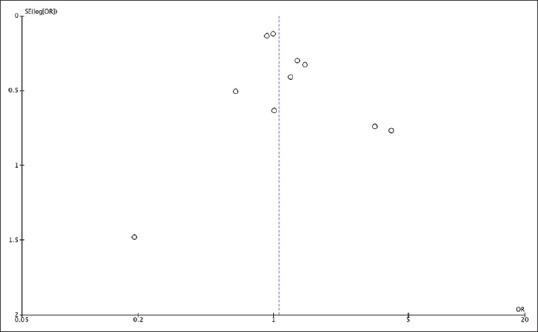
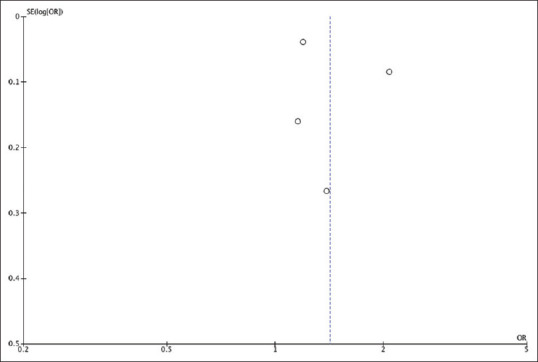
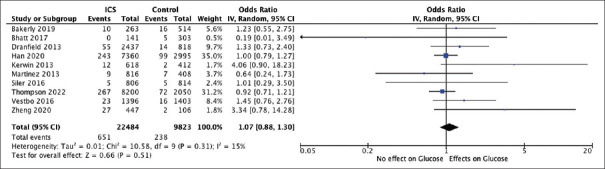
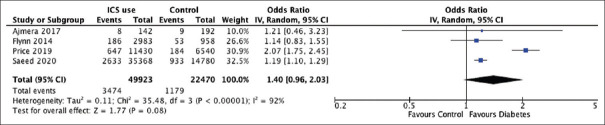
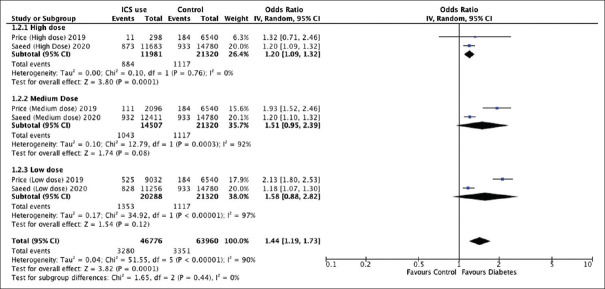
A BSTRACT: Objectives: Chronic obstructive pulmonary disease (COPD) patients have a higher risk of developing diabetes, and studies suggest that inhaled corticosteroids (ICSs) use may be associated with a higher risk of diabetes, particularly at higher doses. This study aims to investigate the effects of ICS use on the risk of diabetes and blood glucose levels in COPD patients. Materials and Methods: A systematic search was carried out on the PubMed, EBSCOhost, and ProQuest databases using the terms “Inhaled Corticosteroids,” “Diabetes,” and “Chronic Obstructive Pulmonary Disease” for the period between 2013 and 2023. The systematic review adhered to the PRISMA 2020 guideline. A meta-analysis was conducted using a random-effects model using the RevMan 5 software. Results: A total of 14 studies were included in the final analysis, with 10 randomized controlled trials (RCTs) and 4 observational studies. Two observational studies investigated the relationship between ICS dose and diabetes risk. A meta-analysis of the RCTs studies showed a nonstatistically significant tendency toward increased blood glucose (odds ratio [OR] 1.07 and 95% confidence interval [CI] 0.88–1.30) after a 52-week follow-up. Whereas the observational studies showed a tendency toward an increased risk of diabetes (OR 1.40 and 95% CI 0.96–2.03). Furthermore, a subgroup meta-analysis of high-dose ICS (>900 mg/day) showed a significant increase in the risk of diabetes (OR 1.20 and 95% CI 1.09–1.32). Conclusion: Short-term use of ICS does not have a significant effect on blood glucose. However, long-term use, especially at higher doses, can increase the risk of developing diabetes.
Overview
The claims and statistics of this paper haven’t been checked yet.
Run the check — free, no account needed. It reads the open-access text and checks the sources it cites.
Integrity signals
Registry
Cites
Statistics
Figures
Verification
Claims the paper makes
The claims and statistics of this paper haven’t been checked yet.
Run the check — free, no account needed. It reads the open-access text and checks the sources it cites.
Claims other papers make about this one
Each is checked against this paper’s own text: does it say what the citing paper says it does?
The source backs part of the claim, not all of it — or backs it for a different population, condition or comparison.
In the citing paper
“A recent meta‐analysis indicated that long‐term inhaled GC exposure may increase the risk of developing hyperglycaemia, 67 though this finding has not been specifically validated in individuals with T1D.”
From A systematic review of glucocorticoid use in type 1 diabetes: Glycaemic effects and clinical management strategies (2026) · cites this paper as [67]
Experimental — accuracy not yet measured
Self-check
Percentages, sums and reported differences re-computed from the paper’s own numbers.
The self-check needs the paper’s full text.
Citations
Cites
Cavailles, A., Brinchault-Rabin, G., Dixmier, A., Goupil, F., Gut‐Gobert, C., Marchand-Adam, S., Meurice, J.-C., Morel, H., Person-Tacnet, C., Leroyer, C., et al. (2013) · European Respiratory Review · doi:10.1183/09059180.00008612 · Cited by 548
Dransfield, M. T., Bourbeau, J., Jones, P., Hanania, N. A., Mahler, D. A., Vestbo, J., Wachtel, A., Martínez, F. J., Barnhart, F., Sanford, L., et al. (2013) · The Lancet Respiratory Medicine · doi:10.1016/s2213-2600(13)70040-7 · Cited by 340
Inhaled corticosteroids in COPD: friend or foe?
Agustí, A. G. N., Fabbri, L. M., Singh, D., Vestbo, J., Celli, B. R., Franssen, F. M. E., Rabe, K. F., & Papi, A. A. (2018) · European Respiratory Journal · doi:10.1183/13993003.01219-2018 · Cited by 242
Venkatesan, P. (2022) · The Lancet Respiratory Medicine · doi:10.1016/s2213-2600(22)00494-5 · Cited by 214
Effectiveness of Fluticasone Furoate–Vilanterol for COPD in Clinical Practice
Vestbo, J., Leather, D. A., Bakerly, N. D., New, J. P., Gibson, M., McCorkindale, S., Collier, S., Crawford, J., Frith, L., Harvey, C., et al. (2016) · New England Journal of Medicine · doi:10.1056/nejmoa1608033 · Cited by 201
Chronic Obstructive Pulmonary Disease and Diabetes Mellitus: A Systematic Review of the Literature
Gläser, S., Krüger, S., Merkel, M., Bramlage, P., & Herth, F. J. F. (2015) · Respiration · doi:10.1159/000369863 · Cited by 162
Systematic review on long-term adverse effects of inhaled corticosteroids in the treatment of COPD
Miravitlles, M., Auladell-Rispau, A., Monteagudo, M., et al. (2021) · European Respiratory Review · doi:10.1183/16000617.0075-2021 · Cited by 137
Systemic Effects of Inhaled Corticosteroids: An Overview
Pandya, D., Puttanna, A., & Balagopal, V. (2014) · The Open Respiratory Medicine Journal · doi:10.2174/1874306401408010059 · Cited by 132
Martínez, F. J., Boscia, J., Feldman, G., Scott-Wilson, C. A., Kilbride, S., Fabbri, L. M., Crim, C. C., & Calverley, P. M. A. (2013) · Respiratory Medicine · doi:10.1016/j.rmed.2012.12.016 · Cited by 123
Risk of new onset diabetes mellitus in patients with asthma or COPD taking inhaled corticosteroids
O’Byrne, P. M., Rennard, S. I., Gerstein, H. C., Radner, F., Peterson, S., Lindberg, B. A., Carlsson, L., & Sin, D. D. (2012) · Respiratory Medicine · doi:10.1016/j.rmed.2012.07.011 · Cited by 103
Cited by
Sorted by citations
Katz, A., Shulkin, A., Housni, A., Roy‐Fleming, A., Rabasa‐Lhoret, R., Yale, J., Tsoukas, M. A., Peters, T. M., & Brazeau, A. (2026) · Diabetes, Obesity and Metabolism · doi:10.1111/dom.70465 · Cited by 3
“A recent meta-analysis indicated that long-term inhaled GC exposure may increase the risk of developing hyperglycaemia, 67 though this finding has not been specifically validated in individuals with T1D.”
Metadata
- Authors
- Kholis, F. N., Pratama, K. G., & Hadiyanto, J. N.
- Affiliations
- Diponegoro University (ID)
- Fatima General Hospital, Ketapang Regency, West Kalimantan, Indonesia
- Corresponding author
- Pratama, Kevin Gracia
- Venue
- Tzu Chi Medical Journal
- Published
- 2023-10
- Volume
- 35
- Issue
- 4
- Pages
- 355-361
- ISSN
- 1016-3190 (ISSN-L)
- 2223-8956
- PMC
- PMC10683519
- OpenAlex
- W4387413400
- Cited by
- 6
- References
- 27
- Citations by year
- 2026: 5 · 2025: 1
- FWCI
- 0.28
- Type
- journal article
- Language
- en
- Open access
- diamond
- doi.org
- Licence
- cc-by-nc-sa
- Locations
- Tzu Chi Medical Journal (publishedVersion, cc-by-nc-sa)
- PubMed Central (publishedVersion, cc-by-nc-sa)
- PubMed (publishedVersion)
- DOAJ (DOAJ: Directory of Open Access Journals) (submittedVersion, cc-by-sa)
- Topics
- Health Sciences › Medicine › Pulmonary and Respiratory Medicine › Chronic Obstructive Pulmonary Disease (COPD) Research
- Health Sciences › Medicine › Pulmonary and Respiratory Medicine › Inhalation and Respiratory Drug Delivery
- Health Sciences › Medicine › Pulmonary and Respiratory Medicine › Asthma and respiratory diseases
- Keywords
- inhaled corticosteroids, chronic obstructive pulmonary disease, hyperglycemia, diabetes risk, blood glucose, corticosteroid dose, long-term corticosteroid therapy
About these checks
Registry, retraction, Cites and statistics results are computed, not judged, with one exception: a printed reference that no index lists is read once by a model before it counts as a citation error. Claims are extracted by a model and kept only when their quote appears verbatim in the text; each cited source is then checked, with a model’s help, for whether it says what the claim relies on. Those verdicts can be wrong — read the claim’s quote and the cited source before relying on one.
Statistics and arithmetic are recomputed, not judged.
Confidence bands are shown only for fields calibrated on our annotated test set. None is calibrated yet, so no band is shown.
What counts as a claim ›How we measure confidence ›How we check this ›
Are you an author, or do you see a problem with this page? Request a review
How to cite
Cite CoChat for the checks on this page, and the paper for its own findings.
- This page
- CoChat. (2026). Citation check: Association between inhaled corticosteroid use and risk of hyperglycemia in patients with chronic obstructive pulmonary disease: A systematic review and meta-analysis. https://app.cochat.ai/papers/10.4103/tcmj.tcmj_131_23
- The paper
- Kholis, F. N., Pratama, K. G., & Hadiyanto, J. N. (2023). Association between inhaled corticosteroid use and risk of hyperglycemia in patients with chronic obstructive pulmonary disease: A systematic review and meta-analysis. Tzu Chi Medical Journal. https://doi.org/10.4103/tcmj.tcmj_131_23
