

The Awareness of the English Word-formation Mechanisms is a Necessity to Make an Autonomous L2 Learner in EFL Context
Open accessThe DOI matches its Crossref record; 35 of the 38 references it cites were found in a registry or an index; none of the 25 sources its claims cite is checked for support yet.
Abstract
The purpose of this paper is to emphasize the issue of word-formation mechanisms in the area of foreign language learning / teaching, and to provide a critical view on the selected English language coursebooks series named Action Pack from the viewpoint of vocabulary selection and teaching techniques they employ. Vocabulary, as compared, for instance, with language functions and other grammatical structures, is still assigned to parts of speech (noun, verb, adverb, adjective, etc.) by a method which goes back for two millennia (Matthews,1974). The new communicative trends disregard the role of word-formation mechanisms; they focus on syntax and/or vocabulary without analyzing the mechanisms involved in the creation of new lexical items. As is pointed out by Lessard-Clouston (1996), EFL materials are often organized along the lines of the four major skills: listening, speaking, reading and writing, vocabulary, on the other hand, is seldom explicitly mentioned, although it is always present. In other words, learning of English wordformation mechanisms is seen as a by-product of other linguistic learning. No wonder, then, that vocabulary is less systematically taught and learnt than other aspects of the FL. Since words play an important role in expressing our feelings, and ideas to others during the act of communication, FL teachers should attribute importance to teaching word-formation in their classes. Textbooks play a pivotal role in the realm of language teaching and learning and they are looked upon as an indispensable vehicle for FL learning. The paper has two main objectives: first, the morphological system including word-formation mechanisms will be reviewed, second, to clarify and discuss the necessity for word-formation teaching to learners of EFL context.
Overview
CoChat Summary
TL;DR
The paper argues that explicit teaching of English word-formation mechanisms is essential for EFL learners’ vocabulary growth, autonomy, and proficiency, and it uses Jordan’s prescribed *Action Pack* textbooks as a critical example of what is missing. It concludes that these textbooks largely neglect morphology and word formation, leaving students to memorize forms rather than understand how words are built.
Key findings
- The author’s review of the Jordanian *Action Pack* 9th-grade textbook found that, after skimming the 12 units, vocabulary tasks mostly involve matching, gap-filling, labeling, and similar exercises, with “almost” no attention to English word-formation processes; the text identifies only one “orphan exercise” in unit 11, page 87.
- The paper argues that learners repeatedly encounter words as unanalyzed items (e.g., *illnesses, cloudy, smog, brunch, motel, telethon, machinery, industrial, unemployment, rainy, blackboard, discovery, went, dried, ran*) instead of being shown how these forms are built through derivation, compounding, blending, conversion, or irregular morphology.
- It claims that knowing word-formation rules supports “autonomous and independent learners,” especially for vocabulary production, creativity, understanding, and proficiency, and that awareness of internal word structure helps learners decode and encode new words in autonomous learning.
- The paper states that English vocabulary learning is often less systematically taught than grammar, and that the communicative approach tends to overlook word-formation processes in favor of syntax, functions, and situations.
Methods
- This is a conceptual/pedagogical paper with a critical review of the *Action Pack* English textbook series used in Jordan’s compulsory stage; the 9th-grade book is selected as the example for the whole stage.
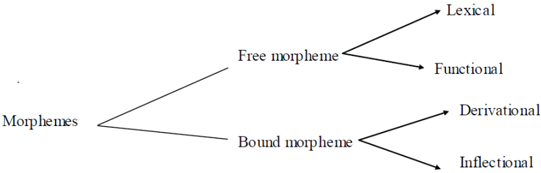
- The paper combines textbook inspection with a review of morphological terminology and word-formation processes, including inflection, derivation/affixation, compounding, borrowing, conversion, stress shift, clipping, acronym formation, blending, backformation, coinage, and onomatopoeia.
- Its main analysis is qualitative and argumentative: it contrasts the textbook’s vocabulary activities with the morphology/word-formation content the author считает should be taught.
Limitations
- The paper explicitly says, “What is proposed in this paper is a preliminary evaluative study,” so its textbook critique is presented as preliminary rather than a full empirical evaluation.
- The analysis is based on a critical reading of the *Action Pack* 9th-grade book “as an example,” which the text makes evident is a limited sample rather than a systematic study of all grades or all EFL materials.
- Not stated in the paper.
Model-written summary. Check it against the paper before relying on it.
Integrity signals
Registry
Cites
Statistics
Figures
Verification
Claims the paper makes
0 Valid · 3 Not valid · 19 Not checked · 32 Own results and interpretations
A result the paper reports from its own data — it cites no other source for it, so there is none to check. The quote shows it is in the paper.
In the paper
“Second, the vocabulary activities and exercises have nothing about English word-formation processes, except for the orphan exercise in AP unit (11) page (87) says 'make nouns from these adjectives and verbs: choose the correct ending and write the noun in the table below';”
plainSingle case- Asserted: passes — The authors put it forward as true.
- Checkable: passes — It can be checked against evidence.
- Load-bearing: passes — The paper’s conclusions depend on it.
- Based: passes — The paper gives a reason why it holds.
- Rests on an assumption not shown here.
A conclusion the paper draws from its own results — it cites no other source for it, so there is none to check. The quote shows it is in the paper.
In the paper
“which means that EFL designers and planners of this prescribed textbook tend to ignore the English word-formation processes entirely.”
plainSingle case- Asserted: passes — The authors put it forward as true.
- Checkable: passes — It can be checked against evidence.
- Load-bearing: passes — The paper’s conclusions depend on it.
- Based: passes — The paper gives a reason why it holds.
- Rests on an assumption not shown here.
None of the sources cited for this claim could be matched to a paper, so there is nothing to check it against.
In the paper
“No wonder, then, that vocabulary is less systematically taught and learnt than other aspects of the FL.”
- Also stated in: § I. INTRODUCTION · plain
“According to Lessard-Clouston, (1996), vocabulary continues to play a marginal role even in the more recent communicative approach.”
- Also stated in: § I. INTRODUCTION · plain
“The truth is that vocabulary is lacking in the overall curriculum. … Furthermore, except for the few vocabulary textbooks that explicitly cover vocabulary, most ESL/EFL textbooks do not systematically deal with vocabulary,”
What the sources say
- Not matchedcites Matthews, 1974
An author–year citation the paper’s reference list doesn’t settle. We don’t search these by name.
- Not matchedcites Lessard-Clouston, (1996)
An author–year citation the paper’s reference list doesn’t settle. We don’t search these by name.
plain- Asserted: passes — The authors put it forward as true.
- Checkable: passes — It can be checked against evidence.
- Load-bearing: passes — The paper’s conclusions depend on it.
- Based: passes — The paper gives a reason why it holds.
- Rests on an assumption not shown here.
- Also stated in: § I. INTRODUCTION · plain
None of the sources cited for this claim have been checked yet.
In the paper
“have mainly concentrated on the order of acquisition of morphemes, that is, on whether L2 learners acquire inflectional morphemes before derivational ones, or whether learners are able to decode and recognize them before they can move into a productive stage, disregarding the importance of knowing and the acquisition of the morphological processes available in the L2.”
What the sources say
- Not checked — no full text of the sourcecites Derwing (1976) matched to “Morpheme recognition and the learning of rules for derivational morphology” (1976) source
- Not matchedcites Derwing and Baker (1977 and 1979)
A range of references, not one source.
- Not checked — no full text of the sourcecites Freyd and Baron (1982) matched to “Individual differences in acquisition of derivational morphology” (1982) source
plain- Asserted: passes — The authors put it forward as true.
- Checkable: passes — It can be checked against evidence.
- Load-bearing: passes — The paper’s conclusions depend on it.
- Based: passes — The paper gives a reason why it holds.
In the paper
“The rationale behind teaching word-formation processes is that learners are likely to attach meanings to words which they have never encountered before if they can recognize within them the presence of familiar morphemes (McCarthy 1990).”
What the sources say
- Not matchedcites McCarthy 1990
An author–year citation the paper’s reference list doesn’t settle. We don’t search these by name.
hedgedstates a possible cause- Asserted: passes — The authors put it forward as true.
- Checkable: passes — It can be checked against evidence.
- Load-bearing: passes — The paper’s conclusions depend on it.
- Based: passes — The paper gives a reason why it holds.
- Not matched
8 more claims
Create a free account to see all 54 claims and every source verdict.
- Probably not a substantial claim. 37
- It may state two separate claims as one. 14
Citations
Cites
A Comprehensive Grammar of the English Language
Huddleston, R., Quirk, R., Greenbaum, S., Leech, G., & Svartvik, J. (1988) · Language · doi:10.2307/415437 · Cited by 7,587
Learning Vocabulary in Another Language
Nation, I. S. P. (2001) · Cambridge University Press · doi:10.1017/cbo9781139524759 · Cited by 6,608
The Practice of English Language Teaching
Harmer, J. (1983) · Cited by 6,117
A Comprehensive Grammar of the English Language
Beauvais, P. J., Quirk, R., Greenbaum, S., Leech, G., & Svartvik, J. (1987) · College Composition and Communication · doi:10.2307/357731 · Cited by 5,488
THEORETICAL BASES OF COMMUNICATIVE APPROACHES TO SECOND LANGUAGE TEACHING AND TESTING
CANALE, M., & SWAIN, M. (1980) · Applied Linguistics · doi:10.1093/applin/i.1.1 · Cited by 5,044
Theoretical Bases of Communicative Approaches to Second Language Teaching and Testing
CANALE, M. (1980) · Applied Linguistics · doi:10.1093/applin/1.1.1 · Cited by 4,021
Word Formation in Generative Grammar
Aronoff, M. (1976) · Medical Entomology and Zoology · Cited by 2,308
Bauer, L. (1983) · doi:10.1017/cbo9781139165846 · Cited by 1,905
Learning Vocabulary in Another Language
Nation, I. S. P., & Hunston, S. (2013) · doi:10.1017/cbo9781139858656 · Cited by 1,622
(1996) · Studies on Semantics in Generative Grammar · doi:10.1515/9783110814231.11 · Cited by 1,439
(1960) · Americanae (AECID Library) · Cited by 885
The Categories and Types of Present-Day English Word-Formation
Langendoen, D. T., & Marchand, H. (1971) · Language · doi:10.2307/412387 · Cited by 875
The Syntax and Semantics of Complex Nominals
Newmeyer, F. J., & Levi, J. N. (1979) · Language · doi:10.2307/412592 · Cited by 835
The practice of English language teaching
Bekeshova, K. (1991) · Cited by 635
English for Academic Purposes: A Guide and Resource Book for Teachers
Jordan, R. R. (1997) · Cambridge University Press eBooks · doi:10.1017/cbo9780511733062 · Cited by 621
The grammar of English nominalizations
Lees, R. (1960) · doi:10.2307/410682 · Cited by 599
An Introduction to Modern English Word-Formation
Adams, V. (2016) · Routledge eBooks · doi:10.4324/9781315504254 · Cited by 513
Historical trends in second language vocabulary instruction
Zimmerman, C. B. (1996) · Second Language Vocabulary Acquisition · doi:10.1017/cbo9781139524643.003 · Cited by 289
Schiffrin, D., & Lyons, J. (1983) · Language · doi:10.2307/413602 · Cited by 267
The Learning and Use of Academic English Words
Corson, D. (1997) · Language Learning · doi:10.1111/0023-8333.00025 · Cited by 267
Vocabulary Myths: Applying Second Language Research to Classroom Teaching
Folse, K. S. (2004) · Medical Entomology and Zoology · Cited by 247
Language Acquisition: Studies in First Language Development
Smith, N. V., Fletcher, P., & Garman, M. (1982) · Language · doi:10.2307/414118 · Cited by 209
Aronoff, M. (2007) · Language · doi:10.1353/lan.2008.0042 · Cited by 175
Language Acquisition: Studies in First Language Development
(1986) · Cambridge University Press eBooks · doi:10.1017/cbo9780511620683 · Cited by 170
Individual differences in acquisition of derivational morphology
Freyd, P., & Baron, J. (1982) · Journal of Verbal Learning and Verbal Behavior · doi:10.1016/s0022-5371(82)90615-6 · Cited by 150 · cited 1×
“As a rule, previous studies in L2 morphology or word-formation, such as Derwing (1976), Derwing and Baker (1977 and 1979), and Freyd and Baron (1982), have mainly concentrated on the order of acquisition of morphemes, that is, on whether L2 learners acquire inflectional morphemes before…”
Vocabulary Myths: Applying Second Language Research to Classroom Teaching
Folse, K. (2004) · doi:10.3998/mpub.23925 · Cited by 143
Bauer, L. (1984) · Lingua · doi:10.1016/0024-3841(84)90079-2 · Cited by 119
Hamp‐Lyons, L. (2001) · Cambridge University Press eBooks · doi:10.1017/cbo9780511667206.019 · Cited by 98
Yule, G. (2005) · Cambridge University Press eBooks · doi:10.1017/cbo9780511819742 · Cited by 89
Morpheme recognition and the learning of rules for derivational morphology
Derwing, B. L. (1976) · Canadian Journal of Linguistics/Revue canadienne de linguistique · doi:10.1017/s0008413100008045 · Cited by 81 · cited 1×
“As a rule, previous studies in L2 morphology or word-formation, such as Derwing (1976), Derwing and Baker (1977 and 1979), and Freyd and Baron (1982), have mainly concentrated on the order of acquisition of morphemes, that is, on whether L2 learners acquire inflectional morphemes before…”
(1985) · Medical Entomology and Zoology · Cited by 67
Templeton, S. (1989) · Reading Psychology · doi:10.1080/0270271890100303 · Cited by 31
English for Academic Purposes: Academic reading
Jordan, R. (1997) · doi:10.1017/cbo9780511733062.011 · Cited by 19
COMPOUND FORMATION IN GENERATIVE GRAMMAR
López, B. G. (1994) · Atlantis: Revista de la Asociación Española de Estudios Anglo-Norteamericanos · Cited by 16
(1985)
Research works printed but not linked: 14
- [5] Bachman, L.F. (1990). Fundamental consideration in language testing . Oxford: Oxford University Press. -
- [8] Boundouqui, N. (1997).Towards a More systematic Teaching of Vocabulary. Proceedings of the 1996 MATE Conference. Moroccan Association of Teachers of English: Morocco -
- [11] Also in Noam Chomsky. (1972). Studies on Semantics inGenerative Grammar, Mouton. The Hague. 11-61. -
- [16] Derwing, B.L. and Baker, W.J. (1977). The psychological basis for morphological rules, in MacNamara, J. (ed.), Language and Thought . New York: Academic Press, pp, 85-110. -
- [22] Hymes, D. (1972). On communicative competence. In J.B. Pride and J. Holmes (Eds) Sociolinguistic s, pp,269-93. Harmondswortth: Penguin. -
- [24] Laufer, B. (1997). The Lexical Plight in Second Language Reading. Cambridge: Cambridge University Press. -
- [30] Matthews, P.H. (1974). Morphology: an introduction to the theory of word structure Cambridge:Cambridge University Press. -
- [31] Matthews, P. H. (1990). Morphology. 2nd ed. Cambridge: Cambridge University Press -
- [32] McCarthy, M. (1990). Vocabulary. Oxford University Press: Oxford. -
- [33] Melouk, M. (1997). Editorial. MATE Newsletter , 1 (18). Moroccan Association of Teachers of English. -
- [37] Ullman, S. (1979). Semantics. New York: Basil Blackwell. -
- [2] Anderson, R.C., and Freebody, P. (1981). Vocabulary knowledge. In J. Guthrie (Ed.), Comprehension and teaching: Research reviews , pp, 77-117. Newark, DE: International Reading Association. -
- [3] Aronoff, M. (1994). Morphology. In A. C. Purves, L. Papa, and S. Jordan (Eds.), Encyclopedia of English studies and language arts , Vol. 2, pp, 820-821. New York.
- [14] Culter,A(1983). Degree of transparensy in word formation. Canadian Journal of Linguistics ,vol.26, pp, 40-55. -
Cited by
Task-Based Syllabus in Medical English Courses: A Journey towards Learning Independence
Nemet, L. D., & Benčina, K. (2019) · International Language Conference on the Importance of Learning Professional Foreign Languages for Communication between Cultures · doi:10.18690/978-961-286-252-7.5 · Cited by 20
Semiotika nacionalizma in rasizma v protiimigrantskih grafitih slovenske urbane krajine
Vičar, B. (2022) · doi:10.18690/um.ff.7.2022.2 · Cited by 15
Didaktik der slawischen Sprachen – Beiträge zum 2. Arbeitskreis in Innsbruck (19.–20.2.2018)
Drackert, A., & Karl, K. B. (2019) · innsbruck university press eBooks · doi:10.15203/3187-80-1 · Cited by 12
Lin, M. (2017) · IRAL - International Review of Applied Linguistics in Language Teaching · doi:10.1515/iral-2015-0081 · Cited by 16
Teaching Russian language: the Role of Word Formation
Shchuklina, T., Mardieva, L. А., & Alyokhina, T. A. (2016) · The European Proceedings of Social & Behavioural Sciences · doi:10.15405/epsbs.2016.07.31 · Cited by 12
“…teaching (Amiantova, 1999; Hashemi, &Azizinezhad, 2011; Kieliszek, 2015;Krasilnikova, 2011; Motina, 1988; Plotnikova, 2012;Shekikhacheva, 1987; Tahaineh, 2012; Vsevolodova, 2001), as well as in applied studies (Baayen, &Lieber, 1991;Barykina, &Dobrovolskaya, 2015; Nishimoto, 2004;Slesareva,…”
Metadata
- Authors
- Tahaineh, Y.
- Affiliations
- Al-Balqa Applied University (JO)
- Corresponding author
- Tahaineh, Yousef
- Venue
- Journal of Language Teaching and Research
- Publisher
- Academy Publication
- Published
- 2012-11-01
- Volume
- 3
- Issue
- 6
- ISSN
- 1798-4769 (ISSN-L)
- OpenAlex
- W2108207086
- Semantic Scholar
- 22a14ad4c605d7564a4967516ae2c21a249fe6e6
- Cited by
- 52
- References
- 38
- Citations by year
- 2025: 1 · 2024: 1 · 2023: 1 · 2022: 16 · 2021: 1 · 2020: 1 · 2019: 24 · 2018: 3 · 2017: 1 · 2016: 2 · 2015: 1
- FWCI
- 0.64
- Type
- journal article
- Language
- en
- Open access
- bronze
- doi.org
- Locations
- Journal of Language Teaching and Research (publishedVersion)
- Topics
- Social Sciences › Psychology › Developmental and Educational Psychology › Second Language Acquisition and Learning
- Social Sciences › Arts and Humanities › Language and Linguistics › EFL/ESL Teaching and Learning
- Social Sciences › Arts and Humanities › Language and Linguistics › Linguistics and Language Studies
- Keywords
- word formation mechanisms, English morphology, vocabulary teaching, EFL textbooks, learner autonomy, communicative language teaching
About these checks
Registry, retraction, Cites and statistics results are computed, not judged, with one exception: a printed reference that no index lists is read once by a model before it counts as a citation error. Claims are extracted by a model and kept only when their quote appears verbatim in the text; each cited source is then checked, with a model’s help, for whether it says what the claim relies on. Those verdicts can be wrong — read the claim’s quote and the cited source before relying on one.
A language model drew the claims from the paper on 2026-10-10, under version 3 of the claim definition (model deepseek-v4.1-flash, prompt extract-v3).
A second model labelled each claim on 2026-10-10 (model jev-1.13-20260917, definition revision gold-guideline-v0.2).
Statistics and arithmetic are recomputed, not judged.
Confidence bands are shown only for fields calibrated on our annotated test set. None is calibrated yet, so no band is shown.
What counts as a claim ›How we measure confidence ›How we check this ›
Are you an author, or do you see a problem with this page? Request a review
Data sources
Bibliographic data: Semantic Scholar, OpenAlex, Crossref.
Contains information from the Semantic Scholar Academic Graph Datasets, made available under the ODC Attribution License (ODC-BY 1.0).
Semantic Scholar’s data is described in: Kinney, R., et al. (2023). The Semantic Scholar Open Data Platform. arXiv:2301.10140.
