

The DOI matches its Crossref record; the references it cites are not checked yet.
Last decade update for three-finger toxins: Newly emerging structures and biological activities
Open accessAbstract
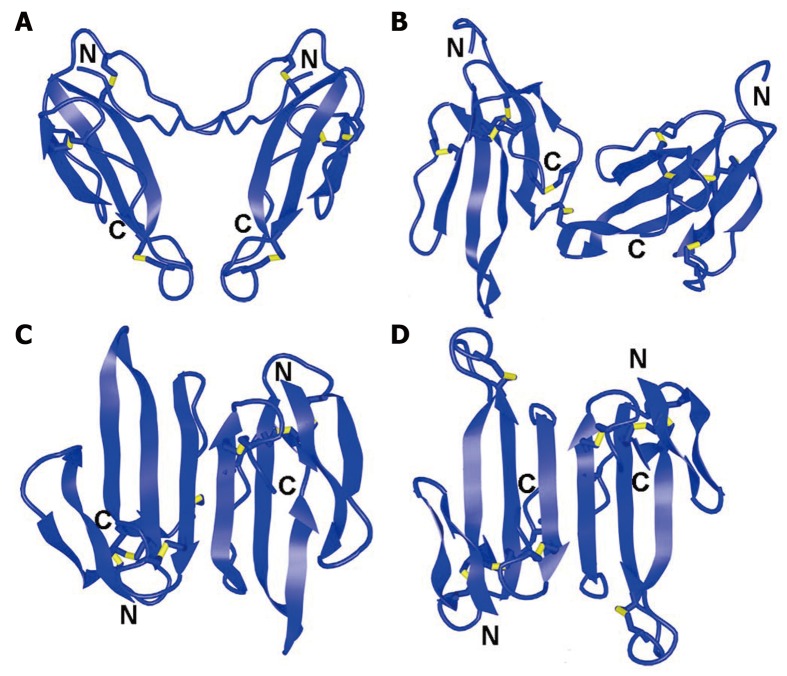
snake family, their presence has also been detected in the venoms of snakes from other families. The first TFT, α-bungarotoxin, was discovered almost 50 years ago and has since been used widely as a specific marker of the α7 and muscle-type nicotinic acetylcholine receptors. To date, the number of TFT amino acid sequences deposited in the UniProt Knowledgebase free-access database is more than 700, and new members are being added constantly. Although structural variations among the TFTs are not numerous, several new structures have been discovered recently; these include the disulfide-bound dimers of TFTs and toxins with nonstandard pairing of disulfide bonds. New types of biological activities have also been demonstrated for the well-known TFTs, and research on this topic has become a hot topic of TFT studies. The classic TFTs α-bungarotoxin and α-cobratoxin, for example, have now been shown to inhibit ionotropic receptors of γ-aminobutyric acid, and some muscarinic toxins have been shown to interact with adrenoceptors. New, unexpected activities have been demonstrated for some TFTs as well, such as toxin interaction with interleukin or insulin receptors and even TFT-activated motility of sperm. This minireview provides a summarization of the data that has emerged in the last decade on the TFTs and their activities.
Overview
The claims and statistics of this paper haven’t been checked yet.
Run the check — free, no account needed. It reads the open-access text and checks the sources it cites.
Integrity signals
Registry
Cites
Statistics
Figures

Verification
Claims the paper makes
The claims and statistics of this paper haven’t been checked yet.
Run the check — free, no account needed. It reads the open-access text and checks the sources it cites.
Claims other papers make about this one
Each is checked against this paper’s own text: does it say what the citing paper says it does?
The source backs part of the claim, not all of it — or backs it for a different population, condition or comparison.
In the citing paper
“These toxins are characterized by the presence of three distinct beta-sheet loops radiating from a hydrophobic disulfide core [16].”
From Role of Regulated Cell Death Pathways in Snakebite Envenomation: Mechanisms, Crosstalk, and Therapeutic Opportunities (2026) · cites this paper as [16]
Experimental — accuracy not yet measured
Self-check
Percentages, sums and reported differences re-computed from the paper’s own numbers.
The self-check needs the paper’s full text.
Citations
The citation lists haven’t been fetched yet
References 49 · Cited by 78
Research works printed but not linked: 49
- Utkin Y, Sunagar K, Jackson TNW, Reeks T, Fry BG. Three-Finger Toxins (3FTxs). Fry BG, editor. Venomous Reptiles and Their Toxins: Evolution, Pathophysiology and Biodiscovery. New York: Oxford University Press, 2015: 215–227
- 10.1016/j.toxicon.2010.07.010 · DOI
- 10.1016/j.toxicon.2012.09.007 · DOI
- 10.3390/toxins8060178 · DOI
- 10.1007/s00239-018-9864-6 · DOI
- 10.1098/rspb.2018.1003 · DOI
- 10.1016/j.tips.2014.11.003 · DOI
- Chang CC, Lee CY. isolation of neurotoxins from the venom of Bungarus multicinctus and their modes of neuromuscular blocking action. Arch Int Pharmacodyn Ther 1963; 144: 241-257
- 10.1074/jbc.M802085200 · DOI
- 10.1074/jbc.M111.322313 · DOI
- 10.1096/fj.08-113555 · DOI
- 10.1074/jbc.M109.074161 · DOI
- 10.1038/srep23904 · DOI
- 10.1021/bi5004475 · DOI
- Chang LS, Liou JC, Lin SR, Huang HB. Purification and characterization of a neurotoxin from the venom of Ophiophagus hannah (king cobra). Biochem Biophys Res Commun 2002; 294: 574-578 · DOI
- 10.1021/acschembio.5b00492 · DOI
- 10.1016/j.biochi.2013.06.025 · DOI
- Chung C, Wu BN, Yang CC, Chang LS. Muscarinic toxin-like proteins from Taiwan banded krait (Bungarus multicinctus) venom: purification, characterization and gene organization. Biol Chem 2002; 383: 1397-1406 · DOI
- 10.1134/S1607672915050099 · DOI
- 10.1134/S1607672918020205 · DOI
- 10.1038/nature11494 · DOI
- 10.1016/j.toxicon.2013.04.008 · DOI
- 10.2174/1871527317666171221110419 · DOI
- 10.1038/s41421-018-0026-1 · DOI
- 10.1074/jbc.M114.561076 · DOI
- 10.1073/pnas.1415488112 · DOI
- 10.1016/j.neuropharm.2015.01.001 · DOI
- 10.1074/jbc.M115.648824 · DOI
- 10.1073/pnas.0600847103 · DOI
- 10.1016/j.toxicon.2011.08.004 · DOI
- 10.1016/j.toxicon.2010.05.001 · DOI
- 10.1016/j.toxicon.2013.04.017 · DOI
- Joubert FJ. The amino acid sequence of protein CM-3 from Dendroaspis polylepis polylepis (black mamba) venom. Int J Biochem 1985; 17: 695-699 · DOI
- Jolkkonen M, Van Giersbergen PL, Hellman U, Wernstedt C, Oras A, Satyapan N, Adem A, Karlsson E. Muscarinic toxins from the black mamba Dendroaspis polylepis. Eur J Biochem 1995; 234: 579-585 · DOI
- 10.1111/j.1476-5381.2009.00532.x · DOI
- 10.1016/j.toxicon.2011.03.009 · DOI
- 10.1111/j.1476-5381.2010.00966.x · DOI
- 10.1038/s41598-017-02953-0 · DOI
- Rowan EG, Harvey AL. Snake toxins from mamba venoms: unique tools for the physiologist. Acta Chim Slov 2011; 58: 689-692
- 10.3390/toxins8100303 · DOI
- 10.1016/j.bbrc.2013.10.125 · DOI
- 10.1038/srep25935 · DOI
- 10.1038/srep32036 · DOI
- 10.1186/1756-6606-4-2 · DOI
- 10.3109/10799893.2013.865747 · DOI
- 10.1002/cbic.201200081 · DOI
- 10.1021/jm401904q · DOI
- 10.1134/S1607672917040068 · DOI
- 10.1186/s40409-018-0140-4 · DOI
Metadata
- Authors
- Utkin, Y. N.
- Affiliations
- Institute of Bioorganic Chemistry (RU)
- Corresponding author
- Utkin, Yuri N
- ORCID
- Utkin, Yuri N
- Venue
- World Journal of Biological Chemistry
- Publisher
- Baishideng Publishing Group Inc.
- Published
- 2019-01-07
- Volume
- 10
- Issue
- 1
- Pages
- 17-27
- ISSN
- 1949-8454 (ISSN-L)
- PMC
- PMC6314878
- OpenAlex
- W2905755315
- Cited by
- 78
- References
- 49
- Citations by year
- 2026: 15 · 2025: 11 · 2024: 7 · 2023: 9 · 2022: 11 · 2021: 11 · 2020: 6 · 2019: 8
- FWCI
- 0.88
- Type
- journal article
- Language
- en
- Open access
- diamond
- doi.org
- Licence
- cc-by-nc
- Locations
- World Journal of Biological Chemistry (publishedVersion, cc-by-nc)
- Europe PMC (PubMed Central) (publishedVersion, cc-by-nc)
- PubMed Central (publishedVersion, cc-by-nc)
- PubMed (publishedVersion)
- Funders
- Russian Foundation for Basic Research
- Topics
- Life Sciences › Pharmacology, Toxicology and Pharmaceutics › Toxicology › Venomous Animal Envenomation and Studies
- Life Sciences › Biochemistry, Genetics and Molecular Biology › Molecular Biology › Nicotinic Acetylcholine Receptors Study
- Health Sciences › Medicine › Clinical Neurology › Botulinum Toxin and Related Neurological Disorders
- Keywords
- three-finger toxins, snake venom toxins, alpha-bungarotoxin, alpha-cobratoxin, nicotinic acetylcholine receptors, GABAA receptor, muscarinic receptors, adrenergic receptors, insulin receptor binding, sperm motility, toxin structure
About these checks
Registry, retraction, Cites and statistics results are computed, not judged, with one exception: a printed reference that no index lists is read once by a model before it counts as a citation error. Claims are extracted by a model and kept only when their quote appears verbatim in the text; each cited source is then checked, with a model’s help, for whether it says what the claim relies on. Those verdicts can be wrong — read the claim’s quote and the cited source before relying on one.
Statistics and arithmetic are recomputed, not judged.
Confidence bands are shown only for fields calibrated on our annotated test set. None is calibrated yet, so no band is shown.
What counts as a claim ›How we measure confidence ›How we check this ›
Are you an author, or do you see a problem with this page? Request a review
How to cite
Cite CoChat for the checks on this page, and the paper for its own findings.
- This page
- CoChat. (2026). Citation check: Last decade update for three-finger toxins: Newly emerging structures and biological activities. https://app.cochat.ai/papers/10.4331/wjbc.v10.i1.17
- The paper
- Utkin, Y. N. (2019). Last decade update for three-finger toxins: Newly emerging structures and biological activities. World Journal of Biological Chemistry. https://doi.org/10.4331/wjbc.v10.i1.17
