

The DOI matches its Crossref record; 1 of the 1 references it cites were found in a registry or an index; none of the 14 sources its claims cite is checked for support yet.
Online narrative therapy intervention improves post-traumatic stress disorder symptoms, perceived stress, anxiety, and depression in nurses: a randomized controlled trial
Open accessAbstract
OBJECTIVE: To evaluate the effect of narrative therapy on post-traumatic stress disorder (PTSD) symptoms, perceived stress, anxiety, and depression in nurses. METHODS: A total of 92 clinical nurses with positive PTSD symptom screening results were randomly assigned (1:1) to the intervention or control group. The intervention group received narrative therapy and a psychological stress leaflet, while the control group received only a psychological stress leaflet. PTSD, perceived stress, anxiety, and depression were measured before and after the intervention to assess the effect of narrative therapy. RESULTS: After the intervention, the intervention group showed significantly lower PTSD symptom levels (p = 0.025), perceived stress (p = 0.033), anxiety (p = 0.004), and depression (p = 0.015) than the control group. Regarding the dichotomous PTSD, anxiety, and depression outcomes, there was a statistically significant decrease in the number of positive cases of PTSD (p = 0.030) and anxiety (p = 0.002), but no significant change in the number of positive cases of depression (p = 0.060). CONCLUSION: Narrative therapy is expected to alleviate PTSD symptoms, stress, anxiety, and depression among frontline clinical nurses, and healthcare managers should consider narrative therapy interventions to improve the mental health of their nursing staff. CLINICAL TRIAL REGISTRATION: ChiCTR2200058472. Registration date: April 09, 2022. Date of first recruitment: June 1, 2022.
Overview
AI snapshot
Written from the paper’s full text.
TL;DR
In a two-hospital cluster-randomized trial of 92 clinical nurses with positive PTSD screening, an 8-week online narrative therapy program plus a stress leaflet improved PTSD symptoms, perceived stress, anxiety, and depression compared with leaflet only. Positive cases decreased significantly for PTSD and anxiety but not depression.
Key findings
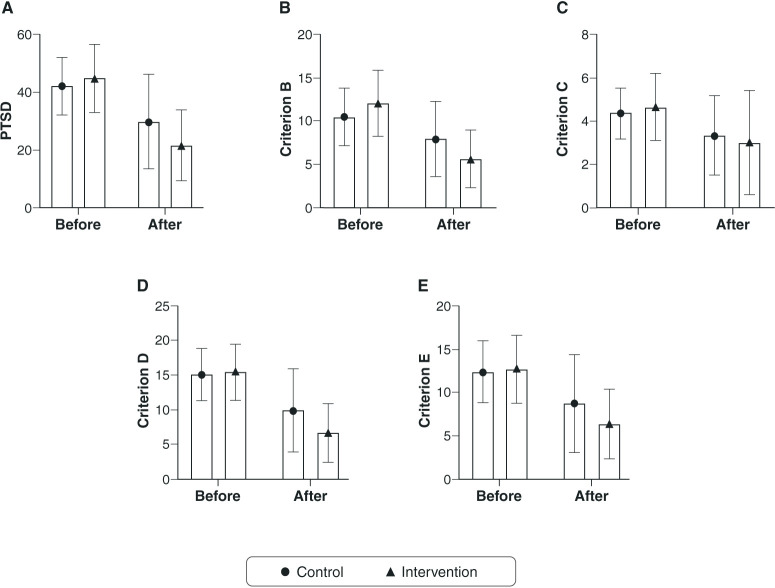
- After the intervention, the intervention group had significantly lower PTSD symptom levels (p = 0.025), perceived stress (p = 0.033), anxiety (p = 0.004), and depression (p = 0.015) than the control group.
- For PTSD symptom clusters, criteria B, D, and E scores were significantly lower in the intervention group than the control group (p < 0.05), while criterion C (avoidance) did not differ significantly (p > 0.05).
- The number of positive PTSD cases (p = 0.030) and anxiety cases (p = 0.002) decreased significantly in the intervention group versus control, but there was no significant change in positive depression cases (p = 0.060).
- Baseline demographic characteristics and PTSD, perceived stress, anxiety, and depression scores did not differ significantly between groups (p > 0.05).
Methods
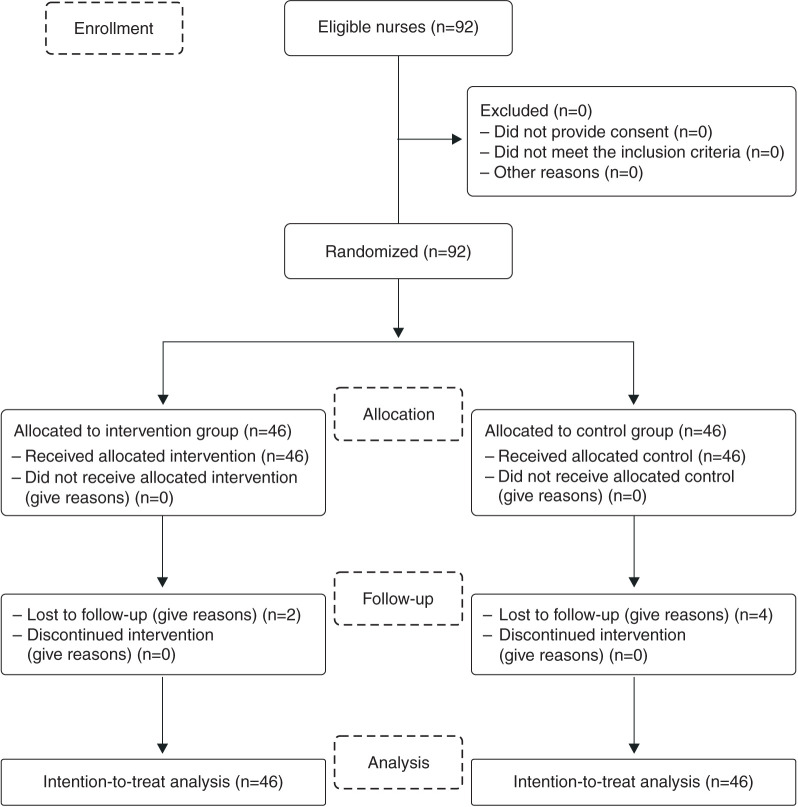
- Cluster randomized controlled trial conducted in two tertiary hospitals in Jiangsu Province from June 2022 to August 2022. A total of 92 registered nurses aged ≥ 18 years with a PTSD checklist score ≥ 33 were randomized 1:1 to intervention (n = 46) or control (n = 46); the target sample size was 88 based on G*Power.
- The intervention group received a psychological stress leaflet plus one-to-one online narrative therapy video calls of 45-60 minutes once weekly for 8 weeks; the control group received only the psychological stress leaflet. Outcomes were measured with the PTSD Checklist for DSM-5, Perceived Stress Scale, Generalized Anxiety Disorder Scale, and Patient Health Questionnaire-9 before and after the intervention.
- Intention-to-treat analysis was used for missing data. Categorical variables were analyzed with Pearson’s chi-square test; continuous variables used independent sample t-tests or Mann-Whitney U tests. SPSS 26.0 was used, with p < 0.05 considered statistically significant (two-tailed). Two intervention participants discontinued and four control participants did not complete the final assessment.
Limitations
- The paper states: PTSD symptoms were assessed with the self-reported PTSD Checklist for DSM-5 rather than a structured clinical interview; the sample was 96.7% women; the study used a quantitative design only; time elapsed since the traumatic experience was not determined; and long-term effects were not assessed.
- Evident from the text: the sample was small (92 nurses) and drawn from only two tertiary hospitals, with cluster randomization by institution, which may limit generalizability and introduce cluster-level confounding.
- Evident from the text: the methods do not describe blinding of participants, interventionists, or outcome assessors, and the control condition was a leaflet only rather than an active comparator.
Model-written summary. Check it against the paper before relying on it.
Integrity signals
Registry
Cites
Statistics
Figures
Verification
Claims the paper makes
9 Own result · 8 Not checked yet · 5 Own method · 4 Own interpretation · 1 Sources not found
A result the paper reports from its own data — it cites no other source for it, so there is none to check. The quote shows it is in the paper.
In the paper
“Regarding the dichotomous PTSD, anxiety, and depression outcomes, there was a statistically significant decrease in the number of positive cases of PTSD (p = 0.030) and anxiety (p = 0.002), but no significant change in the number of positive cases of depression (p = 0.060).”
- Also stated in: § Secondary outcomes · plain
“Among the dichotomous outcome variables, the number of anxiety cases was significantly lower in the intervention group than the control group (p < 0.01), but there was no difference in the number of depression cases (p > 0.05).”
§ Online narrative therapy intervention improves post-traumatic stress disorder symptoms, perceived stress, anxiety, and depression in nurses: a randomized controlled trial > Abstract > Results:
plaindirect- Asserted: passes — The authors put it forward as true.
- Checkable: passes — It can be checked against evidence.
- Load-bearing: passes — The paper’s conclusions depend on it.
- Based: passes — The paper gives a reason why it holds.
- Also stated in: § Secondary outcomes · plain
A result the paper reports from its own data — it cites no other source for it, so there is none to check. The quote shows it is in the paper.
In the paper
“However, there was no significant difference in criterion C scores between the groups (p > 0.05), as shown in Table 3.”
§ Online narrative therapy intervention improves post-traumatic stress disorder symptoms, perceived stress, anxiety, and depression in nurses: a randomized controlled trial > Results > Primary outcome
plain- Asserted: passes — The authors put it forward as true.
- Checkable: passes — It can be checked against evidence.
- Load-bearing: unclear — It is unclear whether the paper’s conclusions depend on it.
- Based: passes — The paper gives a reason why it holds.
A result the paper reports from its own data — it cites no other source for it, so there is none to check. The quote shows it is in the paper.
In the paper
“Regarding the dichotomous PTSD, anxiety, and depression outcomes, there was a statistically significant decrease in the number of positive cases of PTSD (p = 0.030) and anxiety (p = 0.002), but no significant change in the number of positive cases of depression (p = 0.060).”
- Also stated in: § Primary outcome · plain
“The number of PTSD cases in the intervention group was significantly lower than in the control group (p < 0.05).”
§ Online narrative therapy intervention improves post-traumatic stress disorder symptoms, perceived stress, anxiety, and depression in nurses: a randomized controlled trial > Abstract > Results:
plaindirect- Asserted: passes — The authors put it forward as true.
- Checkable: passes — It can be checked against evidence.
- Load-bearing: passes — The paper’s conclusions depend on it.
- Based: passes — The paper gives a reason why it holds.
- Also stated in: § Primary outcome · plain
A result the paper reports from its own data — it cites no other source for it, so there is none to check. The quote shows it is in the paper.
In the paper
“After the intervention, the intervention group showed significantly lower PTSD symptom levels (p = 0.025), perceived stress (p = 0.033), anxiety (p = 0.004), and depression (p = 0.015) than the control group.”
- Also stated in: § Secondary outcomes · plain
“After the intervention, perceived stress, anxiety, and depression were significantly lower in the intervention group than the control group (p < 0.05), as shown in Table 3.”
§ Online narrative therapy intervention improves post-traumatic stress disorder symptoms, perceived stress, anxiety, and depression in nurses: a randomized controlled trial > Abstract > Results:
plain- Asserted: passes — The authors put it forward as true.
- Checkable: passes — It can be checked against evidence.
- Load-bearing: passes — The paper’s conclusions depend on it.
- Based: passes — The paper gives a reason why it holds.
- Also stated in: § Secondary outcomes · plain
A result the paper reports from its own data — it cites no other source for it, so there is none to check. The quote shows it is in the paper.
In the paper
“After the intervention, the intervention group showed significantly lower PTSD symptom levels (p = 0.025), perceived stress (p = 0.033), anxiety (p = 0.004), and depression (p = 0.015) than the control group.”
- Also stated in: § Secondary outcomes · plain
“After the intervention, perceived stress, anxiety, and depression were significantly lower in the intervention group than the control group (p < 0.05), as shown in Table 3.”
§ Online narrative therapy intervention improves post-traumatic stress disorder symptoms, perceived stress, anxiety, and depression in nurses: a randomized controlled trial > Abstract > Results:
plaindirect- Asserted: passes — The authors put it forward as true.
- Checkable: passes — It can be checked against evidence.
- Load-bearing: passes — The paper’s conclusions depend on it.
- Based: passes — The paper gives a reason why it holds.
- Also stated in: § Secondary outcomes · plain
A result the paper reports from its own data — it cites no other source for it, so there is none to check. The quote shows it is in the paper.
In the paper
“After the intervention, the intervention group showed significantly lower PTSD symptom levels (p = 0.025), perceived stress (p = 0.033), anxiety (p = 0.004), and depression (p = 0.015) than the control group.”
- Also stated in: § Primary outcome · plain
“After the intervention, PTSD symptoms (criteria B, D, and E scores) were significantly lower in the intervention group than the control group (p < 0.05).”
§ Online narrative therapy intervention improves post-traumatic stress disorder symptoms, perceived stress, anxiety, and depression in nurses: a randomized controlled trial > Abstract > Results:
plain- Asserted: passes — The authors put it forward as true.
- Checkable: passes — It can be checked against evidence.
- Load-bearing: passes — The paper’s conclusions depend on it.
- Based: passes — The paper gives a reason why it holds.
- Also stated in: § Primary outcome · plain
A result the paper reports from its own data — it cites no other source for it, so there is none to check. The quote shows it is in the paper.
In the paper
“After the intervention, the intervention group showed significantly lower PTSD symptom levels (p = 0.025), perceived stress (p = 0.033), anxiety (p = 0.004), and depression (p = 0.015) than the control group.”
- Also stated in: § Secondary outcomes · plain
“After the intervention, perceived stress, anxiety, and depression were significantly lower in the intervention group than the control group (p < 0.05), as shown in Table 3.”
§ Online narrative therapy intervention improves post-traumatic stress disorder symptoms, perceived stress, anxiety, and depression in nurses: a randomized controlled trial > Abstract > Results:
plaindirect- Asserted: passes — The authors put it forward as true.
- Checkable: passes — It can be checked against evidence.
- Load-bearing: passes — The paper’s conclusions depend on it.
- Based: passes — The paper gives a reason why it holds.
- Also stated in: § Secondary outcomes · plain
A result the paper reports from its own data — it cites no other source for it, so there is none to check. The quote shows it is in the paper.
In the paper
“Regarding the dichotomous PTSD, anxiety, and depression outcomes, there was a statistically significant decrease in the number of positive cases of PTSD (p = 0.030) and anxiety (p = 0.002), but no significant change in the number of positive cases of depression (p = 0.060).”
- Also stated in: § Secondary outcomes · plain
“Among the dichotomous outcome variables, the number of anxiety cases was significantly lower in the intervention group than the control group (p < 0.01), but there was no difference in the number of depression cases (p > 0.05).”
§ Online narrative therapy intervention improves post-traumatic stress disorder symptoms, perceived stress, anxiety, and depression in nurses: a randomized controlled trial > Abstract > Results:
plain- Asserted: passes — The authors put it forward as true.
- Checkable: passes — It can be checked against evidence.
- Load-bearing: unclear — It is unclear whether the paper’s conclusions depend on it.
- Based: passes — The paper gives a reason why it holds.
- Also stated in: § Secondary outcomes · plain
A result the paper reports from its own data — it cites no other source for it, so there is none to check. The quote shows it is in the paper.
In the paper
“After the intervention, PTSD symptoms (criteria B, D, and E scores) were significantly lower in the intervention group than the control group (p < 0.05).”
§ Online narrative therapy intervention improves post-traumatic stress disorder symptoms, perceived stress, anxiety, and depression in nurses: a randomized controlled trial > Results > Primary outcome
plain- Asserted: passes — The authors put it forward as true.
- Checkable: passes — It can be checked against evidence.
- Load-bearing: passes — The paper’s conclusions depend on it.
- Based: passes — The paper gives a reason why it holds.
A conclusion the paper draws from its own results — it cites no other source for it, so there is none to check. The quote shows it is in the paper.
In the paper
“The intervention used in this study is easy to implement and replicate and can reduce mental health problems among nurses.”
§ Online narrative therapy intervention improves post-traumatic stress disorder symptoms, perceived stress, anxiety, and depression in nurses: a randomized controlled trial > Discussion > Relevance for clinical practice
plaindirect- Asserted: passes — The authors put it forward as true.
- Checkable: passes — It can be checked against evidence.
- Load-bearing: passes — The paper’s conclusions depend on it.
- Based: passes — The paper gives a reason why it holds.
- Rests on an assumption: The psychological stress leaflet given to both groups does not itself substantially reduce PTSD symptoms, perceived stress, anxiety, or depression.
- Rests on an assumption: The 92 nurses from two tertiary hospitals in Jiangsu Province are representative of frontline clinical nurses in general.
- Rests on an assumption: The observed benefits are attributable to the specific narrative therapy techniques rather than to nonspecific factors such as additional attention or therapeutic contact.
- It may state two separate claims as one. 6
- Probably not a substantial claim. 4
What the paper did — it cites no source for this, so there is none to check. The quote shows it is in the paper.
In the paper
“This study, a group of randomized controlled trials, was conducted in two tertiary hospitals in Jiangsu Province from June 2022 to August 2022, using a cluster randomization method according to institution. The intervention and control groups were randomly grouped by lottery, which was done to prevent sample contamination and improve participant adherence.”
- Also stated in: § Methods: · plain
“A total of 92 clinical nurses with positive PTSD symptom screening results were randomly assigned (1:1) to the intervention or control group.”
§ Online narrative therapy intervention improves post-traumatic stress disorder symptoms, perceived stress, anxiety, and depression in nurses: a randomized controlled trial > Methods > Study design and participants
plain- Asserted: passes — The authors put it forward as true.
- Checkable: passes — It can be checked against evidence.
- Load-bearing: passes — The paper’s conclusions depend on it.
- Based: passes — The paper gives a reason why it holds.
It may state two separate claims as one.
- Also stated in: § Methods: · plain
In the paper
“Research suggests that PTSD symptoms may lead to additional psychological disorders, such as anxiety and depression, and these combined symptoms may decrease as PTSD symptoms improve.54”
§ Online narrative therapy intervention improves post-traumatic stress disorder symptoms, perceived stress, anxiety, and depression in nurses: a randomized controlled trial > Discussion
What the sources say
- Not checked yetcites [54] Fan Y Shi Y Zhang J Sun D Wang X Fu G The effects of narrative exposure therapy on COVID-19 patients with post-traumatic stress symptoms: a randomized controlled trial J Affect Disord 2021 293 141 7 34186232 PMC8234566
hedgedconditional- Asserted: passes — The authors put it forward as true.
- Checkable: passes — It can be checked against evidence.
- Load-bearing: unclear — It is unclear whether the paper’s conclusions depend on it.
- Based: passes — The paper gives a reason why it holds.
It may state two separate claims as one.
In the paper
“A study of veterans diagnosed with PTSD found a significant reduction in PTSD symptoms after applying an NT intervention; the participants had high levels of satisfaction with the treatment process, and the findings suggested the need for further research into NT as a potential alternative to existing PTSD treatments.36”
§ Online narrative therapy intervention improves post-traumatic stress disorder symptoms, perceived stress, anxiety, and depression in nurses: a randomized controlled trial > Introduction
What the sources say
- Not checked yetcites [36] Erbes CR Stillman JR Wieling E Bera W Leskela J A pilot examination of the use of narrative therapy with individuals diagnosed with PTSD J Trauma Stress 2014 27 730 3 25385702
plaindirect- Asserted: passes — The authors put it forward as true.
- Checkable: passes — It can be checked against evidence.
- Load-bearing: fails — The paper’s conclusions may not depend on it.
- Based: passes — The paper gives a reason why it holds.
Probably not a substantial claim. The paper’s conclusions may not depend on it.
A conclusion the paper draws from its own results — it cites no other source for it, so there is none to check. The quote shows it is in the paper.
In the paper
“This study demonstrated that an online NT-based treatment intervention reduced PTSD symptoms, perceived stress, anxiety, and depression in clinical nurses.”
§ Online narrative therapy intervention improves post-traumatic stress disorder symptoms, perceived stress, anxiety, and depression in nurses: a randomized controlled trial > Discussion
boosteddirect- Asserted: passes — The authors put it forward as true.
- Checkable: passes — It can be checked against evidence.
- Load-bearing: passes — The paper’s conclusions depend on it.
- Based: passes — The paper gives a reason why it holds.
It may state two separate claims as one.
- Rests on an assumption: The psychological stress leaflet given to both groups does not itself substantially reduce PTSD symptoms, perceived stress, anxiety, or depression.
- Rests on an assumption: The 92 nurses from two tertiary hospitals in Jiangsu Province are representative of frontline clinical nurses in general.
- Rests on an assumption: The observed benefits are attributable to the specific narrative therapy techniques rather than to nonspecific factors such as additional attention or therapeutic contact.
In the paper
“Intention-to-treat analysis was used to process missing data.48”
§ Online narrative therapy intervention improves post-traumatic stress disorder symptoms, perceived stress, anxiety, and depression in nurses: a randomized controlled trial > Methods > Data analyses
What the sources say
- Not matchedcites [48] Fisher LD Dixon DO Herson J Frankowski RK Hearron MS Peace KE Intention to treatment in clinical trials New York Statistical Issues in Pharmaceutical Drug Development 1989
Couldn’t be matched to a paper in Crossref, so it can’t be checked.
plain- Asserted: passes — The authors put it forward as true.
- Checkable: passes — It can be checked against evidence.
- Load-bearing: passes — The paper’s conclusions depend on it.
- Based: passes — The paper gives a reason why it holds.
Probably not a substantial claim.
- Not matched
In the paper
“In a study on psychiatric nurses, Yoon et al.14 found that the Posttraumatic Stress Disorder Checklist for DSM-5 had strong internal consistency.”
§ Online narrative therapy intervention improves post-traumatic stress disorder symptoms, perceived stress, anxiety, and depression in nurses: a randomized controlled trial > Methods > Measures
What the sources say
- Not checked yetcites [14] Yoon HJ Bae SY Baek J Factors associated with post-traumatic stress disorder in nurses after directly caring for COVID-19 patients: a cross-sectional study BMC Nurs 2023 22 282 37620908 PMC10464410
boosted- Asserted: passes — The authors put it forward as true.
- Checkable: passes — It can be checked against evidence.
- Load-bearing: fails — The paper’s conclusions may not depend on it.
- Based: passes — The paper gives a reason why it holds.
Probably not a substantial claim. The paper’s conclusions may not depend on it.
A conclusion the paper draws from its own results — it cites no other source for it, so there is none to check. The quote shows it is in the paper.
In the paper
“Online NT-based treatment programs can improve perceived stress and PTSD, anxiety, and depression levels among nurses.”
§ Online narrative therapy intervention improves post-traumatic stress disorder symptoms, perceived stress, anxiety, and depression in nurses: a randomized controlled trial > Discussion > Relevance for clinical practice
plaindirect- Asserted: passes — The authors put it forward as true.
- Checkable: passes — It can be checked against evidence.
- Load-bearing: passes — The paper’s conclusions depend on it.
- Based: passes — The paper gives a reason why it holds.
It may state two separate claims as one.
- Rests on an assumption: The psychological stress leaflet given to both groups does not itself substantially reduce PTSD symptoms, perceived stress, anxiety, or depression.
- Rests on an assumption: The 92 nurses from two tertiary hospitals in Jiangsu Province are representative of frontline clinical nurses in general.
- Rests on an assumption: The observed benefits are attributable to the specific narrative therapy techniques rather than to nonspecific factors such as additional attention or therapeutic contact.
None of the sources cited for this claim have been checked yet.
In the paper
“The Chinese version of the scale has good reliability and validity.40,47”
§ Online narrative therapy intervention improves post-traumatic stress disorder symptoms, perceived stress, anxiety, and depression in nurses: a randomized controlled trial > Methods > Measures
What the sources say
- Not checked yetcites [40] Yang TZ Huang HT An epidemiological study on stress among urban residents in social transition period Zhonghua Liu Xing Bing Xue Za Zhi 2003 24 760 4 14521764
- Not checked yetcites [47] Huang F Wang H Wang Z Zhang J Du W Su C Psychometric properties of the perceived stress scale in a community sample of Chinese BMC Psychiatry 2020 20 130 32197589 PMC7082906
plain- Asserted: passes — The authors put it forward as true.
- Checkable: passes — It can be checked against evidence.
- Load-bearing: unclear — It is unclear whether the paper’s conclusions depend on it.
- Based: passes — The paper gives a reason why it holds.
It may state two separate claims as one.
What the paper did — it cites no source for this, so there is none to check. The quote shows it is in the paper.
In the paper
“Although we recruited and assessed 92 registered nurses, two members of the intervention group discontinued the intervention due to work-related reasons. Four nurses in the control group were unable to complete the final assessment, as shown in Figure 1.”
§ Online narrative therapy intervention improves post-traumatic stress disorder symptoms, perceived stress, anxiety, and depression in nurses: a randomized controlled trial > Methods > Procedure
plainn = 4- Asserted: passes — The authors put it forward as true.
- Checkable: passes — It can be checked against evidence.
- Load-bearing: fails — The paper’s conclusions may not depend on it.
- Based: passes — The paper gives a reason why it holds.
Probably not a substantial claim. The paper’s conclusions may not depend on it. It may state two separate claims as one.
The paper relies on this without support.
The psychological stress leaflet given to both groups does not itself substantially reduce PTSD symptoms, perceived stress, anxiety, or depression.
“The intervention group received narrative therapy and a psychological stress leaflet, while the control group received only a psychological stress leaflet.”
“Two groups of nurses received psychological stress leaflets, on the basis of which the intervention group underwent a one-to-one online NT intervention program, while the control group did not.”
The paper relies on this without support.
The 92 nurses from two tertiary hospitals in Jiangsu Province are representative of frontline clinical nurses in general.
“Ultimately, we recruited 92 registered nurses from two hospitals (intervention group = 46, control group = 46).”
“Narrative therapy is expected to alleviate PTSD symptoms, stress, anxiety, and depression among frontline clinical nurses, and healthcare managers should consider narrative therapy interventions to improve the mental health of their nursing staff.”
The paper relies on this without support.
The observed benefits are attributable to the specific narrative therapy techniques rather than to nonspecific factors such as additional attention or therapeutic contact.
“The intervention group received narrative therapy and a psychological stress leaflet, while the control group received only a psychological stress leaflet.”
“After 8 weeks of intervention, with the exception of criterion C, the intervention group showed lower criteria B, D, and E PTSD symptoms than the control group.”
Citations
Cites
[An epidemiological study on stress among urban residents in social transition period].
Yang, T., & Huang, H.-T. (2003) · PubMed · Cited by 342
Research works printed but not linked: 45
- [1]Stelnicki AM Carleton RN Nursing leadership has an important role in the management of nurses’ mental health Nurs Leadersh (Tor Ont) 2021 34 12 34197287
- [2]Hilton MF Scuffham PA Sheridan J Cleary CM Whiteford HA Mental ill-health and the differential effect of employee type on absenteeism and presenteeism J Occup Environ Med 2008 50 1228 43 19001949
- [3]Xin S Jiang W Xin Z Changes in Chinese nurses’ mental health during 1998-2016: A cross-temporal meta-analysis Stress Health 2019 35 665 74 31692200
- [4]Freimann T Pääsuke M Merisalu E Work-related psychosocial factors and mental health problems associated with musculoskeletal pain in nurses: a cross-sectional study Pain Res Manag 2016 2016 9361016 27885319 PMC5112316
- [5]Westgaard RH Winkel J Occupational musculoskeletal and mental health: Significance of rationalization and opportunities to create sustainable production systems ‐ A systematic review Appl Ergon 2011 42 261 96 20850109
- [6]Arimura M Imai M Okawa M Fujimura T Yamada N Sleep, mental health status, and medical errors among hospital nurses in Japan Ind Health 2010 48 811 7 20616466
- [7]Suzuki K Ohida T Kaneita Y Yokoyama E Miyake T Harano S Mental health status, shift work, and occupational accidents among hospital nurses in Japan J Occup Health 2004 46 448 54 15613767
- [8]American Psychiatric Association Diagnostic and Statistical Manual of Mental Disorders, Fifth Edition (DSM-5) Arlington American Psychiatric Publishing 2013
- [9]Xue M Yuan Y Chen H Dai M Sun H Qu J Analysis of symptom characteristics, influencing factors, and their predictive value for posttraumatic stress disorder in nurses: a cross-sectional questionnaire study J Nerv Ment Dis 2022 210 855 61 35687743
- [10]Schuster M Dwyer PA Post-traumatic stress disorder in nurses: an integrative review J Clin Nurs 2020 29 2769 87 32372541
- [11]Koenen KC Ratanatharathorn A Ng L McLaughlin KA Bromet EJ Stein DJ Posttraumatic stress disorder in the World Mental Health Surveys Psychol Med 2017 47 2260 74 28385165 PMC6034513
- [12]Han HY Stress disorders suffering from workplace violence and posttraumatic investigation on current status of psychiatric nurses [Dissertation]. Changchun Jilin University 2018
- [13]Van der Ploeg E Kleber RJ Acute and chronic job stressors among ambulance personnel: predictors of health symptoms Occup Environ Med 2003 60 Suppl 1 i40 6 12782746 PMC1765729
- [14]Yoon HJ Bae SY Baek J Factors associated with post-traumatic stress disorder in nurses after directly caring for COVID-19 patients: a cross-sectional study BMC Nurs 2023 22 282 37620908 PMC10464410
- [15]Bambi S Foà C de Felippis C Lucchini A Guazzini A Rasero L Workplace incivility, lateral violence and bullying among nurses. A review about their prevalence and related factors Acta Biomed 2018 89 51 79 30038204 PMC6357596
- [16]Baxter A Posttraumatic stress disorder and the intensive care unit patient: implications for staff and advanced practice critical care nurses Dimens Crit Care Nurs 2004 23 145 50 15273477
- [17]Wang L Zhang X Zhang M Wang L Tong X Song N Risk and prediction of job burnout in responding nurses to public health emergencies BMC Nurs 2024 23 46 38233880 PMC10792923
- [18]Tirgari B Forouzi MA Ebrahimpour M Relationship between posttraumatic stress disorder and compassion satisfaction, compassion fatigue, and burnout in iranian psychiatric nurses J Psychosoc Nurs Ment Health Serv 2019 57 39 47 30508460
- [19]Wang YX Guo HT Du XW Song W Lu C Hao WN Factors associated with post-traumatic stress disorder of nurses exposed to corona virus disease 2019 in China Medicine (Baltimore) 2020 99 e20965 32590808 PMC7328992
- [20]Kader N Elhusein B Chandrappa NSK Nashwan AJ Chandra P Khan AW Perceived stress and post-traumatic stress disorder symptoms among intensive care unit staff caring for severely ill coronavirus disease 2019 patients during the pandemic: a national study Ann Gen Psychiatry 2021 20 38 34419094 PMC8379565
- [21]Fu C Lv X Cui X Huang M Cao F The association between fear of future workplace violence and depressive symptoms among nurses based on different experiences of workplace violence: a cross-sectional study BMC Nurs 2023 22 123 37061670 PMC10105151
- [24]Abdollahi A Taheri A Allen KA Perceived stress, self-compassion and job burnout in nurses: the moderating role of self-compassion J Res Nurs 2021 26 182 91 35251240 PMC8894998
- [25]Lazarus RS Folkman S Stress, appraisal, and coping New York Springer Publishing Company 1984
- [26]García-Rodríguez A Gutiérrez-Bedmar M Bellón-Saameño JÁ Muñoz-Bravo C Fernández-Crehuet Navajas J Psychosocial stress environment and health workers in public health: Differences between primary and hospital care Aten Primaria 2015 47 359 66 25443765 PMC6983690
- [27]Liu H Kong L Sun Q Ma X The effects of mindfulness-based interventions on nurses' anxiety and depression: A meta-analysis Nurs Open 2023 10 3622 34 36694384 PMC10170883
- [28]Cecere L Novellis S Gravante A Petrillo G Pisani L Terrenato I Quality of life of critical care nurses and impact on anxiety, depression, stress, burnout and sleep quality: A cross-sectional study Intensive Crit Care Nurs 2023 79 103494 37556987
- [29]Hatch R Young D Barber V Griffiths J Harrison DA Watkinson P Anxiety, depression and post traumatic stress disorder after critical illness: a UK-wide prospective cohort study Crit Care 2018 22 310 30466485 PMC6251214
- [31]Fang BJ Zhang YY Tong HJ A review of narrative psychotherapy J Neurosci Ment Health 2006 6 76 8
- [34]Seo M Kang HS Lee YJ Chae SM Narrative therapy with an emotional approach for people with depression: Improved symptom and cognitive-emotional outcomes J Psychiatr Ment Health Nurs 2015 22 379 89 25753316
- [35]Jalali F Hashemi SF Hasani A Narrative therapy for depression and anxiety among children with imprisoned parents: a randomised pilot efficacy trial J Child Adolesc Ment Health 2019 31 189 200 31805840
- [36]Erbes CR Stillman JR Wieling E Bera W Leskela J A pilot examination of the use of narrative therapy with individuals diagnosed with PTSD J Trauma Stress 2014 27 730 3 25385702
- [37]Korte J Bohlmeijer ET Cappeliez P Smit F Westerhof GJ Life review therapy for older adults with moderate depressive symptomatology: a pragmatic randomized controlled trial Psychol Med 2012 42 1163 73 21995889
- [39]Blevins CA Weathers FW Davis MT Witte TK Domino JL The Posttraumatic Stress Disorder Checklist for DSM-5 (PCL-5): development and Initial Psychometric Evaluation J Trauma Stress 2015 28 489 98 26606250
- [41]Löwe B Decker O Müller S Brähler E Schellberg D Herzog W Validation and standardization of the Generalized Anxiety Disorder Screener (GAD-7) in the general population Med Care 2008 46 266 74 18388841
- [42]Kroenke K Spitzer RL Williams JB The PHQ-9: validity of a brief depression severity measure J Gen Intern Med 2001 16 606 13 11556941 PMC1495268
- [43]Luan ZY Prevalence and related factors of posttraumatic stress disorder symptoms in intensive care unit nurses [Dissertation] Jinan Shandong University 2014
- [44]Lin L Reasearch on post-traumatic stress disorder of emergency nurses in third class of general hospital of changsha [Dissertation] Changsha Central South University 2007
- [46]Cohen S Kamarck T Mermelstein R A global measure of perceived stress J Health Soc Behav 1983 24 385 96 6668417
- [47]Huang F Wang H Wang Z Zhang J Du W Su C Psychometric properties of the perceived stress scale in a community sample of Chinese BMC Psychiatry 2020 20 130 32197589 PMC7082906
- [49]Wang J Zeng Q Wang Y Liao X Xie C Wang G Workplace violence and the risk of post-traumatic stress disorder and burnout among nurses: a systematic review and meta-analysis J Nurs Manag 2022 30 2854 68 36122417
- [50]Kazlauskas E Challenges for providing health care in traumatized populations: barriers for PTSD treatments and the need for new developments Glob Health Action 2017 10 1322399 28562198 PMC5496089
- [51]Chen TT Application of narrative therapy in family caregivers of adolescents with depression [Dissertation] Shiyan Hubei University of Medicine 2023
- [52]Wang DH The effects of narrative therapy on anxiety and depression in low-income female patients with in vitro fertilization-embryo [Dissertation] Lanzhou Lanzhou University 2022
- [53]Frank AW Five dramas of illness Perspec Biol Med 2007 50 379 94 17660632
- [54]Fan Y Shi Y Zhang J Sun D Wang X Fu G The effects of narrative exposure therapy on COVID-19 patients with post-traumatic stress symptoms: a randomized controlled trial J Affect Disord 2021 293 141 7 34186232 PMC8234566
Cited by
Sorted by citations
Permatasari, D. P., Windarwati, H. D., & Lestari, R. (2026) · Indigenous: Jurnal Ilmiah Psikologi · doi:10.23917/indigenous.v11i1.13778
El poder de la literatura en la salud mental
Rivas-Sucari, H. C., Rabelo, C. M. M., Rivas-Sucari, S. A., Núñez, A. M. F., & Rodríguez-Eguizabal, J. L. (2025) · Gaceta Médica de México · doi:10.24875/gmm.m25001096
A Contemporary Approach in Nursing: Narrative Therapy
Bakan, N., & Ayaz‐Alkaya, S. (2025) · Journal of Gazi University Health Sciences Institute · doi:10.59124/guhes.1726707
APPLICATION OF A MODIFIED NARRATIVE EXPOSURE THERAPYIN WORK WITH INTERNALLY DISPLACED PERSONS
MILUTINA, K., BORETS, O., & MOROZOVA, O. (2025) · Bulletin of Taras Shevchenko National University of Kyiv Social work · doi:10.17721/2616-7786.2025/11-1/12
Narrative therapy group intervention for nurses’ moral resilience: A feasibility study
Huang, Q., Li, S., Lin, C., Du, T., Shen, Z., & Zheng, Z. (2026) · Nursing Ethics · doi:10.1177/09697330261428609
Metadata
- Authors
- Xue, M., Yu, P., Gu, Z., & Sun, Y.
- Affiliations
- Nanjing General Hospital of Nanjing Military Command (CN)
- Northern Jiangsu People's Hospital (CN)
- Venue
- Brazilian Journal of Psychiatry
- Publisher
- EDITORA SCIENTIFIC
- Published
- 2025
- Volume
- 47
- Pages
- e20243740-e20243740
- ISSN
- 1516-4446 (ISSN-L)
- 1809-452X
- PMC
- PMC12681330
- OpenAlex
- W4402901222
- Semantic Scholar
- 1430034b062a0a1d038c354bc2584ee24aa8dee8
- Cited by
- 8
- References
- 1
- Citations by year
- 2026: 5 · 2025: 3
- FWCI
- 2.88
- Type
- journal article
- Language
- en
- Open access
- diamond
- doi.org
- Licence
- cc-by-nc
- Locations
- Brazilian Journal of Psychiatry (publishedVersion, cc-by-nc)
- PubMed (publishedVersion)
- PubMed Central (publishedVersion, cc-by-nc)
- DOAJ (DOAJ: Directory of Open Access Journals) (submittedVersion, cc-by-sa)
- Funders
- Nanjing University
- Topics
- Social Sciences › Psychology › Clinical Psychology › Posttraumatic Stress Disorder Research
- Social Sciences › Psychology › Clinical Psychology › COVID-19 and Mental Health
- Social Sciences › Psychology › Clinical Psychology › Psychotherapy Techniques and Applications
- Keywords
- narrative therapy, post-traumatic stress disorder, nurses, perceived stress, anxiety, depression, online intervention, workplace mental health
- MeSH terms
- Adult, Anxiety, Depression, Female, Humans, Male, Middle Aged, Nurses, Stress Disorders, Post-Traumatic, Stress, Psychological, Treatment Outcome, Young Adult, Narrative Therapy
About these checks
Registry, retraction, Cites and statistics results are computed, not judged, with one exception: a printed reference that no index lists is read once by a model before it counts as a citation error. Claims are extracted by a model and kept only when their quote appears verbatim in the text; each cited source is then checked, with a model’s help, for whether it says what the claim relies on. Those verdicts can be wrong — read the claim’s quote and the cited source before relying on one.
A language model drew the claims from the paper on 2026-11-11, under version 3 of the claim definition (model deepseek-v4.1-flash, prompt extract-v3).
A second model labelled each claim on 2026-11-11 (model jev-1.13-20260917, definition revision gold-guideline-v0.2).
Statistics and arithmetic are recomputed, not judged.
Confidence bands are shown only for fields calibrated on our annotated test set. None is calibrated yet, so no band is shown.
What counts as a claim ›How we measure confidence ›How we check this ›
Are you an author, or do you see a problem with this page? Request a review
