

The DOI matches its Crossref record; 2 of the 2 references it cites were found in a registry or an index.
Creativity in bipolar disorder: a systematic review
Open accessAbstract
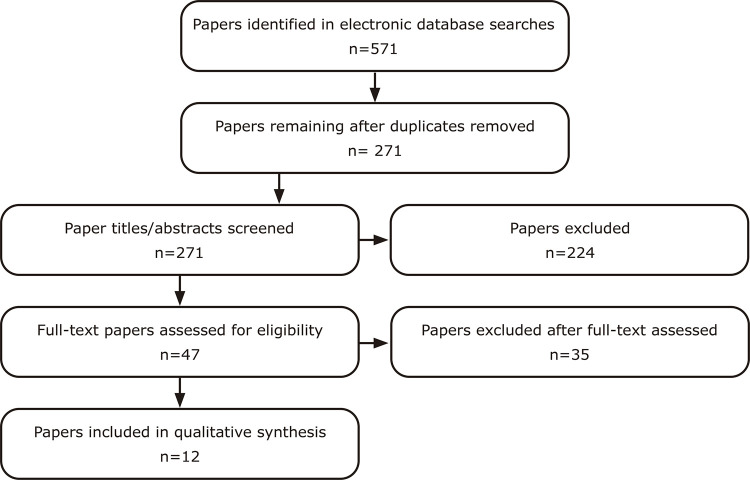
INTRODUCTION: Based on studies of the biographies of artists and on research in which modern diagnostic criteria were applied, it has been suggested that there is a relationship between bipolar disorder (BD) and creativity. Objective: To investigate the relationship between BD and creativity and whether creative capacity varies depending on mood state. METHOD: We conducted a systematic search of the scientific literature indexed on the PubMed, ISI Web of Science, PsycINFO, and SciELO databases using the terms "bipolar" OR "bipolar disorder" OR "mania" OR "manic" AND "creativ*". Original studies were selected that investigated samples of at least ten patients with BD using at least one psychometric instrument to assess creativity. RESULTS: Twelve articles met the selection criteria. The results of comparisons of BD patients with control groups without BD were heterogeneous. BD was not associated with higher levels of creativity than other mental disorders. When comparing BD phases, depression was associated with worse performance on creativity tests and patients in mania (or hypomania) were not distinguished from euthymia patients. CONCLUSION: It was not possible to corroborate the hypothesis that individuals with BD are more creative than individuals without psychiatric diagnoses or than patients suffering from other mental disorders, which may be related to the cross-sectional rather than longitudinal designs of virtually all of the clinical studies.
Overview
The claims and statistics of this paper haven’t been checked yet.
Run the check — free, no account needed. It reads the open-access text and checks the sources it cites.
Integrity signals
Registry
Cites
Statistics
Figures
Verification
Claims the paper makes
The claims and statistics of this paper haven’t been checked yet.
Run the check — free, no account needed. It reads the open-access text and checks the sources it cites.
Self-check
Percentages, sums and reported differences re-computed from the paper’s own numbers.
The self-check needs the paper’s full text.
Citations
Cites
The Cambridge Handbook of Creativity
(2010) · doi:10.1017/cbo9780511763205 · Cited by 1,291
Creativity and the default network: A functional connectivity analysis of the creative brain at rest
Beaty, R. E., Benedek, M., Wilkins, R. W., Jauk, E., Fink, A., Silvia, P. J., Hodges, D. A., Koschutnig, K., & Neubauer, A. C. (2014) · Neuropsychologia · doi:10.1016/j.neuropsychologia.2014.09.019 · Cited by 456
Metadata
- Authors
- Cruz, T. N. D., Camelo, E. V., Nardi, A. E., & Cheniaux, E.
- Affiliations
- Universidade Federal do Rio de Janeiro (BR)
- Venue
- Trends in Psychiatry and Psychotherapy
- Publisher
- EDITORA SCIENTIFIC
- Published
- 2022
- Volume
- 44
- Pages
- e20210196-e20210196
- ISSN
- 2237-6089 (ISSN-L)
- 2238-0019
- PMC
- PMC10039727
- OpenAlex
- W3186572873
- Cited by
- 10
- References
- 2
- Citations by year
- 2026: 2 · 2025: 3 · 2024: 1 · 2023: 3 · 2022: 1
- FWCI
- 0.22
- Type
- journal article
- Language
- en
- Open access
- diamond
- doi.org
- Licence
- cc-by
- Locations
- Trends in Psychiatry and Psychotherapy (publishedVersion, cc-by)
- PubMed Central (publishedVersion, cc-by)
- PubMed (publishedVersion)
- Topics
- Health Sciences › Medicine › Psychiatry and Mental health › Bipolar Disorder and Treatment
- Social Sciences › Psychology › Experimental and Cognitive Psychology › Creativity in Education and Neuroscience
- Health Sciences › Medicine › Psychiatry and Mental health › Schizophrenia research and treatment
- Keywords
- bipolar disorder, creativity, manic phase, depressive phase, mood states, artists
- MeSH terms
- Bipolar Disorder, Creativity, Cross-Sectional Studies, Humans
About these checks
Registry, retraction, Cites and statistics results are computed, not judged, with one exception: a printed reference that no index lists is read once by a model before it counts as a citation error. Claims are extracted by a model and kept only when their quote appears verbatim in the text; each cited source is then checked, with a model’s help, for whether it says what the claim relies on. Those verdicts can be wrong — read the claim’s quote and the cited source before relying on one.
Statistics and arithmetic are recomputed, not judged.
Confidence bands are shown only for fields calibrated on our annotated test set. None is calibrated yet, so no band is shown.
What counts as a claim ›How we measure confidence ›How we check this ›
Are you an author, or do you see a problem with this page? Request a review
