

Securing Clinical Trial Data Using Private Blockchain Technology
Open accessThe DOI matches its Crossref record; 23 of the 23 references it cites were found in a registry or an index; none of the 15 sources its claims cite is checked for support yet.
Abstract
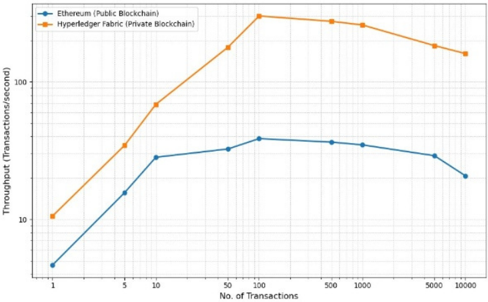
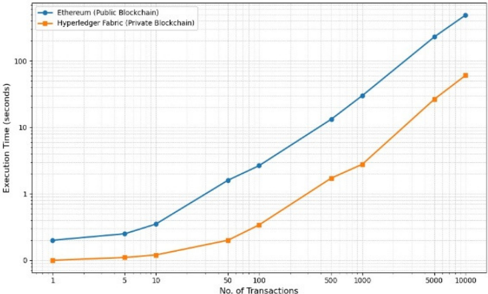
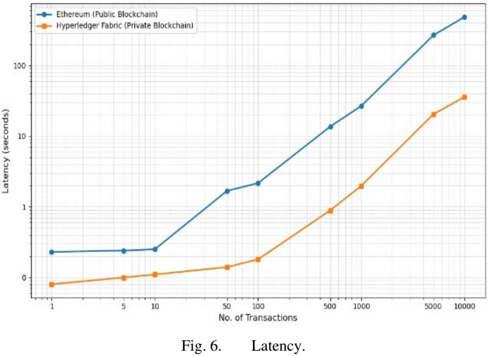
The COVID-19 pandemic placed unprecedented strain on global healthcare systems and exposed several limitations in managing large-scale public health emergencies. The adoption of emerging technologies, however, such as Blockchain, Artificial Intelligence (AI), and Machine Learning (ML), offers opportunities to develop systems that are better suited to help the healthcare system during such challenges. For instance, Blockchain technology can be utilized to secure patient data, Clinical Trial (CT) records, and other sensitive medical information. Among these applications, CTs represent a critical component of drug development and are also one of its most costly and complex stages. Nonetheless, implementing a Blockchain-based CT management system can enhance data traceability, reduce operational costs, and enable efficient record management, assisting regulatory bodies in reviewing and approving drugs more rapidly, enabling faster release of new treatments to the market, and potentially saving lives. Therefore, this study proposes a permissioned private Blockchain-based architecture utilizing Hyperledger Fabric, along with smart contracts within the Hyperledger network, which facilitates secure, transparent, and efficient coordination among all CT stakeholders while maintaining data privacy through controlled access and the use of independent ledgers. Performance analysis of the proposed system, evaluated in terms of throughput, latency, and execution time, indicates that private Blockchain systems demonstrate superior performance relative to public Blockchain implementations.
Overview
CoChat Summary
TL;DR
The paper proposes a permissioned private Hyperledger Fabric architecture with smart contracts and SHA-256 hashing to secure clinical trial data while preserving privacy through controlled access and off-chain storage. It reports that the private Fabric system outperforms an Ethereum baseline in throughput, latency, and execution time on 5,000 ClinicalTrials.gov trial records.
Key findings
- The proposed Hyperledger Fabric system achieved higher throughput, lower latency, and faster execution than the Ethereum baseline across tested transaction counts: at 100 transactions, 300.9 TPS vs 38.58 TPS, 0.34 s vs 2.65 s execution time, and 0.18 s vs 2.16 s latency; at 10,000 transactions, 160.26 TPS vs 20.67 TPS, 60.54 s vs 489.67 s execution time, and 35.78 s vs 485.12 s latency.
- In a platform comparison, Hyperledger Fabric was reported at 300 TPS transaction speed and 3000 TPS throughput, versus Corda (1000/50), Quorum (800/60), MultiChain (1200/40), and MongoDB + Express (200/5000); the paper concludes Fabric is better suited for high-volume, controlled-access CT data management.
- The architecture uses SHA-256 hashing, off-chain storage of original data, on-chain hash digests and metadata, role-based access control, endorsement policies, and duplicate-submission prevention to support traceability and regulatory verification.
Methods
- Design: a permissioned private Hyperledger Fabric v2.2 network with six peer nodes across three organizations, a single communication channel, and a majority endorsement policy requiring at least two of three organizations to approve each transaction; chaincode was developed in Node.js, with SHA-256, a maximum block size of 500 KB, and a 30-second transaction timeout. Experiments used an Intel Core i7 processor, 16 GB RAM, and Ubuntu 20.04 LTS.
- Data: 5,000 clinical trial entries collected from the ClinicalTrials.gov public API v2, recorded between January 2020 and December 2023; retained fields were Key-Outcome-Measures, Marginal-Outcome-Measures, Supplementary-Outcome-Measures, Age, and Brief Summary. Preprocessing removed duplicate records, excluded trials with missing or empty outcome fields, standardized age formats, and cleaned text through tokenization, stop-word removal, lowercasing, and lemmatization.
- Analysis: performance was evaluated in terms of throughput, latency, and execution time against an Ethereum baseline, with additional comparison against Corda, Quorum, MultiChain, and MongoDB + Express; the paper also presents algorithms for blockchain-based CT data updates and regulatory hash-based integrity verification.
Limitations
- The paper states future work will focus on extending the framework with digital consent mechanisms, cross-chain regulatory auditability, large-scale validation, and fairness-aware analytics.
- Evident from the text: the evaluation uses public ClinicalTrials.gov registry records rather than live patient-level clinical trial data, and no real-world deployment or formal security proof is reported.
- Evident from the text: cost-offset claims are not supported by measured cost data, and the Ethereum baseline configuration is not fully detailed.
Model-written summary. Check it against the paper before relying on it.
Integrity signals
Registry
Cites
Statistics
Figures
Verification
Claims the paper makes
0 Valid · 0 Not valid · 13 Not checked · 14 Own results and interpretations
A result the paper reports from its own data — it cites no other source for it, so there is none to check. The quote shows it is in the paper.
In the paper
“Performance analysis of the proposed system, evaluated in terms of throughput, latency, and execution time, indicates that private Blockchain systems demonstrate superior performance relative to public Blockchain implementations.”
§ Shetty & Pushpalatha: Securing Clinical Trial Data Using Private Blockchain Technology Securing Clinical Trial Data Using Private Blockchain Technology > Abstract
hedgedstates a cause- Asserted: passes — The authors put it forward as true.
- Checkable: passes — It can be checked against evidence.
- Load-bearing: passes — The paper’s conclusions depend on it.
- Based: passes — The paper gives a reason why it holds.
A conclusion the paper draws from its own results — it cites no other source for it, so there is none to check. The quote shows it is in the paper.
In the paper
“This indicates that Hyperledger Fabric is better suited for applications requiring high transaction volumes with controlled access, such as CT data management.”
§ Shetty & Pushpalatha: Securing Clinical Trial Data Using Private Blockchain Technology Securing Clinical Trial Data Using Private Blockchain Technology > B. Comparison of Previous Studies
hedgedstates a cause- Asserted: passes — The authors put it forward as true.
- Checkable: passes — It can be checked against evidence.
- Load-bearing: passes — The paper’s conclusions depend on it.
- Based: passes — The paper gives a reason why it holds.
In the paper
“Using cryptographic hashing techniques, data integrity is ensured regardless of data size, since any modification results in a change in the hash value [13].”
§ Shetty & Pushpalatha: Securing Clinical Trial Data Using Private Blockchain Technology Securing Clinical Trial Data Using Private Blockchain Technology > www.etasr.com Shetty & Pushpalatha: Securing Clinical Trial Data Using Private Blockchain Technology
What the sources say
- Not matchedcites [13]
The reference list we hold has no entry [13].
plainstates a cause- Asserted: passes — The authors put it forward as true.
- Checkable: passes — It can be checked against evidence.
- Load-bearing: passes — The paper’s conclusions depend on it.
- Based: passes — The paper gives a reason why it holds.
- Not matched
- It may state two separate claims as one. 23
- Probably not a substantial claim. 10
Self-check
Percentages, sums and reported differences re-computed from the paper’s own numbers.
Each contradiction between two passages listed here was confirmed by an independent check.
Rated minor: it would not touch a result — a value no result rests on, a p-value that stays on the same side of the significance level, or a conflict that is clerical, resolved elsewhere in the paper, or outside its own findings.
In the paper
§ Shetty & Pushpalatha: Securing Clinical Trial Data Using Private Blockchain Technology Securing Clinical Trial Data Using Private Blockchain Technology > B. Comparison of Previous Studies
“Hyperledger Fabric exhibits higher transaction latency (i.e., lower transaction speed) but lower throughput than the database baseline.”
§ Shetty & Pushpalatha: Securing Clinical Trial Data Using Private Blockchain Technology Securing Clinical Trial Data Using Private Blockchain Technology > B. Comparison of Previous Studies
“MongoDB + Express 200 5000 [23] Hyperledger Fabric 300 3000 [24]”
Rated minor: it would not touch a result — a value no result rests on, a p-value that stays on the same side of the significance level, or a conflict that is clerical, resolved elsewhere in the paper, or outside its own findings.
In the paper
“5,000 28.98 183.23”
§ Shetty & Pushpalatha: Securing Clinical Trial Data Using Private Blockchain Technology Securing Clinical Trial Data Using Private Blockchain Technology > B. Comparison of Previous Studies
Reported 28.98 · recomputed 21.665656
Rated minor: it would not touch a result — a value no result rests on, a p-value that stays on the same side of the significance level, or a conflict that is clerical, resolved elsewhere in the paper, or outside its own findings.
In the paper
§ Shetty & Pushpalatha: Securing Clinical Trial Data Using Private Blockchain Technology Securing Clinical Trial Data Using Private Blockchain Technology > B. Phase 2: Cryptographic Hashing and Off-Chain Storage
“The original dataset is stored in a secure offchain repository, while only the hash digest and metadata are recorded on-chain”
§ Shetty & Pushpalatha: Securing Clinical Trial Data Using Private Blockchain Technology Securing Clinical Trial Data Using Private Blockchain Technology > Data availability
“Each record is submitted as a transaction to the Hyperledger Fabric network, where it is hashed using SHA-256 and stored immutably on the Blockchain”
Citations
Cites
BLOCKBENCH: A Framework for Analyzing Private Blockchains
Dinh, T. T. A., Wang, J., Chen, G., Liu, R., Ooi, B. C., & Tan, K.-L. (2017) · Proceedings of the 2017 ACM International Conference on Management of Data · doi:10.1145/3035918.3064033 · Cited by 814
SQL databases v. NoSQL databases
Stonebraker, M. (2010) · Communications of the ACM · doi:10.1145/1721654.1721659 · Cited by 427
Blockchain applications–Usage in different domains
Abou Jaoude, J., & George Saade, R. (2019) · IEEE Access · doi:10.1109/access.2019.2902501 · Cited by 376
Blockchain technology for improving clinical research quality
Benchoufi, M., & Ravaud, P. (2017) · Trials · doi:10.1186/s13063-017-2035-z · Cited by 367
Performance Analysis of Hyperledger Fabric Platforms
Nasir, Q., Qasse, I. A., Abu Talib, M., & Nassif, A. B. (2018) · Security and Communication Networks · doi:10.1155/2018/3976093 · Cited by 346
Blockchain for COVID-19: Review, Opportunities, and a Trusted Tracking System
Marbouh, D., Abbasi, T., Maasmi, F., Omar, I. A., Debe, M. S., Salah, K., Jayaraman, R., & Ellahham, S. (2020) · Arabian Journal for Science and Engineering · doi:10.1007/s13369-020-04950-4 · Cited by 267 · cited 1×
“Phase III CTs, which involve large numbers of participants, require robust and verifiable data-management platforms, and Blockchain technology provides the immutability and traceability required for such large-scale studies [10].”
FastFabric: Scaling Hyperledger Fabric to 20,000 Transactions per Second
Gorenflo, C., Lee, S., Golab, L., & Keshav, S. (2019) · 2019 IEEE International Conference on Blockchain and Cryptocurrency (ICBC) · doi:10.1109/bloc.2019.8751452 · Cited by 221
Analysis of Data Management in Blockchain-Based Systems: From Architecture to Governance
Paik, H.-Y., Xu, X., Bandara, H. M. N. D., Lee, S. U., & Lo, S. K. (2019) · IEEE Access · doi:10.1109/access.2019.2961404 · Cited by 219
Electronic health records in a Blockchain: A systematic review
Mayer, A. H., da Costa, C. A., & Righi, R. D. R. (2020) · Health Informatics Journal · doi:10.1177/1460458219866350 · Cited by 214
Omar, I. A., Jayaraman, R., Salah, K. M., Simsekler, M. C. E., Yaqoob, I., & Ellahham, S. H. (2020) · BMC Medical Research Methodology · doi:10.1186/s12874-020-01109-5 · Cited by 142
Applications of Blockchain Technology in Clinical Trials: Review and Open Challenges
Omar, I. A., Jayaraman, R., Salah, K. M., Yaqoob, I., & Ellahham, S. H. (2020) · Arabian Journal for Science and Engineering · doi:10.1007/s13369-020-04989-3 · Cited by 129
Blockchain-Enabled Internet of Medical Things to Combat COVID-19
Dai, H.-N., Imran, M., & Haider, N. (2020) · IEEE Internet of Things Magazine · doi:10.1109/iotm.0001.2000087 · Cited by 122
Blockchain and COVID-19 pandemic: applications and challenges
Ahmad, R. W., Salah, K. M., Jayaraman, R., Yaqoob, I., Ellahham, S. H., & Omar, M. (2023) · Cluster Computing · doi:10.1007/s10586-023-04009-7 · Cited by 89
Mohanty, D. (2019) · Apress eBooks · doi:10.1007/978-1-4842-4529-3 · Cited by 53
Leiva, V., & Castro, C. (2025) · Bioanalysis · doi:10.1080/17576180.2025.2452774 · Cited by 47
A Blockchain Framework for Ensuring Data Quality in Multi-Organizational Clinical Trials
Choudhury, O., Sylla, I., Fairoza, N., & Das, A. K. (2019) · IEEE International Conference on Healthcare Informatics (ICHI) · doi:10.1109/ichi.2019.8904634 · Cited by 44
Castro, C., Leiva, V., Garrido, D., Huerta, M., & Minatogawa, V. (2024) · Computer Methods and Programs in Biomedicine · doi:10.1016/j.cmpb.2024.108321 · Cited by 27
Enhancing clinical drug trial monitoring with blockchain technology
Kushwaha, P., Srivastava, N., & Kushwaha, S. P. (2024) · Contemporary Clinical Trials · doi:10.1016/j.cct.2024.107684 · Cited by 21
Review Paper on Secure Hash Algorithm With Its Variants
A., & Ghosh, S. M. (2017) · doi:10.13140/rg.2.2.13855.05289 · Cited by 19
Blockchain and COVID-19 Pandemic: Applications and Challenges
Ahmad, R. W., Salah, K., Jayaraman, R., Yaqoob, I., Ellahham, S., & Omar, M. (2020) · doi:10.36227/techrxiv.12936572.v1 · Cited by 18
A Blockchain Semantic-based Approach for Secure and Traceable Agri-Food Supply Chain
Annane, B., Alti, A., & Lakehal, A. (2024) · Engineering Technology & Applied Science Research · doi:10.48084/etasr.8908 · Cited by 13
A Review Of Recent Blockchain Applications
Prajapati, P., Dave, K., & Shah, P. D. (2020) · International journal of scientific and technology research · Cited by 12
Informationist role: clinical data management in auditory research
Hansn, K., Bakker, T., Svirsky, M. A., Neuman, A. C., & Rambo, N. H. (2013) · Journal of eScience Librarianship · doi:10.7191/jeslib.2013.1030 · Cited by 11
Research works printed but not linked: 1
- A. Andrianov, and B. Kaganov, "BlockChain in Clinical Trials-the Ultimate Data Notary," Applied Clinical Trials, vol. 27, no. 7, July 2018.
Cited by
Still being checked.
Metadata
- Authors
- Shetty, S. S., & Pushpalatha, K.
- Affiliations
- Sahyadri College of Engineering & Management (IN)
- Corresponding author
- Shetty, Shailesh S.
- ORCID
- Pushpalatha, K.
- Venue
- Engineering, Technology & Applied Science Research
- Published
- 2026-04-04
- Volume
- 16
- Issue
- 2
- Pages
- 34623-34629
- ISSN
- 1792-8036 (ISSN-L)
- 2241-4487
- OpenAlex
- W7150169195
- Cited by
- 0
- References
- 21
- FWCI
- 0.00
- Type
- journal article
- Language
- en
- Open access
- gold
- doi.org
- Locations
- Engineering Technology & Applied Science Research (publishedVersion, cc-by)
- Topics
- Physical Sciences › Computer Science › Information Systems › Blockchain Technology Applications and Security
- Physical Sciences › Computer Science › Information Systems › Blockchain Technology in Education and Learning
- Social Sciences › Law › Digital Transformation in Law
- Keywords
- private blockchain, Hyperledger Fabric, smart contracts, permissioned blockchain, data privacy, clinical trial management systems, drug development, data traceability, COVID-19 pandemic
About these checks
Registry, retraction, Cites and statistics results are computed, not judged, with one exception: a printed reference that no index lists is read once by a model before it counts as a citation error. Claims are extracted by a model and kept only when their quote appears verbatim in the text; each cited source is then checked, with a model’s help, for whether it says what the claim relies on. Those verdicts can be wrong — read the claim’s quote and the cited source before relying on one.
A language model drew the claims from the paper on 2026-11-22, under version 3 of the claim definition (model deepseek-v4.1-flash, prompt extract-v3).
A second model labelled each claim on 2026-11-22 (model jev-1.13-20260917, definition revision gold-guideline-v0.2).
Statistics and arithmetic are recomputed, not judged.
Confidence bands are shown only for fields calibrated on our annotated test set. None is calibrated yet, so no band is shown.
What counts as a claim ›How we measure confidence ›How we check this ›
Are you an author, or do you see a problem with this page? Request a review
Data sources
Bibliographic data: Semantic Scholar, OpenAlex, Crossref.
Contains information from the Semantic Scholar Academic Graph Datasets, made available under the ODC Attribution License (ODC-BY 1.0).
Semantic Scholar’s data is described in: Kinney, R., et al. (2023). The Semantic Scholar Open Data Platform. arXiv:2301.10140.
