

The DOI matches its DataCite record; 6 of the 6 references it cites were found in a registry or an index.
Violations of the Null Energy Condition in QFT and their Implications
Abstract
We study violations of the Null Energy Condition (NEC) in Quantum Field Theory (QFT) and their implications. For the first part of the project, we examine these violations for classes of already known and novel (first discussed here) QFT states. Next, we discuss the implications of these violations focusing on the example of Wormhole Traversability. After reviewing the current literature on the existing restrictions on these violations, we conjecture that NEC violating states are incompatible with the Semi-Classical Gravity approximation. We argue that this conjecture provides the only way out of the problems introduced by the violations of NEC in this regime. Building on this, we propose a bound that should hold for all QFT states. Finally, we show that both our conjecture and bound hold for some relevant classes of QFT states.
Overview
The claims and statistics of this paper haven’t been checked yet.
Run the check — free, no account needed. It reads the open-access text and checks the sources it cites.
Integrity signals
Registry
Cites
Statistics
Figures
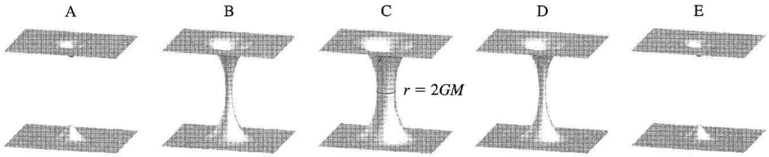
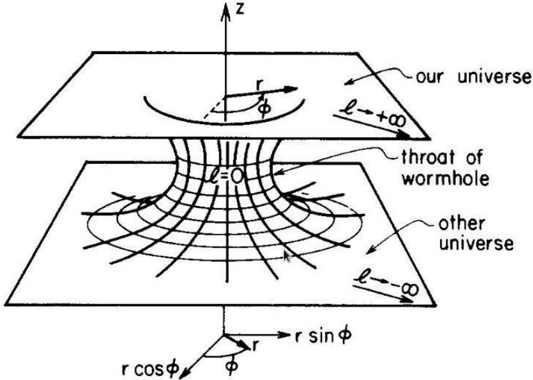
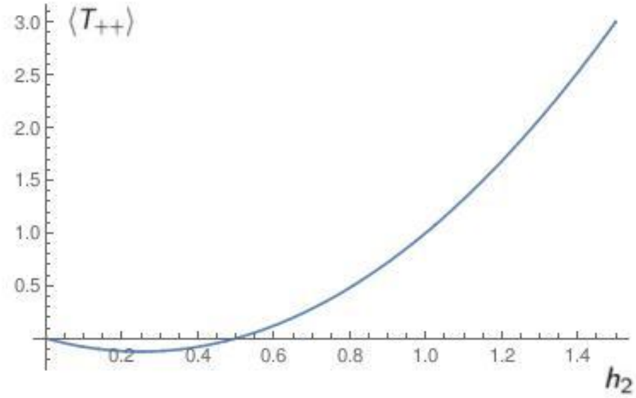
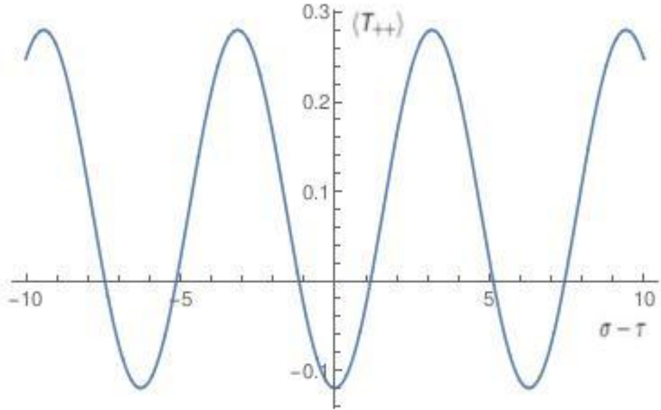
Verification
Claims the paper makes
The claims and statistics of this paper haven’t been checked yet.
Run the check — free, no account needed. It reads the open-access text and checks the sources it cites.
Claims other papers make about this one
Each is checked against this paper’s own text: does it say what the citing paper says it does?
In the citing paper
“A violation of the DEC seems to be quite generic in QFT once quantum effects are taken into account [52,129]”
From Nothing is certain in string compactifications (2020) · cites this paper as [129]
Self-check
Percentages, sums and reported differences re-computed from the paper’s own numbers.
The self-check needs the paper’s full text.
Citations
Cites
Quantum extremal surfaces: holographic entanglement entropy beyond the classical regime
Engelhardt, N., & Wall, A. C. (2015) · Journal of High Energy Physics · doi:10.1007/jhep01(2015)073 · Cited by 836
Entanglement Equilibrium and the Einstein Equation
Jacobson, T. (2016) · Physical Review Letters · doi:10.1103/physrevlett.116.201101 · Cited by 302
Averaged Energy Conditions and Quantum Inequalities
Ford, L. H., & Roman, T. A. (1994) · arXiv · doi:10.48550/arxiv.gr-qc/9410043 · Cited by 276
The 1965 Penrose singularity theorem
Senovilla, J. M. M., & Garfinkle, D. (2015) · Classical and Quantum Gravity · doi:10.1088/0264-9381/32/12/124008 · Cited by 248
Curiel, E. (2017) · Einstein Studies · doi:10.1007/978-1-4939-3210-8_3 · Cited by 226
The generalized second law implies a quantum singularity theorem
Wall, A. C. (2013) · Classical and Quantum Gravity · doi:10.1088/0264-9381/30/16/165003 · Cited by 106
Research works printed but not linked: 71
- M. Parikh and J. P. van der Schaar, Phys. Rev. D 91 (2015) no.8, 084002 doi:10.1103/PhysRevD.91.084002 [arXiv:1406.5163 [hep-th]]. · DOI
- M. Parikh, Int. J. Mod. Phys. D 24 (2015) 1544030 doi:10.1142/S0218271815440307 [arXiv:1512.03448 [hep-th]]. · DOI
- Amalkumar Raychaudhuri, Phys. Rev. 98, 1123 (1955), doi:10.1103/PhysRev.98.1123 · DOI
- C. I. Kuo and L. H. Ford, Phys. Rev. D 47 (1993) 4510 doi:10.1103/PhysRevD.47.4510 [gr-qc/9304008]. · DOI
- N.D. Birrell and P. C. W. Davies, Quantum Fields in Curved Space. Cambridge University Press, 1982.
- S. M. Carroll, San Francisco, USA: Addison-Wesley (2004) 513 p
- B. S. DeWitt, Phys. Rept. 19 (1975) 295. doi:10.1016/0370-1573(75)90051-4 · DOI
- D. Tong, arXiv:0908.0333 [hep-th]. · arXiv
- Philippe Di Francesco, Pierre Mathieu, David Senechal, Conformal Field The- ory. Springer, New York 1997.
- M. S. Morris and K. S. Thorne, Am. J. Phys. 56 (1988) 395. doi:10.1119/1.15620 · DOI
- M. J. Pfenning, gr-qc/9805037. · arXiv
- Kon. Ned. Akad. Wetensch. Proc. 51 (1948) 793] [Front. Phys. 65 (1987) 342] [
- Kon. Ned. Akad. Wetensch. Proc. 100N3-4 (1997) 61].
- L. M. Butcher, Phys. Rev. D 90 (2014) no.2, 024019 doi:10.1103/PhysRevD.90.024019 [arXiv:1405.1283 [gr-qc]]. · DOI
- Homer G. Ellis, J. Math. Phys. 14, 104 (1973), doi:10.1063/1.1666161. · DOI
- J. R. Oppenheimer and H. Snyder, Phys. Rev. 56 (1939) 455. doi:10.1103/PhysRev.56.455 · DOI
- Ludvwig Flamm, Physik Z. 17, 448 (1916)
- Penrose R., Phys. Rev. Lett. 14, 57 , 1965, doi:10.1103/PhysRevLett.14.57 · DOI · Paper page
- Penrose, R., Gravitational collapse: The role of general relativity, 1969, doi:10.1023/A:1016534604511. · DOI
- Wald, R., General Relativity, 1984, Chicago: University of Chicago Press.
- B. Carter, Phys. Rev. Lett. 26 (1971) 331. doi:10.1103/PhysRevLett.26.331 · DOI
- J. D. Bekenstein, Phys. Rev. D 5 (1972) 1239. doi:10.1103/PhysRevD.5.1239 · DOI
- S. A. Hayward, gr-qc/9303006. · arXiv
- R. Bousso, Rev. Mod. Phys. 74, 825 (2002) doi:10.1103/RevModPhys.74.825 [hep-th/0203101]. · DOI · Paper page
- F. J. Tipler, Phys. Rev. D 17 (1978) 2521. doi:10.1103/PhysRevD.17.2521 · DOI
- E. Curiel, arXiv:1405.0403 [physics.hist-ph]. · arXiv
- D. Gannon , J. Math. Phys. 16 (1975) 2364 . doi:10.1063/1.522498 · DOI
- C. Lee, Comm. Math. Phys. 51 (1976) p.157-162. doi:10.1007/BF01609346. · DOI
- S. W. Hawking, Phys. Rev. Lett. 26 (1971) 1344. doi:10.1103/PhysRevLett.26.1344 · DOI
- R. M. Wald and U. Yurtsever, Phys. Rev. D 44 (1991) 403. doi:10.1103/PhysRevD.44.403 · DOI
- P. T. Chrusciel and R. M. Wald, Class. Quant. Grav. 11 (1994) L147 doi:10.1088/0264-9381/11/12/001 [gr-qc/9410004]. · DOI
- G.J. Galloway, Commun. Math. Phys. 151 (1993) 53. doi:10.1007/BF02096748 · DOI
- G.J. Galloway, Class. Quant. Grav. 12 (1995) L99-L101. doi:10.1088/0264- 9381/12/10/002. · DOI
- W. Israel, Phys. Rev. 164 (1967) 1776. doi:10.1103/PhysRev.164.1776 · DOI
- W. Israel, Comm. Math. Phys. Volume 8 (1968) p. 245-260. doi:10.1007/BF01645859 · DOI
- C. Teitelboim, Lett. Nuovo Cimento (1972) 3: 397. doi:10.1007/BF02826050 · DOI
- C. Teitelboim, Phys. Rev. D 5 (1972) 2941. doi:10.1103/PhysRevD.5.2941 · DOI
- R. M. Wald, Phys. Rev. D 6 (1972) 1476. doi:10.1103/PhysRevD.6.1476 · DOI
- R. M. Wald, J. Math. Phys. 14 (1973) 1453. doi:10.1063/1.1666203 · DOI
- Hagen, H.M.Z., Robinson, D.C. & Seifert, H.J. Gen Relat Gravit (1973) 4: 53. doi:10.1007/BF00769760 · DOI
- D. C. Robinson, Phys. Rev. Lett. 34 (1975) 905. doi:10.1103/PhysRevLett.34.905 · DOI
- Robinson, D.C. Gen Relat Gravit (1977) 8: 695. doi:10.1007/BF00756322 · DOI
- P. O. Mazur, 1982 J. Phys. A: Math. Gen. 15 3173. doi:10.1088/0305- 4470/15/10/021 · DOI
- S. A. Hayward, gr-qc/9405055. · arXiv
- E. E. Flanagan, D. Marolf and R. M. Wald, Phys. Rev. D 62 (2000) 084035 doi:10.1103/PhysRevD.62.084035 [hep-th/9908070]. · DOI
- M. Visser, B. Bassett and S. Liberati, Nucl. Phys. Proc. Suppl. 88 (2000) 267 doi:10.1016/S0920-5632(00)00782-9 [gr-qc/9810026]. · DOI
- S. W. Hawking, Phys. Rev. D 46 (1992) 603. doi:10.1103/PhysRevD.46.603 · DOI
- H. Lee, S.W. Kin, Phys. Lett. B 593 (2004) 17-24. doi:10.1016/j.physletb.2004.05.003 · DOI
- Glauber, Roy J., Phys. Rev. 131 (1963) 2766. doi:10.1103/PhysRev.131.2766 · DOI
- S. V. Krasnikov, gr-qc/0003092. · arXiv
- C. Armendariz-Picon, Phys. Rev. D 65 (2002) 104010 doi:10.1103/PhysRevD.65.104010 [gr-qc/0201027]. · DOI
- P. K. F. Kuhfittig, Fund. J. Mod. Phys. 7 (2014) 111 [arXiv:1409.8534 [gr-qc]]. · arXiv
- E. A. Kontou, arXiv:1507.06299 [gr-qc]. · arXiv
- L. H. Ford, Proc. Roy. Soc. Lond. A 364 (1978) 227. doi:10.1098/rspa.1978.0197 · DOI
- M. Visser, S. Kar and N. Dadhich, Phys. Rev. Lett. 90 (2003) 201102 doi:10.1103/PhysRevLett.90.201102 [gr-qc/0301003]. · DOI
- J. Maldacena and L. Susskind, Fortsch. Phys. 61 (2013) 781 doi:10.1002/prop.201300020 [arXiv:1306.0533 [hep-th]]. · DOI · Paper page
- A. Almheiri, D. Marolf, J. Polchinski and J. Sully, JHEP 1302 (2013) 062 doi:10.1007/JHEP02(2013)062 [arXiv:1207.3123 [hep-th]]. · DOI · Paper page
- L. H. Ford and T. A. Roman, Phys. Rev. D 60 (1999) 104018 doi:10.1103/PhysRevD.60.104018 [gr-qc/9901074]. · DOI
- M. Van Raamsdonk, Gen. Rel. Grav. 42 (2010) 2323 [Int. J. Mod. Phys. D 19 (2010) 2429] doi:10.1007/s10714-010-1034-0, 10.1142/S0218271810018529 [arXiv:1005.3035 [hep-th]]. · DOI · Paper page
- E. P. Verlinde, arXiv:1611.02269 [hep-th]. · arXiv
- L. H. Ford and C. H. Wu, Int. J. Theor. Phys. 42 (2003) 15 doi:10.1023/A:1023322904365 [gr-qc/0102063]. · DOI
- B. L. Hu and N. G. Phillips, Int. J. Theor. Phys. 39 (2000) 1817 doi:10.1023/A:1003689630751 [gr-qc/0004006]. · DOI
- S. W. Hawking, Commun. Math. Phys. 43 (1975) 199 Erratum: [Commun. Math. Phys. 46 (1976) 206]. doi:10.1007/BF02345020 · DOI · Paper page
- R. Bousso, Z. Fisher, S. Leichenauer and A. C. Wall, Phys. Rev. D 93 (2016) no.6, 064044 doi:10.1103/PhysRevD.93.064044 [arXiv:1506.02669 [hep-th]]. · DOI · Paper page
- R. Bousso, Z. Fisher, J. Koeller, S. Leichenauer and A. C. Wall, Phys. Rev. D 93 (2016) no.2, 024017 doi:10.1103/PhysRevD.93.024017 [arXiv:1509.02542 [hep-th]]. · DOI · Paper page
- R. Bousso, JHEP 9907 (1999) 004 doi:10.1088/1126-6708/1999/07/004 [hep- th/9905177]. · DOI · Paper page
- A. C. Wall, Class. Quant. Grav. 30 (2013) 165003 Erratum: [Class. Quant. Grav. 30 (2013) 199501] doi:10.1088/0264-9381/30/19/199501, 10.1088/0264- 9381/30/16/165003 [arXiv:1010.5513 [gr-qc]]. · DOI
- R. C. Myers, R. Pourhasan and M. Smolkin, JHEP 1306 (2013) 013 doi:10.1007/JHEP06(2013)013 [arXiv:1304.2030 [hep-th]]. · DOI
- J. D. Bekenstein, Lett. Nuovo Cim. 4 (1972) 737. doi:10.1007/BF02757029 · DOI · Paper page
- B. L. Hu, Int. J. Theor. Phys. 38 (1999) 2987 doi:10.1023/A:1026664317157 [gr-qc/9902064]. · DOI
- C. H. Wu and L. H. Ford, Phys. Rev. D 60 (1999) 104013 doi:10.1103/PhysRevD.60.104013 [gr-qc/9905012]. · DOI
Cited by
Nothing is certain in string compactifications
Etxebarria, I. G., Montero, M., Sousa, K., & Valenzuela, I. (2020) · Journal of High Energy Physics · doi:10.1007/jhep12(2020)032 · Cited by 87
Metadata
- Authors
- Krommydas, D.
- Venue
- arXiv
- Publisher
- arXiv
- Published
- 2018
- arXiv
- 1806.00107
- References
- 6
- Type
- Preprint
About these checks
Registry, retraction, Cites and statistics results are computed, not judged, with one exception: a printed reference that no index lists is read once by a model before it counts as a citation error. Claims are extracted by a model and kept only when their quote appears verbatim in the text; each cited source is then checked, with a model’s help, for whether it says what the claim relies on. Those verdicts can be wrong — read the claim’s quote and the cited source before relying on one.
Statistics and arithmetic are recomputed, not judged.
Confidence bands are shown only for fields calibrated on our annotated test set. None is calibrated yet, so no band is shown.
What counts as a claim ›How we measure confidence ›How we check this ›
Are you an author, or do you see a problem with this page? Request a review
Data sources
Bibliographic data: Semantic Scholar, OpenAlex, Crossref.
Contains information from the Semantic Scholar Academic Graph Datasets, made available under the ODC Attribution License (ODC-BY 1.0).
Semantic Scholar’s data is described in: Kinney, R., et al. (2023). The Semantic Scholar Open Data Platform. arXiv:2301.10140.
