

An Image is Worth 16x16 Words: Transformers for Image Recognition at Scale
Open accessThe DOI matches its DataCite record; 64 of the 64 references it cites were found in a registry or an index; 11 of the 23 sources its claims cite were checked for support.
Abstract
While the Transformer architecture has become the de-facto standard for natural language processing tasks, its applications to computer vision remain limited. In vision, attention is either applied in conjunction with convolutional networks, or used to replace certain components of convolutional networks while keeping their overall structure in place. We show that this reliance on CNNs is not necessary and a pure transformer applied directly to sequences of image patches can perform very well on image classification tasks. When pre-trained on large amounts of data and transferred to multiple mid-sized or small image recognition benchmarks (ImageNet, CIFAR-100, VTAB, etc.), Vision Transformer (ViT) attains excellent results compared to state-of-the-art convolutional networks while requiring substantially fewer computational resources to train.
Overview
CoChat Summary
TL;DR
Vision Transformer (ViT) applies a standard Transformer directly to sequences of image patches and, when pre-trained on large datasets, matches or exceeds state-of-the-art convolutional networks on image classification while using substantially less pre-training compute. Large-scale pre-training can overcome ViT’s weaker image-specific inductive biases, though ViT underperforms ResNets on smaller pre-training datasets.
Key findings
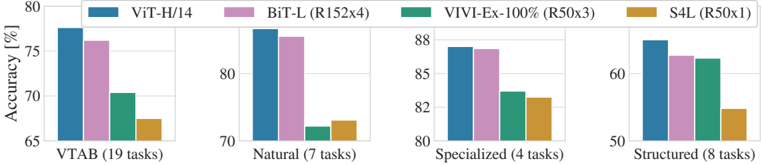
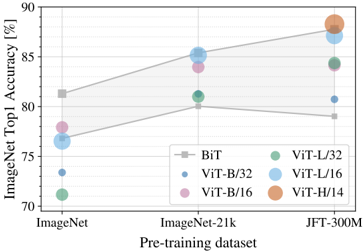
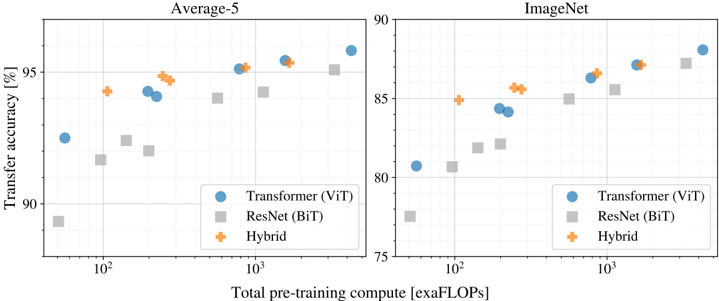
- ViT-H/14 pre-trained on JFT-300M reaches 88.55% ImageNet, 90.72% ImageNet-ReaL, 94.55% CIFAR-100, and 77.63% on VTAB (19 tasks), outperforming BiT-L on all reported tasks while using 2.5k TPUv3-core-days versus BiT-L’s 9.9k and Noisy Student’s 12.3k.
- ViT-L/16 pre-trained on public ImageNet-21k reaches 85.30% ImageNet, 88.62% ImageNet-ReaL, 93.25% CIFAR-100, and 72.72% VTAB, using 0.23k TPUv3-core-days.
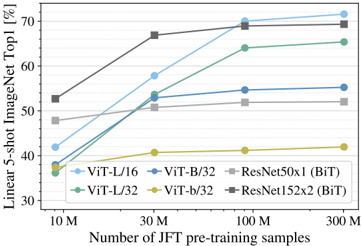
- On smaller pre-training datasets, ViT underperforms comparable ResNets; with JFT-300M, larger ViT models overtake smaller ones and ViT overtakes BiT. In a scaling study, ViT uses approximately 2–4× less compute to attain the same performance averaged over 5 datasets.
- Self-supervised masked patch prediction with ViT-B/16 achieves 79.9% ImageNet accuracy, a 2% improvement over training from scratch but still 4% behind supervised pre-training.
Methods
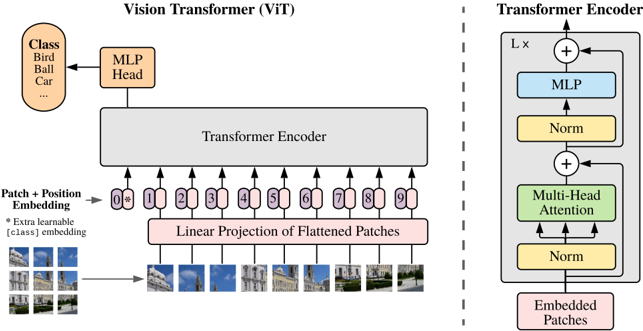
- Images are split into fixed-size patches, flattened, linearly projected to D dimensions, given position embeddings, and fed as a sequence to a standard Transformer encoder; a learnable [class] token provides the image representation for classification.
- Models include ViT-Base (12 layers, D=768, 86M params), ViT-Large (24 layers, D=1024, 307M params), and ViT-Huge (32 layers, D=1280, 632M params); baselines are ResNet (BiT) and hybrid ResNet+ViT models.
- Pre-training uses ImageNet, ImageNet-21k, or JFT-300M; training uses Adam with batch size 4096 and weight decay 0.1, while fine-tuning uses SGD with momentum and batch size 512; evaluation reports fine-tuning and few-shot/linear accuracies.
Limitations
- Stated by the paper: applying ViT to other vision tasks such as detection and segmentation remains a challenge; self-supervised pre-training still lags large-scale supervised pre-training; further scaling of ViT would likely improve performance but remains future work.
- Evident from the text: ViT has much less image-specific inductive bias than CNNs, so it generalizes worse when trained on insufficient data and requires large-scale pre-training (14M–300M images) to become competitive.
- Evident from the text: higher-resolution fine-tuning requires 2D interpolation of pre-trained position embeddings, and the paper notes that pre-training efficiency may be affected by factors beyond architecture, such as training schedule, optimizer, and weight decay.
Model-written summary. Check it against the paper before relying on it.
Integrity signals
Registry
Cites
Statistics
Figures
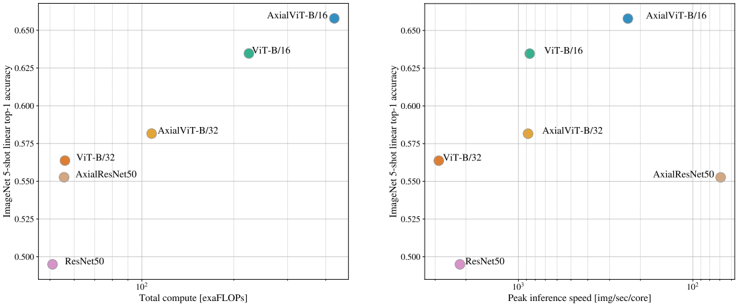
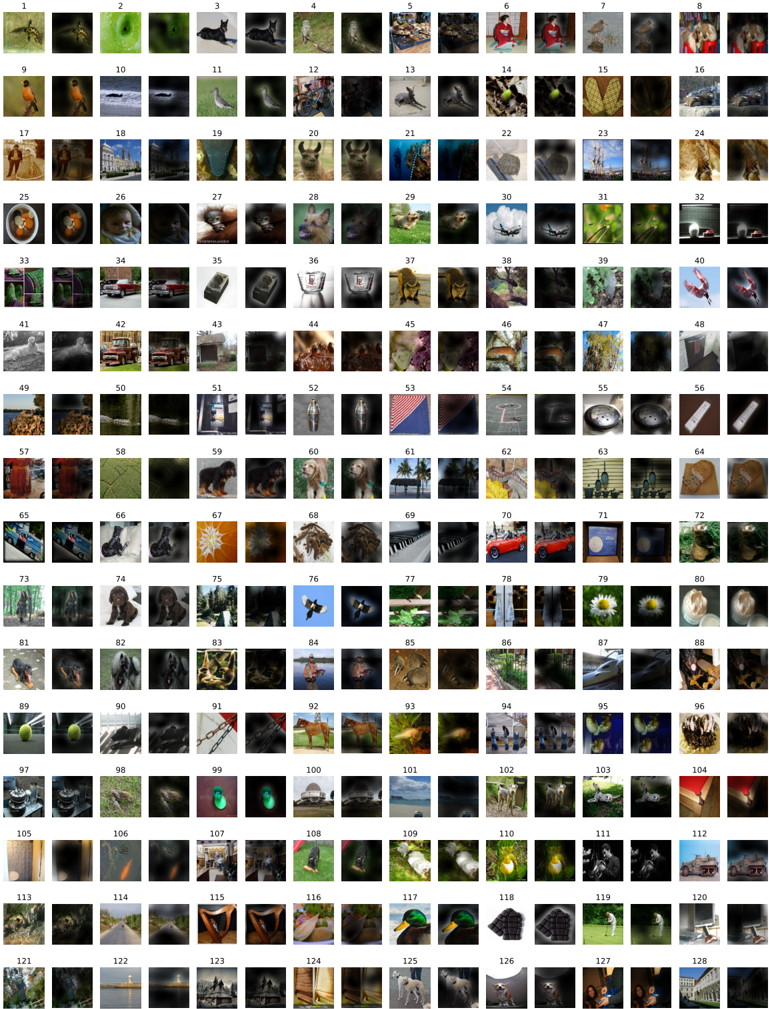
Verification
Claims the paper makes
6 Valid · 3 Not valid · 7 Not checked · 89 Own results and interpretations
Some cited sources support this claim and some don’t — read each source’s verdict below.
In the paper
“Therefore, in large-scale image recognition, classic ResNetlike architectures are still state of the art (Mahajan et al., 2018; Xie et al., 2020; Kolesnikov et al., 2020).”
What the sources say
- Supportedcites Mahajan et al., 2018 matched to “Exploring the Limits of Weakly Supervised Pretraining” (2018) source
Section A.5 (p. 23) compares the paper’s ResNeXt-101 models with the state of the art on ImageNet-1k and reports that they improved on those results. This supports citing the paper as an example of a ResNet-like architecture achieving state-of-the-art large-scale image recognition results at the time of publication. (LLM, conf=0.88)
- Disputedcites Xie et al., 2020 matched to “Self-Training With Noisy Student Improves ImageNet Classification” (2020) sourceExperimental — accuracy not yet measured
In §3.2 (p. 4), the paper calls the ResNeXt-101 WSL result the previous state of the art, then reports that its EfficientNet-L2 model surpasses it on ImageNet. It therefore does not support the claim that classic ResNet-like architectures are still state of the art. (LLM, conf=0.88)
Checked by a reasoning model — may be wrong.
- Supportedcites Kolesnikov et al., 2020 matched to “Big Transfer (BiT): General Visual Representation Learning” (2020) source
Section 3.3 (p. 5) says BiT uses a ResNet-v2 architecture, with changes to normalization and convolutional layers. Section 3.4 (p. 6) reports that BiT-L outperforms previously reported state-of-the-art generalist models on standard computer-vision benchmarks. This supports the claim about ResNet-like architectures, rather than unmodified classic ResNets. (LLM, conf=0.89)
plain- Asserted: passes — The authors put it forward as true.
- Checkable: passes — It can be checked against evidence.
- Load-bearing: passes — The paper’s conclusions depend on it.
- Based: passes — The paper gives a reason why it holds.
- Supported
The cited sources support only part of this claim — read each source’s verdict below.
In the paper
“The latter models, while theoretically efficient, have not yet been scaled effectively on modern hardware accelerators due to the use of specialized attention patterns.”
What the sources say
- Partly supportedcites Ramachandran et al., 2019 matched to “Stand-Alone Self-Attention in Vision Models” (2019) sourceExperimental — accuracy not yet measured
The Discussion (Sec. 5) of our copy does state the hardware-efficiency point attributed here: although the attention-based architecture is favourable in training efficiency and computational demand, 'the resulting network is slower in wall-clock time', and 'the reason for this discrepancy is the lack of optimized kernels available on various hardware accelerators'. But two elements of the claim are not in the source: it never says such models 'have not yet been scaled effectively' (it reports its own fully attentional model trained and scaled across widths/depths on 128 Cloud TPUv3 cores, Sec. 4.1 and A.2), and it locates the cause in the absence of optimized kernels/libraries rather than in 'the use of specialized attention patterns'. So the source supports the general thrust (pure self-attention vision models run inefficiently on current accelerators) but not the scaling claim or the stated causal mechanism. (LLM, conf=0.70)
- Not matchedcites Wang et al., 2020a
More than one paper fits this citation.
plainstates a cause- Asserted: passes — The authors put it forward as true.
- Checkable: passes — It can be checked against evidence.
- Load-bearing: passes — The paper’s conclusions depend on it.
- Based: passes — The paper gives a reason why it holds.
- Partly supported
A result the paper reports from its own data — it cites no other source for it, so there is none to check. The quote shows it is in the paper.
In the paper
“In particular, the best model reaches the accuracy of 88 . 55% on ImageNet, 90 . 72% on ImageNet-ReaL, 94 . 55% on CIFAR-100, and 77 . 63% on the VTAB suite of 19 tasks.”
plain- Asserted: passes — The authors put it forward as true.
- Checkable: passes — It can be checked against evidence.
- Load-bearing: passes — The paper’s conclusions depend on it.
- Based: passes — The paper gives a reason why it holds.
A result the paper reports from its own data — it cites no other source for it, so there is none to check. The quote shows it is in the paper.
In the paper
“Our Vision Transformer (ViT) attains excellent results when pre-trained at sufficient scale and transferred to tasks with fewer datapoints.”
plainstates a cause- Asserted: passes — The authors put it forward as true.
- Checkable: passes — It can be checked against evidence.
- Load-bearing: passes — The paper’s conclusions depend on it.
- Based: passes — The paper gives a reason why it holds.
54 more claims
Create a free account to see all 105 claims and to verify the 1 reference still open.
- Probably not a substantial claim. 21
- It may state two separate claims as one. 27
Claims other papers make about this one
Each is checked against this paper’s own text: does it say what the citing paper says it does?
The cited source doesn’t support the claim as written.
In the citing paper
“The results of ViT on image classification are encouraging, but its architecture is unsuitable for use as a general-purpose backbone network on dense vision tasks or when the input image resolution is high, due to its low-resolution feature maps and the quadratic increase in complexity with image size.”
From Swin Transformer: Hierarchical Vision Transformer using Shifted Windows (2021) · cites this paper as [20]
Checked by a reasoning model — may be wrong.
Experimental — accuracy not yet measuredThe cited source doesn’t support the claim as written.
In the citing paper
“The ViT-B, ViT-L, DeiT-S, DeiT-B are adopted as the baseline model, whose top-1 accuracy on ImageNet dataset are 71.58%, 71.48%, 79.8%, 81.8% respectively.”
From Post-Training Quantization for Vision Transformer (2021) · cites this paper as [11]
Checked by a reasoning model — may be wrong.
Experimental — accuracy not yet measuredThe cited source doesn’t support the claim as written.
In the citing paper
“its computational and memory costs are relatively high even for common input image sizes ( e.g. , shorter edge of 800 pixels in the COCO benchmark [40]).”
From Pyramid Vision Transformer: A Versatile Backbone for Dense Prediction without Convolutions (2021) · cites this paper as [13]
Checked by a reasoning model — may be wrong.
Experimental — accuracy not yet measuredThe source backs part of the claim, not all of it — or backs it for a different population, condition or comparison.
In the citing paper
“In existing Transformer-based models [64, 20], tokens are all of a fixed scale, a property unsuitable for these vision applications.”
From Swin Transformer: Hierarchical Vision Transformer using Shifted Windows (2021) · cites this paper as [20]
Experimental — accuracy not yet measured
63 more claims about this paper
Create a free account to see every claim other papers make about this one.
Self-check
Percentages, sums and reported differences re-computed from the paper’s own numbers.
Each contradiction between two passages listed here was confirmed by an independent check.
Rated minor: it would not touch a result — a value no result rests on, a p-value that stays on the same side of the significance level, or a conflict that is clerical, resolved elsewhere in the paper, or outside its own findings.
In the paper
§ 4.2 COMPARISON TO STATE OF THE ART · p. 5
“The smaller ViT-L/16 model pre-trained on JFT-300M outperforms BiT-L (which is pre-trained on the same dataset) on all tasks”
§ 4.2 COMPARISON TO STATE OF THE ART · p. 6
“| VTAB (19 tasks) | 77 . 63 ± 0 . 23 | 76 . 28 ± 0 . 46 | 72 . 72 ± 0 . 21 | 76 . 29 ± 1 . 70 | - |”
Rated minor: it would not touch a result — a value no result rests on, a p-value that stays on the same side of the significance level, or a conflict that is clerical, resolved elsewhere in the paper, or outside its own findings.
In the paper
§ 4.1 SETUP · p. 5
“We train all models, including ResNets, using Adam (Kingma & Ba, 2015) with β 1 = 0 . 9 , β 2 = 0 . 999 , a batch size of 4096 and apply a high weight decay of 0 . 1”
§ REFERENCES · p. 13
“| ViT-B/ { 16,32 } | ImageNet-21k | 90 | 10 - 3 | linear | 0.03 | 0.1 |”
Citations
Cites
Deep Residual Learning for Image Recognition
He, K., Zhang, X., Ren, S., & Sun, J. (2016) · 2016 IEEE Conference on Computer Vision and Pattern Recognition (CVPR) · doi:10.1109/cvpr.2016.90 · Cited by 235,474 · cited 2×
“In computer vision, however, convolutional architectures remain dominant (LeCun et al., 1989; Krizhevsky et al., 2012; He et al., 2016).”
Vaswani, A., Shazeer, N., Parmar, N., Uszkoreit, J., Jones, L., Gomez, A. N., Kaiser, L., & Polosukhin, I. (2017) · arXiv · doi:10.48550/arxiv.1706.03762 · Cited by 120,404
Self-citationImageNet classification with deep convolutional neural networks
Krizhevsky, A., Sutskever, I., & Hinton, G. E. (2017) · Communications of the ACM · doi:10.1145/3065386 · Cited by 112,155 · cited 1×
“In computer vision, however, convolutional architectures remain dominant (LeCun et al., 1989; Krizhevsky et al., 2012; He et al., 2016).”
BackgroundAdam: A Method for Stochastic Optimization
Kingma, D. P., & Ba, J. (2014) · arXiv · doi:10.48550/arxiv.1412.6980 · Cited by 98,946
ImageNet: A large-scale hierarchical image database
Deng, J., Dong, W., Socher, R., Li, L.-J., Li, K., & Fei-Fei, L. (2009) · 2009 IEEE Conference on Computer Vision and Pattern Recognition · doi:10.1109/cvpr.2009.5206848 · Cited by 65,333 · cited 2×
“…model scalability, we use the ILSVRC-2012 ImageNet dataset with 1k classes and 1.3M images (we refer to it as ImageNet in what follows), its superset ImageNet-21k with 21k classes and 14M images (Deng et al., 2009), and JFT (Sun et al., 2017) with 18k classes and 303M high-resolution images.”
MethodBERT: Pre-training of Deep Bidirectional Transformers for Language Understanding
Devlin, J., Chang, M.-W., Lee, K., & Toutanova, K. (2019) · Proceedings of the 2019 Conference of the North American Chapter of the Association for Computational Linguistics: Human Language Technologies, Volume 1 (Long and Short Papers) · doi:10.18653/v1/n19-1423 · Cited by 54,325 · cited 10×
“We base ViT configurations on those used for BERT (Devlin et al., 2019), as summarized in Table 1.”
InfluentialBatch Normalization: Accelerating Deep Network Training by Reducing Internal Covariate Shift
Ioffe, S., & Szegedy, C. (2015) · arXiv · doi:10.48550/arxiv.1502.03167 · Cited by 27,818 · cited 1×
“For the baseline CNNs, we use ResNet (He et al., 2016), but replace the Batch Normalization layers (Ioffe & Szegedy, 2015) with Group Normalization (Wu & He, 2018), and used standardized convolutions (Qiao et al., 2019).”
Learning Multiple Layers of Features from Tiny Images
Krizhevsky, A. (2024) · doi:10.57702/zp44cu3g · Cited by 23,395
Language Models are Few-Shot Learners
Brown, T. B., Mann, B., Ryder, N., Subbiah, M., Kaplan, J., Dhariwal, P., Neelakantan, A., Shyam, P., Sastry, G., Askell, A., et al. (2020) · arXiv · doi:10.48550/arxiv.2005.14165 · Cited by 23,372 · cited 2×
“…models are often pre-trained on large corpora and then fine-tuned for the task at hand: BERT (Devlin et al., 2019) uses a denoising self-supervised pre-training task, while the GPT line of work uses language modeling as its pre-training task (Radford et al., 2018; 2019; Brown et al., 2020).”
End-to-End Object Detection with Transformers
Carion, N., Massa, F., Synnaeve, G., Usunier, N., Kirillov, A., & Zagoruyko, S. (2020) · Lecture Notes in Computer Science · doi:10.1007/978-3-030-58452-8_13 · Cited by 18,285 · cited 3×
“…classification (Bello et al., 2019) or by further processing the output of a CNN using self-attention, e.g. for object detection (Hu et al., 2018; Carion et al., 2020), video processing (Wang et al., 2018; Sun et al., 2019), image classification (Wu et al., 2020), unsupervised object discovery…”
Research works printed but not linked: 2
- Jean-Baptiste Cordonnier, Andreas Loukas, and Martin Jaggi. On the relationship between selfattention and convolutional layers. In ICLR , 2020.
- Yuxin Wu and Kaiming He. Group normalization. In ECCV , 2018.
Cited by
Items 20,401–20,500 of 21,829
Hao, J., Duan, S., Lv, Y., et al. (2025) · Lecture notes in computer science · doi:10.1007/978-981-96-6582-2_27
Graph-Augmented Sparse Attention for Medical Image Segmentation
Chen, Z., Wang, Q., Tang, Z.-Z., & Hossain, M. Z. (2025) · Lecture notes in computer science · doi:10.1007/978-981-96-6585-3_25
CRAFT: Consistent Representational Fusion of Three Molecular Modalities
Hu, K., Xiao, M., Cao, Q., & Wu, B. (2025) · Lecture notes in computer science · doi:10.1007/978-981-96-6588-4_2
Kumari, N. (2024) · INTERNATIONAL JOURNAL OF ADVANCED RESEARCH IN ENGINEERING & TECHNOLOGY · doi:10.34218/ijaret_15_06_007
Test-Time Adaptation with Angular Distance-Based Prediction
Li, C., Li, L., Zhang, Z., Guo, J., & Cheng, X. (2025) · Lecture notes in computer science · doi:10.1007/978-981-96-6591-4_19
Ensemble of Intermediate-Level Attacks to Boost Adversarial Transferability
Zhao, Y., Huang, W., Liu, W., & Yao, X. (2025) · Communications in computer and information science · doi:10.1007/978-981-96-6975-2_27
Variable operating conditions fault diagnosis Based on Meta-learning-based Multimodal Large Model
Liu, S., Zhang, X., Duan, Q., & Jiang, L. (2025) · International Conference on Advanced Electronic Materials, Computers and Software Engineering (AEMCSE) · doi:10.1109/aemcse65292.2025.11042310
Domain Randomization for Object Detection: A Survey
Fan, J., Xie, Y., & Li, Z. (2025) · International Conference on Advanced Electronic Materials, Computers and Software Engineering (AEMCSE) · doi:10.1109/aemcse65292.2025.11042418 · Cited by 2
A Dynamic Segmentation Model for Spacecraft with Data Generation
Guo, P., Li, D., Li, Y., & Hu, Q. (2025) · International Conference on Information Science, Electrical and Automation Engineering (ISEAE) · doi:10.1109/iseae64934.2025.11041994
Liu, S., Huang, C., & Huang, H. (2025) · IEEE Transactions on Robotics · doi:10.1109/tro.2025.3582814 · Cited by 5
Zhang, T., Shi, F., & Zhu, Y. (2025) · IEEE Journal of Selected Topics in Applied Earth Observations and Remote Sensing · doi:10.1109/jstars.2025.3582823
CLIPMisD: Few-Shot Prompt Learning for Misclassification Detection with Vision Language Model
Zeng, F., Cheng, Z., Zhu, F., & Zhang, X.-Y. (2025) · Communications in computer and information science · doi:10.1007/978-981-96-6954-7_23 · Cited by 1
Exploring the Neural Burden in Pruned Models: An Insight Inspired by Neuroscience
Wang, Z., Dai, W., Zhou, X., Qi, J., & Zhou, Y. (2025) · Communications in computer and information science · doi:10.1007/978-981-96-6954-7_31
Skaza, J., Murlidaran, S., Varshney, A., Wen, Z., Eckstein, M. P., & Beyeler, M. (2025) · bioRxiv (Cold Spring Harbor Laboratory) · doi:10.1101/2025.06.23.660990
Atsushi, K. U. D. O. (2025) · Journal of the Meteorological Society of Japan Ser II · doi:10.2151/jmsj.2025-031
Dong, Y., Ji, X., Wang, T., Ma, C., Li, Z., Han, Y., Madani, K., & Wan, W. (2025) · IET Image Processing · doi:10.1049/ipr2.70102
Accurate Thin Film Defect Detection Using Transformer and Guided Feature Fusion
Yang, T., Liu, Q., Wang, H., & Li, S. (2025) · Pattern Recognition and Image Analysis · doi:10.1134/s1054661825700051
DEEP LEARNING: EVOLUTION, INNOVATIONS, AND APPLICATIONS IN THE LAST DECADE
Günay, M., Yıldırım, Ö., & Demir, Y. (2025) · Middle East Journal of Science · doi:10.51477/mejs.1640908 · Cited by 2
Refining visual token sequence for efficient image captioning
Xian, T., Zhou, Z., Zhou, W., & Zhang, Z. (2025) · Neural Networks · doi:10.1016/j.neunet.2025.107759 · Cited by 2
A Review of Artificial Intelligence Techniques for Medical Image Enhancement
Younis, N. K., Qahtan, M. H., & Ahmed, M. R. (2025) · International Journal of Computational and Electronic Aspects in Engineering · doi:10.26706/ijceae.6.2.20250406 · Cited by 7
MAPLE: Flexible-Precision Processing-In-Memory Architecture for Efficient On-Device ML
Park, J., Hoang, Q. A., Ta, J., Kang, S.-H., Sohn, K., & Jun, S.-W. (2025) · ACM Great Lakes Symposium on VLSI (GLSVLSI) · doi:10.1145/3716368.3735216
A Dataset and Method for Assessing the Quality of Display Devices
Huang, Y., Ni, H., Zhang, K., Lu, F., Min, X., & Zhai, G. (2025) · IEEE International Symposium on Circuits and Systems proceedings · doi:10.1109/iscas56072.2025.11043551 · Cited by 1
PAT-ViT: Token Pruning-based Adversarial Tuning for Robust Vision Transformers
Yang, Y., Luo, Y.-J., Chen, W., Wu, A.-Y. A., Huang, S.-H., & Bereković, M. (2025) · IEEE International Symposium on Circuits and Systems proceedings · doi:10.1109/iscas56072.2025.11044207
Hardware Friendly Transformer Optimization with Dynamic Attention Matrix Fusion
Yang, Q., Wang, X., Zhou, Y., Li, Q., & Qiao, S. (2025) · IEEE International Symposium on Circuits and Systems proceedings · doi:10.1109/iscas56072.2025.11044099 · Cited by 1
A dataset of gZiBeads images for dzi beads recognition
Jianjun, X. I. A., Dingguo, G. A. O., & Songtao, X. U. (2025) · China Scientific Data · doi:10.11922/11-6035.csd.2024.0093.zh
Human Pose Estimation Using LeYOLO-Nano Architecture
Lahimade, V. N. S., Kutika, I., Todingan, T., Poekoel, V. C., & Putro, M. D. (2025) · E-JOURNAL TEKNIK ELEKTRO DAN KOMPUTER · doi:10.35793/jtek.v14i1.61391 · Cited by 1
Fine‐Grained Temporal Encoding and Decoding‐Based Underwater Object Tracking
Sun, Z., Guan, Z., Li, Q., Yuan, M., & Sun, H. (2025) · Electronics Letters · doi:10.1049/ell2.70346
Weakly-Supervised Multimodal Video Pre-Training via Image-Caption Pseudo-LabelingPreprint
Rhodes, C., Marwood, E., & Hale, J. (2025) · Preprints.org · doi:10.20944/preprints202506.2276.v1
A Lightweight Channel Correlation Invertible Network for Image Denoising
Sui, F., Wang, H., & Zhang, F. (2025) · IET Image Processing · doi:10.1049/ipr2.70119
Polyp Segmentation Network with Dual-Decoder Pyramid Visual Converter
Yao, Q., Liu, J., Feng, Y., Zhuang, D., & Wang, Y. (2025) · Journal of Computer and Communications · doi:10.4236/jcc.2025.136012
Haruyama, T., Tsukatani, S., & Kitade, T. (2025) · The Journal of The Institute of Image Information and Television Engineers · doi:10.3169/itej.79.446
Wei, W., Chen, H., Yu, J., Li, F., & Yao, P. (2025) · IEEE Journal of Selected Topics in Applied Earth Observations and Remote Sensing · doi:10.1109/jstars.2025.3584546 · Cited by 1
Lee, S. H., Kang, H., Hong, S. P., Choi, E. H., Lee, J., & Eom, M. (2025) · PLoS ONE · doi:10.1371/journal.pone.0326763
Cultural Relic Image Inpainting via Multi-column Condition Decoding Transformer
Shi, C., Liu, W., Li, Z., Yi, J., & Liu, J. (2025) · Sensing and Imaging · doi:10.1007/s11220-025-00624-3
Li, Q., Wu, J., Liu, X., Li, D., & Xue, J. (2025) · Medical Image Analysis · doi:10.1016/j.media.2025.103692
Highlight Detection in Podcasts: A Multimodal Deep Learning Approach
Phuengpanyaloet, W., Boonruengkhao, N., Anchutin, V., Pasupa, K., & Loo, C. K. (2025) · Lecture notes in computer science · doi:10.1007/978-981-96-6599-0_15
A novel competitive learning prototype for image ordinal classification
Zhang, C., Feng, C., Cheng, J., & Fu, K. (2025) · Scientific Reports · doi:10.1038/s41598-025-05758-8
Zhang, J., & Tang, J. (2025) · PLoS ONE · doi:10.1371/journal.pone.0326852
Rahman, S. S. M. M., Salomon, M., & Dembélé, S. (2025) · Ultramicroscopy · doi:10.1016/j.ultramic.2025.114192 · Cited by 3
Yoon, J. M., Lim, J. Y., Noh, H., Nam, S. W., Lee, J.-H., & Ham, D. (2025) · BMC Ophthalmology · doi:10.1186/s12886-025-04170-0
Dust Detection on Solar Panels Using DINOv2 with Multi-Head Self-Attention
Hamdi, A., Noura, H., & Azar, J. (2025) · International Wireless Communications and Mobile Computing Conference (IWCMC) · doi:10.1109/iwcmc65282.2025.11059675
A Coordinate-Attention-Based Path Loss Prediction Scheme for Indoor IoT Applications
Tian, Z., Zhang, Y., Zhang, K., et al. (2025) · International Wireless Communications and Mobile Computing Conference (IWCMC) · doi:10.1109/iwcmc65282.2025.11059635
A Study on Artificial Intelligence Models Inspired by the Mechanisms of Brain Attention
Liu, F. (2025) · Applied and Computational Engineering · doi:10.54254/2755-2721/2025.ld24677
Decoding 3D cell morphology with interpretable point cloud models
Hugelier, S. (2025) · Nature Methods · doi:10.1038/s41592-025-02752-w
Objectness Scan for Efficient Vision MambaPreprint
Zhang, K., Yuan, X., & Zhao, C. (2025) · SSRN Electronic Journal · doi:10.2139/ssrn.5339514
StegGuard: Secrets Encoder and Decoder Act as Fingerprint of Self-Supervised Pretrained Model
Ren, X., Wu, H., Wang, Y., Liu, H., Lu, X., & Sun, G. (2025) · IEEE Internet of Things Journal · doi:10.1109/jiot.2025.3586013
Disentangled Representation Graph Infomax for Video RetrievalPreprint
Kang, S.-M., Lee, N., & Cho, Y.-S. (2025) · SSRN Electronic Journal · doi:10.2139/ssrn.5338907
Zhang, Q., Sun, Y., Wang, S., Gao, J., & Yin, B. (2025) · Neural Networks · doi:10.1016/j.neunet.2025.107792 · Cited by 1
Hierarchical attention fusion of EUS-doppler features for GISTs risk assessment
Wei, Q., Gao, Y., Liang, S., Chen, K., Wang, Y., & Guo, Y. (2025) · Computerized Medical Imaging and Graphics · doi:10.1016/j.compmedimag.2025.102584
CAT-TPT: Class-Agnostic Text-based Test-time Prompt Tuning for Vision-Language Models
Zhang, Y., Liu, H., Kim, Y., & Hong, S. (2025) · International Journal of Computer Vision · doi:10.1007/s11263-025-02508-1 · Cited by 4
ConvNeXt Fine-Tuning for Accurate Classification of 300 Cooking Ingredients
Tran, N. T., Le, V. Q., Le, T. B., et al. (2025) · Lecture notes in computer science · doi:10.1007/978-3-031-97564-6_7
Zhao, Y., Hu, Y., Han, X., Zhang, L., & Gao, W. (2025) · Ecological Informatics · doi:10.1016/j.ecoinf.2025.103321
Hanwooreid: Multi-View Cattle Re-Identification with Pose-Aware Transformer EnhancementsPreprint
Liu, J., Fuentes, A., Han, S., et al. (2025) · SSRN Electronic Journal · doi:10.2139/ssrn.5342257
Towards real-world molecular pathology diagnosis of cancer with cross-modal AIPreprint
Wang, X., Wang, Y., Hu, W., Zhang, Y., Zhang, X., Lu, C., Hu, J., Yan, Z., Liu, X., Duan, H., et al. (2025) · medRxiv · doi:10.1101/2025.07.07.25330997
Xu, Y., Teutsch, B., Zeng, W., et al. (2025) · medRxiv · doi:10.1101/2025.07.06.25330963
MHMamba: Mobile Hybrid Model for Edge-Enabled Acromegaly Auxiliary Diagnosis in Smart Healthcare
Chen, H. R., He, W., Li, J., Zhou, W. Q., Sun, C., Ma, Z., Luo, J., & Chen, C. (2025) · IEEE Internet of Things Journal · doi:10.1109/jiot.2025.3586661
Xu, Z., Yang, S., Xu, B., Shen, F., & Zhao, J. (2025) · SSRN Electronic Journal · doi:10.2139/ssrn.5342329
Certified Accuracy and Robustness: How different architectures stand up to adversarial attacks
Sarih, A. E., Aneja, N., & Ong, W.-H. (2025) · Intelligent Systems with Applications · doi:10.1016/j.iswa.2025.200555 · Cited by 3
Improving Glioma Grade Classification with a Hybrid Cnn-Transformer ModelPreprint
Gutta, S., & Yathirajam, S. S. (2025) · SSRN Electronic Journal · doi:10.2139/ssrn.5332571
Self-supervised Spatial-Temporal Learner for Precipitation Nowcasting
Li, H., Siebes, A. P. J. M., & Mehrkanoon, S. (2025) · doi:10.1109/cism64958.2025.11060868
Self-similarity Enhancement Via Shape-embedding For Few-shot Counting
Xie, G., Yi, C., Zhan, J., et al. (2024) · Artificial Intelligence and Cloud Computing Conference (AICCC) · doi:10.1145/3719384.3719429
Deep Learning‐Based Automated Segmentation of Layered Crater Ejecta on Mars
He, X., Li, S., Xiao, P., Zhao, Z., Wang, H., & Wang, W. (2025) · Journal of Geophysical Research Machine Learning and Computation · doi:10.1029/2025jh000612
Rady, M., Mahmoud, M., Karim, N. A. E., Elaziz, M. A., ElBeshlawy, D. M., Dahaba, M. M., Galal, O., & Essam, A. (2024) · International Conference on Smart-Digital-Green Technologies and Artificial Intelligence Sciences (CSDGAIS) · doi:10.1109/csdgais64098.2024.11064802
Liver Metastases Disease Detection Based on MobileNetV2 and Swin Transformer Using SVM Classifier
Bekheet, M., Nader, N., Alsakar, Y. M., et al. (2024) · doi:10.1109/csdgais64098.2024.11064758
Semi-Automated Training of AI Vision Models
Pelletier, M. G., Wanjura, J. D., & Holt, G. A. (2025) · AgriEngineering · doi:10.3390/agriengineering7070225
Enhancing Image Captioning with Ensemble Learning and Contrastive Language-Image Pre-training
Sakhuja, V., Ahuja, B., & Singh, P. (2025) · Lecture notes in networks and systems · doi:10.1007/978-981-96-3361-6_44
Vision Transformer Hybrid Model for Enhanced Image Generation: Integrating VQVAE and Swin
Singh, S., Gupta, S., Garg, S., & Kumar, S. (2025) · Lecture notes in networks and systems · doi:10.1007/978-981-96-3361-6_45
AI Models in Cancer Diagnosis and Prognosis
Filos, D., Sykiotis, S., Tzortzis, I. N., Rallis, I., Doulamis, A. D., Doulamis, N., de Almeida, J. G., Rodrigues, N. M., Rodrigues, A. C., Papanikolaou, N. K., et al. (2025) · Springer eBooks · doi:10.1007/978-3-031-89963-8_7
Enhancing Tea Leaf Disease Classification Using Vision Transformers for Precision AgriculturePreprint
George, A. M., John, S. K., & Mishra, D. (2025) · SSRN Electronic Journal · doi:10.2139/ssrn.5346178
AI Enabled Facial Emotion Recognition Using Low-Cost Thermal Cameras
Black, J., & Shakir, M. Z. (2025) · Computing&AI Connect · doi:10.69709/caic.2025.102030 · Cited by 2
Yılmaz, M. T., Algül, E., & Paçal, İ. (2025) · SSRN Electronic Journal · doi:10.2139/ssrn.5343762
Kanyamahanga, H., Dorozynski, M., & Rottensteiner, F. (2025) · ISPRS annals of the photogrammetry, remote sensing and spatial information sciences · doi:10.5194/isprs-annals-x-g-2025-477-2025
Deep Graph Clustering with Structure-Enhanced TransformerPreprint
Tao, Y., Zhao, S., Guo, L., et al. (2025) · SSRN Electronic Journal · doi:10.2139/ssrn.5347309
Comparison of Vision Transformer and ResNet under Federated Learning in Human Action Recognition
Li, Y. (2025) · Applied and Computational Engineering · doi:10.54254/2755-2721/2025.tj24664
Monitoring water reservoirs extent with Segment Anything Model applied to Sentinel imagery
Sergi, G., Bocchino, F., Ravanelli, R., & Crespi, M. (2025) · European Journal of Remote Sensing · doi:10.1080/22797254.2025.2527248 · Cited by 1
Multi-Scale Convolution-Aided Transformer-Based Medical Image Super-Resolution
Zhou, Z. (2025) · Applied and Computational Engineering · doi:10.54254/2755-2721/2025.kl24798 · Cited by 2
Visual-Based Dual-Branch Structure for Bird’s-Eye-View Object Detection
李, 朝. (2025) · Artificial Intelligence and Robotics Research · doi:10.12677/airr.2025.144080
Learning a consensus sub-network with polarization regularization and one pass training
Zhi, X., Babbar, V., Liu, R., Sun, P., Silavong, F., Shi, R., & Moran, S. (2025) · Data Mining and Knowledge Discovery · doi:10.1007/s10618-025-01118-2 · Cited by 2
Unsupervised Insulator Defect Detection Method Based on Masked Autoencoder
Song, Y., & Xiong, W. (2025) · Sensors · doi:10.3390/s25144271
Xu, H., Dong, J., Hu, W., Su, R., Xue, J., & Dong, S. (2025) · IEEE Data Driven Control and Learning Systems Conference (DDCLS) · doi:10.1109/ddcls66240.2025.11065708
Egocentric Perception of Walking Environments Using an Interactive Vision-Language System
Tan, H., Mihailidis, A., & Laschowski, B. (2025) · International Conference on Rehabilitation Robotics · doi:10.1109/icorr66766.2025.11063053 · Cited by 2
Jung, E., & An, J. (2025) · SSRN Electronic Journal · doi:10.2139/ssrn.5343882
Zhu, J., Liu, Y., Wang, H., Chen, M., Li, N., Cao, G., Zhong, R., & Zhu, H. (2026) · Processes · doi:10.3390/pr14132045
An Rgbd Fused Real Time Defect Detection and Size Estimation Method for Sewer RobotsPreprint
Shen, W., ZHANG, J., Wei-ming, J., & Song, A. (2025) · SSRN Electronic Journal · doi:10.2139/ssrn.5348408
Hu, X., Sun, Z., Wang, C., et al. (2025) · SSRN Electronic Journal · doi:10.2139/ssrn.5347358
Distilling Clip Via Prompt-Driven Dual-Stage Optimization for Domain GeneralizationPreprint
Chen, X., & Zou, Q. (2025) · SSRN Electronic Journal · doi:10.2139/ssrn.5349271
Exploring Context-Switching in Medical Image Retrieval Using Segmentation Models
Arvapalli, S. S., & Namboodiri, V. P. (2025) · Lecture notes in computer science · doi:10.1007/978-3-031-98694-9_8
Scene Knowledge Enhanced Multimodal Retrieval Model for Dense Video Captioning
Huang, M., Duan, P., Zhang, Y., Chen, H., Peng, J., & Xiong, S. (2025) · Lecture notes in computer science · doi:10.1007/978-981-96-9794-6_15
Dahl, F. A., & Hofvind, S. S. H. (2025) · Lecture notes in computer science · doi:10.1007/978-3-031-98691-8_3
Selective Scale Context Awareness Network for Object Counting in Intelligent Transportation System
Hu, X., Lin, C., & Yuan, X. (2025) · Journal of Transportation Engineering Part A Systems · doi:10.1061/jtepbs.teeng-8944
Chen, P., Liu, H., Ding, J., Huang, X., Zou, S., & Yang, L. T. (2025) · International ACM SIGIR Conference on Research and Development in Information Retrieval (SIGIR) · doi:10.1145/3726302.3729923 · Cited by 5
Chen, Y., Tao, H., Chen, P., & Xiao, J. (2025) · SSRN Electronic Journal · doi:10.2139/ssrn.5351408
UniCount: Mining Large-Scale Video Data for Universal Repetitive Action Counting
Tang, Y., Zhang, D., Luo, W., Wu, F., Lyu, F., Hang, R., Zhang, L., & Zhang, Y. (2025) · Big Data Mining and Analytics · doi:10.26599/bdma.2025.9020017
A Robust Semantic Segmentation Framework for Baggage Threat Detection
Khan, S. M., Akram, M. U., Salam, A. A., et al. (2025) · International Conference on Emerging Technologies in Electronics, Computing and Communication (ICETECC) · doi:10.1109/icetecc65365.2025.11071247
A Transformer-based Approach to Near-Earth Asteroid Detection
Wolfe, S., & Emami, M. R. (2025) · Proceedings - IEEE Aerospace Conference · doi:10.1109/aero63441.2025.11068741
Xu, Z., Fan, Y., & Mao, H. (2025) · Communications in computer and information science · doi:10.1007/978-981-96-9949-0_36
adrita, R. A., Islam, M., & Sohel, M. K. (2025) · Research Square · doi:10.21203/rs.3.rs-6853898/v1
Approximate‐Guided Representation Learning in Vision Transformer
Wang, K., Sun, X., He, H., Bai, F., & Shen, T. (2025) · CAAI Transactions on Intelligence Technology · doi:10.1049/cit2.70041 · Cited by 1
Hysam: An Improved Hybrid Sam and Mask R-Cnn for Underwater Instance SegmentationPreprint
Wang, X., Chen, C., Dai, C., et al. (2025) · SSRN Electronic Journal · doi:10.2139/ssrn.5352239
Metadata
- Authors
- Dosovitskiy, A., Beyer, L., Kolesnikov, A., Weissenborn, D., Zhai, X., Unterthiner, T., Dehghani, M., Minderer, M., Heigold, G., Gelly, S., Uszkoreit, J., & Houlsby, N.
- Affiliations
- Google (United States) (US)
- ORCID
- Venue
- arXiv
- Publisher
- arXiv
- Published
- 2020
- ISSN
- 2331-8422 (ISSN-L)
- arXiv
- 2010.11929
- OpenAlex
- W3094502228
- Semantic Scholar
- 268d347e8a55b5eb82fb5e7d2f800e33c75ab18a
- Cited by
- 47,472
- References
- 52
- Citations by year
- 2026: 8731 · 2025: 12671 · 2024: 11821 · 2023: 8591 · 2022: 4351 · 2021: 1263 · 2020: 30
- Type
- posted content
- Language
- en
- Open access
- green
- arxiv.org
- Locations
- arXiv (Cornell University) (submittedVersion)
- arXiv (Cornell University)
- Topics
- Physical Sciences › Computer Science › Computer Vision and Pattern Recognition › Advanced Neural Network Applications
- Physical Sciences › Computer Science › Artificial Intelligence › Domain Adaptation and Few-Shot Learning
- Physical Sciences › Computer Science › Computer Vision and Pattern Recognition › Visual Attention and Saliency Detection
- Keywords
- vision transformer, image classification, image patches, attention mechanism, pre-training, transfer learning, computational efficiency, ImageNet, CIFAR-100
About these checks
Registry, retraction, Cites and statistics results are computed, not judged, with one exception: a printed reference that no index lists is read once by a model before it counts as a citation error. Claims are extracted by a model and kept only when their quote appears verbatim in the text; each cited source is then checked, with a model’s help, for whether it says what the claim relies on. Those verdicts can be wrong — read the claim’s quote and the cited source before relying on one.
The claim verdicts this report counts are experimental: their accuracy is not yet measured.
A language model drew the claims from the paper on 2026-10-10, under version 3 of the claim definition (model deepseek-v4.1-flash, prompt extract-v3).
A second model labelled each claim on 2026-10-10 (model jev-1.13-20260917, definition revision gold-guideline-v0.2).
Cited sources are checked with a language model’s help (gpt-6-sol and qwen3.8-omni-flash).
Statistics and arithmetic are recomputed, not judged.
Confidence bands are shown only for fields calibrated on our annotated test set. None is calibrated yet, so no band is shown.
What counts as a claim ›How we measure confidence ›How we check this ›
Are you an author, or do you see a problem with this page? Request a review
Data sources
Bibliographic data: Semantic Scholar, OpenAlex, Crossref.
Contains information from the Semantic Scholar Academic Graph Datasets, made available under the ODC Attribution License (ODC-BY 1.0).
Semantic Scholar’s data is described in: Kinney, R., et al. (2023). The Semantic Scholar Open Data Platform. arXiv:2301.10140.
