

The DOI matches its DataCite record.
How does GPT-2 compute greater-than?: Interpreting mathematical abilities in a pre-trained language model
Open accessAbstract
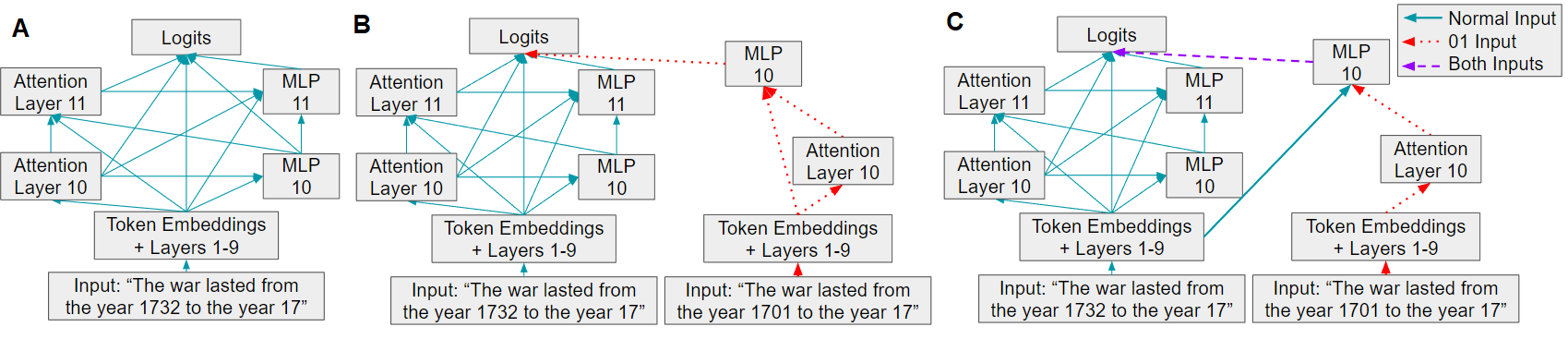
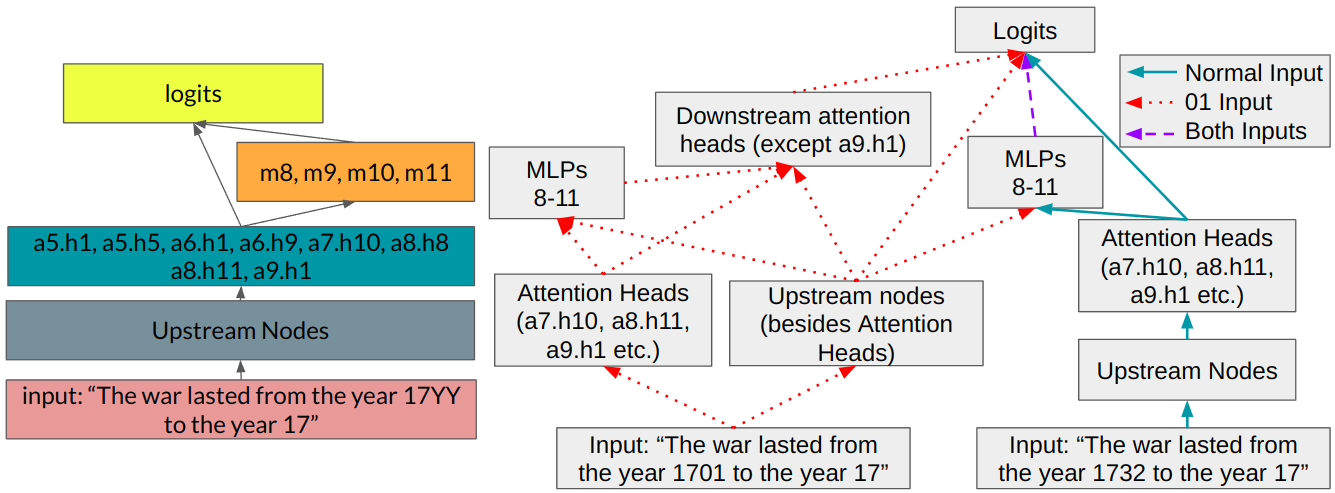
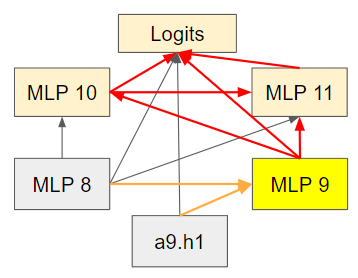
Pre-trained language models can be surprisingly adept at tasks they were not explicitly trained on, but how they implement these capabilities is poorly understood. In this paper, we investigate the basic mathematical abilities often acquired by pre-trained language models. Concretely, we use mechanistic interpretability techniques to explain the (limited) mathematical abilities of GPT-2 small. As a case study, we examine its ability to take in sentences such as "The war lasted from the year 1732 to the year 17", and predict valid two-digit end years (years > 32). We first identify a circuit, a small subset of GPT-2 small's computational graph that computes this task's output. Then, we explain the role of each circuit component, showing that GPT-2 small's final multi-layer perceptrons boost the probability of end years greater than the start year. Finally, we find related tasks that activate our circuit. Our results suggest that GPT-2 small computes greater-than using a complex but general mechanism that activates across diverse contexts.
Overview
The claims and statistics of this paper haven’t been checked yet.
Run the check — free, no account needed. It reads the open-access text and checks the sources it cites.
Integrity signals
Registry
Cites
Statistics
Figures



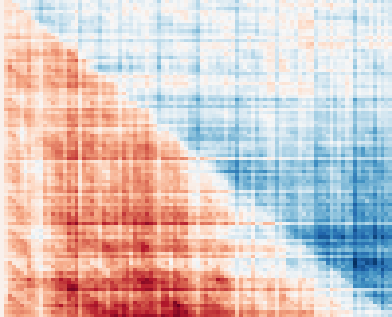
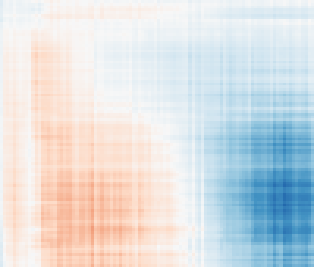
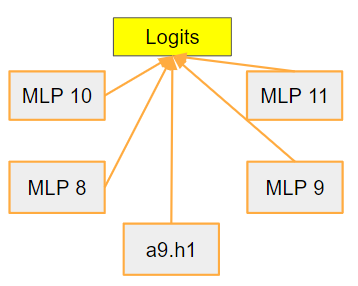
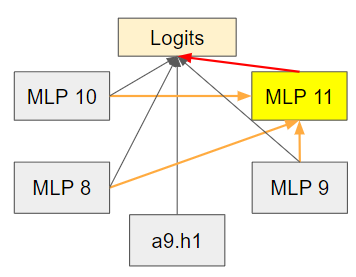



Verification
Claims the paper makes
The claims and statistics of this paper haven’t been checked yet.
Run the check — free, no account needed. It reads the open-access text and checks the sources it cites.
Claims other papers make about this one
Each is checked against this paper’s own text: does it say what the citing paper says it does?
The cited source says what the claim attributes to it.
In the citing paper
“Hanna et al. (2023) who find a circuit implementing greater-than in the context of years”
From Language Models Represent Space and Time (2023) · cites this paper as Hanna et al. (2023)
Self-check
Percentages, sums and reported differences re-computed from the paper’s own numbers.
The self-check needs the paper’s full text.
Citations
Cites
No references could be resolved yet.
Research works printed but not linked: 44
- Collin F. Baker, Charles J. Fillmore, and John B. Lowe. The Berkeley FrameNet project. In 36th Annual Meeting of the Association for Computational Linguistics and 17th International Conference on Computational Linguistics, Volume 1, pages 86-90, Montreal, Quebec, Canada, August 1998. Association for Computational Linguistics. doi: 10.3115/980845.980860. URL https://aclanthology.org/P98-1013. · DOI
- Anthony Bau, Yonatan Belinkov, Hassan Sajjad, Nadir Durrani, Fahim Dalvi, and James Glass. Identifying and controlling important neurons in neural machine translation. In International Conference on Learning Representations, 2019. URL https://openreview.net/forum? id=H1z-PsR5KX.
- Yonatan Belinkov. Probing classifiers: Promises, shortcomings, and advances. Com- putational Linguistics, 48(1):207-219, March 2022. doi: 10.1162/coli_a_00422. URL https://aclanthology.org/2022.cl-1.7. · DOI
- In H. Larochelle, M. Ranzato, R. Hadsell, M.F. Balcan, and H. Lin, editors, Advances in Neural Information Processing Systems, volume 33, pages 1877-1901.
- Curran Associates, Inc., 2020. URL https://proceedings.neurips.cc/paper_files/paper/2020/file/ 1457c0d6bfcb4967418bfb8ac142f64a-Paper.pdf.
- Nicholas Carlini, Daphne Ippolito, Matthew Jagielski, Katherine Lee, Florian Tramer, and Chiyuan Zhang. Quantifying memorization across neural language models. In The Eleventh International Conference on Learning Representations, 2023. URL https://openreview. net/forum?id=TatRHT_1cK.
- Kevin Clark, Urvashi Khandelwal, Omer Levy, and Christopher D. Manning. What does BERT look at? an analysis of BERT's attention. In Proceedings of the 2019 ACL Workshop BlackboxNLP: Analyzing and Interpreting Neural Networks for NLP, pages 276-286, Florence, Italy, August 2019. Association for Computational Linguistics. doi: 10.18653/v1/W19-4828. URL https://aclanthology.org/W19-4828. · DOI
- Fahim Dalvi, Nadir Durrani, Hassan Sajjad, Yonatan Belinkov, Anthony Bau, and James Glass. What is one grain of sand in the desert? analyzing individual neurons in deep nlp models. Proceedings of the AAAI Conference on Artificial Intelligence, 33(01):6309-6317, Jul. 2019. doi: 10.1609/aaai.v33i01.33016309. URL https://ojs.aaai.org/index.php/ AAAI/article/view/4592. · DOI
- Nicola De Cao, Michael Sejr Schlichtkrull, Wilker Aziz, and Ivan Titov. How do decisions emerge across layers in neural models? interpretation with differentiable masking. In Pro- ceedings of the 2020 Conference on Empirical Methods in Natural Language Processing (EMNLP), pages 3243-3255, Online, November 2020. Association for Computational Lin- guistics. doi: 10.18653/v1/2020.emnlp-main.262. URL https://aclanthology.org/2020. emnlp-main.262. · DOI · Paper page
- Nadir Durrani, Hassan Sajjad, Fahim Dalvi, and Yonatan Belinkov. Analyzing individual neurons in pre-trained language models. In Proceedings of the 2020 Conference on Empirical Methods in Natural Language Processing (EMNLP), pages 4865-4880, Online, November 2020. Association for Computational Linguistics. doi: 10.18653/v1/2020.emnlp-main.395. URL https://aclanthology.org/2020.emnlp-main.395. · DOI
- Yanai Elazar, Shauli Ravfogel, Alon Jacovi, and Yoav Goldberg. Amnesic probing: Behavioral explanation with amnesic counterfactuals. Transactions of the Association for Computational Linguistics, 9:160-175, 2021. doi: 10.1162/tacl_a_00359. URL https://aclanthology. org/2021.tacl-1.10. · DOI · Paper page
- Mohsen Fayyaz, Ehsan Aghazadeh, Ali Modarressi, Hosein Mohebbi, and Mohammad Taher Pilehvar. Not all models localize linguistic knowledge in the same place: A layer-wise probing on BERToids' representations. In Proceedings of the Fourth BlackboxNLP Workshop on Analyzing and Interpreting Neural Networks for NLP, pages 375-388, Punta Cana, Dominican Republic, November 2021. Association for Computational Linguistics. doi: 10.18653/v1/2021. blackboxnlp-1.29. URL https://aclanthology.org/2021.blackboxnlp-1.29. · DOI
- Atticus Geiger, Hanson Lu, Thomas F Icard, and Christopher Potts. Causal abstractions of neural networks. In A. Beygelzimer, Y. Dauphin, P. Liang, and J. Wortman Vaughan, editors, Advances in Neural Information Processing Systems, 2021. URL https://openreview.net/ forum?id=RmuXDtjDhG.
- Mor Geva, Ankit Gupta, and Jonathan Berant. Injecting numerical reasoning skills into language models. In Proceedings of the 58th Annual Meeting of the Association for Computational Linguistics, pages 946-958, Online, July 2020. Association for Computational Linguistics. doi: 10.18653/v1/2020.acl-main.89. URL https://aclanthology.org/2020.acl-main.89. · DOI
- Mor Geva, Roei Schuster, Jonathan Berant, and Omer Levy. Transformer feed-forward layers are key-value memories. In Proceedings of the 2021 Conference on Empirical Methods in Natural Language Processing, pages 5484-5495, Online and Punta Cana, Dominican Republic, Novem- ber 2021. Association for Computational Linguistics. doi: 10.18653/v1/2021.emnlp-main.446. URL https://aclanthology.org/2021.emnlp-main.446. · DOI · Paper page
- Mario Giulianelli, Jack Harding, Florian Mohnert, Dieuwke Hupkes, and Willem Zuidema. Under the hood: Using diagnostic classifiers to investigate and improve how language models track agreement information. In Proceedings of the 2018 EMNLP Workshop BlackboxNLP: Analyzing and Interpreting Neural Networks for NLP, pages 240-248, Brussels, Belgium, November 2018. Association for Computational Linguistics. doi: 10.18653/v1/W18-5426. URL https://aclanthology.org/W18-5426. · DOI
- Michael Hanna, Roberto Zamparelli, and David Mareček. The functional relevance of probed information: A case study. In Proceedings of the 17th Conference of the European Chapter of the Association for Computational Linguistics, pages 835-848, Dubrovnik, Croatia, May 2023. Association for Computational Linguistics. doi: 10.18653/v1/2023.eacl-main.58. URL https://aclanthology.org/2023.eacl-main.58. · DOI
- Dieuwke Hupkes, Sara Veldhoen, and Willem Zuidema. Visualisation and 'diagnostic classifiers' reveal how recurrent and recursive neural networks process hierarchical structure. J. Artif. Int. Res., 61(1):907-926, jan 2018. ISSN 1076-9757.
- Yair Lakretz, German Kruszewski, Theo Desbordes, Dieuwke Hupkes, Stanislas Dehaene, and Marco Baroni. The emergence of number and syntax units in LSTM language models. In Proceedings of the 2019 Conference of the North American Chapter of the Association for Computational Linguistics: Human Language Technologies, Volume 1 (Long and Short Papers), pages 11-20, Minneapolis, Minnesota, June 2019. Association for Computational Linguistics. doi: 10.18653/v1/N19-1002. URL https://aclanthology.org/N19-1002. · DOI
- Aitor Lewkowycz, Anders Johan Andreassen, David Dohan, Ethan Dyer, Henryk Michalewski, Vinay Venkatesh Ramasesh, Ambrose Slone, Cem Anil, Imanol Schlag, Theo Gutman-Solo, Yuhuai Wu, Behnam Neyshabur, Guy Gur-Ari, and Vedant Misra. Solving quantitative reasoning problems with language models. In Alice H. Oh, Alekh Agarwal, Danielle Belgrave, and Kyunghyun Cho, editors, Advances in Neural Information Processing Systems, 2022. URL https://openreview.net/forum?id=IFXTZERXdM7.
- Kenneth Li, Aspen K Hopkins, David Bau, Fernanda Viégas, Hanspeter Pfister, and Martin Wattenberg. Emergent world representations: Exploring a sequence model trained on a synthetic task. In The Eleventh International Conference on Learning Representations, 2023. URL https://openreview.net/forum?id=DeG07_TcZvT.
- Ziming Liu, Ouail Kitouni, Niklas Nolte, Eric J Michaud, Max Tegmark, and Mike Williams. Towards understanding grokking: An effective theory of representation learning. In Alice H. Oh, Alekh Agarwal, Danielle Belgrave, and Kyunghyun Cho, editors, Advances in Neural Informa- tion Processing Systems, 2022. URL https://openreview.net/forum?id=6at6rB3IZm.
- Kevin Meng, David Bau, Alex J Andonian, and Yonatan Belinkov. Locating and editing factual associations in GPT. In Alice H. Oh, Alekh Agarwal, Danielle Belgrave, and Kyunghyun Cho, editors, Advances in Neural Information Processing Systems, 2022. URL https:// openreview.net/forum?id=-h6WAS6eE4.
- Swaroop Mishra, Arindam Mitra, Neeraj Varshney, Bhavdeep Sachdeva, Peter Clark, Chitta Baral, and Ashwin Kalyan. NumGLUE: A suite of fundamental yet challenging mathematical reasoning tasks. In Proceedings of the 60th Annual Meeting of the Association for Com- putational Linguistics (Volume 1: Long Papers), pages 3505-3523, Dublin, Ireland, May 2022. Association for Computational Linguistics. doi: 10.18653/v1/2022.acl-long.246. URL https://aclanthology.org/2022.acl-long.246. · DOI
- Aakanksha Naik, Abhilasha Ravichander, Carolyn Rose, and Eduard Hovy. Exploring numeracy in word embeddings. In Proceedings of the 57th Annual Meeting of the Association for Computational Linguistics, pages 3374-3380, Florence, Italy, July 2019. Association for Computational Linguistics. doi: 10.18653/v1/P19-1329. URL https://aclanthology.org/ P19-1329. · DOI · Paper page
- Neel Nanda, Lawrence Chan, Tom Lieberum, Jess Smith, and Jacob Steinhardt. Progress measures for grokking via mechanistic interpretability. In International Conference on Learning Representations, 2023. URL https://openreview.net/forum?id=9XFSbDPmdW.
- Rodrigo Nogueira, Zhiying Jiang, and Jimmy J. Li. Investigating the limitations of the trans- formers with simple arithmetic tasks. ArXiv, abs/2102.13019, 2021. · arXiv
- Chris Olah, Nick Cammarata, Ludwig Schubert, Gabriel Goh, Michael Petrov, and Shan Carter. Zoom in: An introduction to circuits. Distill, 2020. doi: 10.23915/distill.00024.001. https://distill.pub/2020/circuits/zoom-in. · DOI · Paper page
- Judea Pearl. Causality. Cambridge University Press, 2 edition, 2009. doi: 10.1017/ CBO9780511803161. · DOI · Paper page
- Matthew E. Peters, Mark Neumann, Mohit Iyyer, Matt Gardner, Christopher Clark, Kenton Lee, and Luke Zettlemoyer. Deep contextualized word representations. In Proceedings of the 2018 Conference of the North American Chapter of the Association for Computational Linguistics: Human Language Technologies, Volume 1 (Long Papers), pages 2227-2237, New Orleans, Louisiana, June 2018. Association for Computational Linguistics. doi: 10.18653/v1/N18-1202. URL https://aclanthology.org/N18-1202. · DOI · Paper page
- Abhilasha Ravichander, Yonatan Belinkov, and Eduard Hovy. Probing the probing paradigm: Does probing accuracy entail task relevance? In Proceedings of the 16th Conference of the European Chapter of the Association for Computational Linguistics: Main Volume, pages 3363-3377, Online, April 2021. Association for Computational Linguistics. doi: 10.18653/v1/ 2021.eacl-main.295. URL https://aclanthology.org/2021.eacl-main.295. · DOI · Paper page
- Anna Rogers, Olga Kovaleva, and Anna Rumshisky. A primer in BERTology: What we know about how BERT works. Transactions of the Association for Computational Linguistics, 8:842- 866, 2020. doi: 10.1162/tacl_a_00349. URL https://aclanthology.org/2020.tacl-1. 54. · DOI · Paper page
- Tilman Räuker, Anson Ho, Stephen Casper, and Dylan Hadfield-Menell. Toward transparent ai: A survey on interpreting the inner structures of deep neural networks, 2022. URL https: //arxiv.org/abs/2207.13243.
- Hassan Sajjad, Nadir Durrani, and Fahim Dalvi. Neuron-level interpretation of deep NLP models: A survey. Transactions of the Association for Computational Linguistics, 10:1285-1303, 2022. doi: 10.1162/tacl_a_00519. URL https://aclanthology.org/2022.tacl-1.74. · DOI
- Rico Sennrich, Barry Haddow, and Alexandra Birch. Neural machine translation of rare words with subword units. In Proceedings of the 54th Annual Meeting of the Association for Computational Linguistics (Volume 1: Long Papers), pages 1715-1725, Berlin, Germany, August 2016. Association for Computational Linguistics. doi: 10.18653/v1/P16-1162. URL https://aclanthology.org/P16-1162. · DOI · Paper page
- Ian Tenney, Dipanjan Das, and Ellie Pavlick. BERT rediscovers the classical NLP pipeline. In Proceedings of the 57th Annual Meeting of the Association for Computational Linguistics, pages 4593-4601, Florence, Italy, July 2019. Association for Computational Linguistics. doi: 10.18653/v1/P19-1452. URL https://aclanthology.org/P19-1452. · DOI · Paper page
- Avijit Thawani, Jay Pujara, Filip Ilievski, and Pedro Szekely. Representing numbers in NLP: a survey and a vision. In Proceedings of the 2021 Conference of the North American Chapter of the Association for Computational Linguistics: Human Language Technologies, pages 644- 656, Online, June 2021. Association for Computational Linguistics. doi: 10.18653/v1/2021. naacl-main.53. URL https://aclanthology.org/2021.naacl-main.53. · DOI
- Kushal Tirumala, Aram Markosyan, Luke Zettlemoyer, and Armen Aghajanyan. Memo- rization without overfitting: Analyzing the training dynamics of large language models. In S. Koyejo, S. Mohamed, A. Agarwal, D. Belgrave, K. Cho, and A. Oh, editors, Advances in Neural Information Processing Systems, volume 35, pages 38274-38290.
- Curran Associates, Inc., 2022. URL https://proceedings.neurips.cc/paper_files/paper/2022/file/ fa0509f4dab6807e2cb465715bf2d249-Paper-Conference.pdf.
- Jesse Vig, Sebastian Gehrmann, Yonatan Belinkov, Sharon Qian, Daniel Nevo, Yaron Singer, and Stuart Shieber. Investigating gender bias in language models using causal mediation analysis. In H. Larochelle, M. Ranzato, R. Hadsell, M.F. Balcan, and H. Lin, editors, Ad- vances in Neural Information Processing Systems, volume 33, pages 12388-12401.
- Eric Wallace, Yizhong Wang, Sujian Li, Sameer Singh, and Matt Gardner. Do NLP models know numbers? probing numeracy in embeddings. In Proceedings of the 2019 Conference on Empirical Methods in Natural Language Processing and the 9th International Joint Conference on Natural Language Processing (EMNLP-IJCNLP), pages 5307-5315, Hong Kong, China, November 2019. Association for Computational Linguistics. doi: 10.18653/v1/D19-1534. URL https://aclanthology.org/D19-1534. · DOI · Paper page
- Kevin Ro Wang, Alexandre Variengien, Arthur Conmy, Buck Shlegeris, and Jacob Steinhardt. Interpretability in the wild: a circuit for indirect object identification in GPT-2 small. In International Conference on Learning Representations, 2023. URL https://openreview. net/forum?id=NpsVSN6o4ul. Note: Path patching was introduced only in the arXiv version of this paper: https://arxiv.org/abs/2211.00593. · arXiv
- Yan Wang, Xiaojiang Liu, and Shuming Shi. Deep neural solver for math word problems. In Proceedings of the 2017 Conference on Empirical Methods in Natural Language Processing, pages 845-854, Copenhagen, Denmark, September 2017. Association for Computational Linguistics. doi: 10.18653/v1/D17-1088. URL https://aclanthology.org/D17-1088. · DOI
- Jason Wei, Yi Tay, Rishi Bommasani, Colin Raffel, Barret Zoph, Sebastian Borgeaud, Dani Yogatama, Maarten Bosma, Denny Zhou, Donald Metzler, Ed H. Chi, Tatsunori Hashimoto, Oriol Vinyals, Percy Liang, Jeff Dean, and William Fedus. Emergent abilities of large language models. Transactions on Machine Learning Research, 2022. ISSN 2835-8856. URL https: //openreview.net/forum?id=yzkSU5zdwD. Survey Certification.
Cited by
Sorted by citations
Language Models Represent Space and Time
Gurnee, W., & Tegmark, M. (2023) · arXiv · doi:10.48550/arxiv.2310.02207 · Cited by 46
What Algorithms can Transformers Learn? A Study in Length Generalization
Zhou, H., Bradley, A., Littwin, E., Razin, N., Saremi, O., Susskind, J., Bengio, S., & Nakkiran, P. (2023) · arXiv · doi:10.48550/arxiv.2310.16028 · Cited by 10
“A number of papers have studied this question for specific classes of problems, such as decimal addition (Lee et al., 2023), Dyck-1 languages (Bhattamishra et al., 2020), Boolean functions (Abbe et al., 2023), structural recursion (Zhang et al., 2023), and finite state automaton (Liu et al., 2023).”
BackgroundMethodFrom Yes-Men to Truth-Tellers: Addressing Sycophancy in Large Language Models with Pinpoint Tuning
Chen, W., Huang, Z., Xie, L., Lin, B., Li, H., Lu, L., Tian, X., Cai, D., Zhang, Y., Wang, W., et al. (2024) · arXiv · doi:10.48550/arxiv.2409.01658 · Cited by 5
Metadata
- Authors
- Hanna, M., Liu, O., & Variengien, A.
- ORCID
- Hanna, Michael
- Venue
- arXiv
- Publisher
- arXiv
- Published
- 2023
- Pages
- 76033-76060
- ISSN
- 1049-5258 (ISSN-L)
- arXiv
- 2305.00586
- OpenAlex
- W7133199409
- Cited by
- 84
- References
- 0
- Citations by year
- 2026: 30 · 2025: 23 · 2024: 23 · 2023: 8
- FWCI
- 9.73
- Type
- conference paper
- Language
- en
- Open access
- green
- arxiv.org
- Licence
- Locations
- neural information processing systems (publishedVersion)
- arXiv (Cornell University) (submittedVersion, cc-by)
- UvA-DARE (University of Amsterdam) (submittedVersion, other-oa)
- arXiv (Cornell University) (cc-by)
- Topics
- Physical Sciences › Computer Science › Artificial Intelligence › Explainable Artificial Intelligence (XAI)
- Physical Sciences › Computer Science › Artificial Intelligence › Topic Modeling
- Physical Sciences › Computer Science › Artificial Intelligence › Natural Language Processing Techniques
- Keywords
- GPT-2, mechanistic interpretability, mathematical ability, pre-trained language models, circuit identification, multilayer perceptron, numerical reasoning
About these checks
Registry, retraction, Cites and statistics results are computed, not judged, with one exception: a printed reference that no index lists is read once by a model before it counts as a citation error. Claims are extracted by a model and kept only when their quote appears verbatim in the text; each cited source is then checked, with a model’s help, for whether it says what the claim relies on. Those verdicts can be wrong — read the claim’s quote and the cited source before relying on one.
Statistics and arithmetic are recomputed, not judged.
Confidence bands are shown only for fields calibrated on our annotated test set. None is calibrated yet, so no band is shown.
What counts as a claim ›How we measure confidence ›How we check this ›
Are you an author, or do you see a problem with this page? Request a review
