

The DOI matches its DataCite record; 1 of the 1 references it cites were found in a registry or an index.
How well can machine-generated texts be identified and can language models be trained to avoid identification?
Open accessAbstract
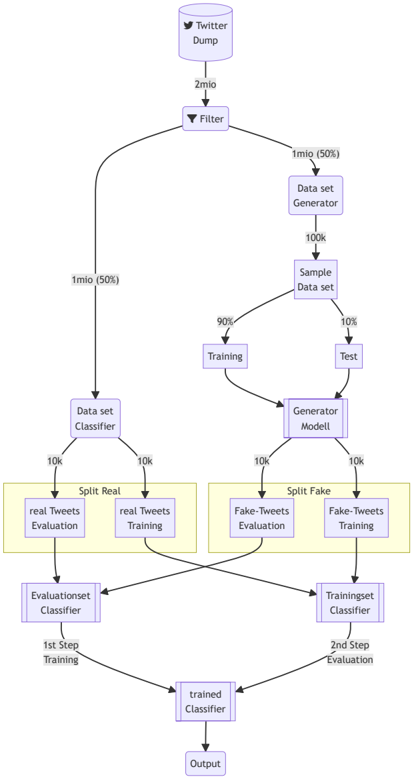
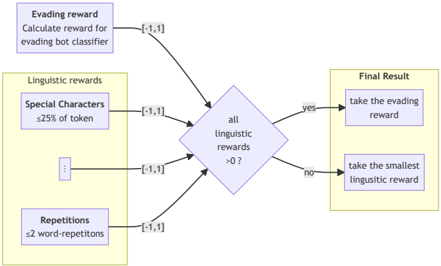
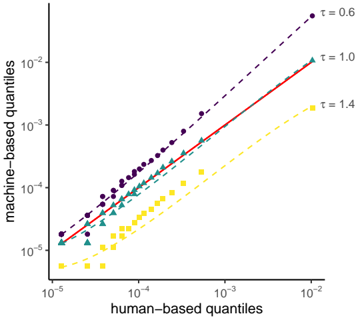
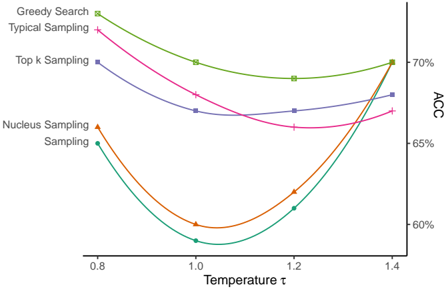
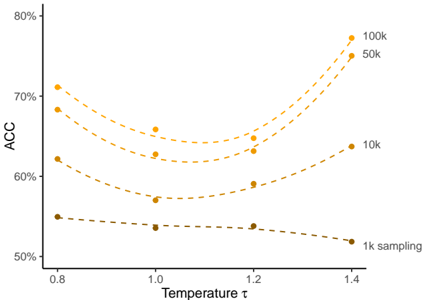
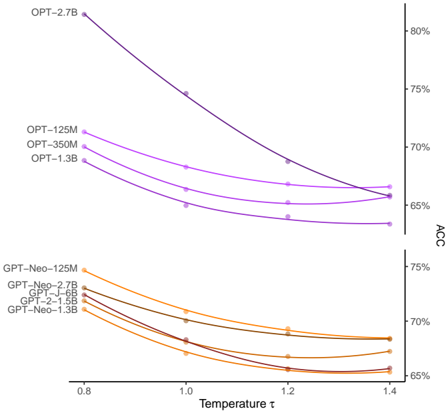
With the rise of generative pre-trained transformer models such as GPT-3, GPT-NeoX, or OPT, distinguishing human-generated texts from machine-generated ones has become important. We refined five separate language models to generate synthetic tweets, uncovering that shallow learning classification algorithms, like Naive Bayes, achieve detection accuracy between 0.6 and 0.8. Shallow learning classifiers differ from human-based detection, especially when using higher temperature values during text generation, resulting in a lower detection rate. Humans prioritize linguistic acceptability, which tends to be higher at lower temperature values. In contrast, transformer-based classifiers have an accuracy of 0.9 and above. We found that using a reinforcement learning approach to refine our generative models can successfully evade BERT-based classifiers with a detection accuracy of 0.15 or less.
Overview
The claims and statistics of this paper haven’t been checked yet.
Run the check — free, no account needed. It reads the open-access text and checks the sources it cites.
Integrity signals
Registry
Cites
Statistics
Figures
Verification
Claims the paper makes
The claims and statistics of this paper haven’t been checked yet.
Run the check — free, no account needed. It reads the open-access text and checks the sources it cites.
Claims other papers make about this one
Each is checked against this paper’s own text: does it say what the citing paper says it does?
The source backs part of the claim, not all of it — or backs it for a different population, condition or comparison.
In the citing paper
“A similar idea is demonstrated in (Schneider et al. 2023): using reinforcement learning to refine generative models can successfully circumvent BERT-based classifiers with detection accuracy as low as 0.15 AUROC, even when using linguistic features as a reward function.”
From A Survey on LLM-Generated Text Detection: Necessity, Methods, and Future Directions (2025) · cites this paper as Schneider et al. 2023
Experimental — accuracy not yet measured
Self-check
Percentages, sums and reported differences re-computed from the paper’s own numbers.
The self-check needs the paper’s full text.
Citations
Cites
Paraphrasing evades detectors of AI-generated text, but retrieval is an effective defense
Krishna, K., Song, Y., Karpinska, M., Wieting, J., & Iyyer, M. (2023) · arXiv · doi:10.48550/arxiv.2303.13408 · Cited by 150 · cited 2×
“Various approaches exist to trick or bypass these detection mechanisms, including paraphrasing the generated texts (Krishna et al., 2023).”
Background
Research works printed but not linked: 26
- Alothali, E., Zaki, N., Mohamed, E. A., & Alashwal, H. (2018). Detecting social bots on twitter: A literature review. International Conference on Innovations in Information Technology (IIT), 175-180. https://doi.org/10/ggwcmw
- Black, S., Leo, G., Wang, P., Leahy, C., & Biderman, S. (2021). GPT-Neo: Large scale autoregressive language modeling with mesh-tensorflow (Version 1.0) [Large language model]. Zenodo. https://doi.org/10/kqrc
- Cabanac, G., & Labbé, C. (2021). Prevalence of nonsensical algorithmically generated papers in the scientific literature. Journal of the Association for Information Science and Technology, 72(12), 1461-1476. https : / / doi . org/10/gj7b8h
- Chen, X., Liang, C., Huang, D., Real, E., Wang, K., Liu, Y., Pham, H., Dong, X., Luong, T., Hsieh, C., Lu, Y., & Le, Q. V. (2023). Symbolic discovery of optimization algorithms. arXiv: abs / 2302 . 06675. https://doi.org/10/kqzw
- Clark, E., August, T., Serrano, S., Haduong, N., Gururangan, S., & Smith, N. A. (2021). All that's 'human' is not gold: Evaluating human evaluation of generated text. Proceedings of the 59th Annual Meeting of the Association for Computational Linguistics and the 11th International Joint Conference on Natural Language Processing (ACL/IJCNLP), 7282-7296. https://doi.org/10/kq2w
- Daya, A. A., Salahuddin, M. A., Limam, N., & Boutaba, R. (2020). BotChase: Graph-based bot detection using machine learning. IEEE Transactions on Network and Service Manage- ment, 17(1), 15-29. https://doi.org/10/gndzsg
- Dugan, L., Ippolito, D., Kirubarajan, A., & Callison-Burch, C. (2020). RoFT: A tool for evaluating human detection of machine-generated text. Proceedings of the Conference on Empirical Methods in Natural Language Processing (EMNLP), 189-196. https://doi.org/10/knkm
- Gehrmann, S., Strobelt, H., & Rush, A. (2019). GLTR: statistical detection and visualization of generated text. In M. R. Costa-jussà & E. Alfonseca (Eds.), Proceedings of the 57th annual meeting of the association for computational linguistics (pp. 111-116). Association for Computational Linguistics. https://doi.org/10/gg9p2b
- Harada, A., Bollegala, D., & Chandrasiri, N. P. (2021). Discrimination of human-written and human and machine written sentences using text consistency. International Conference on Computing, Communication, and Intelligent Systems, 41-47. https://doi.org/10/kq2z
- He, P., Gao, J., & Chen, W. (2023). DeBERTaV3: Improving DeBERTa using ELECTRA-style pre-training with gradient-disentangled embedding sharing. arXiv: abs / 2111 . 09543. https://doi.org/10/krs4
- He, P., Liu, X., Gao, J., & Chen, W. (2021). DeBERTa: Decoding-enhanced BERT with disentangled attention. arXiv: abs/2006.03654. https://doi. org/10/krs5 · arXiv
- Hermann, K. M., Kočiský, T., Grefenstette, E., Espeholt, L., Kay, W., Suleyman, M., & Blunsom, P. (2015). Teaching machines to read and comprehend. In C. Cortes, D. Lee, M. Sugiyama, & R. Garnett (Eds.), Proceedings of the 28th international conference on neural information processing systems (pp. 1693-1701, Vol. 1). MIT Press.
- Ippolito, D., Duckworth, D., Callison-Burch, C., & Eck, D. (2020). Automatic detection of generated text is easiest when humans are fooled. Proceedings of the 58th Annual Meeting of the Association for Computational Linguistics, 1808-1822. https://doi.org/10/knkk
- Lee-Thorp, J., Ainslie, J., Eckstein, I., & Ontañón, S. (2022). FNet: Mixing tokens with fourier transforms. Proceedings of the Conference of the North American Chapter of the Association for Computational Linguistics: Human Language Technologies, 4296-4313. https://doi.org/10/grsfsm
- Liu, Y., Ott, M., Goyal, N., Du, J., Joshi, M., Chen, D., Levy, O., Lewis, M., Zettlemoyer, L., & Stoyanov, V. (2019). RoBERTa: A robustly optimized BERT pretraining approach. arXiv: abs/1907.11692. https://doi.org/10/gp5knh · arXiv
- Meister, C., Pimentel, T., Wiher, G., & Cotterell, R. (2023). Locally typical sampling. Transactions of the Association for Computational Linguis- tics, 11, 102-121. https://doi.org/10/kqrt
- Mitchell, E., Lee, Y., Khazatsky, A., Manning, C. D., & Finn, C. (2023). DetectGPT: Zero-shot machine-generated text detection using probability curvature. arXiv: abs / 2301 . 11305. https://doi.org/10/grsgh4
- Nomm, S., & Bahsi, H. (2018). Unsupervised anomaly based botnet detection in IoT networks. 17th IEEE International Conference on Machine Learning and Applications (ICMLA), 1048-1053. https://doi.org/10/kq34
- Orabi, M., Mouheb, D., Al Aghbari, Z., & Kamel, I. (2020). Detection of bots in social media: A systematic review. Information Processing & Management, 57(4), Article 102250. https : / / doi.org/10/ghfkw8
- Ouyang, L., Wu, J., Jiang, X., Almeida, D., Wainwright, C., Mishkin, P., Zhang, C., Agarwal, S., Slama, K., Ray, A., Schulman, J., Hilton, J., Kelton, F., Miller, L., Simens, M., Askell, A., Welinder, P., Christiano, P. F., Leike, J., & Lowe, R. (2022). Training language models to follow instructions with human feedback. In S. Koyejo, S. Mohamed, A. Agarwal, D. Belgrave, K. Cho, & A. Oh (Eds.), Advances in neural information processing systems (pp. 27730-27744, Vol. 36. Curran Associates. Radford, A., Wu, J., Child, R., Luan, D., Amodei, D., & Sutskever, I. (2019). Language models are unsupervised multitask learners [OpenAI Blog].
- Raffel, C., Shazeer, N., Roberts, A., Lee, K., Narang, S., Matena, M., Zhou, Y., Li, W., & Liu, P. J. (2020). Exploring the limits of transfer learning with a unified text-to-text transformer. The Journal of Machine Learning Research, 21(1), 5485-5551. Social turing tests: Crowdsourcing sybil detection. (2013). In G. Wang, M. Mohanlal, C. Wilson, X. Wang, M. J. Metzger, H. Zheng, & B. Y. Zhao (Eds.), Proceedings of the 20th annual network & distributed system security symposium. https://doi.org/10/kq3v
- Tay, Y., Bahri, D., Zheng, C., Brunk, C., Metzler, D., & Tomkins, A. (2020). Reverse engineering configurations of neural text generation models. Proceedings of the 58th Annual Meeting of the Association for Computational Linguistics, 275-279. https://doi.org/10/kq24
- Warstadt, A., Singh, A., & Bowman, S. R. (2019). Neural network acceptability judgments. Transactions of the Association for Computa- tional Linguistics, 7, 625-641. https://doi.org/ 10/ggv8kd
- Williams, A., Nangia, N., & Bowman, S. R. (2018). A broad-coverage challenge corpus for sentence understanding through inference. Proceedings of the Conference of the North American Chapter of the Association for Computational Linguistics: Human Language Technologies, 1112-1122. https://doi.org/10/gg9fnp
- Zhang, S., Roller, S., Goyal, N., Artetxe, M., Chen, M., Chen, S., Dewan, C., Diab, M. T., Li, X., Lin, X. V., Mihaylov, T., Ott, M., Shleifer, S., Shuster, K., Simig, D., Koura, P. S., Sridhar, A., Wang, T., & Zettlemoyer, L. (2022). OPT: open pre-trained transformer language models. arXiv: abs / 2205 . 01068. https : / / doi . org/10/kfxh
- Ziegler, D. M., Stiennon, N., Wu, J., Brown, T. B., Radford, A., Amodei, D., Christiano, P., & Irving, G. (2020). Fine-tuning language models from human preferences. https : / / doi . org / 10 / gskffn
Cited by
Sorted by citations
A Survey on LLM-Generated Text Detection: Necessity, Methods, and Future Directions
Wu, J., Yang, S., Zhan, R., Yuan, Y., Chao, L. S., & Wong, D. F. (2025) · Computational Linguistics · doi:10.1162/coli_a_00549 · Cited by 212
Metadata
- Authors
- Schneider, S., Steuber, F., Schneider, J. A. G., & Rodosek, G. D.
- Affiliations
- Universität der Bundeswehr München (DE)
- Venue
- arXiv
- Publisher
- arXiv
- Published
- 2023
- ISSN
- 2331-8422 (ISSN-L)
- arXiv
- 2310.16992
- OpenAlex
- W4387994999
- Cited by
- 1
- References
- 1
- Citations by year
- 2025: 1
- Type
- posted content
- Language
- en
- Open access
- green
- arxiv.org
- Licence
- Locations
- arXiv (Cornell University) (submittedVersion, cc-by)
- arXiv (Cornell University) (cc-by)
- Topics
- Physical Sciences › Computer Science › Artificial Intelligence › Authorship Attribution and Profiling
- Physical Sciences › Computer Science › Artificial Intelligence › Topic Modeling
- Physical Sciences › Computer Science › Information Systems › Spam and Phishing Detection
- Keywords
- AI-generated text detection, synthetic text, GPT-3, OPT, text classification, temperature parameter, linguistic acceptability, reinforcement learning, BERT classifier, human-written text
About these checks
Registry, retraction, Cites and statistics results are computed, not judged, with one exception: a printed reference that no index lists is read once by a model before it counts as a citation error. Claims are extracted by a model and kept only when their quote appears verbatim in the text; each cited source is then checked, with a model’s help, for whether it says what the claim relies on. Those verdicts can be wrong — read the claim’s quote and the cited source before relying on one.
Statistics and arithmetic are recomputed, not judged.
Confidence bands are shown only for fields calibrated on our annotated test set. None is calibrated yet, so no band is shown.
What counts as a claim ›How we measure confidence ›How we check this ›
Are you an author, or do you see a problem with this page? Request a review
How to cite
Cite CoChat for the checks on this page, and the paper for its own findings.
- This page
- CoChat. (2026). Citation check: How well can machine-generated texts be identified and can language models be trained to avoid identification? https://app.cochat.ai/papers/10.48550/arxiv.2310.16992
- The paper
- Schneider, S., Steuber, F., Schneider, J. A. G., & Rodosek, G. D. (2023). How well can machine-generated texts be identified and can language models be trained to avoid identification? arXiv. https://doi.org/10.48550/arxiv.2310.16992
