

The DOI matches its DataCite record; 2 of the 2 references it cites were found in a registry or an index.
Copyright Protection in Generative AI: A Technical Perspective
Abstract
Generative AI has witnessed rapid advancement in recent years, expanding their capabilities to create synthesized content such as text, images, audio, and code. The high fidelity and authenticity of contents generated by these Deep Generative Models (DGMs) have sparked significant copyright concerns. There have been various legal debates on how to effectively safeguard copyrights in DGMs. This work delves into this issue by providing a comprehensive overview of copyright protection from a technical perspective. We examine from two distinct viewpoints: the copyrights pertaining to the source data held by the data owners and those of the generative models maintained by the model builders. For data copyright, we delve into methods data owners can protect their content and DGMs can be utilized without infringing upon these rights. For model copyright, our discussion extends to strategies for preventing model theft and identifying outputs generated by specific models. Finally, we highlight the limitations of existing techniques and identify areas that remain unexplored. Furthermore, we discuss prospective directions for the future of copyright protection, underscoring its importance for the sustainable and ethical development of Generative AI.
Overview
The claims and statistics of this paper haven’t been checked yet.
Run the check — free, no account needed. It reads the open-access text and checks the sources it cites.
Integrity signals
Registry
Cites
Statistics
Figures
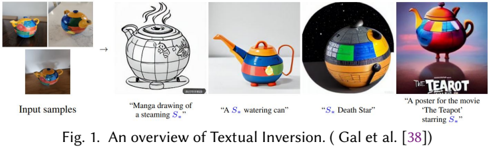
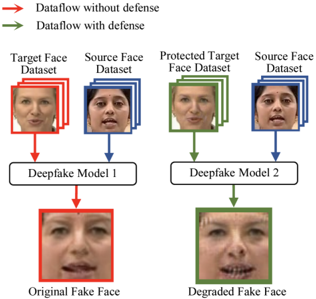
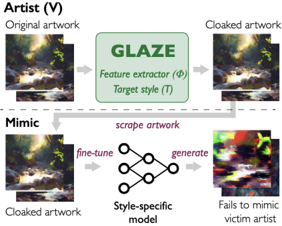
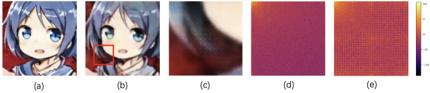
Verification
Claims the paper makes
The claims and statistics of this paper haven’t been checked yet.
Run the check — free, no account needed. It reads the open-access text and checks the sources it cites.
Claims other papers make about this one
Each is checked against this paper’s own text: does it say what the citing paper says it does?
In the citing paper
“It serves as a complement to Ren et al. (2024) by focusing primarily on potential regulatory frameworks.”
From Generative AI and intellectual property: a systematic literature review of possible issues and mitigations (2026) · cites this paper as Ren et al. (2024)
In the citing paper
“Ren et al. (2024) present a cognate secondary study that similarly prioritises a 'technical perspective'.”
From Generative AI and intellectual property: a systematic literature review of possible issues and mitigations (2026) · cites this paper as Ren et al. (2024)
In the citing paper
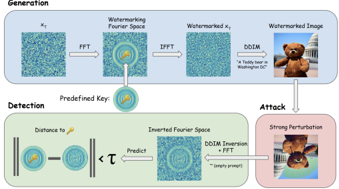
“Because these perturbations typically target the text encoder, they offer limited efficacy in cases where the learning process does not involve modifications to this component.”
From Generative AI and intellectual property: a systematic literature review of possible issues and mitigations (2026) · cites this paper as Ren et al., 2024
In the citing paper
“This presents a significant limitation, as image protectors are generally unable to ascertain the fine-tuning methodologies adopted by potential exploiters (Zhao et al., 2024c;Ren et al., 2024).”
From Generative AI and intellectual property: a systematic literature review of possible issues and mitigations (2026) · cites this paper as Ren et al., 2024
In the citing paper
“Recent studies have demonstrated that duplication within training datasets is the main factor that can result in both Diffusion Models and LLMs to memorise the samples.”
From Generative AI and intellectual property: a systematic literature review of possible issues and mitigations (2026) · cites this paper as Ren et al., 2024
18 more claims about this paper
Create a free account to see every claim other papers make about this one.
Self-check
Percentages, sums and reported differences re-computed from the paper’s own numbers.
The self-check needs the paper’s full text.
Citations
Cites
Paraphrasing evades detectors of AI-generated text, but retrieval is an effective defense
Krishna, K., Song, Y., Karpinska, M., Wieting, J., & Iyyer, M. (2023) · arXiv · doi:10.48550/arxiv.2303.13408 · Cited by 150 · cited 1×
“The purification techniques for watermark and adversarial perturbations have challenged the robustness of watermark protection on model copyright in both image generation (Nie et al., 2022; Yoon et al., 2021; Chen et al., 2021a) and text generation (Krishna et al., 2023; Ren et al., 2023).”
MethodIn-Context Unlearning: Language Models as Few Shot Unlearners
Pawelczyk, M., Neel, S., & Lakkaraju, H. (2023) · arXiv · doi:10.48550/arxiv.2310.07579 · Cited by 20
Research works printed but not linked: 161
- Rameen Abdal et al. 2019. Image2stylegan: How to embed images into the stylegan latent space?. In Proceedings of the IEEE/CVF international conference on computer vision. 4432-4441.
- OpenAI Josh Achiam et al. 2023. GPT-4 Technical Report. https://api.semanticscholar.org/CorpusID:257532815
- Anirudh Ajith et al. 2023. Performance Trade-offs of Watermarking Large Language Models. arXiv:2311.09816 (2023). · arXiv
- Anish Athalye et al. 2018. Synthesizing robust adversarial examples. In International conference on machine learning. PMLR, 284-293.
- Shumeet Baluja. 2017. Hiding images in plain sight: Deep steganography. Advances in neural information processing systems 30 (2017).
- Stella Biderman et al. 2023. Emergent and predictable memorization in large language models. arXiv:2304.11158 (2023). · arXiv
- Lewis Birch et al. 2023. Model Leeching: An Extraction Attack Targeting LLMs. arXiv:2309.10544 (2023). · arXiv
- Lucas Bourtoule et al. 2021. Machine unlearning. In 2021 IEEE Symposium on Security and Privacy (SP). IEEE, 141-159.
- Andrew Brock et al. 2016. Neural photo editing with introspective adversarial networks. arXiv:1609.07093 (2016). · arXiv
- Andrei Z Broder. 1997. On the resemblance and containment of documents. In Proceedings. Compression and Complexity of SEQUENCES 1997 (Cat. No. 97TB100171). IEEE, 21-29.
- Tom Brown et al. 2020. Language models are few-shot learners. Advances in neural information processing systems 33 (2020), 1877-1901.
- Xirong Cao et al. 2023. Invisible Watermarking for Audio Generation Diffusion Models. arXiv:2309.13166 (2023). · arXiv
- Nicholas Carlini et al. 2021. Extracting Training Data from Large Language Models.. In USENIX Security Symposium, Vol. 6.
- Nicholas Carlini et al. 2022. Quantifying memorization across neural language models. arXiv:2202.07646 (2022). · arXiv
- Nicholas Carlini et al. 2023. Extracting training data from diffusion models. arXiv:2301.13188 (2023). · arXiv
- Guangyu Chen et al. 2023. WavMark: Watermarking for Audio Generation. arXiv:2308.12770 (2023). · arXiv
- Jiaao Chen et al. 2023. Unlearn What You Want to Forget: Efficient Unlearning for LLMs. arXiv:2310.20150 (2023). · arXiv
- Xinyun Chen et al. 2017. Targeted backdoor attacks on deep learning systems using data poisoning. arXiv:1712.05526 (2017). · arXiv
- Xinyun Chen et al. 2021. Refit: a unified watermark removal framework for deep learning systems with limited data. In Proceedings of the 2021 ACM Asia Conference on Computer and Communications Security. 321-335.
- Zhikai Chen et al. 2021. Magdr: Mask-guided detection and reconstruction for defending deepfakes. In Proceedings of the IEEE/CVF Conference on Computer Vision and Pattern Recognition. 9014-9023.
- Miranda Christ et al. 2023. Undetectable Watermarks for Language Models. arXiv:2306.09194 (2023). · arXiv
- Timothy Chu et al. 2023. How to Protect Copyright Data in Optimization of Large Language Models? arXiv:2308.12247 (2023). · arXiv
- Yingqian Cui et al. 2023. DiffusionShield: A Watermark for Copyright Protection against Generative Diffusion Models. arXiv:2306.04642 (2023). · arXiv
- Yingqian Cui et al. 2023. FT-Shield: A Watermark Against Unauthorized Fine-tuning in Text-to-Image Diffusion Models. arXiv:2310.02401 (2023). · arXiv
- Bita Darvish Rouhani et al. 2019. Deepsigns: An end-to-end watermarking framework for ownership protection of deep neural networks. In Proceedings of the Twenty-Fourth International Conference on Architectural Support for Programming Languages and Operating Systems. 485-497.
- Prafulla Dhariwal et al. 2021. Diffusion models beat gans on image synthesis. Advances in neural information processing systems 34 (2021), 8780-8794.
- Pantelis Dogoulis et al. 2023. Improving Synthetically Generated Image Detection in Cross-Concept Settings. In Proceedings of the 2nd ACM International Workshop on Multimedia AI against Disinformation. 28-35.
- Gintare Karolina Dziugaite et al. 2016. A study of the effect of jpg compression on adversarial images. arXiv:1608.00853 (2016). · arXiv
- Ronen Eldan et al. 2023. Who's Harry Potter? Approximate Unlearning in LLMs. arXiv:2310.02238 (2023). · arXiv
- David C Epstein et al. 2023. Online detection of ai-generated images. In Proceedings of the IEEE/CVF International Conference on Computer Vision. 382-392.
- Tao Fan et al. 2023. FATE-LLM: A Industrial Grade Federated Learning Framework for Large Language Models. arXiv:2310.10049 (2023). · arXiv
- Jianwei Fei et al. 2022. Supervised gan watermarking for intellectual property protection. In 2022 IEEE International Workshop on Information Forensics and Security (WIFS). IEEE, 1-6.
- Zhangyin Feng et al. 2020. Codebert: A pre-trained model for programming and natural languages. arXiv:2002.08155 (2020). · arXiv
- Pierre Fernandez et al. 2023. The stable signature: Rooting watermarks in latent diffusion models. arXiv:2303.15435 (2023). · arXiv
- Giorgio Franceschelli et al. 2022. Copyright in generative deep learning. Data & Policy 4 (2022), e17.
- Yu Fu et al. 2023. Watermarking conditional text generation for ai detection: Unveiling challenges and a semantic-aware watermark remedy. arXiv:2307.13808 (2023). · arXiv
- Rinon Gal et al. 2022. An image is worth one word: Personalizing text-to-image generation using textual inversion. arXiv:2208.01618 (2022). · arXiv
- Rohit Gandikota et al. 2023. Erasing concepts from diffusion models. arXiv:2303.07345 (2023). · arXiv
- Ian Goodfellow et al. 2014. Generative adversarial nets. Advances in neural information processing systems 27 (2014).
- Ian J Goodfellow et al. 2014. Explaining and harnessing adversarial examples. arXiv:1412.6572 (2014). · arXiv
- Jamie Hayes et al. 2017. Generating steganographic images via adversarial training. Advances in neural information processing systems 30 (2017).
- Pengfei He et al. 2023. Sharpness-Aware Data Poisoning Attack. arXiv:2305.14851 (2023). · arXiv
- Xuanli He et al. 2022. Cater: Intellectual property protection on text generation apis via conditional watermarks. Advances in Neural Information Processing Systems 35 (2022), 5431-5445.
- Jonathan Ho et al. 2020. Denoising diffusion probabilistic models. Advances in neural information processing systems 33 (2020), 6840-6851.
- Jonathan Ho et al. 2022. Classifier-free diffusion guidance. arXiv:2207.12598 (2022). · arXiv
- Zhengmian Hu et al. 2023. Unbiased watermark for large language models. arXiv:2310.10669 (2023). · arXiv
- Qidong Huang et al. 2021. Initiative defense against facial manipulation. In Proceedings of the AAAI Conference on Artificial Intelligence, Vol. 35. 1619-1627.
- Daphne Ippolito et al. 2022. Preventing Verbatim Memorization in Language Models Gives a False Sense of Privacy. arXiv:2210.17546 (2022). · arXiv
- Nikhil Kandpal et al. 2022. Deduplicating training data mitigates privacy risks in language models. In International Conference on Machine Learning. PMLR, 10697-10707.
- Tero Karras et al. 2020. Analyzing and improving the image quality of stylegan. In Proceedings of the IEEE/CVF conference on computer vision and pattern recognition. 8110-8119.
- Aly Kassem et al. 2023. Preserving Privacy Through Dememorization: An Unlearning Technique For Mitigating Memorization Risks In Language Models. In Proceedings of the 2023 Conference on Empirical Methods in Natural Language Processing. 4360-4379.
- Changhoon Kim et al. 2023. WOUAF: Weight Modulation for User Attribution and Fingerprinting in Text-to-Image Diffusion Models. arXiv:2306.04744 (2023). · arXiv
- Diederik P Kingma et al. 2013. Auto-encoding variational bayes. arXiv:1312.6114 (2013). · arXiv
- John Kirchenbauer et al. 2023. On the Reliability of Watermarks for Large Language Models. arXiv:2306.04634 (2023). · arXiv
- John Kirchenbauer et al. 2023. A watermark for large language models. arXiv:2301.10226 (2023). · arXiv
- Zhifeng Kong et al. 2021. DiffWave: A Versatile Diffusion Model for Audio Synthesis. In International Conference on Learning Representations.
- Zhifeng Kong et al. 2023. Data Redaction from Conditional Generative Models. arXiv:2305.11351 (2023). · arXiv
- Zhifeng Kong et al. 2023. Data redaction from pre-trained gans. In 2023 IEEE Conference on Secure and Trustworthy Machine Learning (SaTML). IEEE, 638-677.
- Rohith Kuditipudi et al. 2023. Robust distortion-free watermarks for language models. arXiv:2307.15593 (2023). · arXiv
- Nupur Kumari et al. 2023. Ablating concepts in text-to-image diffusion models. arXiv:2303.13516 (2023). · arXiv
- Christian Ledig et al. 2017. Photo-realistic single image super-resolution using a generative adversarial network. In Proceedings of the IEEE conference on computer vision and pattern recognition. 4681-4690.
- Jooyoung Lee et al. 2023. Do language models plagiarize?. In Proceedings of the ACM Web Conference 2023. 3637-3647.
- Katherine Lee et al. 2021. Deduplicating training data makes language models better. arXiv:2107.06499 (2021). · arXiv
- Taehyun Lee et al. 2023. Who Wrote this Code? Watermarking for Code Generation. arXiv:2305.15060 (2023). · arXiv
- Junnan Li et al. 2022. Blip: Bootstrapping language-image pre-training for unified vision-language understanding and generation. In International Conference on Machine Learning. PMLR, 12888-12900.
- Raymond Li et al. 2023. StarCoder: may the source be with you! arXiv:2305.06161 (2023). · arXiv
- Yaxin Li et al. 2024. Neural Style Protection: Counteracting Unauthorized Neural Style Transfer. In Proceedings of the IEEE/CVF Winter Conference on Applications of Computer Vision. 3966-3975.
- Zheng Li et al. 2022. UnGANable: Defending Against GAN-based Face Manipulation. arXiv:2210.00957 (2022). · arXiv
- Chumeng Liang et al. 2023. Adversarial Example Does Good: Preventing Painting Imitation from Diffusion Models via Adversarial Examples. arXiv:2302.04578 (2023). · arXiv
- Chumeng Liang et al. 2023. Mist: Towards Improved Adversarial Examples for Diffusion Models. arXiv:2305.12683 (2023). · arXiv
- Huan Ling et al. 2021. Editgan: High-precision semantic image editing. Advances in Neural Information Processing Systems 34 (2021), 16331-16345.
- Aiwei Liu et al. 2023. A Private Watermark for Large Language Models. arXiv:2307.16230 (2023). · arXiv
- Aiwei Liu et al. 2023. A semantic invariant robust watermark for large language models. arXiv:2310.06356 (2023). · arXiv
- Ming-Yu Liu et al. 2017. Unsupervised image-to-image translation networks. Advances in neural information processing systems 30 (2017).
- Yugeng Liu et al. 2023. Watermarking Diffusion Model. arXiv:2305.12502 (2023). · arXiv
- Pan Lu et al. 2022. Learn to explain: Multimodal reasoning via thought chains for science question answering. Advances in Neural Information Processing Systems 35 (2022), 2507-2521.
- Xiyang Luo et al. 2020. Distortion agnostic deep watermarking. In Proceedings of the IEEE/CVF conference on computer vision and pattern recognition. 13548-13557.
- Wanlun Ma et al. 2023. The" code"of Ethics: A Holistic Audit of AI Code Generators. arXiv:2305.12747 (2023). · arXiv
- Yihan Ma et al. 2023. Generative Watermarking Against Unauthorized Subject-Driven Image Synthesis. arXiv:2306.07754 (2023). · arXiv
- Yiyang Ma et al. 2023. Unified multi-modal latent diffusion for joint subject and text conditional image generation. arXiv:2303.09319 (2023). · arXiv
- Mehdi Mirza et al. 2014. Conditional generative adversarial nets. arXiv:1411.1784 (2014). · arXiv
- Prakash M Nadkarni et al. 2011. Natural language processing: an introduction. Journal of the American Medical Informatics Association 18, 5 (2011), 544-551.
- KA Navas et al. 2008. Dwt-dct-svd based watermarking. In 2008 3rd International Conference on Communication Systems Software and Middleware and Workshops (COMSWARE'08). IEEE, 271-274.
- Thanh Tam Nguyen et al. 2022. A survey of machine unlearning. arXiv:2209.02299 (2022). · arXiv
- Alexander Quinn Nichol et al. 2021. Improved denoising diffusion probabilistic models. In International Conference on Machine Learning. PMLR, 8162-8171.
- Alexander Quinn Nichol et al. 2022. GLIDE: Towards Photorealistic Image Generation and Editing with Text-Guided Diffusion Models. In International Conference on Machine Learning. PMLR, 16784-16804.
- Guangyu Nie et al. 2023. Attributing Image Generative Models using Latent Fingerprints. arXiv:2304.09752 (2023). · arXiv
- Weili Nie et al. 2022. Diffusion Models for Adversarial Purification. In International Conference on Machine Learning. PMLR, 16805-16827.
- Ding Sheng Ong et al. 2021. Protecting intellectual property of generative adversarial networks from ambiguity attacks. In Proceedings of the IEEE/CVF Conference on Computer Vision and Pattern Recognition. 3630-3639.
- Long Ouyang et al. 2022. Training language models to follow instructions with human feedback. Advances in Neural Information Processing Systems 35 (2022), 27730-27744.
- Sen Peng et al. 2023. Protecting the Intellectual Property of Diffusion Models by the Watermark Diffusion Process. arXiv:2306.03436 (2023). · arXiv
- Wenjun Peng et al. 2023. Are You Copying My Model? Protecting the Copyright of Large Language Models for EaaS via Backdoor Watermark. arXiv:2305.10036 (2023). · arXiv
- Bernd J Pichler et al. 2010. PET/MRI: paving the way for the next generation of clinical multimodality imaging applications. Journal of Nuclear Medicine 51, 3 (2010), 333-336.
- Alec Radford et al. 2015. Unsupervised representation learning with deep convolutional generative adversarial networks. arXiv:1511.06434 (2015). · arXiv
- Alec Radford et al. 2019. Language models are unsupervised multitask learners. OpenAI blog 1, 8 (2019), 9.
- Alec Radford et al. 2021. Learning transferable visual models from natural language supervision. In International conference on machine learning. PMLR, 8748-8763.
- Aditya Ramesh et al. 2022. Hierarchical text-conditional image generation with clip latents. arXiv:2204.06125 (2022). · arXiv
- Jie Ren et al. 2022. Transferable unlearnable examples. arXiv:2210.10114 (2022). · arXiv
- Jie Ren et al. 2023. A Robust Semantics-based Watermark for Large Language Model against Paraphrasing. arXiv:2311.08721 (2023). · arXiv
- Robin Rombach et al. 2022. High-resolution image synthesis with latent diffusion models. In Proceedings of the IEEE/CVF Conference on Computer Vision and Pattern Recognition. 10684-10695.
- Olaf Ronneberger et al. 2015. U-net: Convolutional networks for biomedical image segmentation. In Medical Image Computing and Computer-Assisted Intervention-MICCAI 2015: 18th International Conference, Munich, Germany, October 5-9, 2015, Proceedings, Part III 18. Springer, 234-241.
- Ludan Ruan et al. 2023. Mm-diffusion: Learning multi-modal diffusion models for joint audio and video generation. In Proceedings of the IEEE/CVF Conference on Computer Vision and Pattern Recognition. 10219-10228.
- Nataniel Ruiz et al. 2020. Disrupting deepfakes: Adversarial attacks against conditional image translation networks and facial manipulation systems. In Computer Vision-ECCV 2020 Workshops: Glasgow, UK, August 23-28, 2020, Proceedings, Part IV 16. Springer, 236-251.
- Nataniel Ruiz et al. 2023. Dreambooth: Fine tuning text-to-image diffusion models for subject-driven generation. In Proceedings of the IEEE/CVF Conference on Computer Vision and Pattern Recognition. 22500-22510.
- Aniruddha Saha et al. 2020. Hidden trigger backdoor attacks. In Proceedings of the AAAI conference on artificial intelligence, Vol. 34. 11957-11965.
- Hadi Salman et al. 2023. Raising the cost of malicious ai-powered image editing. arXiv:2302.06588 (2023). · arXiv
- Pamela Samuelson. 2023. Generative AI meets copyright. Science 381, 6654 (2023), 158-161.
- Ryoma Sato et al. 2023. Embarrassingly simple text watermarks. arXiv:2310.08920 (2023). · arXiv
- Shawn Shan et al. 2023. Glaze: Protecting artists from style mimicry by text-to-image models. arXiv:2302.04222 (2023). · arXiv
- Gowthami Somepalli et al. 2023. Diffusion art or digital forgery? investigating data replication in diffusion models. In Proceedings of the IEEE/CVF Conference on Computer Vision and Pattern Recognition. 6048-6058.
- Gowthami Somepalli et al. 2023. Understanding and Mitigating Copying in Diffusion Models. arXiv:2305.20086 (2023). · arXiv
- Jiaming Song et al. 2020. Denoising diffusion implicit models. arXiv:2010.02502 (2020). · arXiv
- Akash Srivastava et al. 2017. Veegan: Reducing mode collapse in gans using implicit variational learning. Advances in neural information processing systems 30 (2017).
- Yuki Takezawa et al. 2023. Necessary and sufficient watermark for large language models. arXiv:2310.00833 (2023). · arXiv
- Matthew Tancik et al. 2020. Stegastamp: Invisible hyperlinks in physical photographs. In Proceedings of the IEEE/CVF conference on computer vision and pattern recognition. 2117-2126.
- Kushal Tirumala et al. 2022. Memorization without overfitting: Analyzing the training dynamics of large language models. Advances in Neural Information Processing Systems 35 (2022), 38274-38290.
- Hugo Touvron et al. 2023. Llama 2: Open foundation and fine-tuned chat models. arXiv:2307.09288 (2023). · arXiv
- Florian Tramèr, Fan Zhang, Ari Juels, Michael K Reiter, and Thomas Ristenpart. 2016. Stealing machine learning models via prediction {APIs}. In 25th USENIX security symposium (USENIX Security 16). 601-618.
- Yusuke Uchida et al. 2017. Embedding watermarks into deep neural networks. In Proceedings of the 2017 ACM on international conference on multimedia retrieval. 269-277.
- Gerrit van den Burg et al. 2021. On memorization in probabilistic deep generative models. Advances in Neural Information Processing Systems 34 (2021), 27916-27928.
- Thanh Van Le et al. 2023. Anti-DreamBooth: Protecting users from personalized text-to-image synthesis. arXiv:2303.15433 (2023). · arXiv
- Pascal Vincent et al. 2010. Stacked denoising autoencoders: Learning useful representations in a deep network with a local denoising criterion. Journal of machine learning research 11, 12 (2010).
- Vedran Vukotić, Vivien Chappelier, and Teddy Furon. 2018. Are deep neural networks good for blind image watermarking?. In 2018 IEEE International Workshop on Information Forensics and Security (WIFS). IEEE, 1-7.
- Nikhil Vyas et al. 2023. Provable copyright protection for generative models. arXiv:2302.10870 (2023). · arXiv
- Bolun Wang et al. 2019. Neural cleanse: Identifying and mitigating backdoor attacks in neural networks. In 2019 IEEE Symposium on Security and Privacy (SP). IEEE, 707-723.
- Run Wang et al. 2022. Anti-Forgery: Towards a Stealthy and Robust DeepFake Disruption Attack via Adversarial Perceptual-aware Perturbations. arXiv:2206.00477 (2022). · arXiv
- Xintao Wang et al. 2018. Esrgan: Enhanced super-resolution generative adversarial networks. In Proceedings of the European conference on computer vision (ECCV) workshops. 0-0.
- Zhenting Wang et al. 2023. How to detect unauthorized data usages in text-to-image diffusion models. arXiv:2307.03108 (2023). · arXiv
- Ryan Webster. 2023. A Reproducible Extraction of Training Images from Diffusion Models. arXiv:2305.08694 (2023). · arXiv
- Ryan Webster et al. 2023. On the De-duplication of LAION-2B. arXiv:2303.12733 (2023). · arXiv
- Yuxin Wen et al. 2023. Tree-Ring Watermarks: Fingerprints for Diffusion Images that are Invisible and Robust. arXiv:2305.20030 (2023). https: //arxiv.org/abs/2305.20030v3 · arXiv
- Hanzhou Wu et al. 2020. Watermarking neural networks with watermarked images. IEEE Transactions on Circuits and Systems for Video Technology 31, 7 (2020), 2591-2601.
- Ruijia Wu et al. 2023. Towards Prompt-robust Face Privacy Protection via Adversarial Decoupling Augmentation Framework. arXiv:2305.03980 (2023). · arXiv
- Cheng Xiong et al. 2023. Flexible and Secure Watermarking for Latent Diffusion Model. In Proceedings of the 31st ACM International Conference on Multimedia. 1668-1676.
- Weixiang Yan et al. 2022. WhyGen: explaining ML-powered code generation by referring to training examples. In Proceedings of the ACM/IEEE 44th International Conference on Software Engineering: Companion Proceedings. 237-241.
- Chaofei Yang et al. 2021. Defending against gan-based deepfake attacks via transformation-aware adversarial faces. In 2021 international joint conference on neural networks (IJCNN). IEEE, 1-8.
- Xi Yang et al. 2023. Watermarking Text Generated by Black-Box Language Models. arXiv:2305.08883 (2023). · arXiv
- Yuanshun Yao et al. 2023. Large Language Model Unlearning. arXiv:2310.10683 (2023). · arXiv
- Chin-Yuan Yeh et al. 2020. Disrupting image-translation-based deepfake algorithms with adversarial attacks. In Proceedings of the IEEE/CVF Winter Conference on Applications of Computer Vision Workshops. 53-62.
- KiYoon Yoo et al. 2023. Advancing beyond identification: Multi-bit watermark for language models. arXiv:2308.00221 (2023). · arXiv
- Jongmin Yoon et al. 2021. Adversarial purification with score-based generative models. In International Conference on Machine Learning. PMLR, 12062-12072.
- Ning Yu et al. 2020. Responsible disclosure of generative models using scalable fingerprinting. arXiv:2012.08726 (2020). · arXiv
- Ning Yu et al. 2021. Artificial fingerprinting for generative models: Rooting deepfake attribution in training data. In Proceedings of the IEEE/CVF International conference on computer vision. 14448-14457.
- Shenglai Zeng et al. 2023. Exploring Memorization in Fine-tuned Language Models. arXiv:2310.06714 (2023). · arXiv
- Fangneng Zhan et al. 2023. Multimodal image synthesis and editing: A survey and taxonomy. IEEE Transactions on Pattern Analysis and Machine Intelligence (2023).
- Chiyuan Zhang et al. 2021. Counterfactual memorization in neural language models. arXiv:2112.12938 (2021). · arXiv
- Eric Zhang et al. 2023. Forget-me-not: Learning to forget in text-to-image diffusion models. arXiv:2303.17591 (2023). · arXiv
- Li Zhang et al. 2022. Generative Model Watermarking Based on Human Visual System. arXiv:2209.15268 (2022). · arXiv
- Li Zhang et al. 2023. Generative Model Watermarking Suppressing High-Frequency Artifacts. arXiv:2305.12391 (2023). · arXiv
- Richard Zhang et al. 2018. The unreasonable effectiveness of deep features as a perceptual metric. In Proceedings of the IEEE conference on computer vision and pattern recognition. 586-595.
- Ru Zhang et al. 2019. Invisible steganography via generative adversarial networks. Multimedia tools and applications 78 (2019), 8559-8575.
- Susan Zhang et al. 2022. Opt: Open pre-trained transformer language models. arXiv:2205.01068 (2022). · arXiv
- Shengyu Zhang et al. 2023. Instruction tuning for large language models: A survey. arXiv:2308.10792 (2023). · arXiv
- Xiangyu Zhao et al. 2021. Structural watermarking to deep neural networks via network channel pruning. In 2021 IEEE International Workshop on Information Forensics and Security (WIFS). IEEE, 1-6.
- Xuandong Zhao et al. 2023. Provable Robust Watermarking for AI-Generated Text. arXiv:2306.17439 (2023). · arXiv
- Yunqing Zhao et al. 2023. A recipe for watermarking diffusion models. arXiv:2303.10137 (2023). · arXiv
- Jiren Zhu et al. 2018. Hidden: Hiding data with deep networks. In Proceedings of the European conference on computer vision (ECCV). 657-672.
- Jiapeng Zhu et al. 2020. In-domain gan inversion for real image editing. In European conference on computer vision. Springer, 592-608.
- Jun-Yan Zhu et al. 2016. Generative visual manipulation on the natural image manifold. In Computer Vision-ECCV 2016: 14th European Conference, Amsterdam, The Netherlands, October 11-14, 2016, Proceedings, Part V 14. Springer, 597-613.
- Jun-Yan Zhu et al. 2017. Unpaired image-to-image translation using cycle-consistent adversarial networks. In Proceedings of the IEEE international conference on computer vision. 2223-2232.
- Minfeng Zhu et al. 2019. Dm-gan: Dynamic memory generative adversarial networks for text-to-image synthesis. In Proceedings of the IEEE/CVF conference on computer vision and pattern recognition. 5802-5810.
Cited by
Arnaudo, A., Coppola, R., Morisio, M., Vetrò, A., Borghi, M., Raso, R., & Khan, B. (2026) · PeerJ Computer Science · doi:10.7717/peerj-cs.3928 · Cited by 2
Metadata
- Authors
- Ren, J., Xu, H., He, P., Cui, Y., Zeng, S., Zhang, J., Wen, H., Ding, J., Huang, P., Lyu, L., Liu, H., Chang, Y., & Tang, J.
- Venue
- arXiv
- Publisher
- arXiv
- Published
- 2024
- arXiv
- 2402.02333
- References
- 2
- Type
- Preprint
About these checks
Registry, retraction, Cites and statistics results are computed, not judged, with one exception: a printed reference that no index lists is read once by a model before it counts as a citation error. Claims are extracted by a model and kept only when their quote appears verbatim in the text; each cited source is then checked, with a model’s help, for whether it says what the claim relies on. Those verdicts can be wrong — read the claim’s quote and the cited source before relying on one.
Statistics and arithmetic are recomputed, not judged.
Confidence bands are shown only for fields calibrated on our annotated test set. None is calibrated yet, so no band is shown.
What counts as a claim ›How we measure confidence ›How we check this ›
Are you an author, or do you see a problem with this page? Request a review
