

The DOI matches its DataCite record.
Dissecting Language Models: Machine Unlearning via Selective Pruning
Open accessAbstract
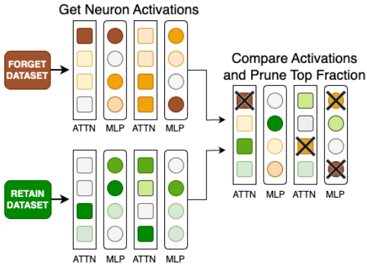
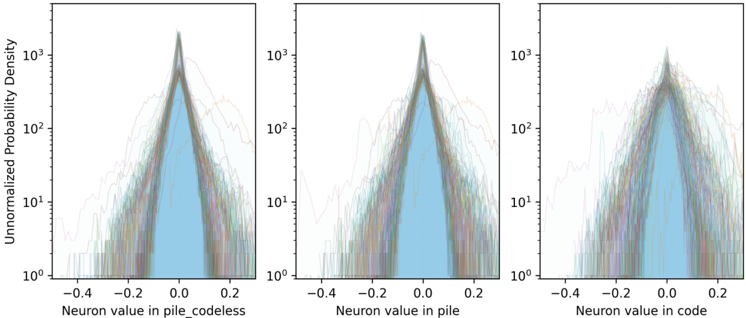
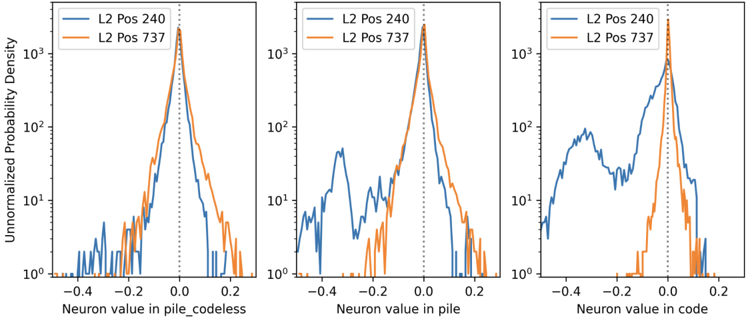
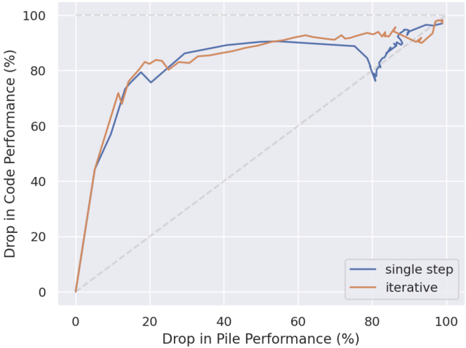
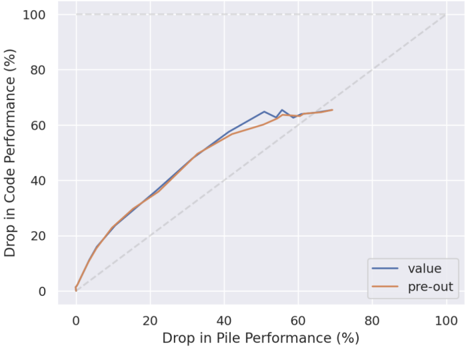
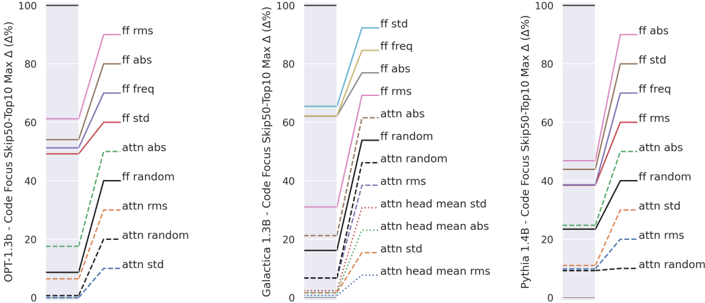
Understanding and shaping the behaviour of Large Language Models (LLMs) is increasingly important as applications become more powerful and more frequently adopted. This paper introduces a machine unlearning method specifically designed for LLMs. We introduce a selective pruning method for LLMs that removes neurons based on their relative importance on a targeted capability compared to overall network performance. This approach is a compute- and data-efficient method for identifying and removing neurons that enable specific behaviours. Our findings reveal that both feed-forward and attention neurons in LLMs are specialized; that is, for specific tasks, certain neurons are more crucial than others. Code from all experiments is available at https://github.com/nickypro/selective-pruning
Overview
The claims and statistics of this paper haven’t been checked yet.
Run the check — free, no account needed. It reads the open-access text and checks the sources it cites.
Integrity signals
Registry
Cites
Statistics
Figures
Verification
Claims the paper makes
The claims and statistics of this paper haven’t been checked yet.
Run the check — free, no account needed. It reads the open-access text and checks the sources it cites.
Claims other papers make about this one
Each is checked against this paper’s own text: does it say what the citing paper says it does?
In the citing paper
“Selective pruning provides a promising avenue for approximate machine unlearning [3], as it identifies and removes model components (e.g., neurons or attention heads) that are disproportionately influential on the targeted forget set , while preserving performance on the retain set .”
From Verifiable Unlearning on Edge (2025) · cites this paper as [3]
Self-check
Percentages, sums and reported differences re-computed from the paper’s own numbers.
The self-check needs the paper’s full text.
Citations
Cites
No references could be resolved yet.
Research works printed but not linked: 42
- Nora Belrose, Zach Furman, Logan Smith, Danny Halawi, Igor Ostrovsky, Lev McKinney, Stella Biderman, and Jacob Steinhardt. Eliciting latent predictions from transformers with the tuned lens. arXiv preprint arXiv:2303.08112, 2023. · arXiv
- Emily M. Bender, Timnit Gebru, Angelina McMillan-Major, and Shmargaret Shmitchell. On the dangers of stochastic parrots: Can language models be too big? In Madeleine Clare Elish, William Isaac, and Richard S. Zemel (eds.), FAccT '21: 2021 ACM Conference on Fairness, Accountability, and Transparency, Virtual Event / Toronto, Canada, March 3-10, 2021, pp. 610-623. ACM, 2021. doi: 10.1145/3442188.3445922. URL https://doi.org/10.1145/3442188.3445922. · DOI · Paper page
- Stella Biderman, Hailey Schoelkopf, Quentin Anthony, Herbie Bradley, Kyle O'Brien, Eric Hal- lahan, Mohammad Aflah Khan, Shivanshu Purohit, USVSN Sai Prashanth, Edward Raff, et al. Pythia: A suite for analyzing large language models across training and scaling. arXiv preprint arXiv:2304.01373, 2023. · arXiv
- Davis W. Blalock, Jose Javier Gonzalez Ortiz, Jonathan Frankle, and John V. Guttag. What is the state of neural network pruning? In Inderjit S. Dhillon, Dimitris S. Papailiopoulos, and Vivienne Sze (eds.), Proceedings of Machine Learning and Systems 2020, MLSys 2020, Austin, TX, USA, March 2-4, 2020. mlsys.org, 2020. URL https://proceedings.mlsys.org/book/296.pdf.
- Lucas Bourtoule, Varun Chandrasekaran, Christopher A. Choquette-Choo, Hengrui Jia, Adelin Travers, Baiwu Zhang, David Lie, and Nicolas Papernot. Machine unlearning. In 42nd IEEE Symposium on Security and Privacy, SP 2021, San Francisco, CA, USA, 24-27 May 2021, pp. 141-159. IEEE, 2021. doi: 10.1109/SP40001.2021.00019. URL https://doi.org/10. 1109/SP40001.2021.00019. · DOI · Paper page
- Paul F Christiano, Jan Leike, Tom Brown, Miljan Martic, Shane Legg, and Dario Amodei. Deep reinforcement learning from human preferences. Advances in neural information processing systems, 30, 2017.
- Vikram S Chundawat, Ayush K Tarun, Murari Mandal, and Mohan Kankanhalli. Can bad teaching induce forgetting? unlearning in deep networks using an incompetent teacher. In Proceedings of the AAAI Conference on Artificial Intelligence, volume 37, pp. 7210-7217, 2023a.
- Vikram S. Chundawat, Ayush K. Tarun, Murari Mandal, and Mohan S. Kankanhalli. Zero-shot machine unlearning. IEEE Trans. Inf. Forensics Secur., 18:2345-2354, 2023b. doi: 10.1109/TIFS. 2023.3265506. URL https://doi.org/10.1109/TIFS.2023.3265506. · DOI · Paper page
- Arthur Conmy, Augustine N. Mavor-Parker, Aengus Lynch, Stefan Heimersheim, and Adrià Garriga-Alonso. Towards automated circuit discovery for mechanistic interpretability. CoRR, abs/2304.14997, 2023. doi: 10.48550/arXiv.2304.14997. URL https://doi.org/10. 48550/arXiv.2304.14997. · DOI · Paper page
- Gelei Deng, Yi Liu, Yuekang Li, Kailong Wang, Ying Zhang, Zefeng Li, Haoyu Wang, Tianwei Zhang, and Yang Liu. Jailbreaker: Automated jailbreak across multiple large language model chatbots. CoRR, abs/2307.08715, 2023. doi: 10.48550/arXiv.2307.08715. URL https://doi. org/10.48550/arXiv.2307.08715. · DOI · Paper page
- Alexey Dosovitskiy, Lucas Beyer, Alexander Kolesnikov, Dirk Weissenborn, Xiaohua Zhai, Thomas Unterthiner, Mostafa Dehghani, Matthias Minderer, Georg Heigold, Sylvain Gelly, Jakob Uszkoreit, and Neil Houlsby. An image is worth 16x16 words: Transformers for image recognition at scale. In 9th International Conference on Learning Representations, ICLR 2021, Virtual Event, Austria, May 3-7, 2021. OpenReview.net, 2021. URL https://openreview.net/forum?id= YicbFdNTTy.
- Jack Foster, Stefan Schoepf, and Alexandra Brintrup. Fast machine unlearning without retraining through selective synaptic dampening. CoRR, abs/2308.07707, 2023. doi: 10.48550/ARXIV.2308. 07707. URL https://doi.org/10.48550/arXiv.2308.07707. · DOI
- Elias Frantar and Dan Alistarh. Optimal brain compression: A framework for accurate post-training quantization and pruning. arXiv preprint arXiv:2208.11580, 2022. · arXiv
- Rohit Gandikota, Hadas Orgad, Yonatan Belinkov, Joanna Materzynska, and David Bau. Unified concept editing in diffusion models. CoRR, abs/2308.14761, 2023. doi: 10.48550/arXiv.2308. 14761. URL https://doi.org/10.48550/arXiv.2308.14761. · DOI
- Leo Gao, Stella Biderman, Sid Black, Laurence Golding, Travis Hoppe, Charles Foster, Jason Phang, Horace He, Anish Thite, Noa Nabeshima, Shawn Presser, and Connor Leahy. The Pile: An 800gb dataset of diverse text for language modeling. arXiv preprint arXiv:2101.00027, 2020. · arXiv
- Mor Geva, Roei Schuster, Jonathan Berant, and Omer Levy. Transformer feed-forward layers are key- value memories. In Marie-Francine Moens, Xuanjing Huang, Lucia Specia, and Scott Wen-tau Yih (eds.), Proceedings of the 2021 Conference on Empirical Methods in Natural Language Processing, EMNLP 2021, Virtual Event / Punta Cana, Dominican Republic, 7-11 November, 2021, pp. 5484- 5495. Association for Computational Linguistics, 2021. doi: 10.18653/v1/2021.emnlp-main.446. URL https://doi.org/10.18653/v1/2021.emnlp-main.446. · DOI · Paper page
- Aditya Golatkar, Alessandro Achille, and Stefano Soatto. Eternal sunshine of the spotless net: Selective forgetting in deep networks. In 2020 IEEE/CVF Conference on Computer Vision and Pattern Recognition, CVPR 2020, Seattle, WA, USA, June 13-19, 2020, pp. 9301-9309. Computer Vision Foundation / IEEE, 2020. doi: 10.1109/CVPR42600.2020.00932. · DOI · Paper page
- Laura Graves, Vineel Nagisetty, and Vijay Ganesh. Amnesiac machine learning. In Proceedings of the AAAI Conference on Artificial Intelligence, volume 35, pp. 11516-11524, 2021.
- B. Hassibi, D.G. Stork, and G.J. Wolff. Optimal brain surgeon and general network pruning. In IEEE International Conference on Neural Networks, pp. 293-299 vol.1, 1993. doi: 10.1109/ICNN.1993. 298572. · DOI
- Dan Hendrycks, Collin Burns, Steven Basart, Andy Zou, Mantas Mazeika, Dawn Song, and Jacob Steinhardt. Measuring massive multitask language understanding. arXiv preprint arXiv:2009.03300, 2020. · arXiv
- Gabriel Ilharco, Marco Túlio Ribeiro, Mitchell Wortsman, Suchin Gururangan, Ludwig Schmidt, Hannaneh Hajishirzi, and Ali Farhadi. Editing models with task arithmetic. CoRR, abs/2212.04089, 2022. doi: 10.48550/arXiv.2212.04089. URL https://doi.org/10.48550/arXiv. 2212.04089. · DOI · Paper page
- Meghdad Kurmanji, Peter Triantafillou, and Eleni Triantafillou. Towards unbounded machine unlearning. CoRR, abs/2302.09880, 2023. doi: 10.48550/ARXIV.2302.09880. URL https: //doi.org/10.48550/arXiv.2302.09880. · DOI
- Quentin Lhoest, Albert Villanova del Moral, Yacine Jernite, Abhishek Thakur, Patrick von Platen, Suraj Patil, Julien Chaumond, Mariama Drame, Julien Plu, Lewis Tunstall, Joe Davison, Mario Šaško, Gunjan Chhablani, Bhavitvya Malik, Simon Brandeis, Teven Le Scao, Victor Sanh, Canwen Xu, Nicolas Patry, Angelina McMillan-Major, Philipp Schmid, Sylvain Gugger, Clément Delangue, Théo Matussière, Lysandre Debut, Stas Bekman, Pierric Cistac, Thibault Goehringer, Victor Mustar, François Lagunas, Alexander Rush, and Thomas Wolf. Datasets: A community library for natural language processing. In Proceedings of the 2021 Conference on Empirical Methods in Natural Language Processing: System Demonstrations, pp. 175-184, Online and Punta Cana, Dominican Republic, November 2021. Association for Computational Linguistics. URL https: //aclanthology.org/2021.emnlp-demo.21.
- Yinhan Liu, Myle Ott, Naman Goyal, Jingfei Du, Mandar Joshi, Danqi Chen, Omer Levy, Mike Lewis, Luke Zettlemoyer, and Veselin Stoyanov. Roberta: A robustly optimized BERT pretraining approach. CoRR, abs/1907.11692, 2019. URL http://arxiv.org/abs/1907.11692. · arXiv
- Zichang Liu, Jue Wang, Tri Dao, Tianyi Zhou, Binhang Yuan, Zhao Song, Anshumali Shrivastava, Ce Zhang, Yuandong Tian, Christopher Ré, and Beidi Chen. Deja vu: Contextual sparsity for efficient llms at inference time. In Andreas Krause, Emma Brunskill, Kyunghyun Cho, Barbara Engelhardt, Sivan Sabato, and Jonathan Scarlett (eds.), International Conference on Machine Learning, ICML 2023, 23-29 July 2023, Honolulu, Hawaii, USA, volume 202 of Proceedings of Machine Learning Research, pp. 22137-22176. PMLR, 2023. URL https://proceedings. mlr.press/v202/liu23am.html.
- Zhuo Ma, Yang Liu, Ximeng Liu, Jian Liu, Jianfeng Ma, and Kui Ren. Learn to forget: Machine unlearning via neuron masking. IEEE Transactions on Dependable and Secure Computing, 2022.
- Thomas McGrath, Matthew Rahtz, János Kramár, Vladimir Mikulik, and Shane Legg. The hydra effect: Emergent self-repair in language model computations. CoRR, abs/2307.15771, 2023. doi: 10.48550/arXiv.2307.15771. URL https://doi.org/10.48550/arXiv.2307.15771. · DOI · Paper page
- Paul Michel, Omer Levy, and Graham Neubig. Are sixteen heads really better than one? In Hanna M. Wallach, Hugo Larochelle, Alina Beygelzimer, Florence d'Alché-Buc, Emily B. Fox, and Roman Garnett (eds.), Advances in Neural Information Processing Systems 32: Annual Conference on Neural Information Processing Systems 2019, NeurIPS 2019, December 8-14, 2019, Vancouver, BC, Canada, pp. 14014-14024, 2019. URL https://proceedings.neurips.cc/paper/ 2019/hash/2c601ad9d2ff9bc8b282670cdd54f69f-Abstract.html.
- Quoc Phong Nguyen, Ryutaro Oikawa, Dinil Mon Divakaran, Mun Choon Chan, and Bryan Kian Hsiang Low. Markov chain monte carlo-based machine unlearning: Unlearning what needs to be forgotten. In Yuji Suga, Kouichi Sakurai, Xuhua Ding, and Kazue Sako (eds.), ASIA CCS '22: ACM Asia Conference on Computer and Communications Security, Nagasaki, Japan, 30 May 2022 -3 June 2022, pp. 351-363. ACM, 2022a. doi: 10.1145/3488932.3517406. URL https://doi.org/10.1145/3488932.3517406. · DOI
- Thanh Tam Nguyen, Thanh Trung Huynh, Phi Le Nguyen, Alan Wee-Chung Liew, Hongzhi Yin, and Quoc Viet Hung Nguyen. A survey of machine unlearning. CoRR, abs/2209.02299, 2022b. doi: 10.48550/arXiv.2209.02299. URL https://doi.org/10.48550/arXiv.2209.02299. · DOI · Paper page
- Alec Radford, Jeffrey Wu, Dario Amodei, Daniela Amodei, Jack Clark, Miles Brundage, and Ilya Sutskever. Better language models and their implications. OpenAI Blog https://openai. com/blog/better-language-models, 1(2), 2019.
- Olga Russakovsky, Jia Deng, Hao Su, Jonathan Krause, Sanjeev Satheesh, Sean Ma, Zhiheng Huang, Andrej Karpathy, Aditya Khosla, Michael Bernstein, Alexander C. Berg, and Li Fei-Fei. ImageNet Large Scale Visual Recognition Challenge. International Journal of Computer Vision (IJCV), 115 (3):211-252, 2015. doi: 10.1007/s11263-015-0816-y. · DOI · Paper page
- Ayush K. Tarun, Vikram S. Chundawat, Murari Mandal, and Mohan S. Kankanhalli. Fast yet effective machine unlearning. CoRR, abs/2111.08947, 2021. URL https://arxiv.org/abs/2111. 08947. · arXiv
- Ross Taylor, Marcin Kardas, Guillem Cucurull, Thomas Scialom, Anthony Hartshorn, Elvis Saravia, Andrew Poulton, Viktor Kerkez, and Robert Stojnic. Galactica: A large language model for science. CoRR, abs/2211.09085, 2022. doi: 10.48550/arXiv.2211.09085. URL https://doi.org/10. 48550/arXiv.2211.09085. · DOI · Paper page
- Anvith Thudi, Gabriel Deza, Varun Chandrasekaran, and Nicolas Papernot. Unrolling SGD: under- standing factors influencing machine unlearning. In 7th IEEE European Symposium on Security and Privacy, EuroS&P 2022, Genoa, Italy, June 6-10, 2022, pp. 303-319. IEEE, 2022. doi: 10.1109/EUROSP53844.2022.00027. URL https://doi.org/10.1109/EuroSP53844. 2022.00027. · DOI · Paper page
- Hugo Touvron, Louis Martin, Kevin Stone, Peter Albert, Amjad Almahairi, Yasmine Babaei, Nikolay Bashlykov, Soumya Batra, Prajjwal Bhargava, Shruti Bhosale, et al. Llama 2: Open foundation and fine-tuned chat models. arXiv preprint arXiv:2307.09288, 2023. · arXiv
- Lewis Tunstall, Leandro Von Werra, and Thomas Wolf. Natural language processing with transform- ers. " O'Reilly Media, Inc.", 2022.
- Alex Turner, Lisa Thiergart, David Udell, Gavin Leech, Ulisse Mini, and Monte MacDiarmid. Activa- tion addition: Steering language models without optimization. CoRR, abs/2308.10248, 2023. doi: 10.48550/arXiv.2308.10248. URL https://doi.org/10.48550/arXiv.2308.10248. · DOI
- Elena Voita, David Talbot, Fedor Moiseev, Rico Sennrich, and Ivan Titov. Analyzing multi-head self-attention: Specialized heads do the heavy lifting, the rest can be pruned. In Anna Korhonen, David R. Traum, and Lluís Màrquez (eds.), Proceedings of the 57th Conference of the Association for Computational Linguistics, ACL 2019, Florence, Italy, July 28-August 2, 2019, Volume 1: Long Papers, pp. 5797-5808. Association for Computational Linguistics, 2019. doi: 10.18653/v1/ p19-1580. URL https://doi.org/10.18653/v1/p19-1580. · DOI · Paper page
- Susan Zhang, Stephen Roller, Naman Goyal, Mikel Artetxe, Moya Chen, Shuohui Chen, Christopher Dewan, Mona T. Diab, Xian Li, Xi Victoria Lin, Todor Mihaylov, Myle Ott, Sam Shleifer, Kurt Shuster, Daniel Simig, Punit Singh Koura, Anjali Sridhar, Tianlu Wang, and Luke Zettlemoyer. OPT: open pre-trained transformer language models. CoRR, abs/2205.01068, 2022a. doi: 10. 48550/arXiv.2205.01068. URL https://doi.org/10.48550/arXiv.2205.01068. · DOI · Paper page
- Zhengyan Zhang, Yankai Lin, Zhiyuan Liu, Peng Li, Maosong Sun, and Jie Zhou. Moefication: Transformer feed-forward layers are mixtures of experts. In Smaranda Muresan, Preslav Nakov, and Aline Villavicencio (eds.), Findings of the Association for Computational Linguistics: ACL 2022, Dublin, Ireland, May 22-27, 2022, pp. 877-890. Association for Computational Linguistics, 2022b. doi: 10.18653/v1/2022.findings-acl.71. URL https://doi.org/10.18653/v1/ 2022.findings-acl. · DOI · Paper page
- Zijie Zhang, Yang Zhou, Xin Zhao, Tianshi Che, and Lingjuan Lyu. Prompt cer- tified machine unlearning with randomized gradient smoothing and quantization. In NeurIPS, 2022c. URL http://papers.nips.cc/paper_files/paper/2022/hash/ 5771d9f214b75be6ff20f63bba315644-Abstract-Conference.html. · DOI · Paper page
Cited by
Sorted by citations
Open Problems in Mechanistic Interpretability
Sharkey, L., Chughtai, B., Batson, J., Lindsey, J., Wu, J., Bushnaq, L., Goldowsky-Dill, N., Heimersheim, S., Ortega, A., Bloom, J., et al. (2025) · arXiv · doi:10.48550/arxiv.2501.16496 · Cited by 291
Self-citationA Survey of Machine Unlearning
Nguyen, T. T., Huynh, T. T., Ren, Z., Nguyen, P. L., Liew, A. W.-C., Yin, H., & Nguyen, Q. V. H. (2022) · arXiv · doi:10.48550/arxiv.2209.02299 · Cited by 193
Maheri, M. M., Davidson, A., & Haddadi, H. (2025) · arXiv · doi:10.48550/arxiv.2506.20037
“Selective pruning provides a promising avenue for approximate machine unlearning [3], as it identifies and removes model components (e.g., neurons or attention heads) that are disproportionately influential on the targeted forget set , while preserving performance on the retain set .”
Metadata
- Authors
- Pochinkov, N., & Schoots, N.
- Affiliations
- King's College London (GB)
- Venue
- arXiv
- Publisher
- arXiv
- Published
- 2024
- ISSN
- 2331-8422 (ISSN-L)
- arXiv
- 2403.01267
- OpenAlex
- W4392487615
- Cited by
- 1
- References
- 0
- Citations by year
- 2025: 1
- Type
- posted content
- Language
- en
- Open access
- green
- arxiv.org
- Licence
- Locations
- arXiv (Cornell University) (submittedVersion, cc-by)
- arXiv (Cornell University) (cc-by)
- Topics
- Physical Sciences › Computer Science › Artificial Intelligence › Privacy-Preserving Technologies in Data
- Physical Sciences › Computer Science › Computer Vision and Pattern Recognition › Advanced Neural Network Applications
- Physical Sciences › Computer Science › Artificial Intelligence › Explainable Artificial Intelligence (XAI)
- Keywords
- machine unlearning, large language models, selective pruning, neuron importance, computational efficiency, data efficiency
About these checks
Registry, retraction, Cites and statistics results are computed, not judged, with one exception: a printed reference that no index lists is read once by a model before it counts as a citation error. Claims are extracted by a model and kept only when their quote appears verbatim in the text; each cited source is then checked, with a model’s help, for whether it says what the claim relies on. Those verdicts can be wrong — read the claim’s quote and the cited source before relying on one.
Statistics and arithmetic are recomputed, not judged.
Confidence bands are shown only for fields calibrated on our annotated test set. None is calibrated yet, so no band is shown.
What counts as a claim ›How we measure confidence ›How we check this ›
Are you an author, or do you see a problem with this page? Request a review
