

The DOI matches its DataCite record.
From Protoscience to Epistemic Monoculture: How Benchmarking Set the Stage for the Deep Learning Revolution
Abstract
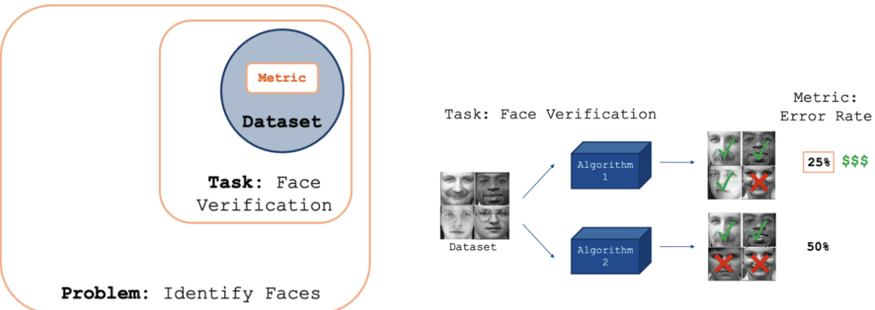
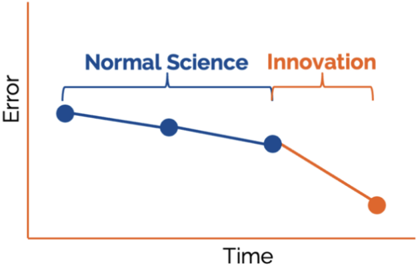
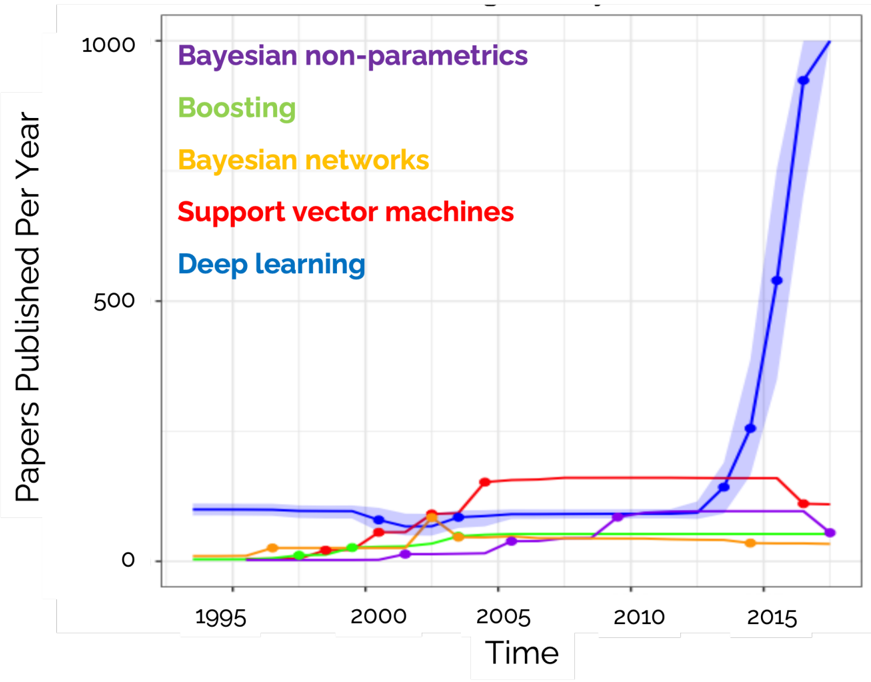
Over the past decade, AI research has focused heavily on building ever-larger deep learning models. This approach has simultaneously unlocked incredible achievements in science and technology, and hindered AI from overcoming long-standing limitations with respect to explainability, ethical harms, and environmental efficiency. Drawing on qualitative interviews and computational analyses, our three-part history of AI research traces the creation of this "epistemic monoculture" back to a radical reconceptualization of scientific progress that began in the late 1980s. In the first era of AI research (1950s-late 1980s), researchers and patrons approached AI as a "basic" science that would advance through autonomous exploration and organic assessments of progress (e.g., peer-review, theoretical consensus). The failure of this approach led to a retrenchment of funding in the 1980s. Amid this "AI Winter," an intervention by the U.S. government reoriented the field towards measurable progress on tasks of military and commercial interest. A new evaluation system called "benchmarking" provided an objective way to quantify progress on tasks by focusing exclusively on increasing predictive accuracy on example datasets. Distilling science down to verifiable metrics clarified the roles of scientists, allowed the field to rapidly integrate talent, and provided clear signals of significance and progress. But history has also revealed a tradeoff to this streamlined approach to science: the consolidation around external interests and inherent conservatism of benchmarking has disincentivized exploration beyond scaling monoculture. In the discussion, we explain how AI's monoculture offers a compelling challenge to the belief that basic, exploration-driven research is needed for scientific progress. Implications for the spread of AI monoculture to other sciences in the era of generative AI are also discussed.
Overview
The claims and statistics of this paper haven’t been checked yet.
Run the check — free, no account needed. It reads the open-access text and checks the sources it cites.
Integrity signals
Registry
Cites
Statistics
Figures
Verification
Claims the paper makes
The claims and statistics of this paper haven’t been checked yet.
Run the check — free, no account needed. It reads the open-access text and checks the sources it cites.
Claims other papers make about this one
Each is checked against this paper’s own text: does it say what the citing paper says it does?
In the citing paper
“Benchmarking has played a central role in shaping research priorities and incentives within the deep learning community (Koch & Peterson, 2024).”
From The Leaderboard Illusion (2025) · cites this paper as Koch & Peterson, 2024
Self-check
Percentages, sums and reported differences re-computed from the paper’s own numbers.
The self-check needs the paper’s full text.
Citations
Cites
No references could be resolved yet.
Part of this paper’s reference list could not be split into single entries.
Research works printed but not linked: 66
- Abbott, Andrew. 1981. "Status and Status Strain in the Professions." American Journal of Sociology 86:819-835. Publisher: University of Chicago Press.
- Belkin, Mikhail, Daniel Hsu, Siyuan Ma, and Soumik Mandal. 2019. "Reconciling modern machine- learning practice and the classical bias-variance trade-off." Proceedings of the National Academy of Sciences of the United States of America 116:15849-15854.
- Bilodeau, Blair, Natasha Jaques, Pang Wei Koh, and Been Kim. 2024. "Impossibility theorems for feature attribution." Proceedings of the National Academy of Sciences 121:e2304406120. Publisher: Proceedings of the National Academy of Sciences.
- Bloor, David. 1991. Knowledge and Social Imagery. Chicago, IL: University of Chicago Press.
- Bottou, Léon, Corinna Cortes, John S. Denker, Harris Drucker, Isabelle Guyon, Larry D. Jackel, Yann LeCun, Urs A. Muller, Edward Sackinger, and Patrice Simard. 1994. "Comparison of classifier meth- ods: a case study in handwritten digit recognition." In Proceedings of the 12th IAPR International Conference on Pattern Recognition, Vol. 3-Conference C: Signal Processing (Cat. No. 94CH3440-5), volume 2, pp. 77-82. IEEE.
- Bourdieu, Pierre. 1996. The Rules of Art: Genesis and Structure of the Literary Field . Stanford University Press. Google-Books-ID: 5cgxLnbZjhcC.
- Bush, Vannevar. 2021. "Science, the Endless Frontier." In Science, the Endless Frontier . Princeton University Press.
- Cetina, Karin Knorr. 1999. Epistemic Cultures: How the Sciences Make Knowledge. Harvard Univer- sity Press.
- Chen, Shi-Jie, Mubashir Hassan, Robert L. Jernigan, Kejue Jia, Daisuke Kihara, Andrzej Kloczkowski, Sergei Kotelnikov, Dima Kozakov, Jie Liang, Adam Liwo, Silvina Matysiak, Jarek Meller, Cristian Micheletti, Julie C. Mitchell, Sayantan Mondal, Ruth Nussinov, Kei-Ichi Okazaki, Dzmitry Pad- horny, Jeffrey Skolnick, Tobin S. Sosnick, George Stan, Ilya Vakser, Xiaoqin Zou, and George D. Rose. 2023. "Opinion: Protein folds vs. protein folding: Differing questions, different challenges." Proceedings of the National Academy of Sciences of the United States of America 120:e2214423119.
- Chiang, Wei-Lin, Lianmin Zheng, Ying Sheng, Anastasios Nikolas Angelopoulos, Tianle Li, Dacheng Li, Hao Zhang, Banghua Zhu, Michael Jordan, Joseph E. Gonzalez, and Ion Stoica. 2024. "Chatbot Arena: An Open Platform for Evaluating LLMs by Human Preference." arXiv:2403.04132 [cs. · arXiv
- Cho, Kyunghyun, Bart van Merrienboer, Caglar Gulcehre, Dzmitry Bahdanau, Fethi Bougares, Holger Schwenk, and Yoshua Bengio. 2014. "Learning Phrase Representations using RNN Encoder-Decoder for Statistical Machine Translation." arXiv:1406.1078 [cs, stat]. CITRIS. 2014. "Keynote Hubert Dreyfus." · arXiv
- Cole, Stephen. 1992. Making Science: Between Nature and Society. Harvard University Press. Google- Books-ID: AusBqjmZM9AC.
- Collins, Harry. 1992a. Changing Order: Replication and Induction in Scientific Practice. Chicago, IL: University of Chicago Press.
- Collins, H. M. 1981. "The Place of the 'Core-Set' in Modern Science: Social Contingency with Methodological Propriety in Science." History of Science 19:6-19. Publisher: SAGE Publications
- Collins, H. M. 1998. "The Meaning of Data: Open and Closed Evidential Cultures in the Search for Gravitational Waves." American Journal of Sociology 104:293-338. Publisher: The University of Chicago Press.
- Collins, Randall. 1992b. The Sociology of Philosophies: A Global Theory of Intellectual Change. Harvard University Press. Google-Books-ID: 2HS1DOZ35EgC.
- Collins, Randall. 1994. "Why the Social Sciences Won't Become High-Consensus, Rapid-Discovery Science." Sociological Forum 9:155-177. Publisher: [Wiley, Springer].
- Corfield, David, Bernhard Schölkopf, and Vladimir Vapnik. 2009. "Falsificationism and Statistical Learning Theory: Comparing the Popper and Vapnik-Chervonenkis Dimensions." Journal for Gen- eral Philosophy of Science 40:51-58.
- Deng, Jia, Wei Dong, Richard Socher, Li-Jia Li, Kai Li, and Li Fei-Fei. 2009. "ImageNet: A large- scale hierarchical image database." In 2009 IEEE Conference on Computer Vision and Pattern Recognition, pp. 248-255. ISSN: 1063-6919.
- Forsythe, Diana. 2001. Studying Those Who Study Us: An Anthropologist in the World of Artificial Intelligence. Stanford University Press. Google-Books-ID: orNUzuFQeLgC.
- Foster, Jacob G., Andrey Rzhetsky, and James A. Evans. 2015. "Tradition and Innovation in Scientists' Research Strategies." American Sociological Review 80:875-908. Publisher: SAGE Publications Inc.
- Fujimura, Joan H. 1992. "Crafting science: Standardized packages, boundary objects, and "trans- lation."." In Science as Practice and Culture, edited by A. Pickering, pp. 168-211. Chicago, IL: University of Chicago Press.
- Gieryn, Thomas F. 1999. Cultural Boundaries of Science: Credibility on the Line. University of Chicago Press.
- Graves, Alex and Jürgen Schmidhuber. 2008. "Offline handwriting recognition with multidimensional recurrent neural networks." Advances in neural information processing systems 21.
- He, Kaiming, Xiangyu Zhang, Shaoqing Ren, and Jian Sun. 2015. "Deep Residual Learning for Image Recognition." arXiv:1512.03385 [cs]. · arXiv
- Hoffman, Steve G. 2017. "Managing Ambiguities at the Edge of Knowledge: Research Strategy and Artificial Intelligence Labs in an Era of Academic Capitalism." Science, Technology, & Human Values 42:703-740. Publisher: SAGE Publications Inc.
- Hull, David L. 2001. Science and Selection: Essays on Biological Evolution and the Philosophy of Science. Cambridge University Press.
- Jasanoff, Sheila and Sang-Hyun Kim. 2009. "Containing the Atom: Sociotechnical Imaginaries and Nuclear Power in the United States and South Korea." Minerva 47:119-146. Publisher: Springer.
- Kitcher, Philip. 1995. The Advancement of Science: Science without Legend, Objectivity without Illusions. Oxford, New York: Oxford University Press.
- Krizhevsky, Alex. 2009. Learning Multiple Layers of Features from Tiny Images. Ph.D. thesis, Uni- versity of Toronto.
- Kuhn, Thomas S. 2012. The Structure of Scientific Revolutions. University of Chicago Press. Google- Books-ID: 3eP5Y OOuzwC.
- Lamont, Michele. 2009. How Professor Think: Inside the Curious World of Academic Judgment. Cambridge, MA: Harvard University Press.
- Latour, Bruno. 1987. Science in Action: How to Follow Scientists and Engineers Through Society. Harvard University Press. Google-Books-ID: sC4bk4DZXTQC.
- Latour, Bruno and Steve Woolgar. 2013. Laboratory Life: The Construction of Scientific Facts. Princeton University Press.
- Liang, Lizhen, Han Zhuang, James Zou, and Daniel E. Acuna. 2024a. "The complementary contribu- tions of academia and industry to AI research." arXiv:2401.10268 [cs. · arXiv
- Liang, Weixin, Zachary Izzo, Yaohui Zhang, Haley Lepp, Hancheng Cao, Xuandong Zhao, Lingjiao Chen, Haotian Ye, Sheng Liu, Zhi Huang, Daniel A. McFarland, and James Y. Zou. 2024b. "Moni- toring AI-Modified Content at Scale: A Case Study on the Impact of ChatGPT on AI Conference Peer Reviews." arXiv:2403.07183 [cs]. · arXiv
- Luccioni, Alexandra Sasha, Yacine Jernite, and Emma Strubell. 2023. "Power Hungry Processing: Watts Driving the Cost of AI Deployment?" arXiv:2311.16863 [cs]. · arXiv
- McCorduck, Pamela. 2004. Machines who think: a personal inquiry into the history and prospects of artificial intelligence. Natick, Mass: A.K. Peters, 25th anniversary update edition.
- McCulloch, Warren S. and Walter Pitts. 1943. "A logical calculus of the ideas immanent in nervous activity." The bulletin of mathematical biophysics 5:115-133.
- McMullin, Ernan. 1982. "Values in Science." PSA: Proceedings of the Biennial Meeting of the Philos- ophy of Science Association 1982:2-28. Publisher: Cambridge University Press.
- McMullin, Ernan. 2013. "The Virtues of a Good Theory." In The Routledge Companion to Philosophy of Science. Routledge, 2 edition. Num Pages: 11.
- Mikolov, Tomas, Ilya Sutskever, Kai Chen, Greg S. Corrado, and Jeff Dean. 2013. "Distributed representations of words and phrases and their compositionality." Advances in neural information processing systems 26.
- Minsky, Marvin and Seymour A. Papert. 1969. Perceptrons: An Introduction to Computational Ge- ometry. The MIT Press.
- Mitchell, Melanie. 2019. Artificial Intelligence: A Guide for Thinking Humans. New York: Farrar, Straus and Giroux, first edition edition.
- Oreskes, Naomi. 2021. Science on a Mission: How Military Funding Shaped What We Do and Don't Know about the Ocean. University of Chicago Press.
- Panofsky, Aaron. 2014. Misbehaving Science: Controversy and the Development of Behavior Genetics. Chicago, IL: University of Chicago Press.
- Peterson, David. 2015. "All That Is Solid: Bench-Building at the Frontiers of Two Experimental Sciences." American Sociological Review 80:1201-1225.
- Peterson, David and Aaron Panofsky. 2021. "Self-correction in science: The diagnostic and integrative motives for replication." Social Studies of Science 51:583-605. Publisher: SAGE Publications Ltd.
- Pierce, J. R. 1969. "Whither Speech Recognition?" The Journal of the Acoustical Society of America 46:1049-1051.
- Rahimi, Ali and Benjamin Recht. 2007. "Random Features for Large-Scale Kernel Machines." In Advances in Neural Information Processing Systems, volume 20.
- Raina, Rajat, Anand Madhavan, and Andrew Y. Ng. 2009. "Large-scale deep unsupervised learning using graphics processors." In Proceedings of the 26th Annual International Conference on Machine Learning, pp. 873-880, Montreal Quebec Canada. ACM.
- Rheinberger, Hans-Jörg. 1997. Toward a History of Epistemic Things: Synthesizing Proteins in the Test Tube. Stanford: Stanford University Press.
- Roland, Alex and Philip Shiman. 2002. Strategic computing: DARPA and the quest for machine intelligence, 1983-1993 . History of computing. Cambridge, Mass: MIT Press.
- Rosenblatt, F. 1958. "The perceptron: A probabilistic model for information storage and organization in the brain." Psychological Review 65:386-408. Place: US Publisher: American Psychological Association.
- Sabour, Sara, Nicholas Frosst, and Geoffrey E. Hinton. 2017. "Dynamic Routing Between Capsules." arXiv:1710.09829 [cs]. · arXiv
- Salganik, Matthew J., Ian Lundberg, Alexander T. Kindel, Caitlin E. Ahearn, Khaled Al-Ghoneim, Abdullah Almaatouq, Drew M. Altschul, Jennie E. Brand, Nicole Bohme Carnegie, Ryan James Compton, Debanjan Datta, Thomas Davidson, Anna Filippova, Connor Gilroy, Brian J. Goode, Eaman Jahani, Ridhi Kashyap, Antje Kirchner, Stephen McKay, Allison C. Morgan, Alex Pent- land, Kivan Polimis, Louis Raes, Daniel E. Rigobon, Claudia V. Roberts, Diana M. Stanescu, Yoshihiko Suhara, Adaner Usmani, Erik H. Wang, Muna Adem, Abdulla Alhajri, Bedoor AlShebli, Redwane Amin, Ryan B. Amos, Lisa P. Argyle, Livia Baer-Bositis, Moritz Büchi, Bo-Ryehn Chung, William Eggert, Gregory Faletto, Zhilin Fan, Jeremy Freese, Tejomay Gadgil, Josh Gagné, Yue Gao, Andrew Halpern-Manners, Sonia P. Hashim, Sonia Hausen, Guanhua He, Kimberly Higuera, Bernie Hogan, Ilana M. Horwitz, Lisa M. Hummel, Naman Jain, Kun Jin, David Jurgens, Patrick Kamin- ski, Areg Karapetyan, E. H. Kim, Ben Leizman, Naijia Liu, Malte Möser, Andrew E. Mack, Mayank Mahajan, Noah Mandell, Helge Marahrens, Diana Mercado-Garcia, Viola Mocz, Katariina Mueller- Gastell, Ahmed Musse, Qiankun Niu, William Nowak, Hamidreza Omidvar, Andrew Or, Karen Ouyang, Katy M. Pinto, Ethan Porter, Kristin E. Porter, Crystal Qian, Tamkinat Rauf, Anahit Sargsyan, Thomas Schaffner, Landon Schnabel, Bryan Schonfeld, Ben Sender, Jonathan D. Tang, Emma Tsurkov, Austin van Loon, Onur Varol, Xiafei Wang, Zhi Wang, Julia Wang, Flora Wang, Samantha Weissman, Kirstie Whitaker, Maria K. Wolters, Wei Lee Woon, James Wu, Catherine Wu, Kengran Yang, Jingwen Yin, Bingyu Zhao, Chenyun Zhu, Jeanne Brooks-Gunn, Barbara E. Engelhardt, Moritz Hardt, Dean Knox, Karen Levy, Arvind Narayanan, Brandon M. Stewart, Dun- can J. Watts, and Sara McLanahan. 2020. "Measuring the predictability of life outcomes with a scientific mass collaboration." Proceedings of the National Academy of Sciences 117:8398-8403. Publisher: Proceedings of the National Academy of Sciences.
- Shazeer, Noam. 2020. "GLU Variants Improve Transformer." arXiv:2002.05202 [cs, stat]. · arXiv
- Sim, S.E., S. Easterbrook, and R.C. Holt. 2003. "Using benchmarking to advance research: a chal- lenge to software engineering." In 25th International Conference on Software Engineering, 2003. Proceedings., pp. 74-83. ISSN: 0270-5257.
- Stefik, Mark. 1985. "Strategic computing at DARPA: Overview and assessment." Communications of the ACM 28:690-704. Publisher: ACM New York, NY, USA.
- Touvron, Hugo, Louis Martin, Kevin Stone, Peter Albert, Amjad Almahairi, Yasmine Babaei, Nikolay Bashlykov, Soumya Batra, Prajjwal Bhargava, Shruti Bhosale, Dan Bikel, Lukas Blecher, Cris- tian Canton Ferrer, Moya Chen, Guillem Cucurull, David Esiobu, Jude Fernandes, Jeremy Fu, Wenyin Fu, Brian Fuller, Cynthia Gao, Vedanuj Goswami, Naman Goyal, Anthony Hartshorn, Saghar Hosseini, Rui Hou, Hakan Inan, Marcin Kardas, Viktor Kerkez, Madian Khabsa, Isabel Kloumann, Artem Korenev, Punit Singh Koura, Marie-Anne Lachaux, Thibaut Lavril, Jenya Lee, Diana Liskovich, Yinghai Lu, Yuning Mao, Xavier Martinet, Todor Mihaylov, Pushkar Mishra, Igor Molybog, Yixin Nie, Andrew Poulton, Jeremy Reizenstein, Rashi Rungta, Kalyan Saladi, Alan Schelten, Ruan Silva, Eric Michael Smith, Ranjan Subramanian, Xiaoqing Ellen Tan, Binh Tang, Ross Taylor, Adina Williams, Jian Xiang Kuan, Puxin Xu, Zheng Yan, Iliyan Zarov, Yuchen Zhang, Angela Fan, Melanie Kambadur, Sharan Narang, Aurelien Rodriguez, Robert Stojnic, Sergey Edunov, and Thomas Scialom. 2023. "Llama 2: Open Foundation and Fine-Tuned Chat Models." arXiv:2307.09288 [cs]. · arXiv
- Valiant, L. G. 1984. "A theory of the learnable." Communications of the ACM 27:1134-1142.
- Vapnik, Vladimir N. 2000. The Nature of Statistical Learning Theory. New York, NY: Springer.
- Vaswani, Ashish, Noam Shazeer, Niki Parmar, Jakob Uszkoreit, Llion Jones, Aidan N Gomez, Lukasz Kaiser, and Illia Polosukhin. 2017. "Attention is All you Need." In Advances in Neural Information Processing Systems, volume 30.
- Vries, Alex de. 2023. "The growing energy footprint of artificial intelligence." Joule 7:2191-2194. Publisher: Elsevier.
- Watts, Duncan J. 2014. "Common Sense and Sociological Explanations." American Journal of Soci- ology 120:313-351. Publisher: The University of Chicago Press.
- Zuboff, Shoshana. 2015. "Big other: Surveillance Capitalism and the Prospects of an Information Civilization." Journal of Information Technology 30:75-89. Publisher: SAGE Publications Ltd.
Cited by
Singh, S., Nan, Y., Wang, A., D'Souza, D., Kapoor, S., Üstün, A., Koyejo, S., Deng, Y., Longpre, S., Smith, N. A., et al. (2025) · arXiv · doi:10.48550/arxiv.2504.20879 · Cited by 108
Can We Trust AI Benchmarks? An Interdisciplinary Review of Current Issues in AI Evaluation
Eriksson, M., Purificato, E., Noroozian, A., Vinagre, J., Chaslot, G., Gomez, E., & Fernandez-Llorca, D. (2025) · arXiv · doi:10.48550/arxiv.2502.06559 · Cited by 35
Metadata
- Authors
- Koch, B. J., & Peterson, D.
- Venue
- arXiv
- Publisher
- arXiv
- Published
- 2024
- arXiv
- 2404.06647
- References
- 0
- Type
- Preprint
About these checks
Registry, retraction, Cites and statistics results are computed, not judged, with one exception: a printed reference that no index lists is read once by a model before it counts as a citation error. Claims are extracted by a model and kept only when their quote appears verbatim in the text; each cited source is then checked, with a model’s help, for whether it says what the claim relies on. Those verdicts can be wrong — read the claim’s quote and the cited source before relying on one.
Statistics and arithmetic are recomputed, not judged.
Confidence bands are shown only for fields calibrated on our annotated test set. None is calibrated yet, so no band is shown.
What counts as a claim ›How we measure confidence ›How we check this ›
Are you an author, or do you see a problem with this page? Request a review
Data sources
Bibliographic data: Semantic Scholar, OpenAlex, Crossref.
Contains information from the Semantic Scholar Academic Graph Datasets, made available under the ODC Attribution License (ODC-BY 1.0).
Semantic Scholar’s data is described in: Kinney, R., et al. (2023). The Semantic Scholar Open Data Platform. arXiv:2301.10140.
