

The DOI matches its DataCite record.
LENS-XAI: Redefining Lightweight and Explainable Network Security through Knowledge Distillation and Variational Autoencoders for Scalable Intrusion Detection in Cybersecurity
Open accessAbstract
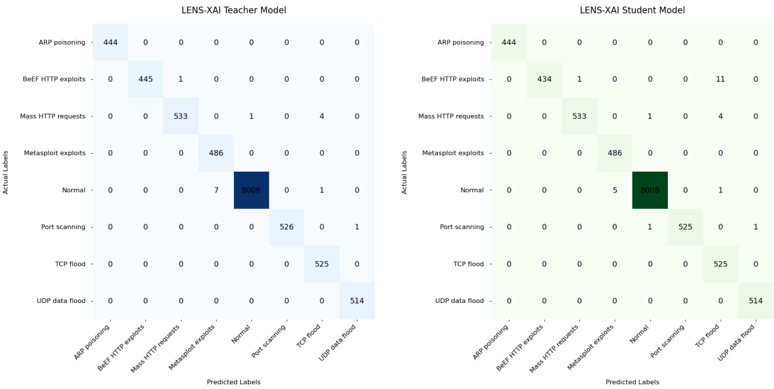
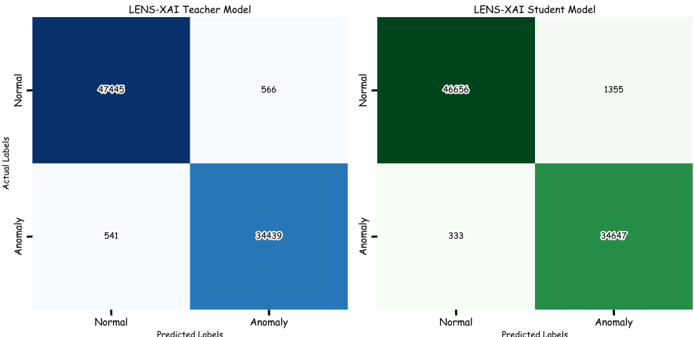
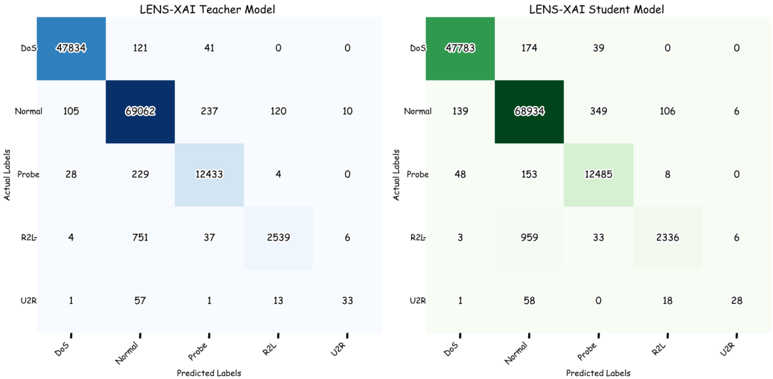
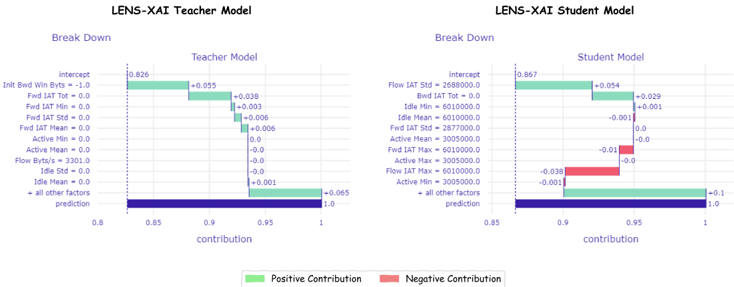
The rapid proliferation of Industrial Internet of Things (IIoT) systems necessitates advanced, interpretable, and scalable intrusion detection systems (IDS) to combat emerging cyber threats. Traditional IDS face challenges such as high computational demands, limited explainability, and inflexibility against evolving attack patterns. To address these limitations, this study introduces the Lightweight Explainable Network Security framework (LENS-XAI), which combines robust intrusion detection with enhanced interpretability and scalability. LENS-XAI integrates knowledge distillation, variational autoencoder models, and attribution-based explainability techniques to achieve high detection accuracy and transparency in decision-making. By leveraging a training set comprising 10% of the available data, the framework optimizes computational efficiency without sacrificing performance. Experimental evaluation on four benchmark datasets: Edge-IIoTset, UKM-IDS20, CTU-13, and NSL-KDD, demonstrates the framework's superior performance, achieving detection accuracies of 95.34%, 99.92%, 98.42%, and 99.34%, respectively. Additionally, the framework excels in reducing false positives and adapting to complex attack scenarios, outperforming existing state-of-the-art methods. Key strengths of LENS-XAI include its lightweight design, suitable for resource-constrained environments, and its scalability across diverse IIoT and cybersecurity contexts. Moreover, the explainability module enhances trust and transparency, critical for practical deployment in dynamic and sensitive applications. This research contributes significantly to advancing IDS by addressing computational efficiency, feature interpretability, and real-world applicability. Future work could focus on extending the framework to ensemble AI systems for distributed environments, further enhancing its robustness and adaptability.
Overview
The claims and statistics of this paper haven’t been checked yet.
Run the check — free, no account needed. It reads the open-access text and checks the sources it cites.
Integrity signals
Registry
Cites
Statistics
Figures
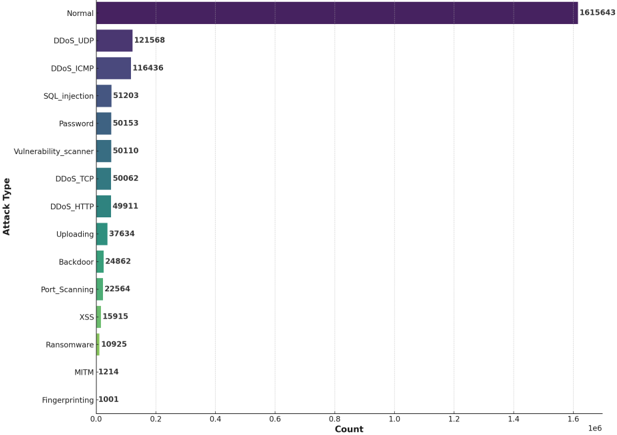
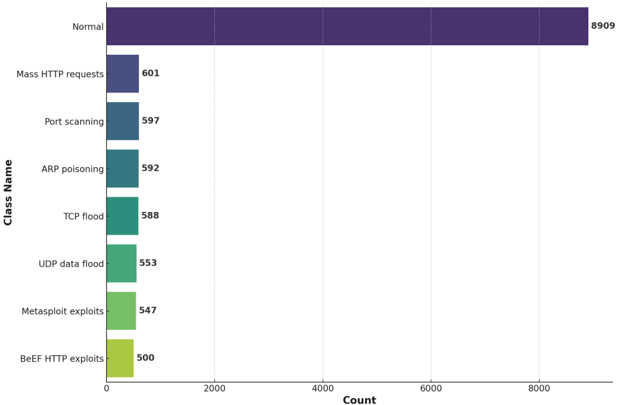
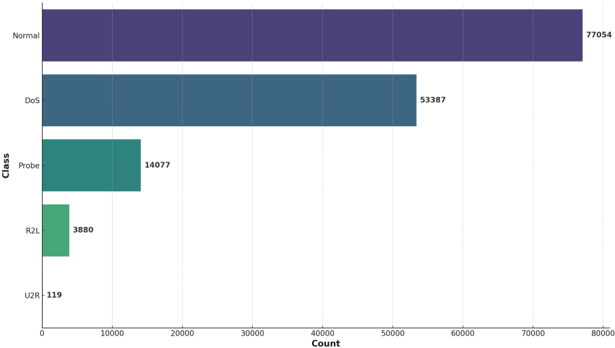
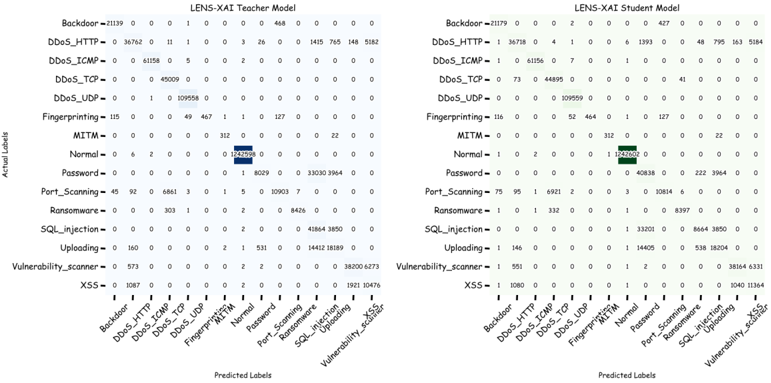
Verification
Claims the paper makes
The claims and statistics of this paper haven’t been checked yet.
Run the check — free, no account needed. It reads the open-access text and checks the sources it cites.
Claims other papers make about this one
Each is checked against this paper’s own text: does it say what the citing paper says it does?
In the citing paper
“Moreover, Yagiz and Goktas (2025) developed the LENS-XAI framework for Industrial Internet of Things (IIoT) environments, combining knowledge distillation and attribution-based methods to balance performance and interpretability.”
From Explainable AI: enhancing decision-making in the detection of cyber threats (2026) · cites this paper as Yagiz and Goktas (2025)
Self-check
Percentages, sums and reported differences re-computed from the paper’s own numbers.
The self-check needs the paper’s full text.
Citations
Cites
No references could be resolved yet.
Research works printed but not linked: 49
- I. Alrashdi, K. M. Sallam, M. A. Alrowaily, O. Alruwaili, B. Arain, Fidwatch: Federated incremental distillation for continuous monitoring of iot security threats, Ad Hoc Networks 165 (2024) 103637. doi:10. 1016/j.adhoc.2024.103637. · DOI
- F. Ullah, S. Ullah, G. Srivastava, J. C.-W. Lin, Ids-int: Intrusion de- tection system using transformer-based transfer learning for imbalanced network traffic, Digital Communications and Networks 10 (1) (2024) 190-204. doi:10.1016/j.dcan.2023.03.008. · DOI
- E. C. Nkoro, J. N. Njoku, C. I. Nwakanma, J.-M. Lee, D.-S. Kim, Zero- trust marine cyberdefense for iot-based communications: An explainable approach, Electronics (Switzerland) 13 (2) (2024) 276. doi:10.3390/ electronics13020276. · DOI
- K. Fatema, M. Anannya, S. K. Dey, C. Su, R. Mazumder, Securing networks: A deep learning approach with explainable ai (xai) and fed- erated learning for intrusion detection, in: Lecture Notes in Computer Science (including subseries Lecture Notes in Artificial Intelligence and Lecture Notes in Bioinformatics), Vol. 15215 LNCS, 2025, pp. 260-275. doi:10.1007/978-981-97-8540-7_16. · DOI
- R. Kumar, A. Aljuhani, D. Javeed, P. Kumar, S. Islam, A. K. M. N. Islam, Blockchain and explainable ai for enhanced decision making in cyber threat detection, Software -Practice and Experience 54 (8) (2024) 1337-1360. doi:10.1002/spe.3319. · DOI · Paper page
- D. Javeed, T. Gao, P. Kumar, S. Shoukat, I. Ahmad, R. Kumar, An intelligent and interpretable intrusion detection system for unmanned aerial vehicles, in: IEEE International Conference on Communications, 2024, pp. 1951-1956. doi:10.1109/ICC51166.2024.10622703. · DOI
- S. Bellegdi, A. Selamat, S. O. Olatunji, H. Fujita, O. Krejcar, Explain- able machine learning for intrusion detection 14748 LNAI (2024) 122- 134. doi:10.1007/978-981-97-4677-4_11. · DOI
- D. Gaspar, P. Silva, C. Silva, Explainable ai for intrusion detection systems: Lime and shap applicability on multi-layer perceptron, IEEE Access 12 (2024) 30164-30175. doi:10.1109/ACCESS.2024.3368377. · DOI
- M. Nalini, B. Yamini, P. Sinthia, S. Praveena Rachel Kamala, Deep- roughnetid: A robust framework for network anomaly intrusion detec- tion with high detection rates, IETE Journal of Research 70 (9) (2024) 7137-7148. doi:10.1080/03772063.2024.2350932. · DOI
- S. Krishnaveni, S. Sivamohan, B. Jothi, T. M. Chen, M. Sathiya- narayanan, Twinsec-ids: An enhanced intrusion detection system in sdn-digital-twin-based industrial cyber-physical systems, Concurrency and Computation: Practice and Experience (2024). doi:10.1002/cpe. 8334. · DOI
- A. Alzu'bi, O. Darwish, A. Albashayreh, Y. Tashtoush, Cyberattack event logs classification using deep learning with semantic feature anal- ysis, Computers and Security 150 (2025) 104222. doi:10.1016/j.cose. 2024.104222. · DOI
- T. Walczyna, D. Jankowski, Z. Piotrowski, Enhancing anomaly de- tection through latent space manipulation in autoencoders: A com- parative analysis, Applied Sciences 15 (1) (2024) 286. doi:10.3390/ app15010286. · DOI
- M. AL-Essa, G. Andresini, A. Appice, D. Malerba, Panacea: A neural model ensemble for cyber-threat detection, Machine Learning 113 (8) (2024) 5379-5422. doi:10.1007/s10994-023-06470-2. · DOI
- Y. K. Saheed, J. E. Chukwuere, Xaiensembletl-iov: A new explainable artificial intelligence ensemble transfer learning for zero-day botnet at- tack detection in the internet of vehicles, Results in Engineering 24 (2024) 103171. doi:10.1016/j.rineng.2024.103171. · DOI
- S. R. Sindiramutty, C. E. Tan, S. P. Lau, R. Thangaveloo, A. H. Gharib, Explainable ai for cybersecurity, Advances in Explainable AI Applica- tions for Smart Cities (2024) 31-97.doi:10.4018/978-1-6684-6361-1. ch002. · DOI
- S. R. Alotaibi, H. K. Alkahtani, M. Aljebreen, A. Alshuhail, M. K. Saeed, S. A. Ebad, W. S. Almukadi, M. Alotaibi, Explainable artificial intelligence in web phishing classification on secure iot with cloud-based cyber-physical systems, Alexandria Engineering Journal 110 (2025) 490- 505. doi:10.1016/j.aej.2024.09.115. · DOI
- R. Zhao, Y. Chen, Y. Wang, Y. Shi, Z. Xue, An efficient and lightweight approach for intrusion detection based on knowledge distillation, in: Proceedings of the IEEE International Conference on Communications, 2021, pp. 1-8. doi:10.1109/ICC42927.2021.9500574. · DOI
- Y. Chen, S. Al-Rubaye, A. Tsourdos, L. Baker, C. Gillingham, Differentially-private federated intrusion detection via knowledge dis- tillation in third-party iot systems of smart airports, IEEE Interna- tional Conference on Communications 2023-May (2023) 603-608. doi: 10.1109/ICC45041.2023.10279722. · DOI
- M. Bacevicius, A. Paulauskaite-Taraseviciene, Machine learning algo- rithms for raw and unbalanced intrusion detection data in a multi-class classification problem, Applied Sciences (Switzerland) 13 (2023) 7328. doi:10.3390/app13127328. · DOI
- S. Roy, J. Li, V. Pandey, Y. Bai, An explainable deep neural frame- work for trustworthy network intrusion detection, in: Proceedings of the 2022 10th IEEE International Conference on Mobile Cloud Com- puting, Services, and Engineering (MobileCloud), 2022, pp. 25-30. doi:10.1109/MobileCloud55333.2022.00011. · DOI
- U. Ahmed, Z. Jiangbin, A. Almogren, S. Khan, M. T. Sadiq, A. Al- tameem, A. U. Rehman, Explainable ai-based innovative hybrid ensem- ble model for intrusion detection, Journal of Cloud Computing 13 (1) (2024) 150. doi:10.1186/s13677-024-00712-x. · DOI
- N. Moustafa, N. Koroniotis, M. Keshk, A. Y. Zomaya, Z. Tari, Explain- able intrusion detection for cyber defences in the internet of things: Op- portunities and solutions, IEEE Communications Surveys and Tutorials 25 (3) (2023) 1775-1807. doi:10.1109/COMST.2023.3280465. · DOI · Paper page
- M. A. Yagiz, P. MohajerAnsari, M. D. Pesé, P. Goktas, Transform- ing in-vehicle network intrusion detection: Vae-based knowledge dis- tillation meets explainable ai, in: Proceedings of the Sixth Workshop on CPS&IoT Security and Privacy, ACM, 2024, pp. 93-103. doi: 10.1145/3690134.3694819. · DOI
- T.-T.-H. Le, R. W. Wardhani, D. S. C. Putranto, U. Jo, H. Kim, To- ward enhanced attack detection and explanation in intrusion detection system-based iot environment data, IEEE Access 11 (2023) 131661- 131676. doi:10.1109/ACCESS.2023.3336678. · DOI
- N. Kostopoulos, D. Kalogeras, D. Pantazatos, M. Grammatikou, V. Maglaris, Shap interpretations of tree and neural network dns clas- sifiers for analyzing dga family characteristics, IEEE Access 11 (2023) 61144-61160. doi:10.1109/ACCESS.2023.3286313. · DOI
- M. M. Shtayat, M. K. Hasan, R. Sulaiman, S. Islam, A. U. R. Khan, An explainable ensemble deep learning approach for intrusion detection in industrial internet of things, IEEE Access 11 (2023) 115047-115061. doi:10.1109/ACCESS.2023.3323573. · DOI
- S. Sivamohan, S. Sridhar, S. Krishnaveni, Tea-ekho-ids: An intrusion detection system for industrial cps with trustworthy explainable ai and enhanced krill herd optimization, Peer-to-Peer Networking and Appli- cations 16 (4) (2023) 1993-2021. doi:10.1007/s12083-023-01507-8. · DOI
- A. Hattak, G. Iadarola, F. Martinelli, F. Mercaldo, A. Santone, A method for robust and explainable image-based network traffic clas- sification with deep learning, in: Proceedings of the International Conference on Security and Cryptography, 2023, pp. 385-393. doi: 10.5220/0012083200003555. · DOI
- S. Arisdakessian, O. A. Wahab, A. Mourad, H. Otrok, M. Guizani, A survey on iot intrusion detection: Federated learning, game theory, so- cial psychology, and explainable ai as future directions, IEEE Internet of Things Journal 10 (5) (2023) 4059-4092. doi:10.1109/JIOT.2022. 3203249. · DOI
- R. Kumar, A. Aljuhani, D. Javeed, P. Kumar, S. Islam, A. N. Islam, Dig- ital twins-enabled zero touch network: A smart contract and explainable ai integrated cybersecurity framework, Future Generation Computer Systems 156 (2024) 191-205. doi:10.1016/j.future.2024.02.015. · DOI
- D. P. Kingma, M. Welling, Auto-encoding variational bayes, in: Inter- national Conference on Learning Representations (ICLR), 2014. URL https://arxiv.org/abs/1312.6114 · arXiv
- G. Hinton, O. Vinyals, J. Dean, Distilling the knowledge in a neural net- work, in: NIPS Deep Learning and Representation Learning Workshop, Curran Associates, Inc., 2015. URL https://arxiv.org/abs/1503.02531 · arXiv
- A. Gosiewska, P. Biecek, ibreakdown: Uncertainty of model explana- tions for non-additive predictive models, arXiv (2019). URL https://arxiv.org/abs/1903.11420v1 · arXiv
- M. Robnik-Šikonja, I. Kononenko, Explaining classifications for individ- ual instances, IEEE Transactions on Knowledge and Data Engineering 20 (5) (2008) 589-600. doi:10.1109/tkde.2007.190734. · DOI
- P. Biecek, T. Burzykowski, Explore, Explain, and Examine Predictive Models: With Examples in R and Python, CRC Press, 2020.
- K. Yang, J. Wang, M. Li, An improved intrusion detection method for iiot using attention mechanisms, bigru, and inception-cnn, Scientific Re- ports 14 (1) (2024) 19339. doi:10.1038/s41598-024-70094-2. · DOI
- W. N. H. Ibrahim, S. Anuar, A. Selamat, O. Krejcar, R. G. Crespo, E. Herrera-Viedma, H. Fujita, Multilayer framework for botnet detec- tion using machine learning algorithms, IEEE Access: Practical Inno- vations, Open Solutions 9 (2021) 48753-48768. doi:10.1109/ACCESS. 2021.3060778. · DOI
- A. Sharma, H. Babbar, Detecting cyber threats in real-time: A super- vised learning perspective on the ctu-13 dataset, in: 2024 5th Inter- national Conference for Emerging Technology (INCET), 2024, pp. 1-5. doi:10.1109/INCET61516.2024.10593100. · DOI
- I. Letteri, G. Della Penna, P. Caianiello, Feature selection strategies for http botnet traffic detection, in: 2019 IEEE European Symposium on Security and Privacy Workshops (EuroS&PW), IEEE, 2019, pp. 202- 210. doi:10.1109/EuroSPW.2019.00029. · DOI
- A. Pektaş, T. Acarman, Botnet detection based on network flow sum- mary and deep learning, International Journal of Network Management 28 (6) (Nov. 2018). doi:10.1002/nem.2039. · DOI
- S. Taheri, M. Salem, J. S. Yuan, Leveraging image representation of net- work traffic data and transfer learning in botnet detection, Big Data and Cognitive Computing 2 (4) (2018) 1-16. doi:10.3390/bdcc2040037. URL https://stars.library.ucf.edu/scopus2015/7328 · DOI
- M. Al-Qatf, Y. Lasheng, M. Al-Habib, K. Al-Sabahi, Deep learning approach combining sparse autoencoder with svm for network intrusion detection, IEEE Access 6 (2018) 52843-52856. doi:10.1109/ACCESS. 2018.2869577. · DOI
- B. Ingre, A. Yadav, Performance analysis of nsl-kdd dataset using ann, in: 2015 International Conference on Signal Processing and Commu- nication Engineering Systems, IEEE, 2015, pp. 92-96. doi:10.1109/ SPACES.2015.7058223. · DOI
- A. Javaid, Q. Niyaz, W. Sun, M. Alam, A deep learning approach for net- work intrusion detection system, in: Proceedings of the 9th EAI Inter- national Conference on Bio-inspired Information and Communications Technologies, 2016, pp. 21-26. doi:10.4108/eai.3-12-2015.2262516. · DOI
- R. Vinayakumar, M. Alazab, K. P. Soman, P. Poornachandran, A. Al- Nemrat, S. Venkatraman, Deep learning approach for intelligent in- trusion detection system, IEEE Access 7 (2019) 41525-41550. doi: 10.1109/ACCESS.2019.2895334. · DOI
- C. Yin, Y. Zhu, J. Fei, X. He, A deep learning approach for intrusion detection using recurrent neural networks, IEEE Access 5 (2017) 21954- 21961. doi:10.1109/ACCESS.2017.2762418. · DOI · Paper page
- K. Wu, Z. Chen, W. Li, A novel intrusion detection model for a mas- sive network using convolutional neural networks, IEEE Access 6 (2018) 50850-50859. doi:10.1109/ACCESS.2018.2868993. · DOI
- N. Altwaijry, A. ALQahtani, I. AlTuraiki, A deep learning approach for anomaly-based network intrusion detection, in: International Con- ference on Big Data and Security, Springer, 2019, pp. 603-615. doi: 10.1007/978-981-15-7530-3_46. · DOI
- I. Al-Turaiki, N. Altwaijry, A convolutional neural network for improved anomaly-based network intrusion detection, Big Data 9 (3) (2021) 233- 252. doi:10.1089/big.2020.0263. · DOI
Cited by
Sorted by citations
Explainable AI: enhancing decision-making in the detection of cyber threats
Prasad, P. W. C., Sayeed, M. S., Nguyen, D.-M., Hutabarat, D. P., & Mohiuddin, G. M. (2026) · Frontiers in Computer Science · doi:10.3389/fcomp.2026.1762332 · Cited by 16
Metadata
- Authors
- Yagiz, M. A., & Goktas, P.
- ORCID
- Yagiz, Muhammet Anil
- Venue
- arXiv
- Publisher
- arXiv
- Published
- 2025
- ISSN
- 2331-8422 (ISSN-L)
- arXiv
- 2501.00790
- OpenAlex
- W4406032551
- Cited by
- 12
- References
- 0
- Citations by year
- 2026: 3 · 2025: 9
- Type
- posted content
- Language
- en
- Open access
- green
- arxiv.org
- Licence
- Locations
- arXiv (Cornell University) (submittedVersion, cc-by)
- arXiv (Cornell University) (cc-by)
- Topics
- Physical Sciences › Computer Science › Computer Networks and Communications › Network Security and Intrusion Detection
- Physical Sciences › Computer Science › Hardware and Architecture › Network Packet Processing and Optimization
- Physical Sciences › Computer Science › Artificial Intelligence › Adversarial Robustness in Machine Learning
- Keywords
- intrusion detection, explainable AI, knowledge distillation, variational autoencoder, Industrial Internet of Things, resource-constrained environments, false positive reduction, network traffic classification
About these checks
Registry, retraction, Cites and statistics results are computed, not judged, with one exception: a printed reference that no index lists is read once by a model before it counts as a citation error. Claims are extracted by a model and kept only when their quote appears verbatim in the text; each cited source is then checked, with a model’s help, for whether it says what the claim relies on. Those verdicts can be wrong — read the claim’s quote and the cited source before relying on one.
Statistics and arithmetic are recomputed, not judged.
Confidence bands are shown only for fields calibrated on our annotated test set. None is calibrated yet, so no band is shown.
What counts as a claim ›How we measure confidence ›How we check this ›
Are you an author, or do you see a problem with this page? Request a review
