

The Impact of National Surveillance for Liver Cancer: Results from Real-World Setting in Korea
Open accessThe DOI matches its Crossref record; 35 of the 35 references it cites were found in a registry or an index.
Abstract
Background/Aims: The National Liver Cancer Surveillance Program (NLCSP) was established in 2003 to reduce the socioeconomic burden imposed by liver cancer (LC).We aimed to investigate the effectiveness of the NLCSP in South Korea with respect to survival benefits and cost, after adjusting for various confounding factors.Methods: We used the National Health Insurance Service claims data linked with the NLCSP from 2004 to 2015.The Cox proportional hazard model and generalized linear model were used to determine the effects of the NLCSP on the early detection of LC, survival, and medical costs.Results: From 2006 to 2010, 66,632 patients (surveillance group: 10,527 and no surveillance group: 56,105) newly diagnosed with LC were included in the study.The odds of the early detection of LC was 1.82 (95% confidence interval [CI], 1.73 to 1.93) times higher among patients who participated in the NLCSP once within the 2-year period prior to the diagnosis of LC than among those who did not participate in the surveillance program.The mortality rate of patients who participated in the NLCSP was 22.0% lower (hazard ratio, 0.78; 95% CI, 0.76 to 0.80) than that of those who did not participate.When compared with the group who did not participate in surveillance, the group who participated in the NLCSP had higher total medical costs; however, their cost per day was lower after adjustment during the follow-up period.Conclusions: This study highlights the survival benefit in patients who participated in the NLCSP and the need for continuous improvements of the NLCSP in South Korea.(Gut Liver 2020;14:108-116)
Overview
The claims and statistics of this paper haven’t been checked yet.
Free: it reads the open-access text and checks the first 5 claims that cite a source we can check. Create a free account to check every claim.
Integrity signals
Registry
Cites
Statistics
Figures
Verification
Claims the paper makes
The claims and statistics of this paper haven’t been checked yet.
Free: it reads the open-access text and checks the first 5 claims that cite a source we can check. Create a free account to check every claim.
Claims other papers make about this one
Each is checked against this paper’s own text: does it say what the citing paper says it does?
The source backs part of the claim, not all of it — or backs it for a different population, condition or comparison.
In the citing paper
“as countries where viral hepatitis infections are endemic have instituted large-scale screening programs, increasingly more viral HCCs have been screen-detected [54, 55]”
From Etiology-Based Treatment for Unresectable/Advanced Hepatocellular Carcinoma: Focus on Viral Hepatitis and Metabolic Dysfunction-Associated Steatohepatitis (2025) · cites this paper as [54]
Experimental — accuracy not yet measuredThe source backs part of the claim, not all of it — or backs it for a different population, condition or comparison.
In the citing paper
“HCC screening is known to reduce overall disease-related mortality mainly effected through detecting HCCs at an earlier stage to allow for more curative resections [54, 58]”
From Etiology-Based Treatment for Unresectable/Advanced Hepatocellular Carcinoma: Focus on Viral Hepatitis and Metabolic Dysfunction-Associated Steatohepatitis (2025) · cites this paper as [54]
Experimental — accuracy not yet measured
Self-check
Percentages, sums and reported differences re-computed from the paper’s own numbers.
The self-check needs the paper’s full text.
Citations
Cites
Charlson, M. E., Pompei, P., Ales, K. L., & MacKenzie, C. R. (1987) · Journal of Chronic Diseases · doi:10.1016/0021-9681(87)90171-8 · Cited by 49,742
Cancer incidence and mortality worldwide: Sources, methods and major patterns in GLOBOCAN 2012
Ferlay, J., Soerjomataram, I., Dikshit, R., Eser, S., Mathers, C., Rebelo, M., Parkin, D. M., Forman, D., & Bray, F. (2015) · International Journal of Cancer · doi:10.1002/ijc.29210 · Cited by 28,766
Management of Hepatocellular Carcinoma: An Update Δσ
Bruix, J., & Sherman, M. (2011) · Hepatology · doi:10.1002/hep.24199 · Cited by 8,103
A New Era of Systemic Therapy for Hepatocellular Carcinoma with Regorafenib and Lenvatinib
Kudo, M. (2017) · Liver Cancer · doi:10.1159/000462153 · Cited by 5,936
Acute Abdomen: A Rare Case of Ruptured Hepatocellular Carcinoma
Gloor, S., Jensen, K. O., Breitenstein, S., Binkert, C. A., Angst, E., & Hetzer, F. H. (2017) · Case Reports in Gastroenterology · doi:10.1159/000463378 · Cited by 5,370
EASL–EORTC Clinical Practice Guidelines: Management of hepatocellular carcinoma
European Association for the Study of the Liver, & European Organisation for Research and Treatment of Cancer (2012) · Journal of Hepatology · doi:10.1016/j.jhep.2011.12.001 · Cited by 5,218
Schweitzer, A., Horn, J., Mikolajczyk, R. T., Krause, G., & Ott, J. J. (2015) · The Lancet · doi:10.1016/s0140-6736(15)61412-x · Cited by 2,742 · cited 1×
“The prevalence of hepatitis B virus and hepatitis C virus infections in Asia, well known risk factors for HCC, is higher than Western counterparts.(7,8) Therefore, surveillance systems for HCC are needed in Asia; in addition, Japan and South Korea have created the national program for HCC surveillance.”
BackgroundOmata, M., Cheng, A.-L., Kokudo, N., Kudo, M., Lee, J. M., Jia, J., Tateishi, R., Han, K.-H., Chawla, Y. K., Shiina, S., et al. (2017) · Hepatology International · doi:10.1007/s12072-017-9799-9 · Cited by 2,171
Self-citationAltekruse, S. F., McGlynn, K. A., & Reichman, M. E. (2009) · Journal of Clinical Oncology · doi:10.1200/jco.2008.20.7753 · Cited by 1,694 · cited 1×
“LC mortality rates mirror hepatocellular carcinoma (HCC) incidence rates, reflecting the poor survival of this cancer.(3) HCC is the most common type of LC accounting for approximately 75% of all LC.”
BackgroundHepatocellular carcinoma: a review
Balogh, J., Victor, D., Asham, E. H., Burroughs, S. G., Boktour, M., Saharia, A., Li, X., Ghobrial, M., & Monsour, H. (2016) · Journal of Hepatocellular Carcinoma · doi:10.2147/jhc.s61146 · Cited by 1,185 · cited 5×
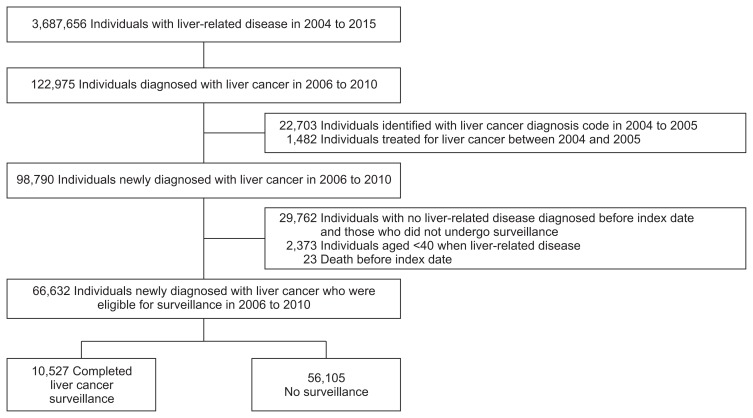
“Of the 3,687,656 patients with liver diseases diagnosed from 2006 to 2010 who underwent the NLSCP, 122,975 were diagnosed with LC.”
BackgroundInfluential
Research works printed but not linked: 1
- Cho EJ Lee JH Lee YB Surveillance for hepatocellular carcinoma may improve patient survival even in patients with decompensated cirrhosis Proceedings of the 2012 the Korean Association for the Study of the Liver Meeting 2012 Nov 22 Seoul, Korea
Cited by
Sim, Y. K., Chong, M. C., Gandhi, M., Pokharkar, Y. M., Zhu, Y., Shi, L., Li, L., Chen, C., Kudo, M., Lee, J. H., et al. (2023) · Liver Cancer · doi:10.1159/000534513 · Cited by 57
“This could be re fl ective of effectiveness and success of surveillance programs, in fl uencing the trends of diagnosis of HCC in those countries [33, 46].”
BackgroundSelf-citationZeng, H., Cao, M., Xia, C., Wang, D., Chen, K., Zhu, Z., Fu, R., Zhang, S., Zhou, J., Wang, H., et al. (2023) · Nature Cancer · doi:10.1038/s43018-023-00618-8 · Cited by 47
“Consistent with previous studies, our organized multicenter prospective study reinforces the importance of HCC surveillance in high-risk participants, with significantly improved survival even after adjusting for lead-time bias 3,19,20 .”
BackgroundResultInfluentialJohnson, P. J., Kalyuzhnyy, A., Boswell, E., & Toyoda, H. (2024) · BJC Reports · doi:10.1038/s44276-024-00050-0 · Cited by 45
“Other Asian countries such as South Korea, where chronic viral hepatitis is more prevalent than in the West, are also less restrictive in terms of patients being offered HCC surveillance [7].”
BackgroundCancer screening programs in South-east Asia and Western Pacific
Wee, H. L., Canfell, K., Chiu, H., Choi, K. S., Cox, B., Bhoo‐Pathy, N., Simms, K. T., Hamashima, C., Shen, Q., Chua, B. W. B., et al. (2024) · BMC Health Services Research · doi:10.1186/s12913-023-10327-8 · Cited by 40
“High-risk individuals are defined as hepatitis B (HBsAg positive), hepatitis C (anti-HCV positive) or liver cirrhosis patients [41].”
BackgroundJang, S., Rou, W. S., Kim, S. H., Lee, B. S., & Eun, H. S. (2020) · Clinical and Molecular Hepatology · doi:10.3350/cmh.2020.0227 · Cited by 27
Chon, Y. E., Lee, H. A., Yoon, J. S., Park, J. Y., Kim, B. H., Lee, I. J., Hong, S. K., Lee, D. H., Kong, H., Kim, E., et al. (2020) · Journal of Liver Cancer · doi:10.17998/jlc.20.2.135 · Cited by 26
“A national HCC surveillance program with ultrasonography and serum alpha-fetoproetin (AFP) test at 6-month intervals for patients at high risk for HCC has been established in Korea since 2003.(8) The participation rate for this surveillance program has increased annually from 2003 to 2012.”
BackgroundSelf-citationNguyen, A. L. T., Nguyen, H. T. T., Yee, K. C., Palmer, A. J., Blizzard, C. L., & de Graaff, B. (2021) · Value in Health · doi:10.1016/j.jval.2020.11.014 · Cited by 23
Lee, J., Park, J., Kim, N., Nari, F., Bae, S., Lee, H. J., Lee, M., Jun, J. K., Choi, K. S., & Suh, M. (2024) · JMIR Public Health and Surveillance · doi:10.2196/55011 · Cited by 15
Self-citationRoadmap for HCC Surveillance and Management in the Asia Pacific
Kudo, M., Bui, O. T., Chen, C., Ngat, D. T., George, J., Kim, D. Y., Pimsawadi, L., Tangkijvanich, P., Pwu, R., Mohamed, R. B., et al. (2025) · Cancers · doi:10.3390/cancers17121928 · Cited by 14
“South Korea’s surveillance primarily relies on two biomarkers (AFP and PIVKA II) [53,54], but more accurate methods are needed to improve early-stage detection and patient outcomes [55].”
Bae, H., Lee, S. A., Choi, J. W., Hwang, S. H., Park, S., & Park, M. (2021) · Yonsei Medical Journal · doi:10.3349/ymj.2021.62.8.758 · Cited by 11
“To date, several studies have been conducted to evaluate the effectiveness of the surveillance program, and most of them have covered data from a single institution.(17-20) In this study, we analyzed associations between surveillance intervals and the rates of receiving curative treatment and mortality to evaluate the…”
MethodKim, Y. R., Baek, J. Y., Seo, S. H., Park, H., Cho, S., & Shin, A. (2023) · Journal of Cancer Prevention · doi:10.15430/jcp.2023.28.2.47 · Cited by 9
“In previous studies using the NHIS database, various operational definitions were used to define liver cancer patients [14-17].”
MethodTran, T. P. T., Han, M., Luu, N. M., & Oh, J. (2023) · Cancer Medicine · doi:10.1002/cam4.5614 · Cited by 10
A Survey of Liver Cancer Specialists’ Views on the National Liver Cancer Screening Program in Korea
Sohn, W., Lee, Y., Lee, J. G., An, J., Jang, E. S., Lee, D. H., & Sinn, D. H. (2020) · Journal of Liver Cancer · doi:10.17998/jlc.20.1.53 · Cited by 9
“…who participated in the NLCSP once within two years prior to the diagnosis of liver cancer compared to those who did not participate in the NLCSP, 8 participants also agreed that the NLCSP should include chronic hepatitis patients with advanced fibrosis as these patients are at high risk for…”
BackgroundInfluentialSelf-citationGeorge, J., Allard, N. L., Roberts, S. K., Adams, L. A., Davies, J., Hajarizadeh, B., MacLachlan, J. H., Mahady, S. E., Altus, R., Brown, C., et al. (2025) · The Medical Journal of Australia · doi:10.5694/mja2.70061 · Cited by 8
“23,24 In the Australian context, unlike colorectal, cervical, and breast cancer, high risk of HCC is concentrated in identifiable subgroups and so a population-level screening program would not be an efficient or cost-effective approach.”
Regional disparities in major cancer incidence in Korea, 1999-2018
Park, E. H., Kang, M. J., Jung, K., Park, E. H., Yun, E. H., Kim, H.-J., Kong, H., Choi, C. K., Im, J.-S., Seo, H. G., et al. (2023) · Epidemiology and Health · doi:10.4178/epih.e2023089 · Cited by 8
John, B. V., Camardo, M., Porter, K. M., Elias, P. Z., Kielar‐Grevstad, E., Rego, S. P., Parikh, N. D., Roberts, L. R., Silva, A. C., Singal, A. G., et al. (2025) · Hepatology Communications · doi:10.1097/hc9.0000000000000800 · Cited by 7
Yan, Y.-W., Liu, X., Zhang, S.-X., & Tian, Q. (2023) · World Journal of Gastrointestinal Oncology · doi:10.4251/wjgo.v15.i5.859 · Cited by 7
Yoo, S. H., Kim, S. S., Kim, S. G., Kwon, J. H., Lee, H. A., Seo, Y. S., Jung, Y. K., Yim, H. J., Song, D. S., Kang, S. H., et al. (2023) · Journal of Liver Cancer · doi:10.17998/jlc.2023.03.11 · Cited by 7
“reduced medical expenses for patients at a high risk of HCC.(11) In South Korea, an early cancer screening program”
BackgroundInfluentialSelf-citationEpidemiological trends and projections to 2035 of hepatitis B burden in China, 1990–2021
Qi, X., Hu, Y., & Jiang, W. (2025) · PLoS ONE · doi:10.1371/journal.pone.0330633 · Cited by 5
“For example, Taiwan has implemented population-based surveillance programs among HBV carriers [43], and South Korea has integrated hepatitis B monitoring into its national cancer screening framework [44,45].”
Rim, C. H., Lee, W. J., Musaev, B., Volichevich, T. Y., Pazlitdinovich, Z. Y., Tillyashaikhov, M. N., & Rim, J. S. (2022) · International Journal of Environmental Research and Public Health · doi:10.3390/ijerph191811727 · Cited by 5
“[42] that included 66,632 liver cancer patients (screening group: 10,527; no screening group: 56,105), those who underwent national screening had a higher probability of early detection (odds ratio: 1.”
BackgroundHepatocellular carcinoma surveillance: a health economic evaluation
Chen, Q.-F., Jiang, X.-Y., Chen, S., Wang, J., & Zhao, M. D. (2026) · Clinical and Molecular Hepatology · doi:10.3350/cmh.2025.1060 · Cited by 4
Hasan, I., Gani, R. A., Sulaiman, A. S., Kurniawan, J., Lesmana, C. R. A., Jasirwan, C. O. M., Nababan, S. H. H., Kalista, K. F., Aprilicia, G., & Teressa, M. (2023) · Jurnal Penyakit Dalam Indonesia · doi:10.7454/jpdi.v10i2.1455 · Cited by 4
“SGPT (U/L), median median (rentang) 30 (8-138) 39 (6-1331) 49 (3-837) 53 (4-489) 43(3-1331)”
InfluentialSun, F. S. K., Wong, J. S. L., Mak, L.-Y., Wong, C. C.-L., Chew, V., Li, B. C. W., Leung, R., Cheung, T. T., & Yau, T. (2025) · Liver Cancer · doi:10.1159/000548536 · Cited by 3
“Furthermore, as countries where viral hepatitis infections are endemic have instituted large-scale screening programs, increasingly more viral HCCs have been screen-detected [54, 55].”
Han, H. S., Lee, K. E., Suh, Y. J., Jee, H., Kim, B. J., Kim, H. S., Lee, K., Ryu, M., Baek, S. K., Park, I. H., et al. (2022) · Therapeutic Advances in Medical Oncology · doi:10.1177/17588359221132628 · Cited by 3
Yan, Y.-W., Liu, X., Zhang, S.-X., & Tian, Q. (2023) · World Journal of Gastrointestinal Oncology · doi:10.4251/wjgo.v15.i5.858 · Cited by 2
Shin, S. H., Sohn, W., Chang, Y., Cho, Y., Kwon, M., Wild, S. H., Byrne, C. D., & Ryu, S. (2024) · Hepatology Research · doi:10.1111/hepr.13999 · Cited by 1
Self-citationBridging the Gap between Evidence and Real-World Practice for Liver Cancer Screening in South Korea
Oh, C. (2020) · Gut and Liver · doi:10.5009/gnl19388 · Cited by 1
“Kwon et al.10 showed that liver cancer screening using liver ultrasonography and serum alpha-fetoprotein measurement reduced all-cause mortality risk among participants after adjustment for lead time and possible covariates in the real-world This is an Open Access article distributed under the terms of the Creative Co…”
BackgroundInfluentialHan, J. W., & Kim, B. H. (2025) · Journal of Liver Cancer · doi:10.17998/jlc.2025.02.17 · Cited by 1
“A previous survey showed that early detection of HCC was higher in the surveillance group compared to the non-surveillance group in South Korea.”
Additional file 1 of Cancer screening programs in South-east Asia and Western Pacific
Wee, H. L., Canfell, K., Chiu, H., Choi, K. S., Cox, B., Bhoo‐Pathy, N., Simms, K. T., Hamashima, C., Shen, Q., Chua, B. W. B., et al. (2024) · Figshare · doi:10.6084/m9.figshare.25025855
Additional file 4 of Cancer screening programs in South-east Asia and Western Pacific
Wee, H.-L., Canfell, K., Chiu, H.-M., Choi, K. S., Cox, B., Bhoo‐Pathy, N., Simms, K. T., Hamashima, C., Shen, Q., Chua, B. W. B., et al. (2024) · Figshare · doi:10.6084/m9.figshare.26669355
Additional file 3 of Cancer screening programs in South-east Asia and Western Pacific
Wee, H.-L., Canfell, K., Chiu, H.-M., Choi, K. S., Cox, B., Bhoo‐Pathy, N., Simms, K. T., Hamashima, C., Shen, Q., Chua, B. W. B., et al. (2024) · Figshare · doi:10.6084/m9.figshare.26669352
Additional file 7 of Cancer screening programs in South-east Asia and Western Pacific
Wee, H.-L., Canfell, K., Chiu, H.-M., Choi, K. S., Cox, B., Bhoo‐Pathy, N., Simms, K. T., Hamashima, C., Shen, Q., Chua, B. W. B., et al. (2024) · Figshare · doi:10.6084/m9.figshare.26669364
Additional file 6 of Cancer screening programs in South-east Asia and Western Pacific
Wee, H.-L., Canfell, K., Chiu, H.-M., Choi, K. S., Cox, B., Bhoo‐Pathy, N., Simms, K. T., Hamashima, C., Shen, Q., Chua, B. W. B., et al. (2024) · Figshare · doi:10.6084/m9.figshare.26669361
Additional file 8 of Cancer screening programs in South-east Asia and Western Pacific
Wee, H.-L., Canfell, K., Chiu, H.-M., Choi, K. S., Cox, B., Bhoo‐Pathy, N., Simms, K. T., Hamashima, C., Shen, Q., Chua, B. W. B., et al. (2024) · Figshare · doi:10.6084/m9.figshare.26669367
Additional file 2 of Cancer screening programs in South-east Asia and Western Pacific
Wee, H.-L., Canfell, K., Chiu, H.-M., Choi, K. S., Cox, B., Bhoo‐Pathy, N., Simms, K. T., Hamashima, C., Shen, Q., Chua, B. W. B., et al. (2024) · Figshare · doi:10.6084/m9.figshare.25026028
Additional file 5 of Cancer screening programs in South-east Asia and Western Pacific
Wee, H.-L., Canfell, K., Chiu, H.-M., Choi, K. S., Cox, B., Bhoo‐Pathy, N., Simms, K. T., Hamashima, C., Shen, Q., Chua, B. W. B., et al. (2024) · Figshare · doi:10.6084/m9.figshare.26669358
Public health opportunities to reduce the global burden of hepatocellular carcinoma
Feletto, E., Worthington, J., He, E., & Canfell, K. (2026) · 中国科学通报:英文版 · doi:10.1016/j.scib.2026.07.013
Kang, H. Y. J., Jang, W., & Ryu, K. S. (2026) · Scientific Reports · doi:10.1038/s41598-026-66550-w
“…screenings be conducted for individuals aged 40 years and above who have been diagnosed with cirrhosis, positive hepatitis B virus antigen, positive hepatitis C virus antibodies, or chronic liver disease attributable to hepatitis B or C virus infection, which showed significant results 32,33 .”
Metadata
- Authors
- Kwon, J. W., Tchoe, H. J., Lee, J., Suh, J. K., Lee, J.-H., & Shin, S.
- Affiliations
- Kyungpook National University (KR)
- National Evidenc- based healthcare Collaborating Agency (KR)
- Seoul National University (KR)
- Corresponding author
- Shin, Sangjin
- Venue
- Gut and Liver
- Published
- 2020-01-15
- Volume
- 14
- Issue
- 1
- Pages
- 108-116
- ISSN
- 1976-2283 (ISSN-L)
- 2005-1212
- PMC
- PMC6974327
- OpenAlex
- W2938722440
- Cited by
- 27
- References
- 35
- Citations by year
- 2026: 1 · 2025: 6 · 2024: 3 · 2023: 9 · 2022: 2 · 2021: 2 · 2020: 4
- FWCI
- 1.28
- Type
- journal article
- Language
- en
- Open access
- diamond
- doi.org
- Licence
- cc-by-nc
- creativecommons.org/licenses/by-nc/4.0 (tdm)
- Locations
- Gut and Liver (publishedVersion, cc-by-nc)
- PubMed Central (publishedVersion, cc-by-nc)
- PubMed (publishedVersion)
- DOAJ (DOAJ: Directory of Open Access Journals) (submittedVersion)
- Funders
- National Evidence-based Healthcare Collaborating Agency (NB16-001)
- Topics
- Health Sciences › Medicine › Hepatology › Hepatocellular Carcinoma Treatment and Prognosis
- Health Sciences › Medicine › Oncology › Global Cancer Incidence and Screening
- Health Sciences › Medicine › Pulmonary and Respiratory Medicine › Lung Cancer Diagnosis and Treatment
- Keywords
- liver cancer, cancer surveillance, early detection, survival, mortality, health care costs, cost-effectiveness, health policy evaluation, South Korea
- MeSH terms
- Adult, Aged, Female, Humans, Liver Neoplasms, Male, Mass Screening, Middle Aged, Population Surveillance, Program Evaluation, Survival Rate, Linear Models, Proportional Hazards Models, Cost of Illness, Early Detection of Cancer, Republic of Korea
About these checks
Registry, retraction, Cites and statistics results are computed, not judged, with one exception: a printed reference that no index lists is read once by a model before it counts as a citation error. Claims are extracted by a model and kept only when their quote appears verbatim in the text; each cited source is then checked, with a model’s help, for whether it says what the claim relies on. Those verdicts can be wrong — read the claim’s quote and the cited source before relying on one.
Statistics and arithmetic are recomputed, not judged.
Confidence bands are shown only for fields calibrated on our annotated test set. None is calibrated yet, so no band is shown.
What counts as a claim ›How we measure confidence ›How we check this ›
Are you an author, or do you see a problem with this page? Request a review
Data sources
Bibliographic data: Semantic Scholar, OpenAlex, Crossref.
Contains information from the Semantic Scholar Academic Graph Datasets, made available under the ODC Attribution License (ODC-BY 1.0).
Semantic Scholar’s data is described in: Kinney, R., et al. (2023). The Semantic Scholar Open Data Platform. arXiv:2301.10140.
