

The DOI matches its Crossref record.
A Case of Vancomycin-Induced Drug Reaction with Eosinophilia, Systemic Symptoms and Multiorgan Involvement Proven Using Lymphocyte Transformation Test
Open accessAbstract
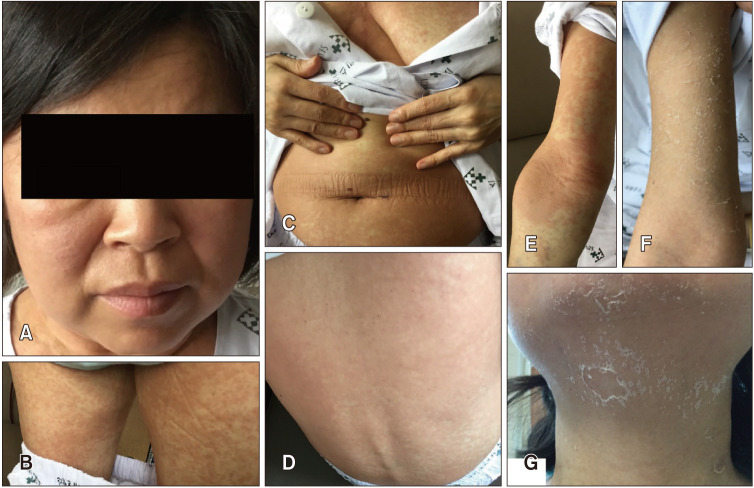
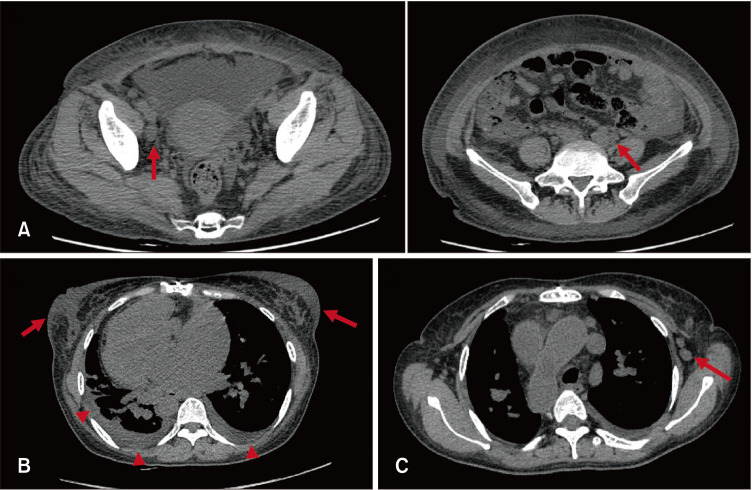
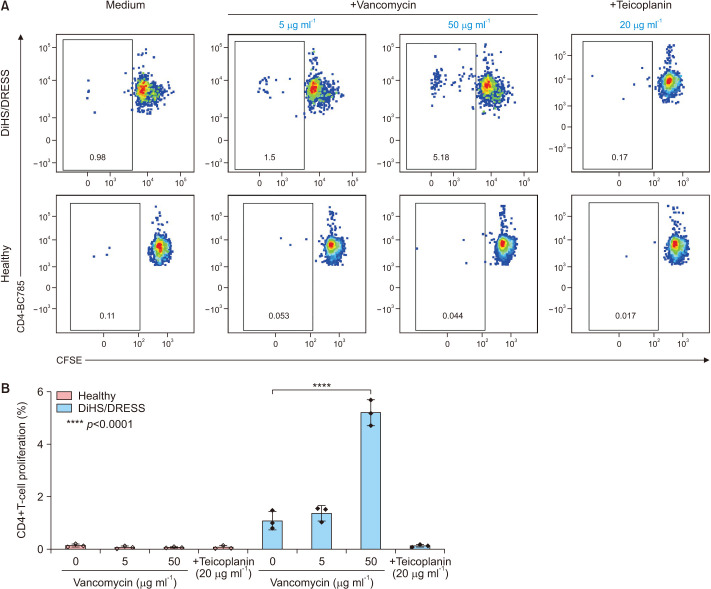
Drug-induced hypersensitivity syndrome (DiHS), also referred to as drug reaction with eosinophilia and systemic symptoms (DRESS), is a rare but potentially life-threatening condition induced by drug hypersensitivity that leads to significant morbidity and mortality and often occurs in patients undergoing combination antibiotic therapy.Due to a recent increase in the incidence of methicillin-resistant Staphylococcus aureus infections, the occurrence of vancomycin-induced DiHS/DRESS has increased rapidly.However, because of insufficient pharmacogenetic data on vancomycin-induced drug eruptions in Asians coupled with the risk of re-eliciting the symptoms by provocation tests, confirmation of the culprit drug in vancomycin-induced DiHS/DRESS is often challenging.Here, we report a case of vancomycin-induced DiHS/DRESS, where the causal relationship was confirmed using a lymphocyte transformation test (LTT).A 51-year-old woman was treated with combination antibiotics, including vancomycin, for infective pericarditis.The patient subsequently developed fever, facial edema, generalized rash followed by multiple internal organ involvement, including the kidney, lung, liver, and heart.Thus, based on the International Registry of Severe Cutaneous Adverse Reaction (RegiSCAR) criteria, the case was diagnosed as 'definite' DiHS/ DRESS, although the culprit drug was obscured by combination antibiotic therapy.The LTT confirmed that vancomycin, but not other glycopeptide antibiotics, specifically induced Tcell proliferation in this case.Collectively, our case suggests that clinicians can utilize LTT to identify the causative medication of DiHS/DRESS when the clinical information is limited to defining the culprit drug.
Overview
The claims and statistics of this paper haven’t been checked yet.
Run the check — free, no account needed. It reads the open-access text and checks the sources it cites.
Integrity signals
Registry
Cites
Statistics
Figures
Verification
Claims the paper makes
The claims and statistics of this paper haven’t been checked yet.
Run the check — free, no account needed. It reads the open-access text and checks the sources it cites.
Claims other papers make about this one
Each is checked against this paper’s own text: does it say what the citing paper says it does?
The cited source says what the claim attributes to it.
In the citing paper
“Chung et al. [111] confirmed through LTT that vancomycin, but not other glycopeptide antibiotics, specifically induced T-cell proliferation in the reported case.”
From The diagnosis of acute interstitial nephritis caused by infection versus antibiotic-induced interstitial nephritis: a narrative review (2024) · cites this paper as [111]
Self-check
Percentages, sums and reported differences re-computed from the paper’s own numbers.
The self-check needs the paper’s full text.
Citations
Cites
No references could be resolved yet.
Research works printed but not linked: 20
- Cabañas, 2018, Clin Exp Allergy, 48, 325, 10.1111/cea.13076 · DOI
- Shiohara, 2019, Allergol Int, 68, 301, 10.1016/j.alit.2019.03.006 · DOI
- Demoly, 2014, Allergy, 69, 420, 10.1111/all.12350 · DOI
- Kim, 2020, Nat Med, 26, 236, 10.1038/s41591-019-0733-7 · DOI
- Kim, 2000, J Clin Microbiol, 38, 3879, 10.1128/JCM.38.10.3879-3881.2000 · DOI
- Zafar, 2020, Ann Allergy Asthma Immunol, 124, 107, 10.1016/j.anai.2019.09.002 · DOI
- Cho, 2017, Int J Mol Sci, 18, 1243, 10.3390/ijms18061243 · DOI
- Nakkam, 2021, J Allergy Clin Immunol, 147, 403, 10.1016/j.jaci.2020.04.056 · DOI
- Miyazu, 2016, Am J Case Rep, 17, 625, 10.12659/AJCR.899149 · DOI · Paper page
- Thongsri, 2017, Asian Pac J Allergy Immunol, 35, 3
- Wilcox, 2017, BMC Pulm Med, 17, 217, 10.1186/s12890-017-0564-6 · DOI
- Díaz-Mancebo, 2012, Nefrologia, 32, 685
- Madigan, 2019, J Am Acad Dermatol, 81, 123, 10.1016/j.jaad.2019.02.002 · DOI
- Mennicke, 2009, Am J Transplant, 9, 2197, 10.1111/j.1600-6143.2009.02788.x · DOI
- Gangireddy, 2019, Cureus, 11, e5015
- Konvinse, 2019, J Allergy Clin Immunol, 144, 183, 10.1016/j.jaci.2019.01.045 · DOI
- Lochmatter, 2009, Immunol Allergy Clin North Am, 29, 537, 10.1016/j.iac.2009.04.009 · DOI
- Mayorga, 2016, Allergy, 71, 1103, 10.1111/all.12886 · DOI
- Galbiati, 2016, Front Pharmacol, 7, 204, 10.3389/fphar.2016.00204 · DOI
- Schrijvers, 2015, Clin Transl Allergy, 5, 31, 10.1186/s13601-015-0073-8 · DOI
Cited by
Sorted by citations
Muhammad, A., Zhang, Y., Huang, L., Yuan, Q., Wang, W., Pu, J., Lin, W., Tang, R., & Xiao, X. (2024) · Clinical Kidney Journal · doi:10.1093/ckj/sfae054 · Cited by 13
“[111 ] confirmed through LTT that vancomycin, but not other glycopeptide antibiotics, specifically induced T-cell proliferation in the reported case.”
Method
Metadata
- Authors
- Chung, K. B., Hwang, J.-H., & Kim, D.
- Affiliations
- Yonsei University (KR)
- Department of Dermatology and Cutaneous Biology Research Institute, Severance Hospital, Yonsei University College of Medicine, Seoul, Korea.
- Venue
- Annals of Dermatology
- Publisher
- XMLink
- Published
- 2023
- Volume
- 35
- Issue
- 2
- Pages
- 140
- ISSN
- 1013-9087 (ISSN-L)
- 2005-3894
- PMC
- PMC10112376
- OpenAlex
- W4324277643
- Cited by
- 4
- References
- 0
- Citations by year
- 2025: 2 · 2024: 1 · 2023: 1
- FWCI
- 0.62
- Type
- journal article
- Language
- en
- Open access
- diamond
- doi.org
- Licence
- Locations
- Annals of Dermatology (publishedVersion, cc-by-nc)
- PubMed Central (publishedVersion, cc-by-nc)
- PubMed (publishedVersion)
- YUHSpace (Yonsei University Medical Library) (submittedVersion, cc-by-nc-nd)
- Topics
- Health Sciences › Medicine › Pharmacology (medical) › Drug-Induced Adverse Reactions
- Life Sciences › Pharmacology, Toxicology and Pharmaceutics › Toxicology › Pharmacovigilance and Adverse Drug Reactions
- Health Sciences › Medicine › Dermatology › Contact Dermatitis and Allergies
- Keywords
- vancomycin, DRESS syndrome, lymphocyte transformation test, T cell proliferation, methicillin-resistant Staphylococcus aureus, combination antibiotic therapy, culprit drug identification, RegiSCAR criteria, severe cutaneous adverse reactions
About these checks
Registry, retraction, Cites and statistics results are computed, not judged, with one exception: a printed reference that no index lists is read once by a model before it counts as a citation error. Claims are extracted by a model and kept only when their quote appears verbatim in the text; each cited source is then checked, with a model’s help, for whether it says what the claim relies on. Those verdicts can be wrong — read the claim’s quote and the cited source before relying on one.
Statistics and arithmetic are recomputed, not judged.
Confidence bands are shown only for fields calibrated on our annotated test set. None is calibrated yet, so no band is shown.
What counts as a claim ›How we measure confidence ›How we check this ›
Are you an author, or do you see a problem with this page? Request a review
