

Validation of Aeolus winds using radiosonde observations and numerical weather prediction model equivalents
Open accessPublished version of a preprint
The DOI matches its Crossref record; 27 of the 27 references it cites were found in a registry or an index.
Abstract
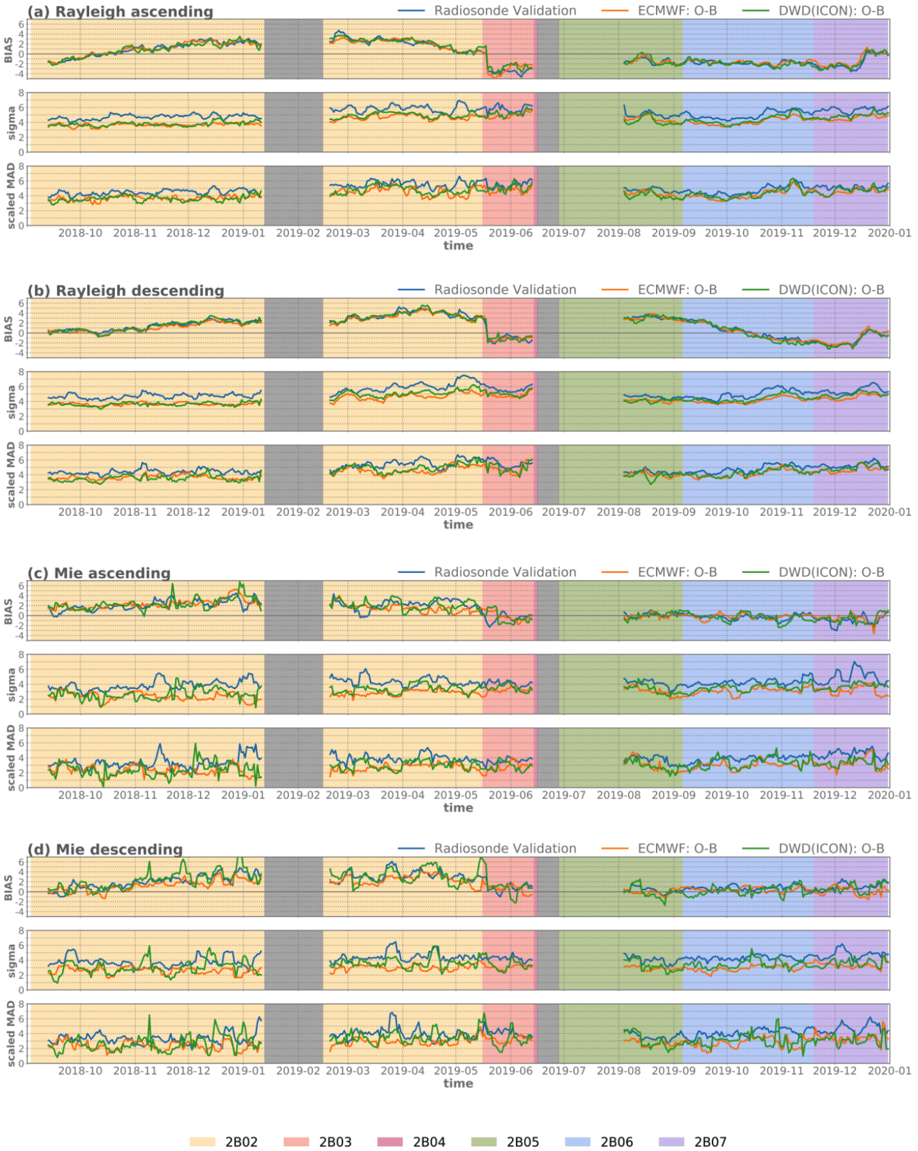
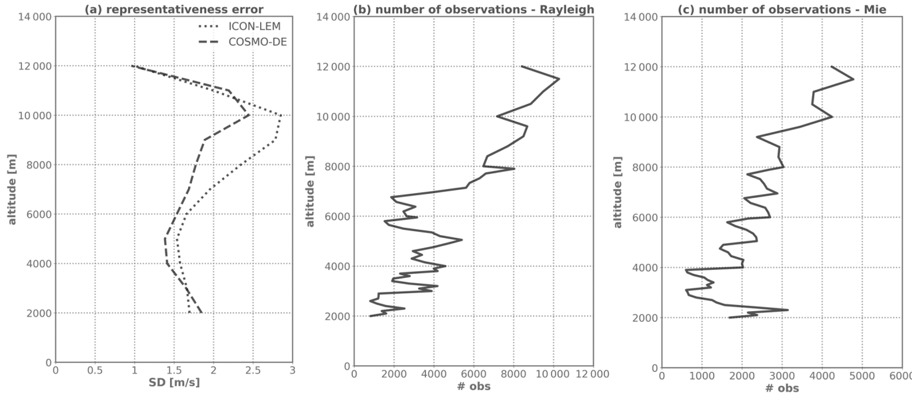
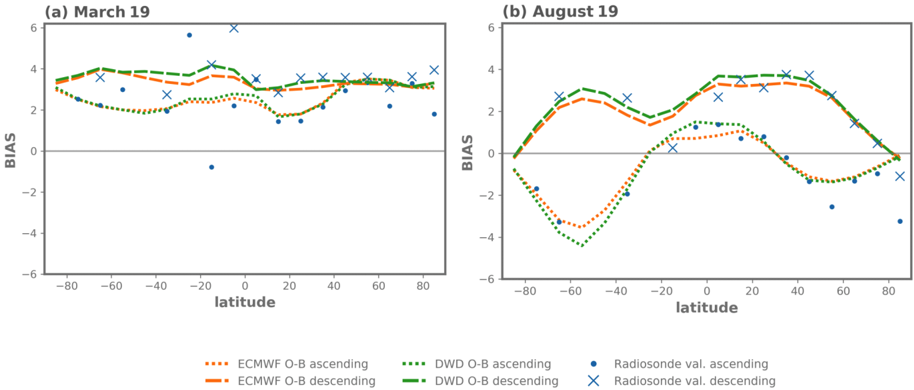
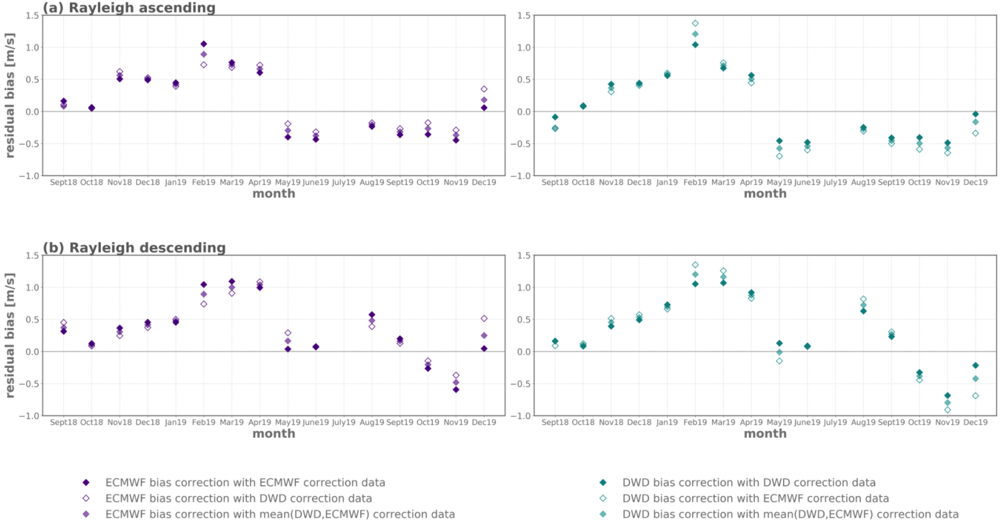
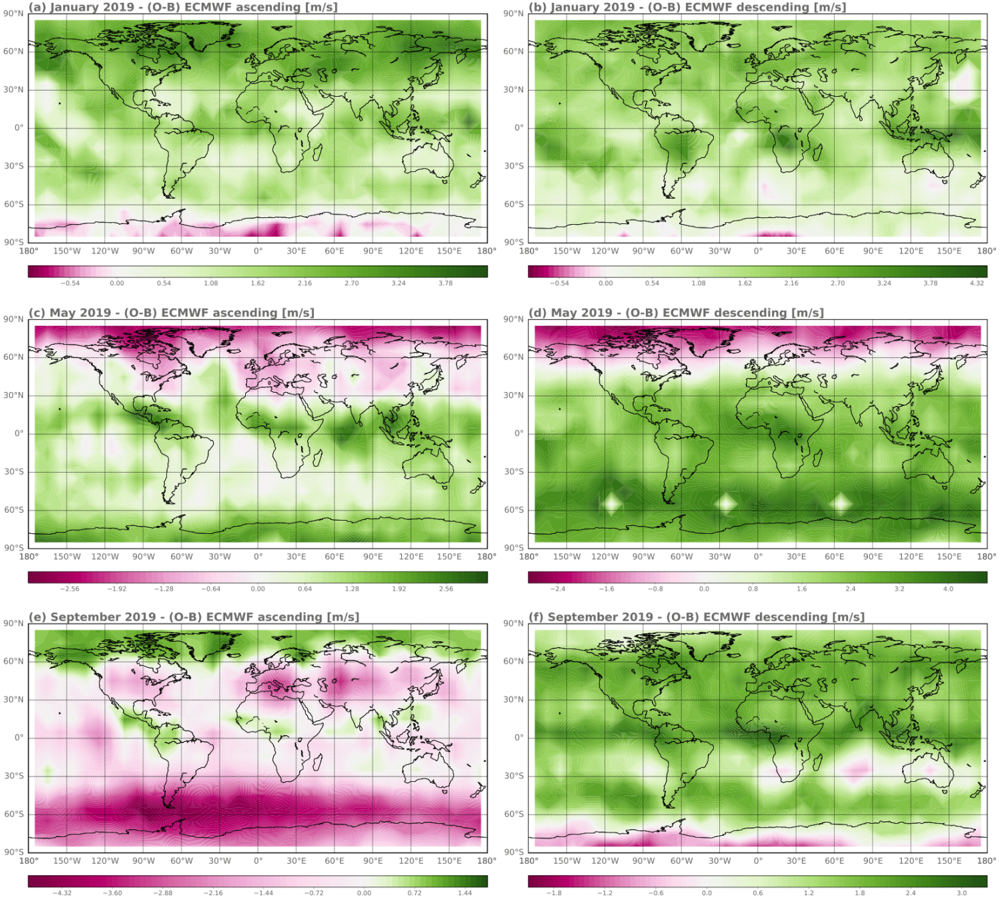
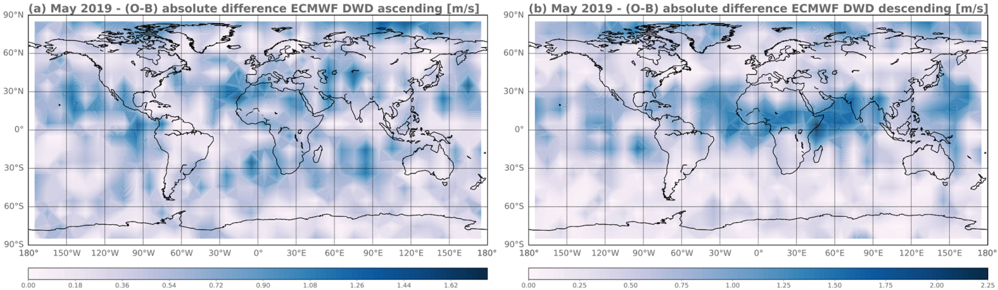
In August 2018, the first Doppler wind lidar, developed by the European Space Agency (ESA), was launched on board the Aeolus satellite into space. Providing atmospheric wind profiles on a global basis, the Earth Explorer mission is expected to demonstrate improvements in the quality of numerical weather prediction (NWP). For the use of Aeolus observations in NWP data assimilation, a detailed characterization of the quality and the minimization of systematic errors is crucial. This study performs a statistical validation of Aeolus observations, using collocated radiosonde measurements and NWP forecast equivalents from two different global models, the ICOsahedral Nonhydrostatic model (ICON) of Deutscher Wetterdienst (DWD) and the European Centre for Medium-Range Weather Forecast (ECMWF) Integrated Forecast System (IFS) model, as reference data. For the time period from the satellite's launch to the end of December 2019, comparisons for the Northern Hemisphere (23.5–65 ∘ N) show strong variations of the Aeolus wind bias and differences between the ascending and descending orbit phase. The mean absolute bias for the selected validation area is found to be in the range of 1.8–2.3 m s −1 (Rayleigh) and 1.3–1.9 m s −1 (Mie), showing good agreement between the three independent reference data sets. Due to the greater representativeness errors associated with the comparisons using radiosonde observations, the random differences are larger for the validation with radiosondes compared to the model equivalent statistics. To achieve an estimate for the Aeolus instrumental error, the representativeness errors for the comparisons are determined, as well as the estimation of the model and radiosonde observational error. The resulting Aeolus error estimates are in the range of 4.1–4.4 m s −1 (Rayleigh) and 1.9–3.0 m s −1 (Mie). Investigations of the Rayleigh wind bias on a global scale show that in addition to the satellite flight direction and seasonal differences, the systematic differences vary with latitude. A latitude-based bias correction approach is able to reduce the bias, but a residual bias of 0.4–0.6 m s −1 with a temporal trend remains. Taking additional longitudinal differences into account, the bias can be reduced further by almost 50 %. Longitudinal variations are suggested to be linked to land–sea distribution and tropical convection that influences the thermal emission of the earth. Since 20 April 2020 a telescope temperature-based bias correction scheme has been applied operationally in the L2B processor, developed by the Aeolus Data Innovation and Science Cluster (DISC).
Overview
The claims and statistics of this paper haven’t been checked yet.
Free: it reads the open-access text and checks the first 5 claims that cite a source we can check. Create a free account to check every claim.
Integrity signals
Registry
Cites
Statistics
Figures

Verification
Claims the paper makes
The claims and statistics of this paper haven’t been checked yet.
Free: it reads the open-access text and checks the first 5 claims that cite a source we can check. Create a free account to check every claim.
Self-check
Percentages, sums and reported differences re-computed from the paper’s own numbers.
The self-check needs the paper’s full text.
Citations
Cites
Black, E. C. L., Slingo, J., & Sperber, K. R. (2002) · Monthly Weather Review · doi:10.1175/1520-0493(2003)131<2112:soteto>2.0.co;2 · Cited by 493
THE ATMOSPHERIC DYNAMICS MISSION FOR GLOBAL WIND FIELD MEASUREMENT
Stoffelen, A., Pailleux, J., Källén, E., Vaughan, J. M., Isaksen, L., Flamant, P., Wergen, W., Andersson, E., Schyberg, H., Culoma, A., et al. (2005) · Bulletin of the American Meteorological Society · doi:10.1175/bams-86-1-73 · Cited by 457
Reference quality upper-air measurements: GRUAN data processing for the Vaisala RS92 radiosonde
Dirksen, R. J., Sommer, M., Immler, F. J., Hurst, D. F., Kivi, R., & Vömel, H. (2014) · Atmospheric Measurement Techniques · doi:10.5194/amt-7-4463-2014 · Cited by 286
Statistics and Data Analysis for Financial Engineering
Ruppert, D. (2011) · Springer Texts in Statistics · doi:10.1007/978-1-4419-7787-8 · Cited by 260
Lidar-Measured Wind Profiles: The Missing Link in the Global Observing System
Baker, W. E., Atlas, R., Cardinali, C., Clement, A., Emmitt, G. D., Gentry, B. M., Hardesty, R. M., Källén, E., Kavaya, M. J., Langland, R., et al. (2014) · Bulletin of the American Meteorological Society · doi:10.1175/bams-d-12-00164.1 · Cited by 214
The Spaceborne Wind Lidar Mission ADM-Aeolus
Reitebuch, O. (2012) · Research Topics in Aerospace · doi:10.1007/978-3-642-30183-4_49 · Cited by 205 · cited 4×
“5 m collects the backscattered signal, and its Doppler shift is analyzed by a dual-channel receiver to measure backscattered signals from both molecules (Rayleigh channel) and particles (Mie channel) (ESA, 2008; Reitebuch, 2012).”
BackgroundMethodInfluentialSelf-citationLux, O., Lemmerz, C., Weiler, F., Marksteiner, U., Witschas, B., Rahm, S., Geiß, A., & Reitebuch, O. (2020) · Atmospheric Measurement Techniques · doi:10.5194/amt-13-2075-2020 · Cited by 180 · cited 1×
“Detailed information and results have been published in Lux et al. (2020) and Witschas et al. (2020).”
BackgroundSelf-citationStatistics and Data Analysis for Financial Engineering: with R examples
Ruppert, D., & Matteson, D. S. (2015) · Springer texts in statistics · doi:10.1007/978-1-4939-2614-5 · Cited by 176 · cited 1×
“4826 (scaled MAD) is identical to the standard deviation (Ruppert and Matteson, 2015).”
BackgroundFirst validation of Aeolus wind observations by airborne Doppler wind lidar measurements
Witschas, B., Lemmerz, C., Geiß, A., Lux, O., Marksteiner, U., Rahm, S., Reitebuch, O., & Weiler, F. (2020) · Atmospheric Measurement Techniques · doi:10.5194/amt-13-2381-2020 · Cited by 175
Self-citationInitial Assessment of the Performance of the First Wind Lidar in Space on Aeolus
Reitebuch, O., Lemmerz, C., Lux, O., Marksteiner, U., Rahm, S., Weiler, F., Witschas, B., Meringer, M., Schmidt, K., Huber, D., et al. (2020) · EPJ Web of Conferences · doi:10.1051/epjconf/202023701010 · Cited by 144 · cited 1×
“Information about the actual performance of the Aeolus wind lidar and a discussion of the systematic and random error sources can be found in Reitebuch et al. (2020) and Rennie and Isaksen (2020).”
BackgroundSelf-citation
Research works printed but not linked: 2
- Bormann, N., Saarinen, S., Kelly, G., and Thépaut, J.-N.: The Spatial Structure of Observation Errors in Atmospheric Motion Vectors from Geostationary Satellite Data, Q. J. Roy. Meteor. Soc., 131, 706-718, https://doi.org/10.1175/1520- 0493(2003)131<0706:TSSOOE>2.0.CO;2, 2003. · doi:10.1175/1520-0493(2003)1312.0.co;2
- Rennie, M. and Isaksen, L.: Aeolus L2B status, monitoring and NWP impact assessment at ECWMF, Aeolus NWP Impact As- sessment Workshop, Darmstadt, Germany, 12 September 2019.
Cited by
The impact of Aeolus wind retrievals on ECMWF global weather forecasts
Rennie, M. P., Isaksen, L., Weiler, F., de Kloe, J., Kanitz, T., & Reitebuch, O. (2021) · Quarterly Journal of the Royal Meteorological Society · doi:10.1002/qj.4142 · Cited by 217
“…of the mission’s calibration and validation (CAL/VAL), Aeolus L2B winds have been compared to various in situ observation types, such as radiosondes (Martin et al., 2021), ground-based radar wind profiler (Geiß et al., 2020), ground-based Rayleigh–Mie Doppler lidar (Khaykin et al., 2020) and…”
BackgroundMethodInfluentialSelf-citationAssimilation of satellite data in numerical weather prediction. Part II: Recent years
Eyre, J. R., Bell, W., Cotton, J., English, S. J., Forsythe, M., Healy, S. B., & Pavelin, E. G. (2022) · Quarterly Journal of the Royal Meteorological Society · doi:10.1002/qj.4228 · Cited by 182
“Aeolus is a technology demonstration mission, and the understanding of the measurement characteristics has evolved rapidly since launch (Straume et al., 2020; Witschas et al., 2020; Martin et al., 2021).”
BackgroundBaars, H., Radenz, M., Floutsi, A. A., Engelmann, R., Althausen, D., Heese, B., Ansmann, A., Flament, T., Dabas, A. M., Trapon, D., et al. (2021) · Geophysical Research Letters · doi:10.1029/2020gl092194 · Cited by 155
“ALADIN is the first lidar instrument on a European satellite and the first instrument in space that actively can measure profiles of an horizontal wind component (Baars, Herzog, et al., 2020; Martin et al., 2021; Reitebuch, 2012; Witschas et al., 2020).”
BackgroundSelf-citationQuantifying CO2 Emissions of Power Plants With CO2 and NO2 Imaging Satellites
Kuhlmann, G., Henne, S., Meijer, Y., & Brunner, D. (2021) · Frontiers in Remote Sensing · doi:10.3389/frsen.2021.689838 · Cited by 111
“5 m s − 1 , which is a typical uncertainty of the wind fi eld in a global meteorological analysis product (Martin et al., 2021).”
BackgroundBedka, K. M., Nehrir, A. R., Kavaya, M. J., Barton‐Grimley, R. A., Beaubien, M., Carroll, B. J., Collins, J. E., Cooney, J. W., Emmitt, G. D., Greco, S., et al. (2021) · Atmospheric measurement techniques · doi:10.5194/amt-14-4305-2021 · Cited by 102
Correction of wind bias for the lidar on board Aeolus using telescope temperatures
Weiler, F., Rennie, M., Kanitz, T., Isaksen, L., Checa, E., de Kloe, J., Okunde, N., & Reitebuch, O. (2021) · Atmospheric measurement techniques · doi:10.5194/amt-14-7167-2021 · Cited by 88
Self-citationDunn, R., Aldred, F., Gobron, N., Miller, J. B., Willett, K. M., Ades, M., Adler, R. E., Allan, R. P., Anderson, J., Anneville, O., et al. (2022) · Bulletin of the American Meteorological Society · doi:10.1175/bams-d-22-0092.1 · Cited by 85
Witschas, B., Lemmerz, C., Geiß, A., Lux, O., Marksteiner, U., Rahm, S., Reitebuch, O., Schäfler, A., & Weiler, F. (2022) · Atmospheric measurement techniques · doi:10.5194/amt-15-7049-2022 · Cited by 63
“Thus, several scientific and technical studies have been performed and published in the meantime, addressing the performance of ALADIN (Atmospheric LAser Doppler INstrument) on board Aeolus and the quality of the wind data products (e.g., Bedka et al., 2021; Martin et al., 2021; Baars et al., 2020; Guo et al., 2021; Z…”
BackgroundSelf-citationALADIN laser frequency stability and its impact on the Aeolus wind error
Lux, O., Lemmerz, C., Weiler, F., Kanitz, T., Wernham, D., Rodrigues, G., Hyslop, A. M., Lecrenier, O., McGoldrick, P., Fabre, F., et al. (2021) · Atmospheric measurement techniques · doi:10.5194/amt-14-6305-2021 · Cited by 73
“In this manner, the lack of wind data on a global scale, which represented a major deficiency in the Global Observing System (GOS) (Baker et al., 2014; Andersson, 2018; NAS, 2018), was mitigated, thus contributing to the improvement of the accuracy of numerical weather prediction (NWP) (Straume et al., 2020).”
BackgroundSelf-citationRatynski, M., Khaykin, S., Hauchecorne, A., Wing, R., Cammas, J., Hello, Y., & Keckhut, P. L. (2023) · Atmospheric measurement techniques · doi:10.5194/amt-16-997-2023 · Cited by 61
Validation of Aeolus winds using ground-based radars in Antarctica and in northern Sweden
Belova, E., Kirkwood, S., Voelger, P., Chatterjee, S., Satheesan, K., Hagelin, S., Lindskog, M., & Körnich, H. (2021) · Atmospheric measurement techniques · doi:10.5194/amt-14-5415-2021 · Cited by 60
Wu, S., Sun, K., Dai, G., Wang, X., Liu, X., Liu, B., Song, X., Reitebuch, O., Li, R., Yin, J., et al. (2022) · Atmospheric measurement techniques · doi:10.5194/amt-15-131-2022 · Cited by 55
Self-citationIwai, H., Aoki, M., Oshiro, M., & Ishii, S. (2021) · Atmospheric measurement techniques · doi:10.5194/amt-14-7255-2021 · Cited by 52
Chen, S., Cao, R., Xie, Y., Zhang, Y., Tan, W., Chen, H., Guo, P., & Zhao, P. (2021) · Atmospheric chemistry and physics · doi:10.5194/acp-21-11489-2021 · Cited by 51
Operational assimilation of Aeolus winds in the Météo‐France global NWP model ARPEGE
Pourret, V., Šavli, M., Mahfouf, J., Raspaud, D., Doerenbecher, A., Bénichou, H., & Payan, C. (2022) · Quarterly Journal of the Royal Meteorological Society · doi:10.1002/qj.4329 · Cited by 53
“Aeolus wind observations exhibit relatively large random and systematic errors when compared to radiosondes and airborne lidar wind observations (e.g. Witschas et al., 2020; Martin et al., 2021) or NWP model counterparts (Rennie and Isaksen, 2020).”
BackgroundWright, C. J., Hall, R. J., Banyard, T. P., Hindley, N. P., Krisch, I., Mitchell, D., & Seviour, W. J. M. (2021) · Weather and Climate Dynamics · doi:10.5194/wcd-2-1283-2021 · Cited by 49
Lux, O., Lemmerz, C., Weiler, F., Marksteiner, U., Witschas, B., Rahm, S., Geiß, A., Schäfler, A., & Reitebuch, O. (2022) · Atmospheric measurement techniques · doi:10.5194/amt-15-1303-2022 · Cited by 44
Self-citationLux, O., Witschas, B., Geiß, A., Lemmerz, C., Weiler, F., Marksteiner, U., Rahm, S., Schäfler, A., & Reitebuch, O. (2022) · Atmospheric measurement techniques · doi:10.5194/amt-15-6467-2022 · Cited by 37
“These studies include model comparisons (Martin et al., 2021; Chen et al., 2021) and the validation of the Aeolus wind product against groundbased and airborne instruments (Zuo et al., 2022; Wu et al., 2022; Liu et al., 2022; Bedka et al., 2021; Iwai et al., 2021; Baars et al., 2020).”
MethodSelf-citationWitschas, B., Lemmerz, C., Lux, O., Marksteiner, U., Reitebuch, O., Weiler, F., Fabre, F., Dabas, A. M., Flament, T., Huber, D., et al. (2022) · Atmospheric measurement techniques · doi:10.5194/amt-15-1465-2022 · Cited by 32
Self-citationValidation of the Aeolus Level-2B wind product over Northern Canada and the Arctic
Chou, C., Kushner, P. J., Laroche, S., Mariani, Z., Rodriguez, P., Melo, S. M. L., & Fletcher, C. G. (2022) · Atmospheric measurement techniques · doi:10.5194/amt-15-4443-2022 · Cited by 31
Zuo, H., Hasager, C. B., Karagali, I., Stoffelen, A., Marseille, G. J., & de Kloe, J. (2022) · Atmospheric measurement techniques · doi:10.5194/amt-15-4107-2022 · Cited by 31
Martin, A., Weißmann, M., & Cress, A. (2023) · Weather and Climate Dynamics · doi:10.5194/wcd-4-249-2023 · Cited by 35
“…differences, which vary seasonally, spatially and with orbital phase and are particularly pronounced for the Rayleigh wind observations (e.g., A. Martin et al., 2021; Rennie et al., 2021) These detected bias dependencies were found to be related to longwave and solar radiation fluctuations and…”
BackgroundMethodInfluentialSelf-citationLaroche, S., & St‐James, J. (2022) · Quarterly Journal of the Royal Meteorological Society · doi:10.1002/qj.4300 · Cited by 32
A new lidar design for operational atmospheric wind and cloud/aerosol survey from space
Bruneau, D., & Pelon, J. R. (2021) · Atmospheric measurement techniques · doi:10.5194/amt-14-4375-2021 · Cited by 29
Validation activities of Aeolus wind products on the southeastern Iberian Peninsula
Abril-Gago, J., Ortiz-Amezcua, P., Bermejo-Pantaleón, D., Andújar-Maqueda, J., Bravo-Aranda, J. A., Granados-Muñoz, M. J., Navas-Guzmán, F., Alados‐Arboledas, L., Foyo-Moreno, I., & Guerrero-Rascado, J. L. (2023) · Atmospheric chemistry and physics · doi:10.5194/acp-23-8453-2023 · Cited by 25
“, 2022) and other suborbital instrumentation (Baars et al., 2020; Lux et al., 2020b, 2022a; Witschas et al., 2020, 2022; Bedka et al., 2021; Chen et al., 2021; Iwai et al., 2021; Martin et al., 2021).”
BackgroundMethodResultInfluentialCorrection of wind bias for the lidar on-board Aeolus using telescope temperatures
Weiler, F., Rennie, M., Kanitz, T., Isaksen, L., Checa, E., de Kloe, J., Okunde, N., & Reitebuch, O. (2021) · doi:10.5194/amt-2021-171 · Cited by 24
Self-citationOuyed, A., Smith, N., Zeng, X., Galarneau, T. J., Su, H., & Dixon, R. D. (2023) · Geophysical Research Letters · doi:10.1029/2022gl101830 · Cited by 23
“The 1° resolution of our 3D AMVs is comparable to that (90 km) of Aeolus for Rayleigh scattering (for which most of the Aeolus wind is available) but it is much coarser than that (10 km) for Mie scattering (for which Aeolus data are frequently not available; Martin et al., 2021).”
MethodAssessing the quality of novel Aeolus winds for NWP applications at NCMRWF
Rani, S. I., Jangid, B. P., Kumar, S., Bushair, M. T., Sharma, P., George, J. P., George, G., & Gupta, M. D. (2022) · Quarterly Journal of the Royal Meteorological Society · doi:10.1002/qj.4264 · Cited by 22
Gkikas, A., Gialitaki, A., Binietoglou, I., Marinou, E. D., Tsichla, M., Σιώμος, Ν., Paschou, P., Kampouri, A., Voudouri, K. A., Proestakis, E., et al. (2023) · Atmospheric measurement techniques · doi:10.5194/amt-16-1017-2023 · Cited by 23
“5 years of instrument and algorithm improvements, the Aeolus L2B wind product was of such good quality (e.g. Witschas et al., 2020; Lux et al., 2020; Martin et al., 2021) that the European Centre for Medium-Range Forecasts (ECMWF) could start operational assimilation (January 2020).”
BackgroundAeolus winds impact on volcanic ash early warning systems for aviation
Amiridis, V., Kampouri, A., Gkikas, A., Misios, S., Gialitaki, A., Marinou, E. D., Rennie, M., Benedetti, A., Solomos, S., Zanis, P., et al. (2023) · Scientific Reports · doi:10.1038/s41598-023-34715-6 · Cited by 22
Self-citationImpact of assimilating Aeolus observations in the global model ICON: A global statistical overview
Martin, A., Weißmann, M., & Cress, A. (2023) · Quarterly Journal of the Royal Meteorological Society · doi:10.1002/qj.4541 · Cited by 23
“A crucial prerequisite to assimilate these novel mete-orological observations in NWP data assimilation systems is a good knowledge of their statistical errors and the mitigation of systematic observation errors (Martin et al. , 2021).”
BackgroundMethodSelf-citationHagelin, S., Azad, R., Lindskog, M., Schyberg, H., & Körnich, H. (2021) · Atmospheric measurement techniques · doi:10.5194/amt-14-5925-2021 · Cited by 24
Mense, T., Höffner, J., Baumgarten, G., Eixmann, R., Froh, J., Mauer, A., Munk, A., Wing, R., & Lübken, F. (2024) · Atmospheric measurement techniques · doi:10.5194/amt-17-1665-2024 · Cited by 21
“The actual error estimates during the operation were proved to be in the range of 4.1 to 4.4 m s 1 (Rayleigh) and 1.9 to 3.0 m s 1 (Mie) by Martin et al. (2021) Later validation campaigns showed even higher random errors due to the decreasing signal levels throughout the mission Witschas et al.…”
BackgroundInfluentialValidation of Aeolus L2B products over the tropical Atlantic using radiosondes
Borne, M., Knippertz, P., Weißmann, M., Witschas, B., Flamant, C. N., Rios‐Berrios, R., & Veals, P. G. (2024) · Atmospheric measurement techniques · doi:10.5194/amt-17-561-2024 · Cited by 22
“Martin et al. (2021) estimated that the representativeness error for the comparison of Aeolus and radiosonde observations in mid-latitudes is about 2.5 m − based on high-resolution model simulations As the wind fields in the area of the present validation study are comparably homogeneous, we…”
InfluentialFeng, C., & Pu, Z. (2023) · Atmospheric measurement techniques · doi:10.5194/amt-16-2691-2023 · Cited by 18
“, 2021), and radiosonde observations (Martin et al., 2021; Baars et al., 2020).”
BackgroundLukens, K. E., Ide, K., Garrett, K., Liu, H., Santek, D. A., Hoover, B. T., & Hoffman, R. N. (2022) · Atmospheric measurement techniques · doi:10.5194/amt-15-2719-2022 · Cited by 19
Weather observation and forecasting using radiosonde
Joseph, J. J., Meenal, R., Josh, F. T., Michael, P. A., Krishnamoorthy, V. K., Chandran, G., & Veerabathran, S. (2022) · TELKOMNIKA (Telecommunication Computing Electronics and Control) · doi:10.12928/telkomnika.v20i6.24247 · Cited by 17
Monitoring global drought using the self-calibrating Palmer Drought Severity Index
Barichivich, J., Osborn, T. J., Harris, I., van der Schrier, G., & Jones, P. (2022) · UEA Digital Repository (University of East Anglia) · Cited by 21
Kottayil, A., Prajwal, K., Devika, M. V., Abhilash, S. R., Satheesan, K., Antony, R., John, V. O., & Mohanakumar, K. (2022) · International Journal of Remote Sensing · doi:10.1080/01431161.2022.2090871 · Cited by 15
Flamant, C. N., Chaboureau, J., Delanoe͏̈, J., Gaetani, M., Jamet, C., Lavaysse, C., Bock, O., Borne, M., Cazenave, Q., Coutris, P., et al. (2024) · Bulletin of the American Meteorological Society · doi:10.1175/bams-d-23-0230.1 · Cited by 18
Comprehensive Analysis and Validation of the Atmospheric Weighted Mean Temperature Models in China
Ma, Y., Zhao, Q., Wu, K., Yao, W., Liu, Y., Li, Z., & Shi, Y. B. (2022) · Remote Sensing · doi:10.3390/rs14143435 · Cited by 14
Long-term validation of Aeolus L2B wind products at Punta Arenas, Chile, and Leipzig, Germany
Baars, H., Walchester, J., Basharova, E., Gebauer, H., Radenz, M., Bühl, J., Barja, B., Wandinger, U., & Seifert, P. (2023) · Atmospheric measurement techniques · doi:10.5194/amt-16-3809-2023 · Cited by 13
“To illustrate the validation strategy and discuss the potentials and drawbacks, we present two interesting case studies performed for Punta Arenas in the following”
MethodBley, S., Rennie, M., Žagar, N., Solé, M. P., Straume, A. G., Antifaev, J., Candido, S., Carver, R. W., Fehr, T., von Bismarck, J., et al. (2022) · Quarterly Journal of the Royal Meteorological Society · doi:10.1002/qj.4391 · Cited by 12
“Martin et al. (2021) performed a validation study of Aeolus Rayleigh–clear and Mie–cloudy winds against radiosonde observations and model data over the Northern Hemisphere for a long time period from September 2018–December 2019.”
MethodResultSelf-citationLiu, B., Guo, J., Gong, W. Y., Zhang, Y., Shi, L., Ma, Y., Li, J., Guo, X., Stoffelen, A., de Leeuw, G., et al. (2022) · doi:10.5194/amt-2022-26 · Cited by 12
Borne, M., Knippertz, P., Weißmann, M., Martin, A., Rennie, M., & Cress, A. (2023) · Quarterly Journal of the Royal Meteorological Society · doi:10.1002/qj.4442 · Cited by 15
Self-citationBanyard, T. P., Wright, C. J., Osprey, S., Hindley, N. P., Halloran, G., Coy, L., Newman, P. A., Butchart, N., Bramberger, M., & Alexander, M. J. (2024) · Atmospheric chemistry and physics · doi:10.5194/acp-24-2465-2024 · Cited by 10
Estimating the benefit of Doppler wind lidars for short‐term low‐level wind ensemble forecasts
Nomokonova, T., Griewank, P., Löhnert, U., Miyoshi, T., Necker, T., & Weißmann, M. (2022) · Quarterly Journal of the Royal Meteorological Society · doi:10.1002/qj.4402 · Cited by 10
“The Doppler lidar Atmospheric LAser Doppler INstrument (ALADIN) on board the Aeolus satellite provides profiles of the zonal wind component with an accuracy varying from 1.9 to 4.4 m⋅s−1 (Martin et al., 2021).”
MethodSensitivity of Aeolus HLOS winds to temperature and pressure specification in the L2B processor
Šavli, M., Pourret, V., Payan, C., & Mahfouf, J. (2021) · Atmospheric measurement techniques · doi:10.5194/amt-14-4721-2021 · Cited by 8
Extended validation of Aeolus winds with wind-profiling radars in Antarctica and Arctic Sweden
Kirkwood, S., Belova, E., Voelger, P., Chatterjee, S., & Satheesan, K. (2023) · Atmospheric measurement techniques · doi:10.5194/amt-16-4215-2023 · Cited by 8
Vaughan, M., Ridley, K. D., Witschas, B., Lux, O., Nikolaus, I., & Reitebuch, O. (2025) · Atmospheric measurement techniques · doi:10.5194/amt-18-2149-2025 · Cited by 7
“…model data (Rennie et al., 2021), airborne wind lidar measurements (Lux et al., 2020, 2022; Witschas et al., 2020, 2022a), radiosonde observations (Martin et al., 2021; Baars et al., 2020; Borne et al., 2024), and various different ground-based instruments have been used to characterize the…”
Self-citationZeng, X., Su, H., Hristova‐Veleva, S. M., Posselt, D. J., Atlas, R. M., Brown, S., Dixon, R. D., Fetzer, E. J., Galarneau, T. J., Hardesty, M., et al. (2024) · Bulletin of the American Meteorological Society · doi:10.1175/bams-d-22-0283.1 · Cited by 6
“As the Mie channel winds are primarily from optically thick cloud tops, from within optically thin clouds, and to a lesser extent from aerosols, they are less frequently available than the Rayleigh channel winds (Martin et al. 2021; Rennie et al. 2021).”
BackgroundSelf-citationVömel, H., & Ingleby, B. (2022) · Elsevier eBooks · doi:10.1016/b978-0-12-823953-7.00010-1 · Cited by 6
Thalman, R. M. (2024) · Sensors · doi:10.3390/s24061768 · Cited by 6
“The most common method of meteorological sounding is radiosondes which are utilized by many national weather forecasting offices as well as airports to gather data that is fed into numerical weather models [10–12].”
MethodHalloran, G., & Forsythe, M. (2024) · Quarterly Journal of the Royal Meteorological Society · doi:10.1002/qj.4739 · Cited by 5
“The successful laser switch resulted in much improved wind observations (Martin et al. , 2021) However, some large and geographically varying biases in the wind observations remained, which were eventually found to be related to the temperature gradient of the M1 mirror of the instrument (Rennie…”
Paschou, P., Σιώμος, Ν., Marinou, E. D., Gkikas, A., Idrissa, S. M., Quaye, D. T., Attannon, D. D. F., Voudouri, K. A., Meleti, C., Donovan, D. P., et al. (2025) · Atmospheric measurement techniques · doi:10.5194/amt-18-4731-2025 · Cited by 4
Gravity waves above the northern Atlantic and Europe during streamer events using Aeolus
Wüst, S., Küchelbacher, L., Trinkl, F., & Bittner, M. L. (2025) · Atmospheric measurement techniques · doi:10.5194/amt-18-1591-2025 · Cited by 4
Apodaca, K., Cucurull, L., Genkova, I. S., Purser, R. J., & Su, X. (2023) · Quarterly Journal of the Royal Meteorological Society · doi:10.1002/qj.4530 · Cited by 5
“In particular, the Rayleigh-clear and Mie-cloudy channels are of superior quality to Rayleigh-cloudy and Mie-clear channels observations (Martin et al. , 2021; Zuo et al. , 2022).”
BackgroundZhang, Y., Hu, H., Li, Y., Liu, M., Zhang, F., She, H., & Wu, H. (2025) · Atmospheric measurement techniques · doi:10.5194/amt-18-4755-2025 · Cited by 3
“The L2B product also provides scene classification based on the backscatter ratios corresponding to winds from “cloudy” or “clear” atmospheric regions, generating observation types such as “Rayleigh-clear”, “Rayleigh-cloudy”, and “Mie-cloudy” (Borne et al., 2024; Martin et al., 2021).”
Menut, L. (2023) · Geoscientific model development · doi:10.5194/gmd-16-4265-2023 · Cited by 3
“In addition to the local study of storm generation, these aircraft measurements were also designed to help with the validation of spaceborne wind and aerosol products such as those of Aeolus, EarthCare and IASI satellites missions (Clerbaux et al., 2009; Illingworth et al., 2015; Martin et al., 2021).”
BackgroundScale‐dependent impact of Aeolus winds on a global forecast system
Chou, C., & Kushner, P. J. (2023) · Quarterly Journal of the Royal Meteorological Society · doi:10.1002/qj.4601 · Cited by 4
“Its Level-2 wind products have undergone extensive validation and processing (Baars et al. , 2020; Guo et al. , 2021), both globally (Martin et al. , 2021) and for specific regions such as the Arctic (Belova et al. , 2021; Chou et al. , 2022).”
BackgroundLong-Term Validation of Aeolus Level-2B Winds in the Brazilian Amazon
Yoshida, A. C., Venturini, P. C., Lopes, F., & Landulfo, E. (2024) · Atmosphere · doi:10.3390/atmos15091026 · Cited by 2
Lee, S., Song, H., Kwon, I., & Kang, J. (2022) · Atmospheric Science Letters · doi:10.1002/asl.1138 · Cited by 2
“This study investigates the impact of the new wind observations in the Korea hybrid-4DEnVar system in an operational configuration, together with the evaluations in the Canadian (Laroche & St-James, 2022) and French (Pourret et al., 2022) operational hybrid-4DEnVar systems.”
MethodDesign and Manufacture of Radiosonde Based on Arduino Pro Mini Using BME280 Sensor
Sari, I. P., Gunawan, A. A. N., Wibawa, I. M. S., Putra, I. K., & Yusuf, M. (2022) · Journal of Engineering Research and Reports · doi:10.9734/jerr/2022/v23i12758 · Cited by 2
“A Radiosonde invented in 1920 to measure the basic meteorological variables in the troposphere and stratosphere [3,4].”
BackgroundZamantakonè Ki, G., Bawindsom Kébré, M., Somda, W., Gandema, S., & Dabilgou, F. (2026) · Environmental Research Communications · doi:10.1088/2515-7620/ae68f0 · Cited by 1
Classified validation of Aeolus wind observations using IGRA over China
Li, S., Chen, Y., Ou, Z., Zhang, A., Chen, S., Han, Y., & Li, W. (2024) · Environmental Research Communications · doi:10.1088/2515-7620/ad419e · Cited by 1
Sarathkrishna, S., Nirmal, C. S. A., Abhilash, S. R., Mridula, S., & Mohanan, P. (2025) · International Journal of Remote Sensing · doi:10.1080/01431161.2025.2601192 · Cited by 1
“Active remote sensing (e.g. Doppler lidar on Aeolus) offers direct wind profiling with mean biases of 1.3–2.3 m/s and random errors of 1.9–58 m/s, depending on the retrieval channel and atmospheric conditions (Martin et al. 2021).”
InfluentialBalasundhar, B., Kumar, A. H., Ratnam, M. V., & Kottayil, A. (2026) · European Journal of Remote Sensing · doi:10.1080/22797254.2026.2712601 · Cited by 1
Advancing High-Resolution Weather Prediction Through Machine Learning and GNSS Techniques
Suya, R. G. (2024) · Lecture notes of the Institute for Computer Sciences, Social Informatics and Telecommunications Engineering · doi:10.1007/978-3-031-56396-6_11 · Cited by 1
(2021) · Atmospheric measurement techniques · doi:10.5194/amt-2021-74-rc1
(2021) · Weather and Climate Dynamics · doi:10.5194/wcd-2021-16-rc2
(2021) · Weather and Climate Dynamics · doi:10.5194/wcd-2021-16-ec1
(2021) · Weather and Climate Dynamics · doi:10.5194/wcd-2021-16-rc1
Wright, C. J. (2021) · Weather and Climate Dynamics · doi:10.5194/wcd-2021-16-ac1
(2021) · Weather and Climate Dynamics · doi:10.5194/wcd-2021-16-rc3
Zhang, F., Zhang, S., & Wang, L. (2021) · Optoelectronics Letters · doi:10.1007/s11801-021-1051-0
Chou, C. (2021) · Atmospheric measurement techniques · doi:10.5194/amt-2021-247-ac1
Witschas, B. (2021) · Atmospheric measurement techniques · doi:10.5194/amt-2021-357-ac1
Iwai, H. (2021) · Atmospheric measurement techniques · doi:10.5194/amt-2021-243-ac2
(2021) · Atmospheric measurement techniques · doi:10.5194/amt-2021-277-rc4
Iwai, H. (2021) · Atmospheric measurement techniques · doi:10.5194/amt-2021-243-ac1
Chou, C. (2021) · Atmospheric measurement techniques · doi:10.5194/amt-2021-247-ac2
(2021) · Atmospheric measurement techniques · doi:10.5194/amt-2021-357-rc1
(2021) · Atmospheric measurement techniques · doi:10.5194/amt-2021-366-rc1
(2021) · Atmospheric measurement techniques · doi:10.5194/amt-2021-366-rc2
(2021) · Atmospheric measurement techniques · doi:10.5194/amt-2021-74-rc2
(2021) · Atmospheric measurement techniques · doi:10.5194/amt-2021-54-rc2
(2021) · Atmospheric measurement techniques · doi:10.5194/amt-2021-277-rc2
(2022) · Atmospheric measurement techniques · doi:10.5194/amt-2021-357-rc2
Belova, E. (2021) · Atmospheric measurement techniques · doi:10.5194/amt-2021-54-ac1
Lux, O. (2022) · Atmospheric measurement techniques · doi:10.5194/amt-2021-366-ac2
Lux, O. (2022) · Atmospheric measurement techniques · doi:10.5194/amt-2021-366-ac1
(2021) · Atmospheric measurement techniques · doi:10.5194/amt-2021-260-rc2
Lukens, K. E. (2022) · Atmospheric measurement techniques · doi:10.5194/amt-2021-277-ac3
Lukens, K. E. (2022) · Atmospheric measurement techniques · doi:10.5194/amt-2021-277-ac4
(2021) · Atmospheric measurement techniques · doi:10.5194/amt-2021-277-rc3
Witschas, B. (2022) · Atmospheric measurement techniques · doi:10.5194/amt-2021-357-ac2
Sun, K. (2021) · Atmospheric measurement techniques · doi:10.5194/amt-2021-260-ac2
Sun, K. (2021) · Atmospheric measurement techniques · doi:10.5194/amt-2021-260-ac1
(2021) · Atmospheric measurement techniques · doi:10.5194/amt-2021-243-rc2
Weiler, F. (2021) · Atmospheric measurement techniques · doi:10.5194/amt-2021-171-ac2
Metadata
- Authors
- Martin, A., Weissmann, M., Reitebuch, O., Rennie, M., Geiß, A., & Cress, A.
- Affiliations
- Ludwig-Maximilians-Universität München (DE)
- University of Vienna (AT)
- Deutsches Zentrum für Luft- und Raumfahrt e. V. (DLR) (DE)
- European Centre for Medium-Range Weather Forecasts (GB)
- Deutscher Wetterdienst (DE)
- Corresponding author
- Martin, Anne
- Venue
- Atmospheric Measurement Techniques
- Publisher
- Copernicus GmbH
- Published
- 2021-03-18
- Volume
- 14
- Issue
- 3
- Pages
- 2167-2183
- ISSN
- 1867-1381 (ISSN-L)
- 1867-8548
- OpenAlex
- W3138988591
- Semantic Scholar
- 375fb85c76e5cd8b96b614360b9e8126bb9bcfa4
- Cited by
- 155
- References
- 26
- Citations by year
- 2026: 4 · 2025: 6 · 2024: 11 · 2023: 27 · 2022: 38 · 2021: 69
- FWCI
- 12.71
- Type
- journal article
- Language
- en
- Open access
- gold
- doi.org
- Licence
- Locations
- Atmospheric measurement techniques (publishedVersion, cc-by)
- elib (German Aerospace Center) (acceptedVersion)
- DOAJ (DOAJ: Directory of Open Access Journals) (submittedVersion, cc-by-sa)
- Funders
- Bundesministerium für Wirtschaft und Energie (50EE1721A)
- Topics
- Physical Sciences › Earth and Planetary Sciences › Atmospheric Science › Meteorological Phenomena and Simulations
- Physical Sciences › Environmental Science › Global and Planetary Change › Atmospheric aerosols and clouds
- Physical Sciences › Engineering › Aerospace Engineering › Aerospace and Aviation Technology
- Keywords
- Aeolus satellite, Doppler wind lidar, radiosonde measurements, ICON model, ECMWF IFS, representativeness error, bias correction, Northern Hemisphere, Earth Explorer mission, data assimilation, tropical convection, land-sea distribution
About these checks
Registry, retraction, Cites and statistics results are computed, not judged, with one exception: a printed reference that no index lists is read once by a model before it counts as a citation error. Claims are extracted by a model and kept only when their quote appears verbatim in the text; each cited source is then checked, with a model’s help, for whether it says what the claim relies on. Those verdicts can be wrong — read the claim’s quote and the cited source before relying on one.
Statistics and arithmetic are recomputed, not judged.
Confidence bands are shown only for fields calibrated on our annotated test set. None is calibrated yet, so no band is shown.
What counts as a claim ›How we measure confidence ›How we check this ›
Are you an author, or do you see a problem with this page? Request a review
Data sources
Bibliographic data: Semantic Scholar, OpenAlex, Crossref.
Contains information from the Semantic Scholar Academic Graph Datasets, made available under the ODC Attribution License (ODC-BY 1.0).
Semantic Scholar’s data is described in: Kinney, R., et al. (2023). The Semantic Scholar Open Data Platform. arXiv:2301.10140.
