

The DOI matches its Crossref record; 22 of the 22 references it cites were found in a registry or an index.
Los objetos de adorno en marfil del yacimiento del Cerro de la Vírgen (Orce, Granada)
Abstract
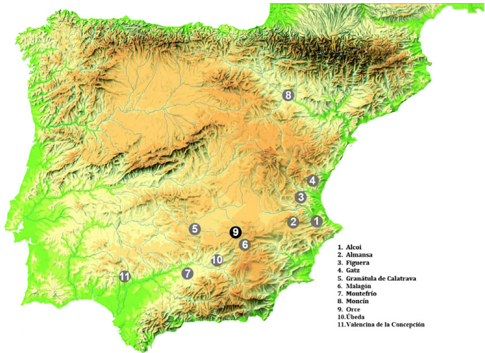
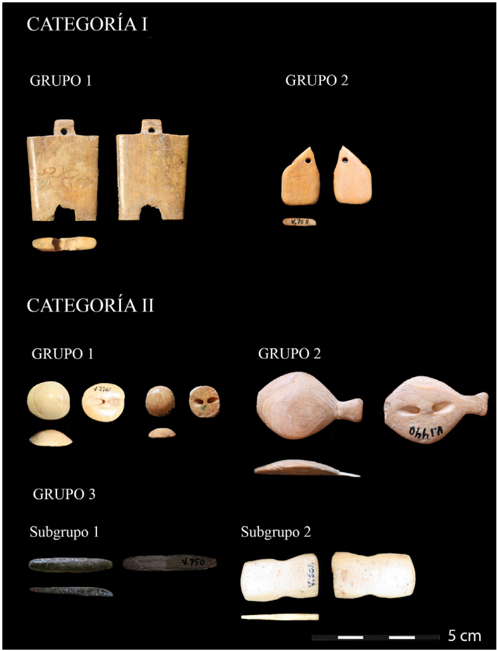
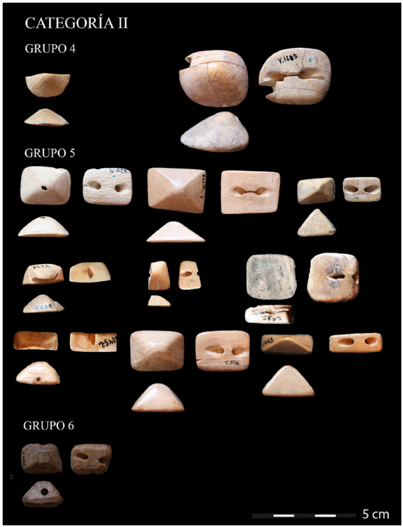
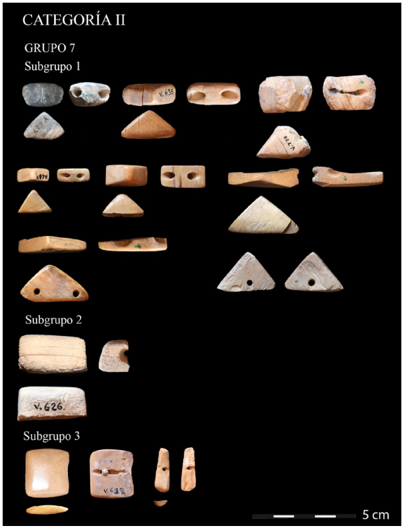
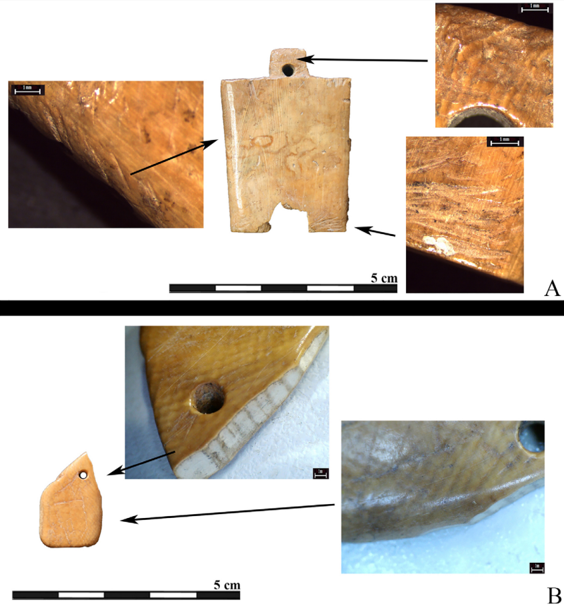
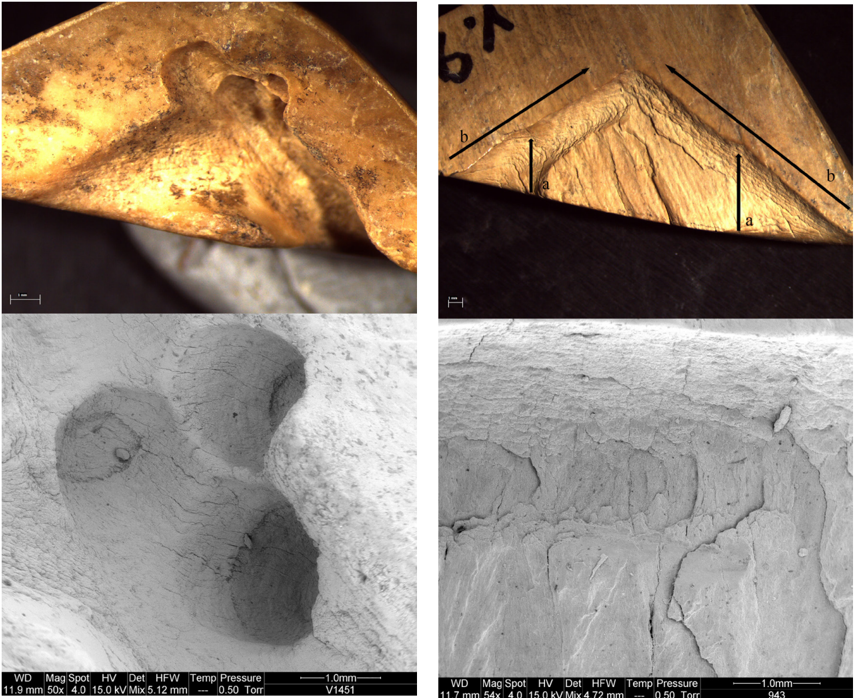
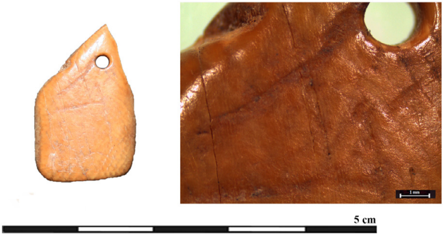
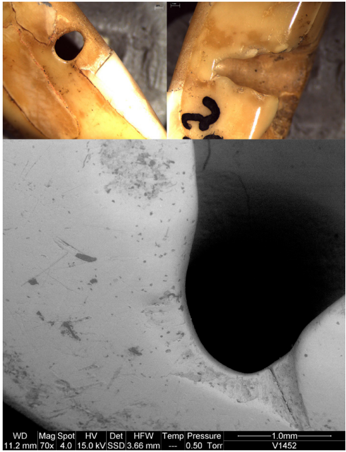
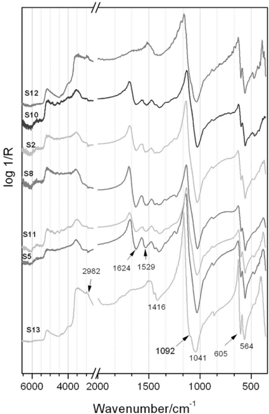
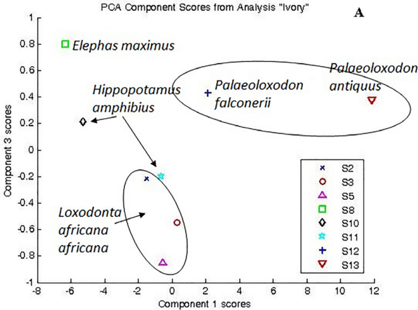
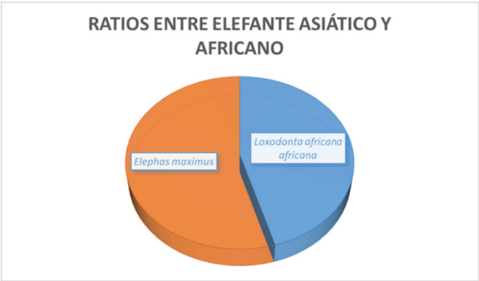
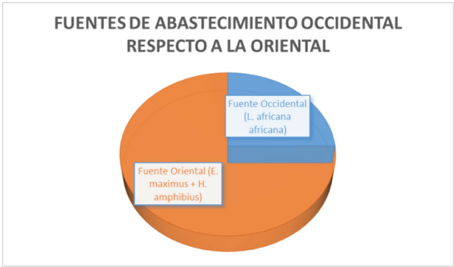
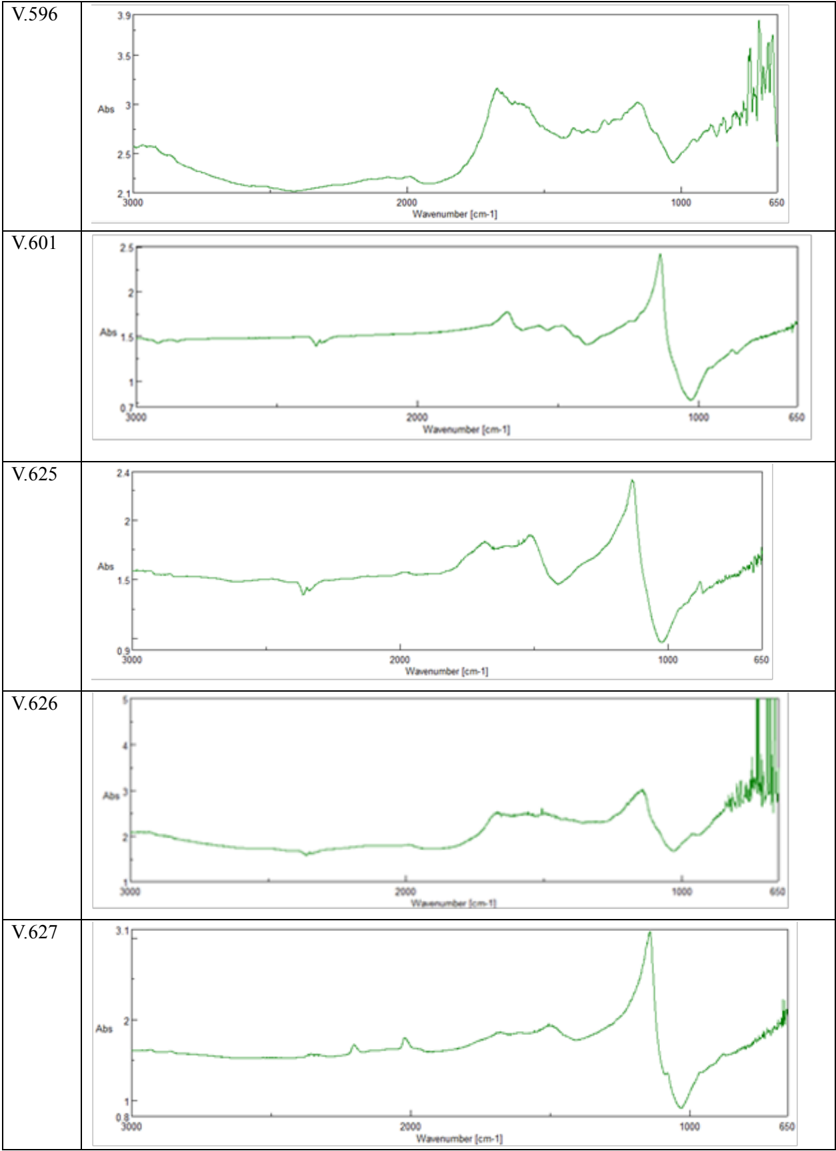
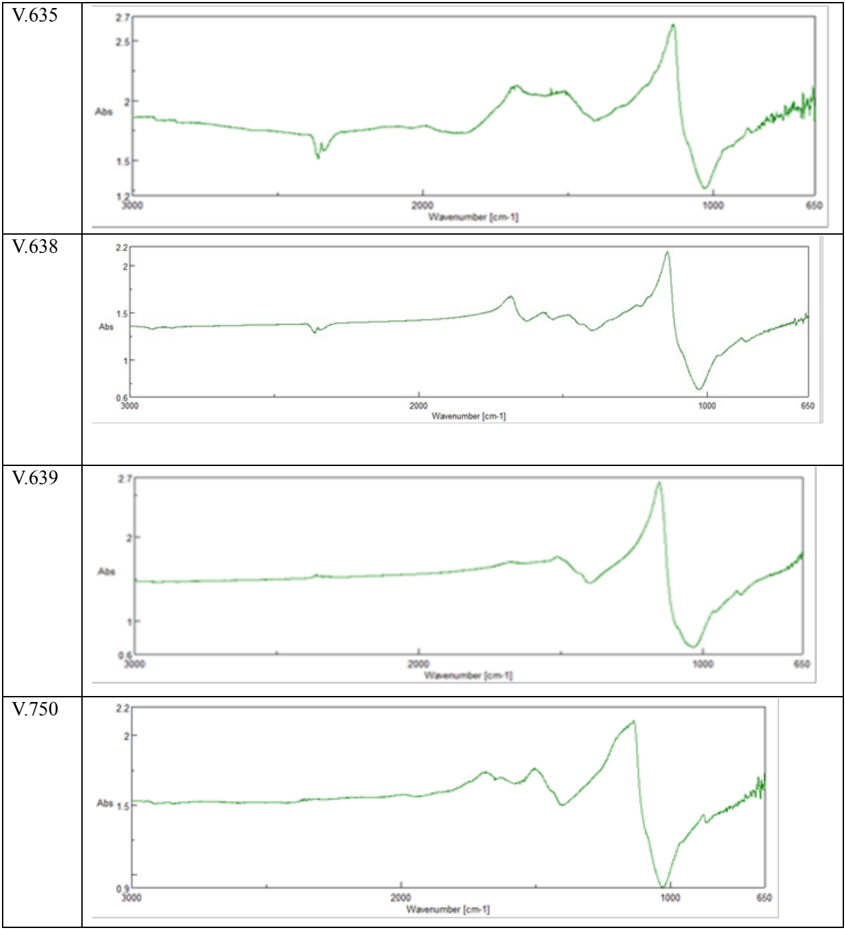
En el presente trabajo se ha estudiado la totalidad (31) de los objetos en marfil recuperados en el Cerro de la Virgen (Orce, Gramada) durante las intervenciones arqueológicas realizadas entre 1963 y 1970. Se ha llevado a cabo el estudio morfo-tipológico, la caracterización de la materia prima y el análisis traceológico. Se han identificado 2 categorías diferentes de adornos (colgantes y botones), en algunos casos con subdivisiones. Se pueden sugerir diferencias temporales con el aumento de la variabilidad en momentos campaniformes (fase 2) y la presencia de algunas formas sólo en determinadas fases. Se han identificado principalmente las últimas fases de manufactura y procesos de reparación, y el análisis traceológico apoya la relación de los denominados “botones” con la vestimenta. En cuanto a la materia prima, el estudio óptico ha podido determinar el uso de marfil de elefante y de hipopótamo, además de elementos realizados sobre muestras de cetáceos y jabalíes. A través de FTIR se ha podido discriminar entre marfil de elefante asiático y africano. Frente a lo constatado en otros yacimientos, el uso de marfil de hipopótamo se constata desde el inicio de la ocupación en un momento precampaniforme y el marfil de elefante asiático sigue utilizándose hasta el Bronce Antiguo.
Overview
The claims and statistics of this paper haven’t been checked yet.
Run the check — free, no account needed. It reads the open-access text and checks the sources it cites.
Integrity signals
Registry
Cites
Statistics
Figures
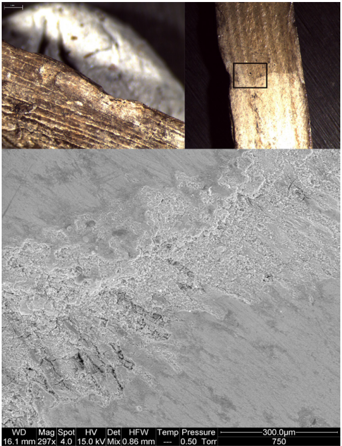
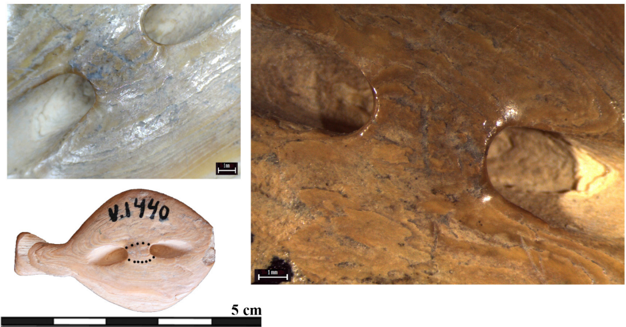
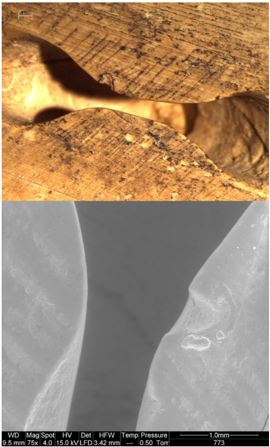
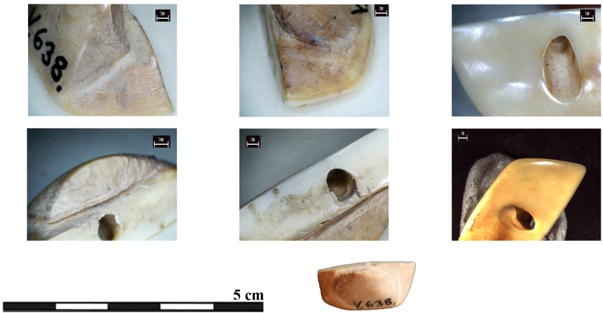
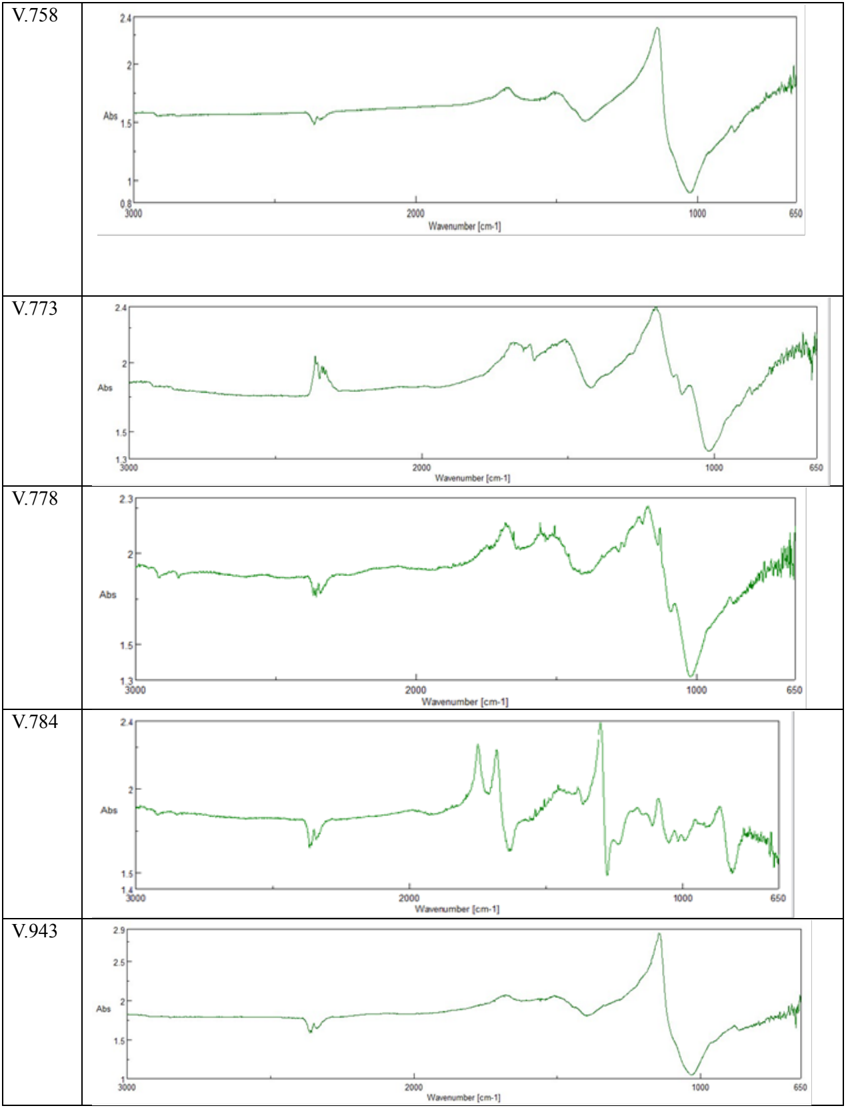
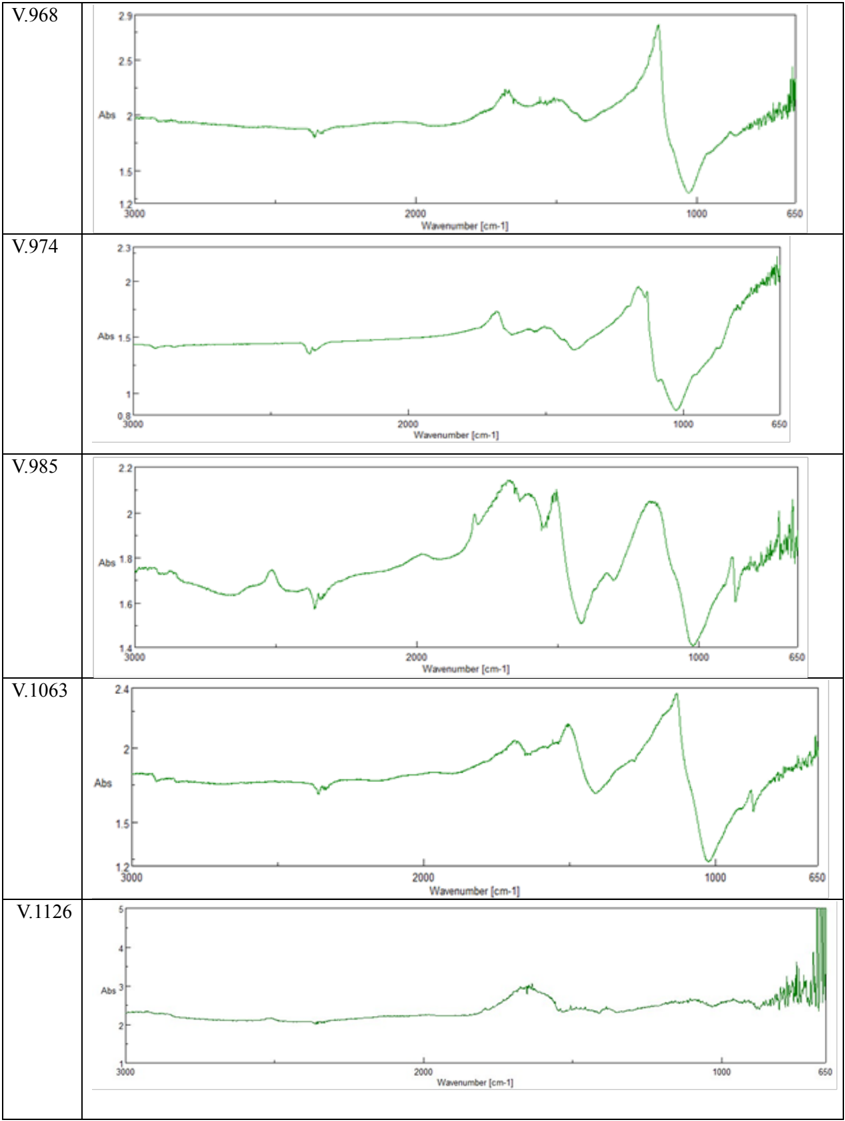
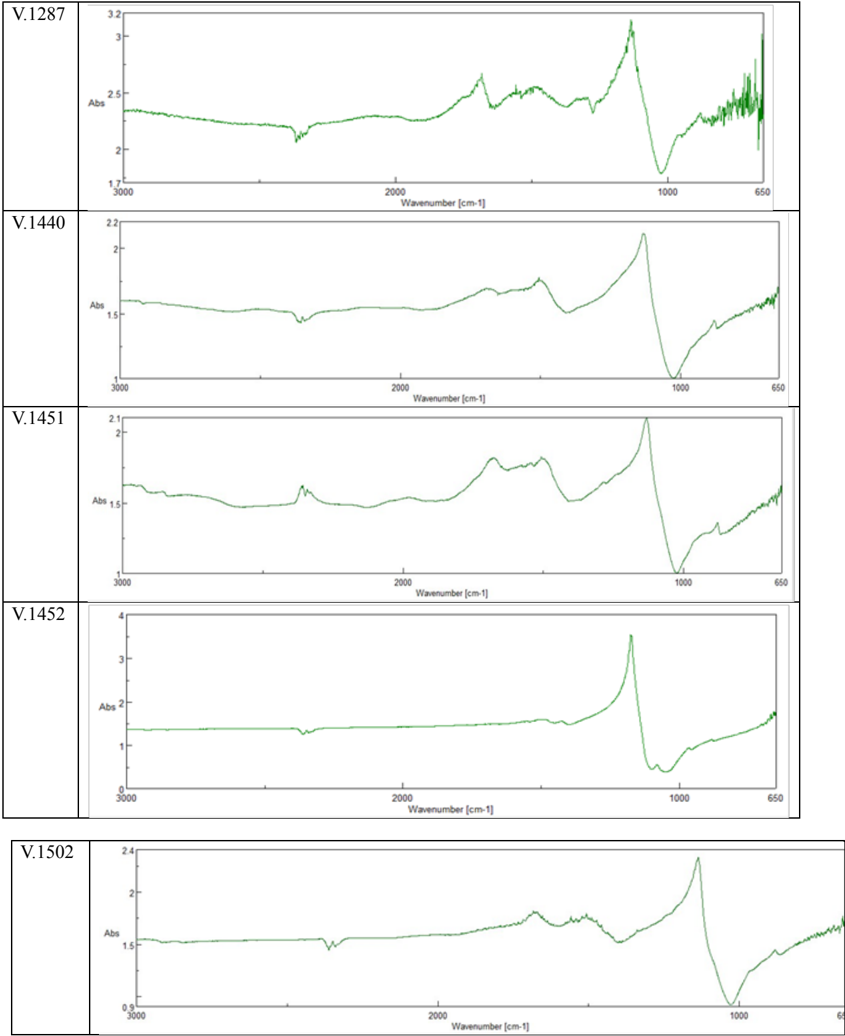
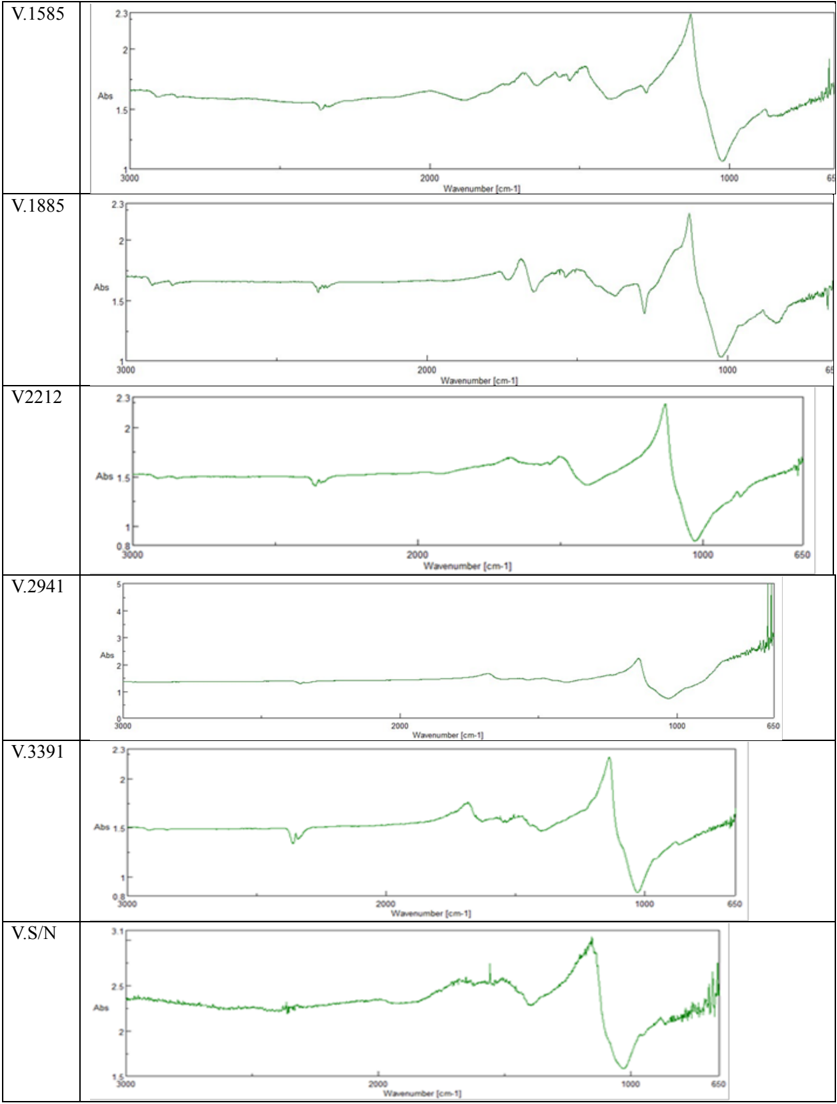
Verification
Claims the paper makes
The claims and statistics of this paper haven’t been checked yet.
Run the check — free, no account needed. It reads the open-access text and checks the sources it cites.
Claims other papers make about this one
Each is checked against this paper’s own text: does it say what the citing paper says it does?
The cited source doesn’t support the claim as written.
In the citing paper
“Interestingly, during the Chalcolithic, most of the elephant ivory present in this area is of Asian elephant origin (E.maximus), with African elephant ivory appearing only in the Early Bronze Age (Schuhmacher 2011), along with hippopotamus ivory (Pau et al 2018).”
From Modelling land and water based movement corridors in the western Mediterranean: a least cost path analysis from chalcolithic and early bronze age ivory records (2024) · cites this paper as Pau et al 2018
Checked by a reasoning model — may be wrong.
Experimental — accuracy not yet measured
Self-check
Percentages, sums and reported differences re-computed from the paper’s own numbers.
The self-check needs the paper’s full text.
Citations
Cites
The mammals of Africa: an identification manual
Meester, J., & Setzer, H. W. (1971) · Zenodo (CERN European Organization for Nuclear Research) · doi:10.5281/zenodo.13500639 · Cited by 490
Bulletin of the Institute of Classical Studies
University of London (2020) · Bulletin of the Institute of Classical Studies · doi:10.1111/(issn)2041-5370 · Cited by 382
Centre National de la Recherche Scientifique, Paris
Surrallés, A. (2016) · Cited by 166
Locke, M. (2007) · Journal of Morphology · doi:10.1002/jmor.10585 · Cited by 103
Sourcing African ivory in Chalcolithic Portugal
Schuhmacher, T. X., Cardoso, J. L., & Banerjee, A. (2009) · Antiquity · doi:10.1017/s0003598x00099294 · Cited by 82
Discriminating Proboscidean Taxa Using Features of the Schreger Pattern in Tusk Dentin
Trapani, J., & Fisher, D. C. (2003) · Journal of Archaeological Science · doi:10.1006/jasc.2002.0852 · Cited by 70
The History and Significance of the Schreger Pattern in Proboscidean Ivory Characterization
Espinoza, E. O., & Mann, M.-J. (1993) · Journal of the American Institute for Conservation · doi:10.1179/019713693806124866 · Cited by 68
Mapping the Elephants of the 19th Century East African Ivory Trade with a Multi-Isotope Approach
Coutu, A. N., Lee‐Thorp, J. A., Collins, M. J., et al. (2016) · PLoS ONE · doi:10.1371/journal.pone.0163606 · Cited by 56
Nocete, F., Vargas, J. M., Schuhmacher, T. X., Banerjee, A., & Dindorf, W. (2013) · Journal of Archaeological Science · doi:10.1016/j.jas.2012.10.028 · Cited by 47
Histogenesis of the unique morphology of proboscidean ivory
Virág, A. (2012) · Journal of Morphology · doi:10.1002/jmor.20069 · Cited by 46
Edwards, H. G. M., Hassan, N. F. N., & Arya, N. (2006) · Journal of Raman Spectroscopy · doi:10.1002/jrs.1458 · Cited by 39
La utilización de marfil de cachalote en el Calcolítico de Portugal
Schuhmacher, T. X., Banerjee, A., Dindorf, W., Sastri, C. S., & Sauvage, T. (2013) · Trabajos de Prehistoria · doi:10.3989/tp.2013.12109 · Cited by 36
Valera, A. C., Schuhmacher, T. X., & Banerjee, A. (2015) · World Archaeology · doi:10.1080/00438243.2015.1014571 · Cited by 28
The Anatolian Middle Bronze Age kingdoms and Alalakh: Mukish, Kanesh and trade
Yener, K. A. (2007) · Anatolian Studies · doi:10.1017/s0066154600008577 · Cited by 20
Las sepulturas del Cerro de la Virgen (Orce, Granada). Diferencias cronológicas y sociales.
González, F. R. M., Serrano, J. A. C., Marrero, J., & Colino, T. N. (2014) · Revista Atlántica-Mediterránea de Prehistoria y Arqueología Social · doi:10.25267/rev_atl-mediterr_prehist_arqueol_soc.2014.v16.13 · Cited by 15
Le Dolmen E 136 du groupe de Monpalais, commune de Taizé (Deux-Sèvres)
Hébras, C. (1965) · Bulletin de la Société préhistorique française Études et travaux · doi:10.3406/bspf.1965.4020 · Cited by 10
El poblado del Bronce antiguo en el Cerro de la Virgen de Orce (Granada) y su acequia de regadío
Schüle, G. (1966) · Dialnet (Universidad de la Rioja) · Cited by 10
Arnal, J. (1954) · Bulletin de la Société préhistorique française · doi:10.3406/bspf.1954.3094 · Cited by 8
El poblado del cerro de la Virgen de Orce (Granada)
Kalb, F. (1969) · Dialnet (Universidad de la Rioja) · Cited by 6
Restos óseos de animales del Cerro de la Virgen, en Orce, y del Cerro del Real , en Galera (Granada)
Boessneck, J. (1966) · Noticiario arqueológico hispánico · Cited by 5
Boutons perforés en V du Chalcolithique pyrénéen
Guilaine, J. (1963) · Bulletin de la Société préhistorique française · doi:10.3406/bspf.1963.3959 · Cited by 3
Pau, C. (2015) · Revista Atlántica-Mediterránea de Prehistoria y Arqueología Social · doi:10.25267/rev_atl-mediterr_prehist_arqueol_soc.2015.v17.23 · Cited by 1
Self-citation
Research works printed but not linked: 17
- Arnal, J. (1973): Sur les Dolmens et Hypogées des Pays Latins: Les V-Boutons. Megalithic Graves and Ritual. Papers presented at the III Atlantic Colloquium (G. Daniel, P. Kjaerum, eds.), Jutland Archaeological Society, Publications XI, Kobenhavn: 221-227.
- Banerjee, A. y Huth, J. (2012): Investigation of Archaeological Ivory. Elfenbeinstudien. Faszikel 1: Marfil y elefantes en la Península Ibérica y el Mediterráneo occidental. Actas del coloquio internacional en Alicante el 26 y 27 de noviembre 2008 (A. Banerjee, J.A. López Padilla, T.X. Schumacher, eds.). Iberia Archaeologica, 16, 1, Mainz: 15-28.
- Becker, H. y Brandherm, D. (2010): Eine Testmessung zur magnetischen Prospektion am Cerro de la Virgen 1998 (Prov. Granada, Spanien). Beiträger zur Vor- und Frühgeschichte der Iberischen Halbinsel und Mittleleuropas. Studien in honorem Philine Kalb (T. Armbruester y M. Hegewish, eds.), Studien zur Archäologie Europas 11, Verlag Dr. Rudolf Habelt GmbH, Bonn: 267-272.
- Cámara, J.A. y Molina, F. (2009): El análisis de la ideología de emulación: el caso de El Argar. Cuadernos de Prehistoria y Arqueología de la Universidad de Granada, 19: 163-194. · DOI
- Delgado, S. (2013): Tecnología y distribución espacial del material macrolítico del Cerro de la Virgen de Orce (Granada). Campañas 1963-1970: una aproximación paleoecónomica. BAR International Series, 2518, Archaeopress, Oxford.
- García, L., Luciañez, M., Schuhmacher, T., Wheatley, D. y Banerjee, A. (2013): Ivory Craftsmanship, Trade and Social Significance in the Southern Iberian Copper Age: The Evidence from the PP4-Montelirio Sector of Valencina de la Concepción (Seville, Spain). European Journal of Archaeology, 16-4: 610- 635.
- Gonçalves, V. S. (ed.) (2005): Cascais há 5000 anos. Cascáis Camara Municipal, Uniarq, Cascáis.
- Harrison, R. J. (1977): The bell beakers cultures of Spain and Portugal. Peabody museum of Archaeology and Ethonology, Harvard University, Cambridge.
- Hopf, M., (1991b): Kulturpflanzenreste aus der Sammlung Siret in Brüssel. Die Funde der Südostspaniscehn Bronzezeit aus der Sammlung Siret Ph. Von Zabern, (H. Schubart, H.Ulreic, eds.), Madrider Beitrage, 17, Zabern, Mainz: 397-413.
- Mérida, V. (1997): Manufacturing proces of V-perforated ivory buttons. Preceedings of the 1993 Bone Modification Conference, Hot Springs, South Dakota (L. Hannus, L. Rossum, R. Winham, eds.), Occasional Publication 1, Archeology Laboratory, Augustana College, Sioux Falls: 1-11.
- Molina, F., Cámara, J.A., Dorado, A. y Villarroya, M. (2017): El fenómeno campaniforme en el Sudeste de la Península Ibérica: el caso del Cerro de la Virgen (Orce, Granada). Sinos e taças. Junto ao Oceano e mais longe. Aspectos da presença campaniforme na Península Ibérica (V.S. Gonçalves y A.C. Sousa, eds.), Lisboa: 112-129.
- Palombo, M. R. y Villa, P. (2001): Schreger lines as support in the Elephantinae identification. The World of Elephants (G. Cavarretta, P. Gioia, V. Mussi, M.R. Palombo, eds.), Consiglio Nazionale delle Ricerche: 656-660.
- Peyronel, L. (2016): Bone and ivory manufacturing at Ebla (Syria) during the Early and Middle Bronze Age (c. 2500–1600 BC). Levant. The Journal of the Council for British Research in the Levant, 48- 2: 184-196.
- Rovira, S., Montero, I. y Consuegra, S. (1997): Cerro de la Virgen. Las primeras etapas metalúrgicas en la Peninsula Iberica I: Analisis de materiales (S. Rovira, I. Montero y S. Consuegra, eds.), Instituto Universitario Ortega y Gasset, Madrid: 206-208.
- Schüle, W. (1976): Die frühmittelalterliche Siedlung auf dem Cerro de la Virgen in Orce (Granada). Glockenbecher symposium, Bussum: 419-421.
- Schuhmacher, T. X. (2011): Elfenbein des Chalkolithikums und der Frühen Bronzezeit auf der iberischen Halbinsel: Ergebnisse einer interdisziplinären Forschungsprojekts. Elfenbein und Archäologie, INCETIUS Tagungsbeiträge 2004-2007, (A. Banerjee, C. Eckmann, eds.), RGZM 7, Mainz: 91-122.
- Schuhmacher, T. (2012): El marfil en España desde el Calcolítico al Bronce Antiguo. Elfenbeinstudien. Faszikel 1: Marfil y elefantes en la Península Ibérica y el Mediterráneo occidental. Actas del coloquio internacional en Alicante el 26 y 27 de noviembre 2008 (A. Banerjee, J.A. López Padilla y T.X. Schu¬macher, Eds.). Iberia Archaeologica, 16:1. Deutsches Archäologisches Institut/Diputación de alicante/ MARQ. Museo Arqueológico de Alicante, Verlag Philipp von Zabern, Mainz: 45-68.
Cited by
Bilotti, G., Kempf, M., & Morillo Leon, J. M. (2024) · Archaeological and Anthropological Sciences · doi:10.1007/s12520-024-02029-x · Cited by 18
Metadata
- Authors
- Pau, C., Morillo León, J. M., Cámara Serrano, J. A., & Molina González, F.
- Venue
- Complutum
- Published
- 1970-01-01
- Volume
- 29
- Issue
- 2
- Pages
- 267-298
- ISSN
- 1988-2327
- 1131-6993
- Cited by
- 11
- References
- 22
About these checks
Registry, retraction, Cites and statistics results are computed, not judged, with one exception: a printed reference that no index lists is read once by a model before it counts as a citation error. Claims are extracted by a model and kept only when their quote appears verbatim in the text; each cited source is then checked, with a model’s help, for whether it says what the claim relies on. Those verdicts can be wrong — read the claim’s quote and the cited source before relying on one.
Statistics and arithmetic are recomputed, not judged.
Confidence bands are shown only for fields calibrated on our annotated test set. None is calibrated yet, so no band is shown.
What counts as a claim ›How we measure confidence ›How we check this ›
Are you an author, or do you see a problem with this page? Request a review
Data sources
Bibliographic data: Semantic Scholar, OpenAlex, Crossref.
Contains information from the Semantic Scholar Academic Graph Datasets, made available under the ODC Attribution License (ODC-BY 1.0).
Semantic Scholar’s data is described in: Kinney, R., et al. (2023). The Semantic Scholar Open Data Platform. arXiv:2301.10140.
