

The DOI matches its Crossref record; 22 of the 22 references it cites were found in a registry or an index.
Predicting Psychiatric Hospitalizations among Elderly Veterans with a History of Mental Health Disease
Open accessAbstract
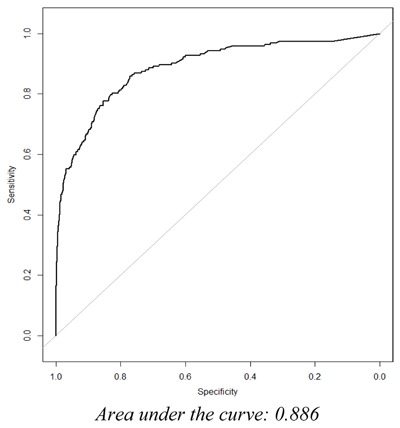
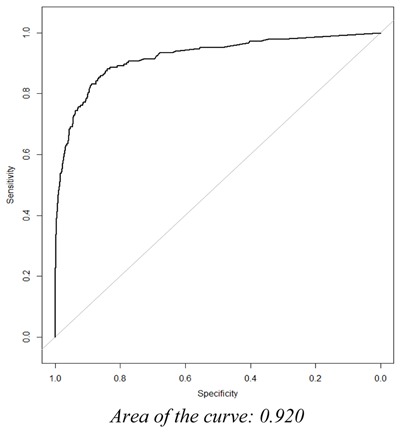
INTRODUCTION: Patient Aligned Care Team (PACT) care managers are tasked with identifying aging Veterans with psychiatric disease in attempt to prevent psychiatric crises. However, few resources exist that use real-time information on patient risk to prioritize coordinating appropriate care amongst a complex aging population. OBJECTIVE: To develop and validate a model to predict psychiatric hospital admission, during a 90-day risk window, in Veterans ages 65 or older with a history of mental health disease. METHODS: This study applied a cohort design to historical data available in the Veterans Affairs (VA) Corporate Data Warehouse (CDW). The Least Absolute Shrinkage and Selection Operator (LASSO) regularization regression technique was used for model development and variable selection. Individual predicted probabilities were estimated using logistic regression. A split-sample approach was used in performing external validation of the fitted model. The concordance statistic (C-statistic) was calculated to assess model performance. RESULTS: Prior to modeling, 61 potential candidate predictors were identified and 27 variables remained after applying the LASSO method. The final model's predictive accuracy is represented by a C-statistic of 0.903. The model's predictive accuracy during external validation is represented by a C-statistic of 0.935. Having a previous psychiatric hospitalization, psychosis, bipolar disorder, and the number of mental-health related social work encounters were strong predictors of a geriatric psychiatric hospitalization. CONCLUSION: This predictive model is capable of quantifying the risk of a geriatric psychiatric hospitalization with acceptable performance and allows for the development of interventions that could potentially reduce such risk.
Overview
The claims and statistics of this paper haven’t been checked yet.
Run the check — free, no account needed. It reads the open-access text and checks the sources it cites.
Integrity signals
Registry
Cites
Statistics
Figures
Verification
Claims the paper makes
The claims and statistics of this paper haven’t been checked yet.
Run the check — free, no account needed. It reads the open-access text and checks the sources it cites.
Claims other papers make about this one
Each is checked against this paper’s own text: does it say what the citing paper says it does?
The source backs part of the claim, not all of it — or backs it for a different population, condition or comparison.
In the citing paper
“the number of psychiatric hospitalizations has been used in other outcome studies55,56 of mental health conditions among veterans.”
From Treatment Engagement and Outcomes of Mindfulness-Based Cognitive Therapy for Veterans with Psychiatric Disorders (2019) · cites this paper as [56]
Experimental — accuracy not yet measured
Self-check
Percentages, sums and reported differences re-computed from the paper’s own numbers.
The self-check needs the paper’s full text.
Citations
Cites
Regression shrinkage and selection via the lasso
Tibshirani, R. (1996) · Journal of the Royal Statistical Society Series B: Statistical Methodology · doi:10.1111/j.2517-6161.1996.tb02080.x · Cited by 51,482
Regularization Paths for Generalized Linear Models via Coordinate Descent
Friedman, J., Hastie, T., & Tibshirani, R. (2010) · Journal of Statistical Software · doi:10.18637/jss.v033.i01 · Cited by 19,927
By the American Geriatrics Society 2015 Beers Criteria Update Expert Panel (2015) · Journal of the American Geriatrics Society · doi:10.1111/jgs.13702 · Cited by 2,609
Measuring Diagnoses: ICD Code Accuracy
O’Malley, K. J., Cook, K. F., Price, M. D., Wildes, K. R., Hurdle, J. F., & Ashton, C. M. (2005) · Health Services Research · doi:10.1111/j.1475-6773.2005.00444.x · Cited by 1,156
Medical Comorbidity in Schizophrenia
Jeste, D. V., Gladsjo, J. A., Lindamer, L. A., & Lacro, J. P. (1996) · Schizophrenia Bulletin · doi:10.1093/schbul/22.3.413 · Cited by 617
McNeish, D. (2015) · Multivariate Behavioral Research · doi:10.1080/00273171.2015.1036965 · Cited by 443
Insights From Advanced Analytics At The Veterans Health Administration
Fihn, S. D., Francis, J., Clancy, C. M., Nielson, C., Nelson, K. M., Rumsfeld, J. S., Cullen, T., Bates, J., & Graham, G. L. (2014) · Health Affairs · doi:10.1377/hlthaff.2014.0054 · Cited by 368
Wang, L., Porter, B., Maynard, C. C., Evans, G. A., Bryson, C. L., Sun, H., Gupta, I., Lowy, E., McDonell, M. B., Frisbee, K. L., et al. (2012) · Medical Care · doi:10.1097/mlr.0b013e31827da95a · Cited by 321
Medical comorbidity in schizophrenia
Lambert, T. J. R., Velakoulis, D., & Pantelis, C. (2003) · The Medical Journal of Australia · doi:10.5694/j.1326-5377.2003.tb05311.x · Cited by 252
Šprah, L., Dernovšek, M. Z., Wahlbeck, K., & Haaramo, P. (2017) · BMC Psychiatry · doi:10.1186/s12888-016-1172-3 · Cited by 217
Cited by
Sorted by citations
Reconciling Statistical and Clinicians’ Predictions of Suicide Risk
Simon, G. E., Matarazzo, B. B., Walsh, C. G., Smoller, J. W., Boudreaux, E. D., Yarborough, B. J. H., Shortreed, S. M., Coley, R. Y., Ahmedani, B. K., Doshi, R., et al. (2021) · Psychiatric Services · doi:10.1176/appi.ps.202000214 · Cited by 44
Marchand, W. R., Yabko, B., Herrmann, T., Curtis, H., & Lackner, R. (2019) · The Journal of Alternative and Complementary Medicine · doi:10.1089/acm.2018.0511 · Cited by 17
Gould, C. E., Carlson, C., Alfaro, A. J., TRIVEDI, R. B., Savell, A. D., Mehta, P. S., Burningham, Z. R., Peeples, A., & Filips, J. (2023) · American Journal of Geriatric Psychiatry · doi:10.1016/j.jagp.2023.01.005 · Cited by 11
Self-citation
Metadata
- Authors
- Burningham, Z., Leng, J., Peters, C. B., Huynh, T., Halwani, A., Rupper, R., Hicken, B., & Sauer, B. C.
- Affiliations
- University of Utah (US)
- VA Salt Lake City Healthcare System (US)
- Corresponding author
- Burningham, Zachary
- Venue
- eGEMs (Generating Evidence & Methods to improve patient outcomes)
- Publisher
- Ubiquity Press, Ltd.
- Published
- 2018-05-17
- Volume
- 6
- Issue
- 1
- Pages
- 7
- ISSN
- 2327-9214 (ISSN-L)
- PMC
- PMC5982950
- OpenAlex
- W2803719419
- Cited by
- 3
- References
- 22
- Citations by year
- 2023: 1 · 2021: 1 · 2019: 1
- FWCI
- 0.59
- Type
- journal article
- Language
- en
- Open access
- diamond
- doi.org
- Locations
- eGEMs (Generating Evidence & Methods to improve patient outcomes) (publishedVersion, cc-by)
- Europe PMC (PubMed Central) (publishedVersion, cc-by)
- PubMed Central (publishedVersion, cc-by)
- PubMed (publishedVersion)
- Topics
- Social Sciences › Psychology › Clinical Psychology › Psychiatric care and mental health services
- Health Sciences › Medicine › Psychiatry and Mental health › Mental Health Treatment and Access
- Physical Sciences › Computer Science › Artificial Intelligence › Machine Learning in Healthcare
- Keywords
- psychiatric hospitalization, geriatric mental health, older veterans, risk prediction model, Patient Aligned Care Team, psychosis, bipolar disorder, LASSO, external validation
About these checks
Registry, retraction, Cites and statistics results are computed, not judged, with one exception: a printed reference that no index lists is read once by a model before it counts as a citation error. Claims are extracted by a model and kept only when their quote appears verbatim in the text; each cited source is then checked, with a model’s help, for whether it says what the claim relies on. Those verdicts can be wrong — read the claim’s quote and the cited source before relying on one.
Statistics and arithmetic are recomputed, not judged.
Confidence bands are shown only for fields calibrated on our annotated test set. None is calibrated yet, so no band is shown.
What counts as a claim ›How we measure confidence ›How we check this ›
Are you an author, or do you see a problem with this page? Request a review
