

The DOI matches its Crossref record.
A Data-Driven Framework For Real-Time Fraud Detection In Financial Transactions Using Machine Learning And Big Data Analytics
Open accessAbstract
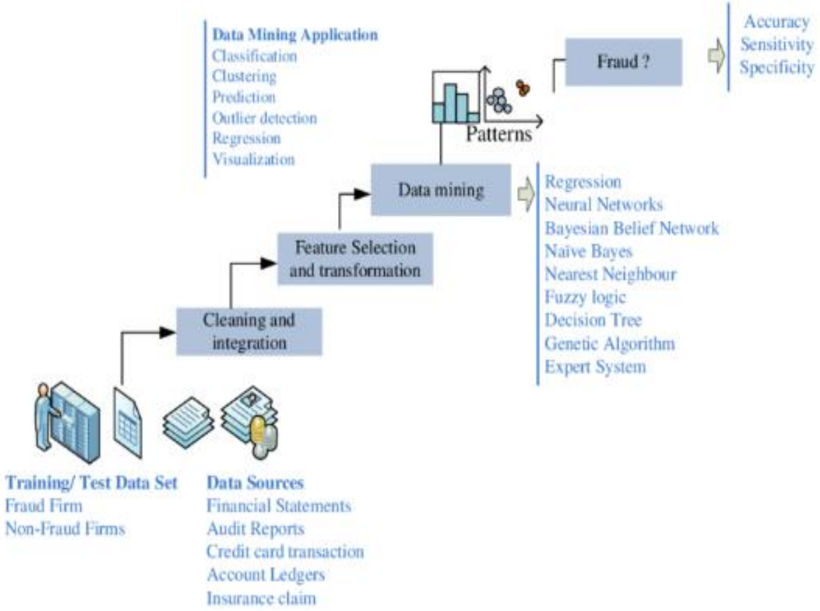
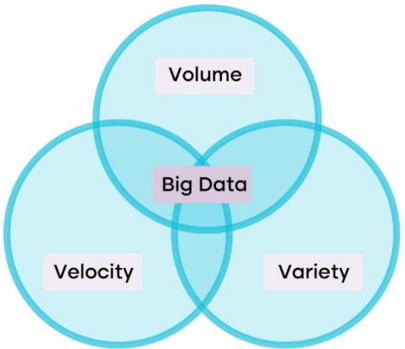
The rapid growth of electronic commerce and the gradual increase in customer confidence in the security of electronic payments have led to a persistent increase in the number of on-line transactions in the past years. Credit and debit cards account for the majority of the on-line payments. Consequently, the credit card financial ecosystem growth has been accompanied by a similar growth of illicit actions, by which con-men try to benefit from this huge financial exchange. Fraud detection is critical for credit institutions, merchants, and national services to minimize money losses. In recent years, several initiatives to enhance systems aimed at detecting fraudulent credit card transactions have been taken. Detecting fraud is very challenging since machine learning approaches rely on training sets limited to the observations that were available at the moment of the training. The newly triggered events, which were never observed in the training phase, can lead to severe issues such as alarm fatigue, in which frauds are detected only after a large amount of incurred losses. Detecting fraud requires applying scalable learning techniques able to analyze the huge amount of streaming data generated by the transactions and able to mitigate the two main situations complicating the problem: the class imbalance and the concept drift since the world evolves and consequently the fraud patterns change. The need to detect frauds in real-time gives rise to several challenges. Recent advances in analytics, and the availability of open source solutions for storage, processing, and analytics of Big Data, have opened new perspectives for the real-time detection of frauds in massive amounts of transactions. In this paper, the SCAlable Real-time Fraud Finder (SCARFF) framework is presented. SCARFF is a distributed (anomaly) detection machine learning approach for the fraud detection that integrates Big Data tools both for the massive storage and processing of the transactions and for the predictive analysis. SCARFF makes a contribution to the literature in four directions. First, the integration of the Hadoop and Spark ecosystems and of the sophisticated learning approach, addressing the inherent problems of imbalance, nonstationarity, and feedback latency, is a unique contribution. Second, the capability of handling a never-seen-before massive dataset of real credit card transactions is a unique achievement. Third, the formal description of the methods implemented to tackle data imbalance in real-time is presented. Fourth, the implementation in real-time of an ensemble learning engine capable of detecting credit card frauds at the rate of records−1, with large computational savings compared to batch implementations, is a further unique achievement.
Overview
The claims and statistics of this paper haven’t been checked yet.
Run the check — free, no account needed. It reads the open-access text and checks the sources it cites.
Integrity signals
Registry
Cites
Statistics
Figures
Verification
Claims the paper makes
The claims and statistics of this paper haven’t been checked yet.
Run the check — free, no account needed. It reads the open-access text and checks the sources it cites.
Claims other papers make about this one
Each is checked against this paper’s own text: does it say what the citing paper says it does?
The check wasn’t confident either way, so it gives no verdict — never disputed.
In the citing paper
“The geographic classification is employed to categorize regions due to differences in economic and social activities across provinces, as well as variance in cancer occurrences between urban and rural areas [16].”
From Multi-Policy Synergies: A Data-Driven Analysis of Consumer Behavior and Cross-Selling Strategies in Auto, Home, Life, And Umbrella Insurance (2023) · cites this paper as [16]
Experimental — accuracy not yet measured
Self-check
Percentages, sums and reported differences re-computed from the paper’s own numbers.
The self-check needs the paper’s full text.
Citations
Cites
Still being checked.
Cited by
Arzu, F., Bajwa, M. K. Z., Obaidullah, Waheed, A., Alam, F., Ali, M., & Khan, A. (2025) · The Asian Bulletin of Big Data Management · doi:10.62019/f3c0g313 · Cited by 7
Singireddy, S. (2023) · Journal for ReAttach Therapy and Developmental Diversities · doi:10.53555/jrtdd.v6i10s(2).3600 · Cited by 1
Metadata
- Authors
- Malempati, M.
- Corresponding author
- Malempati, Murali
- ORCID
- Malempati, Murali
- Venue
- Journal for ReAttach Therapy and Developmental Diversities
- Publisher
- Green Publication
- Published
- 2023
- ISSN
- 2589-7799 (ISSN-L)
- OpenAlex
- W4409812411
- Cited by
- 32
- References
- 0
- Citations by year
- 2026: 3 · 2025: 9 · 2024: 2 · 2023: 17
- FWCI
- 2.74
- Type
- journal article
- Language
- en
- Open access
- diamond
- doi.org
- Licence
- cc-by-nc
- Locations
- Journal for ReAttach Therapy and Developmental Diversities (publishedVersion, cc-by-nc)
- SSRN Electronic Journal (acceptedVersion)
- Journal for ReAttach Therapy and Developmental Diversities (publishedVersion)
- Topics
- Physical Sciences › Computer Science › Artificial Intelligence › Imbalanced Data Classification Techniques
- Physical Sciences › Computer Science › Artificial Intelligence › Anomaly Detection Techniques and Applications
- Physical Sciences › Computer Science › Artificial Intelligence › Privacy-Preserving Technologies in Data
- Keywords
- credit card fraud detection, real-time fraud detection, data streams, big data analytics, Hadoop, Apache Spark, class imbalance, concept drift, ensemble learning, anomaly detection, distributed learning, online payment
About these checks
Registry, retraction, Cites and statistics results are computed, not judged, with one exception: a printed reference that no index lists is read once by a model before it counts as a citation error. Claims are extracted by a model and kept only when their quote appears verbatim in the text; each cited source is then checked, with a model’s help, for whether it says what the claim relies on. Those verdicts can be wrong — read the claim’s quote and the cited source before relying on one.
Statistics and arithmetic are recomputed, not judged.
Confidence bands are shown only for fields calibrated on our annotated test set. None is calibrated yet, so no band is shown.
What counts as a claim ›How we measure confidence ›How we check this ›
Are you an author, or do you see a problem with this page? Request a review
How to cite
Cite CoChat for the checks on this page, and the paper for its own findings.
- This page
- CoChat. (2026). Citation check: A Data-Driven Framework For Real-Time Fraud Detection In Financial Transactions Using Machine Learning And Big Data Analytics. https://app.cochat.ai/papers/10.53555/jrtdd.v6i10s(2).3563
- The paper
- Malempati, M. (2023). A Data-Driven Framework For Real-Time Fraud Detection In Financial Transactions Using Machine Learning And Big Data Analytics. Journal for ReAttach Therapy and Developmental Diversities. https://doi.org/10.53555/jrtdd.v6i10s(2).3563
