

Effects of Varicocele Repair on Testicular Endocrine Function: A Systematic Review and Meta-Analysis
Open accessThe DOI matches its Crossref record; 85 of the 85 references it cites were found in a registry or an index; none of the 43 sources its claims cite is checked for support yet.
Abstract
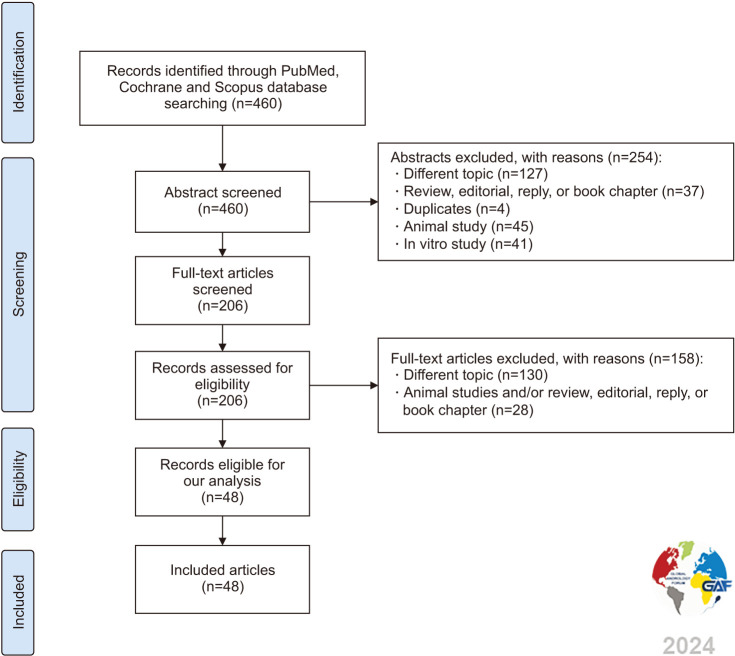
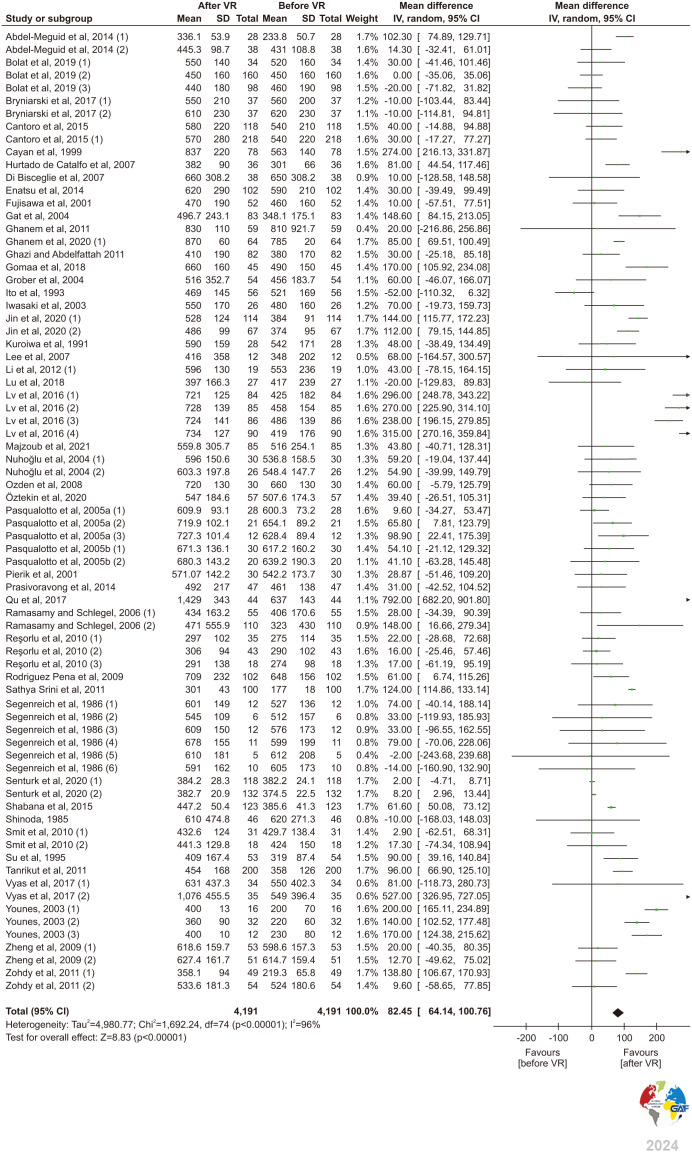
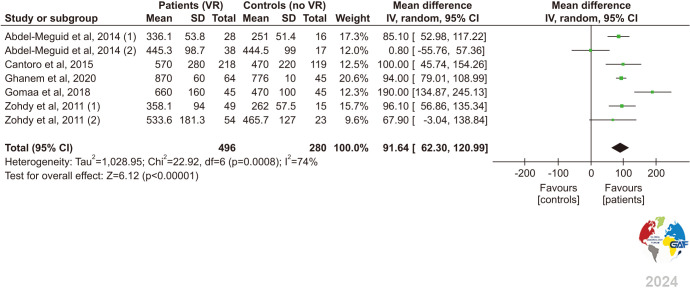
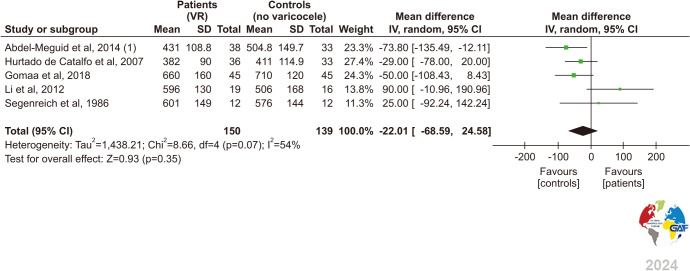
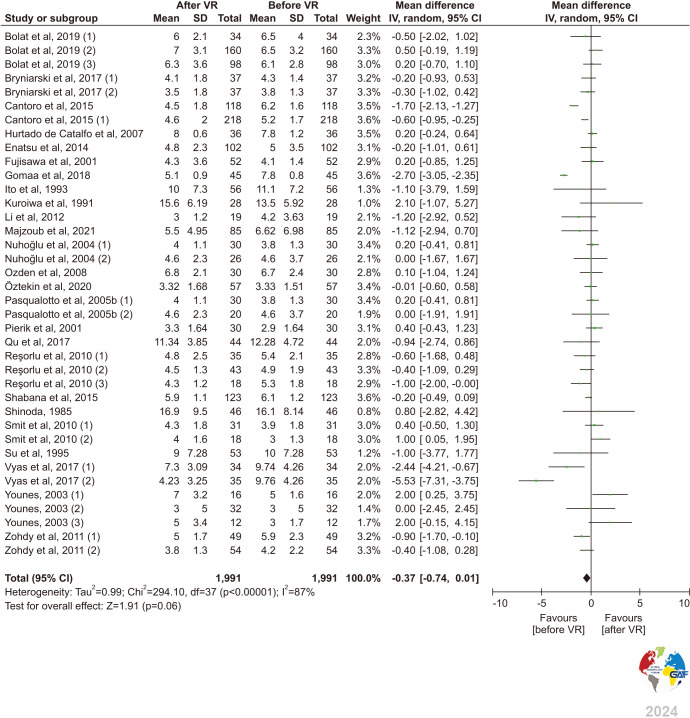
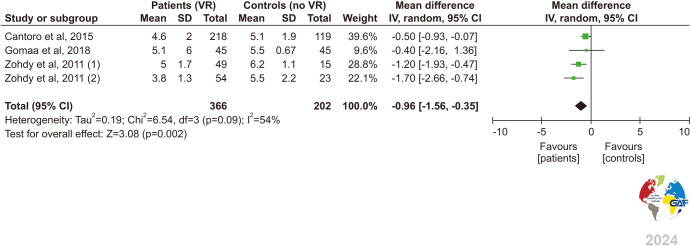
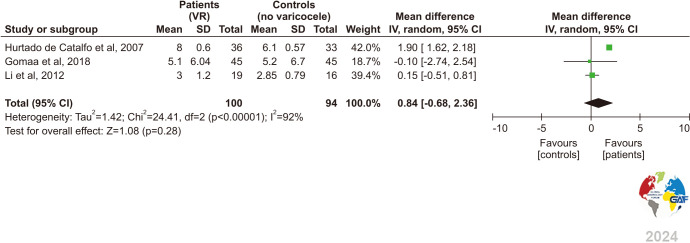
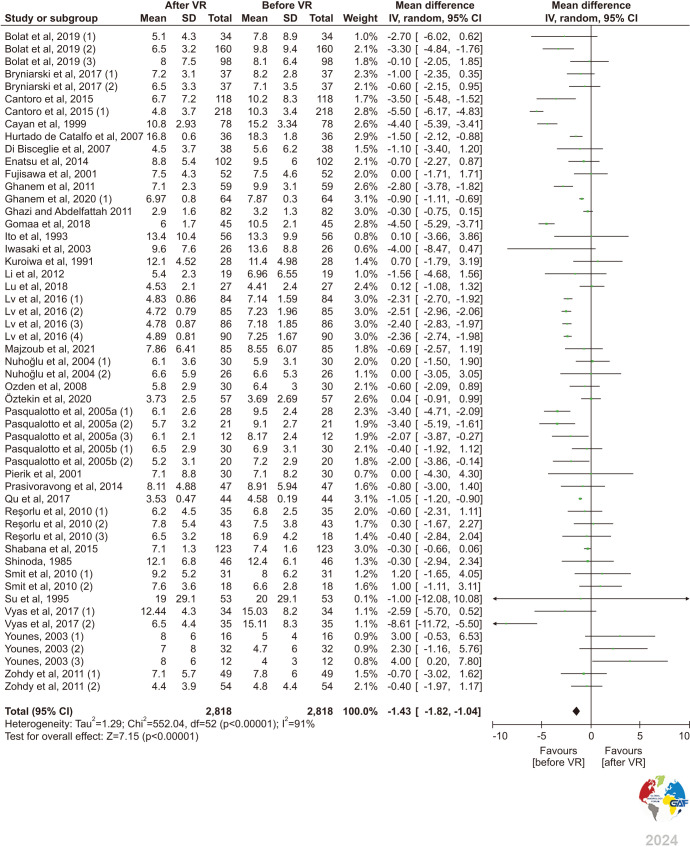
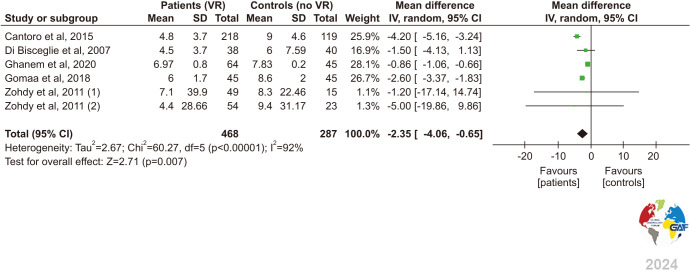
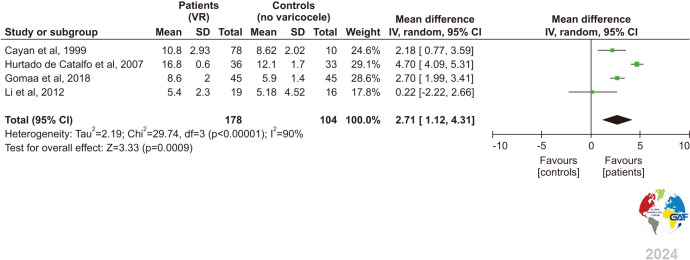
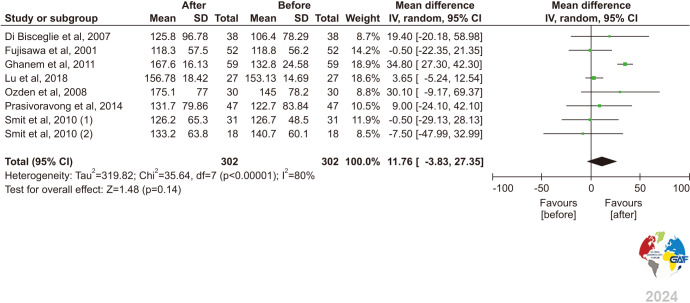
PURPOSE: The objective of this manuscript is to assess the effect of varicocele repair (VR) in patients with clinical varicoceles on serum total testosterone, luteinizing hormone (LH), follicle-stimulating hormone (FSH), and inhibin B serum levels. MATERIALS AND METHODS: The study was performed in compliance with the Meta-Analysis and Systematic Reviews of Observational Studies (MOOSE) guidelines and the Preferred Reporting Items for Systematic Review and Meta-Analysis Protocols (PRISMA-P). All eligible studies were selected following the PICOS (Population, Intervention, Comparison/Comparator, Outcomes, Study design) model. The values of each outcome measured after VR were compared to the before parameters and, when available, to the values on patients with unrepaired varicocele, and to those of healthy controls with no varicocele. For total testosterone, the values were sub-analyzed based on the mean total testosterone levels before VR (<300 ng/dL or >300 ng/dL), the fertility status, the time of follow-up and the technique used for VR. RESULTS: From a total of 460 abstracts retrieved, 48 articles were included in our meta-analysis. Serum total testosterone levels were significantly higher after VR compared to both pre-treatment levels (mean difference [MD] 82.45 ng/dL, 95% confidence interval [CI]: 64.14-100.76; p<0.00001) and to the levels of patients with unrepaired varicocele (MD 91.64 ng/dL, 95% CI: 62.30-120.99; p<0.00001). They did not differ from the levels of healthy controls with no varicocele (MD -22.01 ng/dL, 95% CI: -68.59-24.58; p=0.35). The increase resulted to be independent from the mean total testosterone levels before VR, fertility status, time of follow-up and type of VR. After VR, a trend toward lower serum LH levels was found compared to before values (MD -0.37 IU/L, 95% CI: -0.74-0.01; p=0.06). When compared to the levels of patients with unrepaired VR, LH levels after VR were significantly lower (MD -0.96 IU/L, 95% CI: -1.56 to -0.35; p=0.002). LH levels were not significantly higher than healthy men without varicocele (MD 0.84 IU/L, 95% CI: -0.68-2.36; p=0.28). Patients with VR had significantly lower FSH levels compared to their pre-treatment values (MD -1.43 IU/L, 95% CI: -1.82 to -1.04; p<0.00001), and also to those of patients with non-repaired varicocele (MD -2.35 IU/L, 95% CI: -4.06 to -0.65; p=0.007). When compared to healthy controls with no varicocele, FSH levels were significantly higher (MD 2.71 IU/L, 95% CI: 1.12-4.31; p=0.0009). Lastly, after VR no significant change in inhibin B serum levels was seen compared to pre-treatment levels (MD 11.76 pg/mL, 95% CI: -3.83-27.35; p=0.14). CONCLUSIONS: The present meta-analysis is the largest to date to assess the impact of VR on Leydig cell and Sertoli cell function using a before-after analysis for uncontrolled studies, and using data from patients with unrepaired varicoceles or healthy patients without varicocele as controls. VR was found to increase and restore to normality serum levels of total testosterone and LH. This evidence could be of value in considering the treatment of varicocele in patients with low testosterone or those who show a progressive decline in testosterone levels.
Overview
CoChat Summary
TL;DR
This systematic review and meta-analysis of 48 studies found that varicocele repair significantly increases serum total testosterone and lowers LH and FSH, with no significant change in inhibin B. It suggests varicocele repair can restore total testosterone and LH to levels comparable with healthy controls, while FSH remains higher than in healthy controls.
Key findings
- Total testosterone: after varicocele repair, levels were significantly higher than pre-treatment values (mean difference [MD] 82.45 ng/dL, 95% CI 64.14–100.76; p<0.00001; 48 studies, 4,191 patients) and higher than in patients with unrepaired varicocele (MD 91.64 ng/dL, 95% CI 62.30–120.99; p<0.00001; 5 studies, 496 vs. 280). They did not differ from healthy controls without varicocele (MD −22.01 ng/dL, 95% CI −68.59–24.58; p=0.35; 5 studies, 150 vs. 139).
- LH: after repair, there was a trend toward lower LH than before treatment (MD −0.37 IU/L, 95% CI −0.74–0.01; p=0.06; 26 studies, 1,991 patients); LH was significantly lower than in unrepaired varicocele controls (MD −0.96 IU/L, 95% CI −1.56 to −0.35; p=0.002; 3 studies, 366 vs. 202) and not significantly different from healthy controls (MD 0.84 IU/L, 95% CI −0.68–2.36; p=0.28; 3 studies, 100 vs. 94).
- FSH: after repair, FSH was significantly lower than before treatment (MD −1.43 IU/L, 95% CI −1.82 to −1.04; p<0.00001; 36 studies, 2,818 patients) and lower than in unrepaired varicocele controls (MD −2.35 IU/L, 95% CI −4.06 to −0.65; p=0.007; 5 studies, 468 vs. 287), but remained significantly higher than in healthy controls (MD 2.71 IU/L, 95% CI 1.12–4.31; p=0.0009; 4 studies, 178 vs. 104).
- Inhibin B: no significant change after repair versus pre-treatment values (MD 11.76 pg/mL, 95% CI −3.83–27.35; p=0.14; 7 studies, 302 patients).
Methods
- Systematic review and meta-analysis performed in compliance with MOOSE and PRISMA-P, using PICOS; searches in Scopus, PubMed, and Cochrane from 1970 to the present, including uncontrolled and controlled studies until November 2023 on men with clinical varicocele who underwent varicocele repair for infertility or hypogonadism and had total testosterone measured; excluded adolescents, subclinical varicocele, no varicocele repair, in vitro/animal studies, case reports, case series, and communications.
- From 460 retrieved abstracts, 206 full texts were screened, 158 were excluded, and 48 original articles were included; most were observational studies, with only four randomized controlled trials; follow-up duration ranged from 3 to 24 months.
- Meta-analysis used Comprehensive Meta-Analysis Software v3 and RevMan v5.4, with mean difference as effect size, Cochran’s Q and I² for heterogeneity, fixed- or random-effects models, one-study-removal sensitivity analysis, funnel plots/Egger’s test/trim-and-fill for publication bias, and sub-analyses for total testosterone by baseline mean testosterone (>300 vs. ≤300 ng/dL), fertility status, follow-up duration, and varicocele repair technique.
Limitations
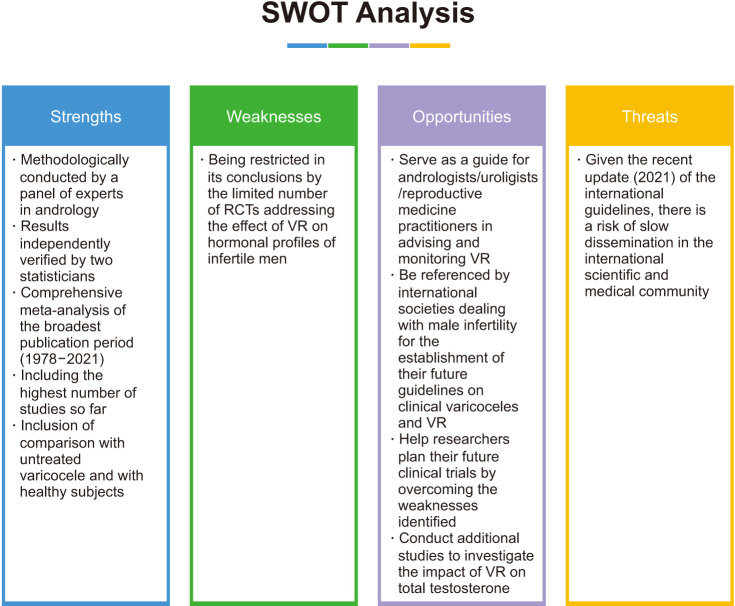
- Stated by the paper: results are limited by high heterogeneity and risk of publication bias among included studies, and by the scarcity of well-designed randomized controlled trials on this topic.
- Evident from the text: only four included studies were randomized controlled trials, while the majority were observational; the fertile subgroup had a low number of studies; testicular asymmetry or atrophy could not be sub-analyzed because testicular measurements were reported in only a few included articles.
- Evident from sensitivity analyses: one study was sensitive enough to change the conclusion that varicocele repair does not significantly decrease LH versus baseline, and one study was sensitive enough to alter the conclusion that total testosterone does not differ between repaired patients and healthy controls.
Model-written summary. Check it against the paper before relying on it.
Integrity signals
Registry
Cites
Statistics
Figures
Verification
Claims the paper makes
0 Valid · 1 Not valid · 35 Not checked · 63 Own results and interpretations
A result the paper reports from its own data — it cites no other source for it, so there is none to check. The quote shows it is in the paper.
In the paper
“at 6 (MD 47.75 ng/dL, 95% CI: 28.43 to 67.06; p<0.00001)”
§ Effects of Varicocele Repair on Testicular Endocrine Function: A Systematic Review and Meta-Analysis > RESULTS > 1. Total testosterone
plainstates a cause- Asserted: passes — The authors put it forward as true.
- Checkable: passes — It can be checked against evidence.
- Load-bearing: passes — The paper’s conclusions depend on it.
- Based: passes — The paper gives a reason why it holds.
A result the paper reports from its own data — it cites no other source for it, so there is none to check. The quote shows it is in the paper.
In the paper
“The increase resulted to be independent from the mean total testosterone levels before VR, fertility status, time of follow-up and type of VR.”
- Also stated in: § 1. Total testosterone · plain
“Subgroup analysis was also performed according to the fertility status, with no significant subgroup difference found.”
§ Effects of Varicocele Repair on Testicular Endocrine Function: A Systematic Review and Meta-Analysis > Abstract > Results
plain- Asserted: passes — The authors put it forward as true.
- Checkable: passes — It can be checked against evidence.
- Load-bearing: passes — The paper’s conclusions depend on it.
- Based: passes — The paper gives a reason why it holds.
- Also stated in: § 1. Total testosterone · plain
A result the paper reports from its own data — it cites no other source for it, so there is none to check. The quote shows it is in the paper.
In the paper
“the increase was significant in the non-microscopic ligation (MD 104.78 ng/dL, 95% CI: 72.30 to 137.26; p<0.0001)”
§ Effects of Varicocele Repair on Testicular Endocrine Function: A Systematic Review and Meta-Analysis > RESULTS > 1. Total testosterone
plainstates a cause- Asserted: passes — The authors put it forward as true.
- Checkable: passes — It can be checked against evidence.
- Load-bearing: unclear — It is unclear whether the paper’s conclusions depend on it.
- Based: passes — The paper gives a reason why it holds.
A result the paper reports from its own data — it cites no other source for it, so there is none to check. The quote shows it is in the paper.
In the paper
“and at 24 months (MD 49.89 ng/dL, 95% CI: 8.49 to 91.30; p=0.02)”
§ Effects of Varicocele Repair on Testicular Endocrine Function: A Systematic Review and Meta-Analysis > RESULTS > 1. Total testosterone
plainstates a cause- Asserted: passes — The authors put it forward as true.
- Checkable: passes — It can be checked against evidence.
- Load-bearing: passes — The paper’s conclusions depend on it.
- Based: passes — The paper gives a reason why it holds.
A result the paper reports from its own data — it cites no other source for it, so there is none to check. The quote shows it is in the paper.
In the paper
“The increase resulted to be independent from the mean total testosterone levels before VR, fertility status, time of follow-up and type of VR.”
- Also stated in: § 1. Total testosterone · plain
“The sub-analysis performed according to the time of follow-up (3, 6, 9, 12, 24 months) resulted in the absence of significant subgroup difference (chi2=2.78; p=0.60)”
§ Effects of Varicocele Repair on Testicular Endocrine Function: A Systematic Review and Meta-Analysis > Abstract > Results
plain- Asserted: passes — The authors put it forward as true.
- Checkable: passes — It can be checked against evidence.
- Load-bearing: passes — The paper’s conclusions depend on it.
- Based: passes — The paper gives a reason why it holds.
- Also stated in: § 1. Total testosterone · plain
52 more claims
Create a free account to see all 99 claims and to verify the 38 references still open.
- It may state two separate claims as one. 24
- Probably not a substantial claim. 24
Self-check
Percentages, sums and reported differences re-computed from the paper’s own numbers.
Each contradiction between two passages listed here was confirmed by an independent check.
Rated minor: it would not touch a result — a value no result rests on, a p-value that stays on the same side of the significance level, or a conflict that is clerical, resolved elsewhere in the paper, or outside its own findings.
In the paper
§ Effects of Varicocele Repair on Testicular Endocrine Function: A Systematic Review and Meta-Analysis > RESULTS > 2. Luteinizing hormone
“No evidence of inter-study heterogeneity was found, as indicated by the Q-test (Q-value: 6.5; p=0.09) and I2 statistics (I2=54.0%).”
§ Effects of Varicocele Repair on Testicular Endocrine Function: A Systematic Review and Meta-Analysis > MATERIALS AND METHODS > 5. Statistical analysis
“To check the heterogeneity across pooled studies, Cochran’s Q test and heterogeneity index (I2) were used with p<0.10 considered statistically significant [23]. I2 is the representator of heterogeneity and it generally lies between 0% and 100%, where <50% represents low-to-moderate heterogeneity and >50% suggests high heterogeneity [24].”
Citations
Cites
RoB 2: a revised tool for assessing risk of bias in randomised trials
Sterne, J. A. C., Savović, J., Page, M. J., Elbers, R. G., Blencowe, N. S., Boutron, I., Cates, C. J., Cheng, H.-Y., Corbett, M. S., Eldridge, S. M., et al. (2019) · BMJ · doi:10.1136/bmj.l4898 · Cited by 34,787
Meta-analysis of Observational Studies in Epidemiology<SUBTITLE>A Proposal for Reporting</SUBTITLE>
Stroup, D. F. (2000) · JAMA · doi:10.1001/jama.283.15.2008 · Cited by 20,623
Assessing the quality of reports of randomized clinical trials: Is blinding necessary?
Jadad, A. R., Moore, R. A., Carroll, D., Jenkinson, C., Reynolds, D. J. M., Gavaghan, D. J., & McQuay, H. J. (1996) · Controlled Clinical Trials · doi:10.1016/0197-2456(95)00134-4 · Cited by 17,582
CONSORT 2010 Statement: updated guidelines for reporting parallel group randomised trials
the CONSORT Group, Schulz, K. F., Altman, D. G., & Moher, D. (2010) · BMC Medicine · doi:10.1186/1741-7015-8-18 · Cited by 13,371
Shamseer, L., Moher, D., Clarke, M., Ghersi, D., Liberati, A., Petticrew, M., Shekelle, P., Stewart, L. A., & the PRISMA-P Group (2015) · BMJ · doi:10.1136/bmj.g7647 · Cited by 13,120
The combination of estimates from different experiments
Cochran, W. G. (1954) · Biometrics · doi:10.2307/3001666 · Cited by 5,380
Assessing heterogeneity in meta-analysis: Q statistic or I² index?
Huedo-Medina, T. B., Sánchez-Meca, J., Marín-Martínez, F., & Botella, J. (2006) · Psychological Methods · doi:10.1037/1082-989x.11.2.193 · Cited by 4,256
A Nonparametric “Trim and Fill” Method of Accounting for Publication Bias in Meta-Analysis
Duval, S., & Tweedie, R. (2000) · Journal of the American Statistical Association · doi:10.1080/01621459.2000.10473905 · Cited by 2,955
The PICO strategy for the research question construction and evidence search
Santos, C. M. D. C., Pimenta, C. A. D. M., & Nobre, M. R. C. (2007) · Revista Latino-Americana de Enfermagem · doi:10.1590/s0104-11692007000300023 · Cited by 2,342 · cited 1×
“Eligible studies were selected following the PICOS (Population, Intervention, Comparison/Comparator, Outcomes, Study type) model (Table 1) [18].”
Testosterone Therapy in Men With Hypogonadism: An Endocrine Society Clinical Practice Guideline.
Bhasin, S., Brito, J. P., Cunningham, G. R., Hayes, F. J., Hodis, H. N., Matsumoto, A. M., Snyder, P. J., Swerdloff, R. S., Wu, F. C., & Yialamas, M. A. (2018) · The Journal of Clinical Endocrinology & Metabolism · doi:10.1210/jc.2018-00229 · Cited by 1,736
Research works printed but not linked: 2
- Iwasaki M Murakami K Nozaki T Akashi T Okumura A Furuya Y Treatment of male infertility in severe oligozoospermia with varicocele Japanese J Fertil Steril 2003 48 7 12
- NuhoğZlu B Göçen A Ersoy E Ayyildiz A Fidan V Germiyanoğlu C [Comparison of subinguinal microsurgery and inguinal varicoselektomy effects on sperm and hormone parameters: A 1-year follow-up] Turkish J Urol 2004 30 302 307 Turkish
Cited by
Recent Trends in the Management of Varicocele
Takács, T., Szabó, A., & Kopa, Z. (2025) · Journal of Clinical Medicine · doi:10.3390/jcm14155445 · Cited by 26
Global Andrology Forum (GAF) Clinical Guidelines on the Management of Infertile Men with Varicocele
Çayan, S., Pinggera, G., Atmoko, W., Hamoda, T. A.-A. A.-M., Shah, R. S., Zini, A. S., Chung, E., Colpi, G. M., Rambhatla, A., Alipour, H., et al. (2025) · The World Journal of Men s Health · doi:10.5534/wjmh.250004 · Cited by 23
Self-citationThe impact of heavy metals exposure on male fertility: a scoping review of human studies
Giulioni, C., Falsetti, F., Maurizi, V., Giudice, F. D., Crocetto, F., Imbimbo, C., & Cafarelli, A. (2025) · Journal of Basic and Clinical Physiology and Pharmacology · doi:10.1515/jbcpp-2025-0049 · Cited by 22
Self-citationImpact of Varicocele on Reproductive Hormones in Men: A Systematic Review and Meta-Analysis
Ziouziou, I., Palani, A., Motawi, A. T., Gherabi, N., Dolati, P., Saleh, R. A., Omran, H., Jain, D., Prasetyo, D. T., Zandieh, Z., et al. (2025) · The World Journal of Men s Health · doi:10.5534/wjmh.250207 · Cited by 8
Self-citationWhy Varicoceles Recur: Missed Venous Anatomy and Contemporary Strategies for Salvage
Kaltsas, A., Sofikitis, N., Dimitriadis, F., Zachariou, A., & Chrisofos, M. (2026) · Journal of Clinical Medicine · doi:10.3390/jcm15041524 · Cited by 6
Metadata
- Authors
- Cannarella, R., Shah, R., Ko, E., Kavoussi, P., Rambhatla, A., Hamoda, T. A.-A. A.-M., Saleh, R., Harraz, A. M., Calogero, A. E., Durairajanayagam, D., Toprak, T., Calik, G., Crafa, A., Gunes, S., Gherabi, N., Kuroda, S., Kandil, H., Gül, M., Boitrelle, F., Ghayda, R. A., Kosgi, R., Karthikeyan, V. S., Russo, G. I., Cayan, S., Singh, R., Chung, E., Giulioni, C., Busetto, G. M., & Agarwal, A.
- Affiliations
- Cleveland Clinic (US)
- Lilavati Hospital & Research Centre (IN)
- Loma Linda University (US)
- Global Andrology Forum, Moreland Hills, OH, USA.
- Henry Ford Health (US)
- King Abdulaziz University (SA)
- Sohag University (EG)
- Mansoura University (EG)
- University of Catania (IT)
- Universiti Teknologi MARA System (MY)
- Sağlık Bilimleri Üniversitesi (TR)
- Ondokuz Mayıs University (TR)
- University of Algiers Benyoucef Benkhedda (DZ)
- Selçuk University (TR)
- Université de Versailles Saint-Quentin-en-Yvelines (FR)
- University Hospitals of Cleveland (US)
- Apollo Hospitals (IN)
- The University of Queensland (AU)
- Marche Polytechnic University (IT)
- University of Foggia (IT)
- Corresponding author
- Agarwal, Ashok
- ORCID
- Cannarella, Rossella
- Shah, Rupin
- Ko, Edmund
- Kavoussi, Parviz
- Rambhatla, Amarnath
- Hamoda, Taha Abo-Almagd Abdel-Meguid
- Saleh, Ramadan
- Harraz, Ahmed M.
- Calogero, Aldo E.
- Durairajanayagam, Damayanthi
- Toprak, Tuncay
- Calik, Gokhan
- Crafa, Andrea
- Gunes, Sezgin
- Gherabi, Nazim
- Kuroda, Shinnosuke
- Kandil, Hussein
- Gül, Murat
- Boitrelle, Florence
- Ghayda, Ramy Abou
- Kosgi, Raghavender
- Karthikeyan, Vilvapathy Senguttuvan
- Russo, Giorgio I.
- Cayan, Selahittin
- Singh, Rajender
- Chung, Eric
- Giulioni, Carlo
- Busetto, Gian Maria
- Agarwal, Ashok
- Venue
- The World Journal of Men's Health
- Publisher
- XMLink
- Published
- 2025
- Volume
- 43
- Issue
- 4
- Pages
- 818
- ISSN
- 2287-4208 (ISSN-L)
- 2287-4690
- PMC
- PMC12505477
- OpenAlex
- W4403595159
- Cited by
- 27
- References
- 84
- Citations by year
- 2026: 16 · 2025: 10
- FWCI
- 1.22
- Type
- journal article
- Language
- en
- Open access
- diamond
- doi.org
- Licence
- cc-by-nc
- creativecommons.org/licenses/by-nc/4.0 (tdm)
- Locations
- The World Journal of Men s Health (publishedVersion, cc-by-nc)
- Europe PMC (PubMed Central) (publishedVersion, cc-by-nc)
- PubMed Central (publishedVersion, cc-by-nc)
- PubMed (publishedVersion)
- HAL (submittedVersion, cc-by)
- DOAJ (DOAJ: Directory of Open Access Journals) (submittedVersion)
- Topics
- Health Sciences › Medicine › Reproductive Medicine › Sperm and Testicular Function
- Health Sciences › Medicine › Urology › Male Reproductive Health Studies
- Health Sciences › Medicine › Surgery › Testicular diseases and treatments
- Keywords
- varicocelectomy, varicocele, testicular endocrine function, total testosterone, luteinizing hormone, follicle-stimulating hormone, inhibin B, male infertility, varicocele surgery outcomes, serum hormone levels, fertility status, varicocele recurrence
About these checks
Registry, retraction, Cites and statistics results are computed, not judged, with one exception: a printed reference that no index lists is read once by a model before it counts as a citation error. Claims are extracted by a model and kept only when their quote appears verbatim in the text; each cited source is then checked, with a model’s help, for whether it says what the claim relies on. Those verdicts can be wrong — read the claim’s quote and the cited source before relying on one.
A language model drew the claims from the paper on 2026-11-27, under version 3 of the claim definition (model deepseek-v4.1-flash, prompt extract-v3).
A second model labelled each claim on 2026-11-27 (model jev-1.13-20260917, definition revision gold-guideline-v0.2).
Statistics and arithmetic are recomputed, not judged.
Confidence bands are shown only for fields calibrated on our annotated test set. None is calibrated yet, so no band is shown.
What counts as a claim ›How we measure confidence ›How we check this ›
Are you an author, or do you see a problem with this page? Request a review
How to cite
Cite CoChat for the checks on this page, and the paper for its own findings.
- This page
- CoChat. (2026). Citation check: Effects of Varicocele Repair on Testicular Endocrine Function: A Systematic Review and Meta-Analysis. https://app.cochat.ai/papers/10.5534/wjmh.240109
- The paper
- Cannarella, R., Shah, R., Ko, E., Kavoussi, P., Rambhatla, A., Hamoda, T. A.-A. A.-M., Saleh, R., Harraz, A. M., Calogero, A. E., Durairajanayagam, D., Toprak, T., Calik, G., Crafa, A., Gunes, S., Gherabi, N., Kuroda, S., Kandil, H., Gül, M., Boitrelle, F., . . . Agarwal, A. (2025). Effects of Varicocele Repair on Testicular Endocrine Function: A Systematic Review and Meta-Analysis. The World Journal of Men's Health. https://doi.org/10.5534/wjmh.240109
Data sources
Bibliographic data: Semantic Scholar, OpenAlex, Crossref.
Contains information from the Semantic Scholar Academic Graph Datasets, made available under the ODC Attribution License (ODC-BY 1.0).
Semantic Scholar’s data is described in: Kinney, R., et al. (2023). The Semantic Scholar Open Data Platform. arXiv:2301.10140.
