

The DOI matches its Crossref record; 1 of the 1 references it cites were found in a registry or an index.
Mitochondrial/Nuclear Transfer: A Literature Review of the Ethical, Legal and Social Issues
Abstract
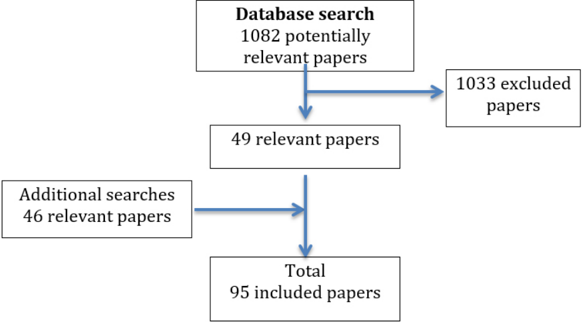
Mitochondrial/nuclear transfer (M/NT) to avoid the transmission of serious mitochondrial disease raises complex and challenging ethical, legal and social issues (ELSI). In February 2015, the United Kingdom became the first country in the world to legalize M/NT, making the heated debate surrounding this technology even more relevant. This critical interpretive review identified 95 relevant papers discussing the ELSI of M/NT, including original research articles, government-commissioned reports, editorials, letters to editors and research news. The review presents and synthesizes the arguments present in the literature in relation to the most commonly raised themes: terminology; identity, relationships and parenthood; potential harm; reproductive autonomy; available alternatives; consent; impact on specific interest groups; resources; “slippery slope”; creation, use and destruction of human embryos; and beneficence. The review concludes by identifying those ELSI that are specific to M/NT and by calling for follow-up longitudinal clinical and psychosocial research in order to equip future ELSI debate with empirical evidence.
Overview
The claims and statistics of this paper haven’t been checked yet.
Run the check — free, no account needed. It reads the open-access text and checks the sources it cites.
Integrity signals
Registry
Cites
Statistics
Figures
Verification
Claims the paper makes
The claims and statistics of this paper haven’t been checked yet.
Run the check — free, no account needed. It reads the open-access text and checks the sources it cites.
Claims other papers make about this one
Each is checked against this paper’s own text: does it say what the citing paper says it does?
The source backs part of the claim, not all of it — or backs it for a different population, condition or comparison.
In the citing paper
“However, there are reasons to be pessimistic about the compliance of the subjects, as previous experience from mitochondrial replacement studies and other ART research is not encouraging (Ishi 2019; Dupras-Leduc et al. 2018).”
From Initial heritable genome editing: mapping a responsible pathway from basic research to the clinic (2023) · cites this paper as Dupras-Leduc et al. 2018
Experimental — accuracy not yet measured
Self-check
Percentages, sums and reported differences re-computed from the paper’s own numbers.
The self-check needs the paper’s full text.
Citations
Cites
A method of analysing interview transcripts in qualitative research
Burnard, P. (1991) · Nurse Education Today · doi:10.1016/0260-6917(91)90009-y · Cited by 2,510
Research works printed but not linked: 72
- P. Amato et al. Three-parent in vitro fertilization: gene replacement for the prevention of inherited mitochondrial diseases. Fertil Steril 2014; 101(1): 31-35
- F. Baylis. The ethics of creating children with three genetic parents. Reprod Biomed Online 2013; 26: 531-534
- Human Fertilisation and Embryology Authority (HFEA). Third scientific review of the safety and efficacy of methods to avoid mitochondrial disease through assisted conception: 2014 update. 2014
- D.P. Wolf, N. Mitalipov & S. Mitalipov. Mitochondrial replacement therapy in reproductive medicine. Trends Mol Med 2015; 21(2): 68-76
- A.L. Bredenoord & P. Braude. Ethics of mitochondrial gene replacement: from bench to bedside. BMJ 2010; 341: c6021
- A.L. Bredenoord et al. Nuclear transfer to prevent mitochondrial DNA disorders: revisiting the debate on reproductive cloning. Reprod BioMed Online 2011; 22: 200-207
- R.W. Taylor & D. Turnbull. Mitochondrial DNA mutations in human disease. Nat Rev Genet 2005; 6: 389-402;
- A.L. Bredenoord et al. Ethics of modifying the mitochondrial genome. J Med Ethics 2011; 37: 97-100
- M.D. Garasic & D. Sperling. Mitochondrial replacement therapy and parenthood. Glob Bioet 2015; 26(3-4): 198-205
- Hens, W. Dondorp & G. De Wert. A leap of faith? An interview study with professionals on the use of mitochondrial replacement to avoid transfer of mitochondrial diseases. Hum Reprod 2015; 30(5): 1256-1262;
- J.Y. Nau. Transfert mitochondrial : pari génétique britannique à haut risque. Rev Med Suisse 2015; 461: 426-427.
- R. McDougall. Reviewing literature in bioethics research: increasing rigour in non-systematic reviews. Bioethics 2015; 29(7): 523-8
- V. Ravitsky, S. Birko & R. Dupras-Leduc. The "three-parent baby": A case study of how language frames the ethical debate regarding an emerging technology. Am J Bioeth 2015 ; 15(12): 57-60
- A.L. Bredenoord, G. Pennings & G. De Wert. Ooplasmic and nuclear transfer to prevent mitochondrial DNA disorders: conceptual and normative issues. Hum Reprod Update 2008; 14(6): 669-678
- M.N. Johnson. Tri-parenthood -a simply misleading term or an ethically misguided approach? Reprod Biomed Online 2013; 26: 516-519
- N. Darnovksy. A slippery slope to human germline modification. Nature 2013; 499: 127
- S.A.M. McLean. Mitochondrial DNA Transfer: Some Reflections From The United Kingdom. BiolawJournal 2015; 2: 81-88
- R. Briscoe. Ethical Considerations, Safety Precautions and Parenthood in Legalising Mitochondrial Donation. New Bioeth 2013; 19(1): 2-17;
- Nuffield Council on Bioethics (NCB). Novel techniques for the prevention of mitochondrial DNA disorders: an ethical review. 2012
- H.J.M. Smeets. Preventing the transmission of mitochondrial DNA disorders: Selecting the good guys or kicking out the bad guys. Reprod Biomed Online 2013; 27, 599-610
- I. Szebik. Response to "Germ line therapy to cure mitochondrial disease: protocol and ethics of in vitro ovum nuclear transplantation" by Donald S. Rubenstein, David C. Thomasma, Eric A. Schon, and Michael J. Zinaman. Camb Q Healthc Ethics 1999; 8: 369-374
- A. Wrigley, S. Wilkinson & J.B. Appleby. Mitochondrial replacement: ethics and identity. Bioethics 2015 ; 29(9): 631- 638
- G.N. Allahbadia. Is the world of ART ready for a ménage à trois? J Obstet Gynaecol India 2015; 65(2): 71-74
- J.B. Appleby. The ethical challenges of the clinical introduction of mitochondrial replacement techniques. Med Health Care and Philos 2015; 18: 501-514
- R. Klitzman, M. Toynbee & M.V. Sauer. Controversies concerning mitochondrial replacement therapy. Fert Steril 2015; 103(2): 344-346
- S. Mitalipov & D.P. Wolf. Clinical and ethical implications of mitochondrial gene transfer. Trends Endocrinol Metab 2014; 25(1): 5-7
- Anonymous. Ethics of mitochondrial donation. The Lancet 2012; 379: 2314
- A. Sutton. A case against germ-line gene therapy. Ethics Med 2013; 29(1): 17-22
- R.L. Fischbach, S. Benston & J.D. Loike. Creating a three-parent child: an educational paradigm for the responsible conduct of research. J Microbiol Biol Educ 2014; 15(12): 186-190
- P. Ball. The art of medicine: unnatural reactions. The Lancet 2014; 383: 1964-1965
- H.S. Liu & P.L. Chu. Three-parent embryo: The therapeutic future for inherited mitochondrial diseases. J Formos Med Assoc 2014; 114(11): 1027-1028
- J. Ravindra Fernando. Three's company: a constitutional analysis of prohibiting access to three-parent in vitro fertilization. Notre Dame J Law Ethics Public Policy 2015; 29: 523-548
- G.P.A. Bongaerts. How to prevent 'half-bastard' progeny? or An alternative for three-parent babies: Two-parent babies through transplantation of sperm mitochondria. Med Hypothesis 2006; 67: 1266-1269
- A.J. Paller-Rzepka. Are you my mother? Why mitochondrial DNAtransfers require states to rework traditional, two- person legal parentage frameworks. Biotechnol Law Rep 2014; 33(5): 193-206
- P. Cheruvu. Three-parent IVF and its effect on parental rights. Hastings Sci Tech Law J, 2014; 6(1): 73-81
- N. Hawkes. Intervention to prevent transmission of mitochondrial disorders should be allowed, subject to safeguards, report says. BMJ 2012; 344:e4089
- I. Torjesen. Government gives the go ahead for mitochondrial donation during IVF. BMJ 2014; 349: g4801
- S. Grauman & H. Haker. Some conceptual and ethical comments on egg cell nuclear transfer. Politics Life Sci 1998; 1: 17-19
- E. Callaway. Reproductive medicine: The power of three. Nature 2014; 509: 414-417
- J. Poulton & P. Oakeschott. Nuclear transfer to prevent maternal transmission of mitochondrial DNA disease. BMJ 2012; 345: e6651
- Donald S. Rubenstein, David C. Thomasma, Eric A. Schon, & Michael J. Zinaman. Germ-line therapy to cure mitochondrial disease: protocol and ethics of in vitro ovum nuclear transplantation. Camb Q Healthc Ethics 1995; 4: 316-339
- A.L. Bredenoord et al. Avoiding transgenerational risks of mitochondrial DNA disorders: a morally acceptable reason for sex selection? Hum Reprod 2010 ; 25(6): 1354-1360
- K. Reinhardt, D.K. Dowling & E.H. Morrow. Mitochondrial replacement, evolution, and the clinic. Science 2013; 341: 1345-1346
- D.L. Dickenson. The commercialization of human eggs in mitochondrial replacement research. The New Bioethics 2013; 19(1): 18-29
- J. Richardson et al. Concise reviews: assisted reproductive technologies to prevent transmission of mitochondrial dna disease. Stem Cells 2015; 33: 639-645
- A.L. Bredenoord & I. Hyun. The road to mitochondrial gene transfer: follow the middle lane. Mol Ther 2015; 3(6): 975-976
- S. Fischer. State of the art: emerging genetic technologies in reproductive medicine are rapidly making real what once was science fiction-are we ready for it?. IEEE Pulse 2015
- Z. Kmietowicz. UK becomes first country to allow mitochondrial donation. BMJ 2015; 350: h1103
- J. Wise. Mitochondrial donation could benefit 150 UK women a year, study says. BMJ 2015; 350: h536
- M. Herbert & D. Turnbull. Mitochondrial replacement to prevent the transmission of mitochondrial DNA disease. Embo Reports 2015; 16(5): 539-540;
- J.G. Armstrong. Three-parent babies: a debate of eugenics. Penn Bioeth J 2015; 10(2): 9
- T. Ishii. Potential impact of human mitochondrial replacement on global policy regarding germline gene modification. Reprod Biomed Online 2014; 29: 150-155
- M. Legge & R. Fitzgerald. Numerical identity: the creation of tri-parental embryos to correct inherited mitochondrial disease. N Z Med J 2013; 126(1385): 71-75
- S. Norcross. How and why mitochondrial replacement gets our vote. Reprod Biomed Online 2014; 29(2): 267-268
- S. Mayor. Chief medical officer advises government to allow mitochondrial replacement to prevent disease. BMJ 2013; 346: f4211
- G. Vogel. FDA considers trials of 'three-parent embryos'. Science 2014; 343: 827-828
- E.C. Hayden. Regulators weigh benefits of 'three-parent' fertilization. Nature 2013; 502: 284-285
- G.R. Passi. The three parent embryo. Indian Pediatr 2015; 52: 261
- G. Pennings. International harmonization and mitochondrial replacement. Reprod Biomed Online 2014; 29: 269
- J. Wise. Draft UK regulations for mitochondrial donation are published. BMJ 2014; 348: g1846
- F. Flinter. Concerning Tetsuya Ishii's article: Potential impact of human mitochondrial replacement on global policy regarding germline gene modification. Reprod Biomed Online 2014; 29: 270
- J. Wise. Mitochondrial donation is "not unsafe," review confirms. BMJ 2014; 348: g3723
- V. Ravitsky. Conceived and deceived: the medical interests of donor-conceived individuals. Hastings Center Report 2012; 42(1): 17-22 2017 Updated references (not included in the literature review)
- J. Zhang et al. Live birth derived from oocyte spindle transfer to prevent mitochondrial disease. Reprod Biomed Online 2017; 34(4): 361-368
- M. Alikani et al. First birth following spindle transfer for mitochondrial replacement therapy: hope and trepidation. Reprod Biomed Online 2017; 34(4): 333-336
- Anonymous. Baby's DNA mix revealed. Nature 2017; 544: 17-18
- Bredenoord, A. et al. 2011 a Ethics of modifying the mitochondrial genome Journal of medical ethics Bredenoord, A. et al. 2011 b Nuclear transfer to prevent mitochondrial DNA disorders: revisiting the debate on reproductive cloning Reproductive Biomedicine Online
- Cheruvu, P. 2014 Three-Parent IVF and its Effects on Parental Rights Hastings Science and Technology Law Journal
- Fischbach, R.L. et al. 2014 Creating a Three-Parent Child: An Educational Paradigm for the Responsible Conduct of Research Journal of Microbiology & Biology Education
- Sutton, A. 2013 A case against germ-line gene therapy Ethics and Medicine Szebik, I. 1999 Response to "Germ Line Therapy to Cure Mitochondrial Disease: Protocol and Ethics of In Vitro Ovum Nuclear Transplantation" by Donald S. Rubenstein, David C. Thomasma, Eric A. Schon, Michael J. Zinaman. Cambridge Quarterly Healthcare Ethics
- Tanaka, A.J. et al. 2013 Harnessing the Stem Cell Potential: The path to prevent mitochondrial disease Nature Medicine Winter, G.F. 2015 Mitochondrial Donation British Journal of Midwifery
- Armstrong, J.G. 2015 Three-Parent Babies: A Debate of Eugenics Penn Bioethics Journal
Cited by
Initial heritable genome editing: mapping a responsible pathway from basic research to the clinic
Ranisch, R., Trettenbach, K., & Arnason, G. (2023) · Medicine, Health Care and Philosophy · doi:10.1007/s11019-022-10115-x · Cited by 19
Metadata
- Authors
- Dupras-Leduc, R., Birko, S., & Ravitsky, V.
- Venue
- Canadian Journal of Bioethics
- Publisher
- Consortium Erudit
- Published
- 2019-03-27
- Volume
- 1
- Issue
- 2
- Pages
- 1-17
- ISSN
- 2561-4665
- Cited by
- 5
- References
- 1
About these checks
Registry, retraction, Cites and statistics results are computed, not judged, with one exception: a printed reference that no index lists is read once by a model before it counts as a citation error. Claims are extracted by a model and kept only when their quote appears verbatim in the text; each cited source is then checked, with a model’s help, for whether it says what the claim relies on. Those verdicts can be wrong — read the claim’s quote and the cited source before relying on one.
Statistics and arithmetic are recomputed, not judged.
Confidence bands are shown only for fields calibrated on our annotated test set. None is calibrated yet, so no band is shown.
What counts as a claim ›How we measure confidence ›How we check this ›
Are you an author, or do you see a problem with this page? Request a review
Data sources
Bibliographic data: Semantic Scholar, OpenAlex, Crossref.
Contains information from the Semantic Scholar Academic Graph Datasets, made available under the ODC Attribution License (ODC-BY 1.0).
Semantic Scholar’s data is described in: Kinney, R., et al. (2023). The Semantic Scholar Open Data Platform. arXiv:2301.10140.
