

The DOI matches its Crossref record.
The Lady Half-Devoured by a Dragon and the Iconography of Saint Margaret of Antioch: Interpreting an Anonymous Invención in the Cancionero general (11CG-517)
Abstract
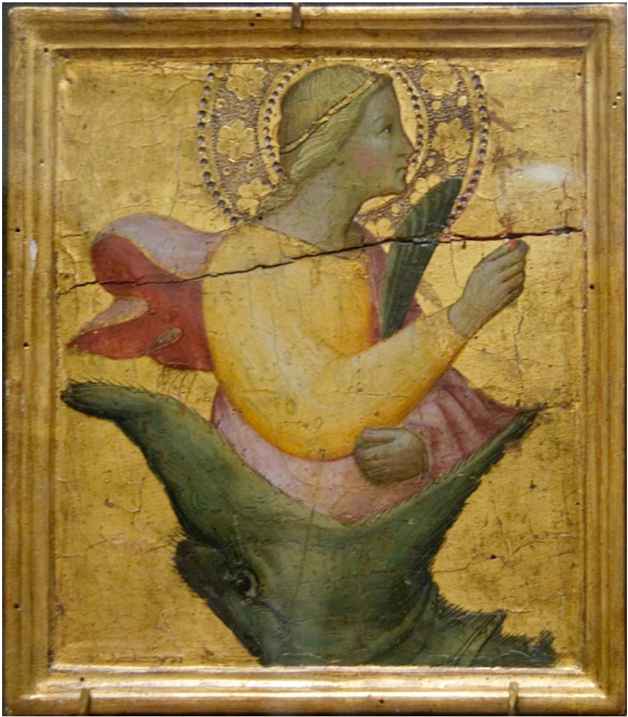
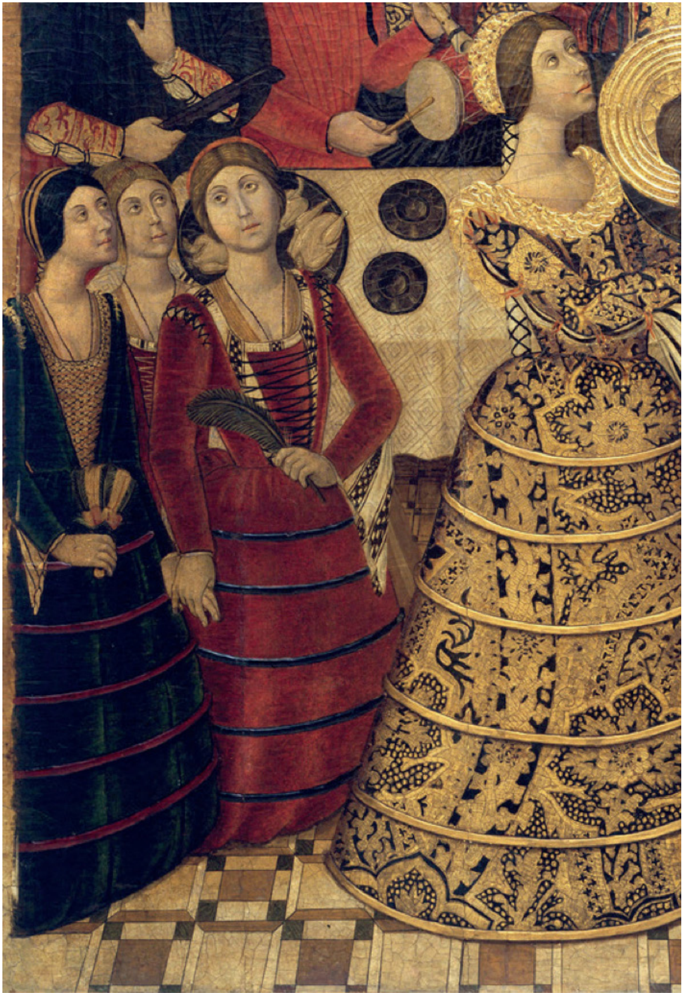
Following in the footsteps of Ian Macpherson, I offer an interpretation of an anonymous invención found in the Cancionero general (11CG-517) and the British Library Cancionero (LB1-251). I maintain that the image displayed by the jouster was inspired by the iconography of the virgin-martyr Saint Margaret of Antioch, and I propose a theory about the identity of the lady addressed and, with less certainty, about the identity of the jouster and the occasion when the invención was displayed, using Pinar’s Juego trobado as a tool of research and invoking a passage on the sinfulness of the fashion among ladies and damsels for wearing hooped petticoats in a treatise by Hernando de Talavera.
Overview
The claims and statistics of this paper haven’t been checked yet.
Run the check — free, no account needed. It reads the open-access text and checks the sources it cites.
Integrity signals
Registry
Cites
Statistics
Figures

Verification
Claims the paper makes
The claims and statistics of this paper haven’t been checked yet.
Run the check — free, no account needed. It reads the open-access text and checks the sources it cites.
Claims other papers make about this one
Each is checked against this paper’s own text: does it say what the citing paper says it does?
In the citing paper
“Además, en mi opinión, Margarita es también la dama representada como una donzella medio devorada por un dragón en una invención anónima en el Revista de Cancioneros Impresos y Manuscritos núm.8 (2019) Cancionero general (11CG-517), que se inspiró en la iconografía de santa Margarita de Antioquía (Boase 2018).”
From El Juego trobado de Pinar: la memoria cultural colectiva de las damas de la corte de la reina Isabel de Castilla en el año 1496 (2019) · cites this paper as Boase 2018
Self-check
Percentages, sums and reported differences re-computed from the paper’s own numbers.
The self-check needs the paper’s full text.
Citations
Cites
No references could be resolved yet.
Research works printed but not linked: 11
- Aragüés Aldaz, José. 2012. 'Los Flores sanctorum medievales y renacentistas: brevísimo panaroma crítico', in Literatura medieval y renacentista en España: líneas y pautas, ed. by N. Fernández Rodríguez and M. Fernández Ferreiro (Salamanca: SEMYR), pp. 349-61 <https://tinyurl.com/ ycxp4kga>
- Bartholomaeus Anglicus. 1494. de las propiedades de todas las cosas [De propietatibus rerum], trans. Fray Vicente de Burgos (Toulouse: Henrique Meyer de Alemania)
- Boase, Roger. 2016. 'María de Fonseca (c. 1486-1521) and the Marquis of Zenete (1473-1523): Aristocratic Rebels and Patrons of Renaissance Culture', Magnificat Cultura i Literatura Medievals, 3: 37-66 <https://doi.org/10.7203/MCLM. · DOI
- 6856> Boase, Roger. 2017. Secrets of Pinar's Game: Court Ladies and Courtly Verse in Fifteenth-Century Spain (Leiden: Brill) <https://doi.org/10.1163/9789004338364> · DOI · Paper page
- Cazzato, Vanessa. 2016. '"Glancing Seductively through Windows": The Look of Praxilla fr. 8 (PMG 754)', in The Look of Lyric: Greek Song and the Visual, ed. by Vanessa Cazzato and André Lardinois (Leiden: Brill), pp. 185-203 <https://doi.org/10.1163/9789004314849_008> · DOI
- Batallas y quinquagenas, ed. by Juan Pérez de Tudela y Bueso (Madrid: RAH) 1983 (vol. 1), 2000 (vols. 2 & 3), 2002 (vol.
- González Cuenca, Joaquín (ed.). 2004. Hernando del Castillo, Cancionero general, 5 vols. Nueva Biblioteca de Erudición y Crítica, 25 (Madrid: Castalia)
- Kennedy, Kirstin. 2006. 'Do Cancionero Rubrics Help Solve Invenciones?', in Proceedings of the Thirteenth Colloquium of the MHRS, ed. by Jane Whetnall and Alan Deyermond, PMHRS, 51 (Queen Mary, University of London), pp. 137-46
- Marino, Nancy F. 2001. 'How Portuguese Damas Scandalized the Court of Enrique IV of Castile', Essays in Medieval Studies, 18: 43-52 <http://dx.doi.org/10.1353/ems.2001.0005> · DOI
- Pinedo, Luis de. 1890. Libro de chistes, in Sales Españolas, o agudezas del ingenio nacional, ed. by Antonio Paz y Mélia (Madrid: Fundación de M. Tello), pp. 255-316
- Riddle, John M. 1992. Contraception and Abortion from the Ancient World to the Renaissance (Cambridge, Mass: Harvard University Press)
Cited by
Boase, R. (2019) · Revista de Cancioneros Impresos y Manuscritos · doi:10.14198/rcim.2019.8.01 · Cited by 2
Self-citation
Metadata
- Authors
- Boase, R.
- ORCID
- Boase, Roger
- Venue
- Magnificat Cultura i Literatura Medievals
- Publisher
- Universitat de Valencia
- Published
- 2018-12-08
- Volume
- 5
- Pages
- 1-17
- ISSN
- 2386-8295
- Cited by
- 2
- References
- 0
About these checks
Registry, retraction, Cites and statistics results are computed, not judged, with one exception: a printed reference that no index lists is read once by a model before it counts as a citation error. Claims are extracted by a model and kept only when their quote appears verbatim in the text; each cited source is then checked, with a model’s help, for whether it says what the claim relies on. Those verdicts can be wrong — read the claim’s quote and the cited source before relying on one.
Statistics and arithmetic are recomputed, not judged.
Confidence bands are shown only for fields calibrated on our annotated test set. None is calibrated yet, so no band is shown.
What counts as a claim ›How we measure confidence ›How we check this ›
Are you an author, or do you see a problem with this page? Request a review
Data sources
Bibliographic data: Semantic Scholar, OpenAlex, Crossref.
Contains information from the Semantic Scholar Academic Graph Datasets, made available under the ODC Attribution License (ODC-BY 1.0).
Semantic Scholar’s data is described in: Kinney, R., et al. (2023). The Semantic Scholar Open Data Platform. arXiv:2301.10140.
