

The DOI matches its Crossref record; 43 of the 43 references it cites were found in a registry or an index.
Behavioral-state modulation of inhibition is context-dependent and cell type specific in mouse visual cortex
Open accessAbstract
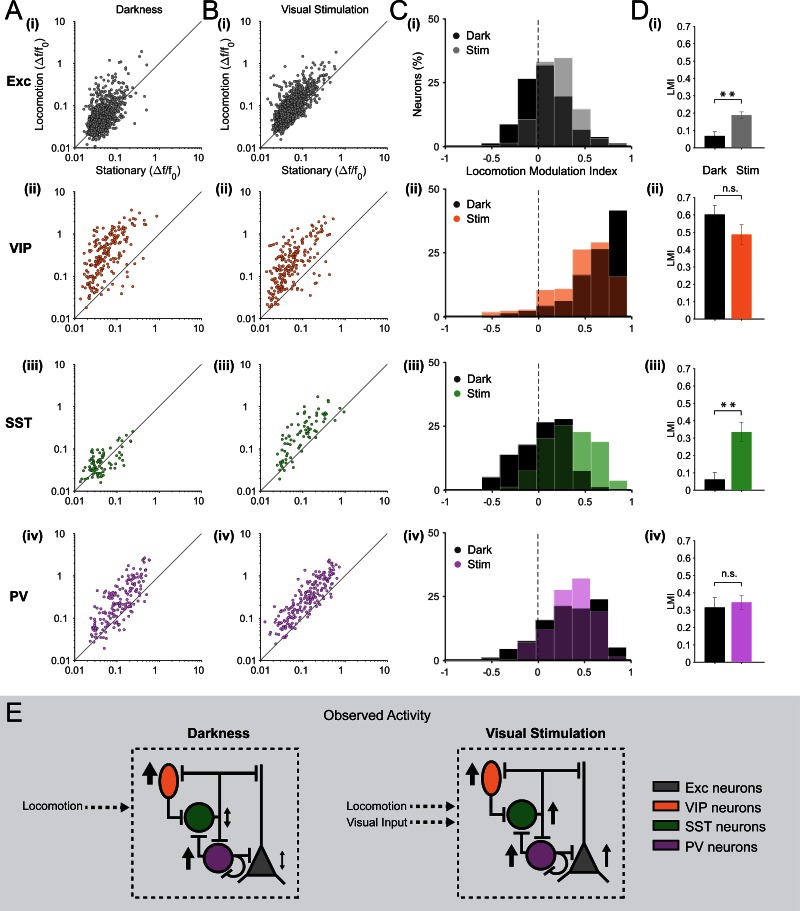
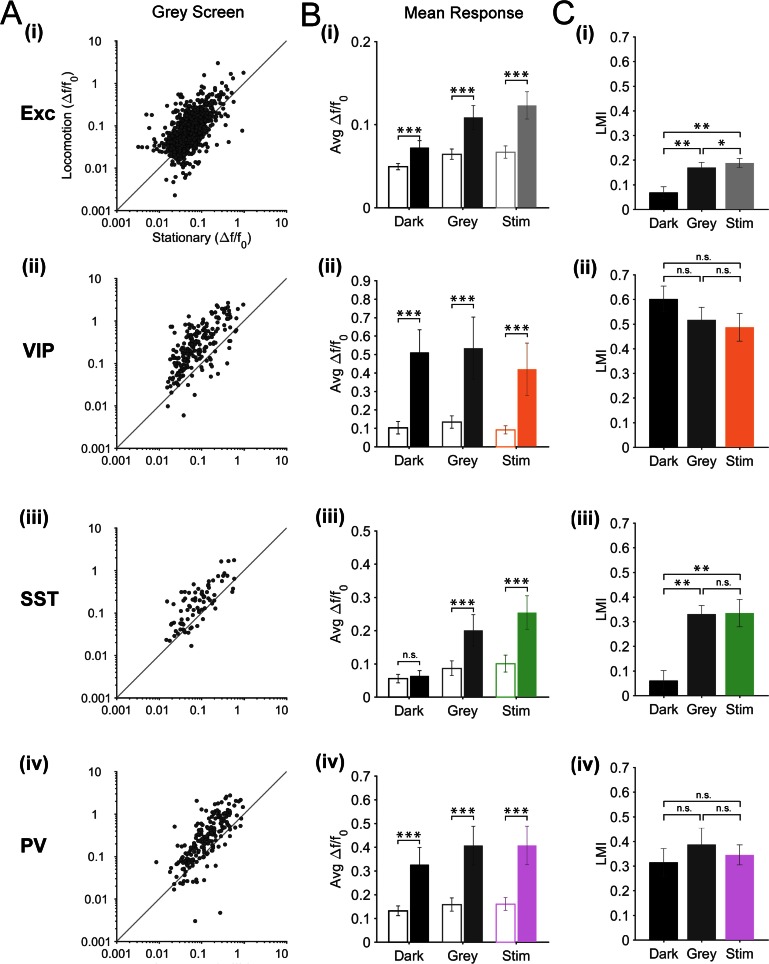
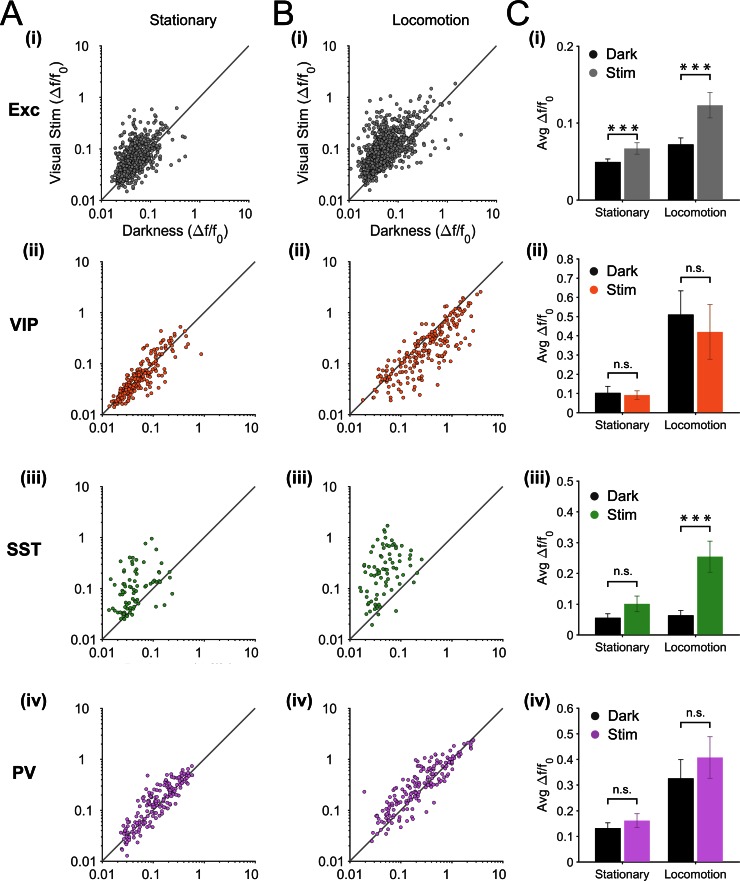
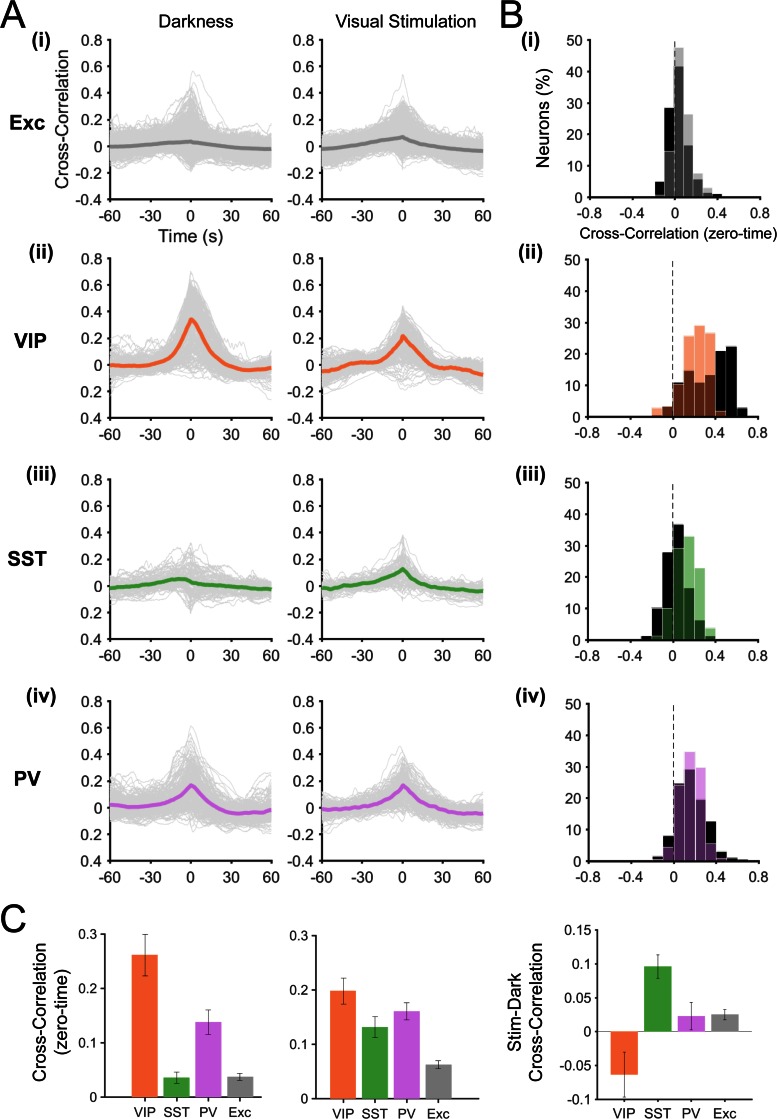
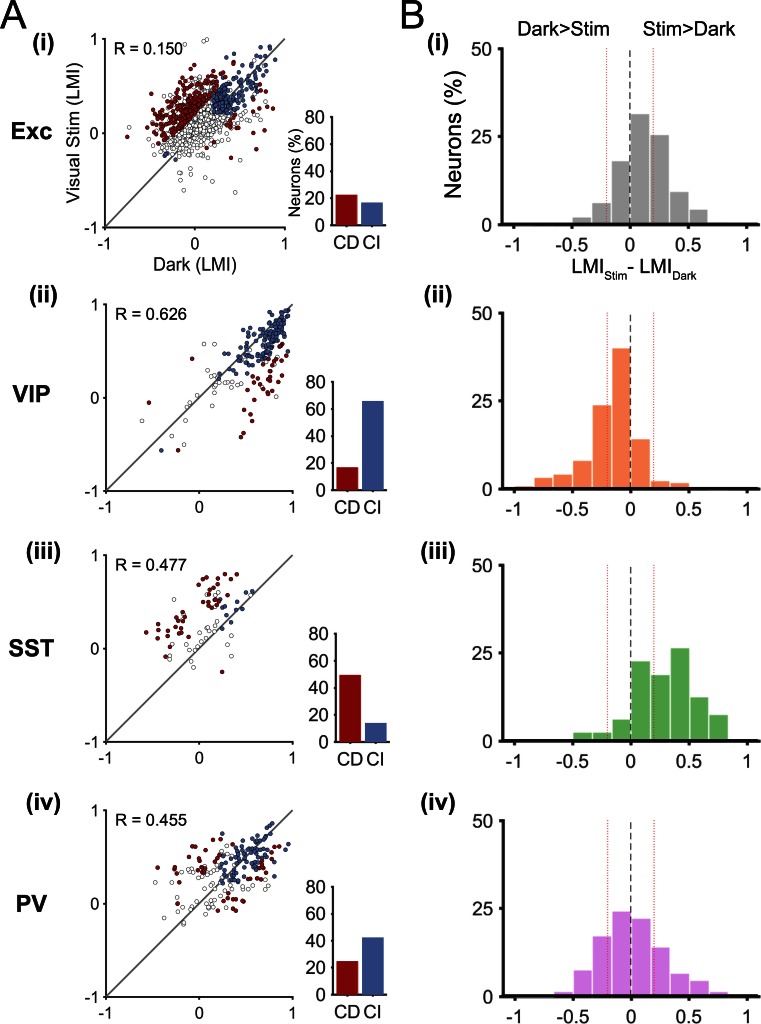
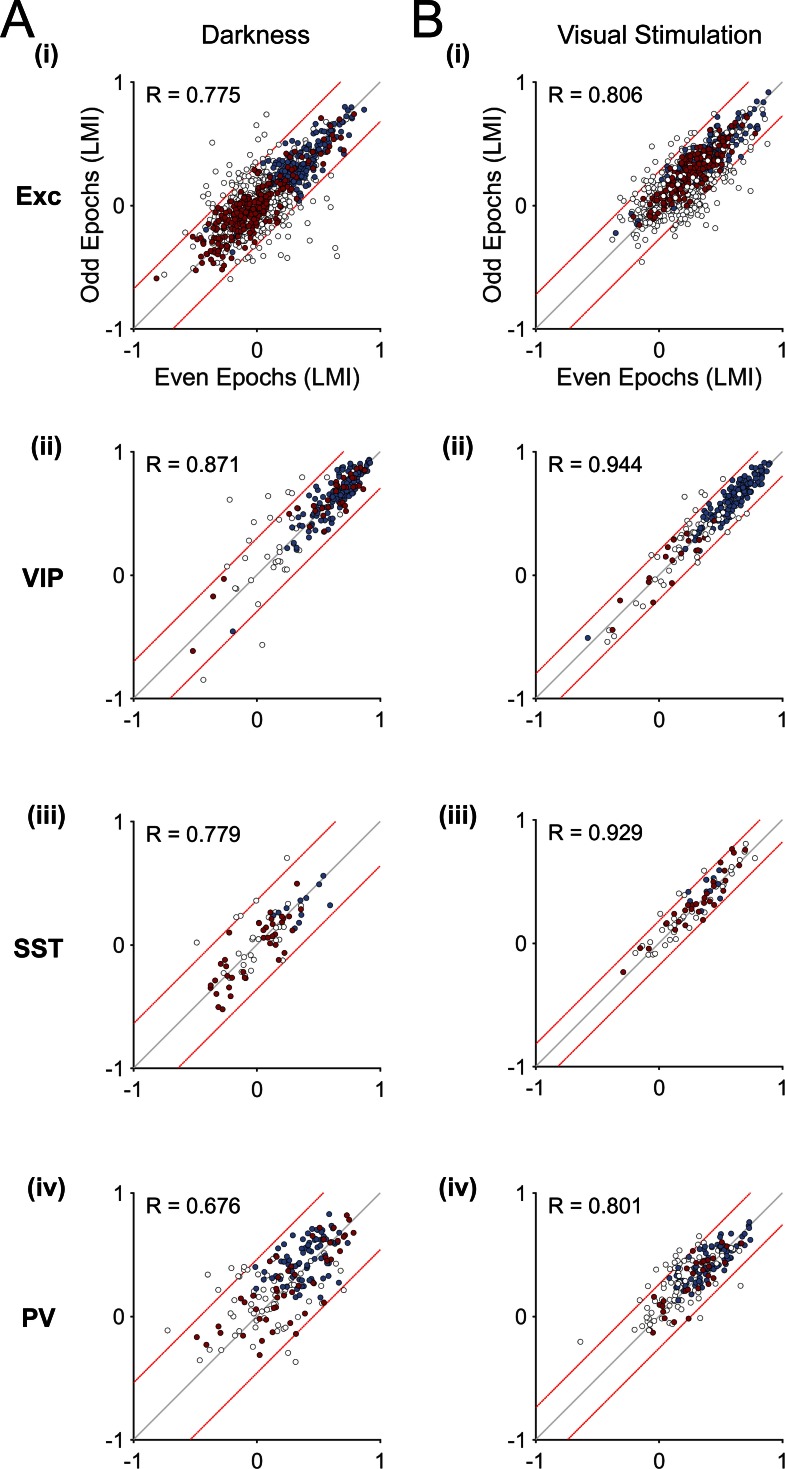
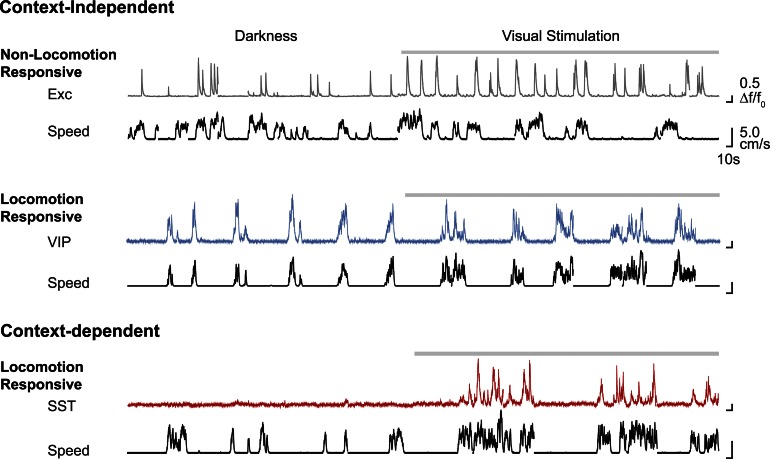
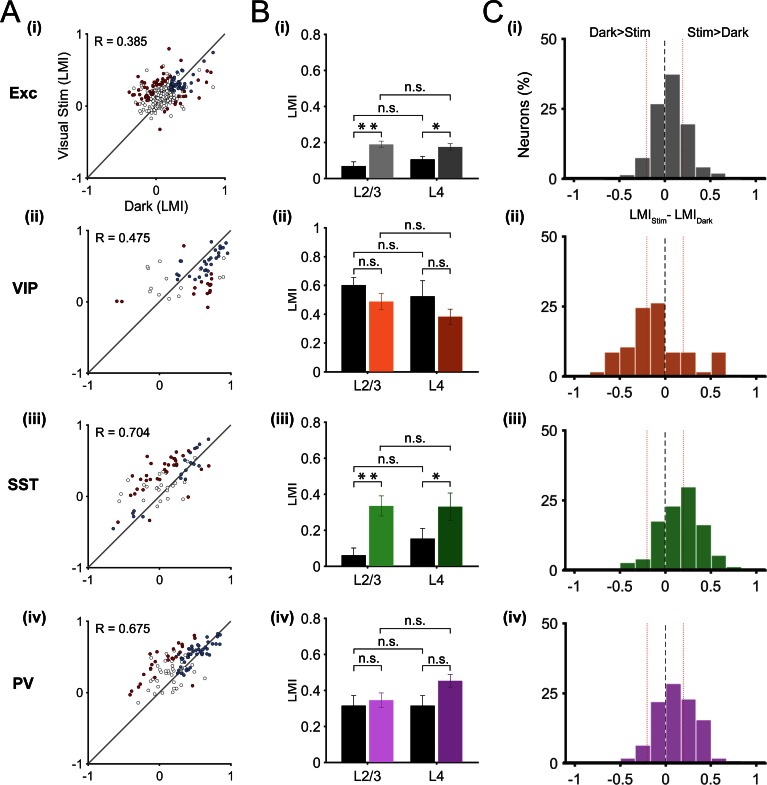
Cortical responses to sensory stimuli are modulated by behavioral state. In the primary visual cortex (V1), visual responses of pyramidal neurons increase during locomotion. This response gain was suggested to be mediated through inhibitory neurons, resulting in the disinhibition of pyramidal neurons. Using in vivo two-photon calcium imaging in layers 2/3 and 4 in mouse V1, we reveal that locomotion increases the activity of vasoactive intestinal peptide (VIP), somatostatin (SST) and parvalbumin (PV)-positive interneurons during visual stimulation, challenging the disinhibition model. In darkness, while most VIP and PV neurons remained locomotion responsive, SST and excitatory neurons were largely non-responsive. Context-dependent locomotion responses were found in each cell type, with the highest proportion among SST neurons. These findings establish that modulation of neuronal activity by locomotion is context-dependent and contest the generality of a disinhibitory circuit for gain control of sensory responses by behavioral state.
Overview
The claims and statistics of this paper haven’t been checked yet.
Run the check — free, no account needed. It reads the open-access text and checks the sources it cites.
Integrity signals
Registry
Cites
Statistics
Figures
Verification
Claims the paper makes
The claims and statistics of this paper haven’t been checked yet.
Run the check — free, no account needed. It reads the open-access text and checks the sources it cites.
Claims other papers make about this one
Each is checked against this paper’s own text: does it say what the citing paper says it does?
In the citing paper
“In the visual cortex, the onset of arousal (as measured by pupil diameter) and locomotion increase neuronal gain32,33,36,37.”
From Mechanisms underlying gain modulation in the cortex (2020) · cites this paper as [36]
Self-check
Percentages, sums and reported differences re-computed from the paper’s own numbers.
The self-check needs the paper’s full text.
Citations
Cites
Brainard, D. H. (1997) · Spatial Vision · doi:10.1163/156856897x00357 · Cited by 20,012 · cited 1×
“Visual stimuli were generated using the Psychophysics Toolbox package (Brainard, 1997) for MATLAB (Mathworks, MA) and displayed on an LCD monitor (51 29 cm, Dell, UK) placed 20 cm from the right eye, covering 104˚ 72˚ of the visual field.”
MethodUltrasensitive fluorescent proteins for imaging neuronal activity
Chen, T.-W., Wardill, T. J., Sun, Y., Pulver, S. R., Renninger, S. L., Baohan, A., Schreiter, E. R., Kerr, R. A., Orger, M. B., Jayaraman, V., et al. (2013) · Nature · doi:10.1038/nature12354 · Cited by 6,474 · cited 5×
“…somatic fluorescence changes and spiking activity in different neuronal types and behavioral contexts In this study, we used the relative changes in fluorescence of the genetically-encoded calcium indicator GCaMP6f as a reporter of the spiking activity of cortical neurons (Chen et al., 2013).”
BackgroundMethodInfluentialModulation of visual responses by behavioral state in mouse visual cortex
Niell, C. M., & Stryker, M. P. (2010) · Neuron · doi:10.1016/j.neuron.2010.01.033 · Cited by 1,483 · cited 2×
“In agreement with previous electrophysiological observations (Niell and Stryker, 2010; Keller et al., 2012; Bennett et al., 2013; Polack et al., 2013; Saleem et al., 2013; Erisken et al., 2014; Reimer et al., 2014), we observed that, on average, locomotion increased the amplitude of calcium…”
BackgroundResultPfeffer, C. K., Xue, M., He, M., Huang, Z. J., & Scanziani, M. (2013) · Nature Neuroscience · doi:10.1038/nn.3446 · Cited by 1,353 · cited 5×
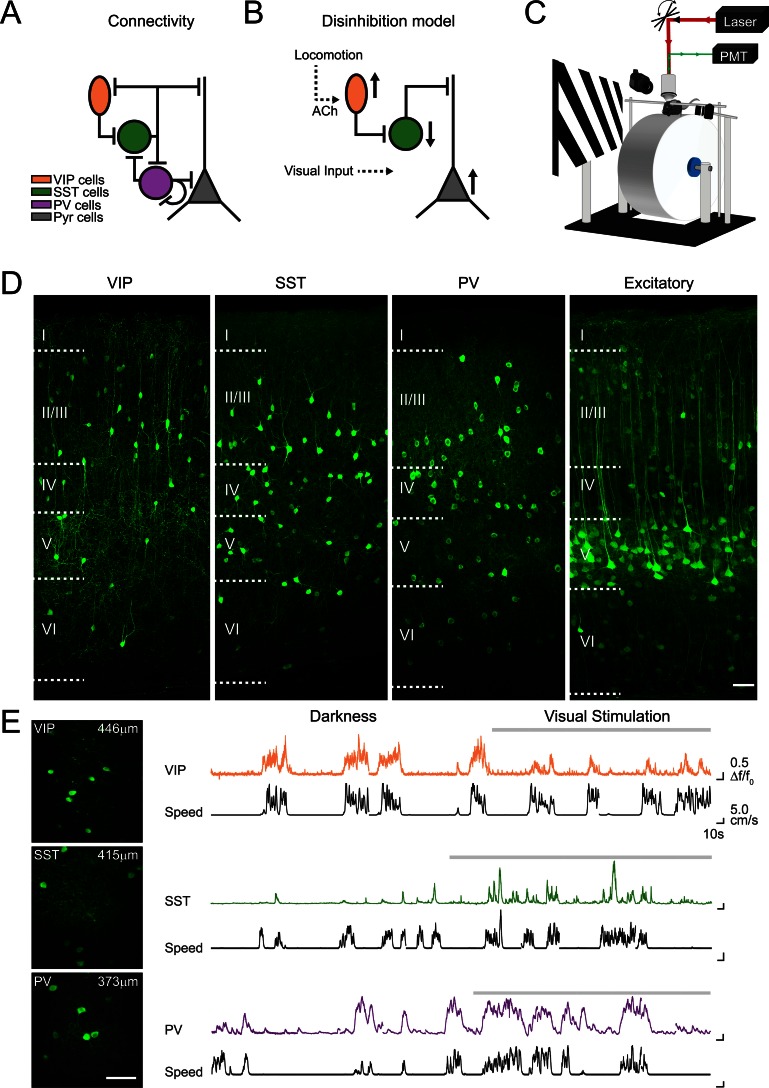
“(A) Schematic of the connectivity between pyramidal neurons (Pyr) and subtypes of inhibitory neurons, vasoactive intestinal peptide (VIP), somatostatin (SST) and parvalbumin (PV) expressing neurons, established from in vitro studies in V1 (Pfeffer et al., 2013; Jiang et al., 2015).”
BackgroundResultInfluentialCortical interneurons that specialize in disinhibitory control
Pi, H.-J., Hangya, B., Kvitsiani, D., Sanders, J. I., Huang, Z. J., & Kepecs, A. (2013) · Nature · doi:10.1038/nature12676 · Cited by 1,136 · cited 1×
“An appealing aspect of the disinhibitory model was the idea of a canonical circuit for gain modulation of sensory responses (Pi et al., 2013).”
BackgroundImaging large-scale neural activity with cellular resolution in awake, mobile mice
Dombeck, D. A., Khabbaz, A. N., Collman, F., Adelman, T. L., & Tank, D. W. (2007) · Neuron · doi:10.1016/j.neuron.2007.08.003 · Cited by 1,099 · cited 1×
“We used two-photon calcium imaging in head-fixed mice that ran freely on a cylindrical treadmill (Figure 1C; Dombeck et al., 2007).”
MethodA Cortical Circuit for Gain Control by Behavioral State
Fu, Y., Tucciarone, J. M., Espinosa, J. S., Sheng, N., Darcy, D. P., Nicoll, R. A., Huang, Z. J., & Stryker, M. P. (2014) · Cell · doi:10.1016/j.cell.2014.01.050 · Cited by 937 · cited 15×
“We suggest that neuromodulatory inputs triggered by locomotion would not only activate VIP neurons through nicotinic acetylcholine receptors as previously shown (Alitto and Dan, 2012; Arroyo et al., 2014; Fu et al., 2014), but would also directly activate PV, SST, and excitatory neurons.”
BackgroundMethodResultInfluentialPrinciples of connectivity among morphologically defined cell types in adult neocortex
Jiang, X., Shen, S., Cadwell, C. R., Berens, P., Sinz, F., Ecker, A. S., Patel, S., & Tolias, A. S. (2015) · Science · doi:10.1126/science.aac9462 · Cited by 908 · cited 3×
“Based on a comprehensive analysis of morphological and electrophysiological properties of inhibitory neurons, a recent in vitro study has identified seven distinct types of cortical interneurons in layer 2/3 (Jiang et al., 2015).”
BackgroundResultKim, H., & Park, H. (2007) · Bioinformatics · doi:10.1093/bioinformatics/btm134 · Cited by 890
Waking state: rapid variations modulate neural and behavioral responses
McGinley, M. J., Vinck, M., Reimer, J., Batista-Brito, R., Zagha, E., Cadwell, C. R., Tolias, A. S., Cardin, J. A., & McCormick, D. A. (2015) · Neuron · doi:10.1016/j.neuron.2015.09.012 · Cited by 801
Cited by
Sorted by citations
Spontaneous behaviors drive multidimensional, brainwide activity
Stringer, C., Pachitariu, M., Steinmetz, N., Reddy, C. B., Carandini, M., & Harris, K. D. (2019) · Science · doi:10.1126/science.aav7893 · Cited by 1,510
Predictive Processing: A Canonical Cortical Computation
Keller, G. B., & Mrsic-Flogel, T. D. (2018) · Neuron · doi:10.1016/j.neuron.2018.10.003 · Cited by 836
“, 2013), which exert context dependent influence on responses in visual cortex (Pakan et al., 2016).”
A Sensorimotor Circuit in Mouse Cortex for Visual Flow Predictions
Leinweber, M., Ward, D. R., Sobczak, J. M., Attinger, A., & Keller, G. B. (2017) · Neuron · doi:10.1016/j.neuron.2017.08.036 · Cited by 375
Mechanisms underlying gain modulation in the cortex
Ferguson, K. A., & Cardin, J. A. (2020) · Nature Reviews Neuroscience · doi:10.1038/s41583-019-0253-y · Cited by 327
Vision and Locomotion Shape the Interactions between Neuron Types in Mouse Visual Cortex
Dipoppa, M., Ranson, A., Krumin, M., Pachitariu, M., Carandini, M., & Harris, K. D. (2018) · Neuron · doi:10.1016/j.neuron.2018.03.037 · Cited by 290
Metadata
- Authors
- Pakan, J. M., Lowe, S. C., Dylda, E., Keemink, S. W., Currie, S. P., Coutts, C. A., & Rochefort, N. L.
- Affiliations
- University of Edinburgh (GB)
- University of Freiburg (DE)
- Corresponding author
- Rochefort, Nathalie L
- ORCID
- Venue
- eLife
- Publisher
- eLife Sciences Publications, Ltd
- Published
- 2016-08-23
- Volume
- 5
- ISSN
- 2050-084X (ISSN-L)
- PMC
- PMC5030095
- OpenAlex
- W2515318112
- Cited by
- 282
- References
- 43
- Citations by year
- 2026: 12 · 2025: 25 · 2024: 34 · 2023: 47 · 2022: 31 · 2021: 17 · 2020: 29 · 2019: 29 · 2018: 30 · 2017: 26 · 2016: 2
- FWCI
- 18.46
- Type
- journal article
- Language
- en
- Update notices
- correction (2017-09-06)
- Open access
- gold
- doi.org
- Licence
- Locations
- eLife (publishedVersion, cc-by)
- Europe PMC (PubMed Central) (publishedVersion, cc-by)
- PubMed Central (publishedVersion, cc-by)
- PubMed (publishedVersion)
- DOAJ (DOAJ: Directory of Open Access Journals) (submittedVersion)
- Edinburgh Research Explorer (University of Edinburgh) (submittedVersion, cc-by)
- Funders
- European Commission (Marie Curie Actions (FP7), IEF 624461, EuroSpin Erasmus Mundus Program, Marie Curie Actions (FP7), MC-CIG 631770)
- University Of Edinburgh (Doctoral Training Centre in Neuroinformatics, Graduate School of Life Sciences, Chancellor's fellow starting grant)
- Engineering and Physical Sciences Research Council (Doctoral Training Centre in Neuroinformatics, EP/F500385/1, Doctoral Training Centre in Neuroinformatics, BB/F529254/1)
- Patrick Wild Centre
- The Shirley Foundation
- RS MacDonald Charitable Trust (Seedcorn Grant 21)
- Wellcome Trust (Sir Henry Dale fellowship, 102857/Z/13/Z)
- Royal Society (Sir Henry Dale fellowship, 102857/Z/13/Z)
- Topics
- Life Sciences › Neuroscience › Cognitive Neuroscience › Visual perception and processing mechanisms
- Life Sciences › Neuroscience › Cellular and Molecular Neuroscience › Neuroscience and Neuropharmacology Research
- Life Sciences › Neuroscience › Cognitive Neuroscience › Neural dynamics and brain function
- Keywords
- primary visual cortex, locomotion, behavioral state, disinhibition, gain control, vasoactive intestinal peptide interneurons, somatostatin interneurons, parvalbumin interneurons, pyramidal neurons, inhibitory interneurons, context-dependent responses
- MeSH terms
- Animals, Behavior, Animal, Interneurons, Locomotion, Models, Neurological, Visual Cortex, Pyramidal Cells, Mice
About these checks
Registry, retraction, Cites and statistics results are computed, not judged, with one exception: a printed reference that no index lists is read once by a model before it counts as a citation error. Claims are extracted by a model and kept only when their quote appears verbatim in the text; each cited source is then checked, with a model’s help, for whether it says what the claim relies on. Those verdicts can be wrong — read the claim’s quote and the cited source before relying on one.
Statistics and arithmetic are recomputed, not judged.
Confidence bands are shown only for fields calibrated on our annotated test set. None is calibrated yet, so no band is shown.
What counts as a claim ›How we measure confidence ›How we check this ›
Are you an author, or do you see a problem with this page? Request a review
