

The DOI matches its Crossref record; 43 of the 43 references it cites were found in a registry or an index.
A predictive focus of gain modulation encodes target trajectories in insect vision
Open accessAbstract
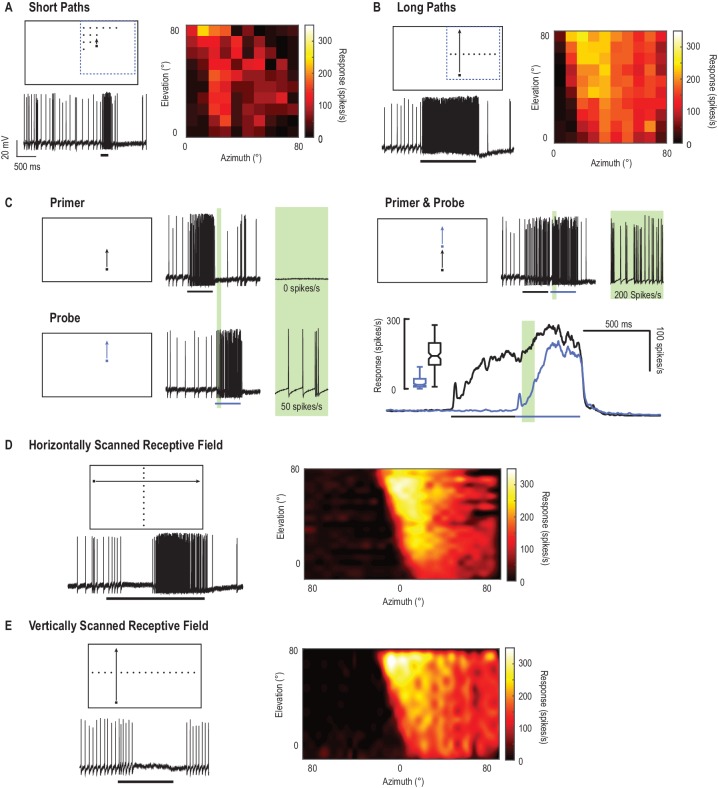
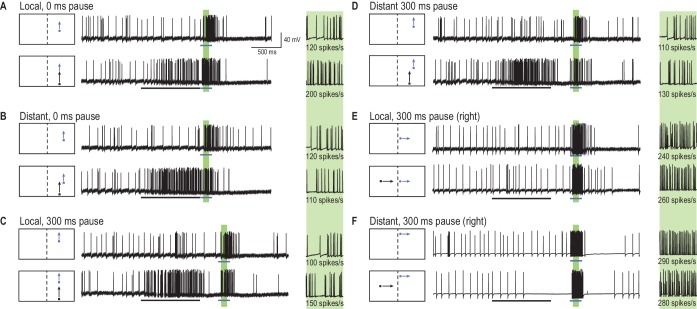
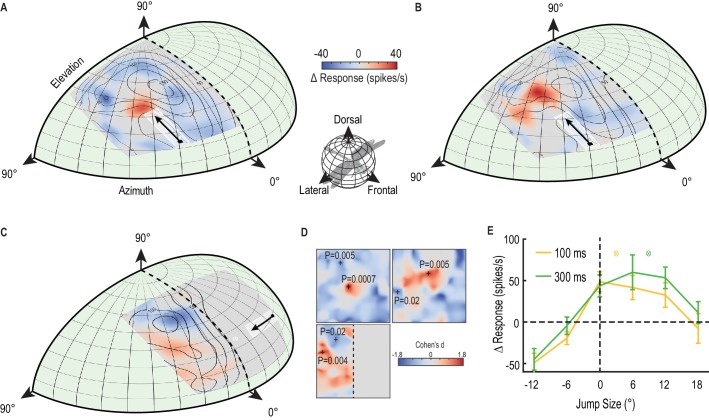
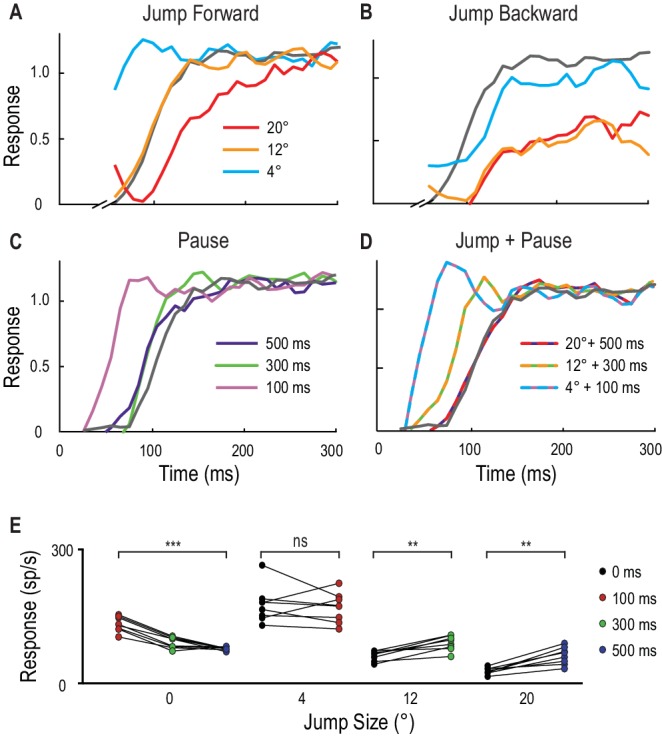
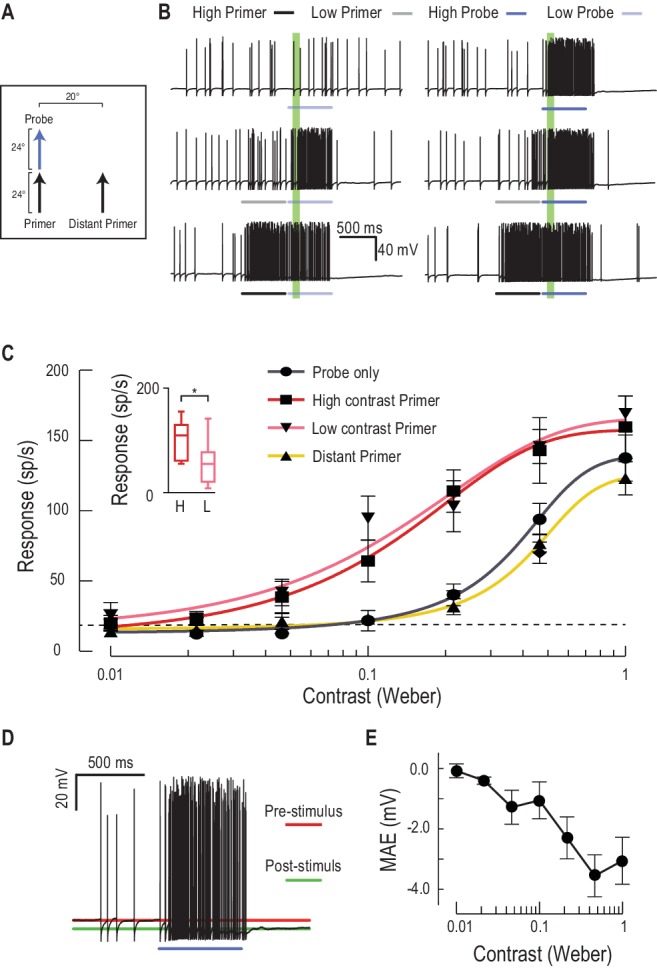
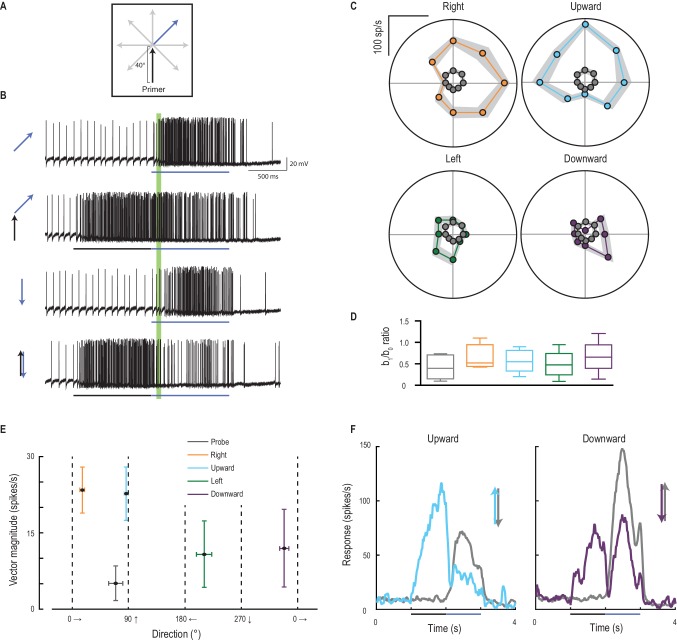
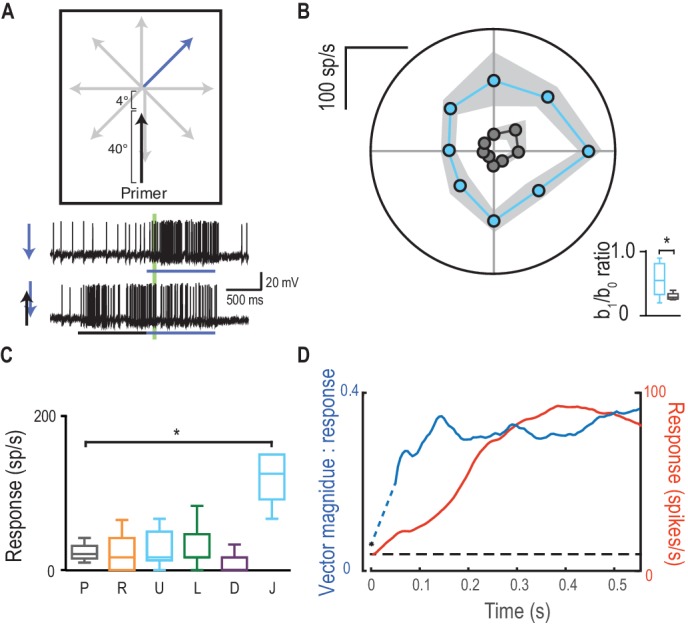
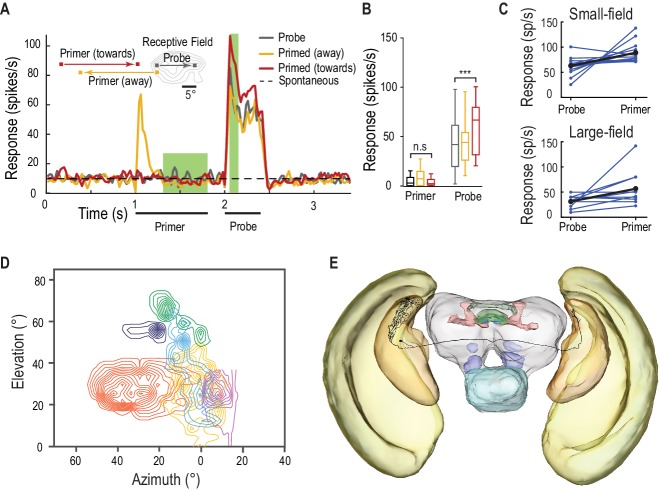
When a human catches a ball, they estimate future target location based on the current trajectory. How animals, small and large, encode such predictive processes at the single neuron level is unknown. Here we describe small target-selective neurons in predatory dragonflies that exhibit localized enhanced sensitivity for targets displaced to new locations just ahead of the prior path, with suppression elsewhere in the surround. This focused region of gain modulation is driven by predictive mechanisms, with the direction tuning shifting selectively to match the target’s prior path. It involves a large local increase in contrast gain which spreads forward after a delay (e.g. an occlusion) and can even transfer between brain hemispheres, predicting trajectories moved towards the visual midline from the other eye. The tractable nature of dragonflies for physiological experiments makes this a useful model for studying the neuronal mechanisms underlying the brain’s remarkable ability to anticipate moving stimuli.
Overview
The claims and statistics of this paper haven’t been checked yet.
Run the check — free, no account needed. It reads the open-access text and checks the sources it cites.
Integrity signals
Registry
Cites
Statistics
Figures
Verification
Claims the paper makes
The claims and statistics of this paper haven’t been checked yet.
Run the check — free, no account needed. It reads the open-access text and checks the sources it cites.
Claims other papers make about this one
Each is checked against this paper’s own text: does it say what the citing paper says it does?
The cited source says what the claim attributes to it.
In the citing paper
“For example, neurons in the dragonfly visual lobes sensitive specifically to small moving targets show a modulated gain of function that predicts the anticipated position of the target based on its current trajectory [79].”
From Phenomenal interface theory: a model for basal consciousness (2025) · cites this paper as [79]
Self-check
Percentages, sums and reported differences re-computed from the paper’s own numbers.
The self-check needs the paper’s full text.
Citations
Cites
Rao, R. P. N., & Ballard, D. H. (1999) · Nature Neuroscience · doi:10.1038/4580 · Cited by 5,483
Components of visual orienting
Posner, M. I. (1984) · Attention and performance · Cited by 2,980
Selective Attention Gates Visual Processing in the Extrastriate Cortex
Moran, J., & Desimone, R. (1985) · Science · doi:10.1126/science.4023713 · Cited by 2,433
Selective Attention Gates Visual Processing in the Extrastriate Cortex
Moran, J., & Desimone, R. (2003) · The MIT Press eBooks · doi:10.7551/mitpress/2834.003.0024 · Cited by 2,164
Dragonflies. Behaviour and Ecology of Odonata
Corbet, P. S. (1999) · Medical Entomology and Zoology · Cited by 1,284
Attention Increases Sensitivity of V4 Neurons
Reynolds, J. H., Pasternak, T., & Desimone, R. (2000) · Neuron · doi:10.1016/s0896-6273(00)81206-4 · Cited by 1,034
Hassenstein, B., & Reichardt, W. (1956) · Zeitschrift für Naturforschung B · doi:10.1515/znb-1956-9-1004 · Cited by 893
Dragonflies: behavior and ecology of Odonata
(2000) · Choice Reviews Online · doi:10.5860/choice.37-2758 · Cited by 768
A visual motion detection circuit suggested by Drosophila connectomics
Takemura, S.-Y., Bharioke, A., Lu, Z., Nern, A., Vitaladevuni, S., Rivlin, P. K., Katz, W. T., Olbris, D. J., Plaza, S. M., Winston, P., et al. (2013) · Nature · doi:10.1038/nature12450 · Cited by 686
Collinear stimuli regulate visual responses depending on cell's contrast threshold
Polat, U., Mizobe, K., Pettet, M. W., Kasamatsu, T., & Norcia, A. M. (1998) · Nature · doi:10.1038/35372 · Cited by 599
Cited by
Sorted by citations
Non-canonical Receptive Field Properties and Neuromodulation of Feature-Detecting Neurons in Flies
Städele, C., Keleş, M. F., Mongeau, J.-M., & Frye, M. A. (2020) · Current Biology · doi:10.1016/j.cub.2020.04.069 · Cited by 52
Phenomenal interface theory: a model for basal consciousness
Klein, C., & Barron, A. B. (2025) · Philosophical Transactions of the Royal Society B: Biological Sciences · doi:10.1098/rstb.2024.0301 · Cited by 8
“For example, neurons in the dragonfly visual lobes sensitive specifically to small moving targets show a modulated gain of function that predicts the anticipated position of the target based on its current trajectory [79].”
Metadata
- Authors
- Wiederman, S. D., Fabian, J. M., Dunbier, J. R., & O’Carroll, D. C.
- Affiliations
- The University of Adelaide (AU)
- Lund University (SE)
- Corresponding author
- Wiederman, Steven D
- Venue
- eLife
- Publisher
- eLife Sciences Publications, Ltd
- Published
- 2017-07-25
- Volume
- 6
- ISSN
- 2050-084X (ISSN-L)
- PMC
- PMC5526664
- OpenAlex
- W2737016124
- Cited by
- 68
- References
- 43
- Citations by year
- 2026: 1 · 2025: 4 · 2024: 6 · 2023: 10 · 2022: 13 · 2021: 9 · 2020: 11 · 2019: 5 · 2018: 6 · 2017: 3
- FWCI
- 3.93
- Type
- journal article
- Language
- en
- Open access
- gold
- doi.org
- Licence
- Locations
- eLife (publishedVersion, cc-by)
- PubMed Central (publishedVersion, cc-by)
- PubMed (publishedVersion)
- Adelaide Research & Scholarship (AR&S) (University of Adelaide) (submittedVersion)
- DOAJ (DOAJ: Directory of Open Access Journals) (submittedVersion, cc-by-sa)
- Lund University Publications (Lund University) (submittedVersion)
- Funders
- Australian Research Council (DE150100548, DP130104572)
- Vetenskapsrådet (VR 2014-4904)
- Swedish Foundation for International Cooperation in Research and Higher Education (STINT 2012-2033)
- Topics
- Life Sciences › Neuroscience › Cognitive Neuroscience › Visual perception and processing mechanisms
- Life Sciences › Neuroscience › Cellular and Molecular Neuroscience › Neurobiology and Insect Physiology Research
- Life Sciences › Neuroscience › Cognitive Neuroscience › Motor Control and Adaptation
- Keywords
- gain modulation, predictive coding, trajectory prediction, dragonflies, direction tuning, contrast gain, occlusion, interhemispheric transfer, insect vision
- MeSH terms
- Animals, Motion Perception, Neurons, Vision, Ocular, Odonata
About these checks
Registry, retraction, Cites and statistics results are computed, not judged, with one exception: a printed reference that no index lists is read once by a model before it counts as a citation error. Claims are extracted by a model and kept only when their quote appears verbatim in the text; each cited source is then checked, with a model’s help, for whether it says what the claim relies on. Those verdicts can be wrong — read the claim’s quote and the cited source before relying on one.
Statistics and arithmetic are recomputed, not judged.
Confidence bands are shown only for fields calibrated on our annotated test set. None is calibrated yet, so no band is shown.
What counts as a claim ›How we measure confidence ›How we check this ›
Are you an author, or do you see a problem with this page? Request a review
How to cite
Cite CoChat for the checks on this page, and the paper for its own findings.
- This page
- CoChat. (2026). Citation check: A predictive focus of gain modulation encodes target trajectories in insect vision. https://app.cochat.ai/papers/10.7554/elife.26478
- The paper
- Wiederman, S. D., Fabian, J. M., Dunbier, J. R., & O’Carroll, D. C. (2017). A predictive focus of gain modulation encodes target trajectories in insect vision. eLife. https://doi.org/10.7554/elife.26478
